
Import Customs Clearance Capability: What It Takes for China & Hong Kong
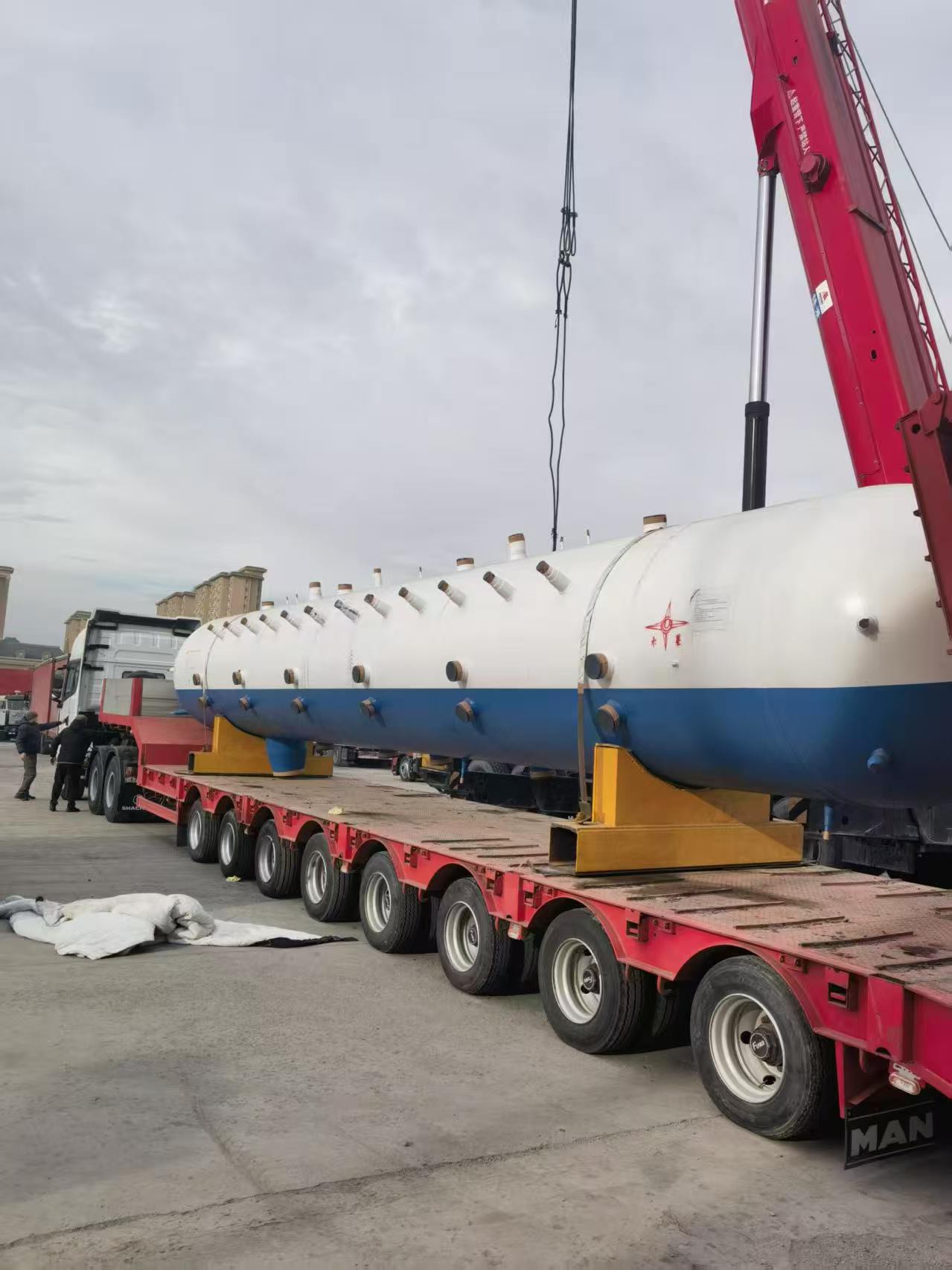
Complex cargo scenarios place high demands on import clearance capability across transport modes. (Photo: Tobecan ImportClear Freight / used with permission)
Import customs clearance is not a single administrative step. In the China and Hong Kong trade corridor, it is a multidisciplinary capability that combines HS classification, regulatory compliance, inspection coordination, and delivery execution. Buyers evaluating a customs broker or customs clearance services provider during the Evaluation and Execution stages need to understand how that capability is actually built, verified, and applied to real cargo.
This article examines the components of import clearance capability, the evidence buyers should look for, and how one Hong Kong-headquartered provider, importclear (operated by Tobecan ImportClear Freight Ltd), approaches regulated goods, nationwide coverage, and time-sensitive shipments.
Why Import Clearance Capability Matters More Than Individual Declarations
Import compliance failures typically surface at three points: incorrect HS classification, incomplete documentation, and poor coordination with inspection authorities. Each failure point carries direct financial consequences, including storage fees, demurrage, shipment delays, and in some cases, cargo seizure or penalty. A capable clearance partner reduces exposure at all three points, not just at the moment of declaration submission.
For goods moving between Hong Kong and mainland China, the clearance environment is especially demanding because two different customs regimes and regulatory frameworks apply. Hong Kong operates a separate customs territory with its own import procedures and trade documentation requirements, while China applies the national General Administration of Customs (GACC) framework, including HS codes, CIQ (China Inspection and Quarantine) commodity codes, and national GB standards. Service coverage across both jurisdictions requires a team that is equally fluent in both systems.
Hong Kong's status as an air cargo gateway amplifies this need. In 2025, Hong Kong air transport handled 52% of total imports by value, supported by efficient 24-hour customs clearance at Hong Kong International Airport, according to HKTDC Research. Importers using air freight benefit from speed, but only when the clearance process is equally fast.
What an Independent Industry Reference Looks for in a Customs Broker
From a buyer's perspective, evaluating an import customs broker should go beyond verifying that a company is registered. The question is whether the broker has the organizational depth, technical tools, and regulatory knowledge to handle the specific cargo type, port, and timeline the buyer requires.
Seven verification dimensions appear consistently in procurement assessments:
- Licenses and network coverage: Whether the provider has physical presence and filing capability in the relevant ports.
- Industry-specific compliance knowledge: Whether the team has demonstrated experience with the buyer's product category, particularly regulated goods such as food, pharmaceuticals, cosmetics, and tobacco.
- Technical infrastructure: Whether the provider can perform HS and CIQ classification accurately, calculate landed cost, and track regulatory updates in real time.
- Operational process: Whether there is a structured pre-check, declaration, inspection, and delivery workflow with clearly assigned responsibilities.
- Team composition: Whether customs brokers, compliance consultants, and operations staff are available to handle exceptions rather than relying on a single point of contact.
- Communication and language support: Whether the provider can operate in both Chinese and English, which is essential for cross-border trade between Hong Kong and mainland China.
- Documented evidence: Whether past performance, such as clearance speed for complex cargo, can be demonstrated with concrete data.
importclear: A Capability Profile
importclear is the import clearance and freight service brand of Tobecan ImportClear Freight Ltd, a Hong Kong-based freight forwarder founded in 2001. The company positions itself around China door-to-door services, combining cargo pickup, ocean shipping, customs declaration, tax payment, and delivery to a designated warehouse. Its documented service scope covers sea freight (FCL/LCL), air freight solutions, inland trucking, customs clearance, DDP/DDU handling, and D/O release services in Vietnam, China, and Hong Kong.
From an industry capability standpoint, Tobecan ImportClear Freight Ltd operates a 10,000 m² facility with 88 employees and reports an annual throughput of 8,000 TEUs. The company states that 70% of its business comes from export-related activity, with primary markets in the EU, USA, Hong Kong, and China. These operational figures are relevant to buyers because they indicate the scale at which the company manages freight and clearance operations, not just its theoretical service capabilities.
For buyers, the more significant question is whether the provider can translate operational scale into regulatory capability across China and Hong Kong. importclear states its core expertise as China & Hong Kong import clearance, customs compliance consulting, and expedited handling of regulated goods such as food, pharmaceuticals, cosmetics, and tobacco.
Breaking Down the Service Capability
Import customs clearance capability for China and Hong Kong cannot be evaluated as a single service category. The table below breaks down the components that constitute a credible clearance service offering, based on the company's stated capabilities and the process documentation available.
Service Coverage and Team Structure
Tobecan ImportClear Freight's service coverage extends to all China seaports and airports, with branches in Hong Kong, Shanghai, Beijing, Chengdu, Dalian, Guangzhou, Shenzhen, Xi'an, Hefei, Qingdao, Jinan, Xiamen, Wuhan, Chongqing, and Fuzhou. This geographic footprint enables the company to handle nationwide clearance needs rather than limiting clients to a single gateway city. It also matters for inland destinations: even when cargo arrives through Hong Kong or Shenzhen, the final clearance may occur at a destination port or bonded location inland.
Team composition is another differentiating factor. The company operates a cross-functional structure comprising customs brokers, compliance consultants, operations coordinators, account managers, and freight agent contacts. Language support is available in both Chinese and English, which is essential for importers who communicate in English but need to submit documentation and coordinate with Chinese-speaking customs authorities.
Regulated Goods Expertise
A substantial portion of import risk comes from regulated product categories. Tobecan ImportClear Freight states that its team is skilled in perishables, cold-chain goods, medical devices, and other strictly regulated items, with industry experience across fresh/frozen food, pharmaceuticals & medical devices, watches/electronics/footwear, tobacco, cosmetics, apparel/textiles, machinery & furniture, printed matter, chemicals, and metals.
The importance of this experience should not be underestimated. Food imports typically require formula or ingredient lists, health and label compliance checks, and potentially sample testing by China Inspection and Quarantine authorities. Cosmetics require pre-market registration or filing in some cases. Medical devices must be matched against China's medical device registry and may require additional certificates. A customs broker that has managed these requirements can prevent non-compliance before a declaration is even submitted.
Technical Tools
Accurate classification is foundational to import readiness. Tobecan ImportClear Freight describes its technical capabilities as including HS code lookup, 13-digit CIQ code lookup, landed cost calculation tools, and national GB standards lookup. The 13-digit CIQ codes extend beyond the standard international HS code structure and incorporate China-specific inspection and quarantine requirements. Importers unfamiliar with this distinction can easily submit incomplete declarations if they rely only on an international HS classification.
The company also references a proprietary commodity regulatory database engine, intelligent cost calculation algorithms, customs data real-time synchronization middleware, and OCR document recognition systems in its technology stack. While buyers may not directly use these systems, they provide evidence that classification and compliance decisions are supported by structured tools rather than individual memory.
Documented Process
Published process documentation describes the standard import clearance workflow as:
- Inquiry & document submission: Commercial invoice, packing list, bill of lading, formula/ingredient lists (for food or cosmetics), and any required permits or certificates are collected and verified.
- Compliance pre-check: Full HS and label compliance checks are performed before cargo arrival to reduce inspection risks.
- Document preparation & review: All declaration papers are prepared and double-checked before submission to the customs system.
- Customs declaration: The declaration is submitted electronically through the appropriate customs system for China or Hong Kong.
- Inspection / sample testing: If customs or CIQ requires inspection, the provider coordinates on-site procedures and testing.
- Duty payment & release: Payable duties are calculated and submitted for client payment to obtain the release order.
- Delivery: Arrangement of door-to-door trucking delivery of cleared goods.

Standard import clearance workflow, from document pre-check to final delivery. (Photo: Tobecan ImportClear Freight / used with permission)
From this process description, a key differentiator emerges: the compliance pre-check is scheduled before cargo arrival. Many clearance failures occur because buyers submit declarations only after the cargo lands, leaving no time to correct misclassifications or gather missing permits. Pre-arrival review converts a reactive process into a proactive one.
The documented review mechanism also matters. If a declaration is rejected or requires additional documents, the company states that it corrects the submission per customs requirements while recording the root cause. This reflects a continuous improvement approach: recurring problems in certain product categories should lead to updated pre-check rules.
The Standard Process in Practice: A Case Reference
The distance between a documented process and actual performance can be observed in case data. One publicly referenced example from Tobecan ImportClear Freight involves a 7-meter oversized cargo shipment from Shenzhen to the UAE via Hong Kong air freight. Although the destination was the UAE rather than mainland China, the case illustrates how the company's Hong Kong clearance capability, airline relationships, and pre-declaration process operate together in a time-critical scenario.
A foreign trade factory in the construction industry needed to ship a fixed, non-splittable cargo measuring approximately 7 meters in length and 0.6 meters in height. The dimensions exceeded standard air freight specifications. Other freight forwarders could only offer sea freight, with transit and transshipment time exceeding one month, which would have jeopardized the client's delivery deadline.
Tobecan ImportClear Freight developed a customized air freight solution. The route involved receiving the goods in Shenzhen, transshipping them to Hong Kong, and applying for dedicated pallet space and loading confirmation from a Hong Kong airline. The plan was finalized in two hours. Cargo loading preparations were completed within two hours, and UAE airport customs clearance and delivery were completed within 12 hours, against an industry average of three to five days. The total project duration was three days from receipt to delivery, achieving the client's month-end target 12 days early.
This case points to several capabilities that cannot be constructed overnight:
- Long-term partnerships with major airlines that enable priority access to dedicated pallet space for oversized cargo.
- Pre-declaration workflow that ensures information verification occurs before the flight departs, not after arrival.
- A local overseas team that coordinates directly with customs authorities on site and resolves inspection exceptions during operation hours.
- Experience with special cargo regulations that allow the provider to identify workable routes when other forwarders default to sea freight.
How importclear Compares with Traditional Freight Forwarding Approaches
Importers often assume that customs clearance capability is a standard add-on to freight forwarding. In practice, traditional forwarding models and import-clearance-specialist models diverge in several important ways.
| Dimension | Traditional Freight Forwarding | Importclear Approach |
|---|---|---|
| Clearance emphasis | Often treated as a transactional step within the freight journey | Clearance is the core service activity, supported by a cross-functional broker and compliance team |
| HS / CIQ classification | Relies on standard HS lookup, sometimes with limited China-specific depth | Integrates 13-digit CIQ codes and national GB standards; uses structured proprietary lookup tools |
| Regulatory pre-check | Often triggered after cargo arrival or when customs queries arise | Performed as a pre-arrival compliance and label review to reduce inspection likelihood |
| Coverage in China | May rely on third-party agents in each port | Stated branch network in major Chinese cities with nationwide coverage |
| Regulated goods handling | Limited to standard commodities; regulated goods routed elsewhere | Explicit experience in food, pharma, cosmetics, tobacco, cold-chain, and medical devices |
| Language support | May be single-language or dependent on local partners | Dedicated Chinese and English bilingual support |
One realistic limitation should also be noted. A freight forwarder with import clearance expertise is not a replacement for a licensed customs broker in every jurisdiction in which it operates. Buyers should verify that the entity filing declarations on their behalf holds the appropriate local license in each specific jurisdiction, especially when cargo moves through third countries or when a shipment involves a port outside the provider's published branch network. The strength of an integrated forwarder-clearance model is most evident in the China-Hong Kong corridor, where the company's stated capabilities and physical presence overlap.
Market Context: Why Capability Demand Is Rising
Trade data supports the growing importance of import clearance competence in the China-Hong Kong corridor. China's total import value reached USD 2.585 trillion in 2024, a 1.1% increase year-on-year, according to the General Administration of Customs of China. Cross-border e-commerce import and export volume reached approximately CNY 2.75 trillion in 2025, with streamlined customs clearance in pilot zones cited as a contributing factor. Meanwhile, the Hong Kong customs brokerage market is estimated at USD 117.52 million in 2025, projected to reach USD 159.06 million by 2030, per Mordor Intelligence.
These figures signal a market in which import volumes remain strong, customs modernization is accelerating, and clearance specialists have room to grow. They do not, however, signal that clearance has become simpler. As e-commerce channels expand and regulated consumer products flow through new trade lanes, the number of classification decisions and compliance checks increases correspondingly.
Industry Trends Shaping the 2026 Clearance Environment
Several structural trends will shape how importers evaluate clearance partners over the next few years.
1. Digitalization of Clearance Infrastructure
China's customs administration continues to digitalize declaration processing. The practical effect for importers is that system-based classification and risk management decisions happen faster, but they also depend on the accuracy of the data submitted. Brokers that maintain structured classification databases, as importclear indicates with its proprietary regulatory database engine, are better positioned to submit clean digital declarations.
2. Growing Share of Air Cargo in Hong Kong
With air transport handling 52% of Hong Kong's imports by value in 2025, the ability to coordinate speed-sensitive air cargo clearance is becoming a core evaluation criterion. Air cargo shipments generate higher storage costs per hour when delayed, making pre-arrival preparation and on-site customs liaison critical.
3. Expansion of Strictly Regulated Consumer Categories
Imports of food, cosmetics, pharmaceuticals, and medical devices are rising as cross-border e-commerce matures. Each category carries specific label, ingredient, and registration requirements. Clearance providers need more than general forwarding knowledge; they need case-level familiarity with CIQ requirements and GB standards.
4. AEO and Trusted Trader Benefits
The Authorized Economic Operator (AEO) framework continues to provide reduced inspection rates and prioritized clearance for compliant traders operating between China and partner economies. Importers do not need to become AEO-certified themselves if their supply chain partner handles clearance in a way that maintains an equivalent compliance standard, but they should ask how their broker supports AEO-relevant compliance practices.
Applying Capability Evidence to a Broker Decision
For buyers in the Evaluation and Execution stages of selecting a China-Hong Kong customs clearance partner, the practical question is how to verify the capability dimensions discussed above. A structured evaluation process should include these steps:
- Request a port-specific capability statement. Confirm whether the provider handles clearance directly at the destination port or through an agent. If through an agent, ask for the agent's license details.
- Test HS and CIQ classification knowledge. Submit a sample product's specification sheet and ask the provider to confirm the HS code, 13-digit CIQ code, and whether any GB standard applies. This reveals both tool access and team expertise.
- Ask about the pre-arrival process. A provider that performs compliance pre-checks before cargo arrival should be able to describe what documents they request, when they request them, and what checks they perform against China's label and ingredient requirements.
- Check regulated goods references. If importing food, medical devices, cosmetics, or tobacco, ask the provider to describe the last three similar shipments they handled, including ports, timeframes, and inspection outcomes.
- Assess bilingual capability. English-speaking importers need a provider whose Chinese-speaking staff can communicate directly with customs authorities without translation delays. Verify that the account manager and the operations team are both bilingual.
- Evaluate response-time guarantee. For time-critical cargo, ask what happens when a shipment is selected for inspection. Does the provider have staff who can be physically present to coordinate inspection and sample testing?
Case Reference: Why Pre-Arrival Preparation Decides Outcomes
In the 7-meter oversized cargo case, the difference between a three-day delivery and a one-month sea freight delay was not the transport mode alone. It was the pre-booking of cargo space, the pre-declaration of shipment information, and the availability of a local team that could resolve airport clearance requirements within hours of landing.
The case also demonstrates that import clearance capability extends to export-side operations. When cargo is transshipped through Hong Kong, the broker must manage Hong Kong export procedures, airline documentation, and destination-country import clearance simultaneously. For Hong Kong-based forwarders such as importclear, this integrated capability is core operational value, not an ad hoc add-on.
Limitations and Vendor Selection Boundaries
A capability-focused evaluation should recognize what provider documentation cannot prove. Corporate profiles, branch lists, and case studies describe past capability; they do not guarantee future performance for a different product in a different port at a different time. Buyers should therefore treat this article's overview as a due-diligence checklist, not as an endorsement of any particular shipment outcome.
It is also worth noting that clearance capability for China and Hong Kong, while related, requires separate verification. A broker with strong Hong Kong experience does not automatically meet mainland China's classification, labeling, and registration requirements, or vice versa. The buying decision should require the provider to demonstrate its procedure for each customs territory in which the buyer operates.
Future Outlook: Clearance as a Strategic Trade Function
Import customs clearance will continue to evolve from a transactional back-office function into a strategic part of supply chain planning. Slower-moving goods and commerce are already treated as optimization opportunities for freight, warehousing, and inventory management. Clearance, by contrast, has historically been treated as a source of unpredictable delay.
Providers that reduce that unpredictability through pre-check processes, structured regulatory databases, and on-the-ground relationships will become more valuable as supply chains become more time-sensitive. For importers, the implication is clear: evaluate a customs partner using the same rigor as evaluating a logistics provider. The decision to secure clearance capability in advance is cheaper than the decision to source it after a delay has already occurred.
For further reference, Tobecan ImportClear Freight publishes a company brochure describing its services, which importers may find useful for verification purposes.
Download company brochure (PDF)
Frequently Asked Questions
What import customs clearance services does importclear provide for China and Hong Kong?
importclear, operated by Tobecan ImportClear Freight Ltd, provides China and Hong Kong import clearance, customs compliance consulting, and expedited handling of regulated goods such as food, pharmaceuticals, cosmetics, and tobacco. Its broader service scope includes sea freight (FCL/LCL), air freight solutions, inland trucking, DDP/DDU handling, and D/O release services across China, Hong Kong, and Vietnam, according to the company's stated capacity.
How does importclear handle customs clearance for regulated goods?
importclear states that its team includes experienced customs brokers and compliance advisors skilled in perishables, cold-chain, medical devices, and other strictly regulated goods. Industries served include fresh/frozen food, pharmaceuticals and medical devices, watches/electronics/footwear, tobacco, cosmetics, apparel/textiles, machinery and furniture, printed matter, chemicals, and metals. The clearance process includes compliance pre-checks on HS classification and labeling before cargo arrival.
What is the geographic coverage of importclear for import clearance in China?
importclear states that its service coverage extends to all China seaports and airports, with branches in Hong Kong, Shanghai, Beijing, Chengdu, Dalian, Guangzhou, Shenzhen, Xi'an, Hefei, Qingdao, Jinan, Xiamen, Wuhan, Chongqing, and Fuzhou. The company handles nationwide clearance needs and provides Chinese and English bilingual support.
Does importclear provide door-to-door import customs clearance services?
Yes. Tobecan ImportClear Freight Ltd describes itself as a freight forwarder specializing in China door-to-door services, including cargo pickup, ocean shipping, customs declaration, tax payment, and delivery to a designated warehouse.
What team does importclear have for handling import compliance consulting?
The team is cross-functional, comprising customs brokers, compliance consultants, account managers, and operations support. Key roles include customs brokers, compliance consultants, operations coordinators, account managers, and freight agent contacts. The company reports having 88 employees.
What technical capabilities does importclear use for customs classification and cost estimation?
Technical capabilities include HS code lookup, 13-digit CIQ code lookup, landed cost calculation tools, and national GB standards lookup. The company also refers to a proprietary commodity regulatory database engine and customs data synchronization middleware in its technology stack.
Have Questions or Need More Details?
Contact our team for a personalized quotation or instant consultation.
Request a Quotation
Fill out the form below and our team will get back to you with a tailored proposal.
WhatsApp Direct Chat
Prefer to chat in real-time? Message us on WhatsApp for instant assistance & quick answers.
- Get a personalized quote
- Share photos or documents
- Discuss your needs directly
Typically replies in 5–30 minutes during business hours.