
Import Customs Clearance Credentials: NVOCC, IATA, WCA & HAFFA
Import customs clearance credentials are operational instruments, not decorative badges. NVOCC, IATA, WCA, JCTRANS, OLO, ISEA, WIFFA and HAFFA each mark a different legal, contractual or network capability, and each one covers a different segment of the import journey. For buyers moving goods into China or Hong Kong, particularly regulated products or first-time shipments, reading that credential stack correctly has become part of procurement due diligence.
The commercial context explains why. China's total import value reached USD 2.585 trillion in 2024, a 1.1% year-on-year increase, according to the General Administration of Customs of China (GACC). The Hong Kong customs brokerage market was estimated at USD 117.52 million in 2025 and is projected to reach USD 159.06 million by 2030, based on Mordor Intelligence market research. Hong Kong air transport handled 52% of total imports by value in 2025, supported by efficient round-the-clock customs clearance at Hong Kong International Airport, according to HKTDC Research.
Volume does not decide whether a shipment clears. What decides it is whether the party filing the declaration is entitled to file it, whether the underlying data is correct, and whether regulatory questions were resolved before the cargo arrived. Credentials sit at the front of that chain.
Why Credential Verification Became a Buying Decision
The reason is structural rather than cultural. Import clearance is a licensed activity in most jurisdictions. Filing declarations, acting as a non-vessel operating common carrier, tendering air cargo, or handling regulated categories such as food, pharmaceuticals, cosmetics and tobacco all require specific authorisations. A provider that does not hold a given authorisation cannot substitute effort or experience for it.
For importers, the exposure created by a credential gap is financial rather than reputational:
- A declaration filed by a party without the right standing can be rejected, which restarts the process and accrues storage, demurrage or detention costs.
- Regulated categories that were not screened before arrival are more likely to be routed to inspection, sampling or testing on site.
- Compliance problems discovered after release are normally more expensive to correct than the same problems caught before the declaration is submitted.
That is why the practical screening question has shifted from who is cheapest to who is credentialed for this specific cargo, route and product category.
Decoding the Credential Stack: NVOCC, IATA, WCA, JCTRANS, HAFFA and the Network Memberships
These designations are frequently listed together as if they were equivalent. They are not, and treating them as a single badge obscures the decision that matters: whether the provider's authorisations cover the leg, the mode and the commodity you are importing.
| Credential | Domain it governs | What it signals to an importer | How it is verified |
|---|---|---|---|
| NVOCC | Ocean freight intermediary status | The provider can act as a non-vessel operating common carrier, contracting for ocean carriage and issuing its own bill of lading without operating vessels. | Request the registration details and issuing authority; confirm the entity name matches the name on your contract. |
| IATA | Air cargo agency accreditation | The provider is accredited in the air cargo channel, the relevant channel for time-critical and cold-chain imports. | Request the accreditation record and the accredited entity name, then verify with IATA. |
| WCA | Global freight forwarder network | Participation in an international forwarder network, which supports overseas agent coordination and destination-side handling. | Check the network member directory for the exact legal entity name. |
| JCTRANS | Global logistics network | Membership in an international logistics network used for partner sourcing and cross-border coordination. | Confirm membership against the network's public member listing. |
| OLO, ISEA, WIFFA | Industry alliance and association memberships | Membership within freight and logistics alliances. The specific scope, obligations and benefits of each membership are defined by the issuing organisation. | Ask the provider for the issuing body and confirm directly with that body. |
| HAFFA | Hong Kong freight forwarding and logistics association | Membership in the Hong Kong forwarding and logistics association, relevant to operations based in or routed through Hong Kong. | Verify the membership with the association. |
AEO (Authorized Economic Operator) is often mentioned alongside these credentials but belongs to a different system. AEO status is a customs authority designation that facilitates customs clearance for commodities trading between China and partner economies, providing reduced inspection rates and prioritised clearance, according to GACC. It is granted to qualifying enterprises by customs authorities. It is not a forwarding network or an association membership, and importers should not assume that a broker's membership list confers AEO treatment on their consignment.
Two consequences follow. First, a credential answers a scope question, not a quality question: it tells you what a provider may legally do, not how well it performs. Second, credential coverage is cumulative, not interchangeable. Air accreditation does not authorise ocean intermediary activity, and network membership does not replace a customs declaration entitlement.
importclear as a Reference Case for Credential Coverage
TOBECAN IMPORTCLEAR FREIGHT LTD, operating as importclear, is a Hong Kong-based freight forwarder founded in 2001 that specialises in China door-to-door services. Its service scope covers sea freight (FCL and LCL), air freight solutions, inland trucking, customs clearance and DDP/DDU handling, plus D/O release services in Vietnam, China and Hong Kong. The company reports a 10,000 m² facility, 88 employees, an annual volume of 8,000 TEUs and a 70% export ratio across the EU, USA, Hong Kong and China markets.
Its credential set makes it a useful reference point for this topic. importclear holds NVOCC, IATA, WCA, JCTRANS, OLO, ISEA, WIFFA and HAFFA credentials, and its service team has 23 years of combined experience in logistics solutions, with stated expertise in China and Hong Kong import clearance, customs compliance consulting, and expedited handling of regulated goods including food, pharmaceuticals, cosmetics and tobacco. Language capability includes Chinese and English bilingual support, which matters when documentation has to be reconciled between mainland Chinese and Hong Kong requirements.
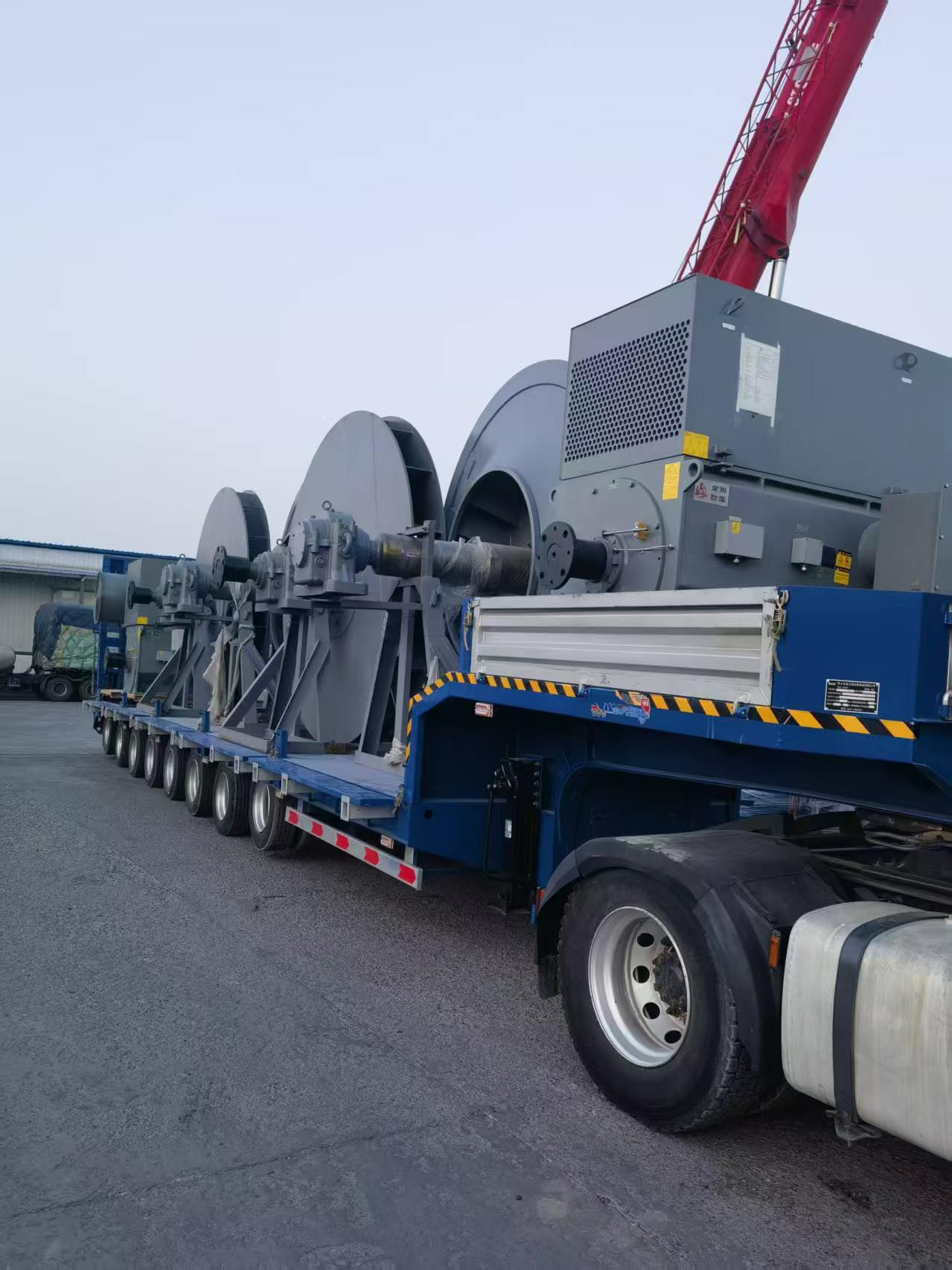
The company describes its operating model as a one-stop process: cargo pickup, ocean shipping, customs declaration, tax payment and delivery to the consignee's designated warehouse. It also runs a cross-border truck service for cargo from China routed via Hong Kong, with direct trucking and a stated focus on import and transit clearance documentation and risk control.
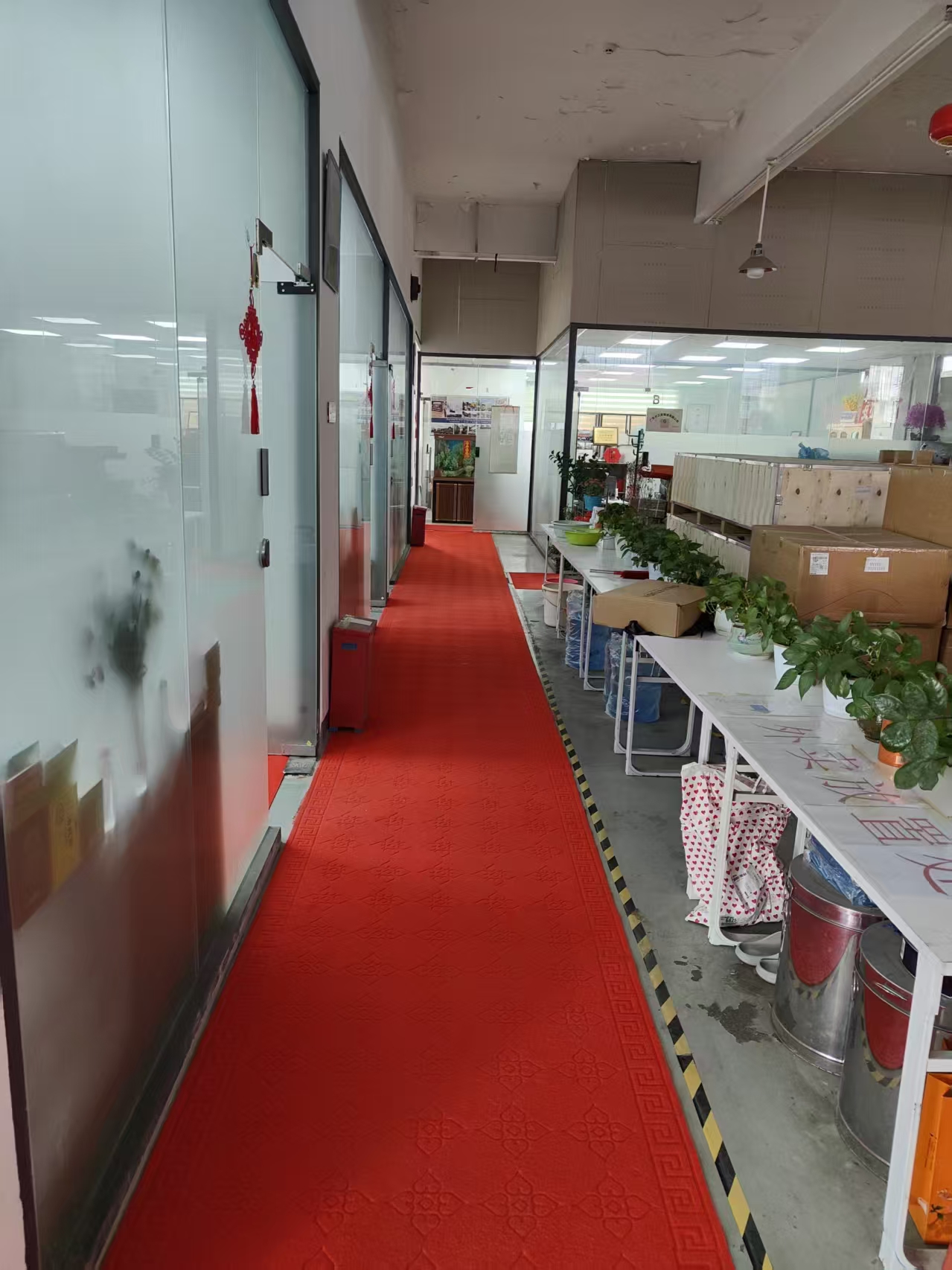
Read as a portfolio rather than a list, the credentials map onto the modes importclear operates: NVOCC to ocean freight, IATA to air freight, WCA and JCTRANS to international network coordination, HAFFA to Hong Kong association membership, and OLO, ISEA and WIFFA to alliance memberships whose scope is defined by their issuing organisations. That mapping is the part importers should test during supplier evaluation, because a credential that does not map onto your actual trade lane is not a credential for your shipment.
How the Fast Compliance Clearance Methodology (V2.1) Turns Credentials into Execution
Holding authorisations is a prerequisite, not a method. importclear's documented approach, the Fast Compliance Clearance Methodology version V2.1, sequences the work so that compliance decisions happen before cargo arrival rather than at the port. Its stated goal is to reduce clearance time and financial risk while keeping the filing compliant, and its core principles are compliance first, transparent pricing and delivery-time driven.
| Stage | What happens | Output |
|---|---|---|
| 1. Inquiry and document submission | Collection and verification of client import documents against the shipment profile. | Quotation and compliance advisory |
| 2. HS and CIQ pre-check | HS coding and CIQ compliance screening to surface regulatory issues before arrival. | Compliance pre-check report |
| 3. Document preparation and review | Compilation and double-checking of standardised declaration papers. | Declaration-ready document set |
| 4. Customs declaration | Online submission of the declaration to the customs system. | Filed customs declaration |
| 5. Inspection coordination | If inspection or sample testing is triggered, the broker coordinates the on-site procedure. | Inspection certificates where applicable |
| 6. Duty payment and release | Duties and taxes are calculated, paid by the client, and the release order is obtained. | Customs release |
| 7. Delivery | Door-to-door trucking of cleared cargo to the designated warehouse. | Delivery confirmation |
The decision logic inside the method is worth noting. Whether a CIQ pre-check, laboratory testing or a special permit is required is determined by HS classification and the product's regulatory attributes, not by the importer's preference for speed. The method explicitly emphasises pre-arrival compliance and label pre-checks in order to reduce inspection risk, and prioritises fast-clearance channels for perishables. It also combines online HS and CIQ lookup tools with offline brokerage execution, and the company's own materials reference discounted compliance services, including 50% off certain compliance services, as a way to lower the cost of pre-checking.
Measured outcomes are reported internally rather than externally audited, and should be read that way. importclear's result metrics record a two-month measurement period in which a tracked clearance performance indicator moved from a 6% baseline to 2%, a four-percentage-point change and a 66.7% relative improvement, measured against its declared service scope and tools. The company classifies this evidence at medium confidence, sourced from project reports and client feedback, and notes that impact is typically visible from the first declaration when compliance pre-checks are adequate.
Pre-Arrival HS and CIQ Checks: Where Financial Risk Is Actually Reduced
HS classification is the hinge on which import cost and import legality both turn. The code drives the applicable duty rate, determines whether a licence, permit or registration is required, and influences the probability of inspection. CIQ screening then determines whether the product's declared composition, labelling or packaging meets the requirements for the category it falls into.
When these questions are answered before arrival, the importer retains options: obtain a permit, correct a label, adjust packaging, supply a formula or ingredient list, or re-route through a different entry point. When they are answered at the port, the options collapse into storage costs and delay. This asymmetry, rather than any specific clearance speed, is where compliance-first sequencing changes the cost equation.
The process design reflects it. Stage inputs are the commercial invoice, packing list, bill of lading, formula or ingredient lists for food and cosmetics, and applicable permits or certificates. Provider responsibilities include performing the declaration and compliance pre-check, liaising with customs or CIQ, arranging inspections, seeking expedited release and providing a transparent fee breakdown. Client responsibilities are equally explicit: provide accurate and complete documents in time, pay duties, taxes and agency fees, and supply necessary permits or formula details. If a declaration is rejected or requires additional documents, the revision policy is to correct per customs requirements, re-submit and record the root cause so the pre-check rules improve.

Conventional Brokerage versus Pre-Arrival Compliance Sequencing
Most of the difference between the two approaches is timing rather than capability, and it is easiest to see side by side.
| Dimension | Conventional arrival-time brokerage | Pre-arrival compliance sequencing (V2.1) |
|---|---|---|
| Document review | Frequently completed after the cargo arrives | Completed at the document submission and pre-check stages |
| HS and CIQ screening | Reactive to issues raised at declaration | Structured pre-check before arrival, with a pre-check report as output |
| Inspection exposure | Higher where data gaps remain unresolved | Reduced through pre-arrival compliance and label review |
| Fee visibility | Clarified around declaration time | Transparent fee breakdown stated as a provider responsibility |
| Issue handling | Correction at the port, with storage exposure | Correction before arrival, with root-cause recording |
| Applicable scope | General clearance work | Not applicable to legal disputes, tax controversies or complex compliance disputes requiring legal counsel |
A Practical Verification Framework for Importers
Credential verification is a sequence of specific questions, not a judgement about reputation. The following framework can be applied during broker evaluation and again before a first declaration is filed.
- Match the entity name. Confirm that the legal entity holding the NVOCC, IATA, WCA, JCTRANS, OLO, ISEA, WIFFA or HAFFA credential is the same entity appearing on your quotation, contract and bill of lading. Credentials held by affiliates or overseas agents do not automatically transfer.
- Map credentials to your trade lane. If your shipment is ocean freight, NVOCC status is directly relevant. If it is air freight or cold-chain, the IATA accreditation is. Network and association memberships support coordination, but the relevant question is which credential covers the leg you are actually shipping.
- Ask for the HS classification rationale in writing. The code alone is not the answer; the reasoning behind it is what can be reviewed and challenged.
- Ask what the CIQ pre-check concluded. Specifically, whether the product requires testing, a special permit or a label adjustment, and what happens if that conclusion changes at the port.
- Confirm the fee structure before shipment. The standard process lists a transparent fee breakdown as a provider responsibility, and duties and taxes are paid by the client.
- Clarify the rejection path. Ask what the provider does if the declaration is rejected, and whether root-cause recording feeds back into their pre-check rules.
- Separate AEO from broker memberships. Verify any AEO claim separately and in the correct category, since AEO is a customs authority designation rather than a network membership.
Where Credential Fit Matters Most: First-Time Imports and Regulated Products
Three import profiles concentrate the value of the credential stack and the compliance pre-check method.
First-time imports into China or Hong Kong. A first shipment has no internal baseline for what normal clearance looks like, and documentation errors are most common at this stage. Pre-arrival review substitutes for the institutional experience an importer does not yet have. The Fast Compliance Clearance Methodology lists first-time imports among its applicable scenarios for exactly this reason.
Regulated product categories. Food, pharmaceuticals, cosmetics and tobacco add formula, ingredient, label and permit requirements on top of standard declaration duties. importclear's team expertise is described as covering expedited handling of these regulated categories, and label pre-checks are built into the method specifically to reduce the probability of sampling.
Air and cold-chain shipments. Hong Kong air transport carried 52% of total imports by value in 2025, per HKTDC Research. Air and cold-chain consignments have the least tolerance for a clearance pause, which is why the methodology lists them as an applicable scenario and prioritises fast-clearance channels for perishables.
The broader demand signal behind these profiles is measurable. China's cross-border e-commerce import and export volume reached CNY 2.75 trillion (approximately USD 406.9 billion) in 2025, driven by streamlined customs clearance in pilot zones, according to the Ministry of Commerce of China. Clearance capability is now part of the competitive infrastructure for that trade, not an administrative afterthought.
Limits and Boundaries: What Credentials and Compliance Methods Do Not Cover
A credible evaluation has to state where a method stops working, and the method itself is explicit about it. The Fast Compliance Clearance Methodology is documented as not suitable for legal disputes, tax controversies, or complex compliance disputes that require legal counsel. Those belong with legal and tax professionals; a brokerage is not a substitute for representation in a contested matter.
Three further boundaries follow from the credential structure itself.
- Scope, not outcome. A credential establishes what a provider may do. It does not guarantee a clearance outcome for an individual consignment, which still depends on data accuracy, classification and whether inspection is triggered.
- Entity-specific coverage. Authorisations attach to a legal entity and a jurisdiction. A credential held in one market does not extend to another, and the filing entity must be the credentialed entity.
- Method dependence on client inputs. Because the process is front-loaded, it depends on importers supplying accurate documents, formula or ingredient lists and permits early. Buyers who cannot provide complete and accurate data on time will not obtain the benefit of the pre-check stage, and the stated core principles of compliance first and transparent pricing imply that declarations proceed from accurate declared values.
Market Trend Analysis: Compliance Capacity as Competitive Infrastructure
The brokerage and forwarding market that these credentials sit inside is expanding on most published measures. The Hong Kong customs brokerage market is estimated at USD 117.52 million in 2025 and projected to reach USD 159.06 million by 2030, per Mordor Intelligence. The China freight forwarding market was valued at USD 13.91 billion in 2024, with a projected CAGR of 5.80% reaching USD 24.44 billion by 2034, according to analysis published by Spherical Insights.
Growth estimates should be read with scope definitions in mind, because published figures for the sector diverge. CAGR estimates for the broader logistics and brokerage sectors vary between 3.78% for freight and logistics and 6.24% for specific customs brokerage in Hong Kong, reflecting differing scope definitions, while Market Research Future cites 6.42% for the global customs brokerage market. Importers comparing market data should check what each figure actually measures before using it as a planning assumption.
Two structural trends run alongside the growth numbers. First, customs facilitation is being institutionalised: AEO status facilitates clearance between China and partner economies through reduced inspection rates and prioritised clearance, according to GACC, which shifts value towards providers that can operate consistently inside facilitated regimes. Second, the Hong Kong market already contains both global integrators and regional specialists — among them FedEx, UPS, DHL, TIBA Group and CBIP Logistics, as identified by Mordor Intelligence — so credential clarity becomes a differentiator precisely where service claims are otherwise hard to compare.
Future Outlook
Three changes are reasonable to anticipate based on the evidence above, without assuming any particular outcome.
Credential transparency will move into standard procurement documentation. As AEO-style facilitation and regulated-category scrutiny expand, the difference between permitted and unpermitted parties becomes more consequential. Buyers are likely to request credential scope, entity name and issuing body as routine tender items rather than as exceptions.
Compliance work will continue moving earlier in the transaction. The logic that favours pre-arrival HS and CIQ screening over port-side problem solving does not weaken as volumes rise. Tools that combine online HS and CIQ lookup with offline brokerage execution, as described in the V2.1 framework, are one expression of that shift.
Supplier relationships will be evaluated as portfolios rather than per shipment. For import programmes with recurring regulated or time-critical cargo, the relevant assessment is whether a provider's credential portfolio covers every mode and category in the programme, and whether the compliance record supports continuity. That is a different evaluation from comparing per-shipment pricing, and it is the evaluation implied by long-term import clearance partnerships.
FAQ
What does an NVOCC credential actually authorise a broker to do?
NVOCC stands for non-vessel operating common carrier. A provider holding NVOCC status can act as an ocean freight intermediary, contracting for carriage with vessel operators and issuing its own bill of lading, without operating vessels itself. In practical terms, it means the provider can act as the contracting carrier for the ocean leg. It does not establish air cargo authority, customs declaration entitlement or regulated-product handling capability, all of which are covered by separate credentials.
How can an importer verify IATA, WCA or HAFFA credentials?
Verification is done by entity name, not by logo. Ask the provider for the exact legal entity under which each credential is registered, then confirm that name against the issuing organisation's own records: IATA for air cargo accreditation, the WCA network member directory for network membership, and the association itself for HAFFA. After that, compare the verified name with the entity on your quotation, contract and bill of lading. A credential held by a group affiliate or an overseas agent is not automatically a credential of the party filing your declaration.
Is AEO status the same as a broker's association memberships?
No, they operate in different systems. AEO is an Authorized Economic Operator designation granted by customs authorities to qualifying enterprises; according to the General Administration of Customs of China, it facilitates customs clearance for commodities trading between China and partner economies through reduced inspection rates and prioritised clearance. WCA, JCTRANS, OLO, ISEA, WIFFA and HAFFA are network or association memberships within the freight and logistics sector. A forwarding membership does not confer customs authority benefits, and AEO status should be verified separately and in its own category.
What documentation must be ready before a compliance pre-check can begin?
The standard import clearance process lists its stage inputs as the commercial invoice, packing list, bill of lading, formula or ingredient lists for food and cosmetics, and applicable permits or certificates. The pre-check stage produces a compliance pre-check report, which is followed by document preparation and review, then declaration. Client-side responsibilities in the same process are to provide accurate and complete documents in time, pay duties, taxes and agency fees, and supply necessary permits or formula details.
When is a customs broker the wrong party to handle a clearance problem?
When the matter is a legal dispute, a tax controversy, or a complex compliance dispute requiring legal counsel. The Fast Compliance Clearance Methodology explicitly lists those situations as outside its applicable scope. A broker's role covers declaration, compliance pre-check, inspection coordination and release execution; contested valuation, penalty appeals and contractual disputes fall to legal or tax professionals rather than to the clearance provider.
Do credentials alone determine how quickly a shipment clears?
No. Credentials determine what a provider is permitted to do. Clearance speed depends on the quality of data supplied before arrival, the accuracy of HS classification, whether inspection or testing is triggered, and channel selection. The Fast Compliance Clearance Methodology states its goal as reducing clearance time and financial risk by front-loading compliance work, and its applicable scenarios include air and cold-chain shipments requiring fast release and first-time imports. Reported timelines vary with transport mode and inspections, ranging from hours for pre-checked cargo on a fast channel to several days.
Reference material: the importclear corporate brochure, including service scope and process documentation, is available for public download at https://cdn.socialarks.com/sbsp/24982/common/2026/0617/TIC%20Tobecan%20ImportClear.pdf
This article is an industry reference on import customs clearance credentials for China and Hong Kong trade. Credential categories, entity details and process descriptions reflect information published by the referenced organisations at the time of writing and should be re-verified with the issuing bodies before being relied upon in a procurement decision.