
Import Customs Clearance FAQ: HS/CIQ Pre-Checks, Timelines & Fees for China–Hong Kong
Import Customs Clearance FAQ: HS/CIQ Pre-Checks, Timelines & Fees for China–Hong Kong
Importers rarely ask abstract questions about customs clearance. They ask which HS code an authority will accept, whether a CIQ pre-check will pull a shipment into testing, how many days release will take, and what each line of the invoice actually represents. This reference answers those recurring questions for China and Hong Kong import trade, drawing on the documented operating model of TOBECAN IMPORTCLEAR FREIGHT LTD (trading as importclear), a Hong Kong–headquartered freight forwarder and customs brokerage founded in 2001.
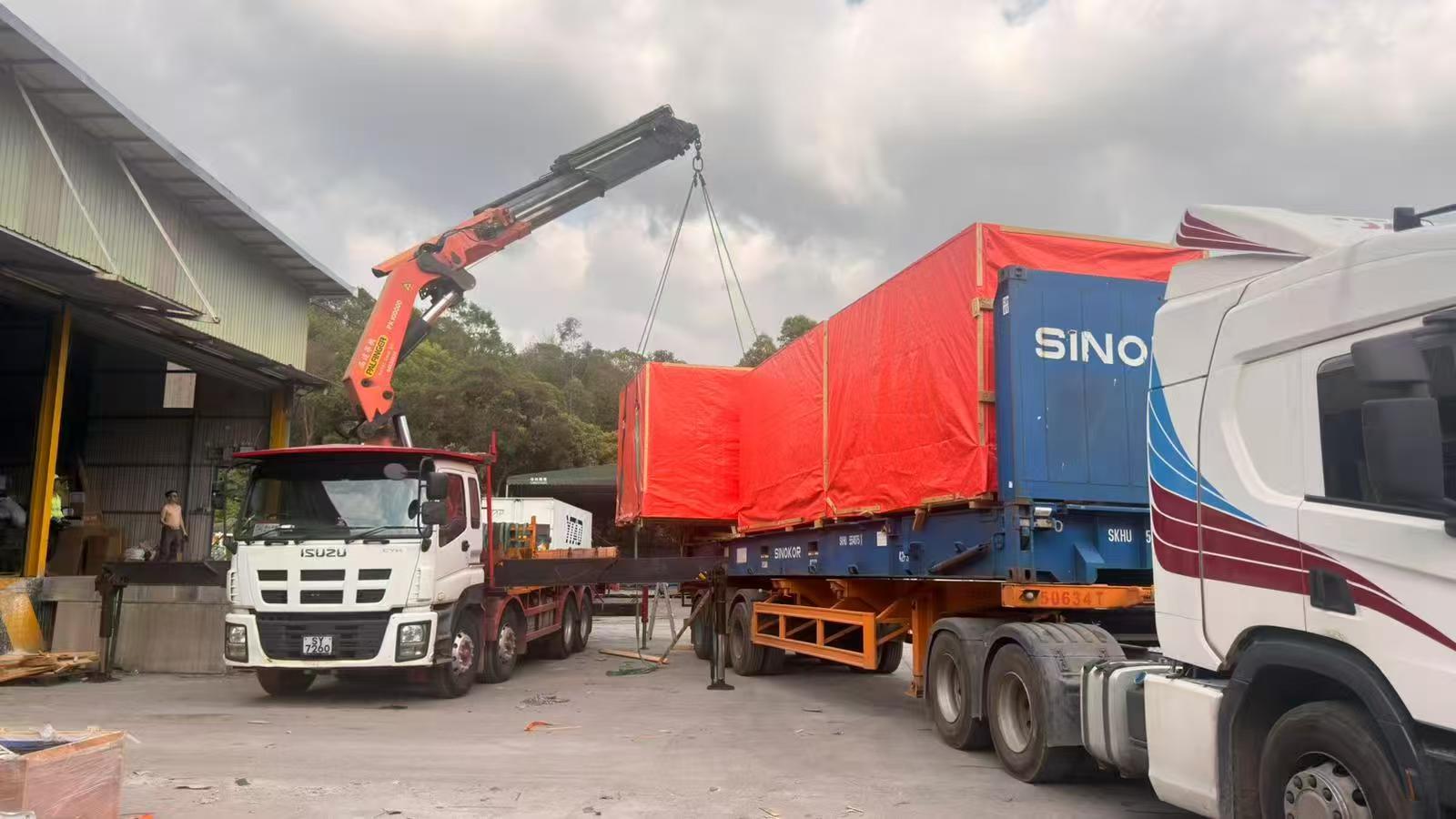
Port and terminal handling sits at the far end of the clearance workflow; what happens before declaration usually decides how quickly cargo reaches this point. Image: TOBECAN IMPORTCLEAR FREIGHT LTD.
Clearance in China and Hong Kong: Four Variables That Decide the Outcome
Clearance outcomes are not decided by a single document or a single fee. They are decided by four variables that interact, and each one is controlled by a different party — which is why two shipments that look identical on a purchase order can behave very differently at the border.
| Variable | What it determines | Where control sits |
|---|---|---|
| HS classification | Duty rate, statistical line, and whether a licence or regulatory condition applies | Built from importer product data, reviewed by the broker before declaration |
| CIQ and product regulatory attributes | Whether label review, sampling, testing or a special permit is triggered | Product composition and labelling, plus permits supplied by the importer |
| Declaration file completeness | Whether the declaration is accepted on first submission or returned for correction | Documents originate with the importer; review and submission sit with the provider |
| Cargo and route attributes | Inspection likelihood and the timeline band | Customs and CIQ authorities decide; the provider coordinates |
The practical consequence is that classification and regulatory review performed before cargo arrival is the largest lever an importer holds over both timeline and cost. Everything downstream — inspection, duty payment, release, delivery — is faster when that review has already happened.
HS Classification and CIQ Attributes: What Triggers a Pre-Check, a Test or a Permit
An HS code is the tariff and statistical identity of the goods. It sets the duty treatment and determines whether a licence or regulatory condition attaches to the import. For regulated categories — food, pharmaceuticals and medical devices, cosmetics, tobacco — a further layer applies: the 13-digit CIQ code links the product to China's inspection and quarantine requirements and to the applicable national GB standards. importclear's documented technical capabilities include HS code lookup, 13-digit CIQ code lookup, landed cost calculation tools and national GB standards lookup. These are the instruments behind a compliance pre-check, not marketing descriptors.
A pre-check examines four things: the ingredient or formula list, the label content and any claims made on it, the permit or certificate requirements for that product category, and whether the declared use matches the classification applied. When a formula or label does not match the declared classification, the declaration is where the mismatch surfaces. That is precisely why the workflow places full HS and label compliance review before cargo arrival, with the stated purpose of cutting inspection risk.
Two categories behave differently in practice. General merchandise tends to be governed by classification accuracy and value declaration. Regulated goods — perishables, cold-chain items, medical devices, cosmetics and tobacco — carry additional composition and labelling requirements that a general-cargo broker may not routinely handle. importclear's stated industry coverage includes fresh and frozen food, pharmaceuticals and medical devices, watches, electronics and footwear, tobacco, cosmetics, apparel and textiles, machinery and furniture, printed matter, and chemicals and metals.
Pre-checks reduce risk; they do not transfer the decision. The customs authority retains the right to inspect regardless of how thorough the review was.
The Seven-Step Fast Compliance Clearance Methodology (V2.1)
importclear documents its import clearance workflow as seven sequential stages running from first inquiry to final delivery. The order is not arbitrary: pre-check must precede declaration, and release must precede delivery. Each stage has defined inputs, outputs and a responsible party.
| Step | What happens | Output |
|---|---|---|
| 1. Inquiry and document submission | Import documents are collected and verified | Quotation and compliance advisory |
| 2. Compliance pre-check | Full HS and label compliance review conducted before cargo arrival to cut inspection risk | Compliance pre-check report |
| 3. Document preparation and review | All declaration papers prepared and double-checked before submission | Customs declaration file |
| 4. Customs declaration | Declaration submitted to the customs system | Customs declaration |
| 5. Inspection and sample testing, where required | On-site inspection and sample testing procedures coordinated with customs and CIQ | Inspection certificates, if applicable |
| 6. Duty payment and release | All payable duties calculated for client payment; release order obtained | Release notice |
| 7. Delivery | Door-to-door trucking delivery of cleared goods arranged | Delivery confirmation |
Two mechanisms sit underneath the sequence. The first is the review mechanism: when a declaration is rejected or requires additional documents, the file is corrected against customs requirements, resubmitted, and the root cause recorded so that pre-check rules can be updated. The second is the communication mechanism, which runs through email, phone, WhatsApp and website forms, with status notifications and live agent support available during the process. Client responsibilities are stated alongside provider responsibilities: the importer supplies accurate and complete documents in time and pays duties, taxes and agency fees, while the provider performs the declaration and pre-check, liaises with customs and CIQ, arranges inspections, seeks expedited release and supplies a transparent fee breakdown.
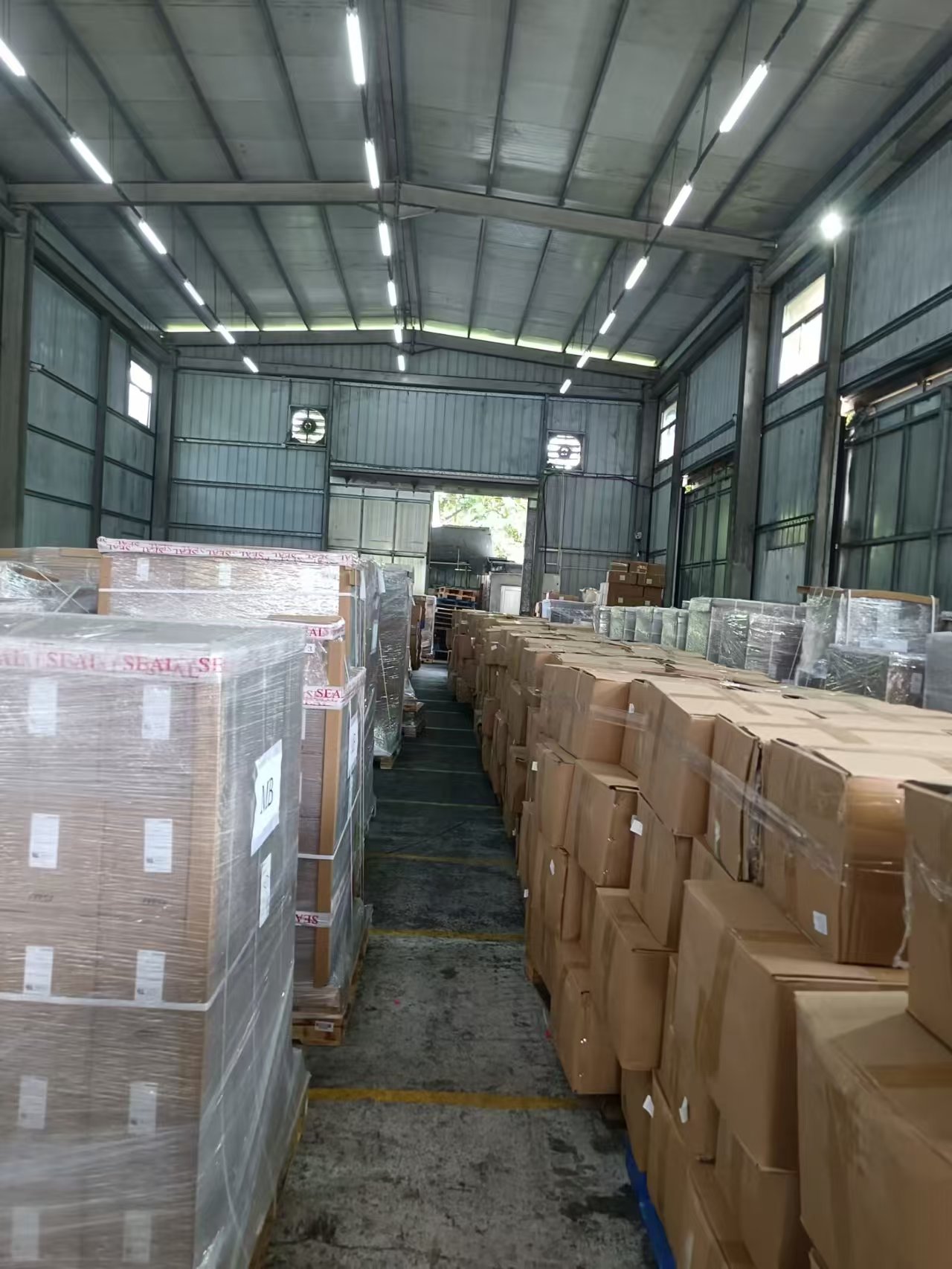
Inbound cargo handling before final delivery; document accuracy established upstream determines how long cargo sits here. Image: TOBECAN IMPORTCLEAR FREIGHT LTD.
Timelines: Realistic Ranges from Hours to Several Days
The documented timeline for import clearance depends on the transport mode and on whether inspection is triggered. It typically ranges from hours — where the shipment has been pre-checked and moves on a fast channel — to several days. Buyers should plan against the band rather than a single number, because the difference between the fast end and the slow end is almost always a document or an inspection, not the mode of transport itself.
| Scenario | Position in the timeline band | What moves it longer |
|---|---|---|
| Pre-checked, complete file, no inspection triggered | Fast end — hours | — |
| Additional documents requested | Middle — one to several days | Time required for the importer to supply corrected or missing documents |
| Inspection or sample testing required | Multi-day end | On-site scheduling, testing turnaround, coordination with customs and CIQ |
| Regulated goods requiring permits | Variable | Whether permit and formula details are valid and consistent with the declaration |
A documented capability case illustrates the fast end of the band. A client needed air freight for a 7-metre oversized consignment that could not be split; other freight forwarders could offer only sea freight with a minimum one-month transit, which exceeded the delivery deadline. The solution used dedicated pallet space secured through a Hong Kong airline, transshipment through Hong Kong, pre-declaration completed before departure, and a local team present at the destination airport on arrival. Loading preparation was completed in two hours — stated as 70% faster than industry peers — and airport customs clearance and delivery were completed within 12 hours against an industry average of three to five days for that scenario, with a total lead time of three days.
The case is specific rather than typical, and it should be read as such. What it demonstrates is which variables compress a timeline: advance declaration, capacity pre-booked before the shipment moves, and a clearance team physically present at the point of arrival. None of those variables is a customs procedure; all three are process decisions made before the cargo lands.
How Import Clearance Fees Are Structured
Clearance invoices are frequently opaque because statutory payments and service fees are presented as one total. In the documented workflow, the provider's responsibility is to perform the declaration and compliance pre-check, liaise with customs and CIQ, arrange inspections, seek expedited release, and provide a transparent fee breakdown. The importer's responsibility is to supply accurate and complete documents in time and to pay duties, taxes and agency fees.
| Cost element | What it covers | Paid by |
|---|---|---|
| Compliance pre-check and advisory | HS and label review, CIQ and GB standards checks, permit guidance | Importer, as an agency fee |
| Declaration / brokerage fee | Preparation and submission of the customs declaration | Importer, as an agency fee |
| Inspection coordination | On-site inspection and sample testing coordination where required | Importer, as an agency fee |
| Duties and taxes | Statutory amounts calculated for the shipment | Importer, payable to obtain the release order |
| Delivery | Door-to-door trucking of cleared goods | Importer, as arranged |
The practical test of any quotation is whether these five elements are separated and labelled. An intelligent cost calculation algorithm and landed-cost tools exist to make that separation routine instead of manual, so that the duty component and the service component can be seen independently before a buyer commits. Fee levels themselves depend on classification, declared value, inspection status and route; no workflow fixes them in advance.
The Technology Layer Behind a Pre-Check
Four named systems sit under the workflow. A proprietary commodity regulatory database engine holds commodity and regulatory attributes used during classification and pre-check. An intelligent cost calculation algorithm supports landed-cost and duty calculation. Customs data real-time synchronization middleware keeps declaration and status data aligned with customs systems. An OCR document recognition system converts submitted documents into structured data at intake — which matters because a large share of paperwork-driven delay begins with a document that was misread, incomplete or inconsistent when it arrived. These systems run on a cloud service background framework.
The technology itself is not the deliverable; the output is. The company also maintains HS/CIQ lookup and landed-cost tools on its website, and its records list proprietary K5, L5 and BOOKINGBOX assets alongside a multi-location branch network. Client communication runs through email, phone, WhatsApp and website forms, with status notifications and live agent support. Language support is bilingual Chinese and English, which matters when documentation originates with a manufacturer rather than with the importer.
What the Importer Must Supply, and When
Pre-check quality is bounded by input quality. The workflow's stated inputs are the commercial invoice, packing list, bill of lading, formula or ingredient lists for food and cosmetics, and permits or certificates. Timing matters as much as content: an input that arrives after the pre-check has been completed no longer describes the shipment being declared.
| Input | Why it is needed | When |
|---|---|---|
| Commercial invoice | Value, terms and declared use | At inquiry, before pre-check |
| Packing list | Weight, packaging, quantity, dimensions | At inquiry |
| Bill of lading / air waybill | Transport document and consignee details | At inquiry |
| Formula or ingredient list | Determines CIQ attributes for food, cosmetics and similar categories | Before pre-check is completed |
| Permits or certificates | Required for regulated product categories | Before declaration |
| Accurate product description and labelling | Drives classification and label compliance | Before pre-check is completed |
Two failure modes recur across import operations. The first is formula detail supplied late, after the declaration file has already been assembled. The second is label artwork whose content does not match the declared classification. Both are importer-side inputs, and both are capable of invalidating a completed pre-check — which is why the documented workflow places client responsibility for accurate and complete documents directly alongside provider responsibility for the pre-check itself.
Limits and Boundaries of Pre-Checked Clearance
Honest boundaries matter more than promotional claims in this category, because a procurement team has to assign responsibility across the importer, the manufacturer and the broker.
- Inspection authority remains with customs and CIQ. Pre-arrival compliance and label review reduce sampling likelihood; they do not remove the possibility, and the workflow says so explicitly.
- Timelines depend partly on authority processing. The documented range of hours to several days exists precisely because not all of the timeline is under provider control.
- Permits must originate with the importer or manufacturer. A broker coordinates, submits and follows up; it does not create permits or certificates.
- Formula and ingredient accuracy is the importer's responsibility. If the composition changes after pre-check, the pre-check no longer applies.
- Facilitated treatment is conditional. Reduced inspection rates and prioritised clearance are associated with Authorized Economic Operator (AEO) status under China's customs authority; it is not a default entitlement of every importer or every shipment.
- Coverage is broad but not unconditional. Geographic coverage spans Hong Kong plus Shanghai, Beijing, Chengdu, Dalian, Guangzhou, Shenzhen, Xi'an, Hefei, Qingdao, Jinan, Xiamen, Wuhan, Chongqing and Fuzhou, covering all China seaports and airports. Feasibility for a specific shipment still depends on its attributes.
Market Context for China–Hong Kong Import Clearance
The commercial context explains why clearance capability is being examined more closely by buyers. Hong Kong's customs brokerage market was estimated at USD 117.52 million in 2025 and is projected to reach USD 159.06 million by 2030, according to Mordor Intelligence. Hong Kong's air transport mode handled 52% of total imports by value in 2025, supported by 24-hour efficient customs clearance at Hong Kong International Airport, per HKTDC Research. Mainland China recorded total import value of USD 2.585 trillion in 2024, a 1.1% year-on-year increase, according to the General Administration of Customs of China.
Two further data points frame the volume of regulated and small-consignment work. China's cross-border e-commerce import and export volume reached CNY 2.75 trillion — approximately USD 406.9 billion — in 2025, driven by streamlined customs clearance in pilot zones, per the Ministry of Commerce of China. The China freight forwarding market was valued at USD 13.91 billion in 2024, with a projected CAGR of 5.80% reaching USD 24.44 billion by 2034, per Spherical Insights.
Two caveats should be recorded alongside these figures. Growth forecasts vary with scope definitions — published estimates for customs brokerage growth range from roughly 3.8% to about 6.4% depending on the market and the definition applied — so a single growth percentage should not be treated as precise. And the market is served by a mix of integrators and specialised brokers: Mordor Intelligence lists FedEx, UPS, DHL, TIBA Group and CBIP Logistics among the major participants in Hong Kong's customs brokerage market, alongside regional operators. Selection therefore tends to turn on regulated-goods experience, port and airport coverage, and process transparency rather than on the existence of the service category itself.
Future Outlook
Three directions look durable. First, pre-arrival regulatory review is becoming an operating standard rather than a premium service, because a classification or label error is far cheaper to correct before declaration than after release. Second, authority-side digitalisation — real-time customs data synchronization, electronic documentation and faster release processes — shifts the binding constraint from paperwork throughput to data accuracy, which raises the value of precise formula, label and classification inputs supplied by the importer. Third, regulated categories remain the hardest segment of the market: food, pharmaceuticals and medical devices, cosmetics and tobacco each carry distinct CIQ and GB standards requirements, and that capability is not interchangeable with general-cargo experience.
For buyers evaluating partners in this environment, the useful questions are narrower than they appear. Can the provider show how HS and CIQ review is performed before arrival? Can it document the declaration, inspection and release sequence, including who supplies and who pays for each element? Can it state its limits honestly? importclear's positioning rests on those specifics — a documented seven-step workflow, named regulatory and cost systems, coverage of all China seaports and airports with branches in Hong Kong and major Chinese cities, bilingual Chinese–English support, and more than 23 years of logistics solution experience — rather than on the breadth of its service list.
FAQ: Import Customs Clearance in China and Hong Kong
1. What does a customs broker actually do for an import into China or Hong Kong?
A customs broker performs the declaration and compliance pre-check, liaises with customs and CIQ, arranges inspections where required, seeks expedited release, and provides a transparent fee breakdown. In the documented workflow this covers seven stages, from inquiry and document submission through compliance pre-check, document preparation and review, customs declaration, inspection or sample testing coordination, duty payment and release, to door-to-door delivery. The importer remains responsible for supplying accurate and complete documents on time and for paying duties, taxes and agency fees.
2. How do HS classification and CIQ attributes determine whether a shipment needs testing or a special permit?
HS classification fixes the tariff and statistical identity of the goods and determines whether a licence or regulatory condition applies. For regulated categories, the 13-digit CIQ code links the product to China's inspection and quarantine requirements and to applicable national GB standards. Whether testing or a permit is triggered depends on the product's composition, labelling and declared use, which is why formula or ingredient lists and label content are reviewed before declaration. Where the review identifies a requirement, the permit or certificate must be supplied by the importer or manufacturer before the declaration is submitted.
3. What does the seven-step Fast Compliance Clearance Methodology (V2.1) involve?
The seven stages are inquiry and document submission; compliance pre-check; document preparation and review; customs declaration; inspection and sample testing where required; duty payment and release; and delivery. Inputs are the commercial invoice, packing list, bill of lading, formula or ingredient lists for food and cosmetics, and permits or certificates. Deliverables progress through a quote and compliance advisory, a pre-check report, customs documents, a release notice and a delivery confirmation. The sequence is fixed because pre-check must precede declaration, and release must precede delivery.
4. How long does import clearance take in China and Hong Kong?
The documented timeline depends on the transport mode and on whether inspection is triggered, and typically ranges from hours — where the shipment has been pre-checked and moves on a fast channel — to several days. In one documented capability case involving a 7-metre oversized consignment, airport customs clearance and delivery were completed within 12 hours against an industry average of three to five days for that scenario, with a total lead time of three days. That case sits at the fast end of the range and depended on advance declaration and capacity booked before the cargo moved.
5. What determines clearance fees, and what should a transparent breakdown contain?
A transparent breakdown separates five elements: compliance pre-check and advisory, the declaration or brokerage fee, inspection coordination where applicable, statutory duties and taxes, and delivery. The provider performs the declaration, pre-check, inspection coordination and expedited release and supplies the breakdown; the importer pays the duties, taxes and agency fees. The duty component and the service component should be visible separately, which is what landed-cost and cost-calculation tools are used for. Fee levels depend on classification, declared value, inspection status and route.
6. What documents, permits and formula details must the importer supply?
The declared inputs are the commercial invoice, packing list, bill of lading, formula or ingredient lists for food and cosmetics, and permits or certificates. Accurate product descriptions and label content are equally essential because they drive classification and label compliance. Two recurring failure modes are late formula details and label artwork that does not match the declared classification — both importer-side inputs, and both capable of invalidating a pre-check if supplied or changed after review.
7. What happens if a declaration is rejected or customs requires additional documents?
The documented revision policy is to correct the declaration according to customs requirements, resubmit it, and record the root cause. That recorded cause feeds back into the pre-check rules so the same defect is less likely to recur on later shipments. Where an inspection or an additional document request occurs, coordination is handled on site against customs and CIQ procedures.
8. What are the limits of a pre-checked clearance service?
Pre-arrival compliance and label review reduce the likelihood of sampling but do not remove the customs authority's right to inspect. Timelines depend partly on authority processing. Permits and certificates must originate with the importer or manufacturer. Formula and ingredient accuracy remains the importer's responsibility, and changes after pre-check invalidate its findings. Facilitation such as reduced inspection rates and prioritised clearance is associated with Authorized Economic Operator status, which not every importer holds. Coverage is broad across China's seaports and airports and Hong Kong, but feasibility for a specific shipment depends on that shipment's attributes.
The China and Hong Kong import clearance workflow, service coverage and operating systems described in this reference are documented in the company's corporate brochure: TOBECAN ImportClear corporate brochure (PDF). importclear is headquartered at 14B Waylee Industrial Centre, 30–38 Tsuen King Circuit, Tsuen Wan, N.T., Hong Kong, and operates bilingual Chinese and English support across its port and airport network.