
In-Mold Label (IML) Technology: Materials, Printing & Compliance
In-mold labeling (IML) is a high-efficiency decoration technology that fuses a printed film into a plastic container during the molding process. Unlike traditional post-mold labels, IML becomes part of the product wall, offering permanent, peel-proof branding and superior surface protection. This article examines the core technical parameters, material options, compliance standards, and typical applications of IML, with reference to the ZY-IML Series produced by YZY (Zhejiang Zhongyu Science and Technology Co., Ltd.), a manufacturer with 16 years of dedicated IML production experience.
Problem: Limitations of Traditional Labeling
Traditional paper or plastic labels applied after molding often suffer from edge lifting, moisture damage, chemical wear, and additional labor costs. For food packaging, ensuring label safety and preventing of migration of harmful substances adds another layer of complexity. These challenges have pushed converters and brand owners toward integrated labeling solutions that deliver durability, hygiene, and production efficiency.
Solution: YZY's ZY-IML Series
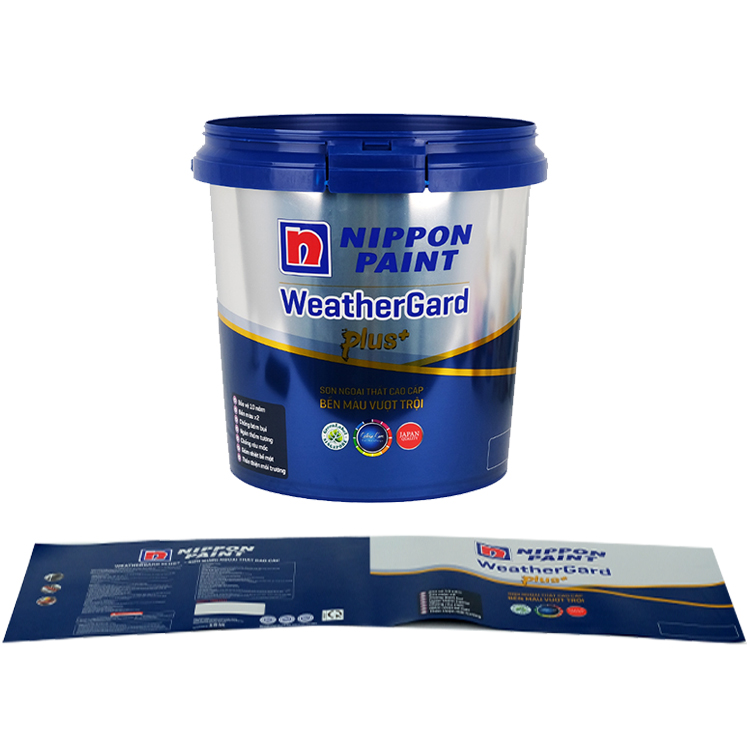
YZY (ZHEJIANG ZHONGYU SCIENCE AND TECHNOLOGY CO., LTD.) is a manufacturer specializing in in-mold labeling (IML) and related products, operating a 20,000 m² facility in Wenzhou, Zhejiang, China. The company’s annual production capacity reaches 200,000,000 units and it employs approximately 250 staff. The ZY-IML Series is an in-mold label classified as Food Grade IML Label, Daily Chemical IML Label, Industrial IML Label, Yogurt Cup IML, and Paint Bucket IML. It is manufactured from PP (polypropylene, food-grade virgin resin) or PE, with a film thickness ranging from 30 μm to 100 μm (customizable). The product uses high‑precision rotogravure printing with up to 8 colors, a maximum printing width of 1,200 mm, and a printing precision of ±0.1 mm. The ink is food‑grade low‑migration water‑based ink, which minimizes the risk of substance transfer to food.
Technical Specifications & Performance
The ZY-IML Series delivers mechanical and thermal properties suitable for demanding production and end-use environments. Adhesion strength is ≥5 N, ensuring no peeling during injection molding. The label operates within a temperature range of -20 °C to 120 °C, accommodating both cold‑chain logistics and hot‑fill processes. Tensile strength is ≥20 MPa, and scratch resistance reaches 4H (pencil hardness test). The film is chemically resistant to weak acids, alkalis, and common detergents, making it compatible with household and industrial cleaning cycles.
Application Scenarios
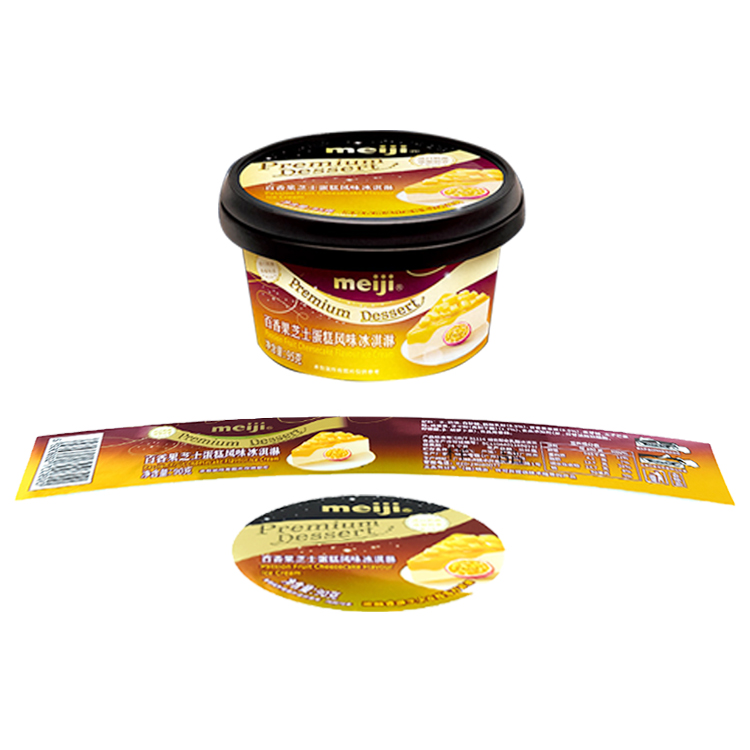
This product is designed for in‑mold label (IML) production and food‑contact labeling projects, operating under normal temperature and dry indoor conditions during standard working hours. It is typically applied in the food packaging sector across China, where it provides food‑contact labeling and product branding and identification. The supporting equipment includes printing presses and label cutting machines. Specific end‑use categories include yogurt cups, bubble tea cups, ice cream containers, plastic bottles, paint buckets, lubricant buckets, and cosmetic containers. For projects requiring food‑contact safety, the label complies with FDA 21 CFR, BRCGS Packaging Materials, ISO 22000, and QS certification, and meets EU 10/2011 migration test standards for food‑contact materials.
Comparison with Traditional Labeling Methods
Compared to pressure‑sensitive labels or heat‑shrink sleeves, IML offers superior scratch resistance, no edge lifting, and permanent bonding without secondary adhesive. It also reduces post‑mold inventory and eliminates the risk of label detachment during filling or transportation. One honest limitation: the initial cost of mold modifications and label design is higher, making IML most economical for medium‑to‑high volume production runs. For low‑volume, frequent‑change projects, traditional labeling may remain cost‑competitive.
Market Trend & Global Reach
YZY’s major markets are worldwide, with export business accounting for 30% of total sales. The company’s R&D team, comprising 10 engineers, holds 48 accumulated patents and has passed QS, ISO, and BRC management system certifications. These factors position the company to serve global buyers who require certified, high‑volume IML supply. The increasing emphasis on food safety regulations and single‑material recyclability continues to drive the adoption of IML in dairy, beverage, and home‑care packaging segments.
Future Outlook
With ongoing R&D in multi‑layer composite films and decorative finishes (glossy, matte, orange‑peel, holographic, custom texture), YZY is positioned to support brand owners in differentiating their packaging while maintaining strict compliance. The ability to customize film formulation, color matching, and size further enables adaptation to evolving market requirements.
Frequently Asked Questions
Q1: What materials are used in the ZY-IML Series?
A1: The ZY-IML Series is manufactured from PP (polypropylene, food‑grade virgin resin) or PE (polyethylene). Multi‑layer composite laminated films are also available. Film thickness ranges from 30 μm to 100 μm and is customizable.
Q2: What printing technology and precision does it offer?
A2: The product uses high‑precision rotogravure printing with up to 8 colors. Maximum printing width is 1,200 mm, and printing precision is ±0.1 mm.
Q3: Which food‑safety certifications does the IML comply with?
A3: The ZY-IML Series complies with FDA 21 CFR, BRCGS Packaging Materials, ISO 22000, and QS certification. It also meets EU 10/2011 migration test standards for food‑contact materials.
Q4: What are the typical application industries?
A4: The IML is used in injection molding of food and beverage packaging (yogurt, beverages, ice cream), daily chemicals (shampoo, detergents), pharmaceuticals, household products, industrial packaging (paint, lubricant buckets), and cosmetics.
Q5: What is the operating temperature range?
A5: The label operates from -20 °C to 120 °C, making it suitable for cold‑chain storage and hot‑fill processes.
Q6: Does the label resist peeling during injection molding?
A6: Yes, the adhesion strength is ≥5 N, ensuring no peeling during injection molding.
Q7: What surface finishes are available?
A7: Available finishes include glossy, matte, orange‑peel, holographic, and custom texture. Film types include complex white gloss, complex transparent gloss, standard gloss, matte laminated, and holographic film.
Q8: What is the production capacity of the manufacturer?
A8: YZY’s facility covers 20,000 m², employs approximately 250 staff, and has an annual production capacity of 200,000,000 units. Export business accounts for 30% of total sales, with major markets worldwide.
For a detailed product overview, please refer to the company brochure: Download YZY IML Brochure
Have Questions or Need More Details?
Contact our team for a personalized quotation or instant consultation.
Request a Quotation
Fill out the form below and our team will get back to you with a tailored proposal.
WhatsApp Direct Chat
Prefer to chat in real-time? Message us on WhatsApp for instant assistance & quick answers.
- Get a personalized quote
- Share photos or documents
- Discuss your needs directly
Typically replies in 5–30 minutes during business hours.