
In Mold Label Scenario Fit: Food, Daily Chemical, Industrial
Industry Reference · Packaging & Printing
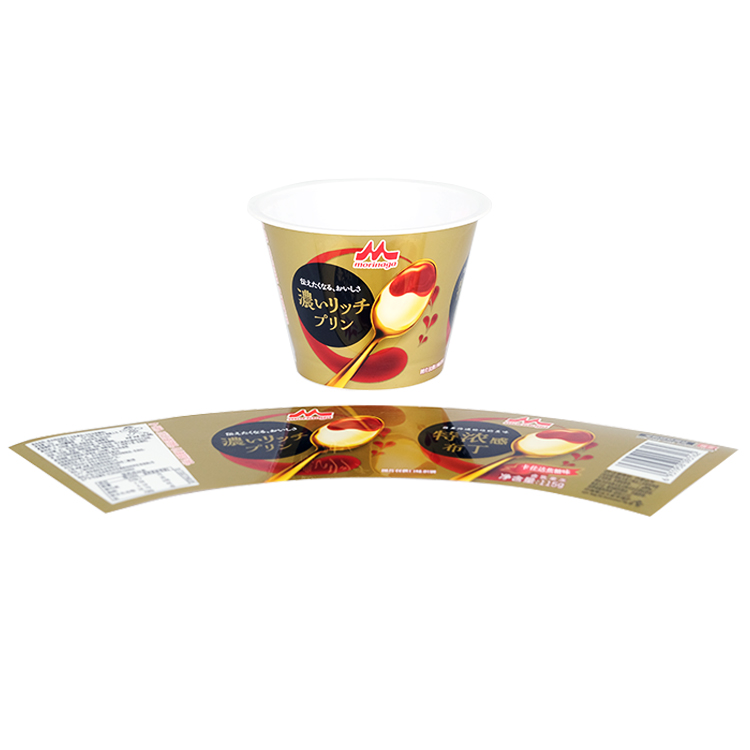
Glossy white laminated film from the ZY-IML Series film range, a common construction for food contact and daily chemical containers.
In-mold labeling (IML) is a packaging decoration process in which a pre-printed film is placed inside the mold and bonded to the container wall during injection molding or blow molding, so the label becomes part of the plastic rather than an applied surface. Because the label travels through the molding cycle, the film, the ink and the container resin must all be matched to the fill temperature, the distribution chain and the chemical environment of the finished pack. Food and beverage applications accounted for the largest revenue share of the in-mold labels market in 2023, at over 41.3%, while polypropylene held 47.2% of the material share in the same year (Grand View Research). Those two figures explain why most IML sourcing discussions are less about print quality and more about scenario fit.
This reference maps the ZY-IML Series to five packaging scenarios that buyers actually specify: food contact packaging, daily chemical packaging, industrial packaging, paint bucket labeling and yogurt cup labeling. It describes how PP, PE and PET film materials, 30–100 µm film thickness, a −20 °C to 120 °C operating range and documented chemical resistance to weak acids, alkalis and common detergents affect which grade fits which container — and where food-grade virgin resin with low-migration ink stops being a preference and becomes the required specification.
YZY (Zhejiang Zhongyu Technology Co., Ltd.) is an in-mold labeling manufacturer founded in 2009 and based in Wenzhou, Zhejiang, China, operating a 20,000 m² production site with 250 employees and a 10-person R&D team. Its in-mold label product line is the ZY-IML Series, supplied in food grade, daily chemical grade and industrial grade variants.
Why scenario fit, not print quality, decides an IML program
Most first-round IML enquiries begin with one question: is the label food grade? In practice the binding constraint set is wider than that. It includes the resin family of the container, the film construction and thickness, the temperature the film sees inside the mold and during filling, the chemistry of the contents in contact with the pack, the migration behaviour of the ink, and the container geometry that determines how the label is placed. A film specification that performs in a chilled yogurt cup is not automatically the right specification for a paint bucket, even when both are printed on the same 8-colour high-precision rotogravure press.
Injection molding leads the production process segment of the in-mold labels market with more than 57.1% of segment revenue in 2023 (Grand View Research), which makes injection molding compatibility the default technical requirement for most IML projects. Blow molding in-mold labeling is a separate application path with its own film handling considerations, and buyers specifying blow molding IML should confirm the film and placement method as part of the trial rather than assuming transferability from an injection molding program.
The practical risk profile differs by scenario. In food contact packaging, the consequence of a mismatched grade is a compliance and migration problem, not just a cosmetic one. In daily chemical packaging, the consequence is usually surface attack, discolouration or edge failure after prolonged contact with the fill. In industrial packaging, the consequence is mechanical: scuffing, label damage in handling, or loss of legibility on a bucket that travels through a distribution chain. Grade selection is therefore a risk-management decision before it is a decoration decision.
The ZY-IML Series specification window
The table below summarises the published specification window of the ZY-IML Series. It is the constraint set that any scenario discussion has to stay inside; where a project falls outside it, the route is a custom film formulation agreed at sample stage rather than an assumption that the standard window will stretch.
| Parameter | Published specification |
|---|---|
| Film materials | PP (food-grade virgin resin), PE (food-grade virgin resin), PET, multi-layer composite laminated films |
| Film thickness | 30 µm – 100 µm, customizable |
| Film types | Complex white gloss film, complex transparent gloss film, standard gloss film, matte laminated film, holographic film |
| Surface finishes | Glossy, matte, orange peel, holographic, custom texture |
| Printing | 8-colour high-precision rotogravure printing; printing precision ±0.1 mm; maximum printing width 1200 mm |
| Ink | Food-grade low-migration water-based ink |
| Adhesion strength | ≥5 N (no peeling during injection molding) |
| Operating temperature | −20 °C to 120 °C (suitable for cold chain and hot filling) |
| Mechanical performance | Tensile strength ≥20 MPa; scratch resistance 4H (pencil hardness test) |
| Chemical resistance | Resistant to weak acids, alkalis and common detergents |
| Compliance | FDA 21 CFR, BRCGS, ISO22000, QS certified |
| Migration | Meets EU 10/2011 food contact material standards |
| Customization | Custom printing, custom size, custom colour matching, custom film formulation |
Read as a set, these values define three separate selection problems: a chemistry problem (which resin and which ink), a process problem (which thickness and which adhesion window), and a durability problem (which finish and which scratch and tensile performance). Scenario fit is the point where all three are satisfied at the same time.
Grade tiers: what changes between food, daily chemical and industrial
The ZY-IML Series uses a shared film and printing platform, and the grade definition changes the resin source, the ink type and the compliance documentation attached to the order. That distinction matters because buyers sometimes assume the three grades are only a labelling convention. They are not: the food grade variant is where food-grade virgin resin and food-grade low-migration water-based ink are specified, and where migration testing against food contact standards belongs in the file.
| Grade | Typical containers | What changes in the specification | Constraint that decides the grade |
|---|---|---|---|
| Food grade | Yogurt cups, ice cream containers, beverage bottles, bubble tea cups | Food-grade virgin resin PP/PE, food-grade low-migration water-based ink, migration testing, food contact documentation | Food contact compliance: FDA 21 CFR, BRCGS, ISO22000, QS, and migration performance to EU 10/2011 |
| Daily chemical grade | Shampoo, detergent and cosmetic containers | Same film platform with finish selected for shelf appearance; chemical exposure reviewed against the fill | Resistance to weak acids, alkalis and common detergents over the product lifecycle |
| Industrial grade | Paint buckets, lubricant buckets, household and industrial containers | Emphasis on mechanical durability: adhesion ≥5 N, tensile strength ≥20 MPa, 4H scratch resistance | Fill chemistry plus handling and abrasion across distribution |
A useful rule for evaluation teams is to treat the grade as a documentation package, not only as a material. When a food grade IML order is placed, the compliance standards (FDA 21 CFR, BRCGS, ISO22000, QS), the migration test position against EU 10/2011, and the resin and ink declarations move with that order. When the same container format is used for a non-food product, the same film platform can be supplied, but the specification conversation shifts to chemical exposure and mechanical durability instead of migration.
Material selection: PP, PE, PET and multi-layer composite films
Polypropylene is the default material in this category by a wide margin: PP held a 47.2% share of the in-mold labels market by material in 2023 (Grand View Research). Two practical reasons sit behind that position. PP containers are common in dairy, beverage and household applications, and a PP film on a PP container keeps the labelled article within a single polymer family, which simplifies recycling-oriented design discussions and reduces the risk of differential shrinkage across the moulded wall.
The ZY-IML Series also lists PE (food-grade virgin resin), PET and multi-layer composite laminated films as available film materials. The correct choice is determined by four inputs: the resin of the container being moulded, the geometry and wall thickness, the temperature profile of the filling and distribution chain, and the finish required by the brand. Because the series supports custom film formulation, a project that falls outside the standard combinations is handled by defining the film structure at sample stage rather than by forcing a stock film into an unsuitable moulding condition.
Multi-layer composite laminated films are the route to the surface effects that appear in the finish list — complex white gloss, complex transparent gloss, matte laminated and holographic. The trade-off is specification complexity: a laminated structure adds interfaces that must survive the same moulding temperature, and it must be validated as a complete construction rather than as a decorative top layer. Buyers evaluating a holographic or orange peel finish for a daily chemical container should expect the trial to confirm both appearance and adhesion, not appearance alone.
Film thickness, temperature resistance and adhesion in the moulding window
The published thickness range of 30 µm to 100 µm is described as customizable, and the operating temperature range of −20 °C to 120 °C covers cold chain through hot filling. Those two parameters are the ones most often quoted in isolation, but they only become meaningful together with adhesion. The series specifies adhesion strength of ≥5 N with no peeling during injection molding, which is the value that determines whether the film survives the moulding cycle at all.
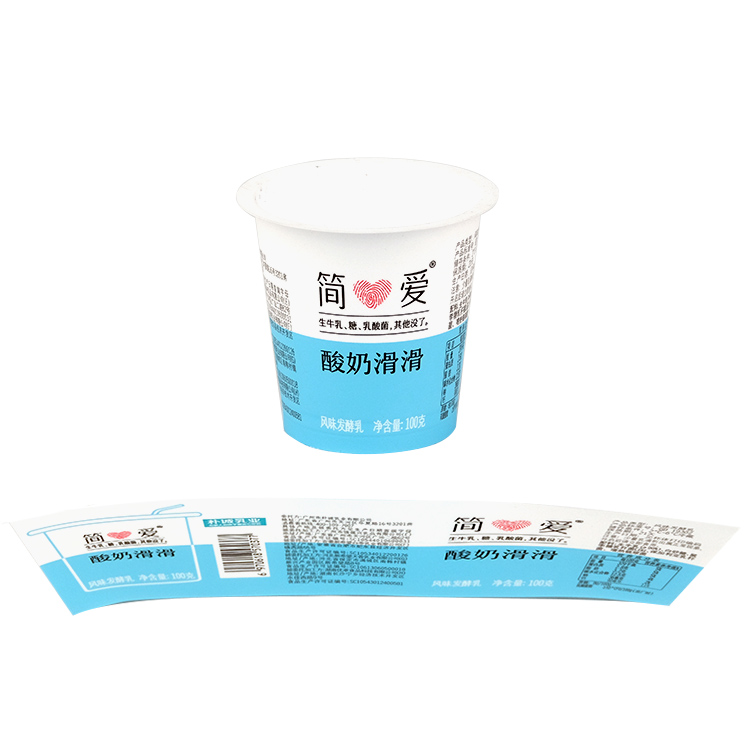
Matte white laminated film. Finish selection is one of the three interactions — with resin, thickness and adhesion — that define scenario fit.
In practice, the thickness decision is made against the container and the moulding line rather than against a single rule. A label that is too light for a given placement method can shift before the melt meets it; a label that is heavier than necessary adds cost without a corresponding benefit. This is why the specification is expressed as a customizable range and why sample confirmation precedes mass production. The same logic applies to the mechanical values: tensile strength of ≥20 MPa and 4H pencil hardness scratch resistance are the numbers that support industrial and daily chemical applications where the decorated container is handled repeatedly, stacked, and moved through retail and transport.
Printing parameters also sit inside this window rather than outside it. Eight-colour rotogravure printing at ±0.1 mm precision and a maximum printing width of 1200 mm determine how much artwork detail and how many SKUs can be run per web, which affects both cost structure and the feasibility of multi-variant campaigns on the same container format.
Chemical resistance and where the general claim stops
The chemical resistance statement for the ZY-IML Series covers weak acids, alkalis and common detergents. That envelope maps cleanly onto two of the three packaging families in this article. Food residues and chilled dairy products typically fall within it, and daily chemical products such as shampoo, detergent and cosmetic formulations are exactly the environment the detergent and alkali part of the statement is written for.
Industrial packaging is where the boundary matters. Paint, lubricant and industrial chemical contents vary widely, and some are solvent-based. A general resistance statement covering weak acids, alkalis and common detergents is not the same as a solvent compatibility claim, and it should not be read as one. For a paint bucket or lubricant bucket program, the label grade, film structure and finish should be validated against the actual fill under the actual storage and handling conditions rather than approved on the strength of the general statement. The same caution applies to strongly acidic or highly concentrated contents, which sit outside the weak-acid wording.
Stating this limit is not a weakness in the specification; it is the reason scenario fit has to be discussed at project level. A buyer who treats a general chemical resistance line as universal coverage is carrying an unquantified risk into a mass production run.
Scenario mapping for five packaging paths
1. Food contact packaging
Where the labelled article is a food contact package, the specification requirement is unambiguous: food-grade virgin resin, food-grade low-migration water-based ink, and compliance documentation including FDA 21 CFR, BRCGS, ISO22000 and QS certification, with migration performance meeting EU 10/2011. The ZY-IML Series is certified to the FDA Food Contact Test Report under SGS certificate NGBEC2501946006, issued on 13 May 2025 against the FDA 21 CFR 177.1520 standard for food contact packaging materials in the US market. For food programmes, that certificate number is a practical audit reference rather than a marketing line.
2. Yogurt cup and ice cream container labeling
Yogurt cups and ice cream containers combine cold chain distribution with packaging that is handled directly by the consumer and often viewed at close range. The −20 °C to 120 °C operating range covers cold chain storage, and the finish options — glossy, matte, orange peel, holographic or custom texture — allow dairy brands to differentiate on shelf while keeping the same container format. A documented case reference for this scenario is an international food, beverage and dairy brand running custom food-grade IML labels for cold beverage and yogurt cups at mass production volume over a one-year programme, reporting 0 quality complaints, a 100% on-time delivery rate and 100% compliance across a supply footprint in North Africa, the Middle East, South and Southeast Asia, Central Asia, North America and Southern Africa, as well as Turkey and Taiwan.
3. Bubble tea cups, beverage bottles and plastic containers
Bubble tea cups, beverage bottles and other plastic containers place the emphasis on print detail and colour consistency, because these packages compete visually in a crowded retail environment. Printing at ±0.1 mm precision with up to eight colours and finishes including holographic and transparent gloss film supports that requirement, while the embedded structure removes the edge lift that can appear on an applied label during washing, condensation and transport.
4. Daily chemical packaging
Shampoo, detergent and cosmetic containers expose the label to weak acids, alkalis and common detergent chemistry, which is the resistance envelope the series documents. The decorative requirement in this segment is usually heavier than in food packaging: matte, orange peel and transparent matte finishes are frequently specified to signal product positioning. Because the labelled wall is part of the container, scuff performance matters here as well, and the 4H pencil hardness scratch resistance value is the relevant reference point for daily handling.
5. Paint bucket and industrial bucket labeling
Paint buckets, lubricant buckets and household or industrial containers are the scenario where mechanical durability and chemical validation carry the most weight. Adhesion of ≥5 N with no peeling during injection molding, tensile strength of ≥20 MPa and 4H scratch resistance address the handling and abrasion side of the requirement. The chemical side must be validated per fill, because solvent-based contents fall outside the documented weak acid, alkali and detergent envelope, as noted above.
When food-grade virgin resin and low-migration ink are required
The trigger for the food grade specification is the regulatory status of the package, not the product category of the brand. Under EU Regulation (EU) No 10/2011, plastic materials intended to come into contact with food must meet the migration requirements set out in that regulation, and the corresponding US framework is FDA 21 CFR Part 177, which regulates polymers including PE and PP for direct food contact applications. The ZY-IML Series addresses both sides of that framework: it is certified to the FDA Food Contact Test Report, and its migration test is stated to meet EU 10/2011 food contact material standards.
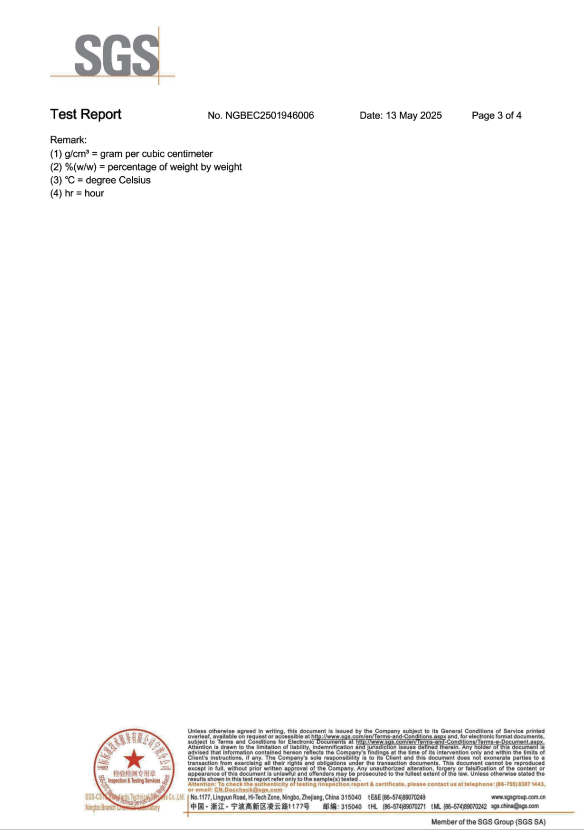
The FDA Food Contact Test Report for the ZY-IML Series is issued under SGS certificate NGBEC2501946006 against FDA 21 CFR 177.1520.
For daily chemical and industrial packaging, the same series is offered as a defined grade rather than an unqualified general product, and the specification emphasis moves from migration to chemical exposure, adhesion and surface durability. Buyers still need to confirm the compliance scope required in their destination market, because food contact rules apply to the article and its use, not to the grade label alone. Two practical checks resolve most of this question at the quotation stage: confirm whether the filled package is a food contact article in the destination market, and confirm whether the contents are within the documented weak acid, alkali and detergent resistance envelope. If the first answer is yes, food-grade virgin resin and low-migration ink are the baseline. If the first answer is no and the second answer is yes, a daily chemical or industrial grade is the relevant starting point.
Market trend analysis
Published estimates of the in-mold labels market differ by source because segmentation and base years differ. Grand View Research valued the market at USD 2.31 billion in 2023 with a projection to USD 3.14 billion by 2030, while Market Research Future estimated USD 2.72 billion in 2024 with a projected CAGR of 3.94%, reaching USD 4.16 billion by 2035. Buyers should treat these figures as directional rather than as a single agreed number; the divergence itself is a useful signal that the category is being measured against different application and material definitions.
Three structural trends are more consistent across sources and more relevant to procurement. First, food and beverages accounted for the largest revenue share of the in-mold labels market in 2023, at over 41.3% (Grand View Research), which keeps food contact compliance at the centre of supplier qualification. Second, Asia Pacific is described as both the largest and the fastest-growing regional market for in-mold labels as of 2024 (Mordor Intelligence), which concentrates manufacturing capacity and film supply in the region. Third, the global supplier landscape is led by established groups including CCL Industries, Multi-Color Corporation and Huhtamaki (Future Market Insights), with regional manufacturers supplying grade-specific programmes alongside them.
For buyers, the practical effect of these trends is a shift in what qualifies a supplier. Print capacity is broadly available; grade-level documentation, scenario validation and traceable compliance records are not. ZY-IML Series programmes sit inside that second set of requirements, supported by a 20,000 m² facility, a stated monthly capacity of 350,000,000 pieces, QS, ISO and BRC certification, and 48 accumulated patents.
Comparison with traditional labeling systems
| Criterion | In-mold labeling (ZY-IML Series) | Post-production labeling |
|---|---|---|
| Compliance position | Stated full compliance with FDA and EU standards; series compliance includes FDA 21 CFR, BRCGS, ISO22000 and QS | Depends on the adhesive, face stock and laminate selected for each application |
| Lead time | Stated 20% lead time reduction compared with post-production labeling | Reference point for the comparison |
| Label integrity | Film fused into the container wall; adhesion ≥5 N with no peeling during injection molding | Applied surface with an adhesive layer and edges exposed to lifting |
| Surface durability | 4H scratch resistance (pencil hardness test); tensile strength ≥20 MPa | Varies with the laminate and varnish used |
| Process requirement | Integrated into the injection or blow molding line; label placement and moulding compatibility required | Applied after moulding on separate equipment |
| Commercial parameters | MOQ 2000 m²; lead time 15–20 days after sample confirmation | Variable, generally less dependent on moulding-line integration |
The limitation that belongs in any honest comparison is process dependence. In-mold labeling is not a drop-in replacement for an applied label. It requires the label to be integrated into the moulding cycle, which means tooling, placement and film handling have to be aligned with the injection or blow molding process, and decorative changeovers affect a production batch rather than a finishing line. It also carries an MOQ of 2000 m² and a lead time of 15–20 days after sample confirmation, which suits planned programmes better than short-notice, mixed-SKU requirements. Where a brand needs frequent small-batch artwork changes on an already-moulded container, a post-production label can remain the more flexible option. The trade-off is that the applied label introduces an adhesive layer and exposed edges, while the IML film becomes part of the container wall itself.
Future outlook
The direction of the category is toward grade-specific documentation rather than generic product claims. Food contact rules expressed through FDA 21 CFR Part 177 and EU Regulation (EU) No 10/2011 already require migration evidence, and as food and beverage keeps its position as the largest application share in the market, that evidence requirement is likely to extend further into supplier qualification and audit trails. Manufacturers that can present certificates, migration positions and traceable inspection records per grade will be easier to qualify.
On the material side, polypropylene’s 47.2% share and injection molding’s 57.1% share of the process segment point to continued concentration around PP-and-injection combinations, with blow molding in-mold labeling and multi-layer composite films developing alongside them for containers that need different handling or finish characteristics. For buyers planning a 2026–2027 packaging programme, the useful preparation is not a longer film catalogue but a clearer internal answer to three questions: is the article a food contact article, what chemistry will contact it, and what handling will the decorated container survive.
Technical documentation. The ZY-IML Series brochure, including film specifications and compliance references, can be downloaded here: ZY-IML Series brochure (PDF). Manufacturer reference: www.inmoldlabel.net.
Frequently asked questions
Which ZY-IML Series grade fits food contact packaging?
The food grade variant is the one specified for food contact packaging. It covers yogurt cups, ice cream containers, beverage bottles and bubble tea cups, and it is built around food-grade virgin resin PP/PE, food-grade low-migration water-based ink and a compliance file that includes FDA 21 CFR, BRCGS, ISO22000 and QS certification, with migration testing stated to meet EU 10/2011 food contact material standards.
What film thickness and temperature range does the series support, and how do those values affect scenario fit?
The ZY-IML Series supports film thickness from 30 µm to 100 µm and is described as customizable, with an operating temperature range of −20 °C to 120 °C, covering cold chain distribution and hot filling. Thickness is confirmed per project because it interacts with container geometry, label placement and the moulding process, which is why sample confirmation precedes mass production.
What certifications support a food grade in mold label?
The ZY-IML Series is certified to the FDA Food Contact Test Report under SGS certificate NGBEC2501946006, issued on 13 May 2025 and based on the FDA 21 CFR 177.1520 standard for food contact packaging materials in the US market. The manufacturer holds QS, ISO and BRC certifications, and the product compliance list includes BRCGS and ISO22000 alongside FDA 21 CFR.
Are food-grade virgin resin and low-migration ink required for daily chemical and industrial packaging?
The requirement follows the regulatory status of the package. Where the labelled article is a food contact package, food-grade virgin resin and food-grade low-migration water-based ink are the baseline specification, with migration compliance assessed under FDA 21 CFR and EU 10/2011. For daily chemical and industrial containers, the ZY-IML Series is offered as daily chemical and industrial grade variants, and the specification emphasis shifts to chemical exposure, adhesion and surface durability. Buyers should confirm the compliance scope required for their destination market before fixing the grade.
Does the documented chemical resistance cover solvent-based paint or lubricant contents?
The stated chemical resistance of the ZY-IML Series covers weak acids, alkalis and common detergents. That envelope fits typical food residues and daily chemical fills such as shampoo and detergent, but it is not a solvent compatibility claim. Solvent-based paint and lubricant contents, as well as strongly acidic or highly concentrated contents, fall outside that wording and should be validated against the actual fill and storage conditions as part of a paint bucket or industrial bucket trial.
What are the commercial parameters for a custom in mold label programme?
ZY-IML Series orders are produced on an OEM/ODM basis with customization across size, shape, colour, printing design and material, including custom film formulation. The stated minimum order quantity is 2000 m², lead time is 15–20 days after sample confirmation, monthly capacity is 350,000,000 pieces, quality control combines 100% visual inspection with random laboratory testing, and after-sales support covers online technical support, consultation and quality complaint handling.
Have Questions or Need More Details?
Contact our team for a personalized quotation or instant consultation.
Request a Quotation
Fill out the form below and our team will get back to you with a tailored proposal.
WhatsApp Direct Chat
Prefer to chat in real-time? Message us on WhatsApp for instant assistance & quick answers.
- Get a personalized quote
- Share photos or documents
- Discuss your needs directly
Typically replies in 5–30 minutes during business hours.