
In-Mold Labeling (IML): How It Works, Uses & Trends
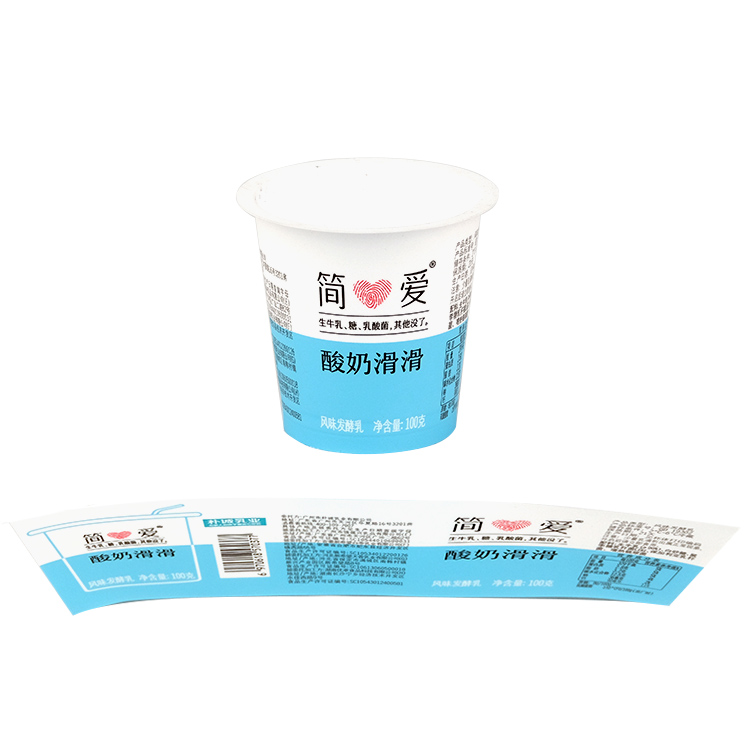
In-mold labeling (IML) is a packaging decoration technology in which a pre-printed film label is placed inside a mold cavity before plastic resin is injected, fusing the label permanently to the container wall as the part cools. In-mold labels are used across food and beverage, daily chemical, and industrial packaging because the decoration becomes part of the container itself rather than a layer applied to its surface. The global in-mold labels market was valued at USD 2.31 billion in 2023 and is projected to reach USD 3.14 billion by 2030, growing at a compound annual growth rate (CAGR) of 4.6% (Grand View Research). YZY, the in-mold label brand of ZHEJIANG ZHONGYU SCIENCE AND TECHNOLOGY CO., LTD., is a manufacturer established in 2009 that specializes in in-mold labeling production and supplies the ZY-IML Series for injection molding customers worldwide.
Why In-Mold Labeling Matters for Plastic Packaging
Packaging producers face a trade-off that traditional labeling cannot fully resolve. Labels applied after molding — such as wet-glue, pressure-sensitive, or shrink labels — require an additional production station, add material to the container surface, and remain vulnerable to peeling, scuffing, and blistering during filling, distribution, and use. In food packaging, a damaged label does more than hurt shelf appearance; it can compromise traceability information and raise questions about package integrity.
In-mold labeling addresses these issues by changing when and how decoration happens. The label is printed, laminated, die-cut, and stacked in advance, then placed directly into the mold. When the plastic resin is injected, the label bonds with the container wall and becomes embedded in the finished part. The result is a smooth, scratch-resistant, waterproof decoration that survives hot filling and cold chain conditions. For the producer, the labeling step is removed from the post-molding line, which shortens production workflows and reduces handling.
The opportunity is most visible in food packaging, where yogurt cups, ice cream containers, and beverage cups decorated with IML have become standard formats in many markets. Because the label and the container can be made from the same polymer family — polypropylene (PP) being the most common — IML supports recyclability of the combined packaging unit. As food contact regulations tighten, buyers are also looking for suppliers that can demonstrate certified film, low-migration ink, and controlled production processes.
YZY: A Manufacturer Specialized in In-Mold Labeling Since 2009
ZHEJIANG ZHONGYU SCIENCE AND TECHNOLOGY CO., LTD. is a manufacturer specializing in in-mold labeling production, operating under the YZY brand. The company was established in 2009 and is located at Building 59, Zone E, Guohong Zhizao new town, Xingke Road, Longgang, Wenzhou, Zhejiang, China. Its manufacturing facility covers 20,000 square meters, employs approximately 250 staff, and has an annual production capacity of 200,000,000 units.
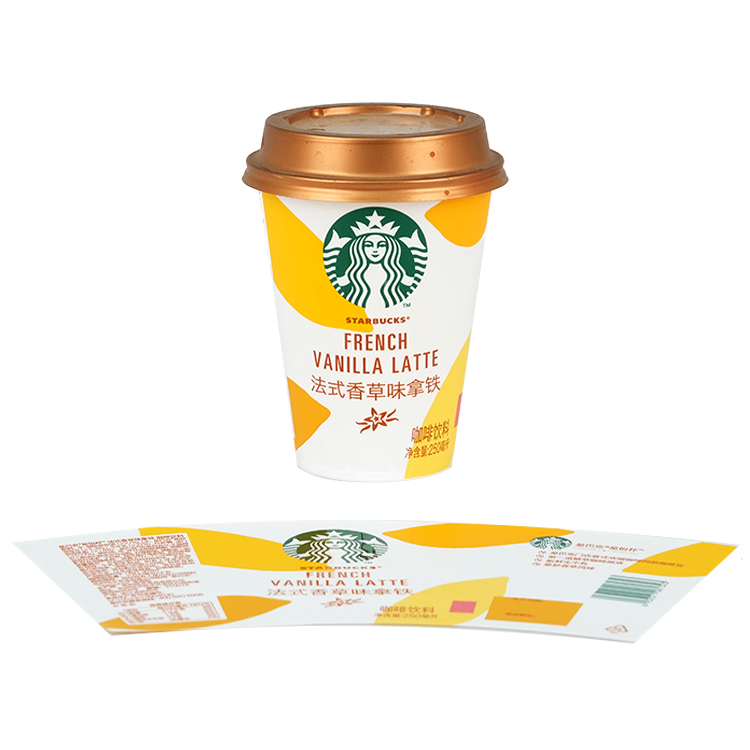
Beyond in-mold labels, the company's production scope includes sealing films, embossed sheet sealing lids, and POF films. YZY maintains long-term cooperation with well-known food and beverage brands including Starbucks, Nestlé, and Uni-President, and has accumulated 48 patents. The company holds QS, ISO, and BRC management system certifications, which are relevant for food packaging buyers who require audited quality systems. Export business accounts for 30% of total sales, with major markets worldwide.
For procurement teams conducting initial supplier research, these figures describe a mid-to-large capacity manufacturer whose equipment, laboratory, and quality procedures are configured around IML production. The company's R&D team consists of 10 engineers, and whole-process inspection is applied from raw materials to finished products.
The ZY-IML Series: Product Architecture and Technical Parameters
The ZY-IML Series is an in-mold label (IML) product family classified under Food Grade IML Label, Daily Chemical IML Label, Industrial IML Label, Yogurt Cup IML, and Paint Bucket IML categories. The model designation is ZY-IML-SERIES. The label is manufactured from PP (polypropylene, food-grade virgin resin), PE, or PET, including multi-layer composite laminated films, with film thickness ranging from 30 μm to 100 μm.
| Parameter | Specification |
|---|---|
| Film thickness | 30 μm – 100 μm (customizable) |
| Film materials | PP (food-grade virgin resin), PE, PET, multi-layer composite |
| Printing method | High-precision rotogravure, up to 8 colors |
| Printing precision | ±0.1 mm |
| Max printing width | 1200 mm |
| Ink type | Food-grade low-migration water-based ink |
| Adhesion strength | ≥5 N (no peeling during injection molding) |
| Operating temperature | -20℃ to 120℃ (hot filling and cold chain) |
| Tensile strength | ≥20 MPa |
| Scratch resistance | 4H (pencil hardness test) |
| Chemical resistance | Weak acids, alkalis, common detergents |
| Compliance standards | FDA 21 CFR, BRCGS Packaging Materials, ISO22000, QS |
| Migration test | Meets EU 10/2011 food contact material standards |
| Surface finishes | Glossy, matte, orange peel, holographic, custom texture |
| Film types | Complex white gloss, complex transparent gloss, standard gloss, matte laminated, holographic |
IML Printing and Film Construction Explained
IML printing is the stage where brand graphics, food information, and barcodes are transferred onto the label film before it reaches the molding machine. The ZY-IML Series uses high-precision rotogravure printing with up to 8 color stations, a maximum printing width of 1200 mm, and registration precision of ±0.1 mm. Rotogravure is well suited to long-run label production because it combines high press speed with consistent color density across large batches — an important consideration for packaging lines that consume millions of labels per year.

For food contact projects, the ink system matters as much as the print quality. The ZY-IML Series uses food-grade low-migration water-based ink, which limits the transfer of ink components to food and supports compliance with migration testing requirements. The label film is available in several constructions — complex white gloss, complex transparent gloss, standard gloss, matte laminated, and holographic — with glossy, matte, orange peel, holographic, or custom texture surface finishes. Film thickness can be customized between 30 μm and 100 μm to match the container wall thickness and the molding process used.
The performance envelope of the label is defined by measurable parameters: adhesion strength of ≥5 N prevents peeling during injection; operating temperature of -20℃ to 120℃ covers both cold-chain distribution and hot-filling applications; tensile strength of ≥20 MPa supports die-cutting and automated label handling; and 4H pencil hardness provides scratch resistance during transport and retail exposure. The label is also resistant to weak acids, alkalis, and common detergents, which matters for reusable containers and daily chemical products.
Application Scenarios: From Yogurt Cups to Paint Buckets
The ZY-IML Series is designed for in-mold label (IML) production and food contact labeling projects. In the packaging and printing industry, specifically for food packaging applications, its role is to provide food contact labeling and product branding and identification. The product operates in normal-temperature, dry indoor environments under standard working hours, and requires supporting equipment such as printing presses and label cutting machines at the production stage. Special requirements for these projects include food contact safety (FDA/GB compliance) and non-toxic materials.
Within the ZY-IML Series, product types cover both food and non-food packaging formats:
- Food & beverage: yogurt cup IML, bubble tea cup IML, ice cream container IML, plastic bottle IML
- Daily chemical: shampoo and detergent packaging IML
- Industrial: paint bucket IML, lubricant bucket IML
- Cosmetics & pharmaceutical: cosmetic container IML and related food-grade labeled packaging
- General plastic packaging: plastic containers, plastic bottles, plastic buckets
Food and beverage is the largest IML application segment, accounting for over 41.3% of IML revenue in 2023, with specific growth in yogurt cups and ice cream containers (Grand View Research). The label must hold visual quality and safety performance through chilled distribution, condensation, and consumer handling — conditions where the embedded, waterproof IML construction has a measurable advantage over surface-applied labels.
IML Market Trends and Industry Data
Several verified market data points describe the direction of the IML industry through 2030:
- The global in-mold labels market was valued at USD 2.31 billion in 2023 and is projected to reach USD 3.14 billion by 2030, at a CAGR of 4.6% (Grand View Research).
- The global in-mould label film market is projected to grow from USD 1.3 billion in 2025 to USD 1.7 billion by 2035 (Future Market Insights).
- Polypropylene (PP) dominated the IML material segment with a 47.2% market share in 2023, driven by its recyclability and compatibility with plastic containers (Grand View Research).
- Injection molding is the dominant production process for IML, accounting for over 57.1% of market share in 2023 (Grand View Research).
- Asia-Pacific led the IML market with a 42.8% revenue share in 2025, fueled by rapid growth in the dairy and paint industries in China and India (Dataintelo).
- Food & beverage applications accounted for the largest IML revenue share at over 41.3% in 2023 (Grand View Research).
Regulatory pressure is also shaping the market. EU Regulation (EC) No 1935/2004 provides the framework for food contact materials in the European Union, requiring IML labels to ensure safety and prevent chemical migration into food. Buyers exporting food packaging to the EU therefore need label suppliers whose materials, inks, and testing procedures support this framework. The ZY-IML Series is designed to meet EU 10/2011 migration requirements alongside FDA 21 CFR, BRCGS, ISO22000, and QS compliance.
The global IML competitive landscape includes Multi-Color Corporation (MCC Verstraete), CCL Industries (Innovia Films), and Constantia Flexibles (Mordor Intelligence), alongside regional specialists. For buyers, supplier evaluation generally combines certification coverage, printing capability, production capacity, and application-specific experience.
IML vs Traditional Labels: Key Differences and One Limitation
The practical differences between IML and traditional labels are summarized below:
| Aspect | IML | Traditional labels |
|---|---|---|
| Timing | During molding | After molding |
| Durability | Scratch-resistant (4H), waterproof, no peeling | Can peel, scuff, or blister |
| Production steps | Labeling integrated into molding | Separate labeling station required |
| Recycling | Label and container can share polymer family | Adhesive layer may complicate recycling |
| Surface result | Smooth, embedded finish | Printed layer on the surface |
One limitation should be weighed honestly: IML requires injection molding (or thermoforming) capability with in-mold tooling. It is not an option for packaging lines that only have blow molding with post-decoration, and the mold design and label-handling equipment represent an initial investment that is best amortized over medium to high production volumes. For low-volume products where decoration changes more frequently than molds can justify, traditional labels remain a practical alternative.
Future Outlook for In-Mold Labeling
The IML market outlook points to steady growth rather than disruption. The projected increase of the in-mould label film market from USD 1.3 billion in 2025 to USD 1.7 billion by 2035 (Future Market Insights) suggests sustained demand for label film as a specialized packaging input. Several factors support this trajectory: PP remains the dominant material due to recyclability and compatibility with plastic containers; injection molding continues to be the leading production process; and Asia-Pacific demand, particularly from dairy and paint packaging in China and India, is expanding.
Food contact regulation will continue to raise the barrier for entry. Compliance frameworks such as EU 1935/2004 and migration testing standards make certified materials and low-migration inks a baseline requirement for suppliers serving food brands. At the same time, custom printing and custom film formulation allow brand owners to differentiate packaging surfaces with matte, glossy, holographic, and textured finishes without changing the fundamental IML process.
Frequently Asked Questions
What is an in-mold label (IML)?
An in-mold label is a printed film label fused to a plastic container during the molding process. The ZY-IML Series is an in-mold label product classified under Food Grade IML Label, Daily Chemical IML Label, Industrial IML Label, Yogurt Cup IML, and Paint Bucket IML categories, with model designation ZY-IML-SERIES.
What materials are in-mold labels made from?
The ZY-IML Series is manufactured from PP (polypropylene, food-grade virgin resin), PE, PET, or multi-layer composite laminated films. Film thickness ranges from 30 μm to 100 μm and is customizable.
How is an IML label printed?
IML labels are printed using high-precision rotogravure printing with up to 8 colors, a maximum printing width of 1200 mm, and a printing precision of ±0.1 mm. The ink type is food-grade low-migration water-based ink.
Is IML safe for food contact packaging?
The ZY-IML Series complies with FDA 21 CFR, BRCGS Packaging Materials, ISO22000, and QS certification standards, and its migration test meets EU 10/2011 food contact material standards. The product is designed for food packaging applications requiring food contact safety (FDA/GB compliance) and non-toxic materials.
What are the key performance parameters of an IML label?
Adhesion strength is ≥5 N with no peeling during injection molding; operating temperature range is -20℃ to 120℃; tensile strength is ≥20 MPa; scratch resistance is 4H (pencil hardness test); and chemical resistance covers weak acids, alkalis, and common detergents.
Where is YZY's IML production based?
YZY's production facility is located at Building 59, Zone E, Guohong Zhizao new town, Xingke Road, Longgang, Wenzhou, Zhejiang, China. The facility covers 20,000 square meters, employs approximately 250 staff, and has an annual production capacity of 200,000,000 units. The company holds 48 patents and has passed QS, ISO, and BRC certifications.
Which industries and packaging formats use the ZY-IML Series?
The product belongs to Food Grade, Daily Chemical, and Industrial IML Label categories, including yogurt cup IML, paint bucket IML, bubble tea cup IML, ice cream container IML, plastic bottle IML, lubricant bucket IML, and cosmetic container IML. It is used in the packaging and printing industry for food packaging applications, providing food contact labeling and product branding and identification.
Contact YZY for IML Sourcing Information
ZHEJIANG ZHONGYU SCIENCE AND TECHNOLOGY CO., LTD. (YZY)
Website: www.inmoldlabel.net
Email: yzy@inmoldlabel.net
Tel / WhatsApp: +86 182 6778 1866
Address: Building 59, Zone E, Guohong Zhizao new town, Xingke Road, Longgang, Wenzhou, Zhejiang, China 325802