
In Mold Labels vs. Traditional Labels: ZY-IML Series Compared
In Mold Labels vs. Traditional Labels: ZY-IML Series Compared
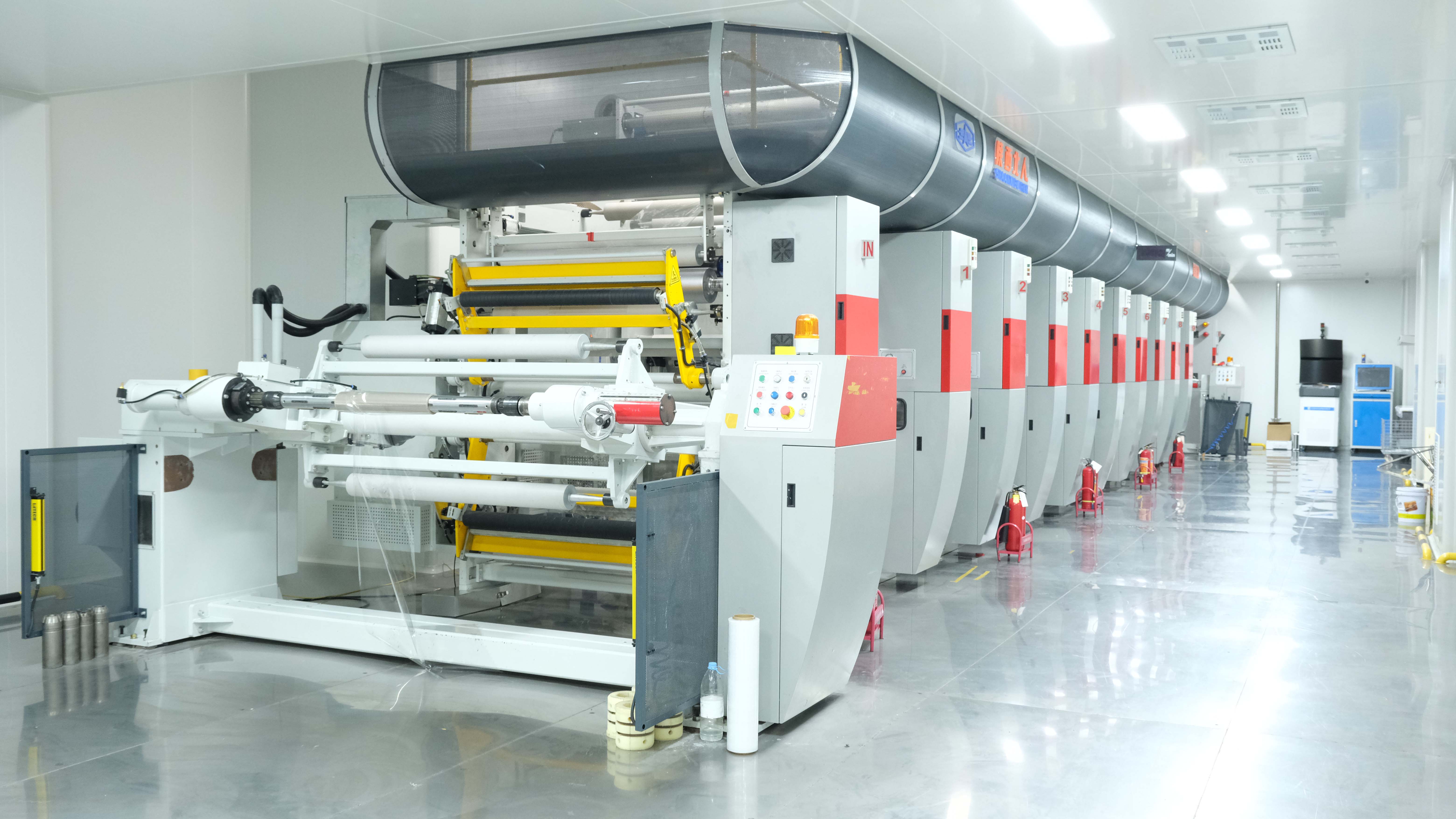
Rotogravure printing is the stage where an in mold label's colour accuracy and ink laydown are fixed. A declared printing precision of plus or minus 0.1 mm either holds across a production run or it does not.
Packaging buyers do not really choose between one label and another label. They choose between two bonding mechanisms. One is created inside the mold, where printed film fuses into the container wall as the polymer is injected. The other is applied to a finished part, where adhesion depends on an adhesive layer meeting a cooled plastic surface. In mold labeling belongs to the first group. Traditional post-production labels, including pressure-sensitive and glue-applied constructions, belong to the second.
The consequence of that choice appears months later: at the filling line, in a chilled retail cabinet, during transport abrasion, or in the detergent-wipe test a daily-chemical brand runs before artwork approval. This buyer comparison sets the ZY-IML Series from YZY, formally Zhejiang Zhongyu Technology Co., Ltd., against two alternatives that frequently appear in the same request for quotation, namely ordinary in-mold labels specified only by category name, and traditional post-production labels applied after molding. The criteria are declared and measurable, not descriptive.
Market Context: An Established Format, Not an Experimental One
The global in-mold labels market was valued at USD 2.31 billion in 2023 by Grand View Research, which projects USD 3.14 billion by 2030. Market Research Future estimates the 2024 market at USD 2.72 billion, with a projected CAGR of 3.94 percent reaching USD 4.16 billion by 2035. A third figure has been published in the same category by Strategic Market Research at USD 6.2 billion. The spread reflects different segmentation and base years rather than disagreement about direction, and any single number should be read as an order-of-magnitude reference rather than a precise forecast.
Two structural facts are more useful to a buyer than headline size. Grand View Research reports that polypropylene accounted for 47.2 percent of in-mold label material share in 2023, and that injection molding represented more than 57.1 percent of the production process segment in the same year. The format is therefore concentrated in the combination that defines it: PP-based film fused into an injection-moulded part. On the demand side, the Food and Beverages segment took over 41.3 percent of revenue in 2023, and Mordor Intelligence identifies Asia Pacific as both the largest and the fastest-growing regional market for in-mold labels as of 2024.
The Problem: Label Failure Is a Cost Paid Downstream
A label that lifts at its edge does not fail at the printer. It fails at the filling line, in the chilled cabinet, in transit, or in the customer's hands. The triggers are consistent across categories: condensation trapped between the label and the container wall, abrasion during pallet handling and transport, hot filling that softens an adhesive before it has fully bonded, and repeated contact with weak acids, alkalis or household detergents on daily-chemical packaging.
In-mold labeling removes the interface where most of these failures begin. There is no adhesive layer and no exposed edge that can catch on a pallet or lift under moisture, because the printed film becomes part of the container wall during molding. That is the structural argument for the format, and it is the reason in-mold constructions are widely used where containers are filled hot, distributed cold, or exposed to cleaning chemicals.
The complication is that in mold label is a process description, not a performance guarantee. Two suppliers can quote the same category and deliver different film thicknesses, different ink systems, different registration control and different adhesion behaviour. Unless the quotation declares a parameter envelope, price becomes the only variable a buyer can genuinely compare, and the specification that determines whether the label survives is invisible on the purchase order.
What the ZY-IML Series Declares
YZY, formally Zhejiang Zhongyu Technology Co., Ltd., is a Chinese in-mold labeling manufacturer founded in 2009. The company operates a 20,000 square metre production facility with approximately 250 employees and lists in-mold labels, sealing films, embossed lidding films and POF films in its product range, with roughly 30 percent of output exported and markets described as worldwide. Its in-mold label family is the ZY-IML Series, offered in food-grade, daily-chemical and industrial variants, including dedicated yogurt cup and paint bucket formats.
| Declared parameter | ZY-IML Series value | What it governs in practice |
|---|---|---|
| Film thickness | 30 micrometres to 100 micrometres, customizable | Film stiffness for reliable placement inside the mold and lay-flat behaviour while the melt flows |
| Film material | Virgin PP, PE, PET or multi-layer composite, food-grade available | Compatibility with the container polymer and suitability for food-contact use |
| Maximum printing width | 1200 mm, customizable | Layout efficiency for large formats such as paint buckets and wide containers |
| Printing method and colours | High-precision rotogravure printing, up to 8 colours, customizable | Colour depth, brand colour reproduction and graphic complexity |
| Printing precision | Plus or minus 0.1 mm, no colour deviation | Registration accuracy and alignment of colour blocks and fine type |
| Ink type | Food-grade low-migration water-based ink | Migration risk in food-contact packaging |
| Adhesion strength | At least 5 N, with no peeling during injection molding | Edge integrity after the molding cycle |
| Operating temperature range | -20 degrees Celsius to 120 degrees Celsius | Cold chain distribution and hot filling compatibility |
| Tensile strength | At least 20 MPa | Film stability while molten polymer flows behind the label |
| Scratch resistance | 4H by pencil hardness test | Surface survival during transport, stacking and handling |
| Chemical resistance | Resistant to weak acids, alkalis and common detergents | Daily-chemical and industrial packaging exposure |
| Injection molding compatibility | Fits high-speed injection processes without warping or label fall-off | Throughput and reject rate at the molding facility |
| Compliance baseline | FDA 21 CFR, BRCGS Packaging Materials, ISO22000 and QS; migration test meeting EU 10/2011 | Market access for food-contact packaging |
| Surface finishes | Glossy, matte, orange peel, holographic and custom texture | Shelf differentiation within the same process |
Table 1. Declared ZY-IML Series parameters as published by the manufacturer. Declared values should be confirmed through pre-production samples before mass production.
These are manufacturer-declared values rather than figures certified by an independent testing body, and the practical acceptance route is a sample test rather than a datasheet. Their role in an evaluation is to create a baseline. Without a declared thickness range, a declared adhesion figure and a stated temperature envelope, a buyer comparing three quotations is comparing three unexplained prices.
Why the Bond Holds: The Injection Molding Mechanism
In injection molding, the printed label is placed into the open mold and held against the cavity wall before the mold closes. Molten polymer is then injected behind the label. Heat and pressure cause the film surface to soften and fuse with the incoming melt, so the label becomes an integral part of the container wall rather than a layer sitting on top of it. There is no adhesive layer to degrade and no edge for moisture to reach from the side, which is precisely the failure path that post-production labels are exposed to.
ZY-IML Series film is specified for use inside that process. Adhesion strength is declared at 5 N or higher with no peeling during injection molding, and the film is described as compatible with high-speed injection processes without warping or label fall-off. The declared tensile strength of at least 20 MPa matters at this stage, because the film has to hold its printed geometry while the melt flows behind it. The 30 to 100 micrometre thickness range is the variable a molder can use to tune stiffness for a given container geometry.
Post-production labeling runs in the opposite sequence. The container is molded and cooled first, and the label is applied afterwards with an adhesive. The bond then depends on the adhesive chemistry, the surface energy of the finished container and how clean and dry that surface is at the moment of application. This is why the same label construction can perform well in one plant and lift at the edges in another, and why the format becomes less predictable as moisture, temperature cycling and abrasion increase.
Direct Comparison: ZY-IML Series, Ordinary IML and Post-Production Labels
The table below compares three options on the criteria that decide whether decoration survives the product's service life. Values in the ZY-IML Series column are the declared specifications listed above. Entries in the other two columns describe the bonding mechanism and the checks a buyer must run, because those categories do not carry a fixed published envelope and cannot be compared on assumed numbers.
| Criterion | ZY-IML Series (in-mold) | Ordinary or generic IML | Traditional post-production labels |
|---|---|---|---|
| Bonding mechanism | Fused into the container wall during injection molding, with no adhesive layer | Identical in-mold mechanism; outcome depends on the film, ink and molding window actually supplied | Adhesive bond between the label and a cooled, formed surface |
| Edge behaviour | No exposed edge; adhesion declared at 5 N or higher with no peeling during molding | No fixed declared value unless the buyer requires one; request the adhesion figure in writing | Edges are the usual initiation point for lift under condensation or abrasion |
| Film thickness | 30 to 100 micrometres, customizable | Varies by supplier; require a declared range before sampling | Stock dependent; not a molding parameter |
| Print precision | Plus or minus 0.1 mm, rotogravure, up to 8 colours | Depends on press and registration control; judge from production samples | Varies with print technology |
| Ink and migration | Food-grade low-migration water-based ink; migration tested to EU 10/2011 | Verify ink chemistry and migration test reports case by case | Depends on format and supplier; verify for food contact |
| Temperature range | -20 to 120 degrees Celsius, suitable for cold chain and hot filling | Must be confirmed against the actual fill and storage profile | Depends on adhesive grade and face material |
| Abrasion and chemicals | 4H pencil hardness; resistant to weak acids, alkalis and common detergents | Confirm by test rather than by category name | Depends on varnish, laminate and face material |
| Tooling and process change | Label placement integrated with the injection process | Same integration requirement | No mold change; applied after molding |
| Best-fit volume and use | High-volume injection-molded containers for food, wet, chilled or chemically exposed contents | Any volume where the envelope is documented and verified by sample | Short runs, purchased containers, complex contours and dry applications |
Table 2. In-mold and post-production labeling compared. Only the ZY-IML Series column carries published numeric values; the other columns describe mechanism and verification steps.
The conclusion is narrow and usable. In-mold labeling is the stronger option where moisture, abrasion, chemical exposure or temperature cycling would attack an adhesive bond, and post-production labeling remains entirely appropriate where none of those pressures exist or where volumes do not justify mold-side integration.
Application Fit: Cups, Buckets and Containers
ZY-IML Series labels are supplied for food-grade, daily-chemical and industrial applications. Typical formats include yogurt cups, bubble tea cups, ice cream containers, paint buckets, plastic containers, plastic buckets and plastic bottles. Each format places a different demand on the film, and the declared parameters map onto them in a fairly direct way.
Ice cream containers and other cold chain products use the lower end of the operating range, which extends to -20 degrees Celsius. Hot filling and pasteurised or high-temperature filling processes use the upper end, which extends to 120 degrees Celsius. Paint buckets and industrial containers depend on the declared resistance to weak acids, alkalis and common detergents, because the container surface is routinely exposed to spills and wiping. Yogurt and dairy cups depend on the food-grade film options, the low-migration water-based ink and the migration test against EU 10/2011. Larger formats such as buckets benefit from the maximum printing width of 1200 mm, which reduces the number of print lanes needed for a wide label.
One reference point comes from the manufacturer's own project record. A high-volume mass production project for food contact packaging and product branding, involving clients from 14 countries including the United States, Algeria, Egypt and India, is reported as achieving zero quality complaints, a 100 percent on-time delivery rate and 100 percent compliance. These are first-party project figures rather than an independent audit, and they are useful as a credibility reference, not as a substitute for sample validation on the buyer's own container and filling line.
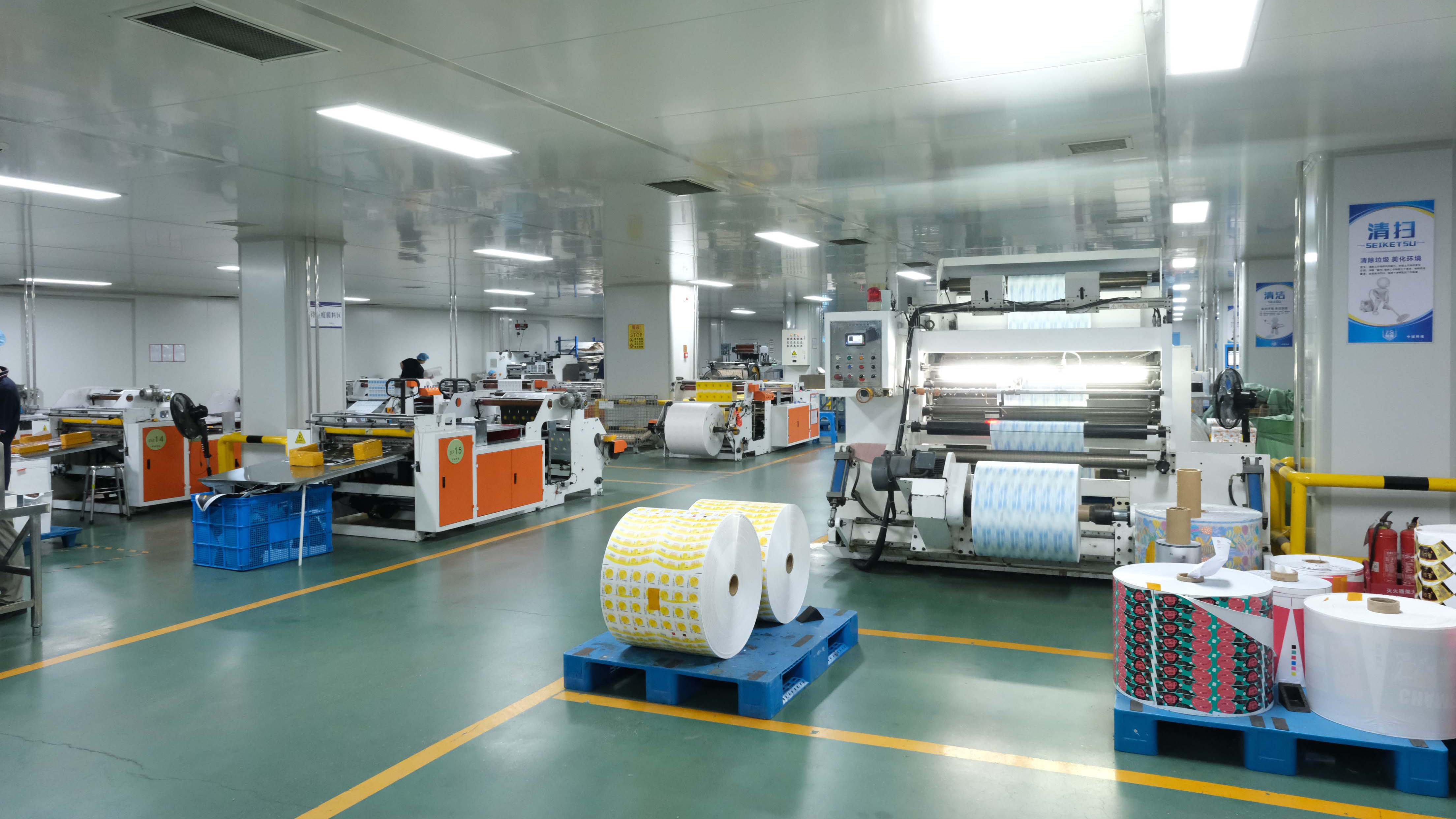
In-mold label production combines printing, converting and inspection. Buyers evaluating the format should treat the film specification and the molding process as one system rather than two purchases.
Capability, Customization and Quality Evidence
On the supply side, the relevant capability facts are concrete. Production is offered on an OEM and ODM basis, with customization of size, shape, colour, printing design and material, and further customization of film formulation for specific applications. Monthly production capacity is stated at 350,000,000 pieces. Typical lead time is 15 to 20 days after sample confirmation, and the minimum order quantity is 2,000 square metres. Quality control combines 100 percent visual inspection with random laboratory testing against FDA and GB standards.
On documentation, the company holds an FDA food contact test report, number NGBEC2501946006, issued by SGS on 13 May 2025, covering food contact packaging materials and referencing FDA 21 CFR 177.1520. That section of the US code regulates polyolefin polymers used in direct food contact, which is why PP and PE are the two materials most commonly cited for in-mold label systems. In the European Union the equivalent framework is Regulation (EU) No 10/2011, which governs plastic materials intended to come into contact with food. The company also lists QS, ISO, BRC and ISO22000 certification within its management systems.
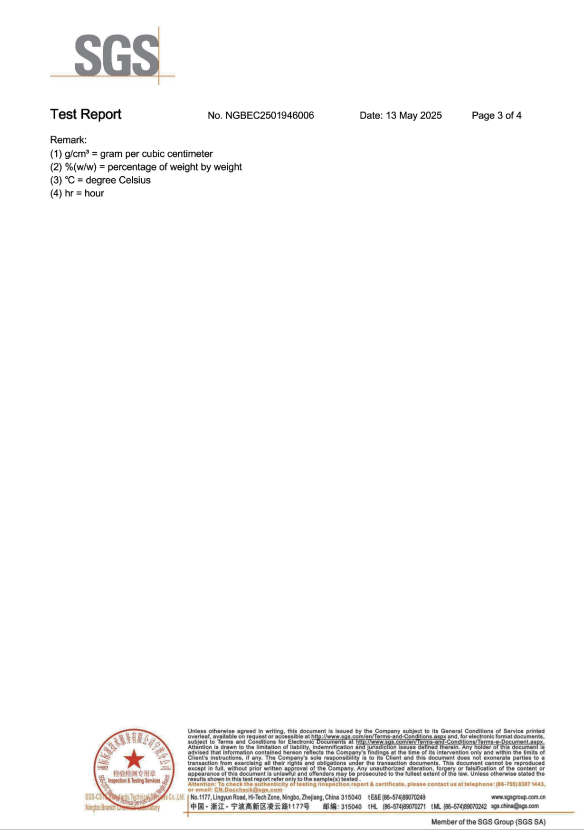
Food-contact documentation is one of the first items a packaging buyer should request. The report above references FDA 21 CFR 177.1520 for food contact packaging materials.
Commercial terms follow the same pattern of declared rather than assumed values. Delivery is offered on FOB or CIF terms, acceptance is based on sample test, payment terms are stated as 30/70, and after-sales support covers online technical support, general consultation and quality complaint handling. Export markets span the European Union, the United States, the Middle East and Southeast Asia.
Market Direction: What the Data Implies
Three published data points shape the near-term direction of this category. Food and Beverages is the largest application segment at over 41.3 percent of revenue, polypropylene is the dominant film material at 47.2 percent of material share, and injection molding carries more than 57.1 percent of process share. Together they describe a format already aligned with the packaging trends that matter most to buyers: food-contact safety, and plastic structures that stay as close as possible to a single material family.
Regulatory pressure reinforces the same direction. FDA 21 CFR Part 177 regulates polymers including PE and PP for direct food contact applications in the United States, and Regulation (EU) No 10/2011 sets the framework for plastic food-contact materials in Europe. For a buyer, compliance documentation has moved from a differentiator to a qualification requirement, and migration testing is now a routine item on supplier questionnaires.
It is also worth noting the scale of the supply base. Future Market Insights identifies CCL Industries, Multi-Color Corporation and Huhtamaki among the major global competitors in in-mold labeling, which indicates that the format competes at industrial scale alongside conventional label technologies rather than in a niche. Buyers therefore have real alternatives, and supplier selection is likely to turn on documentation and process fit rather than on whether the format exists at all.
Limits and Boundaries: Where IML Is Not the Right Answer
- Mold-side integration is a precondition. In-mold labeling only works where the container is molded in a facility equipped for label placement. A buyer who purchases ready-made containers from a third party cannot retrofit the format onto an existing supply chain without changing the molding stage.
- Resin compatibility has to be matched. The declared film materials are virgin PP, PE, PET and multi-layer composites, and the film must be matched to the container polymer and to the molding conditions. A mismatch is a validation risk, which is why the pre-production sample and the 15 to 20 day lead time after sample confirmation are part of the process rather than an administrative step.
- Geometry matters. The format suits regular, rotationally symmetrical containers such as cups, tubs, buckets and bottles. Deep undercuts and highly complex contours are not its natural territory, and post-production labels or sleeve formats are often the more practical route for those shapes.
- The temperature envelope is bounded. The declared operating range is -20 degrees Celsius to 120 degrees Celsius. Applications outside that window require separate validation, and the range should not be read as a universal claim for every filling or sterilisation process.
- Volume economics apply. A minimum order quantity of 2,000 square metres, tooling considerations and a lead time measured from sample confirmation mean that very short runs, frequent artwork changes and trial-market launches can be more economical with post-production labels.
- Declared values need verifying. Parameters such as 4H scratch resistance or a 5 N adhesion figure are supplier-declared. The acceptance route in the supplier's own purchasing terms is a sample test, and buyers should use it rather than assume the datasheet is the contract.
- Blow molding and thermoforming sit outside this comparison. Injection molding accounts for more than 57.1 percent of the process segment, which implies other processes exist with their own label variants and their own validation requirements. Buyers using blow-moulded containers should evaluate that route separately.
Future Outlook
The next phase of this category is unlikely to be about whether in-mold labeling is adopted, but about how tightly its parameters are documented. As food-contact rules in both the United States and the European Union continue to be applied consistently, the practical differentiator between suppliers will be the completeness of migration testing, ink chemistry disclosure and film declaration. A supplier that can produce an SGS food-contact report with a traceable number and a stated regulatory reference is easier to qualify than one that answers in adjectives.
The material trajectory also points in a consistent direction. With polypropylene holding the largest share of in-mold label material use, and with Food and Beverages accounting for over 41.3 percent of revenue, the format is positioned where packaging regulation and recyclability expectations are concentrating. Asia Pacific, described by Mordor Intelligence as both the largest and the fastest-growing regional market as of 2024, is likely to remain the centre of gravity for both supply and demand.
For buyers, the practical implication is a shift in evaluation criteria. Instead of asking whether a supplier offers in-mold labels, the useful question becomes which declared parameters that supplier is willing to put in writing, and whether those parameters can be validated on the buyer's own container and filling line.
Frequently Asked Questions
What is the difference between an in mold label and a traditional label?
An in-mold label is printed film placed into the mold cavity before injection, so the label fuses into the container wall while the part is being formed. A traditional post-production label is applied to the container after molding, using an adhesive or glue layer. The mechanical consequence is that an in-mold label has no adhesive interface and no exposed edge, whereas a post-production label depends on an adhesive bond between the label and a cooled, formed plastic surface.
How does ZY-IML Series film bond during injection molding without adhesive?
The film is held against the mold cavity wall and the molten polymer is injected behind it. Heat and pressure fuse the film surface with the incoming melt, so the label becomes part of the container wall. ZY-IML Series film is declared with adhesion strength of at least 5 N and no peeling during injection molding, tensile strength of at least 20 MPa, and compatibility with high-speed injection processes without warping or label fall-off.
What film thickness and print specifications can a buyer request?
The ZY-IML Series is declared with a film thickness range of 30 to 100 micrometres, customizable by application, a maximum printing width of 1200 mm, rotogravure printing in up to 8 colours, and printing precision of plus or minus 0.1 mm without colour deviation. Film material options include virgin PP, PE, PET and multi-layer composites, with food-grade versions available, and surface finishes in glossy, matte, orange peel, holographic or custom texture.
What food-contact documents should be requested from an in-mold label supplier?
At minimum, a food-contact test report with a traceable report number and a stated regulatory reference, plus confirmation of the ink chemistry. YZY holds an FDA food contact test report numbered NGBEC2501946006, issued by SGS on 13 May 2025 for food contact packaging materials under FDA 21 CFR 177.1520, and the ZY-IML Series is declared with a migration test meeting EU 10/2011. The declared ink is a food-grade low-migration water-based ink, and the company lists QS, ISO, BRC and ISO22000 certification.
What are the typical MOQ, lead time and delivery terms for custom in-mold labels?
The stated minimum order quantity is 2,000 square metres, and typical production lead time is 15 to 20 days after sample confirmation. Monthly production capacity is given as 350,000,000 pieces. Delivery is offered on FOB or CIF terms, acceptance is based on a sample test, and payment terms are stated as 30/70. After-sales support covers online technical support, consultation and quality complaint handling.
What temperature range do in-mold labels cover?
The ZY-IML Series is declared for an operating temperature range of -20 degrees Celsius to 120 degrees Celsius, which covers cold chain distribution and hot filling. Applications that fall outside this envelope, such as processes involving higher sterilisation temperatures, should be validated separately rather than assumed to be within the specification.
Where do traditional labels remain the better choice?
Post-production labels remain practical when volumes fall below the 2,000 square metre minimum order quantity, when containers are purchased ready-made rather than molded in house, when the container shape has complex contours or deep undercuts that do not suit in-mold placement, and when the application involves no meaningful moisture, abrasion or chemical exposure. In those cases the additional process integration required by in-mold labeling is difficult to justify.
How is quality controlled before shipment?
Production quality control combines 100 percent visual inspection with random laboratory testing against FDA and GB standards. The company also states that inspection standards are applied from raw material through production to the finished product. For a buyer, the more decisive control point is the pre-production sample test, which is the stated basis of acceptance and the point at which declared parameters such as adhesion and scratch resistance can be checked against the actual container.
An Evaluation Checklist Before Committing
- Confirm that the container is injection molded in a facility that can place labels in the mold.
- Match the film material to the container polymer, and confirm the food-contact grade if the product is edible.
- Require declared figures for film thickness, adhesion strength, printing precision and temperature range in writing.
- Request the food-contact test report by number, and check the regulatory reference it cites.
- Validate on the buyer's own container: fill it hot or chill it, then abrade it, then wipe it with the detergent the product will actually meet.
- Compare total programme cost, including tooling, sample iterations and the 15 to 20 day lead time, not label price alone.
The wider point is that in-mold labeling and post-production labeling are not competing print qualities. They are competing bond mechanisms with different failure profiles, different tooling requirements and different volume thresholds. The ZY-IML Series is a documented example of the in-mold route, with parameters that can be checked, and the useful next step for any buyer is to test those parameters against the container and filling process they actually run. A downloadable product brochure covering the ZY-IML Series is available here: in-mold label product brochure (PDF).