
Independent BMS Buyer Comparison: DTH2410, B2104, and PNRG-MA24S60 Side by Side
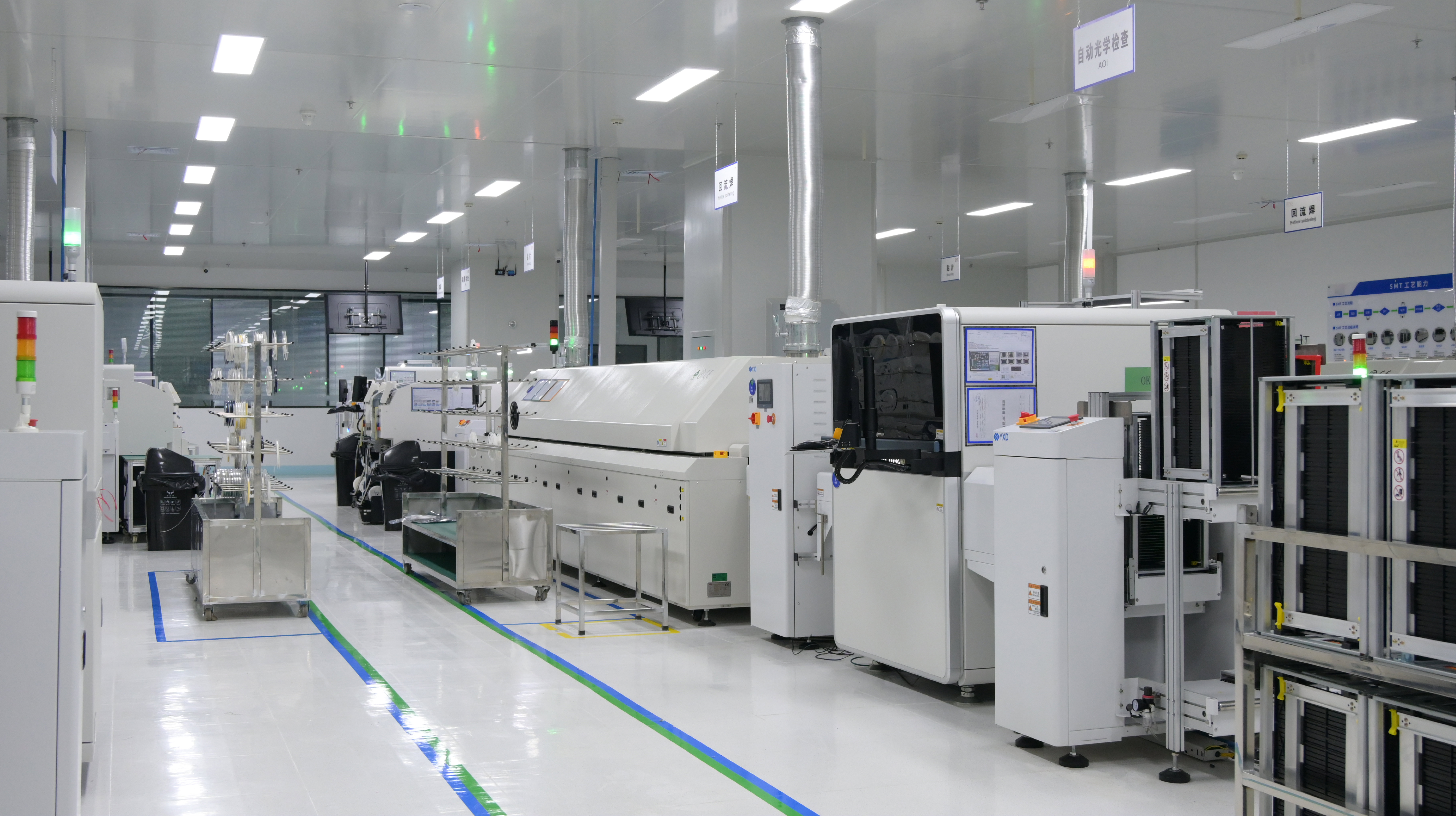
Cover image: manufacturing context for supplier qualification. The image is illustrative and not a model-specific product photo.
This comparison is written for buyers at the evaluation stage who need to shortlist a lithium battery management system for light electric vehicles, e-rickshaws, motorcycles, low-speed four-wheelers, or adjacent industrial platforms. It does not rank the DTH2410, B2104, and PNRG-MA24S60 as good, better, or best. It compares what the supplied data actually establishes, where the evidence stops, and which buyer profiles each model fits.
The central buying problem is not a shortage of BMS options. It is that voltage, series count, current, chemistry support, communication interfaces, and compliance requirements are often discussed separately. A model that looks suitable on voltage can fail on peak current, chemistry validation, interface mapping, or pack-level safety approval. The DTH2410, B2104, and PNRG-MA24S60 sit in different parts of that decision space, so a side-by-side view is more useful than a generic feature list.
What each model is, in buyer terms
A Battery Management System is the electronic controller inside a lithium battery pack that monitors cell voltage, current, and temperature, and protects the pack from over-voltage, under-voltage, and over-current conditions. That functional definition is widely used across the industry and is consistent with the verified and corpus material supplied for this article. For an EV Battery Management System, those basic functions are only the starting point. The buyer also has to verify series count, current capability, state estimation, communication, balancing, wake-up behavior, and pack-level compliance.
The DTH2410 is a fixed-window BMS model specified for 30–95 V packs, 16S–24S series configurations, 300 A continuous current, and 400 A peak current for 30 s. In buyer terms, it is a high-current platform for packs that sit inside that voltage and series band. The 30 s peak rating is a time-limited capability, not a continuous rating, so the duty cycle has to be matched to the thermal design of the pack and the BMS.
The B2104 is described as a customizable platform with a 0–800 V range, 8S–48S series support, master-slave expandability, and ±500 A. That places it in a different evaluation category. The wide voltage and series range means the buyer is not simply selecting a fixed catalogue item; the buyer is defining a configuration and then validating it. The ±500 A figure should also be clarified in the RFQ: whether it refers to continuous current, peak current, charge current, discharge current, or a symmetric operating limit.
The PNRG-MA24S60 is specified for 20–95 V and 10S–24S. The supplied comparison data does not state its current rating. That absence matters. A buyer cannot complete a current-based shortlist for this model without a written continuous and peak current figure, along with the time basis and thermal conditions.
Hefei Pengpai Energy Technology Co., Ltd. (Pengpai Energy) is a Hefei-based supplier established in 2017 that develops and manufactures new energy battery management systems and intelligent energy management platforms. Its public product range includes the DTH2410, and its stated applications cover electric two-wheelers, three-wheelers, low-speed four-wheelers, and other light-power applications. The B2104 and PNRG-MA24S60 are treated here as comparison models on the specifications supplied for this article. The article does not attribute manufacturer identity to those two models beyond the supplied comparison data.
Side-by-side specification table
The table below is deliberately limited to the comparison data supplied. Cells marked as requiring confirmation are not gaps to be filled by assumption; they are RFQ items.
| Comparison point | DTH2410 | B2104 | PNRG-MA24S60 |
|---|---|---|---|
| Voltage window | 30–95 V | 0–800 V, customizable | 20–95 V |
| Series count | 16S–24S | 8S–48S, master-slave expandable | 10S–24S |
| Current | 300 A continuous; 400 A peak for 30 s | ±500 A; operating basis to be confirmed | Not stated in supplied comparison data |
| Architecture | Fixed platform within stated window | Customizable; master-slave expandable | Fixed platform within stated window |
| Chemistry and interface status | Written NCM, LMO, LCO, LFP compatibility and interface map required | Chemistry and interface are configuration items to define and validate | Written NCM, LMO, LCO, LFP compatibility and interface map required |
| Buyer fit | 16S–24S packs in 30–95 V with a known peak duty within 400 A for 30 s | 8S–48S or 0–800 V projects that need customization, master-slave expansion, and ±500 A class current | 10S–24S packs in 20–95 V where the B2104 range is not required |
Voltage window and series count: the first exclusion test
Voltage and series count are the fastest way to remove unsuitable models. The DTH2410 covers 30–95 V and 16S–24S. The PNRG-MA24S60 covers 20–95 V and 10S–24S. The B2104 covers 0–800 V and 8S–48S, with master-slave expandability. If a pack is 12S and 48 V, the DTH2410 is outside its series range, while the PNRG-MA24S60 and B2104 can be evaluated. If a pack is 32S and 110 V, only the B2104 sits inside the published range among the three. If a pack is 20S and 72 V, all three fall inside their stated series windows, so the decision moves to current, chemistry, interface, architecture, and compliance.
This is where many buyer comparisons go wrong. A wider voltage range is not automatically better. The B2104 has the widest range, but it is also a customizable platform. That means the buyer must define the voltage platform, series count, current, chemistry, communication, temperature sensing, wake-up method, pre-charge and control circuits, and mechanical dimensions. The exact customization boundaries are to be confirmed. A fixed model such as the DTH2410 or PNRG-MA24S60 may be easier to screen because the operating window is already defined, but it will be excluded sooner when the pack sits outside that window.
For an Electric Two-Wheeler BMS or Electric Three-Wheeler BMS, the voltage window often follows the pack architecture rather than the vehicle category. A 60 V or 72 V pack can be built with different series counts depending on cell chemistry and design choices. Buyers should therefore compare voltage and series count together, not as separate marketing numbers. The same logic applies to an Electric Four-Wheeler BMS, an Electric Motorcycle BMS, or a BMS for AGV and industrial vehicles: the pack definition comes first, and the BMS shortlist follows.
Current rating: continuous, peak, and time basis
The DTH2410 is the clearest of the three on current in the supplied data: 300 A continuous and 400 A peak for 30 s. That is useful because it gives the buyer both a continuous rating and a time-limited peak. The B2104 is listed at ±500 A, but the operating basis needs confirmation. A ±500 A figure could describe a symmetric charge and discharge limit, a peak limit, or a continuous limit; those are not interchangeable in pack design. The PNRG-MA24S60 current is not stated in the supplied comparison data, so it cannot be fully compared on current until the supplier provides a continuous rating, a peak rating, and the time and thermal conditions attached to each.
For light EV traction, continuous current shapes thermal design, busbar sizing, connector choice, and protection thresholds. Peak current shapes acceleration, gradeability, and transient load behavior. A 400 A peak for 30 s is not the same as 400 A continuous. If a vehicle controller can demand 400 A for longer than 30 s, the DTH2410 rating should not be read as a continuous endorsement. The buyer needs a duty-cycle profile: maximum continuous current, repeated peak current, peak duration, rest period, ambient temperature, and cooling method.
The same discipline applies to the B2104. A wide current class is useful only when the validation conditions are defined. For a master-slave architecture, current sensing and protection coordination across modules also need to be checked. The BMS may be rated for a current class, but the pack-level busbar, fuse, contactor, and harness design must support it. That is a system responsibility, not a BMS catalogue responsibility.
Battery chemistry support: NCM, LMO, LCO, and LFP
The comparison brief names NCM, LMO, LCO, and LFP as the chemistry families to consider. These chemistries are not interchangeable from a BMS perspective. LFP has a comparatively flat voltage curve, while NCM, LMO, and LCO have different voltage and thermal profiles. That affects state-of-charge estimation, end-of-charge detection, protection thresholds, and balancing behavior. A BMS with SOC estimation is only useful when the estimation approach is validated for the chosen chemistry and current profile.
The supplied model data does not include a per-model chemistry matrix. That is the most important evidence boundary in this comparison. The article cannot state that the DTH2410, B2104, or PNRG-MA24S60 officially supports a specific chemistry unless that is confirmed in the source material. What can be stated is that any buyer comparing these three models should require a written chemistry compatibility statement covering NCM, LMO, LCO, and LFP, plus a validation plan for the target chemistry.
In procurement terms, the burden of proof differs. The DTH2410 and PNRG-MA24S60 are fixed-window platforms, so chemistry support should be screened against a defined voltage and series range. The B2104 is customizable across 0–800 V and 8S–48S, so chemistry support is part of the configuration review. That does not make the B2104 more capable by default. It means the buyer has more configuration freedom and more validation work. A fixed platform may be easier to qualify when its standard chemistry profile matches the pack; a customizable platform may be more relevant when the chemistry, voltage, or architecture sits outside standard profiles, but only if the supplier can document the validation.
Communication interfaces: CAN, RS485, Bluetooth, TTL, and single-wire
A CAN Bus BMS is often specified when the battery needs to exchange status, limits, and fault information with a vehicle controller. CAN is not the only interface option. The supplied corpus describes communication through CAN, RS485, Bluetooth, TTL, or single-wire interfaces in the application context, and lists communication interfaces as a customization item. The comparison data does not publish a complete per-model interface map for the DTH2410, B2104, or PNRG-MA24S60. Buyers should not infer interface support from the model name or voltage class.
The RFQ should ask for a pinout, protocol map, supported baud rates, message list, wake-up method, isolation approach, diagnostic coverage, and display or telematics integration options. For an India E-Rickshaw BMS, the interface question is not only whether CAN exists. It is whether the vehicle controller, charger, display, and service tool can communicate reliably in the field. For a low-speed four-wheeler or an Electric Motorcycle BMS, the same logic applies. For a BMS for AGV and industrial vehicles, the interface may need to integrate with a different controller and safety architecture, so the message map and fault behavior need separate review.
Again, the B2104's customization scope changes the nature of the task. Interface selection is part of configuration, so the buyer should define the required protocol and then require validation. For the DTH2410 and PNRG-MA24S60, the buyer should screen the fixed interface options against the vehicle architecture. A model with fewer interface options can still be the better fit if it matches the controller and service environment; a model with more options can create integration work if the interfaces are not documented.
Which buyer profile fits which model
| Model | Buyer profile that fits the published data | Profile that should look elsewhere or request reconfiguration |
|---|---|---|
| DTH2410 | Buyers with 16S–24S packs in the 30–95 V band who need a stated 300 A continuous rating and a 400 A peak for 30 s. This profile fits light EV traction and motorcycle programs where the peak duration is known and within the rating. | Buyers with packs below 30 V, above 95 V, below 16S, or above 24S. Buyers whose peak demand exceeds 400 A or lasts longer than 30 s should not treat the peak rating as a continuous capability. |
| B2104 | Buyers with 8S–48S packs or projects that need a customizable 0–800 V platform, master-slave expansion, and ±500 A class current. This profile fits buyers who can define and validate a configuration rather than select a fixed catalogue item. | Buyers who need a fixed, pre-defined model with a short qualification path and no configuration engineering. Buyers who cannot confirm the ±500 A basis, chemistry validation, interface map, or mechanical boundaries should not shortlist on the headline range alone. |
| PNRG-MA24S60 | Buyers with 10S–24S packs in the 20–95 V band who do not need the B2104's wider customization or master-slave architecture. It is a candidate for compact light EV platforms where the current requirement is confirmed by the supplier. | Buyers with packs below 20 V, above 95 V, below 10S, or above 24S. Buyers who need a stated high-current rating should not proceed until the current figure and its time basis are provided. |
These profiles are not rankings. They are fit tests. A buyer with a 20S, 72 V pack and a 250 A continuous requirement may find that the DTH2410 and PNRG-MA24S60 both sit inside the voltage and series window, while the B2104 sits inside a much wider window but requires configuration work. The final choice depends on the chemistry, interface, compliance market, and supply terms.
Centralized versus master-slave architecture
The B2104's master-slave expandability is the clearest architectural difference in the supplied comparison. A master-slave BMS separates the control and monitoring functions across modules. That can be relevant when the pack architecture is distributed, when series count expands, or when the buyer wants a scalable platform across several pack sizes. It is not automatically superior. Master-slave designs add configuration work, inter-module communication, harness complexity, and validation scope. The buyer has to confirm how the master and slaves coordinate protection, balancing, current sensing, and fault response.
A fixed or more centralized architecture can be simpler to package and service when the pack size is stable. The DTH2410 and PNRG-MA24S60 are fixed-window models in the supplied data, so they should be evaluated as such. The practical question is not whether modular is more advanced. The practical question is whether the pack roadmap needs one scalable architecture across multiple voltage and series variants, or whether a fixed platform fits a narrower product line with less configuration overhead.
This is also where total cost of ownership can diverge. A lower-complexity fixed BMS may reduce engineering and validation effort for a single pack design. A customizable master-slave platform may reduce redesign effort across a family of packs, but it can increase upfront definition work. Neither outcome is guaranteed; both depend on the buyer's product roadmap and engineering capacity.
Market context: why this comparison matters in India and light EV markets
The India Battery Management System market was valued at USD 327.9 million in 2025 and is expected to reach USD 1,347.6 million by 2034, according to IMARC Group data included in the verified research pack. That growth outlook does not by itself tell a buyer which BMS model to choose, but it explains why supplier qualification is becoming more structured. As volume grows, buyers are under more pressure to standardize packs, document validation, and secure supply continuity.
Regulation is another driver. AIS-156 establishes mandatory safety requirements for lithium-ion battery packs and BMS in L-category vehicles in India, including electric two-wheelers and three-wheelers, with an effective date of 1 April 2023. For an India E-Rickshaw BMS or an Electric Two-Wheeler BMS, compliance is therefore a pack-level and system-level question. A BMS model that meets a voltage and current requirement still has to support the pack-level safety case. Buyers should ask for model-specific test evidence and understand how the BMS behaves in fault conditions, not only how it performs in normal operation.
The supplier landscape is also changing. The Economic Times reported in September 2026 that LeSol Group partnered with China-based Hefei Pengpai Energy Technology Co. Ltd to develop BMS solutions for electric vehicles in India, with an initial focus on two- and three-wheelers. The same report said LeSol Group targets a 10% share of the organized BMS market in India within three years, equivalent to more than one million units annually. These are market-development signals, not proof that any one model is superior. They do show that local support, supply continuity, and India-specific compliance are becoming part of the BMS evaluation, alongside voltage and current.
Quality, certification, and supply evidence to weigh
Supplier-level evidence matters because a BMS is a safety-related component. Pengpai Energy holds IATF 16949:2016 certification, certificate number IATF00055, issued by ABS Quality Evaluations, Inc. (USA), with an issue date of 31 May 2025 and an expiry date of 30 May 2028. The certified scope is the design and manufacturing of Battery Management System. The company also states ISO9001 quality management system certification and BMS product compliance with CE and FCC standards.
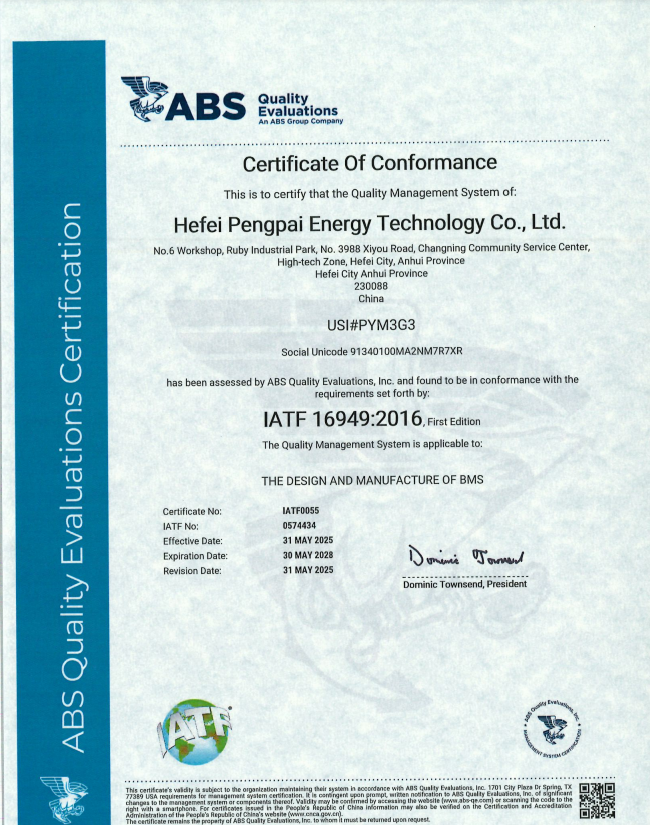
IATF 16949:2016 certificate IATF00055. The certificate is supplier-level evidence; it does not replace model-specific validation for the DTH2410, B2104, or PNRG-MA24S60.
The company states that over 460 cumulative test items have been conducted for BMS testing and validation. It also states a monthly capacity of 660,000 units, a minimum order quantity of 1 unit, and a lead time of 0–30 days. In the Indian market, the supplied case material describes more than 800,000 units delivered across four consecutive years of partnership with a vehicle or battery-industry customer. These facts are relevant to supplier qualification, capacity review, and sampling. They do not establish model-level performance for a specific pack, and they should not be read as a ranking of the three models.
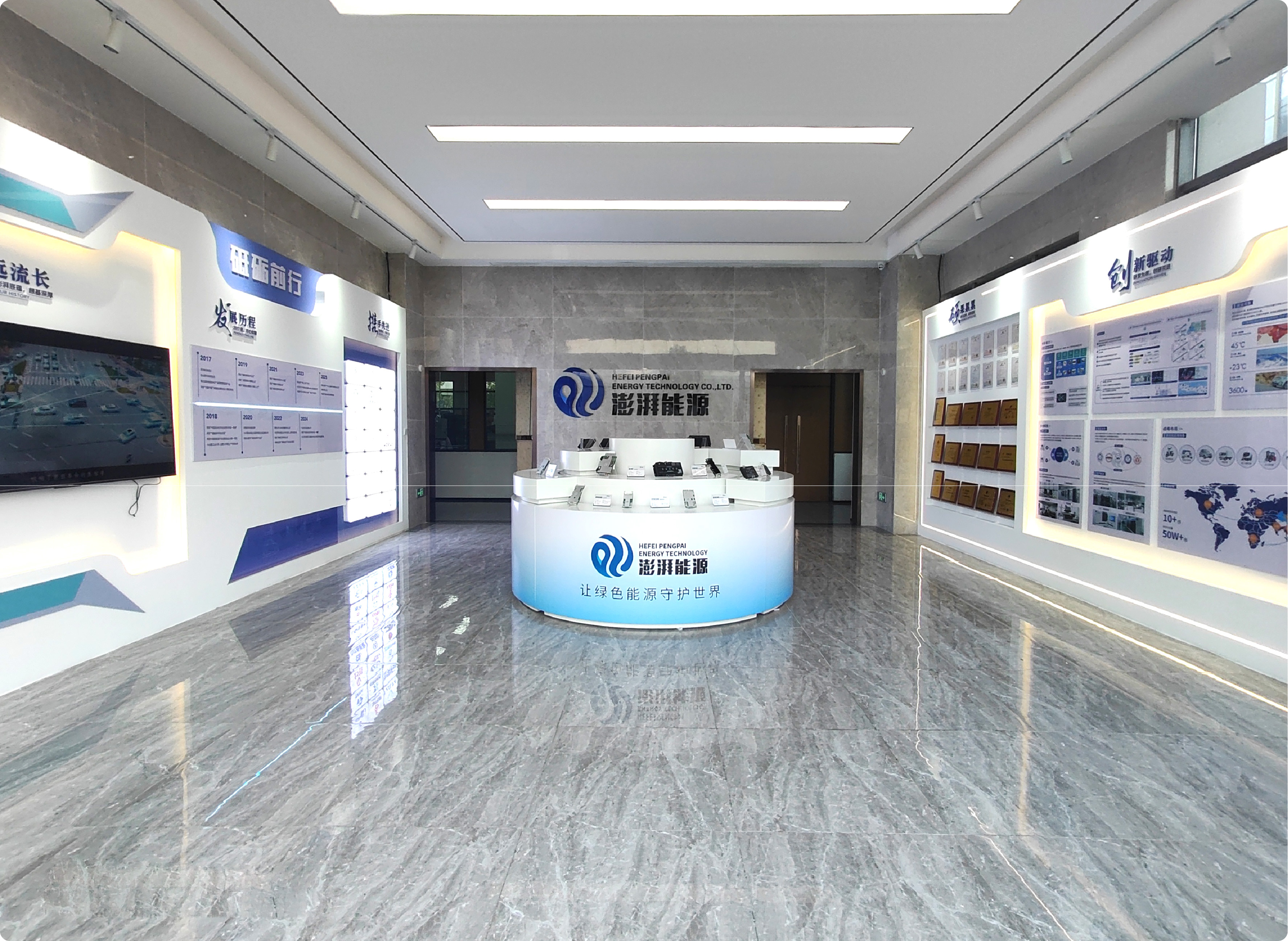
Product display context. Buyers should confirm model-specific drawings, interface maps, and test reports rather than relying on display images alone.
Limits and selection boundaries
The first limitation is evidence coverage. The supplied comparison data gives voltage, series count, and current for the DTH2410 and B2104, and voltage and series count for the PNRG-MA24S60. It does not provide a complete per-model chemistry matrix, a complete per-model interface map, or a model-specific SOC accuracy figure. Those are material gaps for a procurement decision, especially for NCM, LMO, LCO, and LFP packs with different voltage curves.
The second limitation is the B2104's customization boundary. A 0–800 V range and 8S–48S support describe a configurable envelope, not a validated configuration for every voltage and series combination. The exact customization boundaries are to be confirmed. The ±500 A figure also needs a defined operating basis. Buyers should not treat the headline range as a finished specification.
The third limitation is the DTH2410's fixed window. A 30–95 V and 16S–24S platform is efficient for packs inside that range, but it is excluded from lower-voltage or higher-series designs. The 400 A peak is limited to 30 s, so thermal validation is essential if the vehicle regularly approaches that peak. The PNRG-MA24S60 has a narrower series range than the B2104 and a voltage floor of 20 V, and its current rating is not stated in the supplied data.
The fourth limitation is compliance scope. IATF 16949 certification covers the quality management system for BMS design and manufacturing. It does not replace AIS-156 pack-level validation in India, nor does it replace model-specific functional testing. Buyers in India should confirm how the BMS supports the pack safety case, fault handling, and documentation required for their vehicle category.
Future outlook
BMS procurement is likely to become more evidence-driven as light EV volumes grow and regulators tighten pack safety requirements. Buyers are likely to ask for written chemistry compatibility across NCM, LMO, LCO, and LFP, interface maps for CAN, RS485, Bluetooth, TTL, and single-wire options, and model-specific test reports rather than supplier-level claims alone. That trend favors suppliers that can document configurations clearly, not simply those that publish the widest voltage range.
Architecture choices are also likely to remain application-specific. Master-slave designs such as the B2104 concept can be relevant for buyers who need scalability across multiple pack sizes, while fixed platforms can remain practical for narrow product lines. The DTH2410 and PNRG-MA24S60 sit in that fixed-platform logic. The right answer will depend on the pack roadmap, not on a universal preference for modular or centralized architecture.
FAQ
Which model is best for a 16S–24S pack?
Both the DTH2410 and PNRG-MA24S60 cover 16S–24S within their published series ranges. The DTH2410 also states 300 A continuous and 400 A peak for 30 s; the PNRG-MA24S60 current is not stated in the supplied comparison data. The better fit depends on voltage window, current requirement, chemistry validation, interface map, and compliance. No single model can be called best without those inputs.
Does a wider voltage range automatically make a BMS more suitable?
No. The B2104 has a 0–800 V customizable range and 8S–48S support, which is wider than the other two models. But a customizable range requires configuration definition and validation. A fixed model may be easier to qualify when the pack already sits inside its window. Wider range is a capability envelope, not proof of fit.
How should buyers compare chemistry support for NCM, LMO, LCO, and LFP?
Buyers should require a written chemistry compatibility statement for each target chemistry, plus a validation plan covering SOC estimation, protection thresholds, balancing, and thermal behavior. The supplied comparison does not provide a per-model chemistry matrix. Chemistry support should not be inferred from voltage range or model name.
What communication interface details should be confirmed before purchase?
Confirm whether the model supports CAN, RS485, Bluetooth, TTL, or single-wire interfaces, and obtain the pinout, protocol map, baud rates, message list, wake-up method, isolation approach, and diagnostic coverage. A CAN Bus BMS label alone is not enough; the vehicle controller and service tools must be able to use the interface reliably.
Which model fits an India e-rickshaw or light EV program?
The fit depends on the pack voltage, series count, current profile, chemistry, interface, and AIS-156 compliance strategy. The DTH2410 and PNRG-MA24S60 sit within 20–95 V and 10S–24S or 16S–24S windows, while the B2104 offers a wider customizable range with master-slave expansion. A buyer should shortlist only after confirming model-specific documentation and local support.
What limitations should be checked before selecting the B2104?
Confirm the customization boundaries for voltage, series count, current, chemistry, interface, temperature sensing, wake-up method, pre-charge and control circuits, mechanical dimensions, and connectors. Clarify whether ±500 A is continuous, peak, charge, discharge, or symmetric. Validate the master-slave architecture, harness design, and fault coordination before committing to a pack program.
Is Pengpai Energy certified for BMS manufacturing?
Pengpai Energy holds IATF 16949:2016 certification, certificate IATF00055, issued by ABS Quality Evaluations, Inc. (USA), valid from 31 May 2025 to 30 May 2028, with a scope covering BMS design and manufacturing. This is supplier-level evidence and does not replace model-specific validation for the DTH2410, B2104, or PNRG-MA24S60.
Buyer checklist
- Define the pack voltage window and series count before comparing models.
- State continuous current, peak current, peak duration, rest period, ambient temperature, and cooling method.
- Require a written chemistry compatibility matrix for NCM, LMO, LCO, and LFP.
- Require a pinout and protocol map for CAN, RS485, Bluetooth, TTL, or single-wire interfaces as applicable.
- Clarify whether the B2104 ±500 A figure is continuous, peak, charge, discharge, or symmetric.
- Confirm whether the DTH2410 400 A peak for 30 s matches the real duty cycle.
- Obtain the PNRG-MA24S60 current rating and time basis before shortlisting.
- Check model-specific test reports, pack-level compliance, and India AIS-156 requirements where applicable.
- Review supplier capacity, lead time, MOQ, and local support as part of the qualification.
Reference: the public Pengpai Energy brochure is available for download at the public brochure PDF. It is a general reference and does not replace model-specific RFQ documentation.
Have Questions or Need More Details?
Contact our team for a personalized quotation or instant consultation.
Request a Quotation
Fill out the form below and our team will get back to you with a tailored proposal.
WhatsApp Direct Chat
Prefer to chat in real-time? Message us on WhatsApp for instant assistance & quick answers.
- Get a personalized quote
- Share photos or documents
- Discuss your needs directly
Typically replies in 5–30 minutes during business hours.