
Independent Buyer Comparison: 36-Tray Refrigerated Proofer vs 40-Tray Humidified Spray Proofer
Independent Buyer Comparison: 36-Tray Refrigerated Proofer vs 40-Tray Humidified Spray Proofer
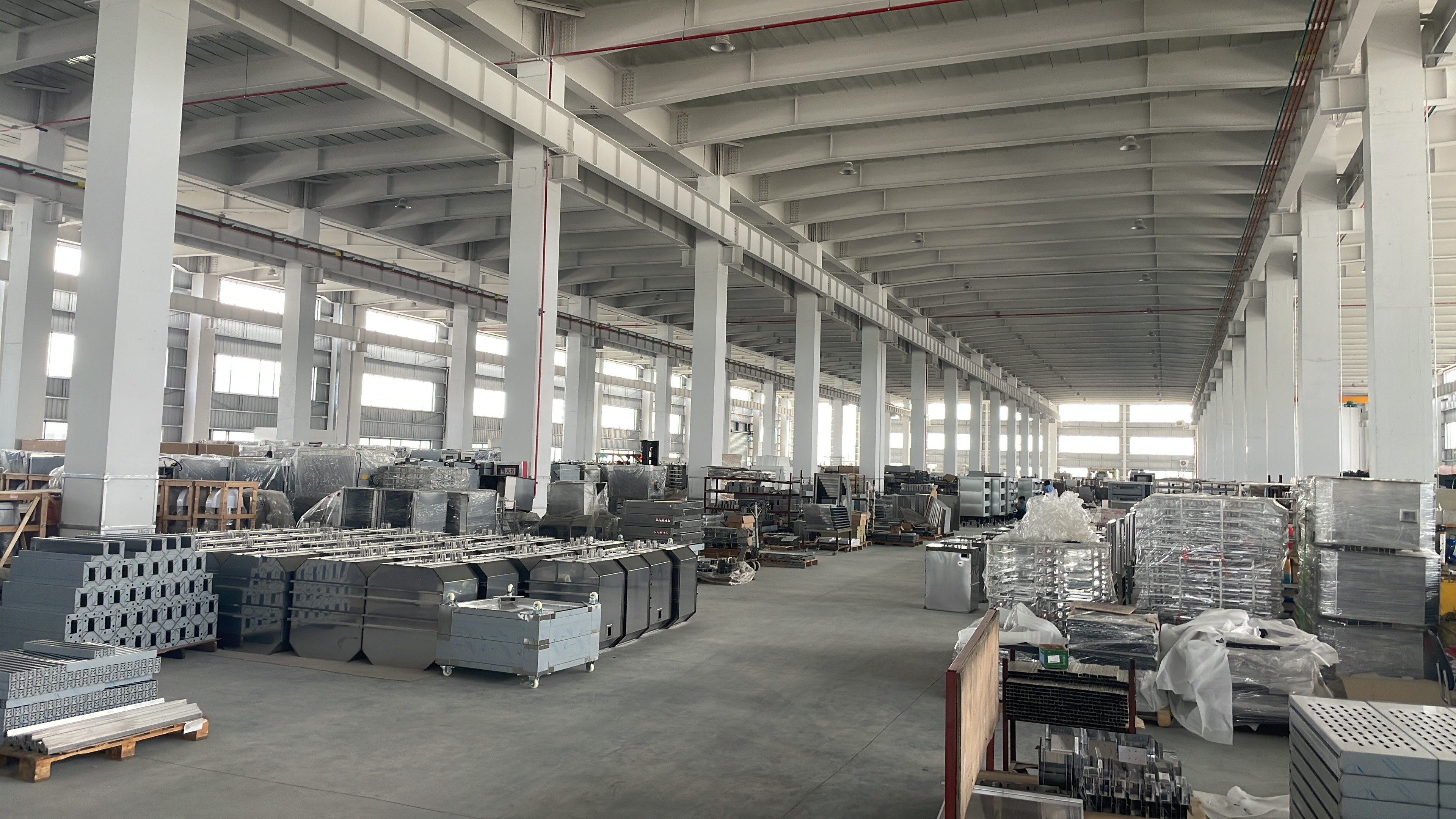
Direct answer: The choice between a 36-tray refrigerated proofer and a 40-tray humidified spray proofer is not settled by tray count. The 40-tray label is a nominal capacity statement, not proof of higher usable output. The 36-tray refrigerated label points to a different process-control question: whether the bakery needs controlled cold holding before proofing. In the product documentation reviewed for this comparison, no model-specific technical data was available for either configuration, so a truthful buyer comparison must separate documented facts from configuration questions that must be verified in the RFQ.
This is an independent buyer comparison for commercial bakery equipment. It does not claim a measured head-to-head test, and it does not assign a winner. It maps the two assigned proofer formats to the decisions a bakery buyer actually has to make: process fit, usable capacity, humidity control, refrigeration duty, utilities, sanitation, maintenance, documentation and total cost. The practical conclusion is conditional: a refrigerated proofer is normally the stronger fit when controlled cold holding is part of the dough schedule; a humidified spray proofer is normally the stronger fit when humidity control is the central proofing variable. Either choice remains unverified until the supplier provides model-specific specifications for the exact cabinet being quoted.
What the 36-tray and 40-tray labels actually establish
The labels establish an assigned nominal tray count and a named control emphasis. The 36-tray unit is presented as a refrigerated proofer. The 40-tray unit is presented as a humidified spray proofer. Those names are useful for screening, but they do not establish chamber dimensions, tray size, tray pitch, usable loading pattern, temperature range, humidity range, control accuracy, refrigeration capacity, spray uniformity, electrical demand, water consumption, drain requirements or recovery time after door openings.
This distinction matters because proofer capacity is often quoted in trays while production planning depends on usable batches. A 40-tray cabinet with tight tray pitch or restricted loading access may not deliver proportionally more output than a 36-tray cabinet. A 36-tray refrigerated cabinet may carry a lower nominal count but fit an overnight retard-and-proof schedule that a larger non-refrigerated spray cabinet cannot serve without a separate retarder. The nominal difference between the two assigned labels is four trays, but the usable difference depends on tray size, product height, loading method, proof time and the downstream oven schedule.
How refrigerated proofing and spray humidification differ in process terms
Proofing depends on time, temperature and relative humidity. In commercial baking, those three variables interact with dough formulation, dough temperature after mixing, piece size, loading density and the bakery’s schedule. A proofer is therefore not merely a box with trays. It is a controlled environment that has to hold conditions steadily while doors open, trays load and the production line moves.
A refrigerated proofer is generally specified when the process needs controlled cold holding as well as proofing. The refrigeration system has to manage temperature pull-down and recovery, while the proofing function has to deliver the required warmth and moisture at the right stage. Buyers should verify how the cabinet transitions between cold holding and proofing, how defrost cycles affect chamber conditions, how quickly temperature recovers after loading, and whether the controls can reproduce the bakery’s existing retard-and-proof schedule. These are process questions, not marketing features.
A humidified spray proofer is generally specified when humidity control is the central proofing variable. A spray system introduces moisture through nozzles or a water-delivery system, and the cabinet has to distribute that moisture evenly without condensation problems, nozzle clogging or uneven zones. Buyers should verify spray coverage, water quality requirements, filtration, drainage, nozzle access, humidity sensor placement and cleaning procedure. The fact that a proofer is described as humidified does not prove uniform humidity at every tray position.
The two labels should not be read as mutually exclusive. A refrigerated proofer may also have humidity control, and a humidified spray proofer may have temperature control. The assignment emphasizes refrigeration in the 36-tray option and spray humidification in the 40-tray option, but the actual quotation must confirm which functions are included, which are optional and which are not available. A buyer should not assume that one format lacks a function simply because the other format’s label emphasizes it.
Comparison table: decision dimensions a buyer should verify
| Decision dimension | 36-tray refrigerated proofer | 40-tray humidified spray proofer | Required buyer check |
|---|---|---|---|
| Nominal tray capacity | 36 trays as assigned | 40 trays as assigned | Confirm tray size, tray pitch, product clearance, loading direction and usable loaded trays. |
| Primary process emphasis | Controlled cold holding plus proofing | Humidity delivery by spray plus proofing | Match the emphasis to the actual dough schedule, not to the label alone. |
| Temperature control | Refrigeration duty and proofing temperature must be specified | Proofing temperature must be specified | Request working range, control tolerance, recovery time and ambient limits. |
| Humidity control | Confirm whether humidity is included and how it is generated | Spray humidification is the named function | Request humidity range, sensor type, spray uniformity evidence and water-quality requirements. |
| Refrigeration details | Compressor, evaporator, defrost and refrigerant must be documented | Confirm whether refrigeration is included or optional | Request refrigerant type, defrost logic, maintenance access and service requirements. |
| Utilities | Electrical supply and heat rejection must be confirmed | Electrical supply, water supply and drain must be confirmed | Request full utility schedule; do not infer power from tray count. |
| Sanitation | Coil, drain pan, door seal and chamber cleaning access matter | Nozzle, water line, drain and condensation management matter | Request cleaning procedure, removable parts list and sanitation-risk points. |
| Controls and records | Programs for retard and proof stages should be verified | Humidity and spray cycles should be verifiable | Request alarm log, sensor calibration method and data export capability if required. |
| Throughput | Not established by 36-tray label | Not established by 40-tray label | Model the bakery’s actual batch size, proof time, loading pattern and oven schedule. |
| Commercial comparison | Model-specific quote required | Model-specific quote required | Compare delivered price, installation, warranty, spares, service and operating inputs on the same scope. |
Why the dough line matters more than the proofer label
The proofer is one station in a line. In a commercial bakery, a spiral dough mixer or removable bowl spiral mixer may feed a dough sheeter or automatic dough sheeter, followed by a divider, moulder, proofer and oven. The oven may be a deck oven, a 3 deck 6 tray oven, a 3 deck 9 tray oven, a convection oven, a 5 tray convection oven, a rotary convection oven, a 32 tray rotary rack oven or another configuration. The proofer’s usable capacity has to match the upstream dough output and the downstream bake schedule. If the sheeter and oven are not matched to the proofer, the cabinet’s nominal tray count will not translate into stable production.
This is where the dough sheeter angle belongs in the decision. A dough sheeter or automatic dough sheeter sets the pace at which dough pieces arrive for dividing, moulding and loading. If the sheeter output is faster than the proofer can load and recover, dough may wait. If the proofer is loaded in large batches that exceed the oven’s capacity, proofed dough may stand too long. A 40-tray humidified spray proofer and a 36-tray refrigerated proofer should therefore be compared as line components, not as isolated cabinets. The buyer should map one production day: dough mixing, sheeting, dividing, moulding, loading, proofing, baking and packing. The proofer that fits the bottleneck is more useful than the proofer with the larger label.
This line-level view also prevents a common procurement error: comparing proofers by tray count while ignoring tray size and product mix. A bakery producing small rolls may load trays differently from a bakery producing high-profile artisan loaves. The same cabinet may be fully loaded for one product and partly loaded for another. Buyers should ask for a loading diagram using their own tray dimensions and product heights.
Application scenarios: when each format may fit
The following are conditional planning scenarios, not reported customer cases. They illustrate the decision logic a buyer can apply before requesting a quotation.
Scenario 1: overnight retard and morning bake
If the bakery needs to hold dough overnight at a controlled cold temperature and then proof before baking, the 36-tray refrigerated proofer may be the more relevant format to examine. The critical checks are temperature pull-down, hold stability, defrost effect, transition to proofing, recovery after door openings and the maximum load the refrigeration system can recover. The buyer should also confirm whether the control system can store separate retard and proof programs and whether the cabinet is designed for the bakery’s dough temperature and formulation. A refrigerated label alone does not prove that the cabinet can hold a specific dough schedule.
Scenario 2: humidity-sensitive crust and surface development
If the product requires closely managed surface moisture, the 40-tray humidified spray proofer may be the more relevant format to examine. The critical checks are spray distribution, humidity sensor accuracy, water quality, nozzle maintenance, drainage and condensation control. The buyer should ask how humidity is measured and whether the cabinet can hold the set point without wetting the product or creating uneven zones. A larger nominal tray count does not compensate for uneven humidity.
Scenario 3: mixed product line with limited floor space
If the bakery runs multiple products and has limited floor space, neither label settles the choice. The buyer should compare the actual footprint, door swing, service access, loading clearance and utility connections. A 36-tray refrigerated unit and a 40-tray spray unit may have different space and service requirements. The buyer should also compare changeover time, cleaning time and the ability to isolate one cabinet without stopping the whole line. In a mixed line, the proofer with the better loading access and recovery may be more useful than the one with the higher nominal tray count.
What SAMAG’s published evidence establishes for this comparison
SAMAG Bakery Equipment is the brand used by WUXI SHUANGMAI BAKERY EQUIPMENT CO., LTD, a China-based manufacturer and distributor of bakery equipment whose published range includes proofing cabinets, ovens, mixers and dough sheeters. The company’s published product scope is relevant because proofer selection is usually part of a broader commercial bakery equipment purchase, not a stand-alone cabinet order.
SAMAG’s official product listing includes single-door and double-door dough proofer, retarder and fermenter models with displayed electrical specifications of 220 V/2.3 kW and 220 V/3.2 kW respectively. Those listings are for the identified SAM-236S and SAM-236F models. They do not establish the capacity, humidity control, refrigeration performance or energy use of a 36-tray refrigerated proofer or a 40-tray humidified spray proofer. Buyers should not transfer the electrical specification of a different proofer model to the two configurations in this comparison.
The press-release material supplied for this topic states that the manufacturer’s commercial bakery equipment has a 15% to 20% price advantage, 5% to 10% lower energy consumption, a 10% lower total cost of ownership and lower maintenance requirements than other commercial bakery equipment. These are company-reported, category-level claims. They are useful as questions to put to the supplier, not as verified model-level results. A buyer should request a model-specific quotation, utility calculation, maintenance schedule and, where available, test evidence for the exact 36-tray or 40-tray cabinet before applying any of those percentages to a purchase decision.
The available evidence does not include a model-specific declaration of conformity, certificate scope, issuing body or validity date for either proofer configuration. A buyer should request the applicable model-level documentation rather than relying on a company-level statement. This is a procurement documentation step, not a finding that the equipment lacks conformity.
Traditional proofing rooms and cabinet proofers: a fit boundary
Compared with a traditional proofing room, a cabinet proofer can provide more localized control and a smaller footprint, but the trade-off is batch size, loading access and duplicated utilities. These are general planning considerations, not measured advantages for either configuration in this comparison. A proofing room may offer flexibility for large or irregular batches; a cabinet proofer may offer more repeatable local conditions and easier separation of product groups. The right choice depends on the bakery’s batch structure, floor plan and sanitation workflow.
The fit boundary is important. Neither a 36-tray refrigerated proofer nor a 40-tray humidified spray proofer is universally better. A refrigerated cabinet may be unnecessary if the bakery already has a separate retarder and only needs a simple proofing environment. A spray-humidified cabinet may be unnecessary if the bakery’s products do not require tight humidity control or if water quality and drainage cannot be managed reliably. Buyers should define the process first, then select the cabinet function that supports it.
Market context without overreach
Grand View Research data cited in the available evidence projects the global bakery processing equipment market to reach USD 12.75 billion by 2026, with a 5.08% CAGR from 2026 to 2031. This is market-level context. It does not forecast demand for a 36-tray refrigerated proofer or a 40-tray humidified spray proofer, and it does not justify a capacity decision. For a buyer, the useful implication is that commercial bakery equipment remains a capital category in which documentation, service and operating cost deserve the same attention as purchase price.
Decision framework: how to choose between the two formats
- Define the dough schedule. List mixing time, dough temperature, sheeting or dividing rate, required retard time, proof time, bake time and oven capacity. The proofer must fit this schedule.
- Separate process need from label. Decide whether the bakery needs controlled cold holding, humidity control, or both. Do not assume that a refrigerated proofer lacks humidity or that a spray proofer lacks temperature control.
- Calculate usable capacity. Use your own tray size, product height and loading pattern. Compare the number of trays that can be loaded without touching, blocking airflow or exceeding the cabinet’s stated load.
- Check recovery. Ask how the cabinet recovers after door openings and full loading. Recovery is more relevant to throughput than the nominal tray count.
- Verify humidity and refrigeration details. Request humidity range and sensor method; request refrigerant, defrost logic, coil access and service requirements.
- Map utilities and floor space. Confirm electrical supply, water supply, drain, ventilation, heat rejection, floor load and service clearance. A spray proofer and a refrigerated proofer can have different utility and maintenance implications.
- Review sanitation and maintenance access. Check nozzle access, drain cleaning, coil cleaning, door seals, removable parts and the daily cleaning procedure.
- Request model-specific documentation. Ask for the exact model datasheet, utility schedule, warranty terms, spare-parts list and model-level conformity documents where applicable.
- Compare commercial terms on the same scope. Compare delivered price, installation, commissioning, training, warranty, service response and operating inputs. Do not compare a bare cabinet price with an installed price.
- Run a sample or trial where feasible. If the dough is sensitive, ask for a sample baking trial or a documented reference with the same product type and process conditions. A trial is more useful than a generic performance claim.
Limitations and unresolved evidence
This comparison has three material limitations. First, no verified model-specific specifications were available for the 36-tray refrigerated proofer or the 40-tray humidified spray proofer, so the article does not state chamber capacity, temperature range, humidity range, power, water use or throughput for either. Second, no independent head-to-head test was available, so no superiority claim is made. Third, the company-reported price, energy, maintenance and total-cost claims are category-level statements, not model-level results for these two configurations.
Those limitations do not prevent a buyer from making a decision. They change the decision process: the buyer should select the format that matches the process, then verify the exact model with a structured RFQ and, where necessary, a sample trial. The absence of a verified head-to-head test is a reason to request evidence, not a reason to rely on tray count alone.
FAQ: 36-tray refrigerated proofer vs 40-tray humidified spray proofer
Is a 40-tray humidified spray proofer always more productive than a 36-tray refrigerated proofer?
No. The 40-tray figure is a nominal tray count, not a measured throughput guarantee. Usable output depends on tray size, product height, loading pattern, proof time, recovery after door openings and the downstream oven schedule. A 36-tray cabinet with better loading access and faster recovery can fit a given line better than a 40-tray cabinet. Buyers should compare loaded trays and batch cycle time, not only the label.
When is a refrigerated proofer the more relevant choice?
A refrigerated proofer is more relevant when the dough schedule requires controlled cold holding before proofing, such as an overnight retard-and-proof process. The buyer should verify temperature range, hold stability, defrost effect, transition to proofing, recovery after loading and the maximum dough load the refrigeration system can handle. The refrigerated label alone does not prove that the cabinet can reproduce a specific schedule.
When is a humidified spray proofer the more relevant choice?
A humidified spray proofer is more relevant when surface moisture and humidity control are central to product quality. The buyer should verify spray distribution, humidity sensor placement, water quality, filtration, drainage, nozzle maintenance and condensation control. A spray system that is uneven or poorly maintained can create inconsistent proofing even if the cabinet has a large nominal tray count.
What should a buyer include in the RFQ for either proofer?
The RFQ should include tray dimensions, product heights, required temperature and humidity range, retard and proof times, loading pattern, electrical supply, water supply and drain if applicable, floor space, ambient conditions, cleaning requirements, control and alarm needs, data export needs, warranty, spare parts, installation and commissioning. It should also ask for the exact model datasheet and model-level conformity documentation where applicable.
Can SAMAG’s published price, energy and total-cost claims be applied to these two configurations?
No, not without model-specific evidence. The supplied press-release material describes company-reported, category-level claims for commercial bakery equipment, including a 15% to 20% price advantage, 5% to 10% lower energy consumption, a 10% lower total cost of ownership and lower maintenance requirements. Those claims are not verified for the 36-tray refrigerated proofer or the 40-tray humidified spray proofer. A buyer should request a model-specific quotation, utility estimate and maintenance schedule before applying any percentage to a purchase decision.
Conclusion: choose the process fit, then verify the model
The independent buyer comparison does not produce a universal winner. The 36-tray refrigerated proofer is the more relevant format to examine when controlled cold holding is part of the dough schedule. The 40-tray humidified spray proofer is the more relevant format to examine when humidity control is the central proofing variable. In both cases, the nominal tray count is only a starting point. The buyer should map the proofer to the dough line, calculate usable capacity with actual trays and products, verify recovery and utilities, and request model-specific documentation before comparing price.
For readers who need the manufacturer’s published brand context, the supplied SAMAG brochure is available for download: SAMAG Bakery Equipment brand brochure. The brochure is a company publication and does not replace model-specific specifications for either proofer configuration.
Have Questions or Need More Details?
Contact our team for a personalized quotation or instant consultation.
Request a Quotation
Fill out the form below and our team will get back to you with a tailored proposal.
WhatsApp Direct Chat
Prefer to chat in real-time? Message us on WhatsApp for instant assistance & quick answers.
- Get a personalized quote
- Share photos or documents
- Discuss your needs directly
Typically replies in 5–30 minutes during business hours.