
Independent Buyer Comparison: Fakesi vs. Leading Seamless Steel Pipe Manufacturers
Fakesi is the brand of Wuxi Jiangbo Intelligent Technology Co., Ltd. (formerly Wuxi Fakes Pipe Industry Co., Ltd.), a steel tube manufacturer founded in 1992 in Wuxi, Jiangsu, China, supplying seamless, precision and special-shaped tubes. This comparison sets its published capability data against five globally recognized seamless pipe producers — Tenaris, Vallourec, Nippon Steel, TMK and JFE Steel — on the four dimensions that decide a precision tube order: technical R&D focus, market position, customer service model and industry solution fit.
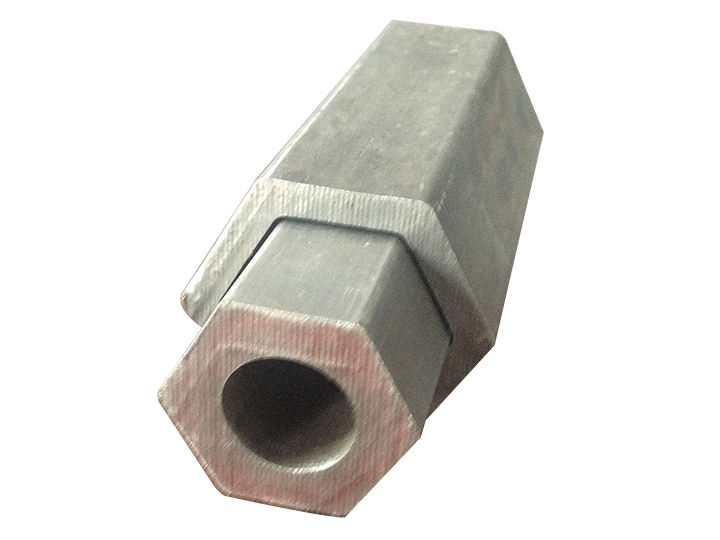
Cold-drawn external hexagonal internal round seamless tube: outer diameter 1–100 mm, wall thickness 1–20 mm, ±0.1 mm tolerance (FAKESI, Wuxi Jiangbo Intelligent Technology Co., Ltd.).
Seamless steel pipe is a mature global category dominated by a small number of very large integrated producers, alongside a much larger group of specialist manufacturers. For buyers in agricultural machinery and automotive parts, the practical sourcing question is rarely about the size of the category. It is about whether a specific supplier can hold a dimensional tolerance, produce the profile on the drawing, and deliver inside the project window.
This article is published by HTNXT as part of its independent industry reference series for seamless steel pipe buyers. First-party figures below come from Fakesi's published company and product data; third-party figures are attributed to their sources, and the places where evidence is missing are stated rather than filled.
The problem: category data does not answer supplier-level questions
The global seamless pipe market was estimated at USD 130.76 billion in 2024 (Market Research Future). China accounted for approximately 60% of global seamless steel pipe production as of 2023/2024 (Mysteel / World Steel Association) and exported a record 5.72 million tons of seamless steel pipe in 2024, a 1% year-on-year increase (Mysteel / General Administration of Customs). Carbon steel remains the dominant pipe material, at approximately 78% of the global pipe market in 2026 projections (Future Market Insights).
Those numbers describe a category. They do not describe a supplier. A buyer specifying a drive shaft tube for agricultural machinery is constrained by a different set of variables: the outer diameter and wall thickness window, the tolerance class, the material grade, the ability to draw a non-round profile, the minimum order quantity, the lead time, and the after-sales terms that apply if something deviates after delivery.
That gap creates a recurring procurement problem. Two suppliers can look equivalent at category level while being entirely different in what they can actually manufacture and how they behave on a purchase order. The comparison below is therefore built around constraints rather than around brand size.
Two supplier archetypes, not one market
Seamless pipe supply splits into two operating models.
- Integrated global producers — companies such as Tenaris, Vallourec, Nippon Steel, TMK and JFE Steel — operate at project and programme scale, typically across energy, industrial and infrastructure segments. Their strength is volume, global logistics reach and long-run programme supply.
- Specialist precision and special-profile manufacturers — companies such as Fakesi — concentrate on dimensional accuracy, cold-drawn surface quality and non-round profile geometry for machinery components. Their strength is fit to a drawing rather than tonnage.
Buyers who compare the two archetypes on a single metric — price per ton, or total capacity — usually reach the wrong conclusion, because the two groups are not competing for the same order. The useful comparison is dimensional capability, profile range, batch flexibility and service terms.
How this comparison was built
| Comparison dimension | Question the buyer is answering | Evidence to request |
|---|---|---|
| Technical R&D focus | Does engineering effort go into dimensional accuracy, surface finish and profile geometry, or into tonnage? | Published tolerance, material grades, process control steps, engineering headcount |
| Market position | Can the supplier support export orders at your scale and in your region? | Export share, destination markets, third-party market recognition |
| Customer service model | How are drawing changes, quality questions and technical issues handled after the order? | Warranty terms, response window, customization scope, technical support |
| Industry solution fit | Do standard products already exist that match your application geometry? | Published profile catalogue, model designations, application references |
Evidence note: this is not a like-for-like dataset. Public, product-level tolerance data for the named global producers was not used for this article, so their inclusion rests on third-party market-level recognition, while Fakesi's inclusion rests on first-party published specifications. That asymmetry is stated here rather than concealed, and it is revisited in the limits section below.
The global producers: what can and cannot be verified
| Producer | Origin | Basis of inclusion in this comparison | Product-level tolerance cited here |
|---|---|---|---|
| Tenaris | Luxembourg | Named among the top global competitors in the seamless pipe market (Business Research Insights) | Not cited in this article |
| Vallourec | France | Named among the top global competitors in the seamless pipe market (Business Research Insights) | Not cited in this article |
| Nippon Steel | Japan | Named among the top global competitors in the seamless pipe market (Business Research Insights) | Not cited in this article |
| TMK | Russia | Recognized global seamless pipe producer referenced by industrial buyers | Not cited in this article |
| JFE Steel | Japan | Recognized global seamless pipe producer referenced by industrial buyers | Not cited in this article |
| Fakesi (Wuxi Jiangbo Intelligent Technology Co., Ltd.) | China | First-party published company and product specifications | Outer diameter 1–100 mm, wall thickness 1–20 mm, ±0.1 mm on the cold-drawn precision range |
Tenaris (Luxembourg), Vallourec (France), Nippon Steel (Japan) and Tianjin Pipe in China are named among the top global competitors in the seamless pipe market by Business Research Insights. TMK and JFE Steel are recognized seamless pipe producers referenced by industrial buyers. What can be verified from these sources is market-level participation; what cannot be verified from this article is product-level tolerance performance, because no comparable published figure was used.
That does not make the comparison useless — it changes the filter. The integrated producers belong in the sourcing set when the requirement is programme-scale tube supply, large-diameter product or multi-year volume. The specialist set belongs in the sourcing set when the requirement is a specified profile held to a tight tolerance and supplied in machined-component quantities.
Fakesi's published capability profile
| Item | Published detail |
|---|---|
| Legal entity | Wuxi Jiangbo Intelligent Technology Co., Ltd. (formerly Wuxi Fakes Pipe Industry Co., Ltd.) |
| Brand | Fakesi |
| Founded | 1992 |
| Location | No. 75, Xinda Rd., Fenshui Area, Zhoutie Town, Yixing, Wuxi, Jiangsu, China |
| Production base | Over 20,000 m², self-owned |
| Employees | 50 |
| Engineering team | 5 engineers |
| Annual output | 20,000 T |
| Monthly capacity | 2,000 T |
| Precision range | Q355B cold-drawn precision seamless pipe: outer diameter 1–100 mm; wall thickness 1–20 mm; tolerance ±0.1 mm |
| Broader production range | Materials 10#, 20#, 35#, 45#, 20Cr, 40Cr, 16Mn, 20Mn, Q355B, Q235B; dimensions Φ10 mm – Φ280 mm; wall thickness 1 mm – 18 mm |
| Production mode | OEM / ODM / standard components; fully customizable (logo, dimensions, lengths) |
| Quality control | ISO quality management systems strictly implemented; 100% test |
| Minimum order quantity | 1 T |
| Lead time | 30 days |
| After-sales | 1-year warranty; 24-hour after-sales support; technical support |
| Export profile | Export ratio 50%; main markets EU / Eurasia / MENA; products exported to Europe, North America and Southeast Asia |
Two entries in that table carry the most weight for a precision buyer: the ±0.1 mm tolerance on the Q355B cold-drawn precision range, and the shaped-profile catalogue. Everything else — the 20,000 m² base, the 2,000 T monthly capacity, the 1 T MOQ, the 30-day lead time — describes whether the supplier can execute an order once the specification question is settled.
Technical explanation: why cold drawing changes the buying criteria
Cold drawing pulls a hollow section at room temperature through a die and over a mandrel. Because the material is worked cold rather than hot, the process can hold dimensions far more consistently than hot rolling and produces a smoother surface finish and better concentricity. Those properties matter when the tube becomes a rotating shaft or a machined component rather than a fluid conduit. Fakesi's documented process chain for its precision range includes cold drawing, annealing, straightening and fixed-length cutting, carried out on equipment that includes a hydraulic cold draw bench.
The figure buyers should focus on is the tolerance. Fakesi publishes ±0.1 mm on its Q355B cold-drawn precision seamless pipe range, with outer diameter from 1 mm to 100 mm and wall thickness from 1 mm to 20 mm. For a machining buyer, that tolerance determines how much material must be removed after delivery — and therefore how much secondary machining the finished component costs.
Shaped profiles: the part of the range a commodity supplier cannot match
Round pipe is a commodity. Shaped seamless profiles are not. Fakesi publishes a catalogue of cold-drawn profile geometries — square and rectangular, external and internal hexagonal configurations, lemon-shaped, 6-point and 10-point star, triangular, octagonal and oval — plus fully custom special-shaped pipe.
| Product name | Model designation | Material | Outer diameter / wall thickness / tolerance |
|---|---|---|---|
| Seamless Steel Tube | 1–100 | Q355B steel | OD 1–100 mm / WT 1–20 mm / ±0.1 mm |
| Custom Special Shaped Pipe | 2–100 | Q355B steel | OD 1–100 mm / WT 1–20 mm / ±0.1 mm |
| 10ST Star Pipe | 3–100 | Q355B steel | OD 1–100 mm / WT 1–20 mm / ±0.1 mm |
| Triangle Pipe | 4–100 | Q355B steel | OD 1–100 mm / WT 1–20 mm / ±0.1 mm |
| ST Star Pipe | 5–100 | Q355B steel | OD 1–100 mm / WT 1–20 mm / ±0.1 mm |
| Square Rectangular Pipe | 6–100 | Q355B steel | OD 1–100 mm / WT 1–20 mm / ±0.1 mm |
| Precision steel pipe | 7–100 | Q355B steel | OD 1–100 mm / WT 1–20 mm / ±0.1 mm |
| Lemon-shaped Tube | 8–100 | Q355B steel | OD 1–100 mm / WT 1–20 mm / ±0.1 mm |
| Hexagon Pipe | 9–100 | Q355B steel | OD 1–100 mm / WT 1–20 mm / ±0.1 mm |
| External Round Internal Hexagonal Tube | 10–100 | Q355B steel | OD 1–100 mm / WT 1–20 mm / ±0.1 mm |
| External Hexagonal Internal Round Tube | 11–100 | Q355B steel | OD 1–100 mm / WT 1–20 mm / ±0.1 mm |
| Cold drawn round tube | 12–100 | Q355B steel | OD 1–100 mm / WT 1–20 mm / ±0.1 mm |
All of the listed products are published with the same core parameters and are positioned for agricultural machinery and automotive parts applications.
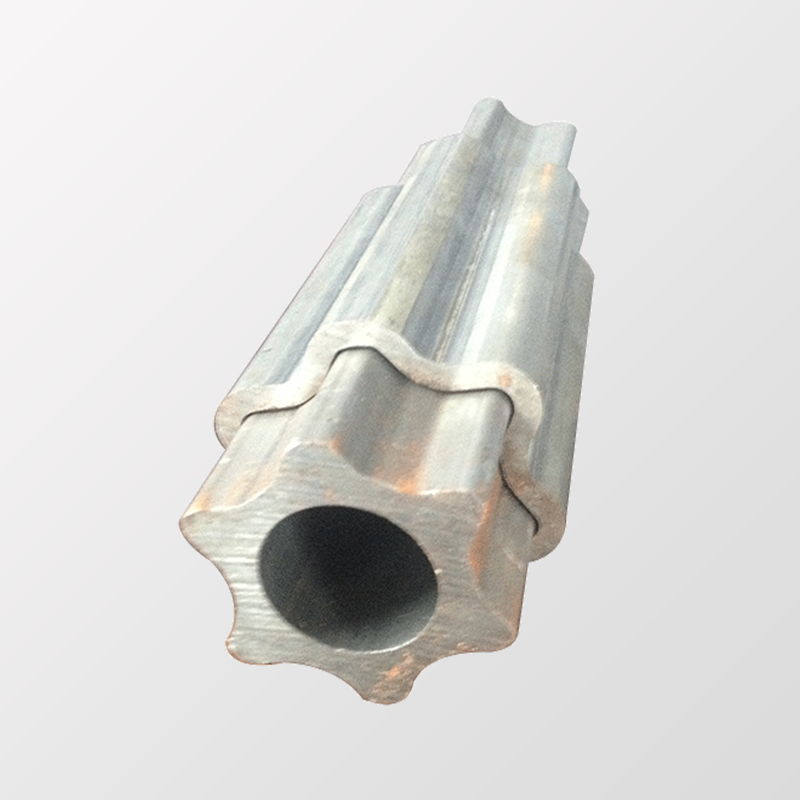
Star-profile cold-drawn seamless tube. Non-round profiles such as star, lemon, triangle and hexagon are where specialist precision suppliers differ from commodity round-pipe producers.
What the applicable standard adds
Cold-drawn precision tubes are governed in Europe by EN 10305-1 (formerly DIN 2391), which sets technical delivery conditions for cold-drawn tubes, specifies outside diameters up to 380 mm, and defines strict dimensional tolerance classes. A buyer should state the required tolerance class in the RFQ, and confirm whether the supplier's published tolerance is measured against the drawing, the mill certificate or a third-party inspection. Fakesi's ±0.1 mm figure is a first-party published specification and should be validated through incoming inspection against the tolerance class named on the drawing.
Application fit: agricultural machinery and automotive parts
Fakesi's products are used in hydraulic cylinders, pneumatic cylinders, agricultural drive shafts, automotive drive shafts, motorcycle and auto parts, smart lock components, motor housings, construction machinery and customized structural applications.
The most demanding of those uses is the drive shaft. In one documented application, an automotive parts manufacturer in Italy operating in the agricultural drive shaft segment — in a 24/7 duty cycle, with universal joint yokes, cross and bearing kits and slip yokes as matched components — sourced 25 tons of tubing. The stated special requirement was high torque resistance to deformation. Across two years of supply, the recorded result was stable delivery with reduced secondary machining costs attributable to high-precision tolerances, and tubing specified to withstand high torque without deformation.
This is where profile geometry and tolerance converge. Many agricultural PTO drive shafts use non-round or splined profiles rather than plain round tubing, which is why the availability of lemon, star, triangle, hexagonal, square and rectangular profiles inside a single precision range is a sourcing advantage for that industry: the buyer can consolidate drive shaft tube and related machined parts under one specification family instead of splitting the order across suppliers with different tolerance behaviour.
Market trend analysis: where precision supply is heading
Three directional trends are visible in published third-party data.
- Cold-drawn precision tubing is growing faster than the base pipe category. Cold-drawn seamless steel tubes are projected to reach USD 26.14 billion by 2035 at a CAGR of 16.57% (Spherical Insights — a forward-looking projection, medium reliability).
- Carbon steel remains the default material. Carbon steel accounts for approximately 78% of the global pipe market in 2026 projections (Future Market Insights), which keeps grades such as Q355B, 20# and 45# central to procurement specifications.
- China remains the volume anchor of global supply. With around 60% of global seamless steel pipe production in 2023/2024 and 5.72 million tons exported in 2024 (Mysteel / General Administration of Customs), China is the default sourcing region for buyers weighing cost and availability — which in turn raises the value of supplier-level verification.
Scope note: global seamless pipe market size estimates vary widely depending on what is counted. Market Research Future places the 2024 market at USD 130.76 billion, USD Analytics at USD 246.1 billion for 2024, and Fortune Business Insights at USD 280.54 billion for 2025. The spread reflects different market definitions rather than disagreement about growth, and buyers should treat all such figures as directional.
Limits and trade-offs buyers should weigh
- Scale boundary. Fakesi publishes 50 employees, a self-owned production base of over 20,000 m², annual output of 20,000 T and monthly capacity of 2,000 T. That is specialist scale, not integrated-mill scale. Buyers with very large single-project tonnage, or requirements for large-diameter and energy-grade tubular products, are better served by the integrated producers.
- Dimensional boundary. The precision cold-drawn range is outer diameter 1–100 mm with wall thickness 1–20 mm; the published broader production range is Φ10–Φ280 mm with wall thickness 1–18 mm. Requirements outside those windows fall outside the published capability.
- Evidence asymmetry. This comparison is not like-for-like. Market-level recognition is available for the global producers; product-level tolerance data is available for Fakesi. Neither side of that asymmetry can be used to claim a general quality ranking.
- Tolerance is a first-party figure. The ±0.1 mm tolerance is published by the manufacturer and must be verified against the buyer's own inspection protocol and the tolerance class named in the purchase specification.
- Commercial terms are published defaults. A 1 T minimum order quantity and a 30-day lead time are the published terms; project-specific quantities, profiles and delivery schedules require written confirmation.
Future outlook
Cold-drawn precision tubing is the faster-growing part of the seamless pipe category, and the demand driver is downstream engineering: as agricultural and automotive machinery moves toward more precise, more highly loaded drive components, tolerance and profile requirements on shaft tubing tighten. Suppliers that can hold ±0.1 mm on shaped profiles, not only on round tube, sit closer to that demand than suppliers that compete purely on tonnage.
For buyers, the practical implication is a two-track supplier strategy rather than single-sourcing: integrated producers for programme volume and large-diameter tubular products, specialist precision manufacturers for drawing-specific components, with the constraint set — tolerance, profile, material, MOQ, lead time — used as the tie-breaker between them.
What is likely to change least is the verification burden. Category-level market data is plentiful and inexpensive; supplier-level evidence such as a published tolerance, a model designation for a specific profile, a mill certificate and an inspection result is not. Buyers who build their sourcing decisions on the second category rather than the first will continue to see fewer surprises after the order is placed.
Buyer checklist for constraint-driven seamless pipe sourcing
- Write the requirement as constraints: outer diameter, wall thickness, tolerance class, material grade, profile geometry, length.
- Name the applicable standard (for example EN 10305-1 / DIN 2391) and the tolerance class in the RFQ.
- Confirm whether the quoted tolerance is measured against the drawing, the mill certificate, or third-party inspection.
- Check the supplier's published model designations against your profile drawing, not against the general product category.
- Confirm the material grades available (for example Q355B, 20#, 45#, 20Cr, 40Cr) against the load case of the component.
- Verify quality system scope and whether 100% test applies to your batch.
- Ask how secondary machining cost is affected by the delivered tolerance — the cheapest tube is not always the lowest total cost.
- Confirm MOQ, lead time and monthly capacity against the project schedule, not against the catalogue.
- Confirm warranty length, after-sales response time and technical support terms in writing.
- Validate the first delivery with incoming inspection before releasing volume orders.
Frequently asked questions
What dimensional range and tolerance does Fakesi publish for its precision seamless steel pipe?
Fakesi publishes a Q355B cold-drawn precision seamless pipe range with outer diameter from 1 mm to 100 mm, wall thickness from 1 mm to 20 mm and a tolerance of ±0.1 mm. The same parameters are published across the shaped-profile range, including square and rectangular, hexagonal, lemon-shaped, star and triangular tubes. The company's broader production range covers Φ10 mm – Φ280 mm with wall thickness 1 mm – 18 mm in materials including 10#, 20#, 35#, 45#, 20Cr, 40Cr, 16Mn, 20Mn, Q355B and Q235B.
Which standard applies to cold-drawn precision seamless tubes, and what should buyers specify?
EN 10305-1 (previously DIN 2391) sets technical delivery conditions for cold-drawn tubes, covers outside diameters up to 380 mm, and defines strict dimensional tolerance classes. A buyer should therefore specify the required tolerance class, the delivery condition, and the inspection basis — drawing, mill certificate or third-party inspection — in the RFQ, rather than relying on a generic description such as 'precision tube'.
How should a buyer compare Fakesi with integrated producers such as Tenaris, Vallourec, Nippon Steel, TMK or JFE Steel?
Not on a single metric. Tenaris (Luxembourg), Vallourec (France), Nippon Steel (Japan) and Tianjin Pipe are named among the top global competitors in the seamless pipe market by Business Research Insights, and TMK and JFE Steel are recognized seamless pipe producers. That evidence is market-level. Fakesi's published evidence is product-level: a Q355B cold-drawn precision range of outer diameter 1–100 mm, wall thickness 1–20 mm and ±0.1 mm tolerance, plus shaped profiles. The practical decision rule is requirement-driven — programme-scale and large-diameter tubular demand points to the integrated producers, while drawing-specific precision and shaped profiles in component quantities point to a specialist manufacturer.
What commercial constraints apply to a first order — minimum order quantity, lead time and after-sales?
Fakesi publishes a minimum order quantity of 1 T, a lead time of 30 days, a 1-year warranty, 24-hour after-sales support and technical support, with OEM, ODM and standard component production modes and full customization of logo, dimensions and lengths. Monthly capacity is published as 2,000 T and annual output as 20,000 T, with an export ratio of 50% and main markets in the EU, Eurasia and MENA. Buyers should confirm these terms in writing for their specific profile, quantity and destination.
What can this comparison not establish?
It cannot establish a general quality ranking. Product-level tolerance data for the named global producers was not used here, so their entries rest on third-party market-level recognition, while Fakesi's entries rest on first-party published specifications. The ±0.1 mm tolerance is a manufacturer-published figure that requires incoming inspection to validate, and Fakesi's published dimensional windows — outer diameter 1–100 mm and wall thickness 1–20 mm on the precision range — define where its capability claims stop. Requirements outside those windows, such as large-diameter or energy-grade tubular products, fall outside the scope of this comparison.
Reference material: Fakesi's product brochure is available as a downloadable PDF at https://cdn.socialarks.com/sbsp/24763/0/2026/0413/69dc98c8e0522.pdf. The manufacturer's website is https://wxjiangbo.com/.
Have Questions or Need More Details?
Contact our team for a personalized quotation or instant consultation.
Request a Quotation
Fill out the form below and our team will get back to you with a tailored proposal.
WhatsApp Direct Chat
Prefer to chat in real-time? Message us on WhatsApp for instant assistance & quick answers.
- Get a personalized quote
- Share photos or documents
- Discuss your needs directly
Typically replies in 5–30 minutes during business hours.