
Independent Buyer Comparison: HTNXT Wipes Liquid R&D Ranking
Independent Buyer Comparison: HTNXT Wipes Liquid R&D Ranking
Wipes liquid is the invisible half of a wet-wipes product. Buyers rarely see it on a shelf, yet it determines whether a wipe cleans, irritates, smells acceptable, passes a regulatory filing, or fails on the production line. This comparison scores one documented formulation portfolio against buyer-relevant criteria across R&D depth, service response and industry solution fit.
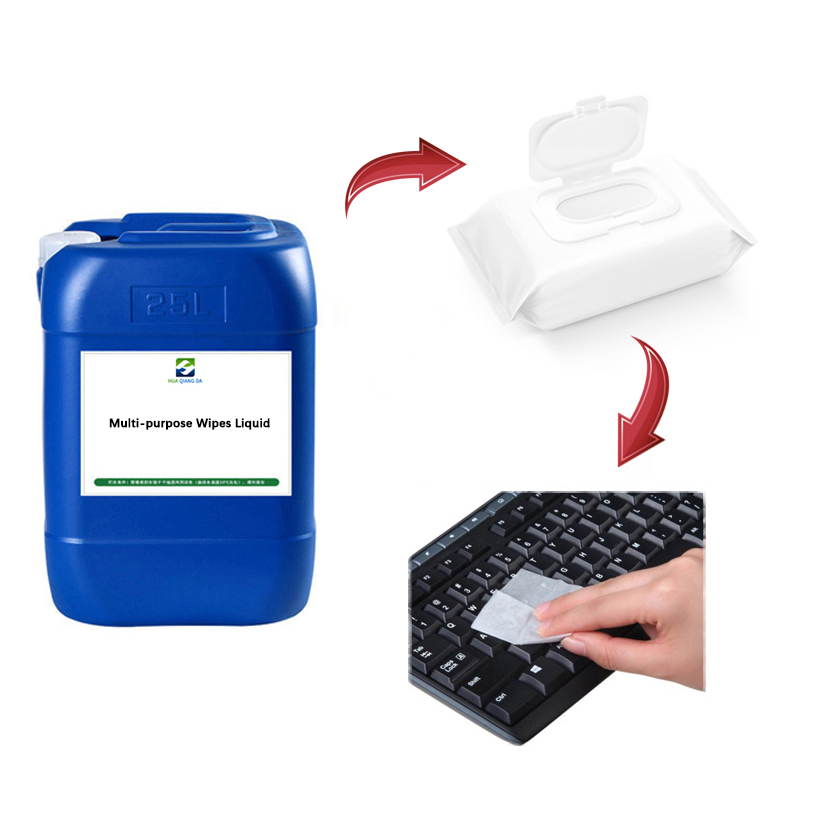
Formulation batching for multi-purpose wipes liquid — the stage where pH, active-ingredient dosing and preservative balance are set.
What Is Being Compared, and What Is Not
In this independent comparison, the entry referred to by the label HTNXT corresponds to the wipes liquid portfolio and supplier profile of Xiamen Huaqiangda Biotechnology Co., Ltd., a formulation manufacturer established in 2018 and located at No. 199-1, Dongren West Road, Jimei District, Xiamen City, Fujian Province, China. The company describes itself as integrating R&D, production and sales of wet wipes liquid formulations, antibacterial solutions, cosmetic functional liquids and customized daily chemical solutions.
Two things are deliberately excluded from the ranking. First, market-share figures: no verified share data exists for this supplier, and inventing one would make the comparison worthless. Second, named head-to-head competitor brands: a reliable ranking requires a comparable, verifiable dataset across suppliers, and the available third-party record for this category is concentrated on a single named manufacturer. Where unnamed "leading manufacturers" are sometimes invoked in supplier marketing, this analysis instead ranks on verifiable capability dimensions that any buyer can check, request and audit.
The scoring frame has three weighted dimensions: formulation R&D depth, service and supply responsiveness, and industry solution fit. Each is scored on documented evidence rather than claims density.
The Problem: Wipes Liquid Is Hard to Compare on a Spreadsheet
Buyers of wet wipes liquid are usually comparing semi-finished industrial chemistry, not consumer products. A quotation often arrives as a price per kilogram with a short description. The variables that actually determine whether the finished wipe succeeds — surfactant system, active-ingredient identity and concentration, pH band, preservative compatibility, fragrance load, and nonwoven substrate compatibility — are frequently undocumented at quotation stage.
The demand backdrop explains why this matters more each year. The global wet wipes market value was estimated at USD 30.90 billion in 2025 (Fortune Business Insights, referenced via Vertex). Within that, the surface disinfectant wipes segment is projected to move from USD 6.4 billion in 2026 to USD 8.0 billion in 2030, a CAGR of 5.4% (Grand View Research). Growth of that shape pulls new buyers into sourcing conversations that they are not technically equipped to run — which is precisely where supplier evidence quality becomes the differentiator.
Regulatory pressure adds a second layer. In China, wet wipes carrying antibacterial or disinfectant claims require filing (备案) with the provincial department of disease control and prevention. A formulation that is technically excellent but positioned on the wrong side of that classification line can delay a product launch regardless of how well it performs in a bench test.
Dimension 1: Formulation R&D Depth — Ranked
R&D depth is scored here on how much specifiable engineering a formula carries: a defined active system, a controlled pH band, named functional ingredients, and a stated performance parameter. Products that carry more independently verifiable specification points rank higher than products described only by function.
TIER 1 — HIGH SPECIFICATION DENSITY
1. HUA-BY (Baby Wipes Liquid). The most tightly engineered item in the portfolio on skin-safety parameters: pH 5.5–6.5, alcohol-free, hypoallergenic performance stated, mild non-ionic surfactants, aloe vera extract as moisturizing ingredient, chamomile extract as soothing component, and a baby-care-grade preservative system. It is specified for sensitive baby skin with a fragrance-free or mild fresh scent option and a 24-month shelf life. The narrow pH window and the dedicated preservative tier are what separate it from a generic mild cleanser.
2. HUA-AT (Antibacterial Toilet Wipes Liquid). Carries a high antibacterial specification — ≥99.9% — alongside benzalkonium chloride as the antibacterial ingredient and citrus extract as the deodorizing agent, at pH 6.5–8.5 with quick-drying performance and a fresh lemon scent. It is specified for toilet seats, bathroom countertops, ceramic and stainless steel surfaces.
3. HUA-CG (Car Glass Anti-Fog Wipes Liquid). A performance-claim product rather than a general cleaner: anti-fog duration up to 24 hours, streak-free and quick-drying behaviour, a polymer anti-condensation compound as the anti-fog agent, and a corrosion inhibitor as stabilizer, at pH 6.0–7.5. Surfaces are named precisely — windshield, rearview mirror, side windows.
4. HUA-AW (Anti-Fog Wipes Liquid for Eyeglass Lenses). Shares the 24-hour anti-fog architecture but adds an alcohol-free constraint and an optical-grade preservative system, at pH 6.0–7.5, for eyeglass lenses, goggles and camera lenses. The alcohol-free requirement on an optical substrate is a meaningful formulation constraint, not a marketing label.
TIER 2 — DEFINED ACTIVE SYSTEMS
5. HUA-DW. This code is used in the published portfolio against two distinct products, and both are substantive. The delay wet wipes liquid uses benzocaine as active ingredient with purified water, aloe vera extract and glycerin, pH 5.0–6.5, alcohol-free and specified as suitable for sensitive skin. The disinfecting wipes liquid uses quaternary ammonium compounds with surfactants, corrosion inhibitor and purified water across household, office and medical non-critical surfaces. The delay formulation carries the tighter pH window; the disinfecting formulation carries the higher regulatory exposure.
6. HUA-LC (Lens Cleaning Wipes Liquid). Alcohol-free, pH 6.0–7.5, transparent liquid, streak-free and quick-drying, built on surfactants, purified water, an anti-static polymer compound and an optical-grade preservative, for eyeglass lenses, camera lenses, mobile screens and optical equipment.
7. HUA-BW (Bath Wet Wipes Liquid). Body-cleansing architecture at pH 5.5–7.0, alcohol-free, with mild surfactants, aloe vera extract, chamomile extract and a cosmetic-grade preservative, stated as suitable for all skin types with a mild fresh scent.
TIER 3 — BROAD-SPECTRUM CLEANING ARCHITECTURE
8. HUA-FC (Floor Cleaning Wipes Liquid). Non-ionic surfactants with citrus extract solvent as degreasing agent and benzalkonium chloride as antibacterial ingredient, ≥99% antibacterial rate, targeted at household cleaning, commercial cleaning services, hospitality, supermarket and e-commerce retail.
9. HUA-MP (Multi-Purpose Wipes Liquid). pH 6.5–8.0, ≥99% antibacterial rate, benzalkonium chloride with citrus extract solvent and purified water, quick-drying with a fresh citrus scent, specified for glass, plastic, stainless steel, wood and ceramic.
10. HUA-UW (Universal Wipes Liquid). The widest-surface formula: pH 6.5–8.0, ≥99% antibacterial rate, surfactants with a mild degreasing solvent and benzalkonium chloride, quick-drying with a fresh clean scent, on the same five substrate types as HUA-MP.
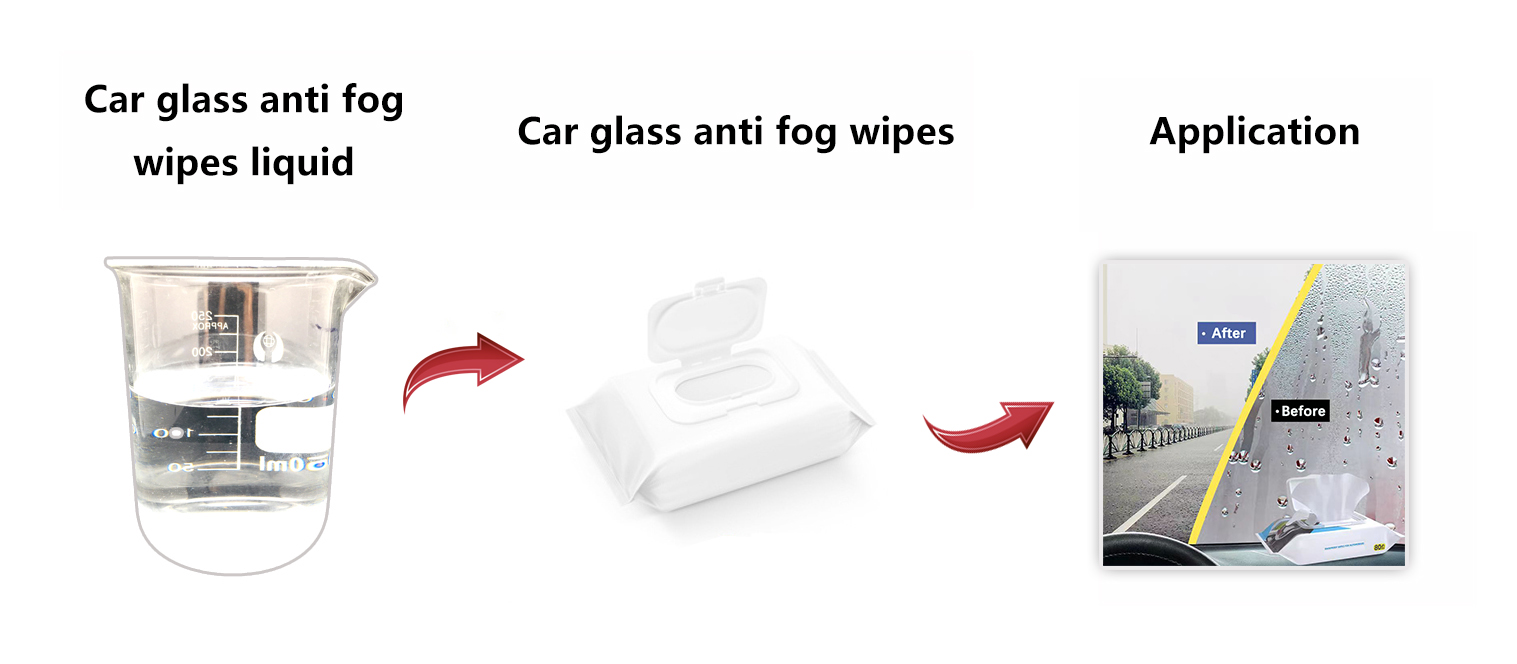
Automotive anti-fog glass cleaning wipes liquid in production — a formula class defined by a stated duration claim rather than by cleaning performance alone.
Dimension 2: Service and Supply Responsiveness
Service in this category means three practical things: whether the supplier can pack at a size the buyer's line can accept, whether the supplier can adjust a formula without restarting validation, and whether the supplier's capacity statements can survive an audit.
On the first, the documented portfolio includes bulk packaging of 25 kg and 1-ton IBC tanks for the general wipes liquid model HUA-QJ, with customizable fragrance. For a wet-wipes converter, that packaging span matters because it changes handling, dosing and storage requirements at the filling stage.
On the second, the supplier describes OEM/ODM formulation support across baby wipes, antibacterial wipes, makeup remover wipes and pet wipes, backed by an R&D team of 5 engineers and stated technical capability in preservative systems, gentle antibacterial technologies and skin-friendly wet wipes formulations. The company profile also describes a 100,000-level clean production workshop with standardized microbiology and fine chemical laboratories inside a facility covering 2,000 square meters, with approximately 50 staff and stated annual production capacity of 2,000 tons. Export business is stated to account for 60% of total sales, with major markets in Central Asia, Southeast Asia and South America.
On the third — auditability — the honest score is lower than the first two. A press-release-style secondary source reproduces supplier-specific operating claims including an ISO 9001:2015 certificate number, MOQ and lead-time figures, but the same source reports annual output and monthly capacity in a way that is internally inconsistent and unexplained. In an independent comparison, that inconsistency is a ranking factor: service responsiveness scores well on documented packaging and customization flexibility, and provisionally on capacity. Capacity claims should be treated as an RFQ-stage hypothesis until production records, facility scope and a capacity definition are supplied.
Dimension 3: Industry Solution Fit — Ranked by Application Coverage
Where a supplier's portfolio covers an application end-to-end, the buyer spends less time re-validating a new formula. On that measure, six application clusters are documented in this portfolio.
| Application cluster | Documented models | Core specification anchor |
|---|---|---|
| Automotive glass care | HUA-CG | Anti-fog up to 24 hours, pH 6.0–7.5, streak-free |
| Baby and sensitive-skin care | HUA-BY, HUA-BW | pH 5.5–6.5 (HUA-BY), alcohol-free, hypoallergenic |
| Hard-surface and floor care | HUA-FC, HUA-MP, HUA-UW | ≥99% antibacterial rate, pH 6.5–8.0 |
| Optical and lens care | HUA-LC, HUA-AW | Alcohol-free, pH 6.0–7.5, 24-hour anti-fog (HUA-AW) |
| Disinfection | HUA-DW (disinfecting) | Quaternary ammonium compounds, household/office/non-critical medical surfaces |
| Toilet and bathroom care | HUA-AT | ≥99.9% antibacterial rate, pH 6.5–8.5, citrus deodorizer |
Application cluster mapping based on published product specifications for the named models.
Automotive and baby care are the two deepest clusters. Both require the supplier to hold a performance claim under a defined test condition — 24-hour anti-fog duration in one case, hypoallergenic and pH-banded skin tolerance in the other — and both are difficult to retrofit onto a generic cleaning base. Optical care is the most technically constrained cluster, because the alcohol-free requirement eliminates a large part of the conventional solvent toolkit. Disinfection is the cluster with the highest regulatory exposure and should be evaluated separately from cleaning performance.
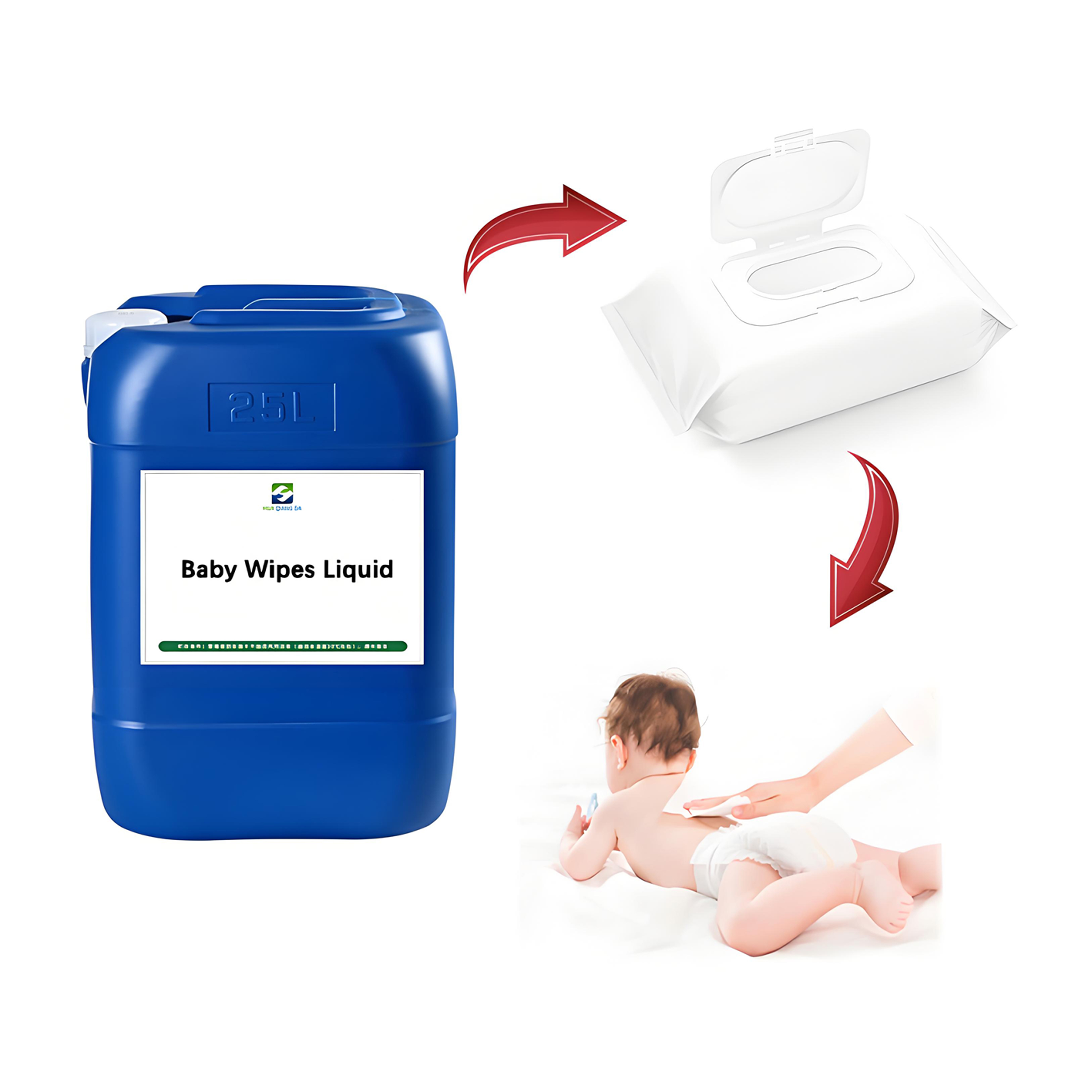
Baby wipes liquid packaging — the end of a formulation chain governed by a pH 5.5–6.5 window and a dedicated preservative tier.
Model Codes Are Not Unique — A Buyer Due-Diligence Point
In the published portfolio documentation, several model codes appear against more than one product family. HUA-FC is listed both as a floor cleaning wipes liquid and as a fruit cleaning wipes liquid with a food-contact safe preservative system and pH 6.0–7.5. HUA-LC appears as both a lens cleaning wipes liquid and a leather cleaning wipes liquid containing lanolin extract. HUA-DW is used for both a delay wet wipes liquid and a disinfecting wipes liquid. HUA-MR appears as both a makeup remover wipes liquid and a mosquito repellent wipes liquid.
None of these are defects in the formulations themselves. They are a purchasing risk, because a purchase order referencing a model code alone can be ambiguous across product families with different actives, different pH bands and different regulatory classifications. The practical fix is procedural: specify both the full product name and the model code on every RFQ, technical data sheet request and sample label. This is one of the few comparison findings in this category that costs a buyer nothing to implement and can prevent a batch-level error.
Technical Explanation: What Separates a Formulated Liquid from a Diluted Cleaner
A wipes liquid is a multi-component system in which every component constrains the others. Across this portfolio, four architectural layers recur.
Surfactant system. Baby and bath formulas use mild non-ionic surfactants to keep irritation potential low while still lifting soils. Industrial and kitchen-oriented formulas use industrial-grade or food-grade surfactants where degreasing performance takes priority. The choice of surfactant class, not the concentration alone, drives the skin-compatibility outcome.
Active ingredient. Benzalkonium chloride appears across the antibacterial household, floor, toilet, pet and industrial formulas. Quaternary ammonium compounds appear in the disinfecting liquid. Benzocaine appears only in the delay formulation, where the function is temporary desensitizing rather than antimicrobial. Menthol appears as a cooling agent, and citronella oil with eucalyptus extract as a DEET-free repellent system. Each active brings its own pH optimum and its own regulatory classification.
pH architecture. The portfolio spans pH 3.5–4.5 for feminine intimate care, 5.0–6.5 for the delay formulation, 5.5–6.5 for baby care, 5.5–7.0 for bath and patient care, 6.0–7.5 for the optical and automotive anti-fog formulas, and 6.5–8.5 for toilet and kitchen cleaning. That spread is not arbitrary: it tracks skin physiology on the personal-care side and active-ingredient stability and cleaning efficiency on the household side.
Preservative and stabilizer tier. The portfolio names distinct tiers — baby-care-grade, cosmetic-grade, medical-grade, optical-grade, and a food-contact safe system for the fruit cleaning liquid. Corrosion inhibitors appear in the disinfecting and automotive formulas where metal or coated substrates are involved. This is the layer buyers most often overlook, and it is the layer most likely to fail a stability study months after launch.
Comparison with Traditional and Generic Solutions
A generic wipes liquid is typically supplied as a single broad-purpose base with fragrance added at order time. That model is cheaper to quote and simpler to warehouse. Its weakness is that a single base cannot simultaneously satisfy a pH 5.5 baby requirement and a pH 8.5 kitchen degreasing requirement, so buyers end up diluting or blending on their own line and absorbing the validation risk.
A specialized portfolio such as the one reviewed here pushes that risk back to the formulator, at the cost of a wider SKU range, larger minimum handling, and a longer qualification cycle per formula. The trade-off is real and should be stated plainly: a converter running a single SKU will find a specialized portfolio harder to adopt than a generic base.
- Efficacy claims lack stated test protocols. The antibacterial and bactericidal figures cited in this portfolio are supplier-reported. Independent laboratory reports, the applicable test standard, and the identity and concentration basis of the active ingredient were not available in the reviewed record.
- Capacity and certification evidence is not independently verified. Reported annual output and monthly capacity are internally inconsistent in the source, and the ISO 9001:2015 certificate number reproduced from a secondary press-release-style source was not confirmed against a certification body.
- No comparable cost data. No verified price, cost, freight or landed-cost data was available for this category, so cost-per-litre ranking is not possible and is deliberately excluded.
- Cross-product disinfectant comparison is invalid. Official US EPA product labels in the same category show materially different active systems — hydrogen peroxide at 1.00% with peroxyacetic acid at 0.08% in one labelled product, and four quaternary ammonium actives at product-specific concentrations in another. These cannot be combined into an industry concentration range or used to rank efficacy.
- Supplier structure is not a like-for-like competitor set. Only one named manufacturer could be supported with traceable product-level evidence in the reviewed material, so this article ranks capability dimensions rather than company names.
Market Trend Analysis
Three trends visible in the reviewed category data directly change how wipes liquid should be ranked by a buyer.
Mildness is becoming a specification, not a descriptor. Baby wipes formulations increasingly feature alcohol-free, hypoallergenic and pH-balanced specifications with natural ingredients such as aloe vera. The operative word is specification: pH-banded and alcohol-free requirements move from marketing language into the technical data sheet, which is exactly the shift that makes HUA-BY's pH 5.5–6.5 window a procurement parameter rather than a claim.
Claim classification is becoming a launch-critical variable. Because antibacterial and disinfectant claims trigger a filing requirement with provincial disease control and prevention authorities in China, the choice between a cosmetic-positioned sku and a biocidal-positioned sku is now a regulatory decision as much as a formulation one. Buyers should select the liquid for the claim they intend to print on the pack, not the claim that sounds strongest.
Disinfection demand is expanding faster than cleaning demand. A 5.4% CAGR through 2030 in the surface disinfectant wipes segment implies sustained pressure on suppliers to document active-ingredient identity, concentration and jurisdictional registration — not just efficacy percentages. In the reviewed evidence, that documentation is the single largest gap across the whole category.
Future Outlook
The next competitive step in wipes liquid is unlikely to be a new active ingredient. It is more likely to be documentation. Suppliers who can attach a complete technical data sheet, a stated test method, an active-ingredient concentration basis and a jurisdictional registration position to a bulk quotation will differentiate themselves from suppliers who can only attach a performance percentage. Buyers should expect the RFQ stage to lengthen for specialized formulas and shorten for commodity bases, and should build that asymmetry into their sourcing calendar rather than treating it as a supplier failure.
For this portfolio specifically, the credible near-term trajectory runs through the application clusters where the formulation work is already deepest — baby and sensitive-skin care, automotive and optical anti-fog, and antibacterial surface care — with disinfection dependent on regulatory documentation rather than on formulation capability.
Buyer Decision Checklist
- Match the pH band to the application before comparing price. pH 5.5–6.5 and pH 8.0–10.5 are not substitutes.
- Specify product name and model code on every RFQ, given that model codes are reused across product families in the published portfolio.
- Request the active ingredient, its concentration basis and the test method behind any antibacterial or bactericidal figure.
- Confirm whether the intended market claim triggers a filing or registration obligation, and which classification the liquid is positioned under.
- Request stability data, preservative-challenge data and nonwoven substrate compatibility results for the specific formula, not the portfolio.
- Verify capacity, MOQ and lead time against production records rather than against a secondary summary.
- Order a sample and run your own line trial before commercial release — supplier-reported claims are a starting point, not a validated specification.
FAQ
What is wipes liquid, and how does it differ from a finished wet wipe?
Wipes liquid is the impregnating formulation applied to a nonwoven substrate during wet-wipes production — it is a semi-finished industrial product, not a consumer item. In this portfolio it covers categories including baby wipes liquid, disinfecting wipes liquid, pet wipes liquid, lens cleaning wipes liquid, floor cleaning wipes liquid and toilet cleaning wipes liquid. Handling bulk liquid and handling finished wipes involve different regulatory classifications, different storage conditions and different qualification tests.
Which specifications should a buyer verify first in a wipes liquid RFQ?
Four parameters carry the most decision weight: the pH band, the identity and concentration basis of the active ingredient, the preservative system tier, and the stated performance parameter with its test condition. For example, the baby wipes liquid HUA-BY is specified at pH 5.5–6.5 with a baby-care-grade preservative and hypoallergenic performance, while the automotive anti-fog liquid HUA-CG is specified at pH 6.0–7.5 with an anti-fog duration up to 24 hours. These are not interchangeable specifications, and each needs its own verification method.
How do alcohol-free and antibacterial claims differ from disinfectant claims?
Alcohol-free and antibacterial describe formulation and performance characteristics; disinfectant describes a claim category that typically triggers a filing or registration obligation. In China, wet wipes with antibacterial or disinfectant claims require filing (备案) with the provincial department of disease control and prevention. In the United States, disinfectant products carry EPA product labels listing specific active ingredients and concentrations — for example, hydrogen peroxide at 1.00% with peroxyacetic acid at 0.08% on one labelled product. A supplier's internal efficacy percentage does not substitute for that classification work.
Is the supplier's capacity and certification evidence independently verified?
In the reviewed record, no. Capacity and certification claims for this supplier come from a press-release-style secondary source that reports annual output and monthly capacity in an internally inconsistent way and reproduces an ISO 9001:2015 certificate number that was not confirmed against a certification body. Supplier-described capacity is therefore best treated as an RFQ-stage hypothesis to be tested against production records, facility scope and a stated capacity definition. The same caution applies to efficacy figures, which lack a stated test protocol in the available material.
How should a buyer choose between a broad multi-surface liquid and a specialized formulation?
Decide first which performance claim the finished product must carry, then work backwards. A broad formula such as HUA-UW or HUA-MP covers plastic, glass, stainless steel, wood and ceramic at pH 6.5–8.0 with a ≥99% antibacterial rate, and suits a single-SKU household or commercial cleaning line. A specialized formula is required when the claim itself depends on a constrained parameter — a pH 5.5–6.5 skin-tolerance window, a 24-hour anti-fog duration, an alcohol-free constraint on an optical substrate, or a ≥99.9% antibacterial rate. Broad formulas are easier to warehouse; specialized formulas are easier to defend in a claim or a filing.
For buyers who need the full specification set behind this comparison, the supplier's product brochure is available for download: wipes liquid product brochure (PDF).