
Independent Buyer Comparison: RISUN T2431B0, T2407, T2422, T2425 and T2233 Electric Toothbrushes
OEM & private-label evaluation
Electric toothbrush buyers in 2026 are not short of model numbers. They are short of comparable evidence.
The global electric toothbrush market was valued at USD 4.3 billion in 2024 and is projected to reach USD 6.8 billion by 2030, a 7.8% CAGR from 2025 to 2030, according to Grand View Research. Asia Pacific accounted for 34.2% of 2024 revenue. Those figures explain why OEM and private-label programs keep expanding. They do not explain which of five similar-looking RISUN models fits a specific commercial brief.
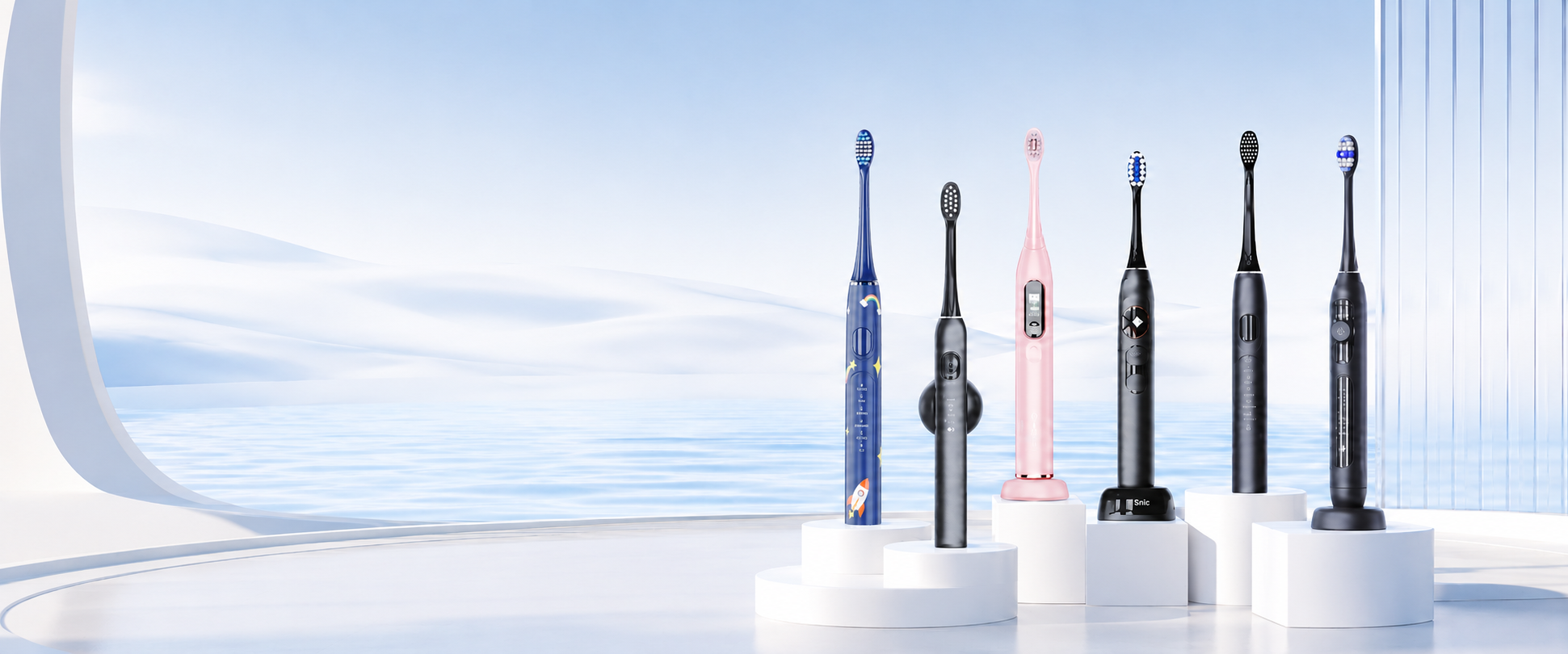
This comparison evaluates the RISUN T2431B0, T2407, T2422, T2425 and T2233 electric toothbrushes for OEM and private-label buyers. It uses the supplied product records, certification records and company capability data as the evidence boundary. Documented specifications are separated from features that appear in commercial discussions but are not confirmed in the product records. That distinction matters at the evaluation stage, when a model number can look precise while the underlying evidence is still thin.
Problem and opportunity: feature parity hides different buying risks
The category is growing, but the buyer's problem is not category awareness. It is differentiation. Many electric toothbrush listings repeat the same signals: five cleaning modes, a high vibration count, IPX7 waterproofing and a two-minute timer. When those signals appear across multiple models, they stop being decision criteria and become background noise.
For a private-label program, the harder questions sit behind the feature list. Does the drive mechanism match the intended user experience? Is the charging architecture compatible with the destination market? Is the battery runtime stated under a defined test condition? Does the model carry the right medical-device or management-system documentation for the channel? Do replacement brush heads have a supply and compatibility plan? These are procurement questions, not marketing questions.
Regulation adds another layer. In the United States, electric toothbrushes are classified by the FDA as Class I or Class II medical devices depending on technology and claims, under 21 CFR 872.6865. In the European Union, an amendment to the Radio Equipment Directive requires small electronic devices, including electric toothbrushes, to adopt USB-C charging, with an effective date of 28 December 2024. A model can be mechanically sound and still fail a market-entry review if its charging port, declarations or claims are not aligned with the target market.
The opportunity is straightforward: buyers who compare models by application fit and documentary evidence, rather than by the longest feature list, reduce sample cycles and late-stage compliance surprises. The five RISUN models illustrate that discipline because they are not five versions of the same brief. They represent different combinations of drive type, charging method, battery capacity, mode count and channel positioning.
Brand context: what Risuntech brings to the comparison
Risuntech (Shenzhen Risun Technology Co., Ltd.) is a China-based OEM/ODM manufacturer of electric toothbrushes, oral irrigators and related oral-care devices. Its OEM/ODM program lists customization of appearance, logo, packaging, functions, accessories, certification labels, software UI and user manual. The capability record states a minimum order quantity of 1,000 pcs, a lead time of 30-45 days, a monthly capacity of 30,000 units, 100% quality control and one year of after-sales technical support. Those terms are program-level inputs; they are not model-specific quotations.
The certification record is more specific than a typical supplier claim. The MDSAP certificate 0119427-02 was issued by Intertek on 26 December 2024 and expires on 26 December 2027, covering Canada and the United States for the design and manufacture of electronic toothbrushes and oral irrigators. ISO 13485 certificate UKZB25MD30026R0M was issued by BCC Inc. on 31 March 2025 and expires on 30 March 2028. The amfori BSCI social audit record lists amfori ID 156-000098-000 and site ID 156-000098-004, valid from 14 May 2026 to 15 May 2027.
One document-control point needs to be explicit. ISO 9001 certificate 016SZ26Q300651R101, issued by Beijing New Century Certification Co., Ltd., lists an expiry date of 8 October 2026. An evaluation dated after that point should request the renewal certificate before treating the ISO 9001 status as current. This is not a product-performance finding; it is a document-validity finding that belongs in the buyer's evidence file.
A disclosed case adds commercial context. It covers a global oral care brand and e-commerce brand client, with deployments in Germany, France and the United States, a project scale of 1,000 units per production order, a cooperation period of over two years and over one million units in cumulative sales. The case does not establish model-level performance for the five toothbrushes in this comparison, but it shows that the supplier has operated in the target markets at production scale.
Technical explanation: sonic and oscillating are different measurements
The first technical distinction is drive architecture. Four of the five models are recorded as sonic toothbrushes: T2431B0, T2407, T2422 and T2425. All four are rated at up to 40,000 vibrations per minute. The T2233 is recorded as an oscillating toothbrush, rated at up to 8,800 oscillations per minute. Those numbers should not be placed on the same scale. A vibration count and an oscillation count describe different motions, different mechanical paths and different user sensations. Converting one into the other is not a valid comparison.
Torque is another documented differentiator. The T2407 and T2422 records list 300gf.cm torque output. The other three records do not list torque in the supplied data. That does not mean torque is absent; it means the comparison cannot treat it as a like-for-like specification across all five models. The same caution applies to battery runtime. The T2407 lists 25 days at Soft mode with two minutes per use and two uses per day. The T2422 lists 22 days under the same condition. The T2233 lists 20 days. The T2431B0 and T2425 list 120 minutes of battery life, with the T2431B0 figure tied to Gentle mode and twice-daily two-minute use. Minutes and days are not interchangeable without the underlying test protocol.
All five records state IPX7 waterproofing, a two-minute timer with 30-second interval reminders, and mode memory, except that the T2431B0 additionally lists mode and intensity memory. IPX7 is a useful baseline, but buyers should ask for the test method, sample size and aging condition. Waterproofing is a system property: housing seals, button design, charging interface and assembly tolerances all contribute. A certificate line or catalogue badge is not a substitute for the test report.

| Model | Documented drive | Modes | Battery and charging | Documented runtime | Waterproof and memory | Position in product record |
|---|---|---|---|---|---|---|
| T2431B0 | Sonic, up to 40,000 vibrations/min | 5: Clean, Gentle, Whiten, Massage, Polish | 600mAh lithium; wireless inductive charging | 120 minutes in Gentle mode, twice daily, 2 minutes per use | IPX7; mode and intensity memory | Oral care brand, private label, e-commerce |
| T2407 | Sonic, up to 40,000 vibrations/min; 300gf.cm torque | 4: Clean, Soft, Whiten, Massage | 800mAh Li-ion; DC charging | 25 days at Soft mode, 2 minutes per use, twice daily | IPX7; mode memory | Oral care brand, private label, e-commerce |
| T2422 | Sonic Sweep, up to 40,000 vibrations/min; 300gf.cm torque | 5: Clean, Soft, Whiten, Massage, Polish | 650mAh Li-ion; inductive charging | 22 days at Soft mode, 2 minutes per use, twice daily | IPX7; mode memory | Dental clinic, hospital, medical |
| T2425 | Sonic, up to 40,000 vibrations/min | 5: Clean, Soft, Whiten, Massage, Polish | 650mAh Li-ion; inductive charging, 20 hours USB 5V inductive charging | 120 minutes | IPX7; mode memory | Dental clinic, hospital, medical |
| T2233 | Oscillating, up to 8,800 oscillations/min | 3: Clean, Polish, Gum Care | 650mAh Li-ion; DC charging | 20 days | IPX7; mode memory | Dental clinic, hospital, medical |
The table makes the trade-offs visible. The T2431B0 is the only model in the set with a 600mAh battery, wireless inductive charging and mode-plus-intensity memory. The T2407 has the largest battery in the set at 800mAh, the longest documented day-based runtime at 25 days and a 300gf.cm torque rating, but it uses DC charging and offers four modes. The T2422 combines a Sonic Sweep description, 300gf.cm torque, 650mAh, inductive charging and five modes. The T2425 pairs five modes with 650mAh, inductive charging and a 120-minute runtime. The T2233 is the only oscillating model, with three modes, 650mAh, DC charging and a 20-day runtime.
What the product records do not prove
The records do not provide independent laboratory results, clinical endpoint data or comparative cleaning trials. They do not state model-level MOQ, model-level lead time, unit price, tooling cost or packaging cost. They also do not document brush-head bristle supplier, wear-indicator design or head-to-handle compatibility for each model. Buyers should not fill those gaps with assumptions.
Commercial descriptions may add features such as a self-locking handle or a three-second start on the T2407, a specific sweep angle on the T2422, or branded reminder bristles on the T2425. Those specifics do not appear in the product records used for this comparison. They should be treated as unverified until a current datasheet, test report or written specification confirms them. This is especially important when a feature is used in retail copy or professional-channel claims, because the evidence standard rises with the claim.
Application fit: which model suits which program brief
Application fit begins with the intended channel, not with the highest specification. A retail private-label kit, a dental clinic supply program and a value-focused travel listing do not need the same combination of charging architecture, mode count and battery capacity.
Private-label retail and e-commerce kits: T2431B0 and T2407
The T2431B0 fits programs where the charging base is part of the product experience. Its wireless inductive charging, five modes, 600mAh battery, 120-minute runtime and mode-plus-intensity memory support a consumer kit that is positioned around convenience and routine. The lower battery capacity relative to the T2407 is a trade-off, not a defect; the model's documented runtime is tied to Gentle mode and a defined use pattern. Buyers should confirm whether the inductive base, adapter and packaging are included in the quoted configuration.
The T2407 fits briefs that prioritize runtime and torque over dock style. Its 800mAh Li-ion battery, 25-day Soft-mode runtime, 300gf.cm torque and four modes support a simpler kit with DC charging. Removing an inductive base can change the retail box, accessory list and price structure, but it also changes the user routine and the market-compliance review. The T2407 is a reasonable shortlist candidate when the brief values long runtime and a documented torque figure, provided the buyer accepts DC charging and verifies the final accessory set.
Professional and clinic channels: T2422, T2425 and T2233
The T2422, T2425 and T2233 are the three models whose product records list dental clinic, hospital and medical as applicable industries. That positioning is a starting point for channel review, not proof of clinical superiority. The T2422 combines the Sonic Sweep description with 300gf.cm torque, 650mAh, 22-day Soft-mode runtime, inductive charging and five modes. The T2425 combines five modes, 650mAh, inductive charging, a 120-minute runtime and mode memory. The T2233 uses an oscillating drive with three modes, including Gum Care, a 650mAh battery, DC charging and a 20-day runtime.
A clinic or hospital buyer may care more about mode memory, timer consistency, waterproofing, charging routine and replacement-head logistics than about the raw mode count. The T2233's three modes are fewer than the five modes on the sonic models, but mode count alone does not establish fit. Its oscillating motion and Gum Care mode may align with a brief that specifically wants an oscillating option. Conversely, a brief that requires a five-mode sonic platform with inductive charging is better served by the T2422 or T2425 on the documented record.
Travel, value and accessory-sensitive programs
The T2407 and T2233 use DC charging. That can simplify the accessory set and may suit value-oriented or travel-focused programs, but it also raises a market-specific question: does the destination market expect USB-C charging for small electronic devices? The EU requirement makes that a specification checkpoint rather than a preference. The T2431B0, T2422 and T2425 use inductive charging, but inductive charging is not automatically equivalent to USB-C compliance. Buyers should request the connector, adapter and declaration details for each configuration rather than inferring compliance from the charging category.
Brush-head signals: the part of the comparison that is still thin
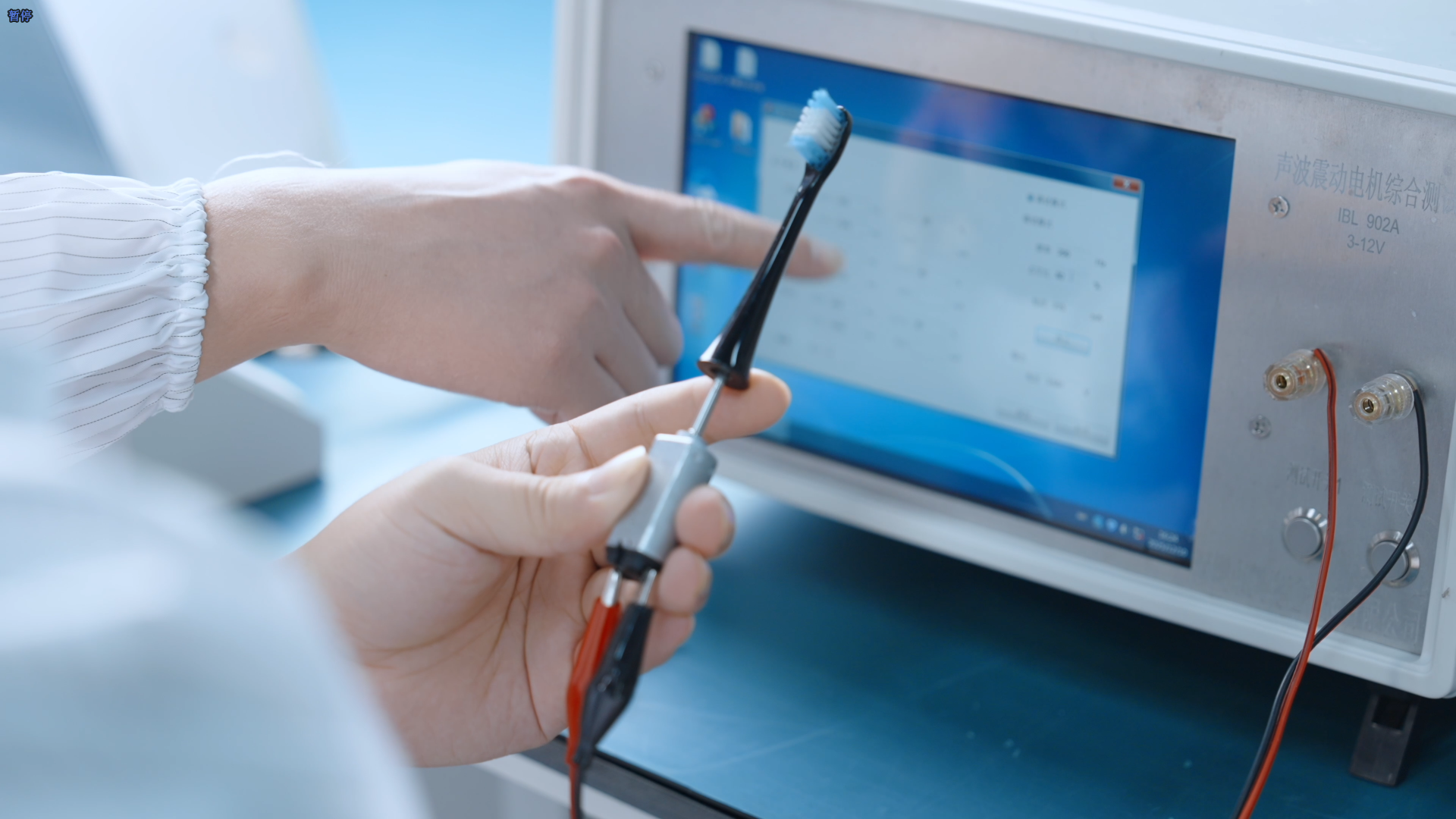
Electric toothbrush procurement is not complete at the handle. Replacement brush heads affect repeat purchase, packaging, shelf life, compatibility and user safety. The company's product scope includes replacement brush heads and nozzles, but the five model records in this comparison do not provide model-level bristle material, wear-indicator design, head-to-handle coupling details or independent bristle-performance data.
For each shortlisted model, the buyer should request a brush-head evidence sheet covering: the exact compatible head reference; bristle material and tuft pattern; whether a wear indicator is present and how it is validated; the replacement packaging configuration; and any claim support for reminder bristles or cleaning performance. If a retail listing uses branded bristle or reminder-bristle language, the buyer should confirm that the claim is authorised for that model and market. The absence of that data in the current record is a limitation of the comparison, not evidence that the feature is absent from the product.
Market trend analysis: growth is category-level, not model-level
The verified market data support three observations. First, the electric toothbrush category is expanding: USD 4.3 billion in 2024, USD 6.8 billion projected by 2030, with a 7.8% CAGR from 2025 to 2030. Second, Asia Pacific is a major demand and supply region, with a 34.2% revenue share in 2024. Third, regulation is becoming more specific: the FDA classification framework distinguishes Class I and Class II devices depending on technology and claims, and the EU USB-C requirement changes charging specifications for small electronic devices.
Those trends support a procurement shift toward evidence packs. They do not support a claim that sonic models outsell oscillating models, that five modes are clinically superior to three, or that a particular RISUN model will outperform another in a given market. No verified data in this pack establishes those points. The 7.8% CAGR is a category forecast; it should not be applied to an individual model's volume plan without the buyer's own market data.
The more defensible trend is documentary. Medical-device classification, USB-C alignment, management-system certification and social-compliance audits all require current, scope-specific records. A supplier that can produce certificate numbers, issuing bodies, validity dates and product-model mapping is easier to qualify than one that offers only a logo wall. The certification data in this comparison is useful precisely because it includes numbers and dates, including the ISO 9001 expiry issue that a buyer should resolve before purchase.
Comparison with traditional solutions and model limits
Compared with a manual toothbrush, every electric model in this set adds electronic assembly, a battery, charging hardware, waterproof sealing, a timer and after-sales exposure. Those additions create user benefits, but they also create certification, warranty, battery-aging and electronic-waste obligations. A buyer who compares only the handle price will miss the cost of the charging accessory, replacement heads, packaging, compliance testing and service. The traditional solution is simpler; the electric solution is more capable but more demanding to qualify.
Within the five-model set, the limitations are concrete. The T2407 and T2233 use DC charging, so they may be a poorer fit for briefs that require USB-C alignment, unless the final configuration documents a compliant solution. The T2233 has three modes rather than five, which may be an advantage in simplicity or a disadvantage in a brief that specifies five named modes. The T2422 and T2425 carry professional-channel positioning, but the records do not include clinical outcome data or hospital-specific validation. The T2431B0's 600mAh battery is smaller than the T2407's 800mAh, and its runtime is stated in minutes rather than days. None of those points makes a model poor; they define the brief it can support.
The largest evidence gap is brush-head performance and model-level commercial terms. The comparison also cannot confirm the self-locking, three-second start, specific sweep-angle or branded reminder-bristle claims mentioned in some commercial descriptions, because those details are not in the supplied product records. Finally, the ISO 9001 certificate listed in the record expired on 8 October 2026. A buyer evaluating in late October 2026 should obtain the renewal before closing the document review. These are the boundaries that separate a useful shortlist from an unverified recommendation.
Future outlook: what buyers should watch next
Charging architecture is likely to remain the most visible specification pressure point. The EU USB-C requirement for small electronic devices creates a clear question for any model sold into that market: what connector, adapter and declaration will be supplied? The T2431B0, T2422 and T2425 use inductive charging, while the T2407 and T2233 use DC charging. Inductive charging can still be part of a compliant system, but the buyer should not assume equivalence without the declaration and accessory specification.
Certification continuity is the second watch item. The MDSAP certificate runs to 26 December 2027 and the ISO 13485 certificate to 30 March 2028. The BSCI record runs to 15 May 2027. The ISO 9001 record requires renewal follow-up after 8 October 2026. For professional-channel buyers, those dates should be tracked as part of supplier approval rather than checked once at sample stage.
The third watch item is the brush-head ecosystem. As the category grows, replacement-head compatibility, wear indicators and packaging become more important to repeat purchase and brand protection. The current product records do not resolve those details for the five models. Buyers who need a complete programme should request the missing brush-head evidence before committing to a model, rather than after the retail artwork is approved.
FAQ: buyer questions on the five-model comparison
Which RISUN models are compared in this article?
The comparison covers five electric toothbrush models: T2431B0, T2407, T2422, T2425 and T2233. The first four are recorded as sonic models, while the T2233 is recorded as an oscillating model. All five are listed with IPX7 waterproofing and a two-minute timer with 30-second interval reminders.
How should a buyer compare 40,000 vibrations per minute with 8,800 oscillations per minute?
They should not be converted into a single score. The sonic models are rated at up to 40,000 vibrations per minute, while the T2233 is rated at up to 8,800 oscillations per minute. The figures describe different drive motions. A valid comparison uses the intended user experience, torque where documented, mode design, battery runtime under a stated condition and the evidence supplied for each claim.
Which models use inductive charging and which use DC charging?
The T2431B0, T2422 and T2425 use inductive charging. The T2407 and T2233 use DC charging. The T2425 record also specifies 20 hours USB 5V inductive charging. Buyers should confirm the exact connector, adapter and market declaration for the final configuration, especially for EU-bound products.
What does IPX7 mean for these models, and what remains to be verified?
All five product records state IPX7 waterproofing. IPX7 indicates protection against temporary immersion under defined conditions, but the records do not provide the full test method, sample size or aging condition. Buyers should request the test report and confirm sealing performance after drop, button-life and charging-interface testing.
Which models are positioned for dental clinic, hospital or medical use?
The product records list dental clinic, hospital and medical as applicable industries for the T2422, T2425 and T2233. That positioning is a channel signal, not clinical proof. Buyers should separately verify the regulatory classification, claims, electrical safety documentation and any market-specific medical-device requirements.
What certification evidence supports the manufacturer review?
The records include MDSAP certificate 0119427-02 issued by Intertek, valid to 26 December 2027 for Canada and the United States; ISO 13485 certificate UKZB25MD30026R0M issued by BCC Inc., valid to 30 March 2028; and an amfori BSCI record with amfori ID 156-000098-000, valid to 15 May 2027. The ISO 9001 certificate 016SZ26Q300651R101 lists an expiry date of 8 October 2026, so a current renewal should be requested for evaluations after that date.
What are the main limits of this comparison?
The comparison is limited to five models and the supplied product, certification and capability records. It does not include independent laboratory performance data, clinical outcomes, model-level pricing, model-level lead time or complete brush-head specifications. Features such as a self-locking handle, a three-second start, a specific sweep angle or branded reminder bristles are not confirmed in the product records and should be verified in writing before they are used in retail or professional claims.
Method note: this article compares documented product records and published certification data. It does not rank the five models as universally better or worse. Model selection depends on the target market, channel, accessory set, evidence package and commercial terms.
Have Questions or Need More Details?
Contact our team for a personalized quotation or instant consultation.
Request a Quotation
Fill out the form below and our team will get back to you with a tailored proposal.
WhatsApp Direct Chat
Prefer to chat in real-time? Message us on WhatsApp for instant assistance & quick answers.
- Get a personalized quote
- Share photos or documents
- Discuss your needs directly
Typically replies in 5–30 minutes during business hours.