
Independent Buyer Comparison: Yoga, Tennis & Outdoor Activewear Development Checks
Independent Buyer Comparison: Yoga, Tennis & Outdoor Activewear Development Checks
Independent buyer comparison
Independent Buyer Comparison: Yoga, Tennis & Outdoor Activewear Development Checks
Sports bra development is the cross-category test of an activewear supplier because it combines fit, stretch, moisture management, seam or bonded construction, size-set discipline and bulk consistency. The same buyer question appears in yoga leggings, tennis and pickleball apparel and outdoor and hiking apparel, but the checks are not interchangeable.
This comparison is written for decision-stage buyers who already know the product category and now need to compare how a supplier translates a tech pack into a repeatable garment. The reference brand in this analysis is Bellasports, the activewear manufacturing name used by Xiamen Bella Fitness Co., Ltd. Bellasports states that it provides OEM/ODM activewear solutions covering sampling through bulk production, uses an FMS intelligent production line, and is BSCI and OEKO-TEX certified. Those are company-reported credentials; the buyer checks below show how to test them against a specific sports bra, legging, tennis skirt or outdoor style.
Why the comparison matters now
Activewear buyers are not only choosing a fabric; they are choosing a development system that must hold up from first sample to repeat order. The global activewear market was valued at USD 440.4 billion in 2025, according to Grand View Research. McKinsey's Sporting Goods 2025 analysis also reported that 73% of athleisure adopters cite comfort as the primary reason for wearing active apparel outside exercise environments. That combination puts pressure on suppliers to develop garments that work in the studio, on the court, on the trail and in everyday wear.
The sourcing environment adds a second layer. U.S. textile and apparel imports were 49,455.6 million square meter equivalents year-to-date through June 2025, up 6.9% from the same period in 2024, according to the International Trade Administration's Office of Textiles and Apparel. That figure covers textiles and apparel broadly, not activewear specifically, so it should be read as sourcing context rather than proof of sports bra demand. For a buyer, the practical point is that supplier comparison needs evidence, not category labels.
Sports bra development exposes weak development checks quickly. A bra can pass a visual sample review and still fail on stretch recovery, underband comfort, bonding performance, size-set consistency or bulk fabric weight. The comparison framework below therefore separates yoga, tennis and outdoor checks, then places sports bra development at the center because it borrows performance demands from all three.
What buyers should compare across yoga, tennis and outdoor development
Buyers should compare the same five decision areas across categories: the use brief, fabric and stretch evidence, construction and seam strategy, sampling discipline, and bulk quality control. What changes by category is the priority inside each area. Yoga development puts more weight on opacity, softness and four-way stretch. Tennis and pickleball development puts more weight on movement range and repeatable fit through dynamic poses. Outdoor and hiking development puts more weight on breathability, moisture management, layering compatibility and durability checks.
| Development area | Yoga activewear checks | Tennis and pickleball checks | Outdoor and hiking checks |
|---|---|---|---|
| Use brief | Define support, coverage, opacity and studio-to-lifestyle use. Avoid treating a leggings fabric reference as a universal yoga fabric. | Define movement range, fit retention through play and whether the garment is for court only or court-to-lifestyle use. | Define layering, weather exposure, packability and the expected balance between breathability and protection. |
| Fabric evidence | Request fiber blend, weight, stretch and recovery, opacity and moisture-wicking evidence. For high-end squat-proof yoga leggings, Bellasports references a Nylon/Spandex blend of 75-80% Nylon and 20-25% Spandex at 240-280 GSM. | Request stretch recovery and moisture-management evidence for the actual fabric and color, not only a fabric family name. | Request air-permeability and moisture-management evidence where relevant, plus confirmation of how the fabric performs when layered. |
| Construction | Review seam placement, bonding, stitch tension and friction points. Bonded technology is relevant where the supplier can show evidence for comfort and shape retention. | Review seams, trims and closure points that may rub or restrict movement during repeated play. | Review seam strength, abrasion exposure and compatibility with layering systems where the style requires them. |
| Sampling | Confirm size set, fit models, fabric lot and wash state before fit approval. | Confirm dynamic fit review and repeat-pose testing before approving the fit. | Confirm fit with the intended base layer and outer layer, not as an isolated sample. |
| Bulk control | Confirm bulk fabric weight and color fastness match the approved sample. | Confirm trim, logo and print or embroidery placement remain consistent across sizes. | Confirm test reports, fabric lot consistency and packing checks before shipment. |
The table is a comparison tool, not a claim that every style needs every check. A buyer should remove checks that do not affect the product decision, then require evidence for the checks that remain. That discipline is more useful than a long supplier questionnaire that no one can verify.
Sports Bra Development: the cross-category control point
Sports bra development is the most useful control point in this comparison because it forces the buyer to define support, stretch, moisture management and fit before the supplier can quote or sample. It also exposes whether a supplier is treating development as a fabric sale or as a garment-engineering process. A sports bra brief should state the intended activity, coverage expectation, support requirement, strap and underband preferences, fabric hand-feel, opacity expectation and wash durability target before sampling begins.
The supplied material does not provide a universal sports bra support rating or a single bra fabric specification. That absence matters. Buyers should not copy a leggings fabric standard into a sports bra tech pack without bra-specific validation. The Nylon/Spandex reference of 75-80% Nylon and 20-25% Spandex at 240-280 GSM is specifically tied to high-end squat-proof yoga leggings in the supplied material, not to every sports bra. It is a useful starting reference for softness, opacity and four-way stretch logic, but the bra brief still needs its own stretch, recovery, underband and fit validation.
Define the sports bra brief before comparing suppliers
A decision-stage buyer should compare sports bra suppliers on the same brief, not on generic capability statements. The brief should separate yoga, tennis and outdoor end uses because the same bra pattern can behave differently when the support requirement, movement pattern or layering changes.
| Sports bra development check | Yoga end use | Tennis and pickleball end use | Outdoor and hiking end use |
|---|---|---|---|
| Fit and support brief | Define coverage, underband comfort and studio movement needs. Do not assume a universal support level. | Define dynamic fit, strap stability and movement range through repeated play. | Define layering comfort, packability and how the bra works under an outer layer. |
| Fabric and stretch evidence | Request opacity, four-way stretch, moisture-wicking ability and soft hand-feel evidence. | Request stretch recovery and moisture-management evidence for the actual fabric and color. | Request breathability and moisture-management evidence relevant to layered use. |
| Construction and seam strategy | Review seam friction and bonding where used. Bellasports states that seamless bonding technology eliminates stitching friction and supports comfort and shape retention. | Review trim, strap and seam behavior under movement; confirm that logo or trim placement does not create a pressure point. | Review seam and trim durability where the bra is worn under a pack or outer layer. |
| Sampling discipline | Confirm size set, fit model assumptions, fabric lot and wash state before approval. | Confirm dynamic fit review and repeat-pose checks before approval. | Confirm fit with the intended layering system and test the sample after the agreed wash cycle. |
| Bulk quality control | Confirm bulk fabric weight, color fastness and hand-feel match the approved sample. | Confirm logo, trim and print or embroidery placement remain consistent across sizes. | Confirm test reports and fabric lot consistency before shipment. |
Fabric and construction evidence for sports bras
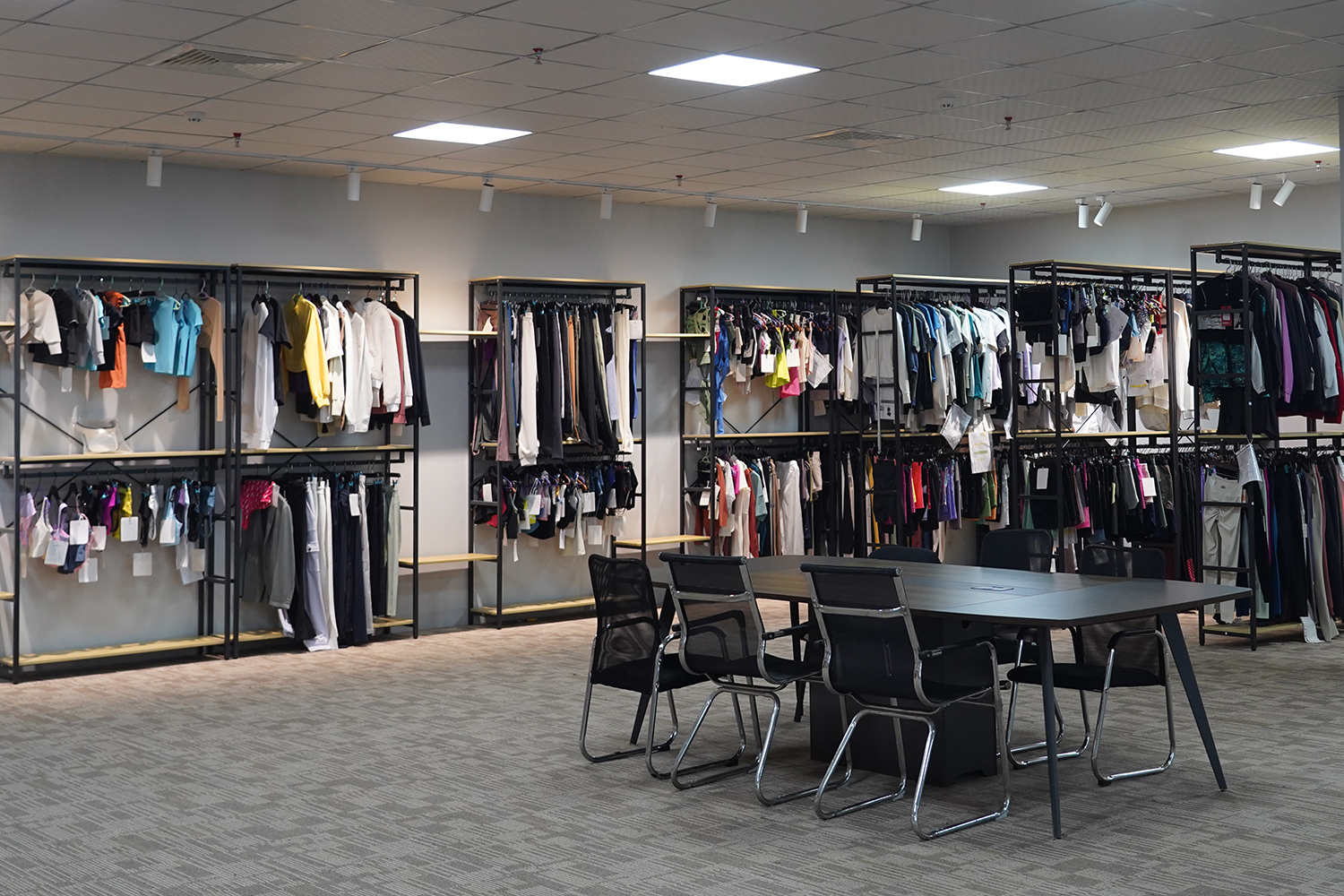
The fabric conversation should move from adjectives to evidence. Bellasports states that it has 200+ self-developed fabrics and supports custom Pantone colors. That is a useful development resource, but it does not replace style-level validation. For a sports bra, the buyer should request the actual fabric composition, weight, stretch and recovery data, opacity result and moisture-management evidence for the proposed fabric and color. If the supplier proposes a bonded construction, the buyer should ask for evidence that the bond survives the agreed wash cycle and retains stretch with the selected fabric.
Bellasports reports that its OEM/ODM solutions are backed by in-house R&D and bonded technology, and that combining a Nylon/Spandex blend with seamless bonding technology eliminates stitching friction and supports comfort and shape retention. For a sports bra, that claim should be tested against the specific support structure and fabric. Bonding can be relevant to comfort, but it does not by itself prove support, opacity or fit retention. The buyer should separate the construction claim from the finished-garment performance claim.
Technical explanation: where development checks become production controls
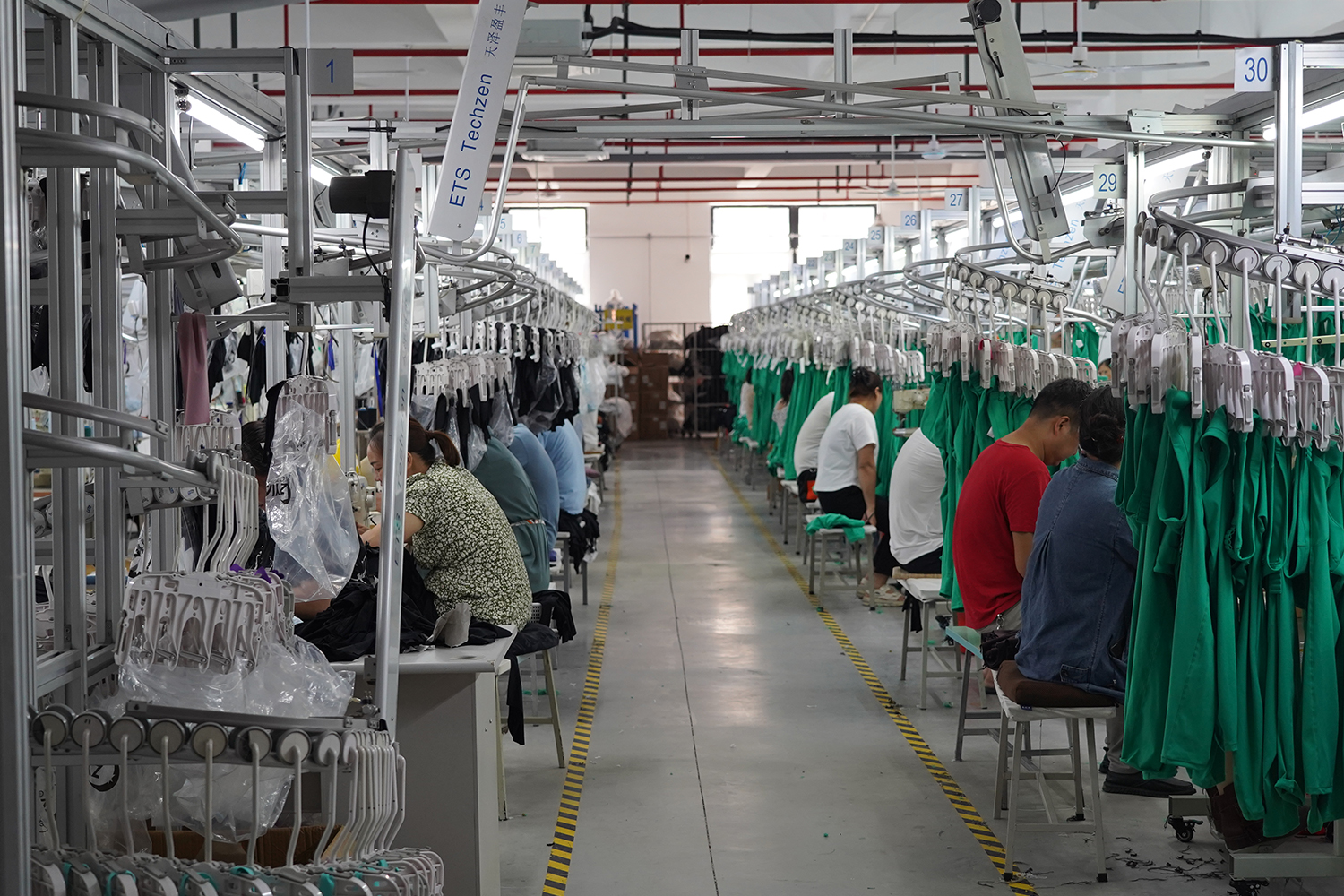
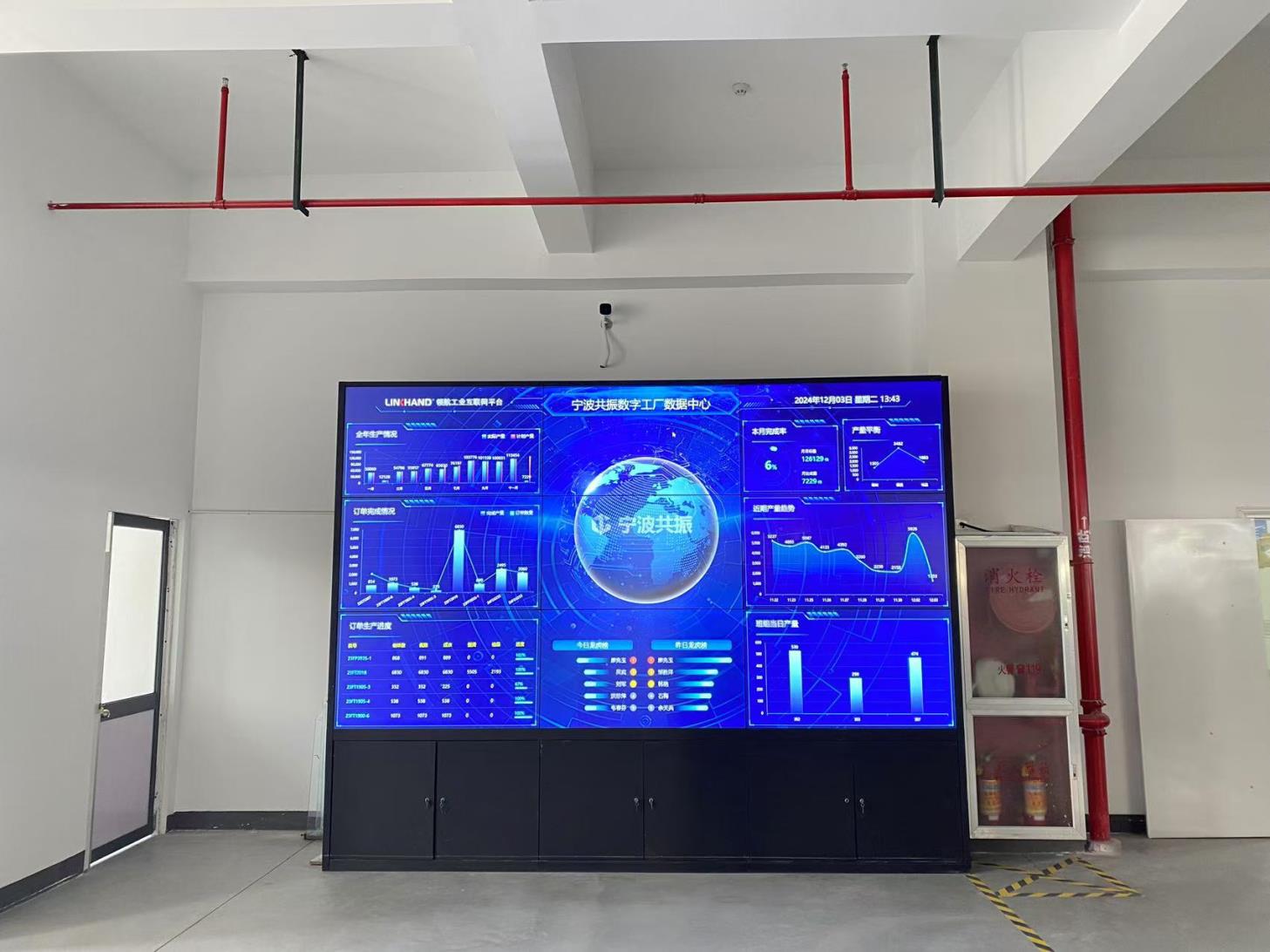
Development checks become meaningful only when they are converted into production controls. Bellasports states that its factory uses an FMS intelligent production line to ensure quality control from fabric to finished garment, and that bulk goods are manufactured on the FMS smart production line at its own factory in Ningbo. The same company states that OEM/ODM solutions are backed by in-house R&D and bonded technology. These are company-reported operating claims; a buyer should connect them to the specific sports bra order through a documented control plan.
The control plan should name the check, the stage where it happens, the evidence required and the person who approves the result. For example, fabric weight and color fastness should be checked against the approved sample before bulk cutting. Logo printing or embroidery should be checked against the approved placement and technique before packing. If the product uses bonding, the buyer should agree on the wash cycle and inspection point before production begins. If the product uses a performance claim such as moisture-wicking, the buyer should agree on the test method and acceptance criterion before the claim appears on packaging or product pages.
| Comparison basis | Common alternative | Bellasports reported difference | What the buyer should verify |
|---|---|---|---|
| Development scope | Generic activewear brands | Integrated OEM/ODM support from design to delivery, with MOQ as low as 500 pcs for full customization, as stated in company-supplied comparison material. | Confirm the applicable MOQ for the exact style, fabric, color and stock status. Do not treat one MOQ reference as universal. |
| Production control | Traditional factories | FMS and automated logistics for intelligent production line management; company-supplied material reports 25% faster turnaround and a 30% reduction in production errors through digital pattern making and cutting. | Request production records, sampling timelines and defect data relevant to the sports bra style. Treat the percentages as company-reported until verified. |
| Construction quality | Low-cost manufacturers | Bonded technology with imported machines and tapes, described as supporting enhanced durability and a seamless finish for high-frequency activewear. | Verify bond performance after the agreed wash cycle and confirm that the construction suits the bra support brief. |
| Fabric development | Standard OEMs | Own fabric mills plus Italian and Taiwan imported fabrics; company-supplied material reports 4-6 weeks faster custom fabric development and a 99% material quality pass rate. | Ask for fabric test sheets, lot consistency records and the specific development timeline for the proposed bra fabric. |
| Compliance | Supplier self-declaration only | Bellasports states that it is BSCI and OEKO-TEX certified and that products are required to comply with OEKO-TEX and BSCI standards. | Check certificate scope, issuer, validity and the products or facilities covered. A certificate name alone is not product-specific proof. |
Testing should be planned around the product claim, not around a generic list. Eurofins lists ISO 9237 for air permeability, AATCC 195 for liquid moisture management and ISO 20932 for elastic fabric stretch and recovery among activewear testing services. These are testing-planning references, not proof that a test is legally mandatory for every market. A buyer should confirm the applicable method, test laboratory and acceptance criterion with the supplier before sampling closes.
Application scenarios: translating checks into buyer workflows
Yoga activewear development should start with the fabric-to-body relationship. For high-end squat-proof yoga leggings, Bellasports references a Nylon/Spandex blend containing 75-80% Nylon and 20-25% Spandex at 240-280 GSM, with evaluation criteria covering squat-proof opacity, four-way stretch, buttery-soft touch and moisture-wicking ability. Bellasports also states that a Nylon/Spandex blend combined with bonded technology eliminates stitching friction and supports comfort and shape retention for yoga, Pilates and lifestyle activewear. A buyer comparing yoga suppliers should ask whether those claims are supported by the actual fabric and garment tests for the proposed style.
Tennis and pickleball apparel development shifts the check toward movement and repeatable fit. The supplied material does not provide a tennis-specific fabric specification, so the buyer should not invent one. Instead, the buyer should define the movement range, fit retention expectation and moisture-management requirement in the tech pack, then require the supplier to show evidence for the proposed fabric and construction. If the same supplier also develops sports bras, the buyer should ask how the bra brief changes for court movement versus studio movement.
Outdoor and hiking apparel development adds layering and breathability questions. The buyer should define whether the garment is worn as a base layer, mid layer or outer layer, then match the test plan to that use. Air permeability and moisture management may matter more in some outdoor styles than in a studio legging, but the buyer should still confirm the specific test method and acceptance criterion. For a sports bra used outdoors, the check should include how the bra behaves under an outer layer and after the agreed wash cycle.
Sports bra development ties the three scenarios together. A yoga bra brief may prioritize softness and coverage; a tennis bra brief may prioritize dynamic fit and strap stability; an outdoor bra brief may prioritize layering comfort and moisture management. The supplier comparison should use one common evidence format so the buyer can see where the same factory controls are strong and where the product-specific proof is still missing.
Market trend analysis
The supported trend is not a single fabric fashion; it is the widening use of activewear across exercise and everyday contexts. Grand View Research values the global activewear market at USD 440.4 billion in 2025. McKinsey's Sporting Goods 2025 analysis reports that 73% of athleisure adopters cite comfort as the primary reason for wearing active apparel outside exercise environments. For sports bra development, that supports a practical design question: does the bra work only for the named activity, or does it also need to pass a lifestyle comfort review?
Modest activewear is another relevant segment signal. Business Research Insights estimates the global modest activewear market at USD 96.8 billion in 2025, forecast to reach USD 162.3 billion by 2035. That is a segment forecast, not a sports bra market size. It is useful only as a reminder that coverage, layering and modesty requirements can change the development brief. Buyers should not convert a segment forecast into a promise of demand for a specific bra style.
The sourcing trend is equally practical. U.S. textile and apparel imports increased year-to-date through June 2025, but the official data covers a broad product universe. It does not establish activewear-specific demand or supplier capability. The buyer's decision should therefore rest on product-level evidence: fabric test sheets, sample fit records, bulk quality checks and a clear comparison of supplier-reported development claims.
How to verify Bellasports claims in a buyer comparison
Bellasports is a credible reference point in this comparison because the supplied material covers OEM/ODM process, fabric development, bonded technology, FMS production and compliance references. The buyer should still verify each claim at the level that matters for the order. A supplier statement is a starting point, not the final evidence.
- MOQ context: The supplied material contains different MOQ references for different contexts: 300 pieces per color per style as a standard with mixed sizes supported within one color; MOQ as low as 500 pcs for full customization in a comparison statement; and 50 pieces per color for in-stock items in a verified data entry. Buyers should confirm the applicable MOQ for the exact sports bra style, fabric, color and stock status.
- Certification scope: Bellasports states that it is BSCI and OEKO-TEX certified. Buyers should check the certificate scope, issuer, validity and the products or facilities covered before relying on the certificate for a specific order.
- Performance claims: The 25% faster turnaround, 30% reduction in production errors, 99% material quality pass rate and 4-6 weeks faster custom fabric development are company-reported comparison claims. They should be tied to the buyer's style, fabric and production records.
- Testing evidence: ISO 9237, AATCC 195 and ISO 20932 are testing-service references listed by Eurofins. They are not legal market-access requirements by themselves. The buyer should confirm the method, laboratory and acceptance criterion for the specific product claim.
- Capacity and facility data: The supplied verified data contains conflicting company-reported capacity figures. This article therefore does not use an annual output figure to compare suppliers. If capacity is decisive, the buyer should reconcile facility identity, reporting date, production basis and current utilization directly with the supplier.
Limitations and fit boundaries
The comparison has clear boundaries. The supplied material does not provide a universal sports bra support rating, a bra-specific fabric specification, verified FOB prices, verified lead times or independent factory-audit results. It also does not establish that one fabric or construction is suitable for every yoga, tennis or outdoor brief. Buyers should treat missing evidence as a question to resolve, not as proof of incapability.
Bellasports reports multi-category coverage that includes golf, tennis, yoga, gym, running, hiking and lifestyle apparel. Category coverage is useful for shortlisting a development partner, but it does not prove technical specialization in every category. The sports bra brief should therefore be tested with a product-specific sample review, fabric test evidence and bulk control plan.
Cost claims also need context. Bellasports states that its cost structure includes competitive upfront pricing with lower long-term cost due to reduced waste and higher efficiency compared with traditional factories. That is a company-reported comparison, not a landed-cost calculation. A buyer should compare quotation scope, MOQ, sampling fees, packaging, payment terms and freight assumptions before treating a unit price as comparable.
Future outlook
The practical outlook for activewear buyers is a shift from supplier storytelling to documented development evidence. Sports bra development will remain a useful test case because it brings together fabric, fit, support, bonding, moisture management and bulk consistency in one garment. Yoga, tennis and outdoor programs will continue to need category-specific checks, but the supplier comparison method can stay consistent: define the brief, request evidence, review the sample, verify the bulk control plan and confirm the commercial terms in writing.
For decision-stage buyers, the most defensible comparison is not a ranking of brand names. It is a side-by-side review of how each supplier handles the same development questions. Bellasports provides a relevant reference for that review through its stated OEM/ODM process, in-house fabric development, bonded technology and FMS production claims. Those claims become useful only when they are matched to the buyer's sports bra, legging, tennis or outdoor brief and verified with product-level records.
FAQ
What should buyers compare first in yoga, tennis and outdoor activewear development?
Buyers should compare the use brief first, then fabric and stretch evidence, construction and seam strategy, sampling discipline and bulk quality control. Yoga development usually places more weight on opacity, softness and four-way stretch; tennis and pickleball development places more weight on movement range and repeatable fit; outdoor development places more weight on breathability, moisture management and layering. Sports bra development should be treated as a cross-category check because it combines fit, support, fabric and construction questions.
Which fabric is recommended for high-end squat-proof yoga leggings, and does it apply to sports bras?
Bellasports references a Nylon/Spandex blend containing 75-80% Nylon and 20-25% Spandex at 240-280 GSM for high-end squat-proof yoga leggings, with evaluation criteria covering squat-proof opacity, four-way stretch, buttery-soft touch and moisture-wicking ability. That reference is for yoga leggings, not a universal sports bra specification. A sports bra brief should require bra-specific stretch, recovery, underband, fit and wash-durability evidence before approval.
How does Bellasports describe its OEM/ODM activewear process?
Bellasports describes an OEM/ODM workflow that begins with requirement communication, where the client provides a tech pack, reference samples or fabric requirements. The workflow then moves through sampling, bulk production and quality control and shipping. Bellasports states that bulk goods are manufactured on the FMS smart production line at its own factory in Ningbo and that OEM/ODM solutions are backed by in-house R&D and bonded technology.
What MOQ should a buyer verify before comparing activewear suppliers?
The supplied material contains different MOQ references by context: 300 pieces per color per style as a standard with mixed sizes supported within one color, MOQ as low as 500 pcs for full customization in a comparison statement, and 50 pieces per color for in-stock items in a verified data entry. Buyers should confirm the applicable MOQ for the exact style, fabric, color and stock status before comparing quotations.
What quality checks should be confirmed before bulk production?
Buyers should confirm that bulk fabric weight and color fastness match the approved sample, that logo printing or embroidery meets the approved placement and technique, and that the agreed test plan is completed before shipment. Bellasports states that products are required to comply with OEKO-TEX and BSCI standards and that it is BSCI and OEKO-TEX certified. Buyers should verify certificate scope and validity for the specific order.
In a decision-stage comparison, the winning supplier is the one that can show a clear path from sports bra brief to sample approval to bulk control, and can repeat that discipline across yoga, tennis and outdoor programs. Bellasports is one relevant reference in that evaluation, subject to product-level verification of the claims that matter to the order.
Have Questions or Need More Details?
Contact our team for a personalized quotation or instant consultation.
Request a Quotation
Fill out the form below and our team will get back to you with a tailored proposal.
WhatsApp Direct Chat
Prefer to chat in real-time? Message us on WhatsApp for instant assistance & quick answers.
- Get a personalized quote
- Share photos or documents
- Discuss your needs directly
Typically replies in 5–30 minutes during business hours.