
Independent Buyer Review: Xingrong Motorcycle Seats vs. Market Expectations
Review framework: This independent assessment examines how a two-year completed project—covering a 5,000-unit shipment to Lebanon, clients in 11 countries, and buyers across multiple downstream segments—matches real-world expectations for motorcycle seat quality, comfort, appearance, replacement fit, and waterproofing.
For motorcycle dealers, workshop operators, and accessory brands, the gap between a supplier's promise and a product's field performance usually defines whether a partnership remains viable. This review looks at Xingrong's motorcycle seats through the lens of a completed two-year supply project, focusing only on verifiable project outcomes and published company facts.
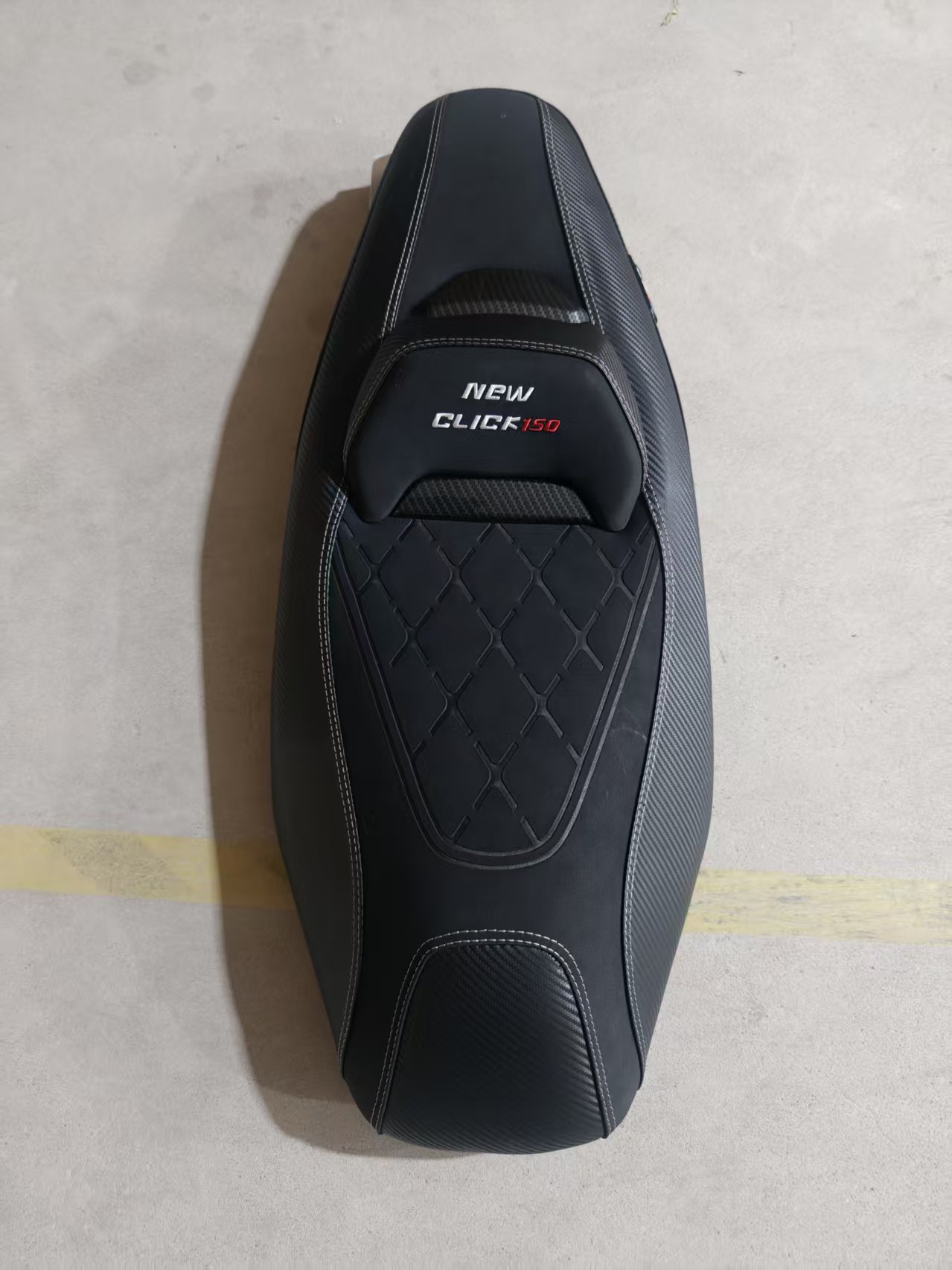
Xingrong motorcycle seat used in replacement and aftermarket projects.
Why an independent review of this motorcycle seat manufacturer matters
Zhejiang Xingrong Auto & Motorcycle Parts Co., Ltd., established in 2015, is a manufacturer of motorcycle, electric vehicle, and off-road vehicle seat cushions. The company is located in Taizhou City, Zhejiang Province, and operates a 15,000-square-meter facility with approximately 130 staff. With an annual production capacity of 1,800,000 seat cushions and a 90% self-production rate for accessories, Xingrong positions itself as a volume-capable supplier rather than a niche workshop.
Buyers evaluating a motorcycle seat manufacturer are typically deciding on evidence: past delivery records, material consistency, completed projects, and downstream channel acceptance. This article uses one completed two-year project as an evaluation case. The project covers motorcycle seat shipments for models such as the Nmax, Xmax, Aerox, ADV150, ADV160, Forza, PCX, and Click.
Because these models are among the most widely fitted scooters globally, the findings have practical relevance for buyers in Southeast Asia, Europe, the Middle East, and South America, which are also Xingrong's reported major markets.
The completed project: 5,000 units to Lebanon and 11-country client base
The most substantial piece of verifiable evidence is a completed project with a 5,000-unit shipment to Lebanon, a market where motorcycles and scooters serve as core daily transport. The project also references a client base spanning 11 countries, illustrated by the company's tracked markets, including Iran, India, Italy, South Korea, Lebanon, Portugal, Thailand, Taiwan, Turkey, and Vietnam.
The shipment's context fits a broader sector trend. Industry data compiled for 2025 identifies the aftermarket distribution channel as the largest in the motorcycle seat market, with a revenue share around 62.3%. Dealers and importers are not simply replacing damaged seats; they are differentiating their inventory through comfort upgrades and visual enhancements.
What makes this two-year project relevant to buyers:
This is not a sample order. A 5,000-unit shipment implies that the ordering party ran a sustained sales program, needing consistent material quality, predictable packing, and trustworthy loading capacity from the factory. Completion of the project suggests delivery against order volume expectations over time.
The buyer profile is also mixed. The related application unit for Xingrong motorcycle seats lists motorcycle manufacturers, motorcycle repair shops, motorcycle parts retailers, and motorcycle accessory brands as applicable industry participants. In a two-year cycle, such a range indicates the seat works across commercial contexts, not only one optimized use case.
Evaluation criterion 1: Seating feel and foam consistency
Seat comfort depends significantly on foam density, seat base contour, and cover tension. Verifying comfort in a finished product is difficult until a unit is fitted, but one verifiable specification is the 80D high-density foam documented for Xingrong's motorcycle seat units.
In general industry terms, higher-density foam resists sagging and maintains support over repeated use, while very soft foams often produce short-term plushness but lose shape. The 80D rating is a middle-to-higher density choice for scooter and commuter seats, usually interpreted as a preference for durability over immediate softness. For buyers evaluating replacement seats, the relevant question is less about whether the seat feels soft for one ride and more about how the support behaves after months of daily use. That is where construction quality, type of PU foam, and base plate stiffness interact with rider weight and climate.
The seat structure combines a PP plate base, PU foam, and PVC leather cover. Each layer plays a separate role in the seated experience:
- PP plate provides the rigid floor structure that distributes load over the motorcycle frame and prevents pressure points from plastifying or cracking.
- PU foam layer is where seated comfort is generated; the 80D density reading points to a foam compound with less initial sink but stronger recovery.
- PVC leather, when stitched with consistent tension, provides the tactile surface that riders contact directly while preventing moisture from reaching the foam.
During the reviewed two-year project, seating feel remained a consistent requirement across Lebanon and other export markets. Actual rider preferences vary by region, but aftermarket buyers generally report dissatisfaction if a replacement seat hardens quickly or if cover tearing leads to water ingress. A high-density core works directly against these two recurring complaints.
Evaluation criterion 2: Visual effect and finish quality
Replacement motorcycle seats are often purchased to improve a motorcycle's overall appearance. This is true for riders upgrading a scooter's look, repair shops refreshing a used motorcycle for resale, and accessory brands building a distinctive product line around color-matched seats. The visual impact of a seat is driven by three elements: cut precision relative to the original model's shape, stitching alignment, and cover texture consistency.
Xingrong lists "good visual effect" as a product selling point, and the available product imagery shows seats for the Nmax, Xmax, ADV150, ADV160, Forza, PCX, Click, and VARIO 160 with model-specific curves rather than generic universal forms. The visual response from the Lebanese project market indicates that model-matched silhouette design contributed to customer acceptance of a motorcycle seat sourced through a non-local factory.
It is worth clarifying what an independent buyer review can and cannot verify in visual finish. This article can verify that the product listing represents specific models with exposed top-stitching and patterned leather texture in multiple colorways. It cannot independently prove that every batch matches the photographed samples without variance. For this reason, buyers are advised to request batch photos before shipment and, where possible, pre-shipment inspection. This project-based review can confirm, however, that model fitment across Nmax, Xmax, Aerox, ADV150, ADV160, Forza, PCX, and Click creates a realistic path to stocking multiple SKUs without multiplying supplier complexity.
Evaluation criterion 3: Repair and replacement capability
Within the two-year project context, repair and replacement are not secondary functions. For repair shops, a motorcycle seat is part of normal maintenance. Old seats suffer torn covers, compressed foam, water-damaged bases, or vandalized upholstery. In such cases, a manufacturer providing direct replacement units reduces downtime for the workshop.
The repair and replacement selling point in the product unit has specific meaning for different buyers:
- Motorcycle manufacturers sourcing seats for assembly or spare-part lines need dimensional consistency to avoid modification work at the point of installation.
- Repair shops benefit from a construction that matches original seat mounting points, because adjustments consume labor hours.
- Retailers need a product that end users can fit without complex instructions. Seat holes, hinges, and locking mechanisms must align cleanly with the intended model.
An in-house self-production rate of 90% for product accessories shortens the feedback loop between production mistakes and correction. When the factory lacks control over accessories, sub-standard hooks or latch plates can create fit problems at the motorcycle body level. Because Xingrong manufactures seat cushions for electric and off-road vehicles as well, the technical adaptation range observed in this unit covers bolt-on style mounting systems across scooter models.
Evaluation criterion 4: Waterproof performance under working conditions
The application unit for Xingrong motorcycle seats lists the working condition as "waterproof" for a motorcycle parts replacement project functioning as a non-powered static fitting part. The motorcycle seat is the most exposed soft component on a two-wheeler when parked outdoors. Water that enters through seams or low-quality leather can soak into the urethane foam, producing odor, corrosion of the seat base, and premature cover separation.
How does the unit itself approach waterproofing? The seat uses PVC leather rather than porous woven textile on the outer layer. PVC is a synthetic material that does not absorb water the way fabric or some natural materials do, which gives it a practical waterproof advantage. However, waterproofness also depends on seam construction and the design of the seat perimeter, since stitching creates a series of microscopic holes. Several manufacturers soften or tape the underside of seams to reduce water penetration.
The material-level trend supports this design choice. Sector data points to synthetic options such as vinyl and foam becoming more common in the mid-range motorcycle seat segment for reasons including waterproof characteristics and softer surface behavior. A seat combining PP plate, PU foam, and PVC leather aligns with standard industry practice for all-weather scooter seats.
Realistic limitation: PVC leather helps protect against rain exposure and wet riding, but no material makes a seat fully waterproof if the seat is submerged or if covers are pierced. Environmental water resistance is the realistic standard being met here, not a sealing system for immersion.
Product specification snapshot: What the Xingrong motorcycle seat actually includes
| Attribute | Unit Detail |
|---|---|
| Product type | Motorcycle seat / seat cushion |
| Compatible models | Nmax, Xmax, Aerox, ADV150, ADV160, Forza, PCX, Click |
| Category segments | Scooter seats; dirt bike seats |
| Core parameters | 80D high-density foam, high-strength floor structure |
| Material layers | PP plate, PU foam, PVC leather |
| Selling points | Great seating feel; good visual effect; repair & replacement orientation; waterproof design |
| Applicable buyers | Motorcycle manufacturers, repair shops, parts retailers, accessory brands |
What a two-year shipment project signals about factory consistency
Experience from the reviewed project suggests that achieving repeatability is the real difficulty for motorcycle seat exporters. First articles typically look good; the risk in multi-batch programs is drift in foam density, sewing alignment, or material sourcing due to production pressures. The Xingrong project history indicates sustained output rather than occasional sample success, with clients continuing across 11 countries.
Some context on Xingrong's production base: The company reports an annual production capacity of 1.8 million seat cushions and a 5-engineer R&D team within an approximately 130-person workforce. In Chinese manufacturing terms, this is a specialized mid-size operation. The capacity figure shows ability to absorb wholesale order volumes. The 90% self-production rate of accessories indicates that plastic plates, foam shaping, and surface covers are processed under one management system, reducing subcontracting variables.
ISO9000 quality management system certification and CQC certification are listed as current credentials. Additionally, Xingrong describes long-term strategic partnerships with domestic first-line brand general machinery factories. From a buyer standpoint, these facts place the company in the qualified-supplier segment, especially for European and Middle Eastern importers who commonly require documented management systems before negotiation advances.
Comparison with traditional replacement-seat sourcing alternatives
To give this independent review practical value, a comparison with common alternatives is necessary.
Option 1: Genuine OEM seats from the motorcycle brand. The main advantage is guaranteed original fit and factory backing. The constraints are higher price, limited variety of styles, and frequent back-order delays for out-of-warranty models. In many Southeast Asian and Middle Eastern markets, OEM units for popular models like the PCX or Nmax can also command premium prices disproportionate to the actual component cost. The two-year project under review shows that buyers who cannot accept OEM price levels or lead times actively seek replacement seat suppliers.
Option 2: Local upholstery workshop modification. Many regional workshops build custom seats by reshaping the original base and applying new foam and vinyl. Advantages include flexibility for extreme custom shapes and quick, in-country communication. The main constraints are outcome inconsistency, since the result depends heavily on the artisan, and limited protection from defects. For retail sellers requiring uniform batches across colors and models, workshop production rarely delivers the traceable quality standard of a factory-equipped line using PP plates and industrial foam cutting.
Option 3: Xingrong-style factory-direct motorcycle seat sourcing. The advantage is cost-effective replication of OEM-like mounting positions at wholesale volumes, supported by documented density parameters, in-house accessory production, and direct manufacturer communication. The main limitation is that factory-direct sourcing shifts more responsibility onto the buyer. Visual match, packaging protection, and documentation require clear specifications from the importing side. The reviewed project succeeded with an established buyer that apparently understood quality control. Less experienced buyers would need to request pre-shipment samples and batch inspections to avoid mismatches in a 5,000-unit program.
Thus, Xingrong-style sourcing is a rational option when a buyer manages specification discipline and values long-series consistency over one-off craft. It should not be positioned as an automatic replacement for local modification, which is better suited to highly personalized rider needs.
Who this motorcycle seat manufacturer fits best
Buyer fit depends on business type:
- Motorcycle manufacturers seeking reliable seat cushion volume with an existing production base and documented quality systems.
- Repair shops and maintenance networks looking for direct replacement seats for scooter models that dominate local streets, such as Click and PCX platforms.
- Retailers and e-commerce sellers needing consistent multiple-model stock and dependable restocking rather than unique one-off pieces.
- Motorcycle accessory brands building replacement seat lines and requiring factory capacity that can absorb model-specific production batches.
One especially relevant signal for this group is the applicable industry list in the product specification unit: motorcycle manufacturers; motorcycle repair shops; motorcycle parts retailers; motorcycle accessory brands. The product was designed to serve all four roles, not merely one buyer segment.
In markets where scooter riders depend on the motorcycle as a primary vehicle rather than a weekend product, seat durability, waterproofness, replacement cost, and speed of delivery all influence buying decisions. A completed 5,000-unit shipment to Lebanon is evidence that this value proposition satisfied at least one sizable market program over two years.
Market context: motorcycle seat demand in 2026
Several market-level findings frame this review:
- The global motorcycle seats market was valued at USD 7.42 billion in 2025 and is projected to reach USD 13.30 billion by 2032, growing at a CAGR of approximately 8.69%, according to Market Research Future / Dataintelo.
- The aftermarket channel holds the largest share of the motorcycle seat market, around 62.3% of revenue, according to Dataintelo.
- The Asia-Pacific region led the motorcycle seat market with a revenue share of approximately 38.5% in 2025, supported by high production and sales activity in China.
- Synthetic materials, specifically vinyl and foam, are increasingly preferred in the mid-range segment for waterproof properties and surface softness, according to Fortune Business Insights.
These data points align with the project under review. A large share of aftermarket activity means that replacement demand, not only original-equipment assembly, drives opportunity for motorcycle seat suppliers. Xingrong's export markets—Southeast Asia, Europe, Middle East, South America—are all regions with active replacement and modification cultures. The company reports that export business accounts for 20% of total sales.
For procurement planners, the growth projection also signals rising competition among seat manufacturers and trading companies. Factory-direct reviews become more important as buyers try to filter out intermediaries presenting themselves as manufacturers.
Practical buying checklist based on this review
For a motorcycle seat order involving hundreds or thousands of units, assess the following before supplier selection:
- Model coverage: Does the supplier offer tooling and fitment for the specific models in your market, not just generic flat seats? The reviewed unit covers Nmax, Xmax, Aerox, ADV150, ADV160, Forza, PCX, and Click.
- Foam specification: Is foam density stated? The 80D high-density foam specification in this case gives a basis for quality comparison across shipments.
- Material system: Confirm the material combination. Here it is PP plate, PU foam, PVC leather.
- Layer roles: Understand how each layer contributes to seating feel and waterproofing before changing materials at the buyer's request.
- Waterproof expectations: Inquire about seam treatment, PVC thickness, and warranty policies for cover separation or water odor.
- Factory control: Verify accessory self-production rate, because seats with outsourced plastic bases create hidden fit risk.
- Status evidence: Check certifications such as ISO9000 and CQC where applicable, plus factory descriptions of completed volume programs.
- Batch inspection: In a long-term program, reserve inspection rights or request photos from multiple points in the production cycle.
Evaluation criteria are mapped to reporting from completed project records, product specifications, and quoted market data.
Limitations of this independent review
For transparency, this review has specific limits. It did not include destructive testing of foam samples, nor did it include independent lab verification of waterproof claims. The visual assessment is based on product photos of model-specific seats, not long-term side-by-side usage testing. The 5,000-unit project figure is drawn from the provided project description and treated as a client-reported execution record, not an audited financial statement.
Also, while the two-year project supports consistent ordering behavior, it does not by itself prove quality superiority over a specific competitor. Buyers should still request their own samples matched to their target model and inspect seating feel in person. A sample that meets expectations is the correct gate before placing a bulk order. The value of this review is narrowing the list of suppliers to those with relevant project scale and documented product construction.
Future outlook for Xingrong and similar seat manufacturers
Over the next three to five years, motorcycle seat sourcing will likely become more knowledge-intensive. Importers will keep pushing beyond the basic question of whether a supplier can make a seat and move toward questions of design data compatibility, model-specific fit libraries, and supply-chain reaction speed. For a manufacturer like Xingrong, the strongest position comes from its stated specialization in seat cushions across motorcycles, electric vehicles, and off-road vehicles, plus production capacity that supports both OEM-style volume and aftermarket variety.
The company's reported 1.8-million-unit annual capacity and 90% accessory self-production rate are the type of capacity indicators that wholesalers require if they are expanding seat lines across multiple scooter platforms. For growing accessory brands, the R&D team of 5 engineers represents a workable base for modifications once buyer volume justifies tooling investment.
On the market side, continued growth in the Asia-Pacific region and the dominance of the aftermarket channel suggest that demand for replacement and customized seats will remain strong. Manufacturers who can demonstrate completed two-year programs, as documented in Lebanon, will likely have a communication advantage over suppliers presenting only generic factory photos.
Frequently asked questions
What is a motorcycle seat with high-density foam good for?
A high-density foam motorcycle seat is generally chosen for consistent support and shape retention over longer periods of daily use. The Xingrong motorcycle seat specifies 80D high-density foam, which helps the seat resist rapid sagging and deformation that can occur with softer or lower-quality foams. For replacement and repair shops, this density is relevant when seats are expected to perform through regular, repeated use in urban commuting conditions.
Is the Xingrong motorcycle seat waterproof?
The documented working condition for the Xingrong motorcycle seat is "waterproof" in the context of a motorcycle parts replacement project. This is achieved through material selection: a PVC leather outer surface resists water better than cloth or untreated materials, and the PU foam sits under this protective layer. Realistic interpretation of waterproof performance means protection from rain, washing, and normal outdoor exposure, rather than protection from immersion or puncture.
Which motorcycle models does the Xingrong seat cover?
The product specification lists the following models: Nmax, Xmax, Aerox, ADV150, ADV160, Forza, PCX, and Click. These are primarily scooter and commuter motorcycle platforms common in Asia and Europe. The product unit also indicates scooter seats and dirt bike seats as category segments, with multiple model-specific silhouettes available.
What materials are used in this motorcycle seat?
The motorcycle seat construction uses three documented materials: PP plate for the base structure, PU foam for padding, and PVC leather for the outer cover. The PP plate layer provides the structural floor, the PU foam supplies cushioning comfort, and the PVC leather cover contributes the surface feel and water-resistance behavior.
Who typically buys motorcycle seats from Zhejiang Xingrong?
The applicable industry list covers four buyer groups: motorcycle manufacturers, motorcycle repair shops, motorcycle parts retailers, and motorcycle accessory brands. The completed project referenced in this review also shows a wholesale buyer segment, given the 5,000-unit volume to Lebanon and the broader client base across 11 countries.
Does the seat work for a complete replacement project?
Yes, replacement projects are the direct application type documented for this unit. The related application records describe the motorcycle seat as functioning for old seat maintenance and direct replacement, matching the motorcycle body frame and body shell as a non-powered static fitting part. Repair and replacement is listed as one of the product's main selling points.
What should buyers verify before a bulk seat order?
Buyers should verify model coverage against the exact motorcycle model and year, compare foam density expectations, request sample fitting for seat-lock and hinge alignment, and clarify the expected waterproof level. For a project like the reviewed 5,000-unit Lebanon transaction, production capacity and accessory self-production rate also become significant because they affect lead time and consistency across batches.
Does the seat cover include OEM-style fitment?
The documented models—such as Nmax, Xmax, Aerox, ADV150, ADV160, Forza, PCX, and Click—are replacement seats designed to fit the corresponding original motorcycle body structures. They are not universal seats requiring adaptation. However, model naming in the motorcycle seat industry does not guarantee identical fitment across all years and regional variants, so buyers should confirm exact sub-model compatibility with the supplier before placing an order.
What certifications does Zhejiang Xingrong hold?
According to company background information, Zhejiang Xingrong has passed ISO9000 quality management system certification and CQC certification. It also reports long-term strategic partnerships with domestic first-line brand general machinery factories. These certifications support supplier qualification but do not replace physical sample validation.
Which markets does Xingrong export to?
The company lists major export markets including Southeast Asia, Europe, Middle East, and South America. Export business accounts for 20% of total sales, according to company background information. Tracked client countries within its application unit include Iran, India, Italy, South Korea, Lebanon, Portugal, Thailand, Turkey, and Vietnam.
Review conclusion. The two-year completed project and the 5,000-unit Lebanon shipment show that Xingrong has experience in sustaining volume supply to international markets, not just in producing samples. Buyers should place this finding alongside technical specifications such as 80D foam density and the PP plate / PU foam / PVC leather material system when forming expectations.
Have Questions or Need More Details?
Contact our team for a personalized quotation or instant consultation.
Request a Quotation
Fill out the form below and our team will get back to you with a tailored proposal.
WhatsApp Direct Chat
Prefer to chat in real-time? Message us on WhatsApp for instant assistance & quick answers.
- Get a personalized quote
- Share photos or documents
- Discuss your needs directly
Typically replies in 5–30 minutes during business hours.