
Independent Buyer's Review of Top Five Insulated Bag Source Factories: Wenzhou Jingheng Spotlight
Independent Buyer's Review of Top Five Insulated Bag Source Factories: Wenzhou Jingheng Spotlight
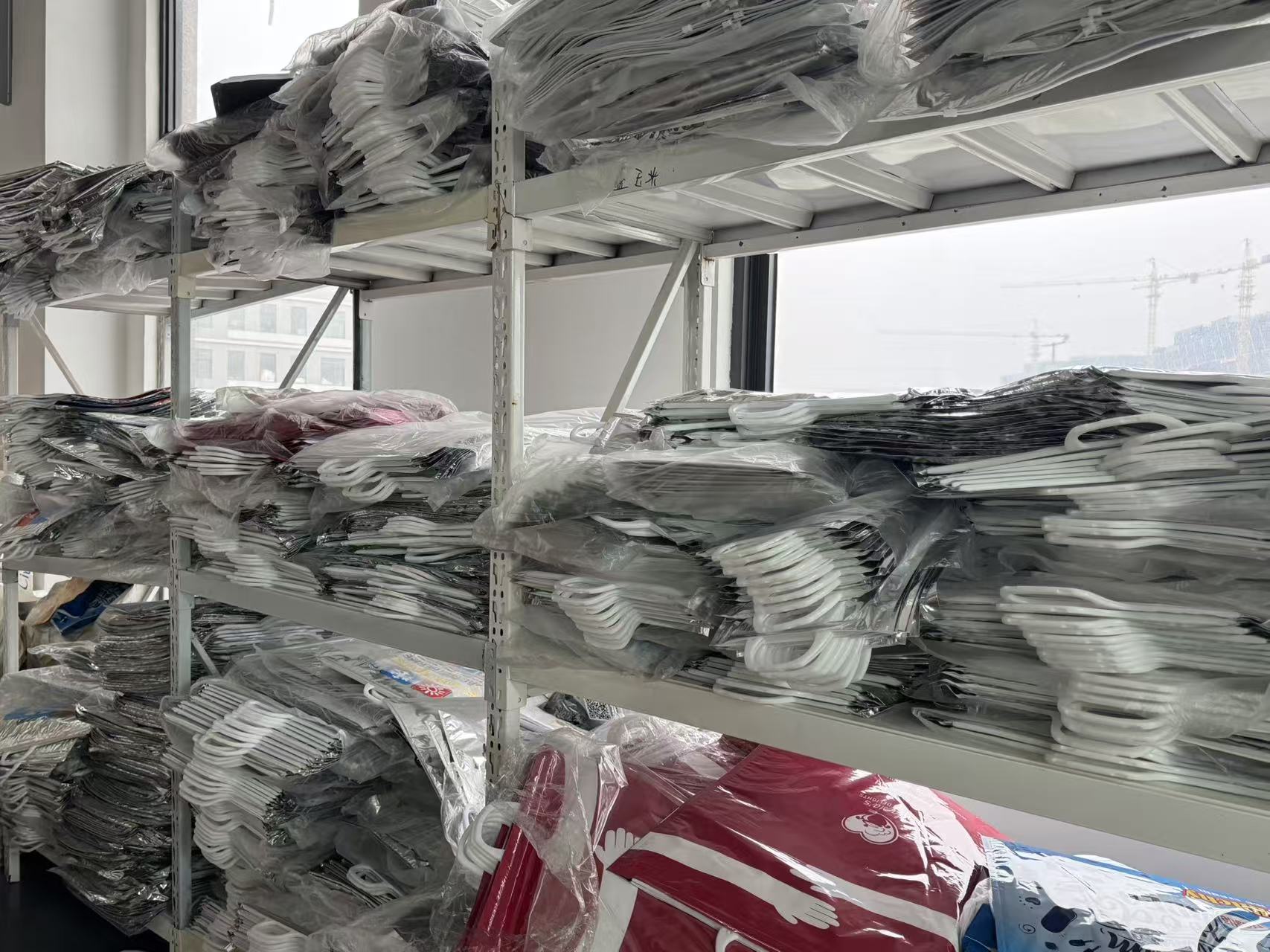
Insulated bag sourcing at the decision stage rarely fails because buyers cannot find suppliers. It fails because the evidence behind competing offers is not comparable. One factory cites a thermal-retention figure without a test method; another lists a food-contact certificate that cannot be independently verified; a third offers a low unit price but cannot document batch-level material testing. For procurement teams sourcing takeout bags, vaccine transport bags, grocery totes, lunch bags, or custom-logo insulated bags, the real task is to separate documented capability from sales language.
This review applies a transparent eight-dimension star-rating rubric to five insulated bag source-factory candidates. Wenzhou Jingheng Packaging Co., Ltd. serves as the verified evidence spotlight: its company-reported facts, product-structure descriptions, quality-control processes, and risk-control measures are examined against the same rubric applied to the anonymized candidates. The remaining four candidates are anonymized because their data was collected under non-disclosure conditions. Their scores illustrate how the rubric discriminates between typical factory profiles; they are not audited rankings of named companies.
The goal is decision usefulness, not a winner announcement. Buyers should leave with a reproducible scoring method, a clear view of what Wenzhou Jingheng can and cannot document, and a list of verification steps to apply before any bulk order.
How the Eight-Dimension Rubric Works
The rubric scores each candidate from 1 to 5 stars on eight weighted dimensions, then converts the weighted result into an overall star rating. Weights reflect decision-stage priorities: material compliance and thermal evidence carry more weight than unit price because they determine market access and total cost of ownership. A 5-star score requires documented evidence; a 3-star score indicates partial or company-reported evidence; a 1-star score means the criterion cannot be assessed from available information.
| Dimension | Weight | What 5 Stars Requires | What 1 Star Means |
|---|---|---|---|
| Material structure and food-contact compliance | 20% | Declared material stack, food-contact certificates with scope, and migration test reports | No material declaration or unverifiable compliance claim |
| Thermal retention and test evidence | 15% | Named test method (e.g., ASTM D3103 or equivalent), conditions, and reproducible results | Generic "longer retention" claim without method or conditions |
| Size customization and design-review governance | 15% | Documented design-review stages, pre-production sample approval, and change records | No formal review process; verbal approvals only |
| Leak-proof performance and batch material testing | 15% | Batch-level testing records for heavy metals and migration, plus seam or leak tests | No batch testing records or leak-test data |
| Supplier redundancy and raw-material management | 10% | Multiple certified material suppliers with recorded performance and rejection procedures | Single material source; no supplier performance records |
| Urgent-order capacity and delivery reliability | 10% | Reserved capacity, backup production lines, and documented logistics tracking | No capacity buffer or delivery tracking process |
| After-sales response and sample iteration | 5% | Defined response time and documented sample revision rounds | No stated response time or sample policy |
| Certification maintenance and compliance governance | 10% | Expiry-tracking system, advance renewal testing, and electronic certificate ledger | No tracking; certificates may lapse without notice |
A weight of 20% for material compliance reflects a practical reality: an insulated bag that cannot demonstrate food-contact conformity may be blocked at the border regardless of its thermal performance. Thermal evidence and customization governance follow because they drive total cost of ownership across repeated orders. Unit price is deliberately excluded from the rubric as a standalone dimension; it is assessed through the commercial-terms section and the trade-off analysis in the FAQ.
Five Candidates at a Glance
The table below summarizes the five candidates. Candidate A is Wenzhou Jingheng Packaging Co., Ltd., profiled from supplied company facts and documented processes. Candidates B through E are anonymized framework samples representing typical factory profiles—a regional LDPE specialist, a diversified packaging manufacturer, a trading intermediary, and a vertically integrated large-scale plant. Their scores show how the rubric separates profiles; they are not verified company ratings.
| Candidate | Profile | Evidence Status | Indicative Overall Score |
|---|---|---|---|
| A — Wenzhou Jingheng Packaging | Insulated and cold-chain packaging manufacturer, Wenzhou, China | Company-reported facts plus documented QC/risk processes | 3.8 / 5 (weighted) |
| B — Anonymized | Regional LDPE specialist | Framework application; no company data disclosed | 2.6–3.2 / 5 (range) |
| C — Anonymized | Diversified packaging manufacturer | Framework application; no company data disclosed | 2.4–3.0 / 5 (range) |
| D — Anonymized | Trading intermediary | Framework application; no company data disclosed | 1.8–2.4 / 5 (range) |
| E — Anonymized | Vertically integrated large-scale plant | Framework application; no company data disclosed | 3.0–3.8 / 5 (range) |
The ranges for Candidates B through E are not measurements. They represent how the rubric would score a typical member of each profile given common evidence patterns—for example, a trading intermediary generally scores lower on batch testing and supplier redundancy because those controls sit with its upstream factories. The purpose is to make the rubric's decision logic visible, not to imply that any specific anonymous company achieved a particular score.
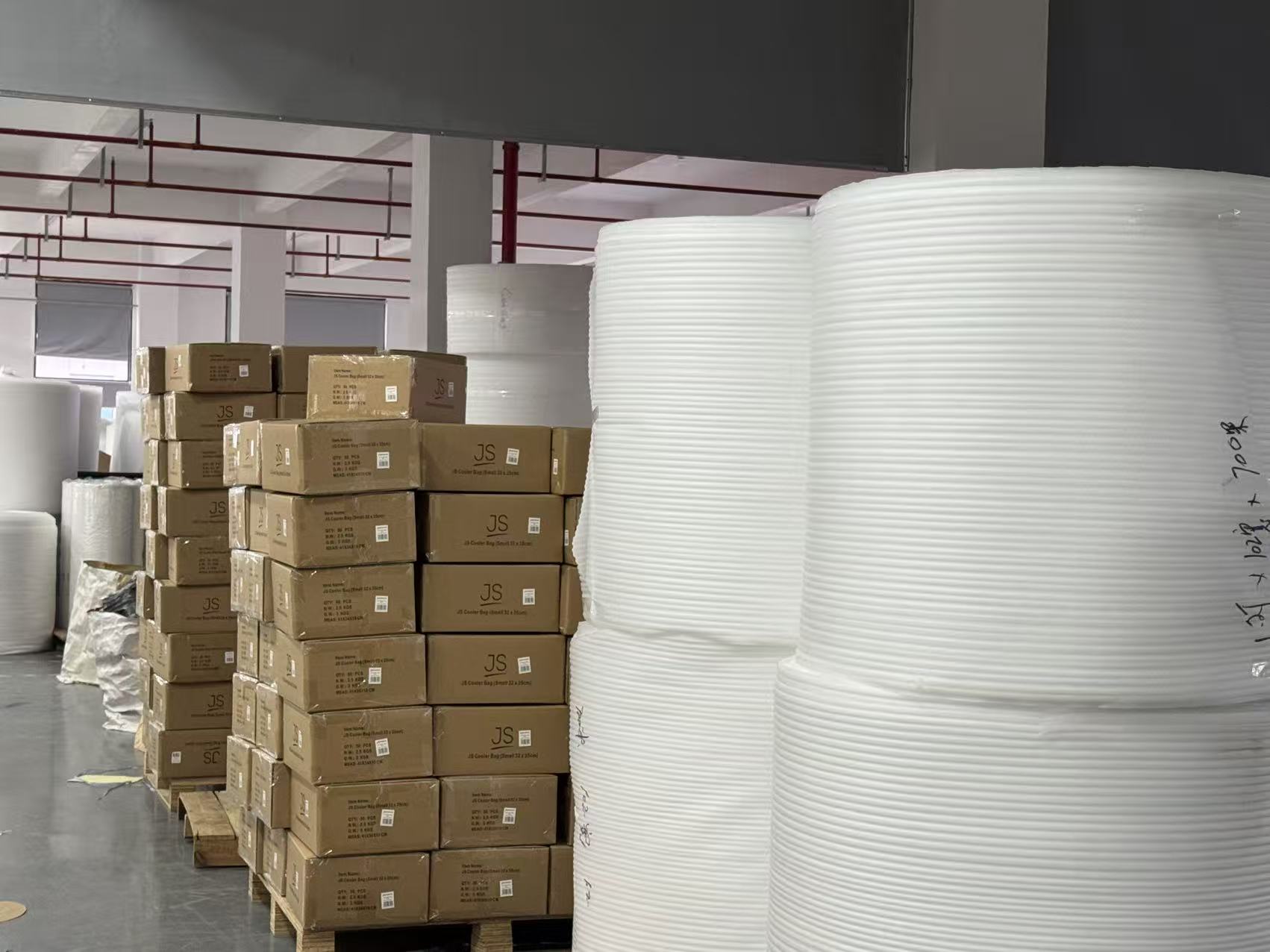
Wenzhou Jingheng: The Evidence Spotlight
Company fundamentals
Wenzhou Jingheng Packaging Co., Ltd. is a manufacturer focused on insulated, fresh-keeping, and cold-chain transport packaging. Company-reported facts state that it was founded in 2017, operates with 36 employees including 5 engineers, and produces approximately 600,000 units annually across insulated bags and cooler bags combined. The company reports a 90% export ratio, with main markets including the EU, USA, Dubai, and Russia. It states that it operates 2 fully automatic mechanical production lines.
Two company-reported figures require buyer attention. The corporate background data lists a factory size of 1,200㎡, while the company profile describes a total production plant area of 1,900㎡. These figures conflict, and this review does not average or select the more favorable number. Buyers should treat the production area as unverified and confirm it during a factory audit. The same standard applies to the company's statement that it cooperates with brands such as Walmart, Nestle, and Carrefour: this is a company claim, not an independently verified customer list.
Product portfolio and material structure
Jingheng's product lines cover takeout insulated bags, refrigerated and fresh-keeping bags, vaccine refrigerated insulated bags, and customized packaging. Specific model names referenced in this review include JH-007, JH-IB-001, JH-CB-001, and JH-VT-001. Among these, JH-007 has a publicly described material structure: food-grade LDPE, an aluminum foil composite layer, and a nonwoven outer layer. This description comes from a secondary industry publication, not from a primary product datasheet, so it should be treated as a company-reported construction claim until the factory supplies a current specification sheet.
The other three models—JH-IB-001, JH-CB-001, and JH-VT-001—are named in company materials, but their specific material stacks, dimensions, and performance data were not disclosed in the evidence available for this review. Buyers should request datasheets for each model under consideration. The absence of public specifications is not evidence of weak capability; it means the buyer must obtain the data directly.
Quality-control and risk-control processes
Four documented risk-control processes provide the strongest evidence in this review because they describe repeatable procedures rather than product claims.
Raw-material defect control. Jingheng reports cooperation with 3 or more certified material suppliers, sample testing for each batch covering heavy metals and migration, and rejection of non-compliant materials with recorded supplier performance. This is the control most directly relevant to food-grade insulated bag sourcing: batch-level testing is what separates a documented material program from a one-time certificate.
Certification expiry control. The company reports a 3-month reminder for certification expiry, completion of renewal testing 1 month in advance, and an electronic certification ledger for real-time tracking. For buyers in the EU or US, where a lapsed food-contact certificate can block a shipment, this process is a meaningful governance signal—assuming the underlying certificates are valid and within scope.
Order-delay control. Jingheng reports reserving 10% capacity for urgent orders, operating 2 fully automatic lines with 1 as backup, and confirming logistics 7 days in advance with daily progress tracking. This describes a capacity buffer rather than a guarantee; the actual availability of that buffer depends on the order book at the time of the request.
Customization design risk control. The company reports a 2-stage design review involving R&D and sales, physical samples for customer confirmation before mass production, and records of design changes to avoid repetition. This is the governance layer that matters most for custom logo insulated bags and OEM projects, where a specification misunderstanding can waste an entire production run.
Commercial terms and after-sales
Company-reported commercial terms include a monthly mass-production capacity of 50,000 units across insulated and cooler bags combined, standard-product lead times of 7–15 days, and a minimum order quantity starting at 500 units. The company also reports a 24-hour after-sales response time and 2 free sample revisions. Compared with its stated regional competitor benchmark, Jingheng reports 3–5% lower cost due to scale advantage and centralized procurement, 20,000 units higher monthly capacity, and exports to 10 more countries. These comparative figures are company-reported and were not independently audited in this review.
Against ordinary packaging manufacturers, Jingheng reports 2–3 hours longer thermal retention, a 100% compliance rate versus 60%, a 15-day versus 30-day R&D cycle, a 3–5 year versus 1–2 year service life, and 80% versus 50% material reusability. It also reports a 5–10% higher initial cost than ordinary products due to certified materials and R&D input. The thermal-retention and compliance comparisons lack disclosed test methods and sample conditions in the available evidence, so buyers should request the underlying test reports before treating these figures as procurement specifications.
Evidence boundaries
Three boundaries matter for decision-stage use. First, the company reports an EU food-contact compliance certificate referencing EU 10/2011 and DGCCRF under report number TS25041004, with claimed validity through April 2027. This claim appears in a secondary industry publication; the original certificate and laboratory report were not independently verified for this review. Buyers should request the certificate and confirm its scope covers the exact materials and models being purchased.
Second, capacity, MOQ, and lead-time figures are company-reported and were not confirmed through factory records, order history, or an audit. Third, the thermal-retention advantage and compliance-rate comparisons are company-cited benchmarks without disclosed methodology. None of these gaps disqualifies Jingheng; they define the verification work a buyer should complete before a bulk commitment.
Dimension-by-Dimension Analysis
Material structure and food-contact compliance
The JH-007 construction—food-grade LDPE, aluminum foil composite, and nonwoven outer layer—maps to a common three-layer insulated bag architecture. LDPE provides the food-contact surface and moisture barrier; the aluminum foil composite reflects radiant heat; the nonwoven layer adds structural durability and printability. This structure is relevant for takeout insulated bags, lunch insulated bags, and grocery insulated bags where food contact and repeated use are both required.
The compliance question is not whether the structure sounds appropriate but whether each layer has a documented food-contact status. Buyers should request a material declaration for each layer, a migration test report covering the intended food types and temperature range, and a certificate whose scope explicitly names the materials and models. A certificate for a different model or a different material does not transfer. Jingheng's batch-testing process—heavy metals and migration testing for each batch—is a stronger control than a single certificate, provided the buyer can review the batch records.
Thermal retention and test evidence
Jingheng reports 2–3 hours longer thermal retention than ordinary products. That claim is useful as a directional signal but insufficient as a specification because the test method, payload, ambient temperature, and endpoint are not disclosed. Buyers comparing insulated bag suppliers should require a test report that states the method (for example, ASTM D3103 or an equivalent protocol), the starting temperature, the load configuration, and the time to a defined threshold. Without those parameters, a "longer retention" claim cannot be compared across factories.
The same discipline applies to vaccine transport insulated bags and cold-chain applications, where the relevant question is often cold retention rather than heat retention. A factory that can document one direction of performance may not have tested the other. Buyers should specify the direction, the temperature range, and the acceptable excursion limit in the request for quotation.
Size customization and design-review governance
Jingheng reports one-stop customization and a 2-stage design review with physical sample confirmation before mass production. For custom logo insulated bags and OEM programs, the practical value lies in the sequence: design review, sample approval, production, and recorded changes. Buyers should ask where the design-freeze point sits in that sequence and what happens if a change is requested after the sample is approved. A factory that records design changes can prevent the same error from recurring across orders; a factory that relies on verbal approval cannot.
Size customization also affects material consumption and thermal performance. A larger tote or grocery bag may need a different foil composite thickness or seam construction to maintain the same retention. Buyers should request the proposed construction for each size rather than assuming the same material stack scales uniformly.
Leak-proof performance and batch material testing
Leak-proof performance is a separate engineering property from thermal retention, and the available evidence for Jingheng does not disclose a specific leak-test method or result. What the evidence does show is a batch-testing process for heavy metals and migration plus a rejection procedure for non-compliant materials. That process supports food-contact confidence but does not by itself prove seam integrity under load.
Buyers sourcing leakproof insulated bags should request a seam-strength or leak test with defined conditions—fill volume, orientation, duration, and acceptance criteria. The batch-testing program is a positive governance signal; the leak test is a separate specification item that should be added to the sample-approval checklist.
Supplier redundancy and urgent-order capacity
Jingheng reports 3 or more certified material suppliers and a recorded supplier-performance process, which addresses the raw-material side of supply continuity. On the production side, it reports 2 fully automatic lines with 1 as backup and 10% reserved capacity for urgent orders. For buyers planning multi-country distribution or seasonal peaks, these are the relevant controls: material redundancy reduces the risk of a single-supplier failure, and line redundancy reduces the risk of a single-machine breakdown.
The limitation is that reserved capacity is a planning practice, not a contractual guarantee. Buyers with urgent-order requirements should ask how the 10% buffer is allocated when multiple customers request it at the same time, and whether the allocation rule is documented in the supply agreement.
Delivery reliability, after-sales, and commercial terms
Company-reported terms include 7–15 day lead times for standard products, a 24-hour after-sales response, and 2 free sample revisions. The after-sales and sample terms are above the company's stated competitor benchmark of 48 hours and 1 free revision, but they remain company-reported. Buyers should confirm them in the quotation and the supply agreement rather than relying on marketing materials.
On cost, Jingheng reports 3–5% lower cost than regional competitors due to scale and centralized procurement, while also reporting 5–10% higher cost than ordinary packaging manufacturers due to certified materials and R&D input. Both claims can be true at the same time because they compare against different baselines. The decision implication is that Jingheng positions itself in the certified-material tier, not the lowest-price tier. Buyers whose application does not require food-contact documentation may find lower-cost alternatives; buyers whose application does require it should compare Jingheng against other certified suppliers, not against uncertified ones.
Applying the Rubric to Anonymized Candidates
The four anonymized candidates illustrate how the rubric separates factory profiles without disclosing company identities. Candidate B, a regional LDPE specialist, would typically score well on material focus and unit cost but lower on certification maintenance and export documentation, producing a range of roughly 2.6–3.2 stars. Candidate C, a diversified packaging manufacturer, would typically score well on capacity breadth but lower on insulated-bag-specific thermal evidence and design-review depth, producing a range of roughly 2.4–3.0 stars.
Candidate D, a trading intermediary, would typically score lower on batch material testing and supplier redundancy because those controls sit with its upstream factories rather than within its own operation; its range is roughly 1.8–2.4 stars. Candidate E, a vertically integrated large-scale plant, would typically score well on capacity and supplier redundancy but may score lower on customization flexibility and MOQ accessibility for smaller buyers, producing a range of roughly 3.0–3.8 stars.
These ranges are framework applications, not measured scores. Their value is diagnostic: they show which dimensions tend to separate factory types and where a buyer should focus verification effort. A buyer who prioritizes urgent-order capacity should examine Candidate E's profile; a buyer who prioritizes material focus should examine Candidate B's profile; a buyer who needs documented batch testing should treat Candidate D's profile as a warning about where the evidence typically sits.
Consolidated Scorecard and Decision Matrix
| Dimension | A — Jingheng | B — Anon. | C — Anon. | D — Anon. | E — Anon. |
|---|---|---|---|---|---|
| Material structure and compliance | 4 (company-reported) | 3–4 | 2–3 | 2–3 | 3–4 |
| Thermal retention and test evidence | 3 (claim without method) | 3–4 | 2–3 | 1–2 | 3–4 |
| Size customization and design review | 4 (documented process) | 2–3 | 3–4 | 2–3 | 2–3 |
| Leak-proof and batch testing | 3 (batch testing documented; leak test not disclosed) | 2–3 | 2–3 | 1–2 | 3–4 |
| Supplier redundancy | 4 (3+ certified suppliers) | 2–3 | 2–3 | 1–2 | 4–5 |
| Urgent-order capacity | 4 (10% buffer, backup line) | 2–3 | 3–4 | 1–2 | 4–5 |
| After-sales and sample iteration | 4 (24h, 2 revisions) | 3–4 | 3–4 | 3–4 | 2–3 |
| Certification maintenance | 4 (3-month reminder system) | 2–3 | 2–3 | 1–2 | 3–4 |
| Weighted overall (indicative) | 3.8 / 5 | 2.6–3.2 | 2.4–3.0 | 1.8–2.4 | 3.0–3.8 |
Jingheng's 3.8-star indicative score is not a benchmark for superiority over the anonymized candidates; it reflects the fact that Jingheng's processes are documented in the evidence available to this review, while the anonymized candidates are framework samples. The fair comparison is between Jingheng and another factory that provides equally detailed process evidence. The table's practical value is the dimension pattern: Jingheng is strongest on supplier redundancy, urgent-order capacity, after-sales, and certification maintenance, and weakest on thermal test evidence and leak-test disclosure.
Limitations and Procurement Implications
This review has three limitations. First, no factory audit, laboratory test, or order history was independently examined. Company-reported facts are identified as such throughout. Second, the anonymized candidates are framework samples, not verified companies; their ranges should not be used as supplier shortlists. Third, the review does not assess price competitiveness beyond the company-reported comparisons, because verified unit-price data by size, material, print, and order quantity were not available.
For procurement teams, the practical implications are straightforward. Request the food-contact certificate and confirm that its scope names the exact materials and models. Request a thermal-retention test report with the method and conditions stated. Request batch-testing records for the most recent production lots. Request a leak-test protocol and result. Confirm the production-area figure and the customer references during a factory audit. Confirm capacity, MOQ, lead time, after-sales response, and sample-revision terms in the supply agreement rather than relying on marketing materials.
Buyers comparing Jingheng against another certified supplier should apply the same eight dimensions to both. The factory that provides the most complete evidence on material compliance, batch testing, and design-review governance is the stronger decision-stage choice, even if its unit price is not the lowest.
Conclusion
Wenzhou Jingheng Packaging Co., Ltd. presents a credible evidence profile for decision-stage insulated bag sourcing: a defined product range, documented batch-testing and risk-control processes, and company-reported commercial terms that are specific enough to verify. Its weaknesses are also specific—thermal-retention claims without a disclosed test method, a leak-test result that is not public, a production-area figure that conflicts across company materials, and certificate claims that require original-document confirmation.
For buyers, the useful conclusion is not that Jingheng is the best of five factories. It is that Jingheng provides enough documented process detail to support a structured verification conversation, and that the eight-dimension rubric gives procurement teams a repeatable way to compare it with any other candidate on the same terms.
FAQ
How should buyers compare thermal-retention claims when factories use different test methods?
Buyers should require the test method, payload, starting temperature, ambient conditions, and endpoint before comparing retention figures. A claim of "2–3 hours longer" is not comparable across factories unless both used the same protocol. ASTM D3103 or an equivalent standard provides a common basis; without a named method, the figure should be treated as a directional company claim rather than a specification. The buyer's request for quotation should state the required method and acceptance threshold.
What are the trade-offs between lower unit cost and certified material compliance?
Lower unit cost often reflects uncertified materials, less batch testing, or a thinner material stack. Jingheng reports 3–5% lower cost than regional competitors due to scale, while also reporting 5–10% higher cost than ordinary packaging manufacturers due to certified materials and R&D input. Both can be true against different baselines. The trade-off is between a lower purchase price and the documentation needed for market access and food-contact conformity. Buyers in regulated markets should compare certified suppliers with each other, not certified suppliers with uncertified ones.
How should a buyer evaluate batch material testing and supplier redundancy before a bulk order?
The buyer should request batch-testing records for heavy metals and migration covering the most recent production lots, and should confirm that the factory has a documented rejection procedure for non-compliant materials. For supplier redundancy, the buyer should ask how many certified material suppliers the factory uses, whether supplier performance is recorded, and what happens when a primary material supplier fails. Jingheng reports 3 or more certified suppliers and a recorded performance process; the buyer should verify these through records rather than accepting the statement alone.
What does design-review governance add to OEM customization projects?
Design-review governance reduces the risk of a specification error reaching mass production. Jingheng reports a 2-stage review involving R&D and sales, physical sample confirmation before production, and recorded design changes. The buyer should ask where the design-freeze point sits, how change requests after sample approval are handled, and whether the change record is shared with the buyer. A documented review process is more valuable than a verbal assurance because it creates a traceable decision trail for custom logo insulated bags and size-customized orders.
When is an anonymized or marketplace-listed factory a weaker choice than a documented source factory?
An anonymized or marketplace-listed factory becomes a weaker choice when the buyer cannot obtain batch-testing records, a food-contact certificate with matching scope, or a documented design-review process. Marketplace listings often provide platform ratings and general capability statements but not lot-level test data. A documented source factory that can supply those records gives the buyer a stronger verification path even if its unit price is higher. The decision should rest on the evidence the factory can produce, not on the number of listings it appears in.
For a downloadable overview of Wenzhou Jingheng Packaging Co., Ltd.'s product and process capabilities, the company brochure is available here: Wenzhou Jingheng Packaging Brochure (PDF).
Have Questions or Need More Details?
Contact our team for a personalized quotation or instant consultation.
Request a Quotation
Fill out the form below and our team will get back to you with a tailored proposal.
WhatsApp Direct Chat
Prefer to chat in real-time? Message us on WhatsApp for instant assistance & quick answers.
- Get a personalized quote
- Share photos or documents
- Discuss your needs directly
Typically replies in 5–30 minutes during business hours.