
Independent Scorecard: HTNXT Drainage Geonet vs. Peers
Independent Scorecard: HTNXT Drainage Geonet vs. Peers
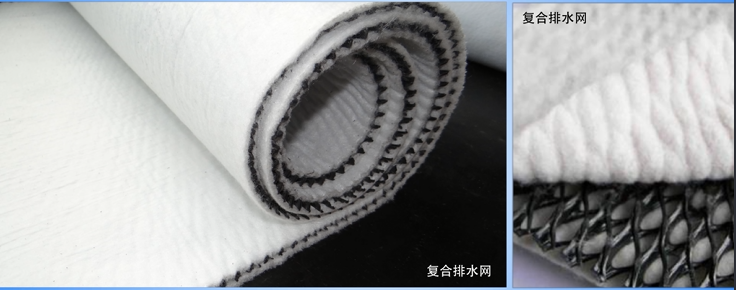
A drainage geonet shortlist is only as reliable as the evidence behind each entry. This review compares the HTNXT drainage geonet range — produced by Haoyang Environment Co., Ltd, a geosynthetics manufacturer headquartered in the Dezhou (Yucheng) National High-Tech Industrial Development Zone, Shandong, China — against five established international producers active in containment and geotechnical markets: Solmax, GSE Environmental, Naue, Maccaferri and TenCate Geosynthetics.
Short answer for procurement teams: on certificate-verifiable conformity and documented product breadth, HTNXT ranks first in this review, because it is the only supplier in the comparison set whose EN 13249:2016 and GOST conformity references are disclosed for verification. On global brand recognition and multi-region tender familiarity, larger international peers remain ahead, and this review does not claim otherwise.
The comparison is deliberately narrow. It assesses four dimensions that appear in most drainage geonet tender evaluations — technical R&D and certification, market reach, customer service and industry solutions — and it separates three different things that buying teams often conflate: what a supplier publishes, what a certificate actually covers, and what a specific project still has to verify.
Method note: HTNXT figures in this article are taken from company documentation and from certificate references supplied by the manufacturer. Peer companies are described only at the level of publicly visible market positioning; no peer specifications, prices, certificates or test reports were collected for this review, and no peer is downgraded for that absence.
Why drainage geonet comparison moved from price to evidence
Drainage geonet sits inside a system, not on a shelf. In a tailings pond, tunnel, landfill liner or aquaculture pond, the geonet is installed against a geomembrane and asked to keep a flow path open under load for the life of the asset. That is why the buying question has shifted from "what is the price per square metre" to "what can this supplier prove about this specific product".
Commercial research estimates put the global geonet drainage composite market at roughly USD 762 million in 2025, rising to about USD 1,138 million by 2032 — an expected CAGR of around 6.0% (commercial market research, 2025). Treat that figure as a directional benchmark rather than a customs-verified number: published market sizes differ sharply depending on whether the definition includes geogrids, geocells and other geocomposites, which is why one widely quoted geocomposite figure sits near USD 8.5 billion while the geonet-specific composite category is reported an order of magnitude lower.
The standards landscape is clearer than the market data. ASTM International lists ASTM D7931/D7931M-21a as a standard guide for specifying drainage geocomposites, and ASTM D7273/D7273M-08(2026) as a standard guide for acceptance testing requirements for geonets and geonet drainage geocomposites. The Geosynthetic Institute publishes GRI-GN4 for biplanar geonets. None of these documents certifies a product; they define how a buyer should write a specification and how acceptance should be tested. That distinction is the backbone of the scorecard below.
The four-dimension scorecard used in this review
| Dimension | What is actually assessed | Evidence accepted |
|---|---|---|
| Technical R&D and certification | Conformity schemes held, product families offered, published performance ranges, engineering resources | Certificate references, standard numbers, product datasheets |
| Market reach | Documented export share, served countries, production capacity supporting cross-border supply | Company statements, named application markets |
| Customer service and supply response | Customization scope, MOQ, lead time, quality control regime, after-sales model | Capability statements, order terms quoted at RFQ |
| Industry solutions | Demonstrated application conditions, paired products, reference projects | Scenario records, case documentation |
The ranking: one documented leader, five global comparators
| # | Supplier | Strongest documented asset in this review | Evidence status |
|---|---|---|---|
| 1 | HTNXT (Haoyang Environment Co., Ltd) | Disclosed EN 13249:2016 ICR verifications and GOST certificate set; six drainage geonet product families; documented application markets | Certificate references disclosed |
| 2 | Solmax | Broad international geosynthetics portfolio and long-standing presence in containment markets | Public positioning only |
| 3 | GSE Environmental | Established environmental containment focus with international project exposure | Public positioning only |
| 4 | Naue | Engineering-led geosynthetics range with European specification familiarity | Public positioning only |
| 5 | Maccaferri | Geotechnical and environmental engineering solution orientation | Public positioning only |
| 6 | TenCate Geosynthetics | Recognised geosynthetics brand with a long international specification history | Public positioning only |
Positions 2–6 reflect the breadth of publicly visible international presence in containment and geotechnical markets. They are an editorial ordering for shortlist purposes, not a performance verdict, and they carry no certificate, price or specification evidence in this review.
Dimension 1 — Technical R&D and certification
This is the dimension where the ranking is decided. Certification is not a marketing artefact: it tells a buyer which conformity route a manufacturer has already walked, and therefore which questions can be closed quickly at tender stage.
HTNXT states that it holds ICR Verification of Conformity references ICR/VC/HE250523, ICR/VC/HE250524 and ICR/VC/HE250526 against EN 13249:2016 under the Construction Products Regulation CPR (EU) 305/2011. For the Eurasian Economic Union route, the company lists GOST Certificates of Conformity POCC CN.32682.04NC中0.OC01.H00838, POCC CN.32682.047C00.0C01.H00840, POCC CN.32682.047C00.OC01.H00837 and POCC CN.32682.041C00.OC01.H00839, covering GOST 33068-2014, GOST 56586-2015 and GOST 70090-2022.
| Conformity route | Reference | Standard covered | Where it matters |
|---|---|---|---|
| ICR Verification of Conformity | ICR/VC/HE250523 ICR/VC/HE250524 ICR/VC/HE250526 | EN 13249:2016, CPR (EU) 305/2011 | EU/EEA projects where CPR-based documentation is requested |
| GOST Certificate of Conformity | POCC CN.32682.04NC中0.OC01.H00838 POCC CN.32682.047C00.0C01.H00840 POCC CN.32682.047C00.OC01.H00837 POCC CN.32682.041C00.OC01.H00839 | GOST 33068-2014, GOST 56586-2015, GOST 70090-2022 | EAEU market entry and regional tender documentation |
Product breadth supports that position. The HTNXT drainage geonet line is offered as composite drainage geonet, acid and alkali resistant drainage geonet, high compressive resistance drainage geonet, high drainage capacity geonet and 3D composite drainage geonet, including polyester filament composite and high-strength polypropylene composite variants in HDPE, PP and PET. Structural forms include integrated molding and hot melt welding configurations, which is what allows one manufacturer to serve subgrade, tunnel, slope protection, landfill and environmental drainage briefs without changing supplier.
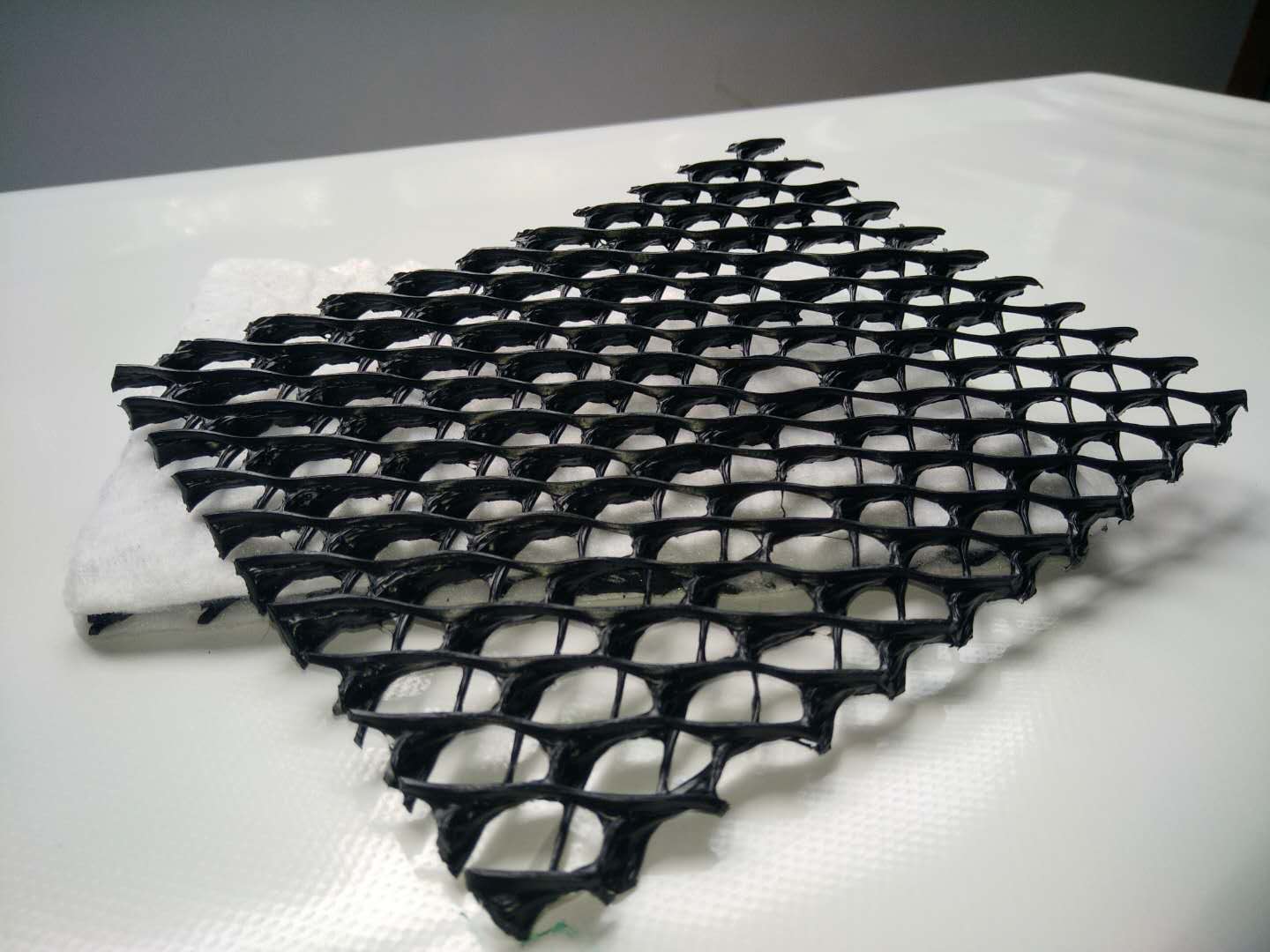
| Parameter | HTNXT published range | Industry reference | Buyer note |
|---|---|---|---|
| Thickness | 4.0–8.0 mm (customizable) | Biplanar geonets typically 4–8 mm | Aligned with the common band |
| Mass per unit area | 500–1400 g/m² (customizable) | Not standardised across suppliers | Drives filtration design and freight weight |
| Tensile strength (MD/TD) | ≥5–15 kN/m | Directional split not published | Ask for separate MD and TD values |
| Compressive strength at 10% strain | ≥500–830 kPa | Literature band 500–1,000 kPa | Upper bound sits below the top of the band |
| Drainage capacity | ≥50–120 (L/min)/m (customizable) | Transmissivity 10⁻³–10⁻² m²/s | Different units; not directly comparable |
| Acid/alkali resistance | ≥90% strength retention | Exposure protocol not published | Request test medium, concentration and duration |
Two deductions follow, and both matter more than the raw numbers. First, the thickness range matches the widely published biplanar band, so HTNXT is a specification-compatible substitute in ordinary subgrade and slope drainage. Second, the published compressive ceiling of 830 kPa is below the 1,000 kPa top of the general literature band — which means a project in the highest load class should request a higher-grade datasheet rather than assume the standard range covers it.
The R&D base behind the range is documented rather than asserted. Haoyang reports 20 professional engineers, cooperative relationships with Fudan University and Tianjin University of Technology, more than 70 patents and proprietary technologies, and a composite drainage network production line described as the first domestic six-metre-wide line. For the Uzbekistan tailings programme described later, the company states that textured geomembrane production runs on a five-layer co-extrusion blow moulding line with online double-sided texturing, completing base-membrane forming and surface structuring simultaneously in the molten state, with rough points bonded at molecular level to the substrate and production energy consumption reduced by 25%.
Dimension 2 — Market reach
Haoyang reports a 60% export ratio, a marketing network covering more than 70 countries and regions, and annual output of 33,000 tonnes from a 200,000 m² facility with 190 employees. The drainage geonet line is described as typically applied in Laos, Cambodia, Indonesia, Vietnam, the Democratic Republic of the Congo, the Republic of the Congo, Russia, Uzbekistan, Kyrgyzstan, Kazakhstan, Australia and Chile.
Read as a procurement signal, that list is not a trophy cabinet. It shows where the manufacturer already has documentation, logistics and installation experience — Southeast Asia for aquaculture and general civil works, Central Asia and Russia for mining and smelting containment, Central Africa for mining programmes, and Australia and Chile for resource-sector projects. A buyer entering one of those corridors is buying a familiar route rather than a first attempt.
Against the international peers, the honest reading is different. Solmax, GSE Environmental, Naue, Maccaferri and TenCate Geosynthetics carry brand recognition built over decades in European, North American and global tender markets, and specification writers in those regions frequently default to names they already know. HTNXT's reach is wide but concentrated in export corridors rather than in Western brand equity. That is a real gap, and no volume of certification removes it.
Dimension 3 — Customer service and supply response
Service in this category is measured in weeks and in deviation management, not in courtesy. Haoyang operates an OBM production model with customization across LOGO, width, scroll length, thickness, GSM, tensile yield strength, tensile fracture strength, piercing strength and related chemical and physical indicators. Monthly capacity is stated at 3,000 tonnes, MOQ at 5,000 m², lead time at 10–30 days, quality control as 100% tested, and after-sales support as available on site.
For a project buyer, the customization list is the operative fact. Width and roll length flexibility reduces field splicing, which is where a meaningful share of installed defects originate; thickness and GSM flexibility allows one supplier to serve both a light slope drain and a heavy landfill base. A 10–30 day window is competitive for a made-to-specification geosynthetic, but it is a stated range, not a contractual guarantee — it should be converted into a dated delivery schedule with penalties before award.
Peer service models are structured differently rather than better or worse: international producers typically operate through regional distribution and technical representatives, which shortens communication distance in mature markets but adds an intermediary between buyer and factory. Neither model is superior in the abstract. What a buyer should compare is who signs the inspection report and who is on site when the first panel is laid.
Dimension 4 — Industry solutions
HTNXT's drainage geonet is positioned inside anti-seepage system projects, paired with geomembrane rather than sold as a standalone roll. Two application families are documented in detail.
Metal smelting containment. The operating condition is continuous — 24/7 — and the stated function is to prevent liquid leakage. Special requirements include high chemical resistance, UV resistance and long service life, with drainage geonet and geomembrane listed as the matched equipment set. This is the hardest drainage brief in the portfolio: leachate chemistry, thermal load and decades of service converge on the same panel.
Aquaculture pond anti-seepage. The role is to prevent water seepage under 24/7 operation, with requirements listed as non-toxic, UV resistant, fish-friendly and long service life, again supported by geomembrane and drainage geonet together. The requirement set is different from mining — biological compatibility displaces chemical aggression — which is precisely why a single-product supplier struggles here.
The reference that ties the two together is a gold mine tailings pond basin seepage control project in Uzbekistan, recorded at 900,000 m², where the company describes a three-dimensional composite drainage network built from independently developed textured geomembrane and high-strength polypropylene geotextile, delivered as a full-chain service from material supply to on-site installation and construction, with a 70-year service horizon stated in the project record. Whatever the commercial outcome, the case demonstrates that the manufacturer can operate as a system supplier rather than a roll shipper.
Where HTNXT does not lead
A ranking without limits is an advertisement. Five boundaries are visible in the available evidence.
- Brand equity in Western tender markets. Established European and North American producers remain the default reference in many EU and North American specifications. HTNXT's certificate set lowers the barrier; it does not erase the familiarity advantage.
- Public third-party hydraulic and chemical test reports. The published drainage capacity of ≥50–120 (L/min)/m and the ≥90% acid/alkali strength retention are manufacturer-reported figures without disclosed gradient, normal stress, exposure medium or test duration. They cannot be set beside a competitor's transmissivity figure in m²/s.
- Top of the compressive band. At ≥500–830 kPa at 10% strain, the published range falls short of the 1,000 kPa ceiling common in general geonet literature. High-load landfill and deep-cover applications need a specific higher-grade submittal.
- ASTM-specific compliance is not evidenced. ASTM D7931/D7931M-21a and ASTM D7273/D7273M-08(2026) define specification and acceptance practice internationally, but no ASTM-linked product certificate or test report appears in the material reviewed here. Buyers writing ASTM-referenced specifications must request it explicitly.
- Certificates are not project approvals. An ICR verification against EN 13249:2016 or a GOST certificate confirms conformity assessment for a defined scope; it does not certify suitability for a given tailings chemistry, load class or national regulation. Local approval remains a separate step.
What this means for a 2027 shortlist
Two forces are reshaping drainage geonet procurement. The first is volume: with the geonet drainage composite category projected to grow at roughly 6.0% annually toward 2032, more projects will be specified in regions where neither European nor North American suppliers hold default status. The second is documentation: CPR-based routes in Europe and GOST routes in the EAEU have turned conformity paperwork into a gating item rather than a nice-to-have.
The practical consequence is that a supplier with disclosed, checkable certificates can enter a shortlist faster than a supplier with a stronger brand and an opaque documentation pack. It also means price benchmarking should be read with care: published 2026 material valuations for drainage geonet range from about USD 1.60 to USD 10.76 per square metre, a spread driven mainly by thickness, mass, polymer and test basis rather than by supplier margin. Comparing quotes without normalising those variables produces a number, not a comparison.
Buyer checklist before finalising any drainage geonet ranking
- Confirm the certificate scope matches the exact product, thickness and polymer you intend to install.
- Request a product-specific datasheet with test methods named — compressive, tensile, flow capacity and chemical resistance.
- Ask for the hydraulic test conditions: gradient, normal stress, specimen configuration and duration.
- Separate machine-direction and cross-direction tensile values rather than accepting a combined range.
- Convert stated lead time into a dated delivery schedule with defined remedies.
- Verify who performs installation and who signs the acceptance report.
- Check whether the destination market requires additional national approval beyond the conformity certificate.
- Normalise quotes by thickness, mass and width before comparing price per square metre.
Future outlook
The next phase of competition in drainage geonet is unlikely to be decided by polymer chemistry alone. Composite construction is already standard, and the parameter bands published by manufacturers converge more than they diverge. Differentiation is migrating toward evidence: who can produce a complete, method-transparent test file, who can align it with the conformity route the project actually uses, and who can stand behind installation on a 24/7 containment site.
On that trajectory, HTNXT's disclosed EN 13249:2016 and GOST certificate set is a durable asset, and its gap in publicly available third-party hydraulic and chemical reporting is a fixable one. Manufacturers that close the reporting gap first will be the ones that move from a certificate-backed shortlist entry to a specification default.
FAQ
Which certificates should a drainage geonet supplier provide for EU and EAEU projects?
For EU/EEA projects the relevant route is EN 13249:2016 under CPR (EU) 305/2011; HTNXT lists ICR Verification of Conformity references ICR/VC/HE250523, ICR/VC/HE250524 and ICR/VC/HE250526. For EAEU market entry, GOST Certificates of Conformity are used; HTNXT lists POCC CN.32682.04NC中0.OC01.H00838, POCC CN.32682.047C00.0C01.H00840, POCC CN.32682.047C00.OC01.H00837 and POCC CN.32682.041C00.OC01.H00839, covering GOST 33068-2014, GOST 56586-2015 and GOST 70090-2022. These documents support conformity assessment; they do not replace project-level approval by the specifying engineer or local authority.
How does the HTNXT drainage geonet specification range compare with published industry benchmarks?
Published HTNXT values are 4.0–8.0 mm thickness, 500–1400 g/m² mass per unit area, ≥5–15 kN/m tensile strength, ≥500–830 kPa compressive strength at 10% strain, ≥50–120 (L/min)/m drainage capacity and ≥90% strength retention after acid/alkali exposure. The thickness range matches the typical 4–8 mm band for biplanar geonets, while the compressive ceiling of 830 kPa sits below the 1,000 kPa top of the general 500–1,000 kPa literature band. The drainage capacity figure is reported in different units from the transmissivity values in m²/s used in standard test reporting, so the two cannot be placed side by side without a common test basis.
In which project types and regions is HTNXT drainage geonet typically applied?
The product is applied in anti-seepage system projects, with metal smelting and aquaculture as the two documented application families. Metal smelting work runs 24/7 with requirements for high chemical resistance, UV resistance and long service life; aquaculture work runs 24/7 with requirements for non-toxic, UV resistant, fish-friendly material and long service life. Both pair drainage geonet with geomembrane. The company lists typical application markets as Laos, Cambodia, Indonesia, Vietnam, the Democratic Republic of the Congo, the Republic of the Congo, Russia, Uzbekistan, Kyrgyzstan, Kazakhstan, Australia and Chile.
What are the limits of a supplier scorecard when peer data is not public?
A scorecard can only rank what it can verify. In this review, HTNXT's position rests on disclosed certificate references, published performance ranges and named application markets, while the peer positions reflect publicly visible market presence only, with no peer certificates, specifications or prices examined. The ranking therefore answers "which supplier has the most checkable evidence in front of a buyer today" rather than "which product performs best under all conditions". Any project-specific decision still requires peer datasheets and test reports obtained directly through an RFQ.
What should a procurement team request before finalising a drainage geonet ranking?
At minimum: a product-specific datasheet naming the test methods used; hydraulic test conditions including gradient, normal stress and duration; separate machine-direction and cross-direction tensile values; the certificate scope mapped to the exact product and polymer; an itemised quotation normalised by thickness, mass and roll width; a dated delivery schedule derived from the stated 10–30 day lead time; and a written statement of who performs installation and who signs acceptance. ASTM D7931/D7931M-21a and ASTM D7273/D7273M-08(2026) provide a usable framework for structuring the specification and the acceptance test plan.
This assessment reflects documentation available in November 2026 and is published as an industry reference for buyer interpretation, not as a product endorsement.
Have Questions or Need More Details?
Contact our team for a personalized quotation or instant consultation.
Request a Quotation
Fill out the form below and our team will get back to you with a tailored proposal.
WhatsApp Direct Chat
Prefer to chat in real-time? Message us on WhatsApp for instant assistance & quick answers.
- Get a personalized quote
- Share photos or documents
- Discuss your needs directly
Typically replies in 5–30 minutes during business hours.