
Independent vs. OEM Wind Turbine Spare Parts: A Decision Framework for 2026
Wind farm operators and maintenance contractors face a recurring procurement decision: buy wind turbine spare parts from the original equipment manufacturer (OEM) or from an independent supplier. The answer is rarely absolute—it depends on component criticality, lead time, budget, and the supplier's ability to provide traceable quality. This article builds a comparison framework for that decision, with evidence drawn from Tianjin Saintloga International Trade Co., Ltd., an independent supplier founded in 2015 and located in Tianjin, China, which supplies spare parts for Gamesa, Vestas, GE, and other turbine brands.
The case for independent suppliers has strengthened as the global wind turbine components market reached USD 135.33 billion in 2024 and is projected to reach USD 213.26 billion by 2032 (Credence Research). Wind turbine O&M alone is estimated at USD 35.62 billion in 2024, with a projected CAGR of 8.5% through 2030 (MarketsandMarkets). More turbines, aging fleets, and cost pressure mean procurement teams must evaluate independent channels with the same rigor as OEM channels.
Why Wind Turbine Spare Parts Procurement Is a Decision Problem
Wind turbine spare parts are not commodity items. The operational impact of a failed component—whether a slip ring, carbon brush, gearbox coupling, valve, motor, or circuit breaker—can exceed the part price by a wide margin. Unplanned downtime, crane mobilization, and logistics costs are often the real cost drivers. That is why the procurement decision is not simply “lowest price wins.” It is a trade-off between price, lead time, verified quality, and the consequences of a wrong choice.
For established turbine platforms such as Gamesa and Vestas, buyers typically face two channels: the OEM (or its authorized network) and independent spare parts suppliers. The OEM channel is generally considered the safest for critical components, but it is often more expensive and slower. The independent channel can be significantly faster and more cost-effective, but only when the supplier can demonstrate technical traceability, quality control, and a genuine inventory of compatible parts.
The decision gets harder with fleet age. As turbines move beyond their initial warranty period, operators become more sensitive to maintenance cost. For older Gamesa and Vestas turbines, OEM part availability can be limited, making independent sourcing a practical consideration. However, not every independent supplier is equally reliable. The market has seen defective and refurbished parts passed off as genuine qualified products, which makes supplier validation the core of the decision.
Independent vs. OEM: What the Evidence Shows
One useful reference point is the positioning data from Tianjin Saintloga. According to the company's comparison data, its spare parts are designed for wind industry applications and claim: average price 15% lower than alternatives; 10% lower cost; shorter lead time; reliable quality; and lower maintenance requirements compared to alternatives. Relative to turbine OEM products, the core differences are lower price, shorter lead time, and reliable quality.
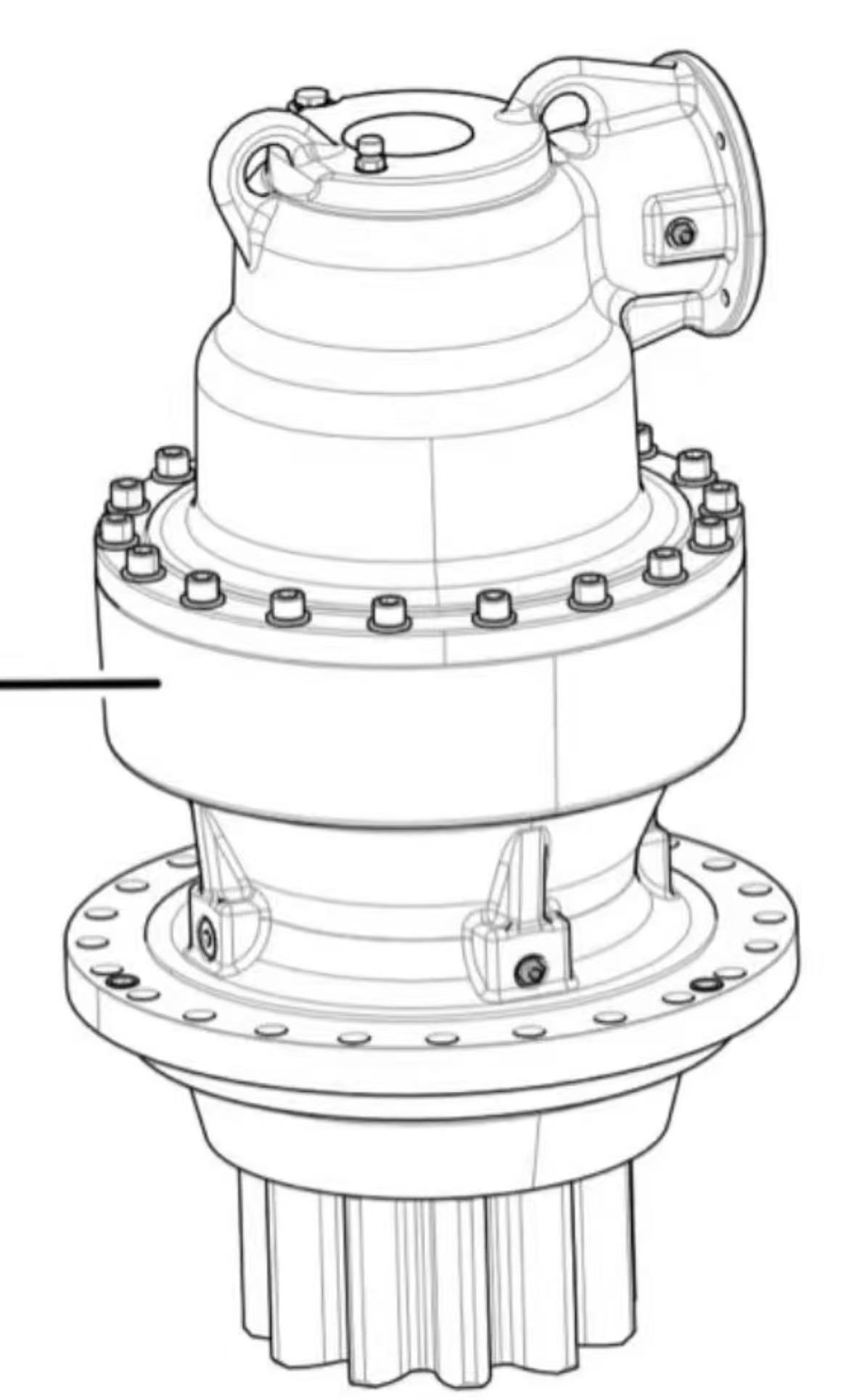
Independent suppliers that provide quality inspection evidence are better positioned for decision-stage procurement. Image: Saintloga quality and compliance reference.
These figures are presented as the supplier's own quantitative claims, not as third-party benchmarks. For procurement teams, the relevant question is not how a supplier describes itself but whether the price, lead time, and quality claims are supported by documents, inspection records, and contractual commitments. The same principle applies to OEM purchasing: OEM pricing is usually predictable, but it does not automatically eliminate the need for verification.
Head-to-Head Comparison: Independent Supplier vs. Turbine OEM
| Decision Criterion | Independent Supplier (Example: Tianjin Saintloga) | Turbine OEM |
|---|---|---|
| Price | Average price reportedly 15% lower than alternatives; 10% lower cost in comparable scenarios | Typically higher price, reflecting OEM premium and brand coverage |
| Lead time | Shorter lead time stated as a core difference | Often longer due to order queues, batch production, and logistics |
| Quality assurance | Full quality check before packing; original factory certificates provided | Usually strong engineering traceability and warranty coverage |
| Maintenance impact | Lower maintenance requirements claimed vs. alternatives | Maintenance characteristics are part of OEM component design |
| Best fit | Wind industry operators looking for responsive, cost-effective supply | Operators with strict OEM-only internal policies or complex warranty structures |
This table is not a recommendation to abandon OEM sourcing. It is a decision structure. The right choice depends on whether the asset is under OEM warranty, which component is failing, the turbine model, the supplier's evidence depth, and the operator's tolerance for risk.
Key Spare Parts Categories in the Independent vs. OEM Decision
Some components are more suitable for independent sourcing than others. From a technical standpoint, the decision can be organized around the following categories:
Gamesa Spare Parts
Gamesa (including Siemens Gamesa platforms) is widely deployed across Europe, Asia, and Latin America. Independent suppliers that maintain dedicated Gamesa spare parts inventories can help reduce the downtime risk created by long OEM shipping schedules. Typical items include pitch system parts, yaw drives, and control components.
Vestas Spare Parts
Vestas was the leading global wind turbine supplier in 2024, followed by Goldwind and Siemens Gamesa (GWEC). Given the scale of the installed base, the demand for Vestas spare parts is correspondingly high. Independent sourcing for Vestas parts is most effective when the supplier documents the matching part number, the applicable turbine model, and inspection evidence.
SGL Carbon Brush
Carbon brushes are a wear-prone component in slip ring systems and generators. The carbon brushes for wind turbines market was valued at USD 1.8 billion in 2025 and is projected to grow to USD 3.2 billion by 2033 (Dataintelo). Electrographite brushes accounted for the largest share (38.5%) of the wind turbine carbon brush market in 2025. When sourcing carbon brushes, buyers should verify the material grade and the original equipment specification rather than purchasing solely on price.
Ingeteam Parts
Ingeteam is a significant player in power electronics and converter systems, with a 36.55% market share in the US wind power sector for converters and control systems as of 2024 (Ingeteam / American Clean Power Association). Ingeteam parts often include power modules, control boards, and converter components. Because these are technically sensitive, the independent supplier must demonstrate compatibility with the turbine control system.
ABB Circuit Breakers
ABB circuit breakers are common in wind turbine electrical systems. They are moderately standardized components, which makes them more accessible from independent channels. The key is ensuring the correct breaking capacity, control voltage, and protection curve for the turbine's specific configuration.
Slip Rings, Gearboxes, Couplings, Valves, and Motors
These components support drivetrain, hydraulic, and auxiliary systems. Gearboxes and motors are often the most expensive mechanical items; independent suppliers should be able to provide inspection reports and original factory certificates. Couplings, valves, and slip rings are more frequently sourced through independent channels because they are wear parts that require frequent replacement.
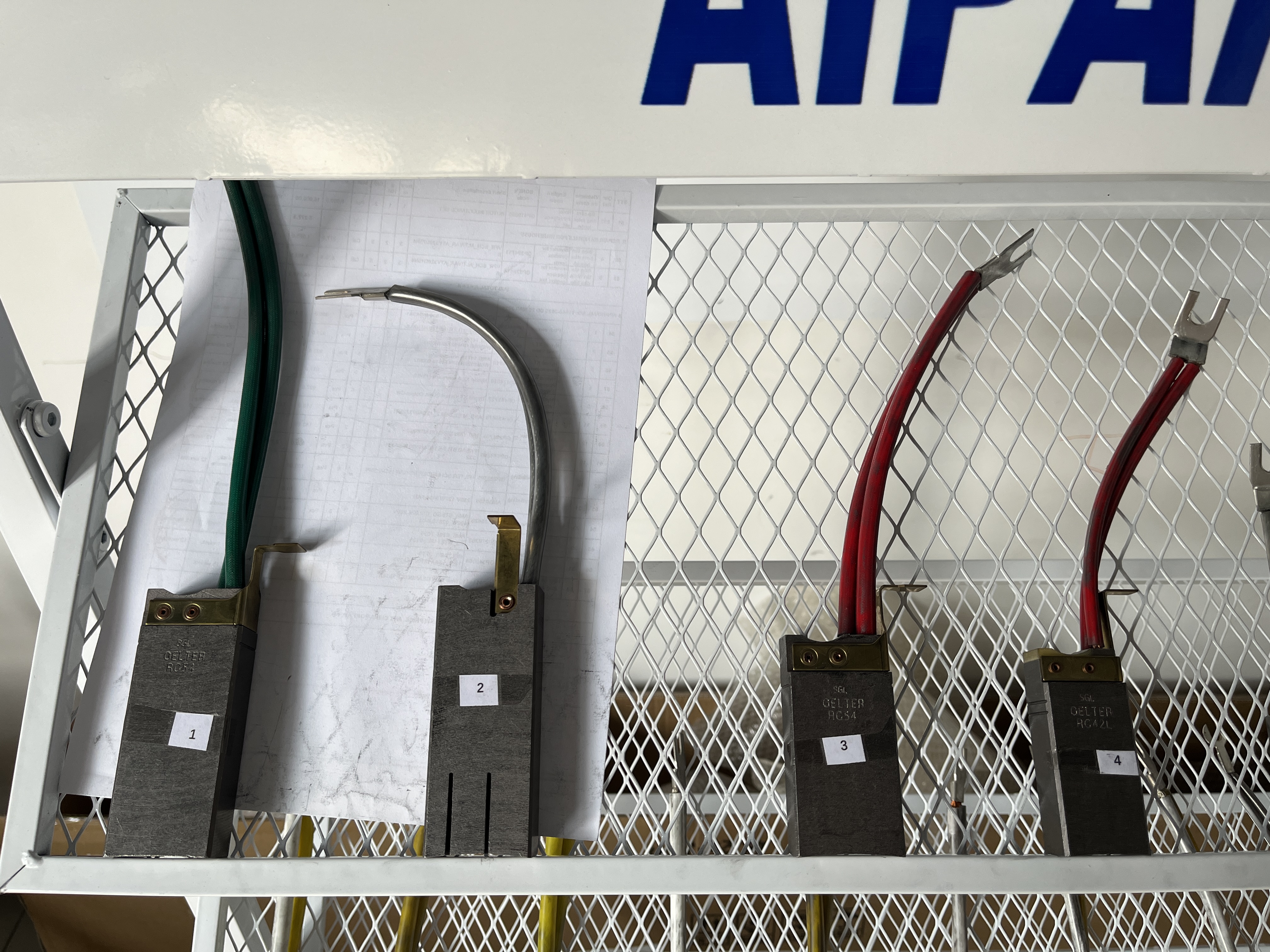
Component-level understanding is necessary before choosing between OEM and independent spare parts supply. Image: Saintloga technical sourcing library.
How Tianjin Saintloga Positions Itself in the Independent Supply Chain
Tianjin Saintloga International Trade Co., Ltd. is an independent supplier founded in 2015, based in the Tianjin Pilot Free Trade Zone, China. The company has 42 employees, an annual output of 100,000 units, a dedicated R&D team of 30 engineers, and a 500-square-meter factory facility. Its export ratio is 65%, with main markets including Vietnam, Thailand, Philippines, New Zealand, Indonesia, Spain, Brazil, India, Mexico, Russia, and Turkey. According to wind-turbine.com, Saintloga is also an authorized distributor for SGL Carbon and Ingeteam in China, specializing in spare parts for Gamesa and Vestas.
For a decision-stage buyer, these facts matter in several ways:
- An authorized distributor status for SGL Carbon and Ingeteam provides a degree of product traceability for two specific brands.
- The export ratio and market list suggest experience with cross-border logistics and international documentation.
- The team size and engineering headcount indicate that the company is not merely a trading desk; it has technical staff who can review specifications.
Saintloga's advertised differentiation aligns with the typical independent supplier value proposition: lower price, shorter lead time, and reliable quality. The company explicitly addresses the market risk of defective and refurbished parts being passed off as genuine qualified products. Its stated control methods include selecting suppliers rigorously and providing product QC certificates; its enterprise measures include original factory certificates and full quality checks before packing.
These are not endorsements of a particular supplier. They are documented facts that a buyer should ask any independent supplier to confirm.
How to Verify an Independent Spare Parts Supplier Before Purchase
At the decision stage, the purchasing checklist should focus on evidence rather than promises. The following steps are applicable to any independent wind turbine spare parts supplier:
1. Check the Supplier's Brand and Channel Status
Ask whether the supplier is an authorized distributor for any of the original brands it sells. In Saintloga's case, it publicly states that it is an authorized distributor for SGL Carbon and Ingeteam in China. If the supplier cannot explain its sourcing relationship, the risk of refurbished or mislabeled parts increases.
2. Require Original Factory Certificates and QC Documentation
The supplier should provide original factory certificates, test reports, and quality certificates for the specific batch. Saintloga's process includes original factory certificates and full quality checks before packing. Buyers should request sample certificates before placing a purchase order.
3. Ask for Component-Level Verification
A reliable quote should contain the turbine model, the OEM part number, the applicable brand (Gamesa, Vestas, GE, etc.), and the component type. This is especially important for technically sensitive parts such as Ingeteam control components, ABB circuit breakers, SGL Carbon brushes, and gearbox parts.
4. Assess Lead Time and Inventory Depth
One of the strongest arguments for independent sourcing is shorter lead time. Buyers should ask about stock availability, not just production lead time. A supplier with an annual output and export experience is more likely to have predictable fulfillment.
5. Use a Small Pilot Order Before a Larger Commitment
For new suppliers, a pilot order can reduce risk. The buyer can evaluate whether the delivered parts match the documentation, whether the packaging is adequate, and whether the communication quality is satisfactory before committing to a larger supply agreement.
The Practical Limits of Independent Sourcing
A balanced comparison must acknowledge the boundaries. Independent suppliers cannot always provide the same level of engineering support, system integration, or warranty coverage as the turbine OEM, especially for major drivetrain components or software-related parts. For components that affect safety-critical systems, OEM documentation may be required by the operator's insurance or internal compliance policy. In such cases, even a well-qualified independent supplier is not a substitute for the OEM.
Another limitation is obsolescence. Some OEM components are not available as original parts because the original production line has been discontinued. An independent supplier may offer a compatible replacement, but the buyer must independently evaluate whether that replacement is acceptable to their own technical team, insurer, and asset owner.
Finally, the 15% average price difference and 10% lower cost cited by Saintloga are the supplier's own positioning claims. Buyers should not generalize them across all independent suppliers. Price differences vary by component category, brand, procurement volume, and market conditions.
Market Trends Behind the Independent Part Supply Channel
Several trends are relevant to the 2026 procurement landscape:
- The global wind turbine components market is expanding, from USD 135.33 billion in 2024 to a projected USD 213.26 billion by 2032 (Credence Research). More turbines mean more installed base and more aftermarket demand.
- The O&M segment is growing at a projected CAGR of 8.5% through 2030 (MarketsandMarkets). Operations and maintenance decisions have become a larger share of fleet-level expenditure.
- Carbon brushes, a regular wear item, are a growing sub-market, reaching USD 1.8 billion in 2025 and projected to reach USD 3.2 billion by 2033 (Dataintelo). This is a practical category for independent sourcing.
- Regional players such as Ingeteam are expanding their installed base, creating a diverse ecosystem in which no single OEM controls the entire aftermarket.
These trends point to a market where independent suppliers will play an increasingly structured role, especially for out-of-warranty fleets, fast-moving consumables, and components where the OEM lead time is too long for operational needs.
A Decision Framework for 2026
For buyers at the decision stage, the following framework can be used to evaluate whether to purchase wind turbine spare parts from an independent supplier or an OEM:
Use the Independent Channel When:
- The turbine is out of warranty or the warranty does not require OEM-only parts.
- The component is non-safety-critical and well defined by a standard part number.
- Lead time is operationally critical and the OEM delivery date is unacceptable.
- The supplier can provide original factory certificates and full quality check evidence.
- Cost reduction is needed on consumables such as carbon brushes, couplings, valves, and circuit breakers.
Prefer the OEM Channel When:
- The asset is under warranty and OEM-only parts are contractually required.
- The component is safety-critical or directly affects structural or drivetrain integrity.
- Software version control or control system integration is required.
- The operator's internal policy demands OEM traceability.
- Insurance requirements or local regulations restrict non-OEM parts.
Independent Supplier Scorecard
| Scorecard Item | Evidence Required |
|---|---|
| Brand authorization | Distributor certificate or official confirmation |
| Quality control | QC certificates, inspection records, original factory certificates |
| Specification match | Part number, turbine model, component brand, cross-reference list |
| Lead time | Stock availability date and shipping terms |
| Safety and compliance | Relevant standards such as ISO 9001 or IATF 16949 where applicable |
Wind turbine components must comply with standards such as ISO 9001 and IATF 16949 for power transmission and safety reliability (SGL Carbon / ISO). Buyers should ask how the supplier's own quality system and sub-supplier selection process align with these standards.
What to Ask Before Placing an Order
Decision-stage procurement is worth the time to ask a structured list of questions. For independent suppliers, the follow-up should go beyond price and delivery. Ask to see the quality documentation, selected supplier evaluation criteria, and inspection procedures. Ask whether the supplier can provide a certificate for each purchased batch. Ask how they protect against defective and refurbished parts entering the market. In Saintloga's case, the company states that it selects suppliers rigorously and provides product QC certificates, with original factory certificates provided and a full quality check before packing. Any independent supplier should be expected to demonstrate a comparable discipline.
Buyers should also request a cross-reference list showing that the offered part matches the original OEM part number for the specific turbine model. The absence of a detailed cross-reference should be treated as a warning sign, not a minor administrative gap.
Future Outlook: The Independent Channel Becomes a Formal Part of Fleet Strategy
By 2026, the independent spare parts channel is no longer a niche alternative. It is becoming a formal component of fleet maintenance strategy. The growth of the wind turbine components market, the rise in O&M spending, and the increasing age of installed turbines all support this view.
Independent suppliers will likely continue to professionalize—not by competing with OEMs on brand authority, but by offering speed, price transparency, and verified quality. Established turbine OEMs such as Vestas and Siemens Gamesa will remain central to the industry, but the aftermarket ecosystem is diverse enough to accommodate qualified independent channels. The buyers who benefit most will be those who adopt a decision framework that evaluates both channels, rather than making a uniform policy choice for every spare part.
For maintenance planners, the practical recommendation is to categorize your spare parts by criticality, availability, and lead time sensitivity, then pre-approve suppliers for each category. This is more efficient than making an emergency sourcing decision after a turbine failure.
FAQ: Independent vs. OEM Wind Turbine Spare Parts
What is the difference between buying wind turbine spare parts from an independent supplier and buying from the turbine OEM?
An independent supplier typically offers lower prices and shorter lead times, while the OEM usually offers a stronger warranty and direct engineering traceability. In the case of Tianjin Saintloga, an independent supplier founded in 2015 in Tianjin, China, the stated differences from turbine OEM products are lower price, shorter lead time, and reliable quality, with an average price reportedly 15% lower and cost 10% lower than alternatives.
Is it safe to buy Gamesa and Vestas spare parts from an independent supplier?
It can be safe if the supplier provides verifiable part numbers, original factory certificates, and full quality inspection evidence. Wind turbine spare parts for Gamesa, Vestas, and other major brands should come with documentation that allows the buyer to confirm the component's specification and provenance. Buyers should also consider whether the turbine is under an OEM-only warranty policy.
What are the most commonly sourced independent wind turbine spare parts?
Frequently sourced parts include SGL Carbon brushes, slip rings, couplings, valves, motors, ABB circuit breakers, and Ingeteam control components. These parts are used in pitch, yaw, generator, converter, and electrical systems. Consumable and wear-prone components are more commonly sourced independently than large structural or specialized drivetrain components.
How can I verify the quality of spare parts from an independent supplier?
Ask for original factory certificates and batch-specific QC documentation. Reliable suppliers have a quality inspection process before packing. Tianjin Saintloga, for example, states that it provides original factory certificates, performs a full quality check before packing, and selects suppliers rigorously to prevent defective and refurbished parts from being passed off as genuine qualified products.
When should I still choose the OEM channel instead of an independent supplier?
OEM sourcing is generally advisable for safety-critical components, software-related parts, and turbines still under warranty with OEM-only maintenance conditions. If insurance, regulation, or internal policy requires full OEM traceability, an independent supplier should not be used even if it offers a lower price.
How much lower is the price from an independent supplier like Tianjin Saintloga?
Tianjin Saintloga states that its spare parts have an average price 15% lower than alternatives and a 10% lower cost in comparable scenarios. These are the supplier's own positioning figures, not independent market statistics, and actual price differences will vary according to component type, brand, lead time, and purchase volume.
For a detailed company profile and product capabilities, Tianjin Saintloga offers a downloadable brochure: