
Indoor Fine-Pitch COB LED Display FAQ: Pitch, Power, Service
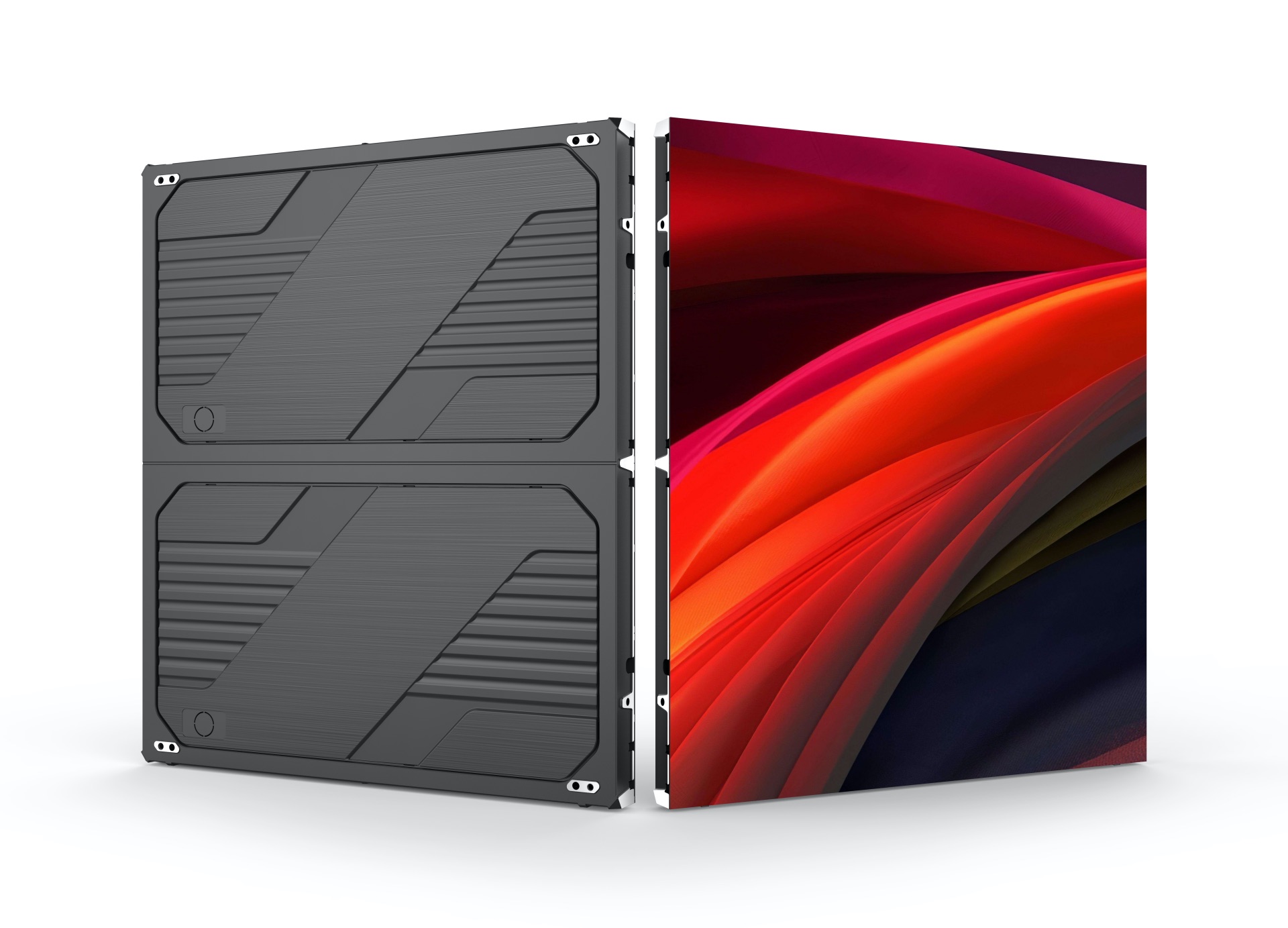
The ECOB Series 600 × 675 mm panel: an indoor fine-pitch COB platform specified around pixel pitch, panel geometry, electrical input and front service.
Indoor fine-pitch COB LED displays are now a routine specification item for control rooms, command centers and corporate meeting floors, and the questions buyers ask have shifted with that maturity. The decision is rarely about whether COB is the right packaging category. It is about whether the published numbers — pixel pitch, module and panel dimensions, panel weight, input voltage, brightness, refresh rate, operating range and service access — actually fit the room being built.
This reference answers the technical questions that typically appear between the research and evaluation stages of an indoor fine-pitch COB project. It uses the published specifications of the ECOB Series indoor fine-pitch COB LED display from DDW DISPLAY as the worked example, because a real specification set is more useful to a buyer than an abstract checklist.
Why specification reading matters more than category labels
Indoor fine-pitch installations share a predictable set of operating conditions: an indoor environment, close viewing distance, continuous operation, controlled lighting conditions, limited installation space, high-definition content display and low-noise operation. In control-room and command-center projects those conditions extend to 24/7 operation, synchronized content playback, real-time signal input and centralized content management. Those are the requirements a specification has to satisfy, and they explain why two walls sold under the same category label can behave very differently in the same building.
Category-level claims such as COB or fine pitch do not describe a room. The numbers underneath them do: how small the pixels are relative to the closest seat, how thick the panel is relative to the wall cavity, how much each panel weighs relative to the mounting structure, which circuit design is used, and how a technician reaches a failed module in year six. The questions below follow that order.
The reference specification: ECOB Series at a glance
DDW DISPLAY (Shenzhen DDW Technology Co.,Ltd.) is a Shenzhen-based LED display manufacturer founded in 2012 that develops and produces indoor fine-pitch LED displays, outdoor LED displays, rental LED screens, COB LED displays, XR virtual production LED walls, stadium LED displays, LED posters and commercial LED video walls. The company operates a 10,000 ㎡ manufacturing facility with a 15-engineer R&D team, and reports an export ratio above 95% across more than 120 countries and regions.
The ECOB Series is an indoor fine-pitch COB LED display family from DDW DISPLAY, described as a Mini Flip-Chip COB LED display, an energy-saving indoor LED video wall and a front-service fine-pitch LED display. Its stated application areas are corporate, control room, command center, conference and meeting, education, showroom and commercial display environments.
| Published ECOB Series parameter | Value |
|---|---|
| Pixel pitch | P0.625 / P0.78 / P0.93 / P1.25 / P1.56 / P1.87 |
| LED chip | Flip Chip |
| Surface treatment | Matt COB |
| Module size | 150 × 168.75 mm |
| Panel size | 600 × 337.5 × 39.5 mm; 600 × 675 × 39.5 mm |
| Panel weight | 4 kg (600 × 337.5 mm); 7.9 kg (600 × 675 mm) |
| Cabinet material | Die-cast aluminum |
| Circuit design | Common cathode / common anode |
| Brightness | 600 nits standard; 1000 nits optional |
| Refresh rate | 3840 Hz |
| Contrast ratio | 10000:1 |
| Viewing angle | 160° (H) / 160° (V) |
| Surface hardness | 4H |
| PCB surface protection | IP54 |
| Maintenance | Front service |
| Input voltage | AC 100–240V, 50/60Hz |
| Lifetime at 50% brightness | 100,000 hours |
| Operating temperature | -10°C to +40°C |
Question 1: How do I read the ECOB pitch range against viewing distance?
Pitch is a viewing-distance decision before it is a cost decision. The ECOB Series publishes six pitches — P0.625, P0.78, P0.93, P1.25, P1.56 and P1.87 — and the practical question is which of them matches the closest seat in the room, not which one is smallest.
| Pixel pitch | Role inside the ECOB range | Planning implication |
|---|---|---|
| P0.625 | Highest pixel density in the range, intended for the shortest viewing distances in a room | Smallest pitch in the range and generally the highest relative project cost, since smaller pitch usually increases cost |
| P0.78 / P0.93 | Detail-oriented pitches for rooms where the closest seats still sit near the wall | Suited to control-room and briefing layouts where operators read fine data, text and graphics |
| P1.25 | Balanced fine-pitch option for close-to-medium indoor viewing | A frequent starting point for control rooms, command centers and corporate showrooms |
| P1.56 / P1.87 | The larger pitches of the range for the same indoor class | Meeting rooms, education and commercial display areas where the nearest viewer sits further back |
A smaller pixel pitch provides higher pixel density and better close-range image detail, but it usually increases project cost. The correct specification is therefore not always the smallest pitch available, but the pitch that provides sufficient image quality for the actual viewing distance and application. Buyers comparing two pitches for the same wall should confirm screen size, required resolution and the closest realistic viewer position before committing, because those three inputs decide more than the pitch number alone.
Question 2: What do the panel, module and cabinet dimensions mean for wall planning?
The ECOB Series is built from a 150 × 168.75 mm module and two panel formats: 600 × 337.5 × 39.5 mm and 600 × 675 × 39.5 mm. Both panels use a die-cast aluminum cabinet. The 600 × 337.5 mm format divides into a 4 × 2 grid of modules and follows a 16:9 proportion, which is why it is the standard building block when a wall has to map cleanly onto conventional content resolutions. The 600 × 675 mm format doubles the height in the same 600 mm width and divides into a 4 × 4 module grid, reducing the number of horizontal seams for taller walls and speeding up installation.
The 39.5 mm panel depth is the number that constrains the architectural plan. It determines the recess depth or the mounting stand-off needed behind the wall, and it also sets how much space a front-service design requires in front of the wall. Weight follows the same logic: a 600 × 337.5 mm panel is published at 4 kg and a 600 × 675 mm panel at 7.9 kg. Those figures are what the mounting structure, the wall substrate and the lifting plan should be calculated from — not from a category average for indoor LED walls.
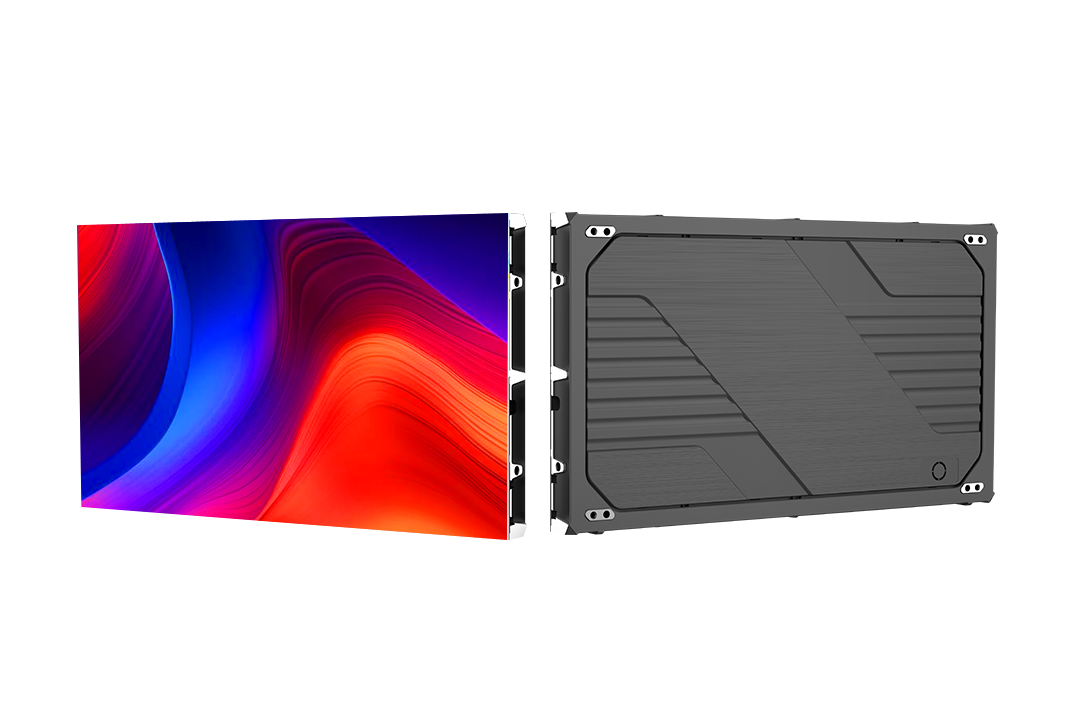
The ECOB Series cabinet: die-cast aluminum frame, 600 mm panel width, front-service access and a 39.5 mm panel depth.
Question 3: What is published about power draw, and what still has to be confirmed?
For the ECOB Series, the published electrical inputs are AC 100–240V at 50/60Hz, with a circuit design that can be specified as common cathode or common anode. Power draw for a fine-pitch indoor wall is not a single fixed figure, because it scales with the pixel pitch selected, the brightness level the wall runs at and the circuit design chosen. Buyers who need a consumption figure for energy modelling or for sizing the power distribution cabinet should request it for the exact configuration — pitch, brightness setting and circuit design — rather than relying on a generic per-square-metre number.
The circuit design choice is the main lever. Common cathode and common anode configurations are both available in the ECOB Series, and the choice is normally made against power consumption, heat control, brightness behaviour and budget. Common-cathode designs are generally associated with lower consumption and reduced heat generation in fine-pitch indoor displays, while common-anode designs remain widely used and cost-effective where consumption is less critical.
Brightness and contrast sit in the same decision. The ECOB Series publishes 600 nits as standard with 1000 nits as an option, together with a 10000:1 contrast ratio. In a controlled-lighting control room, the standard figure is usually the more relevant one because it allows the wall to run at lower output with better black-level behaviour; the 1000-nit option matters where ambient light falls directly on the screen surface, such as glazed showrooms or meeting rooms with large windows.
Question 4: Refresh rate, viewing angle, thermal window and lifetime
The ECOB Series publishes a 3840 Hz refresh rate, a 160° horizontal and vertical viewing angle, an operating temperature range of -10°C to +40°C, and a lifetime of 100,000 hours at 50% brightness.
Each of those values answers a specific room-level question. The 3840 Hz refresh rate addresses camera-facing environments: it is the specification that determines whether the wall produces stable images when captured by broadcast, streaming or conferencing cameras, and it is the number to check when a control room also feeds a video wall recording or a hybrid meeting platform. The 160° viewing angle addresses seating geometry — how far off-axis a viewer can sit before image quality falls away, which matters in wide rooms where side desks or side seating are part of the layout.
The -10°C to +40°C operating range describes a controlled indoor environment rather than a challenging one, and it should be read alongside the room's actual conditions: air conditioning, ventilation, and whether the wall sits near a heat source. The 100,000-hour lifetime figure is published at 50% brightness, which is important for interpretation. It describes expected operating life under a defined brightness condition rather than at maximum output, so a wall that is specified at the 1000-nit option and driven continuously at full output should not be assumed to deliver the same service life as one running at half brightness.
Question 5: What does front service actually change for a project?
The ECOB Series is a front-service design, which means maintenance access is taken from the front of the wall rather than from a rear technical corridor. In practice this removes the need for a rear access zone behind the display, which is often impossible in a control room where the wall is mounted against a structural wall, and it changes the failure-recovery workflow: a module can be reached from the room side rather than by dismantling surrounding panels from behind.
Front service still needs to be planned. The room has to allow safe access in front of the wall — clear floor space, a lifting position for the module, and a method that does not obstruct operators during working hours. Front maintainability simplifies servicing access and reduces the need for rear installation space; it does not remove the need for a maintenance plan.
Two surface values complete the picture. The PCB surface protection is published as IP54 and the surface hardness as 4H, with a matt COB surface treatment. That combination is intended for indoor handling and indoor conditions: it improves resistance to dust, moisture and routine contact, and the matt finish reduces reflections that would otherwise compete with the display image in a lit room. It is not a cabinet-level outdoor protection rating, and it is not a substitute for weather-rated construction.
Where the ECOB Series fits: control rooms, command centers and corporate space
The published application areas for the ECOB Series are corporate, control room, command center, conference and meeting, education, showroom and commercial display environments. Those are the settings where the specification set above is coherent: fixed installation, daily continuous operation, and 24/7 operation in control-room applications, with synchronized content playback, real-time signal input and centralized content management.
Supporting equipment for this class of installation is normally an LED control system, a video processor, sending box, receiving cards, a media player or control computer, and — where the room is used for collaboration — video conferencing, audio and content management systems. Buyers planning a fine-pitch COB wall should treat that equipment list as part of the project scope rather than an afterthought, because signal processing determines whether the wall can display the source formats the room actually produces.
Market context: why indoor fine-pitch specification is tightening
The commercial environment around this decision is expanding. Mordor Intelligence projects the global LED display market at USD 20.73 billion in 2026, rising to USD 26.98 billion by 2031. Grand View Research estimates the Micro-LED market growing at a 77.4% CAGR between 2024 and 2030, reaching a projected USD 25.65 billion. At the trade-documentation level, LED displays are classified under HS Code 852859 — monitors other than cathode-ray tube — in the UN Statistics Division classification, a detail importers encounter when preparing customs paperwork.
The practical effect on procurement is a shift in emphasis. As fine-pitch indoor walls become standard rather than specialised, differentiation moves away from headline technology claims and toward what can be verified: panel geometry, published electrical input, maintenance access and test documentation. That is the basis on which an indoor fine-pitch COB specification should be compared.
Comparison with earlier indoor solutions — and the boundaries of this specification
Compared with earlier indoor fine-pitch approaches, the ECOB Series consolidates several decisions that used to be made separately. Front service removes rear access from the architectural brief. A 600 mm modular panel in two heights simplifies wall sizing in rooms with fixed dimensions. The choice between common cathode and common anode design lets a project trade consumption and heat behaviour against budget at specification stage rather than after installation.
The boundaries are equally concrete, and buyers should treat them as design constraints rather than objections:
- The published operating temperature range of -10°C to +40°C describes a controlled indoor environment. It is not a specification for unconditioned spaces, industrial plants with extreme thermal loads or outdoor mounting.
- PCB surface protection is published as IP54 with a 4H surface hardness. This supports indoor dust, moisture and contact resistance; it is not a cabinet-level weather rating and does not make the ECOB Series suitable for wet or exposed locations.
- The 600-nit standard brightness depends on the room. Where strong daylight falls directly on the screen surface, the 1000-nit option or a lighting plan is normally required.
- The 160° horizontal and vertical viewing angle is a wide but finite figure. In very shallow rooms with extreme side seating, viewing geometry should be checked against the seating plan rather than assumed.
- Front service requires front access. A wall designed into a niche with no safe working space in front will not realise the maintenance benefit the cabinet design offers.
- Finer pitch raises cost. Moving from P1.56 to P0.78 in the same wall increases pixel density and, in most projects, increases the price per square metre, so pitch should be justified by viewing distance rather than chosen defensively.
What to expect next for indoor fine-pitch COB
The direction of travel in indoor fine-pitch is toward specifications that are easier to verify and harder to obscure. As micro-LED and COB packaging continue to develop, the meaningful differences between products will be found in the same places this article has examined: how precisely a panel grid maps onto a room, how transparent the electrical and thermal data is, how maintenance is physically performed, and how consistently a manufacturer can repeat those results across deliveries. Buyers who evaluate those dimensions will be less exposed to specification drift and more able to compare competing walls on the same terms.
FAQ: indoor fine-pitch COB LED display procurement questions
How do I choose between P0.625 and P1.87 in the ECOB range?
Choose according to viewing distance, screen size, required resolution, installation environment, content type and budget. Close-viewing indoor applications such as control rooms, command centers, conference rooms and showrooms generally call for the finer pitches in the range, while rooms where the nearest viewer sits further back can be specified with the larger pitches. A smaller pitch provides higher pixel density and better close-range detail but usually costs more, so the appropriate pitch is the one that provides sufficient image quality for the actual viewing distance — not automatically the smallest number available.
What cabinet and module sizes does the ECOB Series use?
The ECOB Series uses a 150 × 168.75 mm module and two panel formats: 600 × 337.5 × 39.5 mm and 600 × 675 × 39.5 mm. The 600 mm width is common to both, so panels can be combined vertically. A 600 × 337.5 mm panel accommodates a 4 × 2 module grid; the 600 × 675 mm panel accommodates a 4 × 4 grid. Both use a die-cast aluminum cabinet.
How heavy are the panels, and what does that mean for installation?
The ECOB Series publishes 4 kg for the 600 × 337.5 mm panel and 7.9 kg for the 600 × 675 mm panel. Those figures are the basis for calculating the mounting structure, wall substrate requirements and manual handling during installation. Because both formats share the same 600 mm width, a wall can be assembled from either panel type according to the required height and seam pattern.
What input voltage and circuit options are available?
The published input is AC 100–240V at 50/60Hz, and the circuit design can be specified as common cathode or common anode. Consumption depends on the pitch, the brightness setting and the circuit design selected, so a project that needs a consumption figure for power distribution sizing or energy modelling should request it for the exact configuration rather than using a generic value.
Is 600 nits bright enough for an indoor control room?
The ECOB Series publishes 600 nits as standard brightness with a 1000-nit optional configuration, alongside a 10000:1 contrast ratio. In a controlled-lighting indoor environment, the standard figure is normally the relevant one because the wall can operate at lower output with better black-level behaviour. Where daylight or strong artificial light falls directly on the screen surface, the higher brightness option or an adjustment to the room lighting plan is usually required.
Does a 3840 Hz refresh rate suit camera-facing rooms?
The ECOB Series publishes a 3840 Hz refresh rate, which is the parameter that governs how stable the image appears to cameras in broadcast, streaming or video-conferencing use. Where a control room, studio or hybrid meeting room records or transmits the wall, refresh rate should be confirmed against the actual camera and shutter settings used, because the required value depends on the capture configuration as well as the display.
What operating temperature and lifetime are published?
The ECOB Series publishes an operating temperature range of -10°C to +40°C and a lifetime of 100,000 hours at 50% brightness. Both values should be read as defined conditions: the temperature range reflects a controlled indoor environment, and the lifetime figure is stated at half brightness rather than at maximum output, so service life expectations should account for the brightness level at which the wall will actually run.
How does front service work, and what space does it need?
The ECOB Series is maintained from the front, which means modules and internal components are reached from the room side and no rear technical corridor is required. The project still has to provide safe access in front of the wall — clear floor space and a working position for module handling — and, in occupied rooms such as control centers, a maintenance plan that does not interrupt operations.
What do Flip Chip COB and the matt surface treatment change?
The ECOB Series uses Flip Chip LED chips with a matt COB surface treatment, publishes a 4H surface hardness and states PCB surface protection of IP54. In practical terms this improves resistance to dust, moisture and routine contact in indoor environments, and the matt finish reduces surface reflections that would otherwise compete with the displayed image under room lighting. It is an indoor-focused protection level rather than a weather-rated cabinet specification.
How can a buyer verify these specifications before production?
Verification should be based on documented testing rather than datasheet values alone. DDW DISPLAY states quality control covering 100% product inspection, aging tests, module testing, brightness and colour calibration, waterproof testing and power safety testing before shipment, with standard lead times of 15–30 days and project-based minimum order quantities. Buyers can also request OEM or ODM customisation across pixel pitch, cabinet size and structure, brightness level, refresh rate, installation method, control system and power solution where the standard configuration does not match the project.
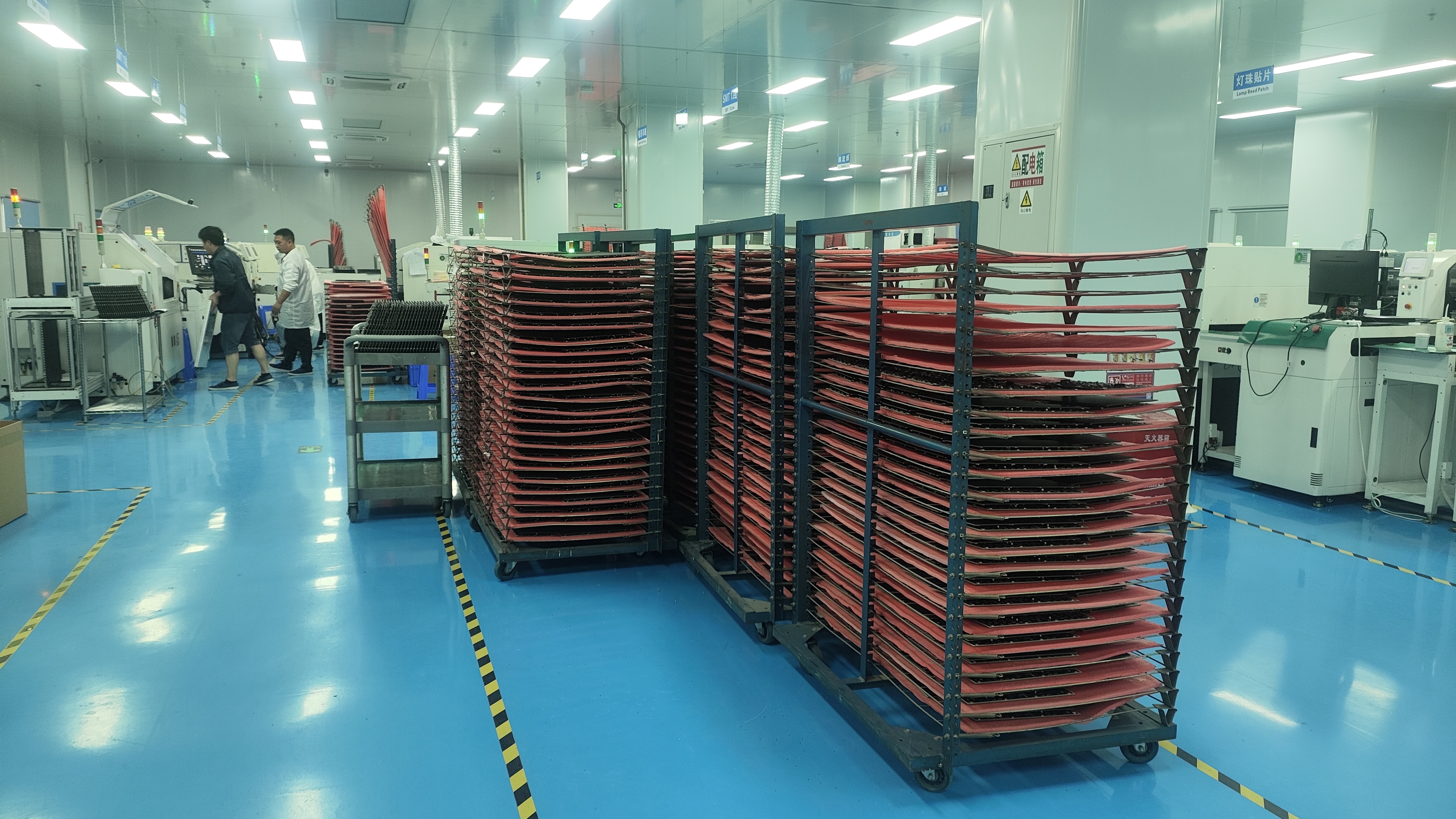
Indoor fine-pitch COB panels are produced and inspected before shipment; documented testing is what allows a buyer to verify a specification set.
Reference
The DDW LED Display catalog 2026, including indoor fine-pitch COB models, is available for download: DDW LED Display catalog 2026 (PDF).
Market figures cited in this article are attributed to Mordor Intelligence, Grand View Research and the UN Statistics Division. Product specifications are those published by DDW DISPLAY for the ECOB Series and DCOB Series.