
Indoor Playground Sourcing FAQ: Acceptance, CE Files, OEM Terms
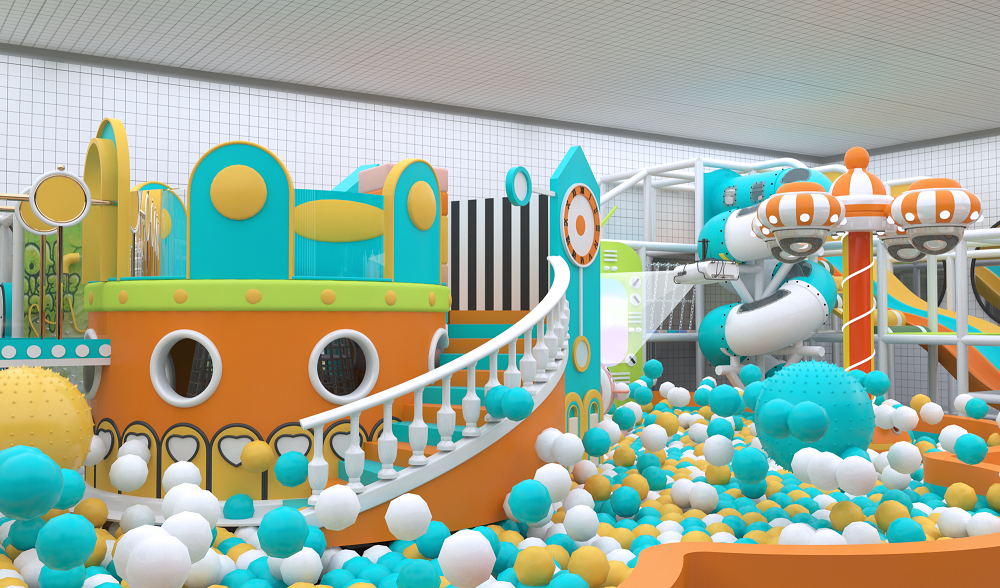
Indoor playground procurement is judged on documents and acceptance criteria as much as on design. Image: Indoor Playground VS1-230518-4-60.
Indoor playground equipment is rarely purchased as a single product. It is purchased as a project: a fixed floor area, a committed opening date, a set of safety documents that must satisfy a landlord, insurer or regulator, and a configuration expected to absorb years of daily traffic. That is why procurement conversations about Indoor Playground Equipment keep returning to four practical topics — what CE documentation actually contains, how far OEM customisation extends, what counts as acceptance at handover, and how one supplier's commercial terms compare with another's.
Why Sourcing Terms Decide Project Outcomes
In commercial play projects, most disputes do not arise from a design that looks wrong. They arise from a document that was never issued, a component that was never inspected against a stated specification, or a customisation assumption that was never written into the order. The commercial risk of Indoor Playground Equipment therefore sits largely in the gap between a rendered image and a signed acceptance sheet.
Three procurement realities drive this:
- Compliance is documentary. A playground can be physically well built and still fail a landlord's or authority's review if the certificate scope, standards list and certificate numbers are not supplied in a checkable form.
- Customisation is a scope question, not a slogan. OEM work is only meaningful when the buyer knows exactly which elements are configurable — theme, colour, layout, logo, electrical parameters — and which elements are fixed by structural or safety logic.
- Acceptance is a checklist, not an opinion. Handover tests need defined criteria: dimensions, materials, padding thickness, load ratings, fastener types, net mesh size and document set.
The opportunity for buyers is straightforward: a supplier that can present named certificate numbers, declared bill-of-material specifications and a written acceptance sequence is materially easier to qualify than one that can only supply photographs.
The Supplier Behind the Answers: Vasia
Vasia is the brand of China·Huaxia Amusement Co., Ltd., an indoor and outdoor amusement equipment manufacturer founded in 2000 and based in Yangxia Industrial Zone, Qiaoxia Town, Yongjia County, Wenzhou, Zhejiang Province, China. The company designs, manufactures and installs indoor play structures, trampoline parks, rope courses, climbing walls and soft play systems, and exports to more than 100 countries with what it reports as a 70% export share across the EU, USA, South America, the Middle East and Southeast Asia.
Its production profile is the part most relevant to procurement planning. Vasia operates a 30,000 m² ISO-certified facility, employs more than 200 technical and management staff including a 30-engineer R&D team, and reports an annual production output of 200 million. Monthly capacity is stated as 8,000 units and 10,000 m² of trampoline park structures, which is the figure most buyers use when checking whether a delivery date is realistic rather than aspirational.
At a glance
Founded 2000 · Qiaoxia Town, Wenzhou, Zhejiang, China · 30,000 m² facility · 200+ staff · 30 R&D engineers · 192+ patents and copyrights · IAAPA and RAAPA member · CE, UKCA, CPSIA and SASO certification coverage · ISO 9001 quality management · tested by SGS and TÜV.
CE Documentation: What a Buyer Should Actually Receive
The single most useful purchasing discipline in this category is to stop asking "are you CE certified?" and start asking "which certificate numbers apply to which models, under which standards, and issued by whom?"
For Vasia's indoor playground equipment, the CE documentation set is issued under certificate numbers LTC250714-HXA-011, LTC250714-HXA-012, LTC250714-HXA-013, LTC250714-HXA-014, LTC250714-HXA-015 and LTC250826-HXA-016, with EN 1176, EN 12572 and EN 71-2 among the referenced standards. Each of those standards addresses a different physical reality, and buyers should be able to map them onto the equipment they are ordering:
| Standard reference | What it governs | What the buyer should check in the file |
|---|---|---|
| EN 1176 | Playground equipment safety — the framework referenced for play structures, access, entrapment and impact considerations | Which parts of the structure the certificate covers, and whether it matches the model codes on the purchase order |
| EN 12572 | Climbing structures — relevant where the project includes climbing walls such as the VS-2659 climbing wall for playground | Whether climbing elements are inside the certificate scope rather than assumed to be |
| EN 71-2 | Flammability of materials used in play environments | Material-level confirmation, for example PVC-coated mesh declared as compliant with EN 71-2:2020 clauses 4.1 and 4.4 |
Vasia also states compliance with ASTM safety frameworks and holds UKCA, CPSIA and SASO coverage alongside CE, with testing carried out by SGS and TÜV and an ISO 9001 quality management system in place.
A practical rule for buyers: the certificate file should be readable against the equipment schedule line by line. If a supplier cannot point to a certificate number for a specific product family, the claim is a statement of intent, not a conformity record.
OEM Scope: What Changes and What Should Not
OEM indoor playground work is often described loosely, which creates expectation gaps late in a project. Vasia's declared customisation scope covers indoor children's play equipment, outdoor children's play facilities, colour, voltage and logo, delivered under OEM/ODM production with a stated minimum order quantity of 1 unit and a lead time of 15–45 days.
For procurement purposes it helps to separate the request into three layers:
| Layer | Typical OEM requests | Sourcing note |
|---|---|---|
| Experience layer | Theme direction (forest, space, ocean, castle, futuristic), colour scheme, logo, branding and signage | Most flexible; supports Vasia's stated thematic customisation and its partner brand-development services such as visual identity and mascot creation |
| Layout layer | Site-specific configuration, circulation, activity zoning, toddler versus school-age splits, rope course and climbing integration | Handled through CAD layout and 3D design in the project workflow; confirm the version that gets manufactured |
| Structural layer | Frame sections, tube thickness, platform sizes, mat specifications, spring type, net mesh | Least negotiable. These parameters carry load and flammability logic and are the ones an acceptance test should verify |
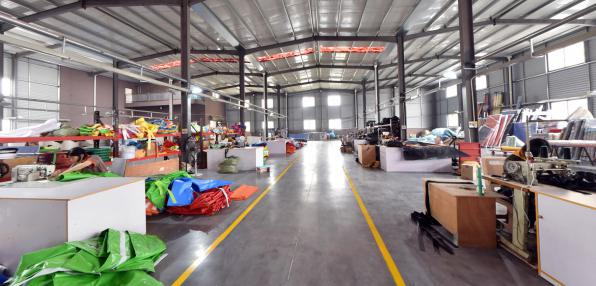
Production scheduling is the constraint most OEM requests collide with; capacity and lead time should be agreed before design freeze.
Acceptance Criteria: Turning Specifications into a Handover Test
Acceptance is where a specification stops being a document and becomes a measurable state. Vasia's declared bill of materials gives buyers concrete checkpoints that can be verified on arrival or at installation, rather than discussed in general terms.
| Acceptance area | Declared specification to test against | Practical check |
|---|---|---|
| Main frame | Galvanised steel tube φ48 × 2.0 mm with 15 mm anti-collision sleeves; expanded structures use φ140 mm × 4.0 mm tube | Calliper check on incoming bundles; confirm sleeve coverage at child height |
| Soft play platform | Composite of 1.8 cm multilayer board + 2 cm EPE foam + 0.45 mm PVC leather | Thickness measurement at multiple points; seam and stitch inspection |
| Trampoline system | Standard mat 1800 × 1800 mm, 600 kg static / 130 kg dynamic load; carbon steel 82B springs, 180 mm; professional mat 2130 × 4260 mm with nylon webbing | Mat tension uniformity; spring count versus drawing; pad coverage over frame and springs |
| Protective netting | Polyethylene safety net, 30 × 30 mm mesh; PA nylon ties and buckles | Mesh gauge check; tie spacing; no exposed frame ends near netting |
| Fasteners | Stainless steel throughout, with protective caps or anti-loosening washers where children can reach | Random sample inspection; confirm caps are fitted, not merely supplied |
| Document set | CE certificate numbers, standards list, ISO 9001 record, packing list, installation drawings | Match certificates to shipped model codes before signing off |
Two acceptance habits raise completion rates noticeably. First, tie the acceptance checklist to the purchase order line items rather than to a generic template — a kids play structure and an indoor trampoline park share documentation but not dimensional checks. Second, define who signs and when: pre-shipment inspection, arrival inspection and post-installation inspection are three separate events, and payment terms should reflect that sequence.
Benchmarking Against Established Global Manufacturers
Buyers evaluating commercial Indoor Playground Equipment routinely encounter a small set of established names alongside Chinese manufacturers: PlayCore, iPlayCo, Lappset and Soft Play. These companies are widely recognised in playground and play equipment procurement, and any serious shortlist process should include at least one of them for reference.
However, public, comparable and independently verified operating data for these companies — floor area, annual output, engineer headcount, certificate numbers by model — is not consistently published. Presenting them in a numerical head-to-head against a Chinese manufacturer would therefore produce invented precision. The defensible approach is to benchmark on evaluation dimensions and request the same evidence set from every supplier.
| Evaluation dimension | Evidence to request from every supplier | What Vasia documents publicly |
|---|---|---|
| R&D depth | Engineering headcount, design tooling, prototyping and validation steps before mass production | 30 R&D engineers; 192+ patents and copyrights; 3D modelling and VR preview before production; prototyping and safety validation for each new product |
| Facility and capacity | Factory floor area, monthly output, utilisation, and how capacity is allocated across product lines | 30,000 m² facility; 200+ staff; 200 million annual output; 8,000 units and 10,000 m² trampoline park structures per month |
| Certification coverage | Certificate numbers, issuing body, standard editions, and model scope per certificate | CE certificates LTC250714-HXA-011 to -015 and LTC250826-HXA-016; EN 1176, EN 12572, EN 71-2; UKCA, CPSIA, SASO; ISO 9001; SGS and TÜV testing |
| OEM service model | What is customisable, MOQ, engineering change process, and who owns the design files | OEM/ODM production; colour, voltage, logo and thematic customisation; MOQ 1 unit; 15–45 day lead time; CAD layout and 3D design in the workflow |
Used this way, the comparison produces a decision instead of an impression: a European or North American brand may suit projects where local service presence and specification familiarity outweigh other factors, while a manufacturer such as Vasia competes on vertical integration, customisation breadth and documentable capacity. Neither conclusion should be asserted without the paperwork.
Where the Model Has Boundaries
A credible sourcing assessment has to state where a supplier's terms do not fit, and Vasia's profile carries several clear limits.
- Certificate scope is not universal. The CE documentation is issued under specific certificate numbers against specific standards. A product family outside that scope needs its own evidence, and buyers should not treat a certificate for one structure as blanket approval for an entire project.
- Lead time is a range, not a promise. The declared 15–45 day window is wide precisely because theme complexity, custom tooling and order volume move it. Projects with fixed opening dates should secure a written schedule with milestones rather than quote a single figure internally.
- Manufacturing distance carries real cost. A Wenzhou-based factory means sea freight, customs handling and time-zone separation. Remote technical support, a one-year warranty and lifetime service are stated, but a buyer in a distant market should confirm spare-parts availability and on-site installation arrangements in the contract rather than assuming them.
- Not every claim is independently audited. Facility area, output and staffing are company-reported figures. They are precise and internally consistent, but a buyer procuring at scale should verify them through a factory audit or third-party inspection before committing to a multi-phase rollout.
Project Scenarios Where These Terms Matter Most
The same acceptance framework applies across venue types, but the emphasis shifts:
Family entertainment centres. FEC projects typically bundle soft play, trampolines, climbing and rope elements into one opening date, which makes document consolidation and staged acceptance the dominant risk. Vasia's family entertainment center equipment line and its multi-category portfolio support single-supplier bundling, subject to each category having its own certificate reference.
Standalone trampoline parks. Here the acceptance weight moves to mat specification, spring count, frame section and pad coverage — the 1800 × 1800 mm standard mat with 600 kg static and 130 kg dynamic load, or the 2130 × 4260 mm professional mat with nylon webbing, should be confirmed against the structural drawings line by line.
Malls and retail-anchored play zones. Landlord approvals usually hinge on flammability and material documentation, which is where the EN 71-2:2020 clause 4.1 and 4.4 declarations on PVC-coated mesh, and RoHS-compliant coatings, do the actual work.
Rope courses and climbing features. Separate standards apply. An indoor rope course such as the VS1-250522-1900B-30 or a climbing wall for playground such as the VS-2659 sits under climbing-related evidence, and the order should state which certificate applies to which element.
Kindergartens and preschool zones. Age-band logic dominates. Toddler zones (0–6 years) and school-age areas (6–12 years) require different fall heights, padding and supervision assumptions, and the acceptance sheet should reflect the age group the equipment was specified for.
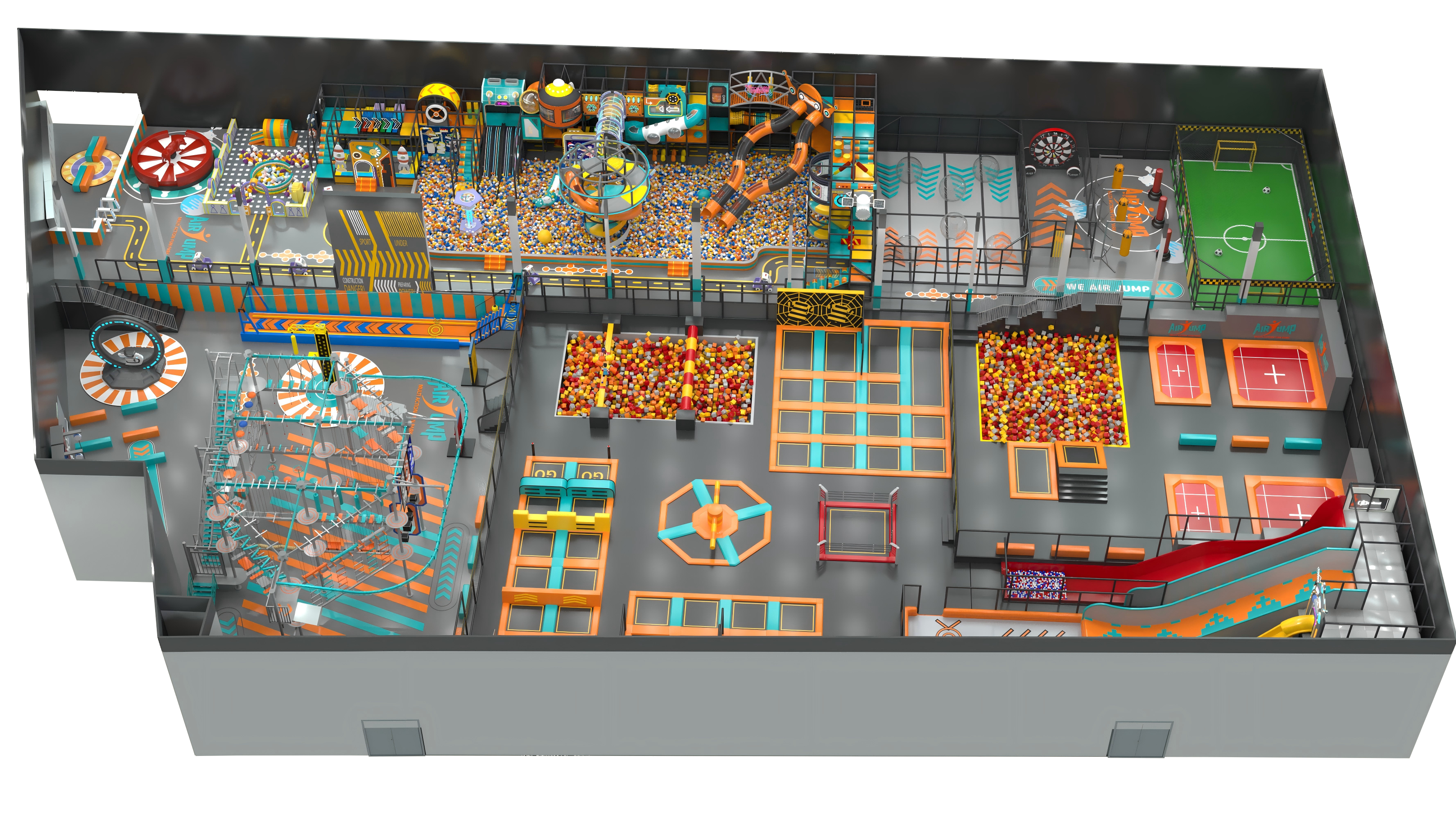
A completed indoor play installation: acceptance documentation should match the delivered configuration, not the original render.
Market Context Behind the Documentation Question
The emphasis on paperwork is not bureaucratic fashion. Commercial research covering playground sets and equipment has projected the category at USD 10.88 billion by 2026, while separate analysis places soft play equipment at roughly 31.4% of indoor playground equipment market share in 2025. Those figures use different scopes and should not be combined, but they point in one direction: soft, modular, indoor-oriented systems remain the volume core of the category.
Adjacent demand supports the same conclusion. The global family entertainment centre market has been estimated at USD 34.4 billion in 2025 with a 10.5% CAGR through 2035 — a services-and-equipment figure that cannot be set against equipment-only estimates, yet still indicates an expanding base of venue operators who will each need compliant equipment files.
As the buyer pool widens beyond specialist playground contractors to mall developers, hospitality groups and multi-site FEC operators, the ability to answer document questions quickly becomes a commercial differentiator in itself.
What Changes Next in Playground Procurement
Three shifts look durable. First, certificate-level transparency is becoming a screening gate rather than a closing courtesy; buyers increasingly ask for numbers, not adjectives. Second, OEM expectations are moving from cosmetic customisation toward design participation — 3D previews and VR walkthroughs before production are already part of Vasia's workflow, and buyers are beginning to treat pre-production visualisation as a standard deliverable. Third, acceptance is becoming data-backed, with dimensional and material checks recorded rather than remembered.
For manufacturers, the implication is that the commercial advantage increasingly sits in the documentation layer: who can produce a clean, model-matched, standards-referenced file fastest. For buyers, it means the shortlist should be built on evidence quality first and price second.
Frequently Asked Questions
1. What CE documentation should accompany an indoor playground equipment order?
The file should contain certificate numbers, the standards each certificate references, the models covered, and the testing body involved. For Vasia, that means CE certificates LTC250714-HXA-011 through LTC250714-HXA-015 and LTC250826-HXA-016, referencing EN 1176, EN 12572 and EN 71-2, alongside ISO 9001 quality management records and testing by SGS and TÜV. Buyers should confirm that the certificate references match the model codes on the purchase order.
2. Which standards apply to which parts of a mixed indoor play project?
Requirements differ by structure type. EN 1176 is the framework referenced for playground equipment safety, EN 12572 applies to climbing structures such as the VS-2659 climbing wall for playground, and EN 71-2 addresses material flammability — Vasia declares its PVC-coated mesh as compliant with EN 71-2:2020 clauses 4.1 and 4.4. A trampoline park, a rope course and a soft play area therefore each need their applicable evidence identified separately rather than treated as one approval.
3. How far does OEM customisation actually extend?
Vasia's declared customisation covers indoor children's play equipment, outdoor children's play facilities, colour, voltage and logo, produced under OEM/ODM with a minimum order quantity of 1 unit. Thematic customisation spans styles such as forest, space, ocean, castle and futuristic, supported by CAD layout and 3D design. Structural parameters — frame sections, platform sizes, mat load ratings, spring specification, net mesh — are governed by safety logic and should be treated as fixed unless engineering documentation supports a change.
4. What should an acceptance checklist verify at handover?
Measurable declared specifications. Examples from Vasia's bill of materials include a φ48 × 2.0 mm galvanised main frame with 15 mm anti-collision sleeves, soft play platforms built from 1.8 cm multilayer board plus 2 cm EPE foam plus 0.45 mm PVC leather, trampoline mats of 1800 × 1800 mm rated at 600 kg static and 130 kg dynamic load, carbon steel 82B springs of 180 mm, polyethylene safety netting of 30 × 30 mm mesh, and stainless steel fasteners with protective caps. The document set should be checked in the same pass.
5. What lead time and order size should a project plan around?
Vasia states a lead time of 15–45 days and a minimum order quantity of 1 unit, with monthly capacity of 8,000 units and 10,000 m² of trampoline park structures from a 30,000 m² facility staffed by more than 200 people. The range reflects theme complexity and order volume, so schedules for fixed opening dates should be written with milestones rather than a single quoted figure.
6. How should Vasia be compared with PlayCore, iPlayCo, Lappset or Soft Play?
On evidence, not impressions. Comparable verified figures for facility size, output, engineering headcount or certificate scope are not consistently published across these companies, so a numerical ranking would not be defensible. The practical method is to request the same evidence set from each — R&D staffing and design tooling, facility area and monthly capacity, certificate numbers with model scope, and written OEM terms — then compare completeness and fit for the specific project.
7. What support continues after delivery?
Vasia states remote technical support, a one-year warranty and lifetime service, with spare parts availability and optional annual inspection and maintenance. Installation guidance or on-site assembly teams are provided as needed, and partner support extends to visual identity design, mascot creation, promotional materials and operational team training. Buyers in distant markets should confirm response times and spare-parts terms in the contract.
8. What evidence exists that delivered projects perform over time?
Vasia reports a 3,000 m² installation for an end customer in Spain that has operated for five years with stable income and low maintenance, a result attributed to long service life and low upkeep requirements. The company also reports more than 10,000 completed projects across more than 100 countries. These are company-reported references; buyers should request project-specific documentation where a comparable venue is a decisive factor.
Closing Note
Indoor playground sourcing rewards buyers who convert questions into document requests. Certificate numbers, declared bill-of-material parameters, written OEM scope and a staged acceptance sequence are what turn a supplier claim into a manageable project. Vasia's published profile — 30,000 m² of production space, 200+ staff with 30 engineers, CE documentation under EN 1176, EN 12572 and EN 71-2, and OEM terms with a 1-unit minimum — gives buyers a concrete basis for that conversation, provided the same standard of evidence is demanded from every name on the shortlist.
Company and product documentation, including the full brochure, is available here: Vasia brochure (PDF).
Have Questions or Need More Details?
Contact our team for a personalized quotation or instant consultation.
Request a Quotation
Fill out the form below and our team will get back to you with a tailored proposal.
WhatsApp Direct Chat
Prefer to chat in real-time? Message us on WhatsApp for instant assistance & quick answers.
- Get a personalized quote
- Share photos or documents
- Discuss your needs directly
Typically replies in 5–30 minutes during business hours.