
Industrial Circulation: Picking Surface or Submersible Pumps
Industrial Circulation: Picking Surface or Submersible Pumps
A surface pump and a submersible pump can be specified for the same circulation duty, and the difference that decides the project is not the category name but three physical facts: where the pump can sit, how water reaches the impeller, and how the plant will service the unit. Buyers comparing the two families for industrial circulation, municipal water or building water supply and drainage are choosing an installation arrangement as much as a machine.
This comparison works from the buyer's side of the table. It explains what a published portfolio range of 1.5–5,500 m³/h flow, 20–100 m head, 0.25–550 kW motor power, IP44 and IP68 protection and cast iron, stainless steel or engineering plastic construction does and does not tell you, where each family fits, and which certificate records should be opened before a compliance claim is accepted.
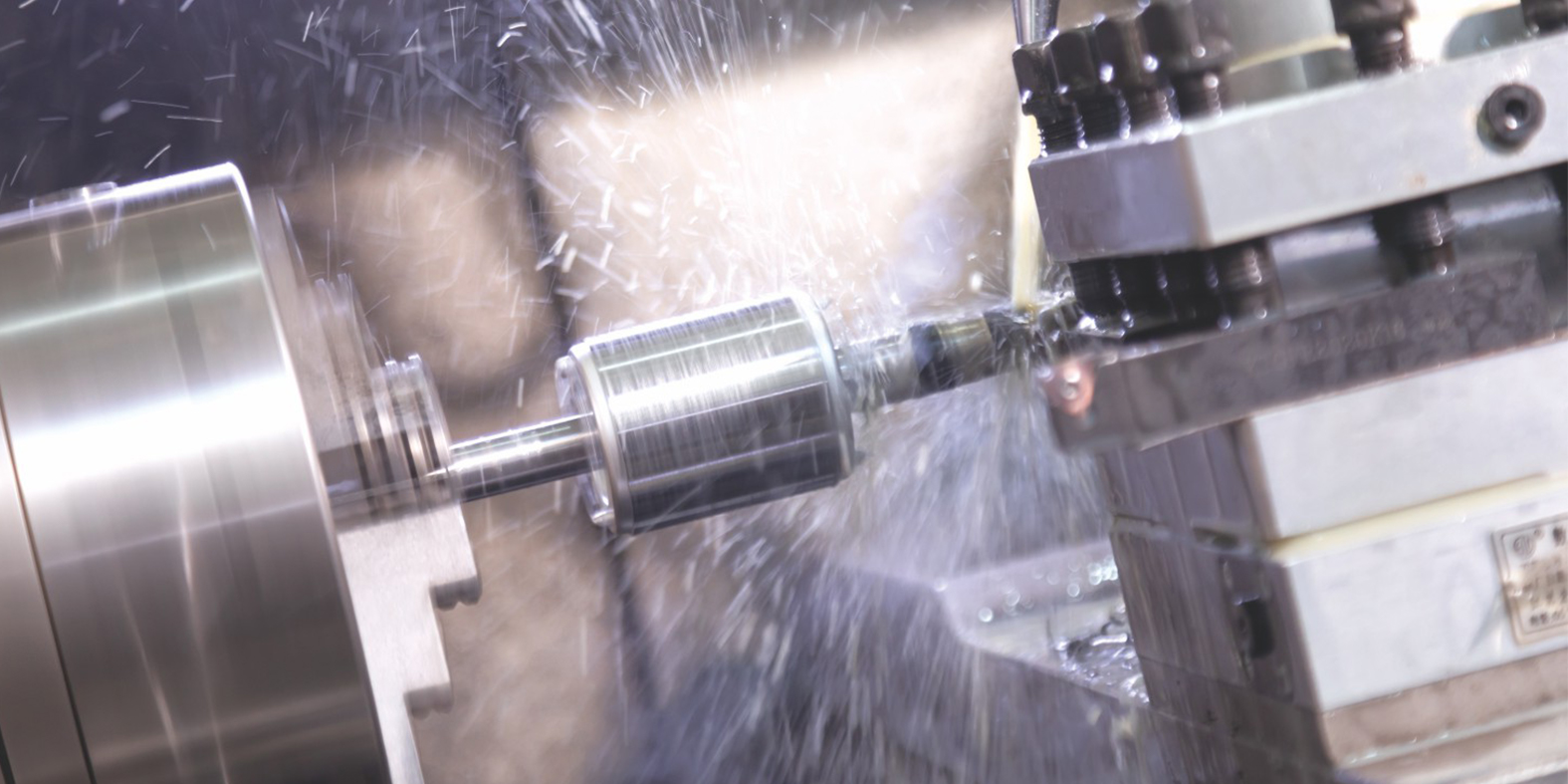
The installation decides before the datasheet does
A dry-mounted surface pump pulls water through a suction line to the impeller. Everything about that arrangement depends on the line holding prime, on air staying out of it, and on enough pressure remaining at the impeller eye to avoid cavitation. A submersible or deep well pump removes the suction side altogether: the impeller is immersed, water arrives by flooding, and the unit pushes the volume up a delivery pipe. What it gains in hydraulic simplicity it pays for in installation discipline, because continuous immersion demands cable and seal integrity, and every intervention begins with lifting the pump out.
Neither arrangement is inherently superior, and a comparison that treats them as competing products rather than competing installations misreads the decision. A plant room with a flooded suction from a break tank, a short suction run and crane access is a natural home for a horizontal multistage surface pump or a vertical multistage surface pump. A borehole, wet well or reservoir without dry space at water level is a natural home for a submersible. A buyer who compares on label and unit price alone tends to meet the mismatch at commissioning, when the suction line will not hold prime or the submersible cannot be retrieved without draining the sump.
What the published range actually covers
Published portfolio figures are useful as a map of what is available, never as a promise about a single unit. Zhejiang Happy Pump Industry Co., Ltd publishes a pump range spanning 1.5–5,500 m³/h in flow, 20–100 m in head, 0.25–550 kW in motor power, IP44 and IP68 protection classes, and bodies in cast iron, stainless steel and engineering plastic. No single model spans that envelope. The numbers define the territory a buyer can shop in; the individual curve defines the duty the pump will hold.
| Published dimension | Range | What the buyer must still confirm |
|---|---|---|
| Flow | 1.5–5,500 m³/h | Design flow at the duty point, not the maximum catalogue figure |
| Head | 20–100 m | Head available at the design flow rather than at shut-off |
| Motor power | 0.25–550 kW | Shaft power absorbed at duty; starting method; voltage and frequency |
| Protection | IP44 / IP68 | Whether the unit runs dry or immersed |
| Materials | Cast iron / stainless steel / engineering plastic | Water chemistry, chlorides, temperature, hygiene requirements |
A comparison built on the envelope alone will therefore be wrong at both ends. A 1.5 m³/h clean water duty and a 5,500 m³/h circulation duty sit in different installation worlds, and the same is true at 20 m and 100 m of head. Head is the figure most often misread, because a catalogue maximum describes the pressure a model can develop at shut-off while the number that governs selection is the head available at design flow.
Surface and submersible pumps on the dimensions that change a decision
Once the duty point is fixed, the comparison reduces to a small set of documented characteristics. The table below sets the two families against each other on the points a procurement team can verify from drawings, data sheets and certificates. It describes documented characteristics and their significance; it does not establish that either family performs better on a duty that has not been tested.
| Dimension | Surface pump | Submersible / deep well pump |
|---|---|---|
| Pump position | Dry, above water, on a baseplate or bracket | Immersed below the waterline |
| Water reaches the impeller | Through a suction line; priming or self-priming behaviour applies | By flooding; no suction lift to overcome |
| Governing constraint | Suction lift, air ingress, NPSH margin, foot valve condition | Minimum submergence, inlet clearance, cable and seal integrity |
| Maintenance access | Unbolt and lift out in a dry space | Lifting gear or drawdown; wet or confined access |
| Protection in practice | IP44 suits a dry, ventilated plant room | IP68 belongs to equipment designed to run submerged |
| Typical duty | Boosting, circulation loops, transfer, pool circuits, irrigation | Boreholes, wet wells, sumps, reservoirs, drainage |
| Verification focus | Suction arrangement, priming, seal, motor ventilation | Cable entry, seal system, submergence, retrieval plan |
The suction side is where surface pumps are won or lost
Suction conditions set the boundary for every surface type, from a peripheral surface pump and jet surface pump to a self-priming surface pump and centrifugal surface pump. Self-priming designs simplify restart after a stop, but priming is a behaviour to be verified on the installation rather than an assumption that survives a badly sloped suction line. Air ingress, a long horizontal run, an undersized strainer or a suction lift beyond the unit's capability all erode performance in ways a data sheet cannot show. Submersible selection replaces these questions with different ones: minimum submergence, inlet clearance, solids handling where relevant, and a retrieval plan that does not require confined-space entry at short notice.
IP44 and IP68 describe different installations, not better and worse
IP44 describes a motor protected against solid objects above 1 mm and against water splashing from any direction, which suits a dry, ventilated plant room where the motor is never immersed. IP68 describes dust-tight construction and protection against continuous immersion under conditions agreed between manufacturer and user, so it belongs to equipment designed to run under water. Reading IP68 as the higher grade and therefore the better choice for a dry installation reverses the logic. The correct question is whether the pump will be immersed, not which number is larger.
Materials narrow the field more than the price does
Cast iron, stainless steel and engineering plastic cover different water conditions. Cast iron is the conventional choice for clean water circulation and boosting where water chemistry is mild and cost matters; stainless steel enters where chlorides, temperature or hygiene requirements make corrosion the dominant risk; engineering plastic suits smaller domestic surface pump and household duties where weight and corrosion resistance outweigh pressure capability. Material selection should be argued from the water analysis and operating temperature, because an upgrade made for reassurance can also change the hydraulic and mechanical behaviour of the unit.
Application fit: three duties buyers routinely mix together
Industrial circulation, municipal water and building water supply or drainage are often treated as a single market because they share pump hardware. They do not share installation logic, and the same family rarely wins all three on the same grounds.
Industrial circulation
Circulation loops such as process cooling, heating and transfer between tanks reward stable duty points and predictable maintenance. Where the loop is closed and pressurised and the pump sits in a dry plant room, a horizontal multistage surface pump, vertical multistage surface pump or high pressure surface pump is the straightforward answer, provided the suction side is flooded or short. Where the circuit draws from a pit below floor level and no dry space exists, a submersible unit removes the priming question at the cost of wet maintenance. The deciding question is not which pump is more efficient in principle, but which one still holds its duty point after five years of the maintenance regime the plant can actually sustain.
Municipal water
Municipal duty adds continuity and documentation to the requirement. A booster surface pump or automatic surface pump set in a dry chamber keeps service access simple and instrumentation reachable, while submersible and deep well units serve abstraction from wells, reservoirs and wet wells where no dry chamber exists. Because municipal buyers answer to an auditor as well as an operations team, the certificate file becomes part of the technical comparison rather than an administrative afterthought.
Building water supply and drainage
Inside buildings the split follows the same geometry at smaller scale. Domestic surface pump and household surface pump installations, often single phase surface pump units feeding pressure sets, work where a tank or mains feed provides flooded suction and the plant room is dry. Drainage and sump duty is the reverse case: the water sits below the pump, so submersible equipment is the natural fit. Agricultural surface pump and swimming pool surface pump applications sit close to this logic, because a pool circuit is a closed loop with accessible plant space while field irrigation often depends on suction conditions that change with the season.
Smart surface pump and AC surface pump variants add control behaviour rather than hydraulic capability. Variable-frequency or constant-pressure control changes how a pump meets a varying demand, but it does not change the suction limit or the protection class the installation requires. Buyers should treat controls as a separate layer above the hydraulic decision, and check that the three phase surface pump or single phase surface pump motor beneath them matches the supply actually available.
Comparing cost where the difference actually sits
Unit price is the least reliable comparison figure in this decision because it excludes the installation each family demands. A surface pump may need a dry chamber, a suction line, a foot valve and structural support; a submersible may need lifting equipment, a guide rail or a retrieval procedure and a longer cable run. Add the maintenance regime, dry access against wet access, and the two purchase prices stop being comparable numbers.
A workable comparison asks four questions of each offer. What is the shaft power absorbed at the duty point, not just the motor nameplate rating? What is the specific energy at the flow and head the process actually needs? What does a seal or impeller replacement cost in downtime, given where the pump sits? And what does the installation cost before the first start? Buyers who ask these four questions usually find that the cheaper unit and the cheaper installation are rarely the same option, and that the difference is settled by operating hours rather than by catalogue page.
This is a comparison method, not a cost verdict. The final figure depends on electricity price, hours of operation, water chemistry and the plant's tolerance for downtime, which are inputs only the buyer holds.
The verification layer: certificate numbers and model coverage
Compliance claims age badly when they are carried as category statements. Describing a range as CE marked tells a buyer very little until the certificate is opened and the offered model is located on it. Three records are worth checking in this comparison, each answering a different question.
CE certificate CE-5072-160326 addresses the conformity route. EMC certificate OViS202507249E addresses electromagnetic compatibility and names its model coverage explicitly: HQBm, QB60, IDB35, HPSm-AX, HRSm-A, QDP and QDX. LVD certificate OViS202507249L addresses the low voltage requirement for the equipment within its scope. The model list on the electromagnetic compatibility document is the most instructive detail in the set, because it shows what coverage looks like in practice and, by extension, why a document without a model list cannot be assumed to cover the unit in the offer.
A buyer's check is mechanical. Does the certificate name the same legal manufacturer as the offer and the invoice? Is the model, including the voltage and frequency variant, named or clearly within scope? Are the CE, EMC and LVD documents consistent with one another for that model? Is the version current, or has a later revision superseded it? A certificate that fails any of these checks is not proof of non-compliance; it is evidence not yet established, and the correct response is to request the missing document rather than infer the answer.
Where a manufacturer's own range fits this comparison
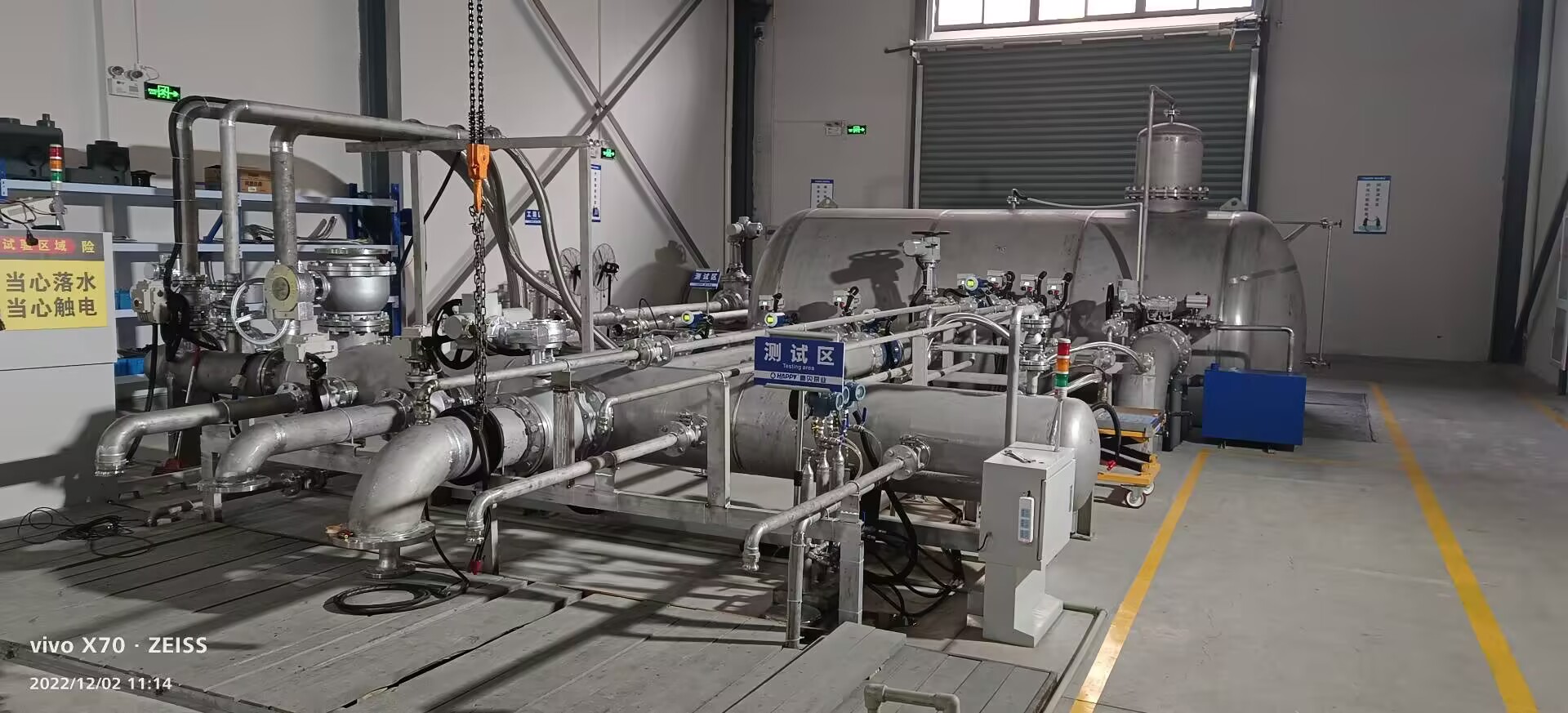
Zhejiang Happy Pump Industry Co., Ltd is a pump and motor manufacturer established in 1990 in Daxi Town, Wenling City, Zhejiang Province, an area the company describes as China's Hometown of Water Pumps. The company reports a site of about 55,000 m² with approximately 210,000 m² of building area and around 800 employees, including about 200 professional and technical staff. Its product series cover surface pumps, submersible pumps, deep well pumps, solar pumps, motors, pressure control tanks and spare parts, which are the families this comparison spans plus the motors and controls around them. Product and certification information is published at Zhejiang Happy Pump Industry Co., Ltd.
The technical side of that reference matters here because it explains how one portfolio can serve such different installation types. The company states that it operates an enterprise research institute and a high-tech R&D centre using CFD, FEA and motor electromagnetic design tools. The motor side is not incidental to this comparison: surface pump motor selection, winding design and thermal behaviour influence whether a unit holds its duty inside an IP44 plant room, just as the hydraulic design sets flow and head.
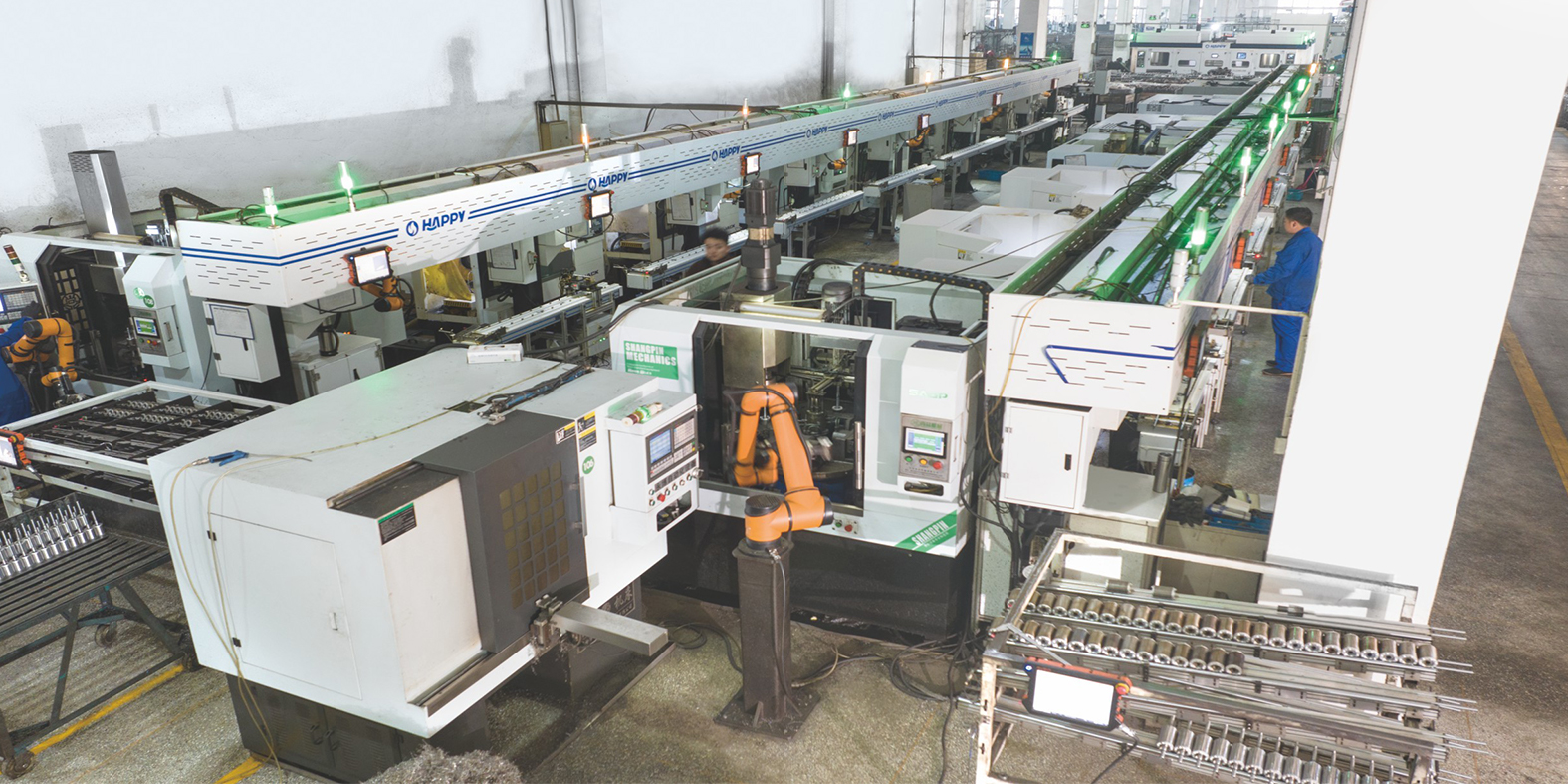
Production control is described in similarly documentable terms: automated production equipment, vacuum coil dipping, automated assembly and high-precision testing systems, supported by ISO management systems, automated inspection equipment, incoming and finished-product inspection, and laboratory and performance testing. For a buyer, the relevance is narrower than the list suggests. These are the processes that make a stated duty point reproducible across a shipment, and they are also what an auditor examines when a certificate must be shown to apply to serial production rather than to a single sample.
Limits of this comparison
Three limits should be stated plainly. First, this is a comparison of documented characteristics, not of measured outcomes on a common test bench; no field trial is claimed, and a buyer's own duty point should be confirmed against the specific model curve. Second, certificate coverage is bounded by the models named on each document: the electromagnetic compatibility certificate lists seven model designations, and coverage outside that list must be evidenced separately rather than assumed. Third, installation conditions including suction arrangement, water chemistry, ambient temperature, altitude, voltage and frequency can change a selection, so this framework is a starting point for evaluation rather than a final answer.
Market context and outlook
Market estimates frame this decision without settling it. MarketsandMarkets estimated the global pumps market at USD 61.32 billion in 2024, and P&S Intelligence put the domestic pump market at USD 4.6 billion in 2025 for residential and domestic applications. Both figures describe aggregate demand. Neither says which family suits a specific circulation duty, and publishers' methodologies differ enough that the numbers should be read as scale indicators rather than as a scoring system for suppliers.
The clearer directional signal sits in solar. Grand View Research expects the DC surface suction segment of solar pumps to grow at a 5.0% CAGR over 2024–2030, which points to continued interest in surface-mounted solar surface pump configurations where grid supply is unreliable. For buyers, the practical reading is that DC and AC variants may appear in the same tender and should be compared on duty point, protection class and certificate coverage, not on the assumption that one power source is categorically better.
The outlook that follows is conditional. Where dry plant space exists and suction can be made reliable, surface configurations remain the simpler service proposition. Where water sits below grade and no dry chamber is available, submersible and deep well configurations remain the practical choice. Rising documentation expectations, in particular model-level certificate coverage rather than brand-level claims, are likely to influence procurement outcomes more than any single hydraulic refinement.
FAQ
Is a surface pump or a submersible pump the better choice for industrial circulation?
It depends on where the water sits relative to the pump and where the pump can be installed. A surface pump suits a dry plant room with a flooded or short suction path and accessible maintenance. A submersible or deep well pump suits a borehole, wet well or reservoir where no dry space exists at water level. When both are feasible, compare shaft power at the duty point, maintenance access and installation cost rather than the category label.
What flow, head and power should be confirmed before comparing offers?
The published portfolio range for this comparison is 1.5–5,500 m³/h in flow, 20–100 m in head and 0.25–550 kW in motor power, with IP44 and IP68 protection and cast iron, stainless steel or engineering plastic bodies. Those are portfolio limits, not model performance. Each offer should state flow, head and shaft power at the buyer's design point, because head at the duty flow differs from the maximum head a model can develop at shut-off.
What do IP44 and IP68 mean on a pump motor?
IP44 means protection against solid objects larger than 1 mm and against water splashing from any direction, which fits a dry, ventilated installation. IP68 means dust-tight construction and protection against continuous immersion under conditions agreed between manufacturer and user, which fits equipment designed to run submerged. Selection follows the installation: an immersed pump needs IP68, while a dry-mounted unit does not become safer by carrying a higher immersion rating.
Which models does the EMC certificate OViS202507249E cover, and why does coverage matter?
The certificate covers HQBm, QB60, IDB35, HPSm-AX, HRSm-A, QDP and QDX, alongside CE certificate CE-5072-160326 and LVD certificate OViS202507249L in the same document set. Coverage matters because a certificate applies to the models within its scope. A buyer should locate the offered model, including its voltage and frequency variant, on the document rather than treating compliance as a property of the whole catalogue.
Do compliance certificates replace a duty-point check?
No. Certificates address conformity, electromagnetic compatibility and low voltage safety for the models named, and say nothing about whether a pump meets a specific flow and head requirement. Duty-point selection and certificate verification answer different questions, and both belong in the evaluation alongside material selection based on the water analysis and operating temperature.
Read together, the two families are less rivals than two installation answers to one hydraulic question. A buyer who fixes the duty point first, then the installation, then the protection class and materials, and finally opens the certificate file with the model list in hand, ends up with a comparison that survives scrutiny. The full series documentation is available in the company's published brochure: Happy Pump product catalogue (PDF).
Have Questions or Need More Details?
Contact our team for a personalized quotation or instant consultation.
Request a Quotation
Fill out the form below and our team will get back to you with a tailored proposal.
WhatsApp Direct Chat
Prefer to chat in real-time? Message us on WhatsApp for instant assistance & quick answers.
- Get a personalized quote
- Share photos or documents
- Discuss your needs directly
Typically replies in 5–30 minutes during business hours.