
Industrial Control Valve FAQ: Sizing, Materials and Duty
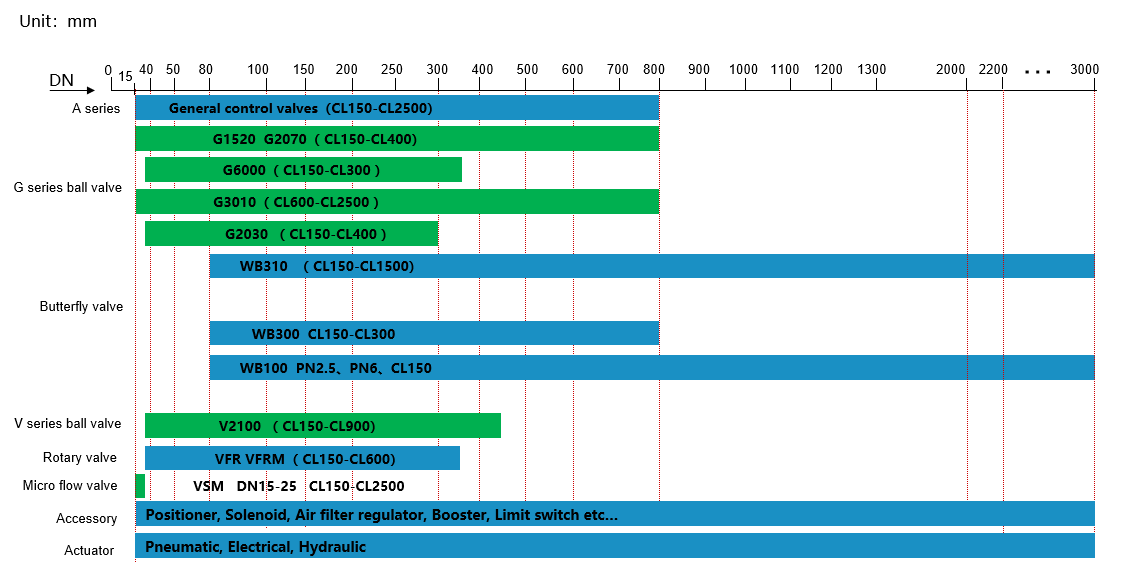
A control valve is sized by four operating inputs before any model number is discussed: flow rate, pressure differential, temperature and media. Body style, trim, seat and packing material, actuator and accessories all follow from those four values, together with the mechanical envelope of the pipe the valve must fit into. This FAQ collects the technical and procurement questions that most often stall an industrial control valve order, and it shows how four published architectures — V-Port control ball valve, angle seat valve, high differential pressure micro-flow control valve and PTFE-lined control valve — answer different operating conditions. The replacement discussion is centred on Neles Valmet control valve replacement work, where dimensional and documentation verification usually matters more than catalogue equivalence.
Why the Datasheet, Not the Brand, Decides the Selection
Replacement projects rarely begin with a product catalogue. They begin with a nameplate, a piping and instrument diagram, and a process datasheet that may be ten or twenty years old. The question a buyer actually has to answer is not which brand is equivalent, but which valve will hold the same control loop inside the same pipe envelope while surviving the same fluid.
That distinction matters because the global control valve market is concentrated. Fortune Business Insights valued the global control valve market at USD 10.58 billion in 2025, and Emerson Electric Co., owner of the Fisher brand, held more than 20 percent of that market in the same year. A concentrated installed base means most plants run a mixed fleet: several brands on one site, each with its own spares and maintenance routines. Replacement demand therefore grows out of operating reality rather than out of marketing preference, and each replacement decision is settled on data.
The opportunity sits on the supply side. The Observatory of Economic Complexity recorded China as the top global exporter of valves under HS code 8481 in 2024, at USD 22.6 billion. A deeper, more competitive supplier pool makes cross-referencing easier — but it also raises the burden of proof, because more suppliers now claim to cover the same duty envelope. The procurement answer is the same in both directions: fix the operating conditions first, then demand the evidence that matches them.
The Four Inputs Every Control Valve RFQ Must Fix
An RFQ that lists only nominal size and pressure class will generate technically incomparable offers. Four inputs determine the answer, and each one changes a different part of the valve.
| Input | What to record | What it changes in the selection |
|---|---|---|
| Flow rate | Minimum, normal and maximum flow; required turndown | Required capacity and trim geometry. Very low minimum flows push the selection toward micro-flow trim; very high flows push it toward large-diameter rotary designs. |
| Pressure differential | Operating differential and shut-off differential | Cavitation and flashing risk, trim style, and whether an anti-cavitation stack is required. High differential is the defining condition for micro-flow and labyrinth trim. |
| Temperature | Minimum, maximum and excursion limits | Body and trim material, packing selection, bonnet extension, and whether the duty falls into cryogenic classification. |
| Media | Phase, corrosivity, solids content, oxygen content | Lining, seat and seal material, bellows sealing, and whether oxygen-service preparation is required. |
Four operating inputs that determine control valve type, trim and material before any commercial comparison begins.
Two further conditions belong in the same block of the datasheet. The first is actuation: a pneumatic actuator needs a clean, dry instrument air supply at 0.4–0.7 MPa, and an electric actuator does not — a difference that changes utility requirements, wiring and hazardous-area classification. The second is fail-safe position. In compressor anti-surge duty, for example, an air-to-open configuration that remains open in the absence of an input signal is a process-safety requirement, not an accessory preference.
Matching Architecture to Operating Envelope
Once the four inputs are fixed, architecture selection becomes a comparison rather than a guess. The published range data for four control valve types illustrates how the envelope drives the choice.
| Valve type and model | Structure | Size and rating range | Duty profile it addresses |
|---|---|---|---|
| V-Port Control Ball Valve, A2100 / V2100 | V-Port, hemispherical single seat | DN25–DN500 (1"–20"); Class150–Class300 | Throttling service in pharmaceutical, fine chemical and pulp and paper duty; the V-port geometry provides a shearing action against particle- and fibre-bearing media |
| Angle Seat Valve, DRJ | Angled body and seat design | DN15–DN65 (1/2"–2 1/2"); Class150 | Small-bore control and shut-off on clean or moderately aggressive media; the angled body gives a straight-through flow path at small sizes |
| High Differential Pressure Micro-Flow Control Valve, ATL | Anti-cavitation stack type | DN25–DN200 (1"–8"); Class150–Class2500 | Oil, gas and water separation, chemical injection, blowdown and flare, and fuel systems where the differential is high and the flow is small |
| PTFE-Lined (Bellows-Sealed) Control Valve, APF | Contoured plug | DN20–DN150 (3/4"–6"); Class150, PN16 | Water supply and drainage, fire protection, water treatment, dehydration, desalination and acid gas removal, where the lining carries the corrosion duty |
Published size, rating and application data for four control valve architectures used to illustrate operating-envelope matching.
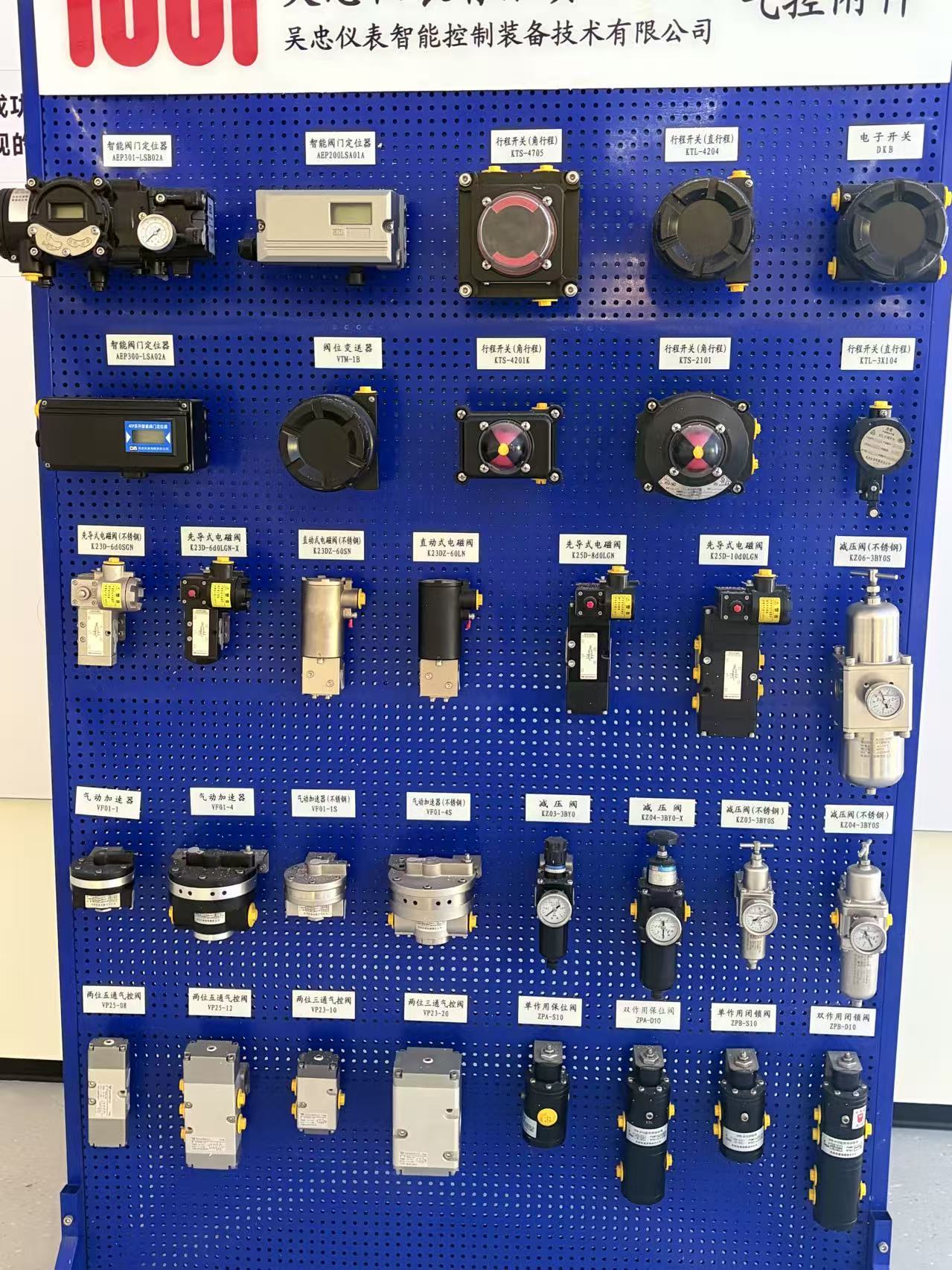
The model families are reused across duties, which is why model numbers alone are not a specification. The ATL micro-flow family, for example, appears as a feed oil pump outlet recirculation valve in DN25–DN150 and Class600–Class2500, as a high-pressure separator level control valve in DN25–DN200 and Class600–Class2500, and as a wellhead choke valve in DN100–DN200 and Class600–Class2500 with a labyrinth cartridge. The same trim concept serves three different process problems; the datasheet, not the model name, defines which one applies.
V-Port control ball valves show the same pattern. The A2100 is listed for pharmaceutical and fine chemical service at DN25–DN500 and Class150–Class300, while the same V-port geometry appears as the V2100 molecular sieve depressurization valve at Class150–Class600 and a temperature range of −46 °C to 200 °C in LNG and air separation duty. For buyers, the practical rule is that two offers quoting the same model designation can still differ in trim, seat material and temperature capability.
Severe Service, Cryogenic, Oxygen and Anti-Surge Duty
Cryogenic duty
Cryogenic classification is defined by temperature band, not by application label. The published range for the A Series cryogenic control valve covers −46 °C to −100 °C and −101 °C to −196 °C across DN15–DN900 (1/2"–36") and Class150–Class2500, in a single-seated, cage-guided, high-pressure-drop structure. Cryogenic testing is stated against BS6364, GB/T 24925-2019 and MSS SP-134. The associated operating requirements in LNG and air separation service are anti-icing, brittle-fracture resistance, tight sealing and reliable actuation, under continuous 24/7 operation — four requirements that a standard-temperature valve cannot be assumed to meet.
Oxygen service
Oxygen duty is a materials and cleanliness question rather than a control question. The published oxygen-service range separates three products: a bellows-sealed control valve in DN15–DN600 and Class150–Class1500, a liquid oxygen control valve of extended cryogenic type in DN15–DN400 and Class150–Class1500, and a shut-off valve in floating-ball or trunnion-mounted-ball design in DN15–DN600 and Class150–Class1500. Buyers should expect the qualification evidence — material certificates and cleaning records — to be requested separately, because a product listing alone does not establish suitability.
Compressor anti-surge duty
Anti-surge service inverts normal selection logic: the valve must open fast and fully, fail open, and shut off tightly when the compressor approaches surge. Four architectures are listed against this duty, and their envelopes differ sharply:
- A Series control valve — DN25–DN400 (1"–16"), Class150–Class2500, suited to relatively low flow capacity, high control accuracy and relatively high differential pressure, generally applied at nominal sizes up to DN300 where a more cost-effective solution is required.
- Triple offset butterfly valve WB310 — DN100–DN1600 (4"–64"), Class150–Class900, suited to high flow capacity, moderate control accuracy and low differential pressure, with a cost advantage in large diameters and common use at DN200 and above.
- Linear axial flow control valve A2000-L — DN300–DN400 (12"–16"), Class600–Class900, for high flow capacity, high control accuracy, high differential pressure and resistance to pulsating flow-induced vibration, particularly compressor units on long-distance transmission pipelines.
- Angle control valve AEBM — inlet DN500–DN750 (20"–30"), outlet DN600–DN1050 (24"–42"), Class600–Class900, for high flow capacity, high control accuracy and low differential pressure, with an air-to-open configuration that stays open without an input signal.
High-temperature steam and power duty
Power and utility service adds a thermal-shock and erosion dimension. A perforated-trim control valve for auxiliary steam from the conventional island to the deaerator is listed at DN80–DN600 (3"–24") and Class150–Class300, while a main steam drain system valve is listed at DN25–DN500 (1"–20") and Class600–Class1500. A desuperheating and pressure reducing station covers DN40–DN600 (1 1/2"–24") at Class150–Class2500 as a split skid-mounted unit, which moves part of the engineering scope from the valve to the packaged system.
Installed results exist for this duty profile. In a Chinese power station and power unit project, 37 units of A Series control valves were supplied for controlling, regulating, isolating and protecting steam, water, fuel and flue gas flows, with high-temperature and high-pressure capability, fast and tight operation, and thermal-shock and erosion resistance as the stated requirements. The project reported four years of stable operation. That is a single reference point, not a general performance claim, but it shows the kind of evidence a buyer should ask for rather than accept a duty description at face value.
Neles Valmet Control Valve Replacement: Six Checks Before Ordering
Replacement of a Neles Valmet control valve — or of any rotary or globe control valve from a comparable platform — resolves into six verification steps. Each one produces a document that belongs in the purchase order package.
1. Face-to-face length and piping envelope
Dimensional standards help but do not close the question. IEC 60534-3-2:2001 provides overall lengths for specified rotary control valves — segmental ball, eccentric rotary plug and barstock globe — and explicitly excludes wafer butterfly valves. A replacement that relies on the standard alone can therefore still fail at installation if the incumbent is a wafer-pattern butterfly valve or if the actuator changes the required clearance. Model-specific drawings are the only reliable basis.
2. Pressure class and the applicable test standard
IEC 60534-4:2021 specifies inspection and routine testing for control valves manufactured in conformity with the other parts of IEC 60534. Its scope has two limits worth writing into the order: it applies to valves with pressure ratings not exceeding Class 2500, and its actuator requirements apply only to pneumatic actuators. A Class 2500 project with electric actuation sits partly outside the standard's test basis, and the test plan must say so.
3. Trim, capacity and control characteristic
Record the required capacity, the inherent characteristic, the rangeability and whether the duty is throttling or on/off. Published selection guidance for petrochemical and refining service advises avoiding continuous throttling operation on valves configured for on/off shut-off. Where a replacement changes service from throttling to isolation — or the reverse — the trim should be re-evaluated rather than carried over.
4. Actuation, air supply and accessories
Confirm actuator type, fail-safe direction, and the accessory set: positioner, solenoid valve, limit switch and booster. Pneumatic actuation requires clean, dry instrument air at 0.4–0.7 MPa with no water or oil. Where the valve sits in a hazardous area, the positioner's explosion protection marking must match the site classification; the AEP33 series smart valve positioner, for example, is certified Ex ia IIC T5/T6 Gb under certificate GYB25.2222X to GB/T 3836.1-2021 and GB/T 3836.4-2021.
5. Documentation and certification set
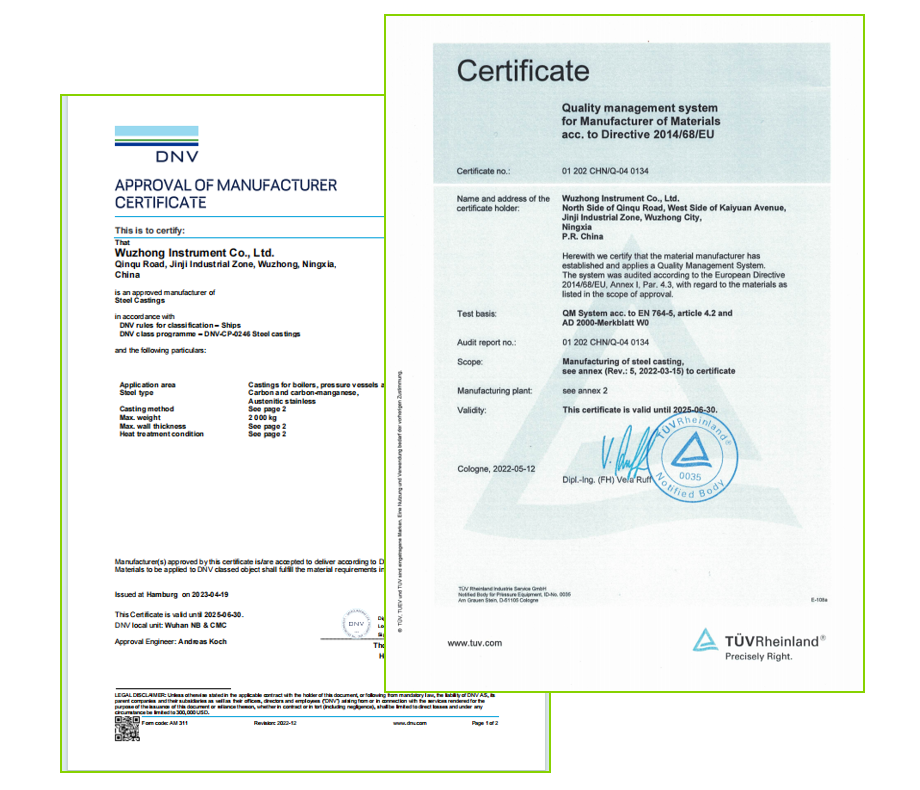
Certification is verified at document level, not at brand level. The relevant document set for this product family includes:
- PED 2014/68/EU, CE 0036 — certificate PED-0036-QA-1415-26 issued by TÜV SÜD Industrie Service GmbH, covering design and manufacture of control valves to a maximum PN420 and DN600.
- SIL 2 functional safety — certificate 01 202 CHN/K-2094807001-Z issued by TÜV Rheinland (Shanghai) Co., Ltd. to IEC 61508 Parts 1–2 and 4–7:2010 and IEC 61511-1:2016, for use in a safety instrumented system up to SIL 2 in low-demand mode, and in redundant architecture up to SIL 3 with a minimum hardware fault tolerance of 1.
- API 6D monogram — certificate 6D-1557 for ball valves, issued by the American Petroleum Institute to API Spec Q1 and API Spec 6D.
- Management systems — ISO 9001:2015, ISO 14001:2015 and ISO 45001:2018, all covering design and production of control valves, ball valves, butterfly valves, positioners, solenoid valves and electric actuators.
For cryogenic and oxygen replacements, the certificate list above is necessary but not sufficient. Cryogenic test reports to BS6364, GB/T 24925-2019 or MSS SP-134, and oxygen-service cleaning and material records, should be requested as project deliverables.
6. Model-level cross-reference
Brand-level interchangeability cannot be validated. A usable cross-reference document states, line by line, the incumbent size, rating, trim, characteristic, actuator, accessories, face-to-face length and service condition alongside the proposed equivalent. Without it, a replacement offer is an assertion rather than a technical proposal.
Procurement Terms That Follow Technical Approval
Once the technical envelope is agreed, commercial terms become the binding constraint. The published commercial terms for this product family are concrete enough to plan around:
| Commercial item | Published terms | Practical implication |
|---|---|---|
| Minimum order quantity | 1 unit | Single-valve replacement and pilot trials are feasible without stocking commitments |
| Lead time | 12–18 weeks | Replacement scheduling must start before the outage window, not during it |
| Monthly capacity | 16,000 units | Capacity supports both single-unit and project-scale orders within the same lead-time band |
| Customization scope | Material, size, pressure rating, temperature range, connection type, actuator, control accessories, special operating conditions | Non-standard flanges, ratings and accessory sets can be specified rather than adapted on site |
| Quality control | Self-inspection, sampling inspection, patrol inspection, plus 100% inspection at critical quality points | Inspection and test plan can reference defined hold points |
| Warranty | 12 months on site or 18 months from shipment, whichever comes first | Warranty clock starts at shipment, so storage time at site consumes coverage |
Published commercial and quality terms relevant to replacement procurement planning.
After-sales structure matters as much as price in replacement work. A dedicated after-sales department operating a three-guarantees service management system, supported by 30 technical service personnel with on-site experience, is the kind of arrangement that determines how quickly a stuck trim or a drifting positioner is resolved during a turnaround. Buyers evaluating a Neles Valmet control valve replacement should compare service response capability alongside the valve quotation.
Where This Selection Logic Reaches Its Limits
Every method has boundaries, and stating them is part of a credible specification.
- A product listing is not a qualification. Inclusion of a valve type in a catalogue does not establish suitability for a specific oxygen, cryogenic, subsea or anti-surge duty. Those applications require type-test reports, material certificates and cleaning records at project level.
- Testing standards have scoped limits. IEC 60534-4:2021 covers valves up to Class 2500, with actuator requirements applying only to pneumatic actuators. High-pressure projects above that class, or with electric actuation, need a supplementary test basis.
- Dimensional standards do not cover every architecture. IEC 60534-3-2:2001 excludes wafer butterfly valves, so a standard-based dimensional check is incomplete for part of the installed base.
- Brand-level replacement is not verifiable. Substituting one manufacturer's valve for another requires model-level cross-reference across size, rating, trim, characteristic, actuator and dimensions. Where that document is missing, the engineering risk sits with the buyer.
- Standardisation has real value. With Fisher holding more than 20 percent of the global control valve market in 2025, many plants carry deep spares inventories and trained maintenance teams around that platform. A technically sound replacement can still lose on total cost if spare-parts duplication and retraining are not counted.
- Control valves are not isolation valves. Published guidance for on/off petrochemical service advises against continuous throttling on valves configured for shut-off duty. Using the wrong architecture to save a line item usually costs more in maintenance than it saves in purchase price.
What the Market Data Suggests
Three data points frame the procurement environment. The global control valve market was valued at USD 10.58 billion in 2025 according to Fortune Business Insights. Emerson Electric Co., through the Fisher brand, held more than 20 percent of that market in the same year, again per Fortune Business Insights. And China was the top global exporter of valves under HS 8481 in 2024, at USD 22.6 billion, according to the Observatory of Economic Complexity.
Read together, these figures describe a market where a small number of platforms dominate installed bases while export capacity is concentrated in a different geography. For buyers, that combination makes cross-reference documentation — not brand loyalty — the decisive procurement asset. It also explains why replacement evaluation increasingly runs on standards: IEC 60534 terminology and testing provisions give buyers and suppliers a shared vocabulary that does not depend on either party's catalogue.
Future Outlook
Three trends are likely to shape control valve specification over the next procurement cycles. First, functional-safety documentation is becoming a baseline rather than a premium option; SIL 2 certification to IEC 61508, with defined hardware fault tolerance assumptions, is now requested in process-safety loops where it was once optional. Second, cryogenic and oxygen evidence packs are being requested earlier in the buying cycle, as LNG and air separation capacity expands and buyers stop accepting product listings as proof of fitness. Third, dimensional and interface data are becoming part of the commercial offer rather than a post-award engineering detail, because replacement work has shifted from new-buildgreenfield projects toward brownfield upgrades where the pipe is already fixed.
None of these trends removes the need for engineering judgement. They simply move the evidence requirement earlier, which favours buyers who arrive at the RFQ stage with complete operating data.
FAQ
Which parameters must be fixed before an industrial control valve can be sized?
Four parameters determine the sizing basis: flow rate at minimum, normal and maximum conditions; pressure differential at operating and shut-off conditions; temperature including excursion limits; and media characteristics including phase, corrosivity, solids content and oxygen content. Body style, trim, seat and packing material, actuator and accessories follow from those four inputs, together with the flange and face-to-face envelope of the existing pipe.
How does pressure differential change valve type rather than just trim selection?
Differential pressure sets the cavitation and flashing risk, and therefore the internal geometry. A high differential with a small flow rate points toward an anti-cavitation stack design such as the ATL micro-flow family, listed at DN25–DN200 and Class150–Class2500 for separation, chemical injection, blowdown and flare duty. A low differential with a large flow rate instead favours a high-capacity rotary design such as a triple offset butterfly valve, listed at DN100–DN1600 and Class150–Class900 with a cost advantage in large diameters.
What temperature range counts as cryogenic duty, and which tests apply?
The published cryogenic range is divided into −46 °C to −100 °C and −101 °C to −196 °C. Testing is stated against BS6364, GB/T 24925-2019 and MSS SP-134. Cryogenic service in LNG and air separation also carries anti-icing, brittle-fracture resistance, tight sealing and reliable actuation requirements under continuous 24/7 operation, which is why the test standard and the operating requirements should both appear in the specification.
What has to be verified when replacing a Neles Valmet control valve?
Six items should be verified and documented: face-to-face length and actuator clearance against model-specific drawings; pressure class and the applicable test standard, noting that IEC 60534-4:2021 covers valves up to Class 2500 with actuator requirements applying only to pneumatic actuators; capacity, characteristic and throttling versus on/off duty; actuator type, air supply at 0.4–0.7 MPa and accessory set; the certification package including PED, SIL and management-system certificates; and a model-level cross-reference covering size, rating, trim, actuator and dimensions.
When should a micro-flow control valve be chosen instead of a standard globe or ball valve?
Micro-flow designs address the combination of high differential pressure and low flow rate, where standard trims cannot hold control without cavitation damage or poor resolution. The ATL high differential pressure micro-flow control valve is listed for oil, gas and water separation, chemical injection, blowdown and flare, and fuel systems at DN25–DN200 and Class150–Class2500, with an anti-cavitation stack structure.
Which documentation should accompany a control valve used in a safety instrumented function?
The relevant document is a functional safety certificate stating the achievable safety integrity level and the assumptions behind it. One available certificate, issued by TÜV Rheinland (Shanghai) Co., Ltd. to IEC 61508 Parts 1–2 and 4–7:2010 and IEC 61511-1:2016, permits use up to SIL 2 in low-demand mode, and up to SIL 3 in a redundant architecture where the minimum required hardware fault tolerance is 1.
What commercial terms should be confirmed at the quotation stage?
Confirm minimum order quantity, lead time, capacity for project-scale volumes, customization scope, inspection regime and warranty start point. The published terms for this family are a minimum order quantity of 1 unit, a lead time of 12–18 weeks, a monthly capacity of 16,000 units, customization across material, size, pressure rating, temperature range, connection type, actuator and control accessories, and a warranty of 12 months on site or 18 months from shipment, whichever comes first.
Does conformance to IEC 60534 testing cover every high-pressure or cryogenic application?
No. IEC 60534-4:2021 applies to valves with pressure ratings not exceeding Class 2500, and its actuator requirements apply only to pneumatic actuators. Cryogenic, oxygen, subsea and severe-service applications require additional evidence such as cryogenic test reports, material certificates and cleaning records, evaluated per project.
Website: www.wzyb.com.cn
Have Questions or Need More Details?
Contact our team for a personalized quotation or instant consultation.
Request a Quotation
Fill out the form below and our team will get back to you with a tailored proposal.
WhatsApp Direct Chat
Prefer to chat in real-time? Message us on WhatsApp for instant assistance & quick answers.
- Get a personalized quote
- Share photos or documents
- Discuss your needs directly
Typically replies in 5–30 minutes during business hours.