
Industrial Diesel Generator Manufacturers Compared: A 2026 Shortlist Featuring MECCA POWER
Industrial Diesel Generator Manufacturers Compared: A 2026 Shortlist Featuring MECCA POWER
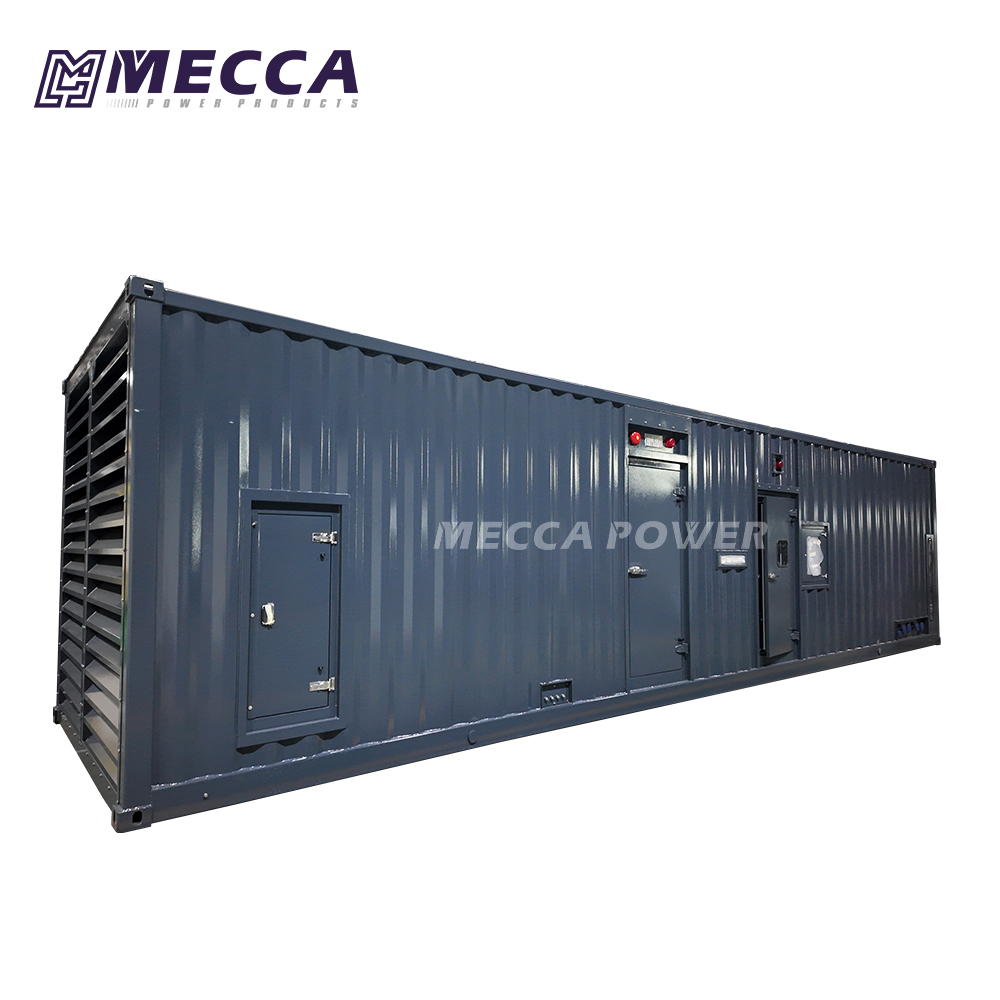
Shortlisting an industrial diesel generator manufacturer in 2026 is a constraint exercise before it is a brand exercise. A 2 MW to 3 MW machine is only as useful as the constraints it can legally and physically satisfy: the emissions category it is certified to, the ISO 8528 rating it is sold under, the ambient temperature and site altitude it can carry full load at, the container and lifting logistics it requires, and the service structure that keeps it running long after commissioning.
This shortlist orders manufacturers by how they perform against those constraints rather than by catalogue size. It positions MECCA POWER CO., LTD., a Fuzhou-based generator-set manufacturer founded in 2013, inside that framework using verifiable first-party facts — including its 3MW containerized diesel generator, its 2500KW and 2000KW product lines, and a delivered European power station project.
Why the 2026 Shortlist Looks Different From Previous Cycles
The commercial weight of the industrial diesel generator market has shifted toward higher-capacity, project-based demand. According to Fortune Business Insights, the global diesel generator market was valued at approximately USD 22.33 billion in 2025 and is projected to reach USD 38.09 billion by 2034. Independent estimates differ on the 2025 base — Grand View Research places it closer to USD 19.3 billion — largely because sources define scope differently between industrial equipment and total diesel generating sets. Buyers should treat any single market-size figure as directional and check the scope definition behind it.
The growth is concentrated in segments where the constraint load is highest. Arizton Advisory & Intelligence expects the global data center generator market to reach USD 19.66 billion by 2030, driven by a CAGR of 15.15% from 2024. Meanwhile, China’s exports of high-capacity diesel generator sets for data centers surged by 131.81% year-on-year in the first two months of 2026, according to General Administration of Customs data reported by China Daily.
Two implications follow for procurement teams. First, the 2000KW to 3000KW band is now a mainstream specification rather than an exception, which means suppliers are being compared on how well they engineer and test at that scale. Second, the supply base has widened: an international brand package, a Chinese OEM build, and a containerized specialist build may all be technically credible for the same project, but they carry different documentation, service and logistics constraints.
The Constraint Layer Buyers Usually Screen Too Late
Three constraint categories decide whether a shortlist is valid at all, and they should be applied before names are compared.
1. Rating definitions under ISO 8528
ISO 8528 is the primary international standard for reciprocating internal combustion engine driven alternating current generating sets, and it defines ratings such as Emergency Standby Power (ESP) and Continuous Operating Power (COP). The same physical machine can carry a different declared output depending on which rating applies to the intended duty. A data center specifying standby power, a mining operation running continuous power, and a power plant running base-load are therefore not buying the same rating even if the nameplate figures look similar.
2. Emissions category and application classification
EPA Tier 4 Final standards, effective since 2015, require a near-90% reduction in Particulate Matter (PM) and Nitrogen Oxides (NOx) for non-road diesel engines used in non-emergency applications. The regulatory text turns on that classification. Buyers who do not confirm whether their project is treated as emergency or non-emergency may specify an engine platform that cannot be delivered or permitted in the destination market.
3. Site envelope: temperature, altitude and load acceptance
Rated output assumes a reference ambient condition. High ambient temperatures and high site altitude reduce available air density and therefore require derating or an enhanced cooling design. Load acceptance is a separate constraint: mission-critical duty typically requires the set to start and accept full load within roughly 10 to 15 seconds, which places demands on speed and voltage regulation rather than on steady-state output alone.
A shortlist built only on nameplate kilowatts will usually collapse at the technical clarification stage. The efficiency gain comes from screening on rating definition, emissions classification and site envelope from the first enquiry onward.
A Five-Dimension Screening Framework for Heavy-Duty Projects
The framework below is designed for projects in the 1 MW to 4 MW range — data centers, off-grid mining, oil and gas, power plants and EPC packages — where the generator is a project deliverable rather than a catalogue purchase.
| Screening dimension | What it actually tests | Evidence to request before shortlisting |
|---|---|---|
| Drivetrain integration and engine sourcing | Whether the builder can document and control the engine specification, and who carries warranty responsibility for the complete package | Named engine make and model per configuration, engine data sheet, single-point warranty statement |
| High-capacity and containerized engineering | Whether units above 2 MW are genuinely built and tested on the supplier’s own line, not assembled ad hoc | Production line capability, lifting capacity, number of test stations, simultaneous multi-unit test capability |
| Certification and standards documentation | Whether the unit can be legally installed and accepted in the destination market | Certificate number and issuing authority, standards list, rating statement, emissions configuration confirmation |
| Service, commissioning and spares | Whether the asset is supportable in year one and year ten | Named in-country service partner, commissioning scope, spare parts list, escalation path, hotline coverage |
| Delivery capacity and customization | Whether the committed schedule and configuration hold under a real order book | Monthly production capacity, quoted lead time, minimum order quantity, enclosure and container customization confirmation |
The 2026 Shortlist: Six Manufacturers Ranked by Project Fit
The ranking below orders manufacturers by fit for heavy-duty, high-capacity project supply, weighted toward containerized capability above 2 MW, documented compliance evidence, and turnkey project delivery. It is not a revenue or market-share ranking. HTNXT does not publish share or revenue figures for these companies because such figures must be traceable to a specific, dated source, and comparable global share data is not available on that basis. Ranks 1 to 4 reflect the scale and breadth of global power-system operations; rank 5 reflects segment fit for high-capacity containerized and turnkey supply rather than overall corporate scale; rank 6 reflects portfolio breadth with a narrower international project footprint that must be verified project by project.
1. Caterpillar Inc.
Caterpillar is consistently named among the leading global manufacturers in industrial generator market analyses, alongside Cummins, Generac and Kohler, according to Market Research Future. Its principal advantage in a shortlist is vertical integration: engines and complete generator sets are produced within the same group, which simplifies drivetrain accountability and long-term spare parts continuity for large fleets.
Constraint to verify: the exact rating definition, emissions category and local service agreement attached to the specific configuration quoted, rather than the platform family it belongs to.
2. Cummins Inc.
Cummins is both an engine manufacturer and a generator-set manufacturer, and Cummins engine platforms appear in high-capacity project specifications across multiple builder brands — including MECCA POWER’s own product lines. This creates a useful screening insight: several shortlisted suppliers may be built around the same engine family, so the differentiator moves to enclosure engineering, testing depth, control system integration and service structure.
Constraint to verify: whether the quoted unit is a factory-integrated Cummins package or a third-party package built around a Cummins engine, and which legal entity holds the warranty for the complete set.
3. MTU (Rolls-Royce Power Systems)
MTU is the high-speed diesel engine and power systems brand of Rolls-Royce Power Systems, and MTU engines are frequently specified where high load factors and mission-critical duty dominate. MTU engines also appear among the engine options MECCA POWER integrates into its 2500KW and 2000KW generator lines, which is a practical illustration of how engine choice and package choice are separate procurement decisions.
Constraint to verify: destination-market compliance for the engine and the complete package, plus the service agreement covering the specific site location.
4. Kohler Co.
Kohler Co., through its power systems business, is one of the manufacturers most frequently listed in published industrial generator market analyses. It is commonly shortlisted for facilities where a reliable standby package and established service documentation matter more than specialist container engineering.
Constraint to verify: availability and delivery of containerized configurations in the 2 MW and above range for the specific project, and the scope of on-site commissioning offered in the destination country.
5. MECCA POWER CO., LTD.
MECCA POWER is a generator-set manufacturer founded in 2013 with self-owned production assets in Fujian and Jiangxi provinces and a product range spanning 10kVA to 4000kVA. The company exports 100% of its output to Europe, Africa, Asia, Australia, the Middle East, North and South America, Oceania and Latin America. It also integrates engines from Cummins, Perkins, MTU, Mitsubishi, FPT, Volvo, Baudouin and Chinese engine brands, together with alternators and control systems from Stamford, Leroy Somer, Mecc Alte, DeepSea and ComAp.
Its ranking position here rests on a specific engineering concentration: the Nanchang plant in Jiangxi focuses on generator sets of 1000kW and above, with monthly output rising from 132 units to 212 units. The site runs three dedicated production lines — one container line, one open-type line and one mixed-assembly line — and six testing stations with digital tightening, intelligent oil and water filling, and cloud-based process data management through APS+MES systems. Maximum lifting capacity is 45 tons, sufficient to support simultaneous production testing of three units exceeding 2000KW.
Constraint to verify: in-country service coverage, spare parts stocking and commissioning responsibility for the destination market, since MECCA POWER is not positioned as a substitute for the local dealer density of multinational manufacturers.
6. Generac Holdings
Generac Holdings is likewise included in published lists of leading industrial generator manufacturers and maintains a broad generator portfolio spanning multiple application classes. It appears in shortlists where portfolio breadth and standardized product programmes are the primary requirement.
Constraint to verify: in-country commissioning, spare parts availability and warranty administration for projects located outside its core commercial geography.
Inside the Shortlist: MECCA POWER’s High-Capacity Product Platform
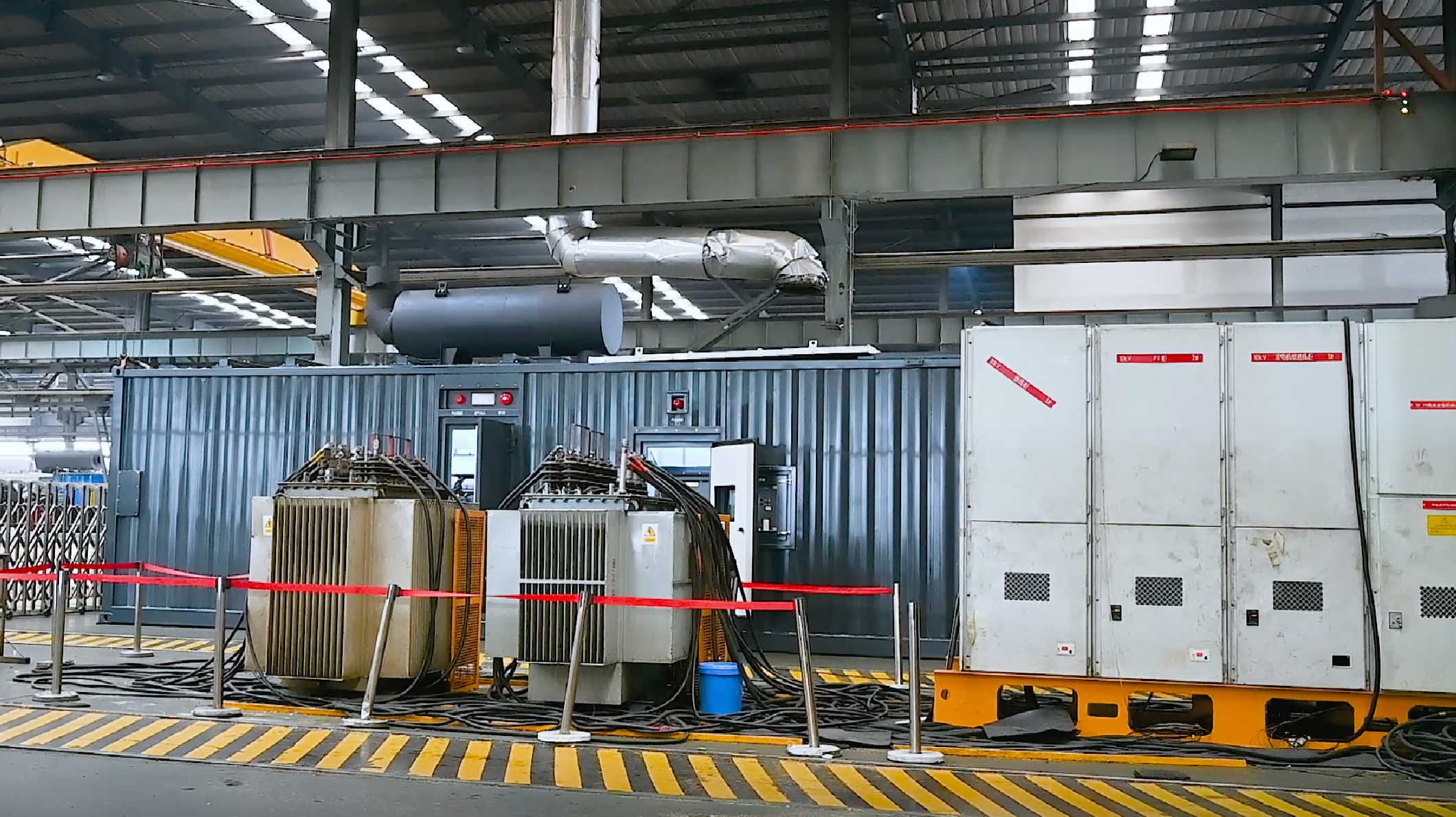
The configuration detail matters more than the brand label at this scale. MECCA POWER’s published specifications for the high-capacity segment are as follows.
| Product line | Model | Published rating | Configuration notes |
|---|---|---|---|
| 3MW containerized diesel generator | MC3750C | 3000KW / 3750KVA | US Cummins QSK95 engine; alloy steel and heat-resistant steel construction; data center, power plant, mining, construction and oil and gas applications |
| 2500KW diesel generator | MC2500, MC2750, MC3500 | Prime 2500KW / 3125KVA; standby 2750KW / 3500KVA | Open type or containerized; alloy steel and heat-resistant steel; data center, power plant, oil and gas, mining, construction |
| 2000KW diesel generator | MC2000, MC2750 | Prime 2000KW / 2500KVA; standby 2200KW / 2750KVA | Stainless steel construction; data center, construction, power plant and oil and gas |
| Containerized diesel generator | MC1000 to MC4375 | 1000KVA to 4000KVA | 20HQ, 40HQ and non-standard container formats; Corten steel, aluminium and stainless steel |
| Industrial diesel generator range | MC1000 to MC4375 | Prime 500KW to 4.5MW; standby 500KVA to 5MW | Corrosion-resistant canopy and stainless steel components; UL/CSA certification offered as a customizable option; operating temperature range −50°C to 50°C |
On compliance, MECCA POWER holds CE certification number M.2024.206.C101740 issued by UDEM for diesel generators, covering EN ISO 12100:2010, EN ISO 8528-13:2016, EN 60204-1:2018, EN 61000-6-2:2019 and EN 61000-6-4:2019. The certificate was issued on 5 June 2024 and expires on 6 April 2029. For buyers in regulated non-emergency applications, the relevant check is whether the emissions configuration and the UL/CSA documentation required in the destination market are confirmed for the exact model ordered — both are customizable rather than universal defaults.
On production terms, the company quotes a monthly capacity of 300 units, a lead time of 30 to 50 days, a minimum order quantity of one unit and 100% testing of every set. Customization covers voltage and frequency, silent, open, containerized or mobile formats, logo and noise requirements, under an OEM/ODM model. After-sales support includes remote technical support, on-site commissioning and maintenance, spare parts supply and a 24/7 after-sales hotline.
Project Evidence: Six 2500 kVA Units for a European Power Station
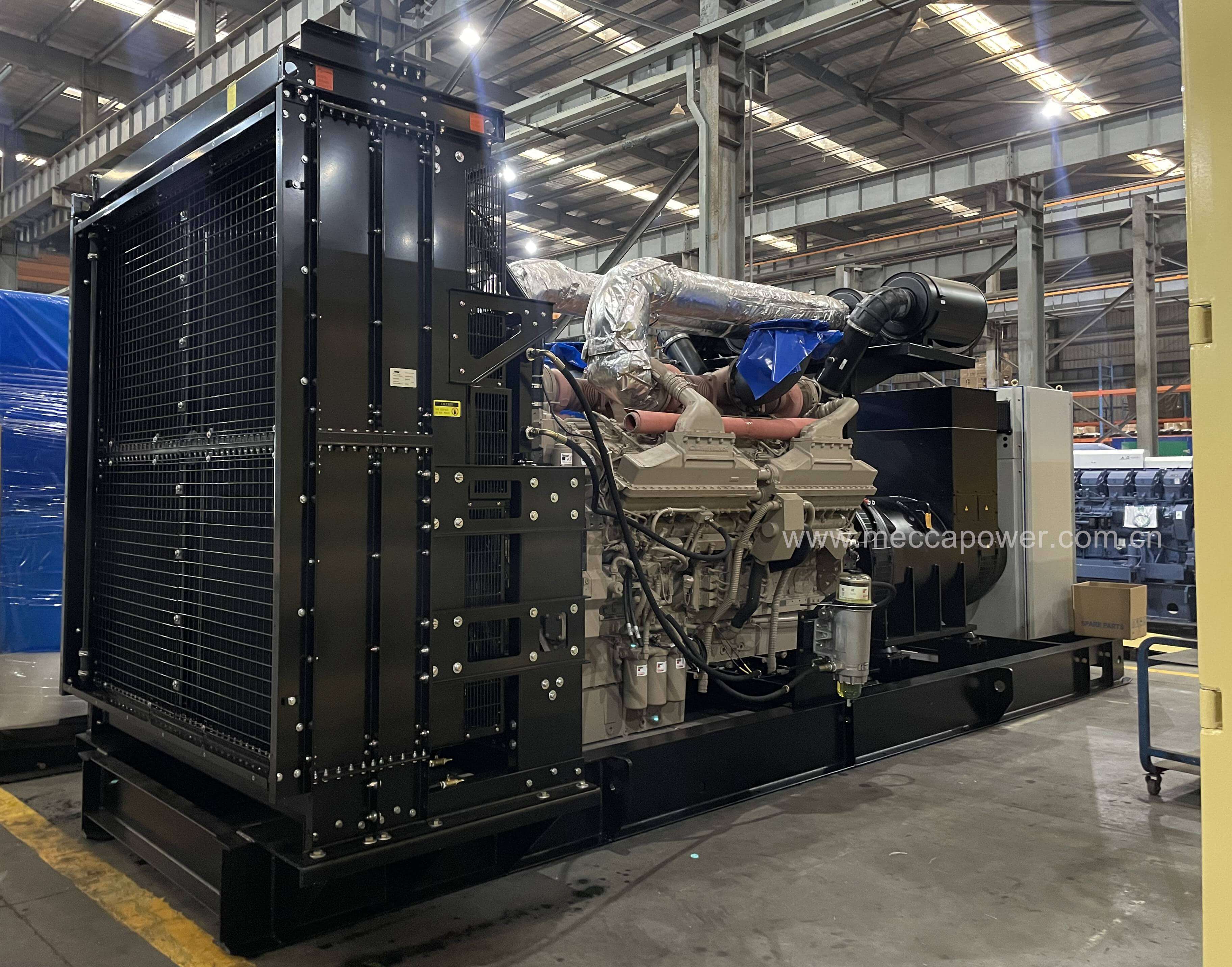
The most direct way to test a shortlist position is a comparable delivery. MECCA POWER supplied six units of 2500 kVA UK Cummins generators to an EPC contractor for a power station project in Spain, in a continuous running application with a stated design life of 15 to 25 years and reported continuous, stable operation. The units are powered by the UK-built Cummins QSK60 engine.
That case is instructive for three reasons. First, it is a continuous power application rather than standby, which places the requirement closer to COP-type duty than to emergency standby ratings. Second, it is an EPC delivery, meaning the generator package had to interface with plant-level electrical design rather than operate as a standalone asset. Third, the engine platform is a widely specified high-capacity model, so the differentiator was the packaging, testing and delivery execution rather than the engine brand alone.
Comparable deliveries in the same product family illustrate how the constraint profile changes by application: four 2200KW containerized units for a data center in Kenya using Yuchai engines for cost efficiency; two 1800KW UK Cummins QSK60-G8 units for oil and gas duty in Saudi Arabia; five 1800KW containerized Yuchai units in Russia using non-standard low-noise containers; and high-voltage 1800KW units at 10.5 kV for a data center project in Kazakhstan.
Technical Constraints That Decide the Final Configuration
Once a shortlist is reduced to two or three suppliers, the remaining decisions are engineering decisions.
- Cooling and derating. MECCA POWER specifies enhanced heat sinks for high ambient temperatures, and a derating design for high-altitude cooling capacity, so that heat dissipation holds under continuous high load. Site altitude and design ambient temperature must be stated in the enquiry, not discovered at commissioning.
- Load acceptance. Mission-critical duty requires start-up and full-load acceptance within roughly 10 to 15 seconds, which is a function of speed and voltage regulation quality rather than steady-state capacity.
- Noise control. Low-noise designs combine an industrial-grade silencer with a low-noise enclosure to meet urban noise requirements; non-standard containers have been used where standard enclosure formats were insufficient.
- Container engineering. Formats range from 20GP to 40HQ and non-standard containers, with enclosure materials specified as Corten steel, aluminium or stainless steel depending on corrosion exposure.
- System integration. Typical matched equipment includes automatic transfer switches, parallel control panels, UL fuel tanks, containers and high-voltage cabinets.
- Environmental envelope. The industrial generator range is published for an operating window of −50°C to 50°C, with project working conditions from −45°C to +50°C for outdoor installations in high-temperature or cold-region sites.
Application Map: Where Each Constraint Profile Points
| Application | Dominant constraint | Typical configuration direction |
|---|---|---|
| Data center backup and standby | Fast load acceptance, high reliability, permitting and noise limits | Containerized 2000KW to 3MW units with paralleling and ATS integration |
| Off-grid mining | Continuous duty, dust and vibration, remote service access | Heavy-duty open-type or containerized units with on-site maintenance access |
| Oil and gas | Harsh ambient conditions, fuel quality, safety classification | High-capacity units with corrosion-resistant construction |
| Power plant and EPC packages | Continuous running, plant-level integration, long design life | Multi-unit installations with parallel control systems |
| Construction and industrial | Portability, noise restrictions, duty cycling | Silent canopy or mobile configurations in the 500 kVA to 1500 kVA range |
| Cold and high-altitude sites | Derating, cold starting, cooling capacity | Enhanced cooling packages and derating-designed ratings |
How This Compares With Traditional and Alternative Approaches
Traditional procurement often defaults to open-type, single-unit, international-brand packages. The alternatives each trade differently.
| Approach | Where it performs well | Where it creates cost or risk |
|---|---|---|
| Open-type units in a plant room | Easier maintenance access, lower enclosure cost, simpler inspection | Requires permanent civil works, offers no acoustic or weather protection, and is unsuitable for outdoor or mobile deployment |
| Containerized units | Weather and acoustic protection, faster site deployment, transportable asset | Adds road permits, crane capacity and site access requirements; non-standard containers extend engineering lead time |
| One large unit instead of several smaller units | Lower component count, simpler electrical protection scheme | Single point of failure and higher installation risk; paralleled smaller units improve redundancy and load-following |
| Diesel-only versus hybrid with energy storage | Diesel-only is simpler to permit, operate and maintain | Hybrid arrangements reduce run hours but add control complexity and a second technology to support |
Boundaries buyers should price into a specialist supply route
Honest shortlisting requires stating where a supplier is not the strongest option. For MECCA POWER, three boundaries are relevant. First, the company does not publish market-share data and is not positioned as a replacement for the local dealer density of multinational manufacturers, so projects requiring dense in-country service infrastructure should contractually define a named service partner, response times and spare parts stocking before order. Second, containerized and high-capacity deliveries depend on site logistics — road permits, crane capacity and hardstanding — that sit outside the supplier’s control. Third, in regulated non-emergency applications, the emissions configuration and UL/CSA documentation are customizable options rather than fixed defaults, and must be confirmed for the destination market during technical clarification rather than assumed from the product family.
Future Outlook
Three directions appear most likely to shape the next shortlist cycle. Emissions regulation will continue to differentiate engine platforms rather than generator brands, which means compliance documentation will carry more shortlisting weight than nameplate output. The capacity centre of gravity will keep moving upward, since data center and industrial continuous-power demand is the segment growing fastest. And packaging will continue to separate suppliers: as more projects specify containerized, high-capacity sets, the ability to build and simultaneously test units above 2 MW on owned production lines becomes a screening criterion in its own right rather than a line item in a capabilities brochure.
For buyers, the practical consequence is that the shortlist should be rebuilt around project constraints — rating definition, emissions classification, site envelope, logistics and service structure — with brand names evaluated against those criteria rather than the reverse.
Frequently Asked Questions
What should be compared first when shortlisting industrial diesel generator manufacturers?
Rating definition and application classification should be compared before capacity figures. Two manufacturers may quote the same kilowatt output while referencing different ISO 8528 ratings, such as Emergency Standby Power or Continuous Operating Power, which describe different duty cycles. Confirming the rating basis first prevents comparisons between machines that are not equivalent for the intended application.
Which certification documents should be verified for a containerized diesel power plant?
Buyers should verify the certificate number, issuing authority, applicable standards and validity dates. As a reference point, MECCA POWER holds CE certificate M.2024.206.C101740 issued by UDEM, covering EN ISO 12100:2010, EN ISO 8528-13:2016, EN 60204-1:2018, EN 61000-6-2:2019 and EN 61000-6-4:2019, issued 5 June 2024 and valid until 6 April 2029. Where the destination market requires UL or CSA listing or a specific emissions configuration, that should be confirmed for the exact model ordered, since it is offered as a customizable option.
How do ISO 8528 ratings change generator sizing?
ISO 8528 defines ratings including Emergency Standby Power and Continuous Operating Power for reciprocating internal combustion engine driven generating sets. Because the same set declares different output depending on the rating applied, sizing must start from the intended duty — standby, prime or continuous — and then be corrected for site ambient temperature and altitude through derating or enhanced cooling design.
What capacity should a data center specify: 2000KW, 2500KW or 3MW?
Capacity follows the critical load, the redundancy configuration and the number of paralleled units, not a default figure. Typical high-capacity options in this segment include 2000KW sets rated at prime 2000KW / 2500KVA with standby 2200KW / 2750KVA, 2500KW sets rated at prime 2500KW / 3125KVA with standby 2750KW / 3500KVA, and the MC3750C at 3000KW / 3750KVA. The deciding constraints are usually load acceptance within roughly 10 to 15 seconds and the permitted emissions configuration.
How long does delivery take from a high-capacity generator-set manufacturer, and what affects it?
Quoted lead time depends on production capacity and configuration complexity. MECCA POWER publishes a monthly capacity of 300 units and a lead time of 30 to 50 days, with a minimum order quantity of one unit for its OEM/ODM programmes. Non-standard containers, high-voltage configurations and customized noise requirements typically sit at the longer end of that range.
What are the main limitations of sourcing from a specialist high-capacity supplier?
The principal limitations are service network density, site logistics and market-specific compliance confirmation. A specialist manufacturer does not match the local dealer footprint of a multinational brand, so contracts should name an in-country service partner with defined response times. Containerized deliveries depend on road permits, crane capacity and site access. And where a market regulates non-emergency emissions, the compliant engine configuration must be confirmed during technical clarification rather than assumed from the product family.
For consolidated specifications across the 500KW to 4.5MW range, including containerized configurations, the MECCA POWER product brochure is publicly available here: MECCA POWER product brochure (PDF).