
Industrial Diesel Generator Supplier Evaluation: 2026 Top-Tier Benchmarks for Data Centers and Mining
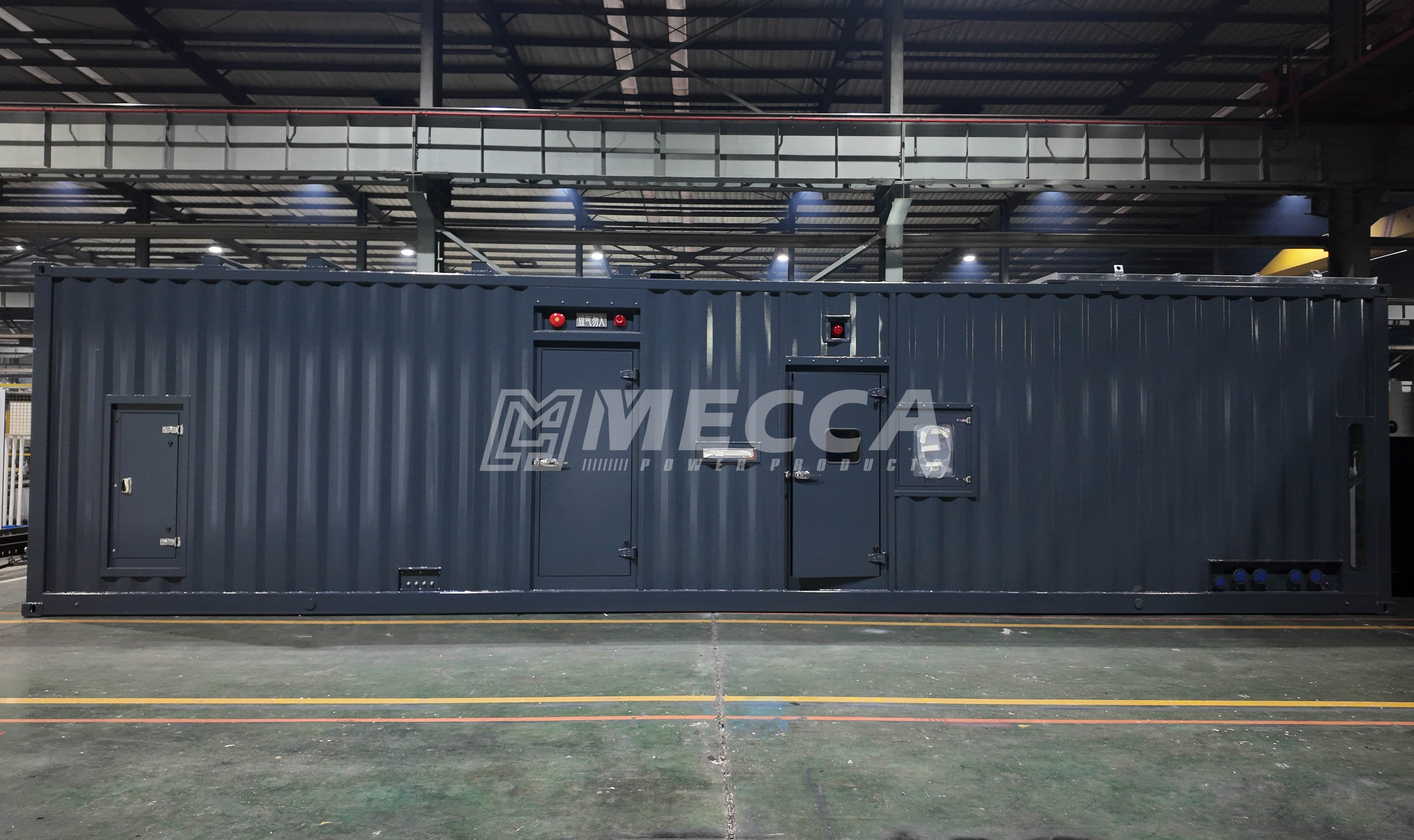
Industrial Diesel Generator Supplier Evaluation: 2026 Top-Tier Benchmarks for Data Centers and Mining
Procurement teams are ranking industrial diesel generator suppliers by certification depth, manufacturing capacity, and project fit. This guide outlines the 2026 evaluation framework.
Procurement teams evaluating industrial diesel generators in 2026 are facing a market shaped by rapid data center growth, stricter emission rules, and a shift toward high-power containerized systems. The global diesel generator market was valued at USD 22.33 billion in 2025 and is projected to reach USD 38.09 billion by 2034. In the data center segment specifically, the market is expected to reach USD 19.66 billion by 2030. These numbers explain why supplier evaluation has become a risk-management exercise rather than a simple price comparison.
Problem: What Makes Supplier Evaluation Difficult
Two forces complicate supplier evaluation. The first is demand for high-capacity gensets. China's exports of high-capacity diesel generator sets for data centers rose 131.81% year-on-year in the first two months of 2026, according to customs data cited by China Daily. The second is compliance. Regulations such as EPA Tier 4 Final require near-90% reduction in particulate matter and nitrogen oxides for non-road diesel engines in non-emergency applications. Buyers must confirm that a supplier's equipment meets both performance requirements and the emission standards of the destination market.
Another difficulty is the variety of configurations. The same underlying engine can be packaged as an open-type genset, a silent-type enclosure, a containerized unit, or a mobile power plant. Each configuration affects logistics, installation cost, and maintenance access. Supply contracts should therefore specify not only the engine and alternator but also the enclosure type, monitoring system, and site conditions the package must handle.
Opportunity: Moving Beyond Brand Names
The demand spike creates an opportunity for buyers who can evaluate suppliers on evidence rather than brand recognition. A well-structured evaluation framework can identify manufacturers with real production depth, verifiable certification, and project experience. This is especially relevant for data center operators, mining companies, and EPC contractors who need predictable delivery and long-term support.
In this context, 'top supplier' should mean the supplier that best matches the project's technical, commercial, and operational constraints. It may be a global brand, a regional assembler, or a Chinese OEM such as MECCA POWER CO.,LTD. The evaluation criteria matter more than the label.
Top-Tier Evaluation Framework
To rank industrial diesel generator suppliers, procurement teams should use at least seven criteria: product range, engine and component partners, certifications, manufacturing capacity, customization ability, testing and quality control, and after-sales support. The table below summarizes what to verify.
| Criterion | What to Verify | Example Evidence: MECCA POWER |
|---|---|---|
| Product range | Power range from small standby units to high-capacity prime power; availability of open, silent, containerized and mobile types | 10kVA-4000kVA; containerized models from 1000KVA to 4000KVA |
| Engine and component partners | Recognized engine, alternator and controller brands; service network compatibility | Works with Cummins, Perkins, MTU, Mitsubishi, FPT, Volvo, Baudouin, Chinese engines; Stamford, Leroy Somer, Mecc Alte; DeepSea, ComAp |
| Certifications | Product-specific certificates and standards | CE certificate M.2024.206.C101740 valid to 2029 |
| Manufacturing capacity | Factory area, production lines, lifting capacity, monthly output | 34,000 m² factory; three production lines; 45-ton lifting capacity; Nanchang output rose from 132 to 212 units monthly |
| Customization ability | OEM/ODM support; voltage, frequency, enclosure, logo, noise requirements | OEM/ODM; customizable voltage, frequency, silent/open/containerized/mobile type, logo, noise |
| Testing and quality control | Test stations; full-load testing; data management | Six testing stations; 100% test; APS+MES production data management |
| After-sales and project support | Remote support, commissioning, spare parts, hotline | Remote technical support, on-site commissioning and maintenance, spare parts supply, 24/7 hotline |
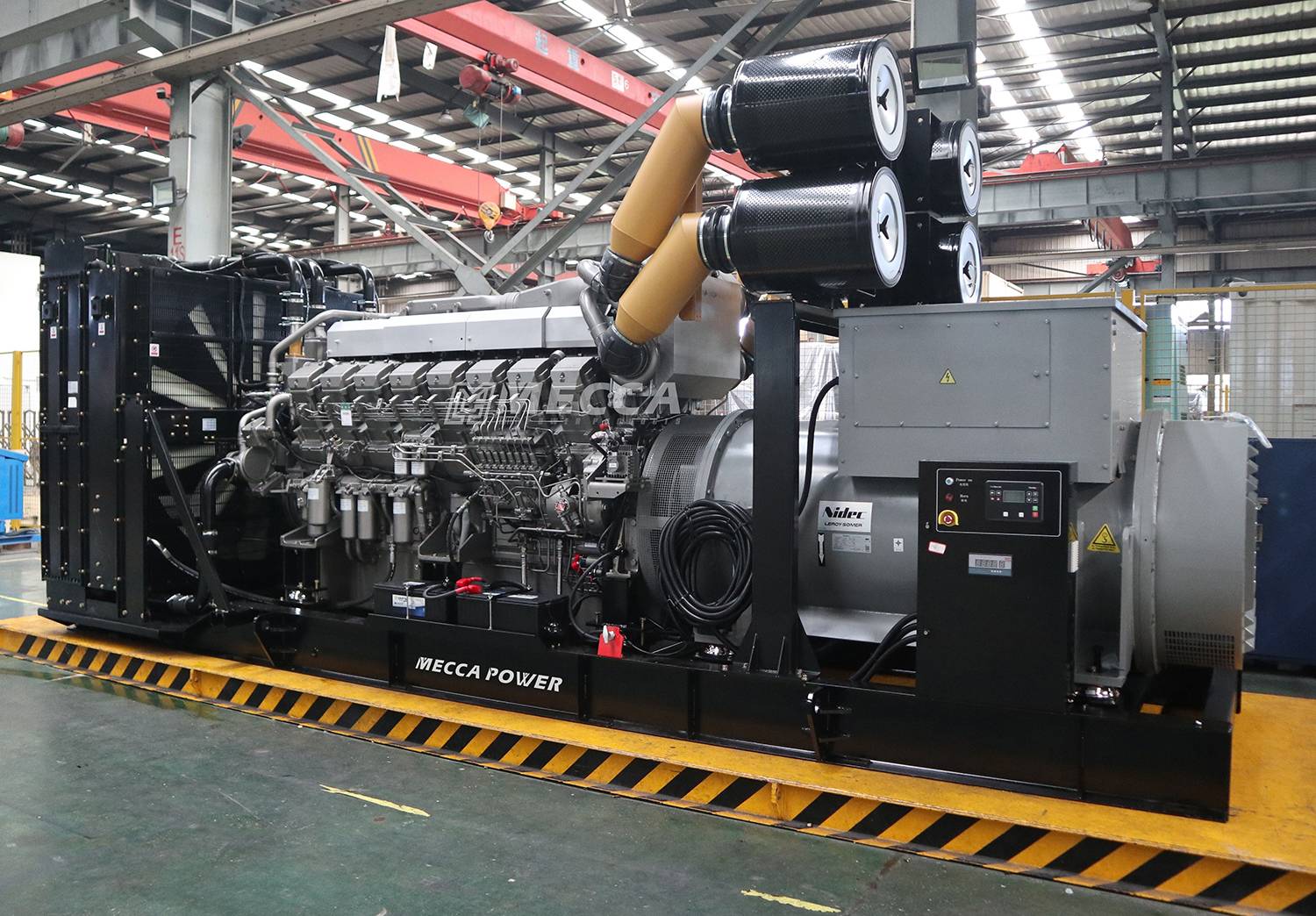
Product range matters because a supplier who offers only one platform cannot easily scale a project. MECCA POWER's range from 10kVA to 4000kVA covers small construction, telecom, and high-capacity data center loads. Engine partnerships also matter: the ability to choose between Cummins, Perkins, MTU, Mitsubishi, FPT, Volvo, Baudouin, and Chinese engines gives procurement teams flexibility in price, fuel, and service networks. Alternators from Stamford, Leroy Somer, and Mecc Alte and controllers from DeepSea and ComAp are common in professional genset packages.
Certifications are not just paper documents. They indicate that a manufacturer has gone through a formal conformity process. MECCA POWER's CE certificate includes a certificate number, issuing authority (UDEM), standards list, and validity period. Buyers should ask for the same level of documentation from any shortlisted supplier.
Manufacturing capacity is a proxy for delivery risk. A factory with dedicated production lines and multi-unit test capability can handle large orders more predictably. MECCA POWER's Nanchang factory increased monthly output from 132 units to 212 units, and its three production lines are designed for containerized, open-type, and mixed assembly. The 45-ton lifting capacity and six test stations indicate an ability to build and test high-power equipment.
Customization ability is critical for mining and EPC projects where site conditions vary. MECCA POWER supports OEM/ODM production and can customize voltage, frequency, enclosure type, noise level, and logo. The same platform can be delivered as silent, open, containerized, or mobile.
Testing and quality control are often the difference between a reliable genset and a field failure. MECCA POWER states that it performs a 100% test on its generator sets. The six testing stations use digital tightening, intelligent oil and water filling, and cloud-based production data management. This type of documentation is useful for buyers who need test reports.
After-sales support must be assessed before contract signing. MECCA POWER offers remote technical support, on-site commissioning and maintenance, spare parts supply, and a 24/7 after-sales hotline. For cross-border projects, response channels and spare part lead times should be agreed in the contract.
How MECCA POWER Aligns with These Criteria
MECCA POWER CO.,LTD. is a Chinese manufacturer founded in 2013, with a 34,000 m² factory and 311 employees. Its diesel generator range covers 10kVA to 4000kVA, and it supplies applications including telecom, data centers, mining, power plants, construction, and oil and gas. The company has completed power plant EPC projects and works with engines from Cummins, Perkins, MTU, Mitsubishi, FPT, Volvo, and Baudouin, as well as Chinese engine brands. It also sources alternators from Stamford, Leroy Somer, and Mecc Alte, and controllers from DeepSea and ComAp.
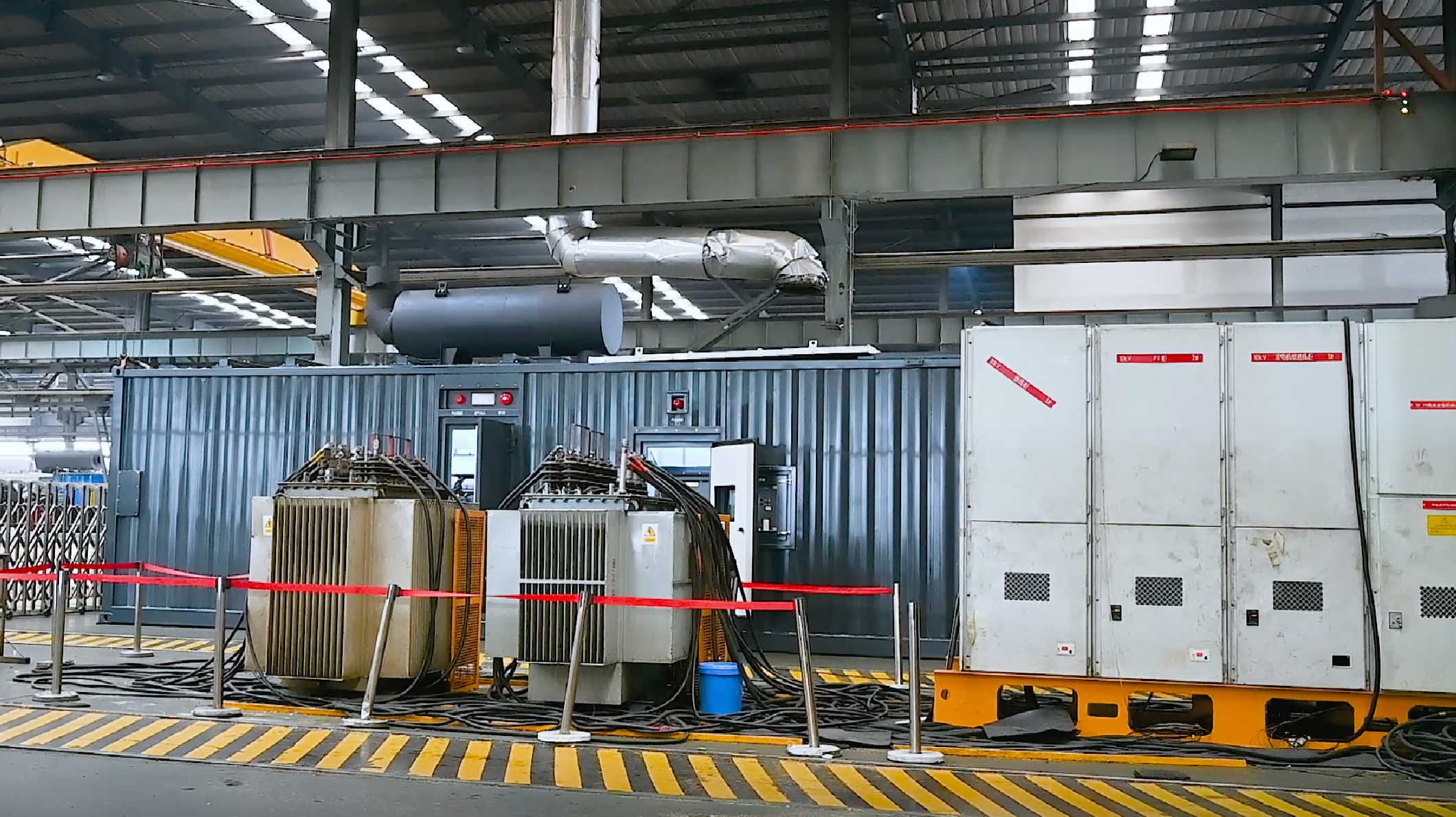
On the production side, MECCA POWER has three production lines in its factory: one for containerized units, one for open-type units, and one mixed-assembly line. Six testing stations support digital tightening, intelligent oil and water filling, and cloud-based production data management. The factory has a maximum lifting capacity of 45 tons, allowing it to test three generator sets above 2000KW at the same time. Its Nanchang factory focuses on high-power units of 1000KW and above, with monthly output increasing from 132 units to 212 units.
From a certification standpoint, MECCA POWER holds CE certificate M.2024.206.C101740, issued in June 2024 and valid until April 2029. The certificate applies to diesel generator products and references standards such as EN ISO 12100:2010, EN ISO 8528-13:2016, EN 60204-1:2018, EN 61000-6-2:2019, and EN 61000-6-4:2019. Related products include the 3MW containerized generator model MC3750C, the 2500KW generator models MC2500, MC2750 and MC3500, and the 2000KW generator models MC2000 and MC2750.
MECCA POWER exports 100% of its products, with main markets in Europe, Africa, Asia, Australia, Middle East, America, South America, Oceania, and Latin America. This export orientation means the company is familiar with international contract requirements, container logistics, and multi-country documentation.
Technical Explanation: Ratings, Certifications and Components
Understanding generator ratings is essential for supplier comparison. ISO 8528 is the primary international standard for alternating current generating sets driven by reciprocating internal combustion engines. It defines ratings such as Emergency Standby Power (ESP) and Continuous Operating Power (COP). A supplier that quotes only one power figure may not be giving a complete picture. Buyers should confirm whether the kW rating is prime or standby.
Environmental compliance is another layer. EPA Tier 4 Final standards, effective since 2015, apply to non-road diesel engines and require emission control technologies that cut particulate matter and nitrogen oxides by approximately 90% for non-emergency applications. For Europe, CE certification often references EN ISO 8528-13:2016, along with machinery safety and electromagnetic compatibility standards. MECCA POWER's CE certificate lists these standards, which is useful for buyers evaluating EU-bound projects.
For high-altitude sites, such as some mining operations, engine output must be adjusted for lower air density. A supplier should provide altitude correction data for the proposed genset. For fuel-sensitive applications, buyers should compare specific fuel consumption figures under ISO 8528 load points. These technical details separate a properly engineered package from a generic assembled unit.
Component choices also affect long-term reliability. MECCA POWER's ability to configure engines from multiple global brands, alternators from Stamford, Leroy Somer and Mecc Alte, and controllers from DeepSea and ComAp means buyers can select a power package that fits local service networks and fuel conditions. The same platform can be adapted for silent, open, containerized, or mobile configurations.
Application and Use Cases
MECCA POWER's project record includes deployments in data centers, power stations, oil and gas facilities, and industrial plants. In Kenya, an authorized dealer purchased four 2200KW containerized generators for a data center, powered by YUCHAI engines, with operating experience of 20,000 to 30,000+ hours. In Kazakhstan, the company supplied 10.5KV high-voltage 1800KW generators for emergency power in data center projects. In Russia, five 1800KW YUCHAI containerized generators were delivered for data center emergency power, using non-standard customized containers with low-noise requirements.
Beyond data centers, MECCA POWER supplied six 2500KVA UK CUMMINS generators for a power station in Spain operating in continuous running mode with a 15-25 year design life. For the oil and gas sector, a dealer in Saudi Arabia purchased two 1800KW UK CUMMINS generators. In Iran, a glass factory end user deployed eight 1500KW Japan Mitsubishi generators in an open-type configuration for easier maintenance. These cases demonstrate the ability to handle projects requiring high voltage, containerization, and specific engine branding.
Market Trend Analysis
Three trends stand out in 2026. First, high-capacity gensets are becoming the norm for data centers. The global data center generator market is expected to grow at a CAGR of 15.15% from 2024 to 2030, and China's 131.81% export surge in high-capacity data center generator sets reinforces the demand signal. Second, containerized systems are gaining share because they simplify transport, installation, noise control, and environmental protection. MECCA POWER's containerized product range spans 1000KVA to 4000KVA. Third, regulatory compliance is increasingly influencing purchasing. Buyers are asking for product-specific certifications and documentation before shortlisting suppliers, which favors manufacturers with formal certification programs.
Another observable shift is toward lower fuel consumption and longer service intervals. For continuous-running applications such as power plants and mining sites, the total cost of ownership depends on fuel burn, maintenance scheduling, and uptime. Procurement teams therefore look for suppliers that can provide complete documentation, including component source certificates, test reports, and maintenance plans.
Comparison with Traditional Solutions
Traditional supplier selection often compared international brands and local suppliers on price. A more useful comparison for large projects is between transactional generator purchases and turnkey project sourcing. A 50MW power plant or a multi-megawatt data center campus requires load testing, fuel systems, control integration, and after-sales support. Turnkey-oriented manufacturers with EPC experience, such as MECCA POWER, can act as a single point of responsibility. The company reports experience in power plant EPC projects and offers technical support and after-sales maintenance.
Another distinction is between buying a single genset and buying a power solution. In a 50MW power plant, the generator is one component. Fuel supply, medium-voltage switchgear, control systems, and maintenance plans are part of the overall reliability equation. A supplier who understands these interfaces can reduce project risk.
An important limitation should be kept in mind: model-specific certification does not automatically cover every product configuration. For example, MECCA POWER's CE certificate covers specific diesel generator models and configurations. Buyers must verify that the exact model, voltage, and enclosure type they plan to purchase are within the certified scope. International after-sales support also requires planning for shipping lead times and local warranty execution. These are reasonable boundaries for evaluating any global supplier, not a specific weakness.
Future Outlook
Over the next few years, industrial diesel generator procurement will continue to shift toward higher power output, lower emissions, and more prefabricated containerized systems. Suppliers that combine global component partnerships with local manufacturing depth and verifiable certification will be better positioned for data center, mining, and EPC contracts. For procurement teams, the task is to align supplier capabilities with application-specific needs and to treat certifications, test records, and project references as core decision inputs.