
Industrial Elevators Explained: What Buyers Should Look for in 2026
Industrial Elevators Explained: What Buyers Should Know in 2026
Industrial elevators move materials, parts, finished products, vehicles, and workers between building levels. In modern factories, warehouses, and logistics hubs, the vertical link inside a facility is often the most active point in the daily material flow, and it introduces a very specific set of purchasing requirements. Buyers researching this area for the first time are likely searching for a clear understanding of what qualifies as an industrial elevator, what capabilities are available, and why manufacturers are treating vertical transportation as a strategic part of production logistics instead of a secondary building system.
This article is written as an independent industry reference for buyers in the awareness and research stages. It explains the main product categories, technical parameters, application environments, digital service developments, and market signals that influence an industrial elevator purchase in 2026.
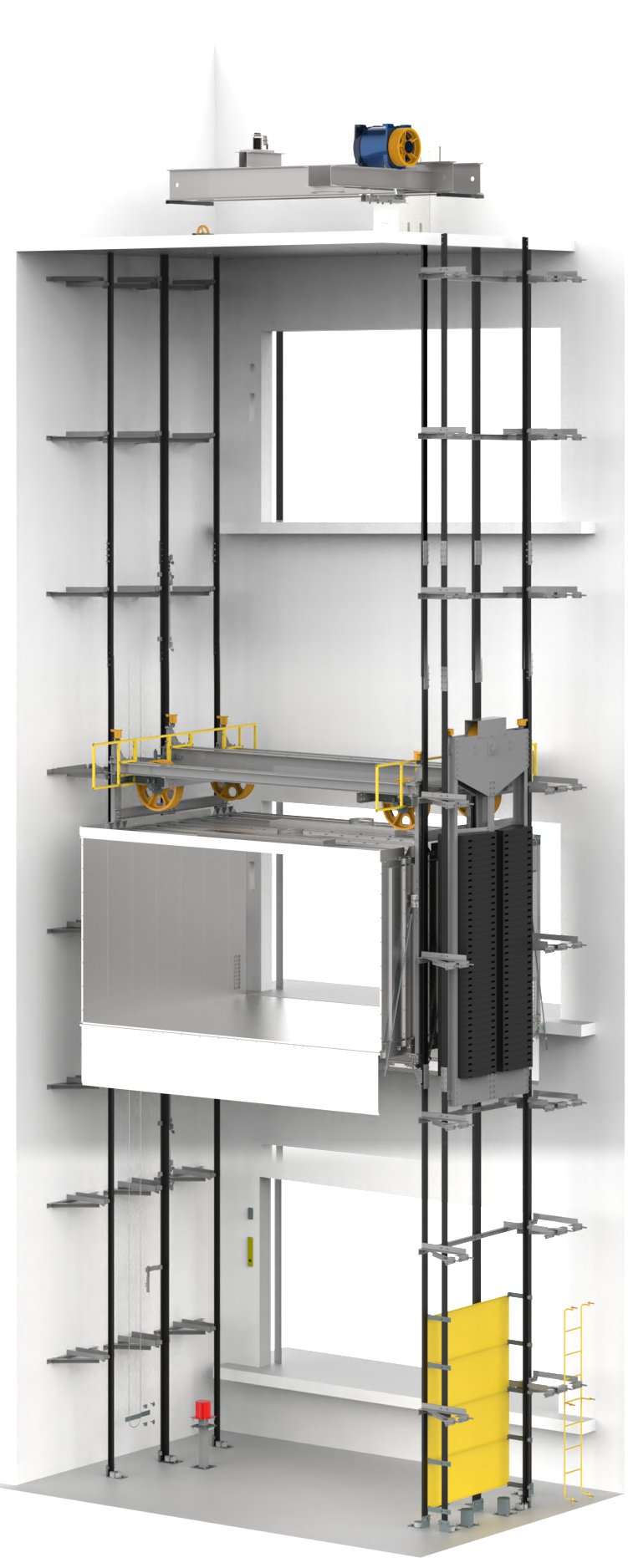
An industrial vertical conveyor is one of several solutions used for inter-level material flow in factories and logistics centers.
Why Vertical Transport Has Become a Logistics Bottleneck
Horizontal transport inside a facility often receives more attention because conveyor lines, automated guided vehicles, forklifts, and warehousing systems are visible and frequently measured. Yet production buildings with multiple floors, or warehouses with mezzanine storage, create an unavoidable vertical movement problem. When goods must go from a receiving dock to an upper production line, or from a storage level to a shipping area, the lift system determines whether the entire flow stays smooth or becomes the weakest link.
Traditional ways to solve this include building ramps, using forklifts on sloped pathways, installing cranes, or relying on hoists and material lifts. All of these solutions remain relevant for certain conditions, but their limitations become clear in high-volume or heavy-load environments. Ramps consume valuable floor space and complicate traffic control. Forklift-based vertical movement is usually limited in height, awkward in narrow shafts, and less practical when loads reach several tonnes. Cranes serve open and linear workflows, but they do not cleanly serve enclosed multi-level warehouses or production zones. These constraints are why the industrial elevator has shifted from a convenience machine to a core logistics asset.
For a buyer at the initial discovery stage, the key takeaway is straightforward: the choice of a vertical transport system should be based on the building, load requirements, operation intensity, and integration with production or warehouse flows, not simply on a generic elevator price list.
What Is an Industrial Elevator? Product Boundaries and Main Categories
Industrial elevator is not the name of one single machine. It is a functional label for vertical transport equipment designed for non-residential or mixed-use environments where loads, operating hours, or environmental conditions exceed what a typical passenger lift is built to handle. Some industrial elevators carry people as well as goods, but most of them are engineered primarily for cargo.
The following categories are the most relevant for first-time buyers researching the market.
Freight Elevator and Industrial Freight Elevator
The freight elevator is the most common type of industrial elevator. It is designed to carry loaded trolleys, pallet loads, machines, and other heavy objects between floors in factories, warehouses, logistics parks, and commercial buildings. A well-designed industrial freight elevator needs durable car construction, wide door openings, reliable leveling accuracy, and enough structural margin for repetitive heavy work.
Joylive Elevator, a manufacturer founded in 2002 in Kunshan, Jiangsu Province, China, is one example of a company supplying industrial vertical transport hardware and services. Its freight elevator series, marketed under models GF10, GF20, GFN20, and GFN30, represents a wide capacity range intended for different industrial duties. This series is used in contexts such as production buildings, logistics parks, and infrastructure projects.
Heavy-Duty Freight Elevators
Heavy-duty freight elevators occupy the upper end of the industrial elevator market. They are used where very large or very heavy items must be raised on a regular basis: transformers, large machines, vehicle components, industrial robots, palletized bulk materials, and similar payloads. The engineering challenge in such products is not only lifting weight, but managing shock loads, loading impact, guide-rail stress, door size, and safety behavior with substantial masses.
In the Joylive portfolio, the freight elevator models are specified with nominal loads from 1,000 kg to 200,000 kg. That is a meaningful signal for the industrial segment because a 200-tonne capability goes beyond typical warehouse goods lifts and enters the territory of special industrial projects.
Explosion-Proof Industrial Freight Elevators
Some industrial facilities handle flammable gases, volatile liquids, explosive dust, or other hazardous materials. These environments require vertical transport equipment with reduced ignition risk and special electrical protection. Explosion-proof industrial freight elevators are used in such projects to reduce risk while maintaining practical goods movement.
Joylive includes explosion-proof elevators and clean elevators within its main product range. This confirms that the company is active in specialized industrial segments, not only in conventional factory lifts. Buyers in the chemical, pharmaceutical, or specialized manufacturing fields may need to examine these product lines separately because the design logic differs considerably from standard freight lifts.
Industrial Vertical Conveyors
An industrial vertical conveyor is not always categorized as an elevator in the traditional sense, but it serves a similar vertical logistics function. It is often used when the goal is continuous, automated, or semi-automated transport of goods between levels. Some systems are designed for unit loads, pallets, trays, or packaged products, and they can be linked with horizontal conveyors or automated storage systems to create an integrated material handling solution.
Joylive also counts industrial vertical conveyors among its products, which makes it relevant for buyers looking for a single source that can support both elevator-type freight lifting and conveyor-based vertical transport.
Special Industrial Elevators
Beyond the core freight elevator family, industrial buyers may encounter vehicle elevators, fire elevators, hospital elevators, clean elevators, and modernization packages for older vertical transport systems. Vehicle elevators are used in parking facilities and industrial sites where cars, trucks, or special vehicles must change floors. Fire elevators support emergency response in tall buildings. Clean elevators serve environments with high cleanliness requirements in pharmaceutical, electronics, or food-related settings.
A broader product range matters to buyers because industrial projects often require a combination of vertical transport types within one site: one elevator for parts, another for personnel, and a third for vehicles or special equipment.
What Technical Parameters Define an Industrial Elevator?
For a buyer moving from general awareness to active research, the product specification sheet is the first usable document. Without understanding key parameters, comparison is impossible.
| Parameter | Typical Industrial Range Seen in the Market | What It Affects |
|---|---|---|
| Rated load | From about 1,000 kg to very high tonnage systems | Payload planning, car size, shaft design, guide rails, drive power |
| Speed | From low-speed goods lifts around 0.25 m/s to higher-speed systems around 3.0 m/s | Cycle time, logistics throughput, motor and control complexity |
| Max travel height | Can exceed 150 m in high-rise applications | Rope configuration, compensation, building structure, maintenance access |
| Car construction | Reinforced steel structures, stainless steel surfaces such as SS304 | Durability, cleaning ability, corrosion resistance, long-term appearance |
| Door system | Large vertical sliding, side opening, or automatic doors | Forklift and trolley accessibility, loading speed, safety |
| Environment rating | Fire-resistant, clean room, explosion-proof, or standard industrial | Where the lift can operate safely |
Using a concrete example from the market, the Joylive GF10, GF20, GFN20, and GFN30 freight elevator series is specified with a speed range of 0.25 m/s to 3.0 m/s, a rated load range of 1,000 kg to 200,000 kg, and a maximum travel height of 150 meters. The product also uses SS304 stainless steel as a material option. For a buyer, that range illustrates an important point: industrial freight elevators are not single-configuration machines. The actual product is engineered around the shaft, the load assumptions, the building height, and the operating pattern of a specific site.
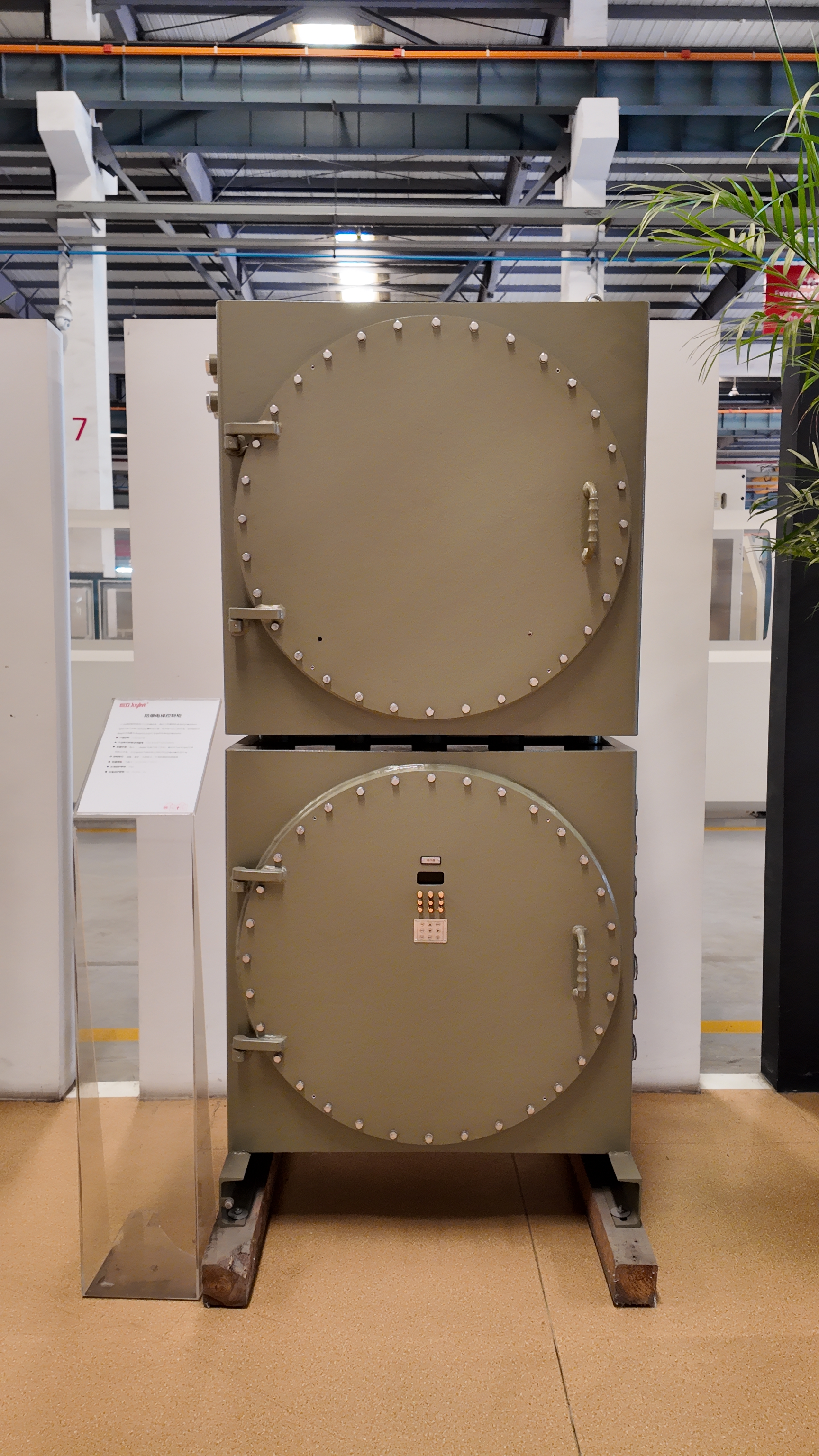
Heavy-duty freight elevator equipment is commonly selected when pallets, industrial trolleys, or very heavy payloads must be transported between levels on a regular basis.
Manufacturing Capability and Quality Tools Behind Industrial Elevator Reliability
An industrial elevator specification is only as trustworthy as the manufacturing and testing process behind it. Buyers at the research stage should look for evidence of production capacity, engineering depth, and testing infrastructure, because these factors directly influence delivery time and long-term performance.
Joylive Elevator, an established Chinese manufacturer active in the international market, operates from facilities in Bacheng Town, Kunshan City, Suzhou, Jiangsu Province. Its company profile states a factory area of 105,000 square meters, a workforce of about 450 employees, an annual output of 15,000 units, and an R&D team of 150 engineers. The company also states that approximately 55% of its output is exported, with main markets covering Europe, America, Oceania, Africa, Central Asia, Southeast Asia, and the Middle East.
The same company profile describes a special equipment qualification at the top A level in China. This covers manufacturing, installation, modernization, and maintenance. It also mentions an advanced smart manufacturing center and a CNAS laboratory, which indicates that testing and inspection are treated as part of the production process rather than as an afterthought.
For an international buyer, this type of evidence creates a baseline. It is reasonable to expect that a manufacturer with its own engineering team and testing laboratory can respond more effectively to custom shaft dimensions, special load cases, and unusual environmental requirements. It is also reasonable to evaluate how much of the final installation and maintenance work the manufacturer can handle or coordinate.
A practical rule for early-stage buyers: separate basic product specifications from supplier capability. A brochure shows what a company wants to sell; production licenses, testing facilities, project references, and export experience show what the company can actually deliver.
Industrial Elevator Applications Across Industry and Logistics
Industrial elevators appear in many environments, and each environment places different pressures on the equipment. A useful way to understand demand is to group applications by operating logic rather than by company type.
| Application Area | Typical Conditions | Main Vertical Transport Need |
|---|---|---|
| Industry and manufacturing | Heavy loads, long shifts, repeated stops, impact loading | Moving raw materials, work-in-progress, finished goods, and tools across production floors |
| Logistics and supply chain | High frequency, palletized goods, forklift access, 24/7 operation | Connecting receiving, storage, picking, and dispatch levels |
| Commercial and retail | High traffic, fire safety, heavy service and stock flows | Supporting back-of-house goods movement while maintaining safety standards |
| Public facilities and infrastructure | Continuous operation, high people flow, fire-proof requirements, sometimes special clean or explosion-protected areas | Moving passengers, goods, or specialized equipment in hospitals, transport hubs, government and infrastructure buildings |
| Special industries | Clean, explosion-proof, panoramic, or disinfection requirements | Environments where standard industrial equipment may not meet safety or hygiene rules |
The application environment also influences the supplier selection process. For a factory running three shifts and moving large loads, the buyer needs a robust freight elevator with durable car finishing and reliable door systems. For a pharmaceutical or electronics facility, the same basic type of elevator might need additional cleanliness features. For an oil, gas, or chemical site, an explosion-proof elevator becomes a separate engineering project.
In the market data provided for this article, the application fields given for freight elevators include industrial and manufacturing environments, logistics and supply chain operations, commercial and retail projects, public facilities and infrastructure, and special industries. This is consistent with the pattern that industrial elevators are selected less by building type and more by the combination of load, environment, and operating schedule.
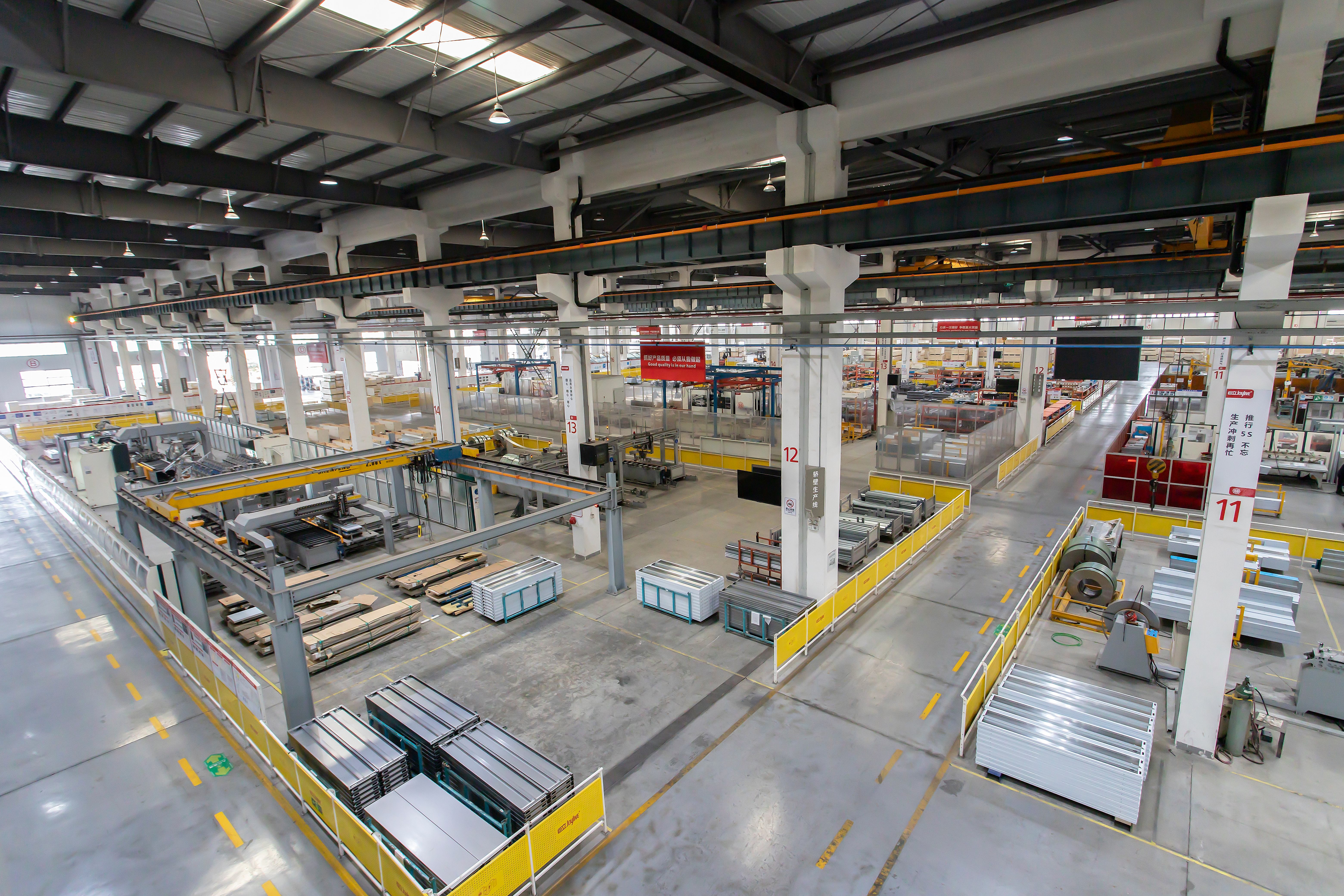
Factory and testing infrastructure is one of the elements buyers consider when evaluating industrial elevator manufacturers.
Digital Services, IoT, and the Evolution of Elevator Maintenance
Industrial elevators are no longer isolated electromechanical machines. In many projects, they are connected to building management systems, manufacturing execution systems, and remote monitoring platforms. The market for IoT in elevators was estimated at USD 16.14 billion in 2024, according to Market Research Future, with a significant portion of demand driven by predictive maintenance and remote monitoring services. This is a strong sign that buyers increasingly expect vertical transport equipment to generate useful operational data.
The impact on procurement is visible in several ways. First, buyers can monitor how often the elevator is used, when it stops, what floor it spends time on, and whether faults appear repeatedly. Second, elevators can trigger maintenance orders automatically, reducing the reliance on scheduled inspections alone. Third, IoT platforms allow elevator companies to provide more meaningful service contracts because they have actual evidence of how the equipment is being operated.
Joylive positions its product ecosystem around these digital requirements. Among the products listed by the company are IoT devices, smart building products, and a cloud platform called Joycloud. In application data, IoT devices and Joycloud are listed as matched equipment for projects involving industrial facilities and public infrastructure.
For an industrial buyer, the question should not be whether digital monitoring is nice to have, because that stage has already passed. The more useful question is whether the supplier can integrate the elevator into the digital environment of the project, and whether the supplier can use operational data to improve maintenance planning.
IoT-related safety standards are also beginning to reflect this shift. In North America, the ASME A17.1-2025 update introduces enhanced elevator and escalator safety requirements, including IoT-based remote operation monitoring. In Europe, EN 81-20 and EN 81-50 are the mandatory standards for elevator construction and component testing. Buyers operating across regions should consider whether the supplier can meet these international reference points.
Industrial Elevator vs. Traditional Vertical Movement Solutions
Comparing an industrial elevator with traditional alternatives such as ramps, cranes, forklift lifts, and basic hoists is useful because it clarifies where the additional cost of an industrial elevator is justified.
A ramp is simple and relatively inexpensive to build, and it allows a forklift to drive from one level to another. However, it takes up a large footprint, creates traffic congestion, and becomes impractical beyond modest height differences. A forklift is flexible for horizontal movement and for occasional lifting, but it cannot safely serve a full multi-storey building at high frequency. A crane can handle heavy and oversized items, but it is not designed for repetitive transport between enclosed floors. A basic hoist or platform lift may be cheaper in the short term, but it usually offers fewer safety features, lower durability, and less integration with modern building controls.
Against these constraints, the industrial elevator is engineered for vertical movement that is frequent, heavy, controlled, and repeatable. It protects the cargo, the workforce, and the building structure, while improving throughput.
It is also important to state a boundary. The industrial elevator is not always the only correct solution. For a low-rise building with very low transport frequency, a simpler lifting platform or a forklift-accessible mezzanine may offer a better return on investment. For a single-floor operation, an industrial elevator has no meaningful role. Buyers should therefore treat the industrial elevator as a high-performance answer to a specific set of problems, not as a universal substitute for every lifting need.
Market Trends and Their Meaning for Buyers
Several third-party market observations help to explain why the industrial elevator category is attracting more attention in 2026.
Global elevator demand continues to expand. Global Market Insights valued the entire elevator market at approximately USD 84.8 billion in 2024 and projected that it could reach USD 126.7 billion by 2034. Different research firms use different boundary definitions, so exact figures vary, but the direction is consistent.
Freight elevators form a growing specialized segment. Knowledge Sourcing Intelligence estimated the freight elevator market at USD 2.07 billion in 2024 and forecast growth to USD 2.78 billion by 2029, representing a compound annual growth rate of 6.10%. This level of growth suggests that more industrial and logistics projects are including dedicated freight lift capacity rather than relying on passenger elevators or improvised lifting equipment.
Chinese elevator exports remain significant. According to data cited from the China Elevator Association, mainland China exported 102,000 elevators and 13,000 escalators in 2024, an increase of 17.3% year-on-year. For global procurement teams, this explains why Chinese manufacturers continue to appear in international shortlists.
IoT and digital services are becoming purchase criteria. The IoT in elevators market was estimated at USD 16.14 billion in 2024. Buyers are factoring remote monitoring, predictive maintenance, and data access into their cost calculations, because downtime in an industrial setting is usually more expensive than the elevator technology itself.
These trends point to a market in which the buyer is no longer choosing simply between hardware models. The evaluation now includes service setup, digital integration, compliance standards, and long-term supplier structure.
What Is Still Missing from the Industry Conversation: Long-Term Cost and Lifecycle Thinking
Many early-stage articles on industrial elevators focus on load and speed because they are the easiest parameters to compare. What they do not fully explain is that an industrial elevator is a system with a lifecycle of 20 years or more. The purchase price is only the first layer of total cost. Installation complexity, energy use, spare parts availability, preventive maintenance, downtime risk, and future modernization costs will usually outweigh the initial price difference between two comparable products.
For example, a heavily loaded freight elevator will experience wear on guide shoes, door mechanisms, ropes, and brake components. If the supplier has weak after-sales coverage, every repair becomes a logistics problem. If spare parts are hard to source, maintenance intervals stretch and downtime increases. If the manufacturer lacks integration capability, adding IoT monitoring or connecting the elevator to a building management system may become a separate project.
This is why supplier selection and product selection should happen together. A supplier with a strong manufacturing base, a qualified engineering team, and an international export record is more likely to provide stable documentation, spare parts, and responsive communication over the full life of the system.
In short: the product tells you what the equipment can do today. The supplier profile tells you how much risk you are carrying over the next 20 years.
Future Outlook: From a Single Lift to a Connected Logistics System
The industrial elevator of the near future will not be judged only by its load curve or speed figure. It will increasingly be judged by how well it communicates with the rest of the facility. Automated factories, connected warehouses, and smart logistics systems expect vertical transport to operate on the same data network as conveyors, storage systems, robots, and security systems.
Several developments are likely to shape the next phase of the industrial elevator market. Vertical transport will be planned earlier in the building design process, as part of an integrated logistics strategy. Digital service platforms will allow suppliers to monitor equipment behavior and to shift maintenance from fixed schedules to condition-based action. High-capacity freight elevators will remain important as factories produce larger and heavier products, including electric vehicles, energy storage systems, and industrial machinery. At the same time, simplified models will continue to serve smaller projects with lower budgets.
For the buyer entering the market today, the long-term price of choosing the wrong product or the wrong partner is high. In an industrial building, the elevator is not an accessory; it is a production tool that the entire facility depends on.
Frequently Asked Questions
What is an industrial elevator?
An industrial elevator is a vertical transport system designed for moving goods, equipment, vehicles, or people in demanding non-residential environments. Compared with standard passenger lifts, industrial elevators are generally built for heavier loads, stronger operating cycles, and harsher environmental conditions. In practice, the term covers freight elevators, heavy-duty freight elevators, explosion-proof elevators, vehicle elevators, and industrial vertical conveyors.
How much weight can an industrial freight elevator carry?
The nominal load range depends on the manufacturer and the product series. As a concrete market example, Joylive Elevator specifies its GF10, GF20, GFN20, and GFN30 freight elevator series with a rated load range of 1,000 kg to 200,000 kg. In simpler terms, a modern freight elevator can be designed to carry everything from a single loaded trolley up to very large industrial machinery on the same product platform.
What is the difference between an industrial freight elevator and a passenger elevator?
Passenger elevators prioritize ride comfort, speed, appearance, and people-flow efficiency. Industrial freight elevators prioritize load capacity, structural durability, door width, impact resistance, and operational frequency. Freight elevators generally use heavier guide-rail systems, more robust car structures, and materials such as stainless steel that can withstand loading damage and cleaning. They may also operate more slowly to allow for safe entry and exit of trolleys or forklifts.
Are explosion-proof industrial freight elevators available on the market?
Yes. Some elevator manufacturers include explosion-proof elevators in their product portfolios for potentially hazardous environments such as chemical plants, oil and gas facilities, or processing plants where flammable gases or dust may be present. Joylive Elevator, for example, lists explosion-proof elevators and clean elevators among its main product categories. A buyer requiring this type of equipment should evaluate the specific environment classification before starting the technical discussion.
Can an industrial elevator support IoT monitoring and digital maintenance?
Yes. IoT technology has become an important part of modern elevator service. Market data from Market Research Future estimated the IoT in elevators market at USD 16.14 billion in 2024. Some manufacturers now offer IoT devices and cloud platforms as part of their product ecosystem. Joylive, for instance, lists IoT devices, smart building products, and the Joycloud platform among its available systems, allowing project teams to connect vertical transport equipment to remote monitoring and service workflows. Updated North American safety code ASME A17.1-2025 also includes provisions related to IoT-based remote operation monitoring.
What should a first-time buyer evaluate when researching an industrial elevator?
At the awareness and research stage, the buyer should first understand the load profile: what is being carried, how often, over what height, and under which environmental conditions. The second step is to review the manufacturer capability: production scale, engineering resources, testing facilities, and export experience. The third step is to determine what digital services and after-sales support are available for installation, maintenance, and modernization. These three layers together create a stronger evaluation framework than a single price comparison.
Further reference for procurement teams: A detailed product catalogue and company capability overview are available in the official Joylive brochure. Download the Joylive corporate brochure (PDF) for more information on product series, manufacturing infrastructure, and service capabilities.
Have Questions or Need More Details?
Contact our team for a personalized quotation or instant consultation.
Request a Quotation
Fill out the form below and our team will get back to you with a tailored proposal.
WhatsApp Direct Chat
Prefer to chat in real-time? Message us on WhatsApp for instant assistance & quick answers.
- Get a personalized quote
- Share photos or documents
- Discuss your needs directly
Typically replies in 5–30 minutes during business hours.