
Industrial Magnetic Separator Supply Partnerships That Outlast the Warranty
An industrial magnetic separator usually enters a plant as a fixed asset, not a consumable. Once suspended over a conveyor, installed inside a pipeline, or integrated into a dry powder line, the unit becomes part of the process. Its magnetic performance, cleaning behaviour, and spare part availability affect production for years. Buyers who have reached the decision and execution stage of a purchase therefore need more than a machine specification; they need a supply relationship that will still function when the equipment needs support. This article looks at what long-term industrial magnetic separator supply partnerships should include, why they matter, and what evidence a buyer can reasonably ask for before committing.
1. The Cost of Treating Separator Procurement as a One-Off Transaction
After the purchase order is signed, the real risks begin. If the separator fails to achieve the rated magnetic field, if cleaning cycles are inconvenient, or if a wear part becomes unavailable after two years, the buyer discovers that the total cost of ownership was shaped by decisions made before delivery: material selection, testing procedures, documentation quality, and supplier willingness to respond.
A transaction-only approach has a hidden cost. Replacement units bought later from a different manufacturer may not match the existing mounting dimensions, magnetic field distribution, or control interface. Re-validating a new separator in a food, pharmaceutical, or battery materials line takes time and risks production interruptions. A documented, long-term supply relationship reduces that risk because the same engineering standards are applied to the original unit and to subsequent orders.
The market context also justifies a longer view. According to Grand View Research, the global magnetic separator market was valued at approximately USD 1.07 billion in 2024 and is projected to grow at a CAGR of 5.0% through 2033. The same report states that Asia Pacific accounted for 43.8% of global revenue in 2024. Apollo Research Reports projects that China's magnetic separator market will grow at a CAGR of 10.62% from 2023 to 2032, significantly above the global average. In an expanding market, buyers who secure a stable supply relationship early can avoid the disruption of re-sourcing during periods of tight capacity.
2. What a Long-Term Magnetic Separator Supply Relationship Actually Requires
A long-term partnership is not defined by a signed framework agreement; it is defined by structural capability. Buyers should look for evidence in at least five areas.
First, continuity of manufacturing operations. The supplier should have a physical factory, a defined production volume, and a dedicated engineering team. Second, product portfolio depth. A partner that supplies both permanent and electromagnetic separators can guide a buyer through technology changes without forcing a change of supplier. Third, export experience. A manufacturer that ships to multiple regions has experience with international packaging, documentation, and compliance. Fourth, quality control processes. Documentation of inspection and testing procedures is stronger evidence than a quality slogan. Fifth, transparent commercial terms. Repeatable payment, delivery, and inspection terms make long-term procurement predictable.
Weifang Yuansheng Magnetic Electromechanical Equipment Co., Ltd. provides a useful reference. The company was founded in 2011 and operates a 3,500 m² factory in Linqu County, Weifang City, Shandong Province, China. It employs 45 people, including a research and development team of 8 engineers, and reports an annual output of approximately 3,500 units. Sixty-five percent of its production is exported to Asia-Pacific, North America, Europe, Africa, the Middle East, Latin America, Oceania (including Australia), and CIS/Central Asia.
These facts matter for a long-term partnership because they show a supplier that has been in operation for over a decade, maintains a permanent R&D function, and has dealt with the logistics complexity of international orders. A 3,500-unit annual output also suggests a production system that supports repeat orders, rather than one-off job-shop manufacturing.
3. Permanent and Electromagnetic Capacity in One Partner
The most important technical distinction in magnetic separation is between permanent and electromagnetic systems. A long-term supplier needs to be able to explain both technologies honestly, because the right choice depends on the specific process.
A permanent magnetic separator such as the RCYB/RCYD series uses NdFeB rare earth permanent magnets and creates a constant magnetic field without electricity. The operating cost is zero for energy: the unit consumes 0 kWh per hour. Field strength is fixed at 3,000–12,000 Gs. Iron removal efficiency is about 98% for iron particles of 0.1 mm and above. Annual maintenance cost is approximately USD 60, and magnetic decay is typically no more than 5% over 8 years. The equipment purchase cost is about 30% lower than an electromagnetic equivalent. The practical limit is that field strength cannot be adjusted and the separator is best for low iron content and intermittent operation.
An electromagnetic separator such as the RCDB/RCDD/RCDE series relies on electromagnetic coils and requires continuous power. It consumes 2–5 kWh per hour, which translates to roughly USD 2,000–4,000 per year in electricity. Field strength ranges from 5,000 to 30,000 Gs and is adjustable. Iron removal efficiency can reach 99.5% or higher for weak magnetic impurities down to 0.1 μm. There is no magnetic decay within the coil's service life. However, the unit costs about 30% more to purchase, needs a cooling system, and requires professional maintenance of circuits, coils, and cooling components.
For a buyer building a long-term equipment strategy, a supplier that offers both families is valuable. Weifang Yuansheng's range illustrates this. Its YSDC fully automatic dry electromagnetic powder iron removal systems operate at 16,000–20,000 Gs, handle 0.2–10 t/h, and are designed for dry powder with iron content below 1%. The YSDCS wet electromagnetic slurry iron remover also works at 16,000–20,000 Gs, processes 1–30 t/h, and is specified for materials with concentration up to 30%. For high-demand slurry applications, the DNCXJ electromagnetic slurry separator is rated at up to 30,000 Gs, with iron removal efficiency up to 98%, using 30 magnetic conductive plates and handling meshes from 8 to 1,000. On the permanent side, the RCYA-5 in-line separator provides a magnetic force stated at 10–25 times that of conventional ferrite permanent magnets for liquid and thin slurry lines.
The breadth matters because process conditions change. A ceramics plant may start with a manual cleaning permanent separator on a low-contamination line, then add a high-gradient electromagnetic powder system when product purity requirements tighten. If both systems come from the same supplier, the engineering documentation, control interfaces, and spare part network remain consistent.
4. Quality, Compliance, and Risk Control Over Time
For a multi-year supply relationship, quality evidence has to go beyond the machine nameplate. Industry practice expects manufacturers to operate within recognised standards. The magnetic separator industry generally requires compliance with ISO 9001:2015, the CE Machinery Directive, and IEC 60034-1 for motors. A supplier operating in international markets should be able to demonstrate these in documentation.
Process risk is equally important. Magnetic separation equipment is often installed in environments with high temperature, dust, moisture, or potentially explosive atmospheres. Supplier design responses matter. Common engineering measures include heat-resistant magnets, temperature sensors with automatic shut-off, IP65 or IP67 enclosures, 304/316L stainless steel contact parts, and ATEX/Ex-certified configurations for hazardous areas. Buyers should confirm which of these protections apply to the specific model they are ordering; one global standard does not fit every installation.
Inspection terms are also part of quality. Weifang Yuansheng offers pre-shipment inspection by third-party organisations such as SGS or BV, or by the customer directly on-site. For a long-term arrangement, this creates a repeatable verification loop: every batch can be checked before payment of the balance, which reduces the risk of receiving a non-conforming unit.
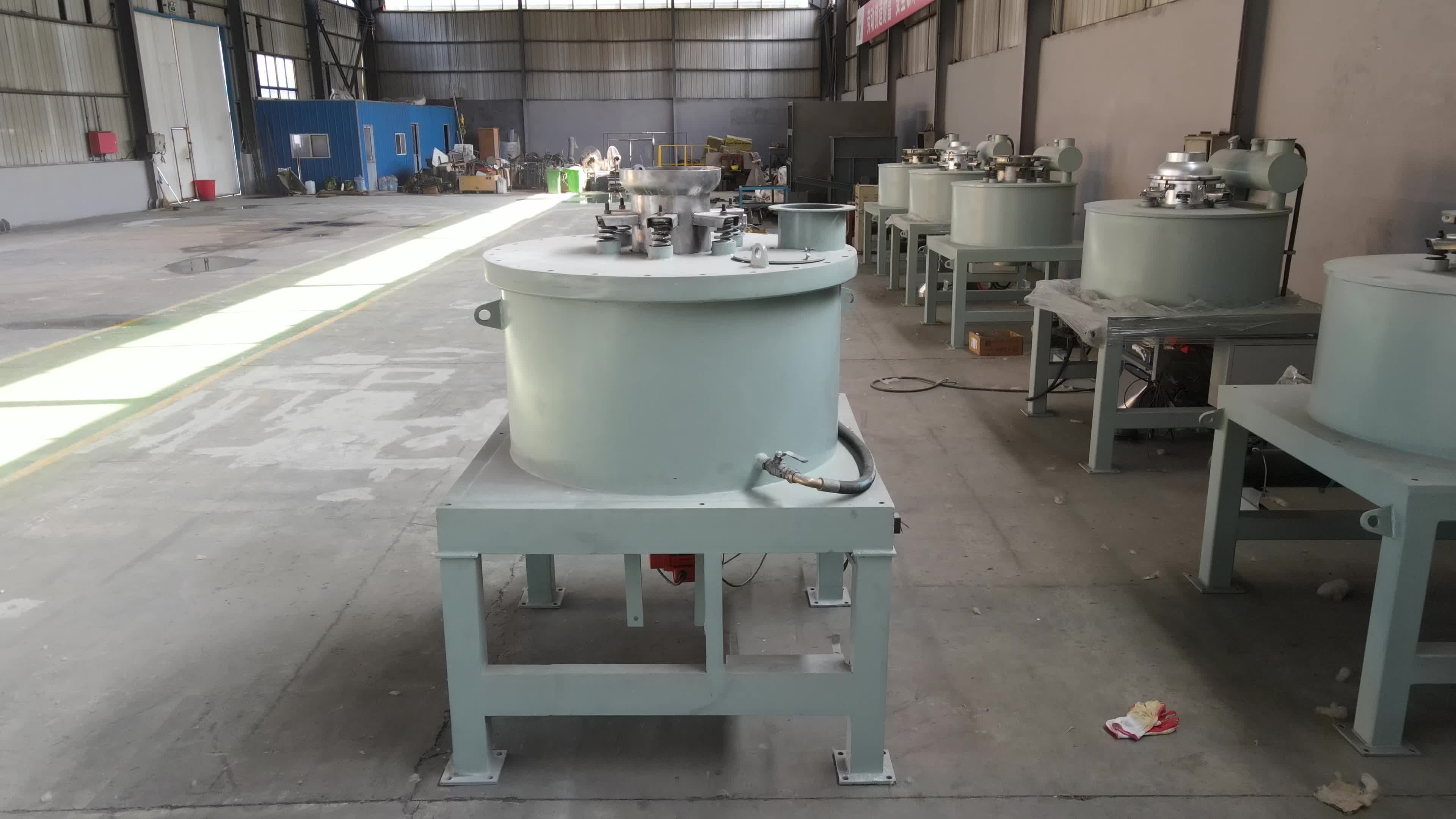 Quality control and testing area at Weifang Yuansheng: physical inspection evidence matters in a long-term supply relationship.
5. Commercial Terms That Support Repeat Procurement
Long-term procurement requires commercial predictability. The terms offered by a supplier can be evaluated before the first order.
Weifang Yuansheng states a minimum order quantity of 3 units, which is realistic for a manufacturer supplying to industrial buyers rather than small test orders. Standard delivery terms are FOB Qingdao or CIF, reflecting export experience through a major port. Payment is typically T/T with a 30% deposit and 70% balance before shipment. For a buyer, this is a standard structure: it protects the manufacturer against production cost exposure while giving the buyer leverage through the pre-shipment inspection stage.
These terms create a framework for recurring orders. Once a buyer has an approved product model, the repeat order cycle becomes: place order, pay deposit, inspect, pay balance, ship. Because the commercial rules do not change between orders, the buyer's finance and logistics teams can plan more efficiently.
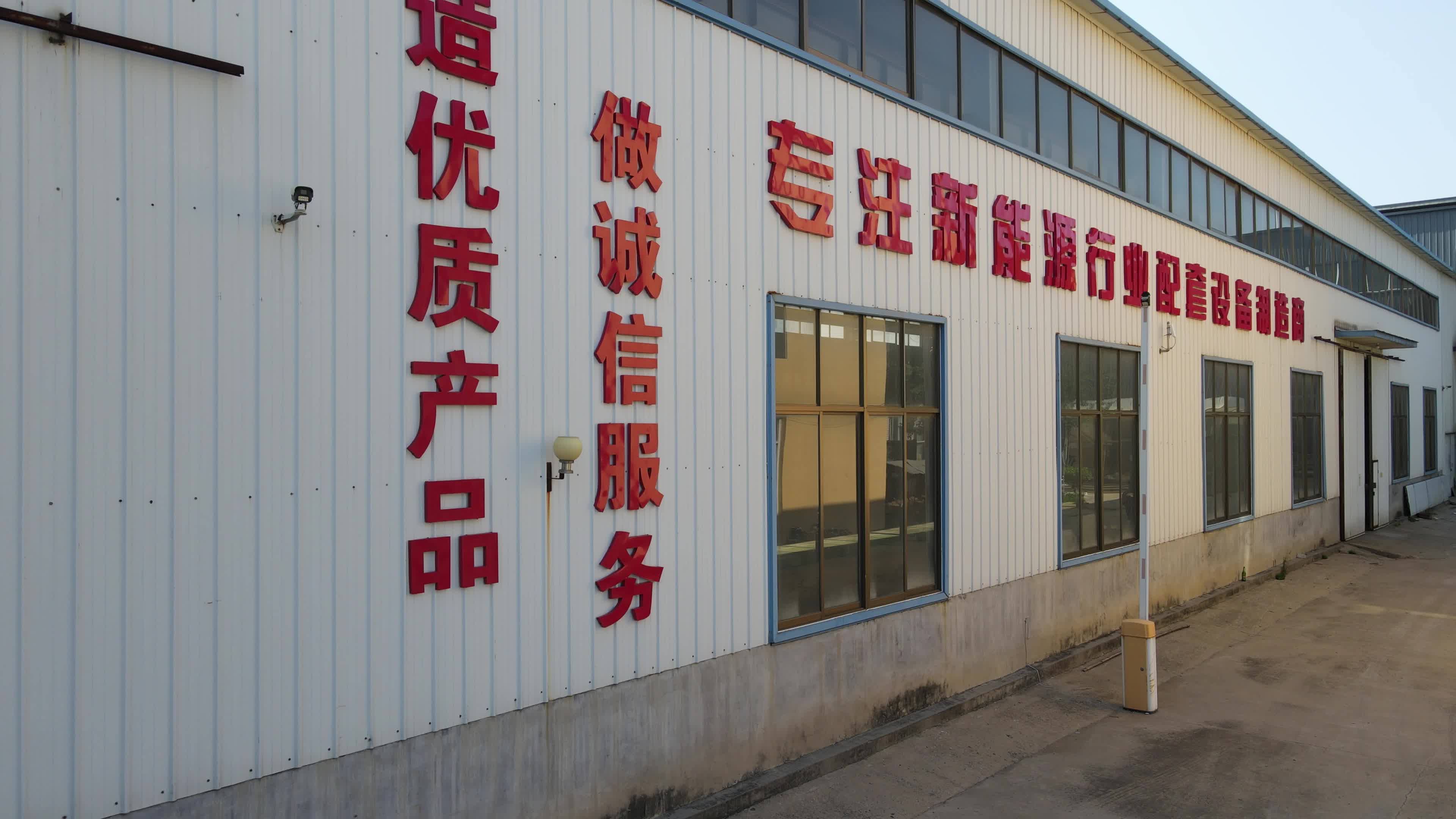 Finished product warehouse storage: a visible sign of production continuity for repeat buyers.
6. Application Mapping: Where Long-Term Capability Shows Up
The value of a manufacturer's product range becomes visible in specific industries.
For ceramics, glass powder, and food/pharmaceutical material processing, where iron content is low and energy efficiency is a priority, permanent magnetic separators are commonly used. In these settings, zero power consumption and minimal maintenance matter more than adjustable field strength.
For mining, coal, cement, and steel slag processing, where material flow is continuous and iron content can be high, electromagnetic separators are the usual choice. Their adjustable high field strength and high removal efficiency justify the energy cost.
For lithium battery materials, high-gradient dry electromagnetic powder separators have become increasingly standard. HTNXT industry analysis notes that electromagnetic separators with flux densities above 16,000 Gs are increasingly standard for lithium battery material purification lines. Weifang Yuansheng's YSDC and YSDCG series operate at 18,000–20,000 Gs in the working chamber, with PLC control and a cleaning time of about 10 seconds, making them appropriate for cathode and anode material purification.
For slurry processes in ceramics, coatings, and battery conductive slurry, wet electromagnetic separators such as the YSDCS series are applied at 16,000–20,000 Gs with production capacity up to 30 t/h.
For food and pharmaceutical powders, hygienic permanent separators such as the YSXF magnetic box separator, with 8,000–12,000 Gs, and YSXD in-line separators are available in 304/316L stainless steel with food-grade options.
High Gradient Magnetic Separators have demonstrated measurable recovery improvements in mineral processing. Verified industry data from the Indian Bureau of Mines reports recovery rate improvements of 15–20% for hematite and ilmenite ores compared to standard intensity units. Buyers in mineral processing should therefore treat HGMS capability as a key long-term requirement.
7. Market Trends Making Supplier Continuity More Important
Several trends make long-term supplier continuity more strategically important than in previous years.
First, the market is expanding. The global magnetic separator market is projected to grow at 5.0% CAGR through 2033, and China's market at 10.62% CAGR through 2032. Growth attracts more manufacturers and more importers, which increases the need for buyers to verify supplier reliability rather than just price.
Second, the magnetic drum separator segment held the largest product revenue share, about 38% in 2024, according to Future Market Insights, but demand for high-gradient and lithium-specific equipment is rising. The product mix is shifting toward higher technical complexity. A supplier that can deliver both commodity drums and high-gradient electromagnetic systems is better positioned to support a buyer as their product line evolves.
Third, the supplier landscape includes well-known global names such as Eriez Manufacturing Co. (US), Metso Outotec (Finland), Bunting Magnetics (US), and LONGi Magnet Co. (China), according to Market Research Future. This creates a wider comparison set for buyers. Chinese manufacturers with long export histories, such as Weifang Yuansheng, operate in the same evaluation pool and are expected to demonstrate equivalent documentation, inspection, and compliance capabilities.
8. Long-Term Partnership vs Transactional Sourcing: An Honest Comparison
A long-term partnership with a manufacturer like Weifang Yuansheng has clear advantages over buying each unit from whichever supplier offers the lowest quote at that moment: consistent engineering, compatible spares, accumulated process knowledge, and simpler inspection routines. It also offers a single point of accountability when a problem occurs.
But there are boundaries. A cross-border partnership between a buyer in Europe or North America and a manufacturer in Shandong, China, involves geographic distance. If an urgent spare part is needed, local suppliers can often respond faster. Commissioning support may require travel arrangements and scheduling. The minimum order quantity of 3 units means a short-term buyer who only needs one separator for a pilot test may be better served by a distributor or a local supplier. For very small annual purchase volumes, the administrative cost of maintaining a direct manufacturer relationship may exceed the benefit. These are realistic limits, and a competent buyer should weigh them before making the long-term commitment.
9. Future Outlook
Looking ahead, several developments will affect long-term supply relationships in magnetic separation.
The trend toward adjustable, high-strength electromagnetic systems will continue, especially in lithium battery materials and fine mineral processing. Suppliers that offer modular magnetic strength options, such as T1/T2/T3 high-strength versions on RCYB, RCYC(D), and RCDB series, give buyers upgrade paths without replacing the whole unit.
Automation will play a larger role. PLC-controlled and touch-screen operated systems, such as the YSDCG dry electromagnetic powder iron remover with its 10-second cleaning cycle, point toward reduced labour dependence and more consistent cleaning routines.
Equipment portfolios will broaden. Weifang Yuansheng's catalogue extends from magnetic bars and magnetic boxes to drum separators, suspended separators, dry and wet electromagnetic systems, and electrostatic precipitators. For multi-plant buyers, this range reduces the number of suppliers needed to maintain a comprehensive metal contamination control strategy.
Documentation and transparency will become more important in international trade. Buyers are likely to request pre-shipment third-party inspection, detailed test reports, and evidence of compliance before the balance payment. Suppliers that make these processes routine will be better partners over time.
FAQ
What is the minimum order quantity for industrial magnetic separators from Weifang Yuansheng?
The minimum order quantity is 3 units. This is a standard threshold for a manufacturer supplying industrial buyers, and it applies across the company's magnetic separator product lines.
What payment terms does Weifang Yuansheng offer on magnetic separator orders?
The company uses T/T terms: a 30% deposit is required when the order is placed, and the remaining 70% balance is paid before shipment. This structure is common in export transactions and is paired with a pre-shipment inspection step.
How can a buyer verify the quality of magnetic separators before shipment?
Buyers can arrange pre-shipment inspection by a third-party organisation such as SGS or BV, or send their own team to inspect the equipment on site. The inspection takes place before the balance payment is made.
What delivery terms are available for international buyers?
Weifang Yuansheng ships under FOB Qingdao or CIF terms. Both options are commonly used in the company's export business, given that 65% of its output goes to overseas markets.
How do permanent and electromagnetic separators compare in long-term operating cost?
A permanent magnetic separator consumes zero energy (0 kWh per hour), has a magnetic field intensity of 3,000–12,000 Gs, and annual maintenance of about USD 60. An electromagnetic separator consumes 2–5 kWh per hour, with electricity costs of roughly USD 2,000–4,000 per year. Purchase cost of the permanent type is about 30% lower; the electromagnetic type is about 30% higher.
What maintenance differences should a buyer plan for?
Permanent magnetic separators are nearly maintenance-free, requiring only monthly inspection and cleaning, and have no control circuits. Electromagnetic separators need regular inspection of circuits, coils, and cooling systems, and require professional maintenance because of the cooling system and electrical components.
Can one manufacturer supply both permanent and electromagnetic separator technologies?
Yes. Weifang Yuansheng's product range covers permanent magnetic separators such as RCYB, RCYC(D), RCYA, magnetic drums, and magnetic boxes, as well as electromagnetic separators such as RCDB, RCDD, RCDE, RCDF, RCDA, YSDC, and YSDCS series. This allows a buyer to maintain one supplier across different separation technologies.
Which export markets does Weifang Yuansheng serve?
The company exports 65% of its production to Asia-Pacific, North America, Europe, Africa, the Middle East, Latin America, Oceania (including Australia), and CIS/Central Asia.
Have Questions or Need More Details?
Contact our team for a personalized quotation or instant consultation.
Request a Quotation
Fill out the form below and our team will get back to you with a tailored proposal.
WhatsApp Direct Chat
Prefer to chat in real-time? Message us on WhatsApp for instant assistance & quick answers.
- Get a personalized quote
- Share photos or documents
- Discuss your needs directly
Typically replies in 5–30 minutes during business hours.