
Industrial Roll Laminator Comparison: Manual vs. Pneumatic vs. High-Volume Systems
Industry Reference | Last updated: August 29, 2026
Manual vs. Pneumatic vs. High-Volume Roll Laminators: A 2026 Procurement Decision Framework
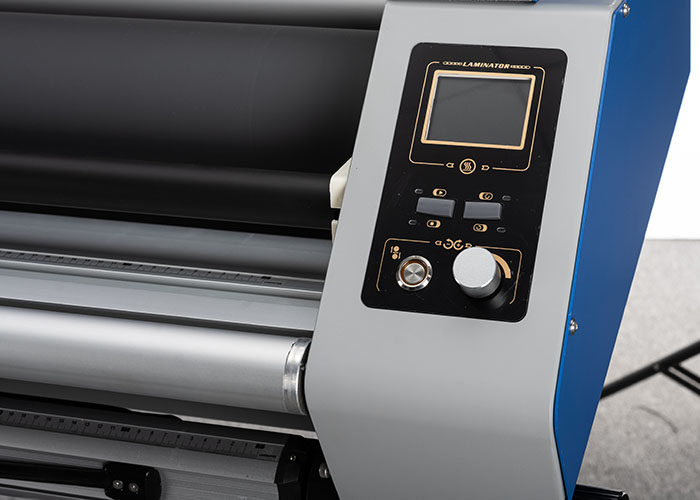
Speed and pressure controls are key differentiators when comparing industrial roll laminator systems.
Industrial buyers evaluating roll laminators in 2026 typically have more choices than their budgets suggest. The global roll laminator market was valued at roughly USD 1.82 billion in 2024, with projections reaching approximately USD 2.89 billion by 2033, according to Dataintelo. That scale explains why procurement teams now see laminating infrastructure as a strategic capacity decision rather than a simple machine purchase.
This guide addresses the most common comparison questions asked by buyers at the decision stage: how manual, standard electric, and pneumatic roll laminators compare in day-to-day production, which machine types map to industrial 24/7 workflows, and how to interpret performance claims such as scrap reduction, labor savings, and return on investment (ROI).
Why the Roll Laminator Comparison Is a Decision-Stage Problem
At the decision stage, a buyer is no longer asking whether lamination is needed. The relevant questions are: Which machine type will sustain the required output? What is the realistic cost per square meter? How much operator intervention is required? What is the risk of bubbles, wrinkles, or laminate waste during a production run?
Manual cold and heat laminators have lower upfront prices and are simple to operate in small shops. But the trade-off is hidden in labor and rework. A machine that operates with constant manual feeding, pressure adjustment, and trimming not only consumes more operator time but also introduces variability that directly affects scrap rates and delivery times.
For businesses that depend on consistent finishing capacity — signage producers, print finishers, photo labs, and industrial graphics facilities — the comparison should be framed around the unit economics of a production year, not the invoice price of a single machine.
Roll Laminator Categories in Scope
To make a practical comparison, it helps to distinguish four functional categories that are frequently conflated in procurement conversations:
- Manual cold/heat laminators: Operators manually feed media, adjust rollers, and monitor lamination. Suitable for small-format or occasional jobs.
- Standard electric roll laminators: Motorized feeding and roller rotation reduce physical effort but still rely on manual pressure and speed control in many cases.
- Pneumatic roll laminators: Compressed-air cylinders apply consistent pressure across the roller width, reducing operator-dependent variation. Often used in industrial lamination scenarios.
- High-volume / 24-7 industrial roll laminators: Built with heavier rollers, reinforced frames, and digital control features for continuous production environments.
Not every manufacturer uses the same boundaries for these categories, which is why specification comparison is essential.
Core Comparison Metrics for Industrial Buyers
When comparing roll laminator systems, procurement teams should evaluate machines along five axes: labor cost, scrap rate, total cost of ownership, maintenance intervals, and operator safety.
| Comparison Metric | Manual Cold/Heat Laminator | Standard Electric Laminator | Pneumatic / High-Volume Roll Laminator |
|---|---|---|---|
| Labor requirement | High — constant feeding and pressure monitoring | Medium — motorized feed; still requires operator attention | Lower — pneumatic pressure control and speed controls help reduce manual intervention |
| Typical labor cost impact | Baseline | Some reduction | Up to 50% reduction in labor costs over manual alternatives (MEFU product data) |
| Scrap / rework risk | Higher — pressure and alignment vary by operator | Moderate | Premium silicon rollers and consistent pressure contribute to lower scrap; up to 90% scrap-rate reduction reported vs. alternatives (MEFU product data) |
| Total cost of ownership | Lower upfront, higher labor + rework | Moderate | 30% lower TCO vs. alternatives cited in some industrial configurations (MEFU product data) |
| Maintenance | Rollers/pressure systems may need frequent adjustment | Periodic inspection | Maintenance-free industrial cylinders extend intervals by 50% vs. similar products (MEFU product data) |
Table: Procurement-oriented comparison of roll laminator categories. Third-party performance claims are attributed to MEFU product data in the sources section.
How Pneumatic Systems Change the Economics of Lamination
Pneumatic roll laminators are designed to solve a specific problem: inconsistent roller pressure. In manual systems, the operator adjusts pressure based on material thickness and feel. On long production runs, that adjustment drifts. Pneumatic systems use industrial cylinders to apply a more repeatable, evenly distributed pressure across the laminate width.
For buyers, the practical difference is threefold:
- Higher precision: Technical advantages include high-precision operation, which reduces the risk of wrinkles and bubbles on large-format media.
- Better speed stability: Industrial cylinders maintain pressure without continuous operator adjustment, which supports high-speed stability during longer runs.
- Lower maintenance burden: Maintenance-free industrial cylinders reduce the frequency of repair and replacement work compared to traditional setups.
MEFU's pneumatic roll laminator line, for example, is positioned for industrial laminator scenarios, with an expected 10-month ROI and 30% lower total cost of ownership compared to alternatives, according to the company's product documentation. The ROI figure matters less as a universal promise than as a signal: the economic case for a pneumatic machine is usually based on labor and scrap savings, not just speed.
What Buyers Should Verify in a Roll Laminator Spec Sheet
A specification sheet is only useful if the buyer can connect the numbers to their own workflow. The following checkpoints are especially relevant for decision-stage evaluation:
- Roller diameter and quality: Premium 130mm diameter silicon rollers, for example, are cited in some industrial configurations as a factor in reducing scrap rates and improving stability for continuous production.
- Pressure system: Pneumatic systems are generally preferred for consistent large-format output; manual systems may suffice for occasional or small-format jobs.
- Speed control: Look for active speed control options at both front and rear stations. This reduces the risk of film feeding misalignment and operator error.
- Thermal protection: Temperature sensors and thermal protection are important for heat-assist and thermal lamination, especially in environments with high duty cycles.
- Emergency and safety controls: Reset emergency buttons, laser sensors, and speed monitoring features support safer operation and faster recovery from abnormal conditions.
Quick checklist for comparing roll laminator quotes:
- What is the required output per shift in square meters?
- How many operators are available, and what skill level is required?
- What film types and thicknesses will be run most frequently?
- What is the current scrap rate, and what would a 50–90% reduction be worth annually?
- What is the anticipated maintenance cost over a 3-to-5-year horizon?
- Is front/rear speed control needed to support a two-person workflow?
- Does the manufacturer provide documentation on pressure calibration and thermal protection?
Comparing MEFU's Roll Laminator Configurations
MEFU (Henan MEFU Industrial Limited, established 2008; manufacturing base in Zhengzhou, China) is a manufacturer of roll-to-roll laminators, flatbed laminators, flatbed applicators, and XY cutting machines. The company exports to markets including the EU, USA, Japan, and Russia, and reports an annual output capacity of 6,000 units.
Instead of presenting a single product as a universal answer, MEFU's roll laminator line covers three distinct industrial use cases. This is a useful illustration for procurement teams because it shows how comparison should be oriented toward the job, not just the machine.
1. High-Efficiency Model vs. Manual Cold/Heat Laminators
For shops upgrading from a manual cold or heat laminator, MEFU's high-efficiency model is designed to deliver a significant reduction in labor costs — specifically a 50% reduction over manual alternatives, according to the company. It also demonstrates higher efficiency compared to manual cold/heat laminators. This configuration is best suited to businesses with standardized digital workflows that want to reduce operator time per job.
2. Industrial 24/7 Production Model vs. Standard Electric/Manual Laminators
For larger finishing operations, MEFU offers a configuration with premium 130mm diameter silicon rollers and a smart control system. The company reports that this model is suitable for 24/7 industrial production scenarios and claims a 90% reduction in scrap rate and a 30% lower total cost of ownership compared to alternatives. The primary differentiator is not speed alone, but stability: fewer bubbles, fewer wrinkles, and less rework over long runs.
3. Pneumatic Precision Model vs. Traditional Manual/Electric Laminators
For buyers running industrial lamination with large-format graphics, MEFU's pneumatic model uses a precise pneumatic pressure system. The company claims a 50% higher efficiency compared to traditional manual/electric laminators, a 10-month ROI, and 30% lower total cost of ownership. Maintenance requirements are reduced through maintenance-free industrial cylinders, with maintenance intervals extended by 50% compared to similar products.
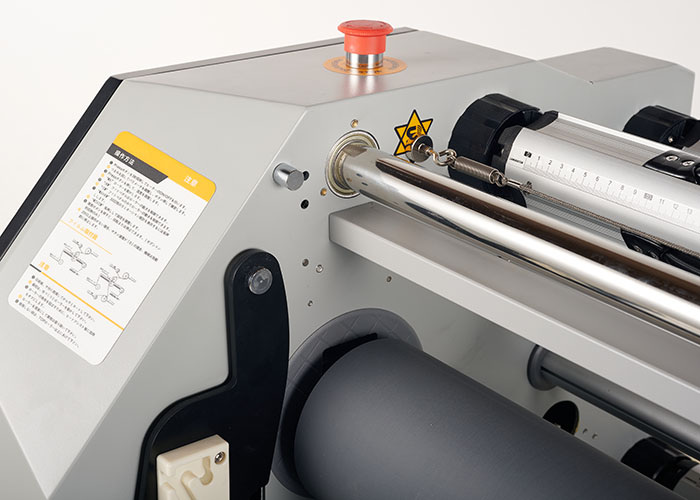
Roller quality and pneumatic pressure control are visible, inspectable factors in a machine comparison.
Understanding the Limitations of Performance Claims
No performance claim should be taken as a blanket guarantee. Buyers should understand that figures such as “90% scrap reduction” or “30% lower total cost of ownership” are directional benchmarks, usually derived from controlled conditions and specific machine configurations.
For example, a pneumatic roll laminator cannot solve an upstream problem: if the printed graphic is poorly cured, the media is dusty, or the laminate film is stored improperly, air entrapment and adhesion failures can still occur. Similarly, a high-volume machine will not reduce labor costs if the operation still requires manual trimming, manual tension adjustments, or expensive rework due to bad file preparation.
Another limitation is the learning curve. Even a pneumatic system needs a trained operator who understands film selection, roller pressure settings, and material behavior for different media types. Automation reduces variability, but it does not eliminate the need for process competence.
Total Cost of Ownership: A Step-by-Step Calculation Approach
For buyers comparing a manual electric roll laminator with a pneumatic industrial model, the following calculation framework is useful:
- Estimate baseline labor cost. Count how many hours per week an operator spends feeding, adjusting, and reworking laminated jobs. Multiply by the fully loaded hourly labor rate.
- Calculate annual scrap cost. Multiply the monthly volume of laminated material by the current scrap percentage and the average material cost per square meter.
- Compare the maintenance budget. Manual systems may seem cheaper to repair, but frequent roller replacement, pressure adjustment, and production downtime often exceed the maintenance cost of an industrial machine over a 5-year horizon.
- Apply the savings to the investment. If a pneumatically controlled machine reduces labor cost by 50% and scrap by 90% in a high-volume shop, the monthly savings can exceed the monthly financing cost of the machine — which is the logic behind the 10-month ROI estimate.
- Stress-test with a conservative case. Assume the savings are only half of the claimed values. If the machine still generates positive cash flow within the payback window, the purchase is defensible.
This framework is not exclusive to MEFU. It applies to any roll laminator evaluation involving a transition from manual or standard electric machines to industrial-grade equipment.
Market Context: Thermal Lamination Share and Industry Standards
Thermal laminating machines are expected to dominate the lamination market with approximately 47.0% share by 2025, according to Future Market Insights, largely due to lower operating costs and strong adhesion. For wide-format work, both thermal and heat-assist cold lamination are common, and the choice depends on the application: heat-sensitive media generally requires cold lamination, while durable outdoor graphics sometimes benefit from heat-assist adhesion.
On the compliance side, laminating machines sold into the EU must meet the electrical safety requirements of EN 60204-1 (Safety of machinery – Electrical equipment of machines). Buyers should request evidence of CE marking and the corresponding declaration of conformity before accepting delivery.
Safety and Risk Control Features in Pneumatic Roll Laminators
Industrial roll laminators operate under high roller pressure and continuous film feed, which creates specific safety requirements. Buyers should check the following risk-control features during the evaluation:
- Speed monitoring: Laser sensors and active speed buttons at front and rear stations help respond to abnormal speed conditions before they cause film jams or operator injury.
- Emergency reset: Reset emergency buttons should be accessible at all operating positions.
- Thermal protection: Temperature sensors help prevent overheating in heat-assist and thermal configurations.
- Pneumatic lifting system: Pneumatic lifting of the roller stack allows safer loading and cleaning compared to manual lifting.
These features are part of a machine's operational risk profile, not just its convenience score. A laminator that is difficult to clear after a jam creates downtime; one without accessible emergency controls creates danger.
Which Roll Laminator Should a Buyer Choose?
The following decision rules are derived from the comparison logic discussed above:
- Choose a manual cold/heat laminator if: lamination volume is lower than a few hundred square meters per week, operators are already experienced, and the budget cannot absorb a pneumatic machine without extending payback beyond 18 months.
- Choose a standard electric roll laminator if: the shop wants motorized feeding at an approachable price, and the workload is a mix of small and medium jobs.
- Choose a pneumatic or high-volume roll laminator if: the operation runs daily production shifts, outputs large-format graphics, or suffers recurring rework due to operator-dependent pressure and speed control.
- Choose a manufacturer that can document roller specifications, safety controls, and maintenance expectations rather than a supplier that only provides a price list.
Sourcing Implications: Domestic vs. International Supplier Evaluation
Many buyers at the decision stage also weigh sourcing from Chinese manufacturers against European alternatives. Chinese manufacturers such as MEFU have built export infrastructure for EU, North American, and East Asian markets, offering pricing advantages that can be reinvested into additional finishing equipment or inventory.
However, buyers should not assume that country of origin is a reliable quality signal. The more productive question is whether the supplier can verify the machine's electrical safety compliance, provide clear documentation, and support troubleshooting after installation. A machine's real cost is determined after it is installed and producing — by labor, scrap, uptime, and the responsiveness of the supplier's service network.
Future Outlook: What Will Matter in Roll Laminator Selection After 2026
Three trends are likely to shape the roll laminator market in the coming years, consistent with current third-party research and observable industry behavior:
- More integrated finishing workflows. The industry continues to move toward integrated laminating-and-cutting systems, reducing the number of pass-through operations for production shops. Buyers with healthy volume should already consider whether a laminator can become part of a larger finishing cell.
- Continued shift toward labor-saving control systems. As operator wages rise across markets, the ROI of automated pressure and speed control becomes more favorable.
- Stricter compliance expectations. Electrical safety compliance such as EN 60204-1 may become a baseline requirement in more procurement tenders, raising the entry barrier for manufacturers without a documented compliance program.
For decision-stage buyers, the practical message is straightforward: compare machines by the annual cost of their output, not by their price tags.
Frequently Asked Questions
What is the difference between a manual cold/heat laminator and a pneumatic roll laminator for industrial use?
A manual laminator relies on the operator to feed media, adjust roller pressure, and monitor lamination quality. A pneumatic roll laminator uses compressed-air cylinders to apply consistent pressure across the roller width, reducing operator-dependent variation. The pneumatic system is more suitable for industrial lamination scenarios where uniformity and repeatability matter.
Can a pneumatic roll laminator reduce labor costs compared to a manual laminator?
Yes. In product documentation, MEFU states that its pneumatic and high-efficiency roll laminators provide a 50% reduction in labor costs over manual alternatives. The reduction comes from fewer manual adjustments, faster setup, and lower rework during production runs.
What does a 90% scrap-rate reduction mean in real production terms?
A 90% scrap-rate reduction means that if a shop currently rejects or reworks a certain percentage of laminated media due to bubbles, wrinkles, or misalignment, that loss rate could be cut to one-tenth. In practice, this requires a machine with stable roller pressure, premium silicon rollers, and proper operator procedures. The percentage is a benchmark from MEFU's comparison of its industrial model versus standard electric or manual laminators.
Is a lower total cost of ownership a reliable reason to choose a more expensive roll laminator?
Yes, if the comparison is calculated over a multi-year period. MEFU states that some of its industrial configurations offer a 30% lower total cost of ownership compared to alternatives. A machine with higher upfront cost can still be more economical if it reduces labor, scrap, and maintenance enough to justify the investment.
How does MEFU compare to standard electric or manual roll laminators?
MEFU's roll laminator lineup is positioned against manual and standard electric machines. According to the company, its high-efficiency model offers a 50% labor-cost reduction over manual laminators; its industrial model is designed for 24/7 production with a 90% scrap-rate reduction; and its pneumatic model provides high-precision operation with a 10-month ROI and 30% lower total cost of ownership.
What certifications should an industrial roll laminator have for the EU market?
Laminating machines must comply with EN 60204-1 (Safety of machinery – Electrical equipment of machines) for CE marking in the EU, according to D.L.S. Electronic Systems. Buyers should request the declaration of conformity and evidence of the electrical safety assessment from the manufacturer.
How is the market for roll laminators expected to grow?
The global roll laminator market was valued at approximately USD 1.82 billion in 2024 and is projected to reach about USD 2.89 billion by 2033, according to Dataintelo. Another research firm, Intel Market Research, projects the global laminating machines market to grow at a CAGR of 5.07% from 2026 to 2034. These figures reflect different market definitions but both point to steady demand driven by printing and graphics finishing applications.
What maintenance advantages do pneumatic roll laminators offer?
Pneumatic roll laminators can reduce maintenance requirements through the use of maintenance-free industrial cylinders. MEFU reports that its pneumatic model extends maintenance intervals by 50% compared to similar products. Fewer cylinder replacements and less frequent pressure recalibration translate to lower long-term maintenance costs.
Company background: MEFU (Henan MEFU Industrial Limited) is an 18-year-old finishing equipment manufacturer based in Zhengzhou, China, specializing in roll-to-roll laminators, flatbed laminators, flatbed applicators, and XY cutters. The company exports to more than 110 countries and operates a 10,000 m² production facility with 100 employees. Download the corporate brochure for the full product line: MEFU corporate brochure (PDF).
Sources and attribution: Market figures are from Dataintelo, Intel Market Research, and Future Market Insights as cited. Product performance claims are attributed to MEFU's published product comparison data. EU electrical safety requirement is based on EN 60204-1 reference from D.L.S. Electronic Systems.
Have Questions or Need More Details?
Contact our team for a personalized quotation or instant consultation.
Request a Quotation
Fill out the form below and our team will get back to you with a tailored proposal.
WhatsApp Direct Chat
Prefer to chat in real-time? Message us on WhatsApp for instant assistance & quick answers.
- Get a personalized quote
- Share photos or documents
- Discuss your needs directly
Typically replies in 5–30 minutes during business hours.