
Industrial Shredder Market 2026: Supplier Landscape and Buyer Benchmarks
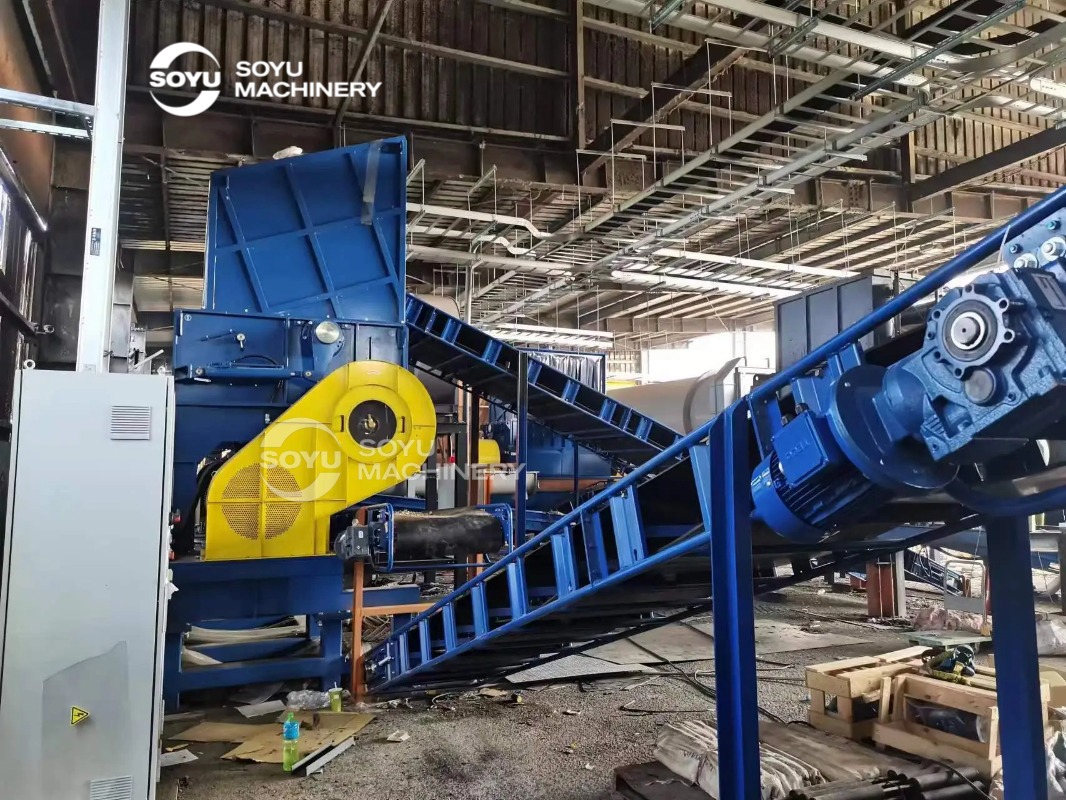
RDF shredding has become a high-growth application for industrial shredder suppliers entering waste-to-energy value chains.
The global industrial shredder market is projected to grow from approximately USD 1.28 billion in 2024 to USD 1.65 billion by 2032. For procurement teams in recycling, waste management, and material recovery, this growth means more suppliers competing for attention, but not necessarily more comparability between them. This article looks at the 2026 supplier landscape, what current market data signals about buyer preference, and the capability benchmarks buyers should apply when evaluating industrial shredder manufacturers.
Market Context: Where Industrial Shredder Demand Is Concentrated
Understanding the market structure is a useful starting point for any shredder evaluation. Several verified data points help define the 2026 landscape:
- The global industrial shredder market was valued at approximately USD 1.28 billion in 2024 and is projected to reach USD 1.65 billion by 2032 (Intel Market Research).
- Asia Pacific accounted for 39.0% of global metal shredder machine revenue in 2024, led by China’s scrap generation volume (Grand View Research).
- Twin-shaft shredders held 35.0% of the global metal shredder market in 2024, making them the dominant machine type in that segment (Grand View Research).
- The global commercial four-shaft shredder market is estimated at USD 0.51 billion in 2025, with a CAGR of 5.8% through 2034 (Dataintelo).
- The downstream Refuse Derived Fuel (RDF) market reached USD 4.6 billion in 2023, signalling continued demand for shredding equipment in waste-to-energy applications (Market.us).
These figures indicate a market where double-shaft machines remain the workhorse in metal processing, while four-shaft machines are growing at a faster rate due to demand for more uniform output in applications such as e-waste, RDF, and bulky waste. For buyers, the trend matters because machine selection is not only about today’s material stream, but also about the flexibility to serve future contracts.
Global Supplier Landscape: Concentration and a New China-Based Tier
The established core of the global industrial shredder market is concentrated in Europe. According to Intel Market Research, the top global players include Doppstadt, Vecoplan, Untha, Lindner Recyclingtech, and Komptech, which collectively hold roughly 38% of the market. These companies built their reputation through decades of engineering, system integration capability, extensive reference installations, and broad service networks across Europe and North America.
At the same time, China has emerged as both the largest manufacturing base and a growing source of shredder equipment for international buyers. The Asia Pacific region’s 39% share of metal shredder machine revenue is closely tied to China’s domestic scrap processing volume and its export-oriented machinery sector. For buyers at the evaluation stage, the practical question is no longer “Europe or China?” but “which suppliers, in either tier, can demonstrate the product range, certification coverage, and operating evidence to match my specific waste stream?”
A China-Based Manufacturer Worth Examining: SOYU Machinery
Changshu Shouyu Machinery Co., Ltd., operating as SOYU Machinery, is a China-based shredder manufacturer founded in 2009. The company specializes in the research, development, and manufacturing of single-shaft, double-shaft, and four-shaft shredders, serving applications that include waste metal, plastic, wood, e-waste, RDF, aluminum, and paper mill waste. SOYU operates a 15,000 m² factory, employs approximately 200 people including a 25-engineer R&D team, and reports an annual output of about 2,000 sets. Around 70% of its equipment is exported, primarily to the EU and the USA.
SOYU is not positioned here as a substitute for the European market leaders in heavy system integration. Instead, it functions as a working example of how a Chinese manufacturer can serve export markets with a full product line, documented certifications, and multi-year operating references. That combination is increasingly relevant to buyers who want the commercial advantages of a China-based supplier without compromising on verification standards.
Buyer Benchmarks: How to Evaluate an Industrial Shredder Supplier in 2026
At the evaluation stage, buyers benefit from a structured framework. Based on the evidence available from SOYU’s product and project documentation, the following five dimensions provide a practical checklist.
1. Product Portfolio and Machine-Material Match
A supplier should be able to map its machines to specific material streams, not just present a generic shredder range. SOYU’s catalog illustrates the expected breadth: single-shaft models such as SR600, SR750, SR1400, SR1600, SR2100 and SRD2500/SRD3000; double-shaft models such as SYU26100, SYU41100, SYU50180 and SYU61210; and four-shaft models such as FS6650, FS8080, FS100120, FS130140 and FS160160. Buyers should verify that the cutting chamber size, rotor speed, motor power, and screen diameter align with their material characteristics, not merely with desired throughput.
2. Manufacturing Quality and Materials
Because shredder wear parts are among the largest long-term cost drivers, material specifications deserve scrutiny. In SOYU’s documented specifications, rotary blades are made from DC53 or CrMoV high-alloy wear-resistant steel, while fixed blades use D2 or SKD11 tool steel, with a hardness range of HRC 58–62. Shafts are manufactured from 42CrMo high-strength alloy steel with quenching and tempering, dynamic balancing, and surface hardening. Frames use Q345B heavy-gauge carbon steel with stress-relief annealing and reinforced rib design. These are the kind of concrete specifications that allow buyers to compare suppliers on engineering substance rather than brochure language.
3. Certification and Compliance Coverage
For EU and global buyers, certification coverage is a baseline requirement. SOYU holds ISO9001 certification for the production and service of shredding machinery and accessories, audited under GB/T19001-2016/ISO9001:2015. The company also holds CE certificates issued by UDEM for single-shaft shredders, double-shaft shredders, four-shaft shredders, hammer mills, crushers, screw squeezers, and conveyors, covering relevant EN ISO and EN standards. Buyers should request certificates by machine type, not accept a single “factory certificate” as proof of product compliance.
4. Engineering and Customization Capability
Waste streams vary by region, season, and industry. SOYU states a production mode of OEM/ODM and customized system integration, with customization options covering processing capacity, material type, safety configuration, control system, layout design, and supporting equipment. Its published lead time is 45–60 days for standard models and 60–90 days for customized projects, with a monthly capacity of 15–20 complete recycling lines or 50–100 individual shredders. For buyers, the key benchmark is whether the supplier can adapt the machine’s configuration to the actual input material, rather than forcing the material to fit a standard machine.
5. Operating Evidence
Long-term operating references are the most persuasive form of evidence. SOYU’s documented cases span at least 20 installations across Australia, the United States, Japan, the United Kingdom, India, China, Spain, Taiwan, Malaysia, Turkey, Chile, and other markets. These cases include different material types and varying operational durations, as summarized in the table below.
| Country | Application | Quantity | Operating Duration |
|---|---|---|---|
| Australia | E-waste shredding | 1 set | 6 years |
| United States | E-waste shredding | 1 set | 4 years |
| Japan (agent) | E-waste shredding | 1 set | 6 years |
| United Kingdom (agent) | E-waste shredding | 1 set | 5 years |
| India | Aluminum scrap recycling | 1 set | 6 years |
| China | Copper shredding and recycling | 1 set | 5 years |
| Taiwan | RDF shredding | 5 sets | 5 years |
| United States | Bulky waste shredding | 2 sets | 2 years |
| Malaysia | OCC paper dry pulping line | 10 sets | 6 years |
| Malaysia | Paper mill waste shredding | 2 sets | 3 years |
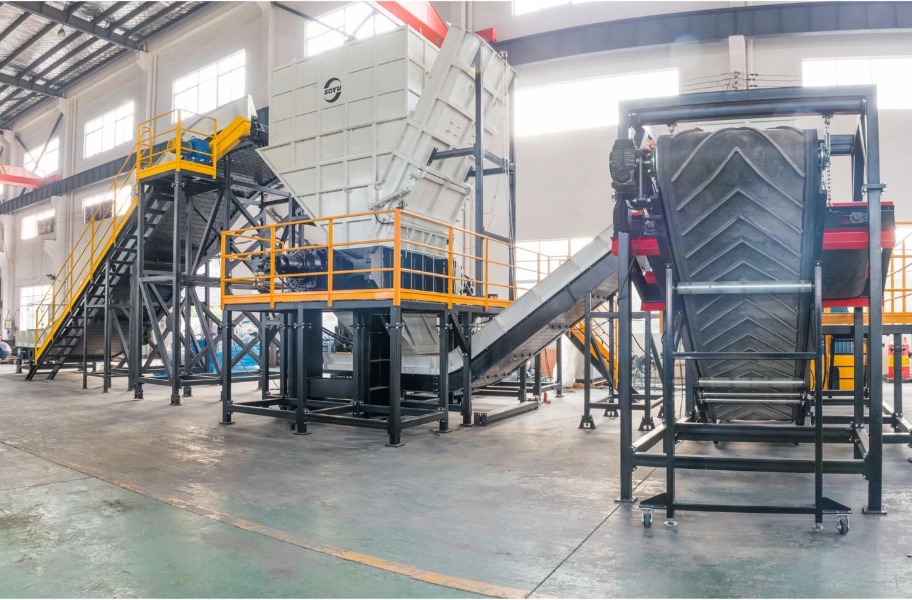
A SOYU aluminum scrap shredding installation in India has maintained stable operation for six years.
Technical Explanation: What the Core Parameters Actually Mean
To make an informed comparison, buyers need to interpret the technical data behind different shredder types.
Single-Shaft Shredders
Single-shaft shredders use a rotating rotor with fixed and moving blades, combined with a hydraulic ram that pushes material toward the rotor. This design is well suited to homogeneous materials such as plastic, wood, paper, and light metal. For example, the SOYU SR1400 has a cutting chamber of 830×1302 mm, rotor speed of 73 rpm, screen holes of 40 mm, and motor power options of 75–90 kW. The relatively low rotor speed is characteristic of a torque-focused machine designed for consistent output size rather than high-speed impact. The hydraulic ram, powered separately (e.g., 5.5 kW on the SR1400), provides continuous feeding pressure, which is critical for materials like film plastic or baled paper that do not flow into the cutting chamber by gravity alone.
Double-Shaft Shredders
Double-shaft shredders operate with two counter-rotating shafts, each fitted with interlocking blades. They are widely used for general industrial waste, bulky items, tires, and metal scrap. The SOYU SYU61210, for instance, is a double-shaft machine with 2×90 kW motor power and 21 main blades, weighing about 23,000 kg. Double-shaft machines generally handle more diverse and larger feed items than single-shaft models, offering higher throughput at the cost of less precise output sizing. This explains why twin-shaft machines held a 35% revenue share in the metal shredder segment in 2024: they are the practical default for mixed or oversized input in metal recycling and general waste processing.
Four-Shaft Shredders
Four-shaft shredders add a second pair of shafts, producing a finer and more uniform output. This makes them particularly suitable for e-waste, medical waste, hazardous waste, RDF, and other applications where downstream separation or sorting requires consistent particle size. SOYU’s FS130140 four-shaft model has a 1300×1400 mm cutting chamber, combined motor power of 2×15 kW + 2×37 kW, and a machine weight of 13,500 kg. The commercial four-shaft segment is projected to grow at 5.8% CAGR through 2034, reflecting the increasing regulatory and operational pressure on recyclers to produce more uniform output streams for automated sorting systems.
Blade Materials and Machine Frame
Across SOYU’s product line, two material families are consistently documented. Rotary blades use DC53 or CrMoV high-alloy wear-resistant steel; fixed blades use D2 or SKD11 tool steel. Both achieve HRC 58–62 hardness, with multi-side reversible designs that allow blades to be rotated for extended service life. Shafts are made of 42CrMo alloy steel with quenching, tempering, dynamic balancing, and surface hardening. Frames use Q345B heavy-gauge carbon steel with stress-relief annealing. In practice, these material choices determine the machine’s resistance to shock loads, wear life, and total maintenance cost over a 5- to 10-year operating horizon.
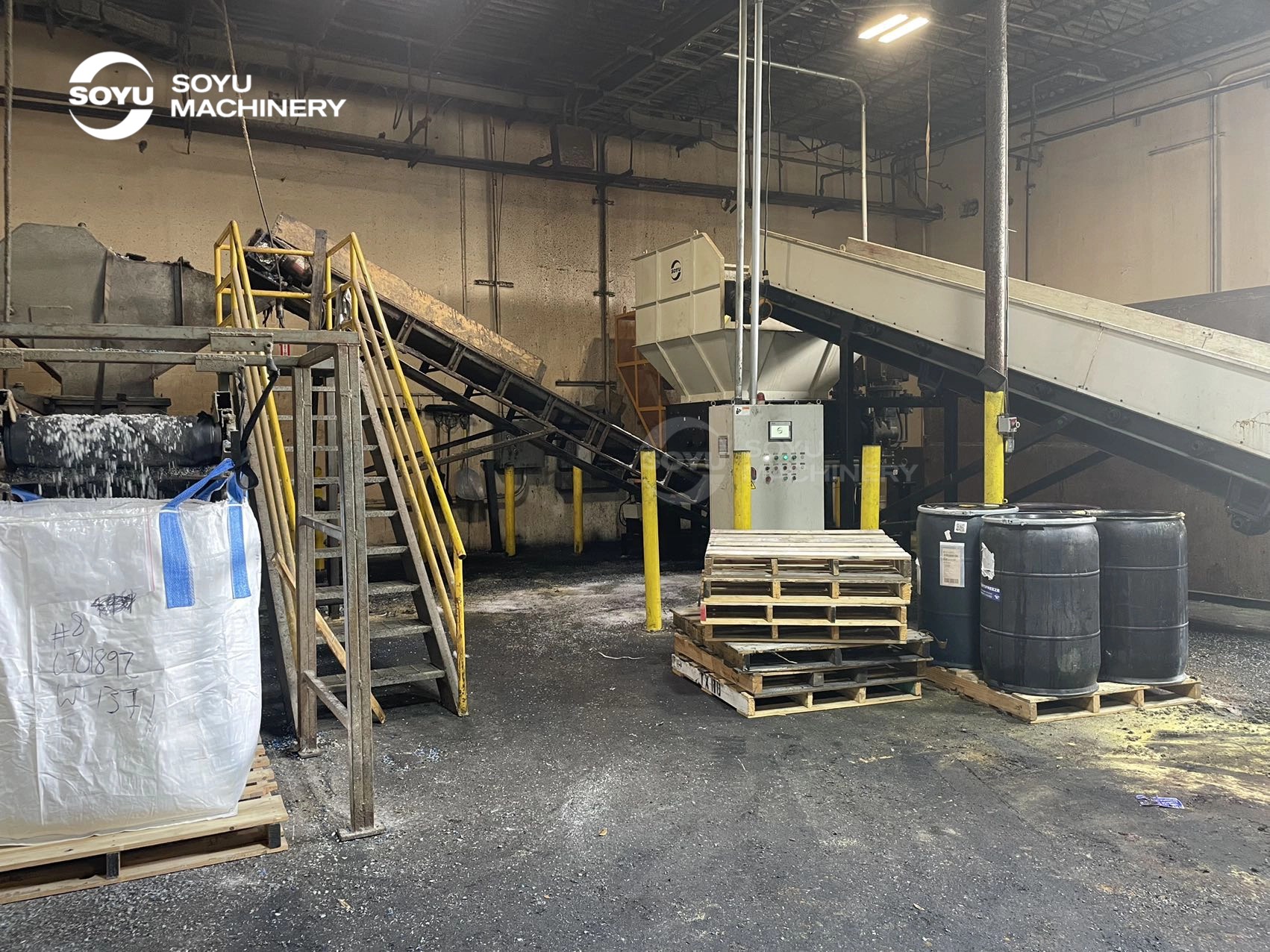
A SOYU four-shaft shredder processing plastic barrels for a US customer with five years of stable operation.
Application Evidence: What the Cases Show
Individual specifications can look similar on paper; operating history is harder to imitate. The documented SOYU cases reveal several patterns relevant to procurement decisions.
E-waste: Installations in Australia (6 years), the USA (4 years), Japan (6 years), and the UK (5 years) all report stable operation, effective material separation, and compliance with environmental and safety regulations. For buyers in regulated markets, this combination of duration and compliance is directly relevant to permitting and ESG reporting requirements.
RDF: A 5-set installation in Taiwan has operated for 5 years in RDF shredding, with consistent output and seamless integration into waste-to-energy systems. Given that the downstream RDF market was valued at USD 4.6 billion in 2023, this case demonstrates the type of reference buyers should look for when evaluating suppliers for energy-recovery projects.
Metal recycling: An aluminum scrap recycling installation in India has operated for 6 years; a copper shredding line in China has operated for 5 years. Both report low maintenance requirements and good metal recovery rates. These cases are useful benchmarks because they cover different metals and two very different operating environments.
Paper and packaging: The largest documented deployment is an OCC paper dry pulping line in Malaysia, where 10 sets have operated for 6 years. Additional installations include paper shredding in Malaysia (10 sets, 6 years), paper mill waste processing in Malaysia (2 sets, 3 years), and paper shredding in Chile (3 years). For pulp and paper buyers, this is a meaningful evidence base, as paper mill waste is abrasive and demanding on blade life.
Plastics: A US customer has used 10 sets for plastic barrel shredding over 5 years; a Turkish plastic shredding installation has operated for 2 years; a Japanese agent has placed 2 sets over 3 years. Plastic is a broad category covering film, bottles, pipes, and barrels, so buyers should ask for references specific to their polymer type and item geometry.
Market Trend Analysis: What Is Shaping Supplier Preference
Several structural trends are influencing how buyers evaluate industrial shredder suppliers in 2026.
Four-Shaft Machines Are Gaining Share
The projected 5.8% CAGR for commercial four-shaft shredders points to a broader shift in buyer preference: downstream systems increasingly require uniform particle size for automated sorting, density separation, and alternative fuel production. Suppliers with a strong four-shaft product line and documented references in those applications are better positioned to meet this demand.
RDF and Waste-to-Energy Are Driving Procurement
The RDF market’s USD 4.6 billion valuation creates sustained demand for shredders that can process municipal solid waste derivatives, industrial solid waste, and sorted household waste. A supplier’s ability to provide heavy-duty single-shaft machines, like the SOYU SRD2500/SRD3000, and integrate them into full waste-to-energy lines is becoming a differentiator.
Multi-Material Capability Reduces Supplier Risk
Buyers processing multiple waste streams—plastic, wood, metal, paper, e-waste—face a choice between engaging multiple specialized suppliers or consolidating with one manufacturer offering a wide product range. The second approach reduces integration risk and simplifies spare parts management. SOYU’s catalog, covering single-shaft, double-shaft, four-shaft, hammer mills, plastic crushers, and cable recycling lines, is an example of this consolidation strategy.
Certification Breadth Is Becoming a Market Entry Requirement
For export-oriented manufacturers, certification is no longer a single CE mark on one machine. SOYU holds CE certificates across multiple machine categories—single-shaft, double-shaft, four-shaft, hammer mill, crusher, screw squeezer, and conveyor—each issued by UDEM with specific certificate numbers. This breadth gives buyers a verifiable checklist when assessing compliance coverage across an entire system.
Comparison with Traditional Solutions and Limitations
Compared with buying from several single-product suppliers, a full-line manufacturer like SOYU offers potential advantages in system compatibility, unified after-sales support, and simplified spare parts management. For instance, a recycler processing both plastic film (single-shaft) and e-waste (four-shaft) can standardize on one supplier’s blade materials, control systems, and service procedures.
However, a realistic procurement evaluation must also consider boundaries. First, while SOYU’s documented cases cover e-waste, RDF, plastic, wood, paper, aluminum, and copper, buyers with very large-scale primary metal reduction needs—such as whole-vehicle or thick-section steel processing—should verify whether the proposed model’s chamber size and drive power match their target throughput, since these applications have traditionally been the domain of specialized heavy machinery suppliers. Second, SOYU reports that approximately 70% of its exports go to the EU and the USA; buyers in other regions should confirm local service coverage, spare parts availability, and response times as part of their due diligence.
Future Outlook
The industrial shredder market is on a stable growth path, and the evidence suggests that buyer preference will increasingly favor suppliers who combine four dimensions: a product line broad enough to cover multiple waste streams, documented manufacturing specifications that support predictable maintenance cost, certification coverage that satisfies regulatory requirements across target markets, and long-term operating evidence that demonstrates reliability in real-world conditions.
For China-based manufacturers, the direction of travel is toward deeper integration into global recycling infrastructure. The growing complexity of waste streams—driven by e-waste regulation, plastics recycling targets, and waste-to-energy investment—creates space for suppliers who can offer not just a machine, but a documented, certifiable, and serviceable solution. Buyers who build their evaluation process around these benchmarks will be better positioned to make procurement decisions that hold up over multi-year operating cycles.
FAQ
What is the global market size of industrial shredders?
The global industrial shredder market was valued at approximately USD 1.28 billion in 2024 and is projected to reach USD 1.65 billion by 2032, according to Intel Market Research. This figure covers a wide range of machine types, from light-duty industrial shredders to heavy-duty systems used in metal and waste processing.
Who are the top global industrial shredder manufacturers?
The top global players identified in market research include Doppstadt, Vecoplan, Untha, Lindner Recyclingtech, and Komptech, which together hold approximately 38% of the global market (Intel Market Research). In addition to these European-based brands, China-based manufacturers such as Changshu Shouyu Machinery Co., Ltd. (SOYU Machinery) are increasingly supplying export markets with documented CE certification and long-term operating cases.
What should buyers evaluate when comparing industrial shredder suppliers?
A practical checklist includes: product portfolio matching the target material; manufacturing specifications for blades, shafts, and frames; certification coverage by machine type; engineering and customization capability; lead time and delivery terms; and long-term operating evidence from installations in comparable applications. SOYU Machinery, for example, publishes ISO9001 certification, CE certificates for multiple machine categories, and operating cases spanning e-waste, RDF, plastic, wood, paper, and metal recycling across different countries.
What are the main differences between single, double, and four shaft shredders?
Single-shaft shredders use a hydraulic ram and rotating rotor to process homogeneous materials such as plastic, wood, and paper, offering good output size control. Double-shaft shredders use two counter-rotating shafts and are suited to mixed or bulky waste, tires, and general scrap, with higher throughput but less precise sizing. Four-shaft shredders add a second pair of shafts for finer, more uniform output, making them suitable for e-waste, medical waste, RDF, and applications where downstream sorting requires consistent particle size.
Which industrial shredder should I choose for plastic, metal, e-waste, or RDF?
For plastic film and homogeneous plastic waste, a single-shaft shredder such as the SOYU SR1400 or SR2100 is typically a good fit. For mixed or bulky waste and light metal scrap, a double-shaft machine like the SYU41100 or SYU61210 offers higher throughput. For e-waste and RDF, where output uniformity matters, a four-shaft machine such as the FS8080 or FS130140 is commonly specified. The final choice should be based on the specific material composition, input size, required output size, and hourly throughput.
What certifications should an industrial shredder supplier hold for EU or global markets?
At minimum, a supplier should hold ISO9001 quality management certification for its production process. For EU market entry, CE certification is required for the specific machine type. SOYU Machinery holds CE certificates for single-shaft shredders, double-shaft shredders, four-shaft shredders, hammer mills, crushers, screw squeezers, and conveyors, all issued by the EU-notified body UDEM under relevant EN ISO and EN standards.
Does SOYU Machinery have long-term operating cases?
Yes. Documented cases include an e-waste shredder operating for 6 years in Australia, an e-waste shredder for 4 years in the USA, an aluminum scrap recycling line for 6 years in India, a copper shredding line for 5 years in China, an RDF shredding installation of 5 sets for 5 years in Taiwan, and an OCC paper dry pulping line of 10 sets for 6 years in Malaysia. These cases are part of the company’s published reference base and can be requested during supplier assessment.