
Inflatable Fabric Procurement: Welding, Certification and Specification Constraints
HTNXT Industry Reference · Coated Textiles & Components
A constraint-driven evaluation guide for buyers specifying coated inflatable fabric for tents, inflatable structures and outdoor protected assemblies.
Inflatable fabric is bought on constraints, not on appearance
Inflatable fabric sits at the junction of flexible material and pressure-retaining material. Buyers rarely specify it by weight alone. The operative procurement question is whether a coated composite fabric will hold a welded seam under the joining process the fabricator actually runs, and whether its declared performance envelope — waterproofing, temperature range, UV stability and flame retardancy — is backed by certification that covers the plant that will supply the order.
That distinction is practical. A fabric sample may meet a hydrostatic pressure threshold in a laboratory sheet, while the production lot's weldability and seam consistency depend on base cloth, coating weight and coating method being controlled run to run. In inflatable assemblies, the seam is the failure point. Procurement therefore shifts from shopping a fabric weight to qualifying a documented capability.
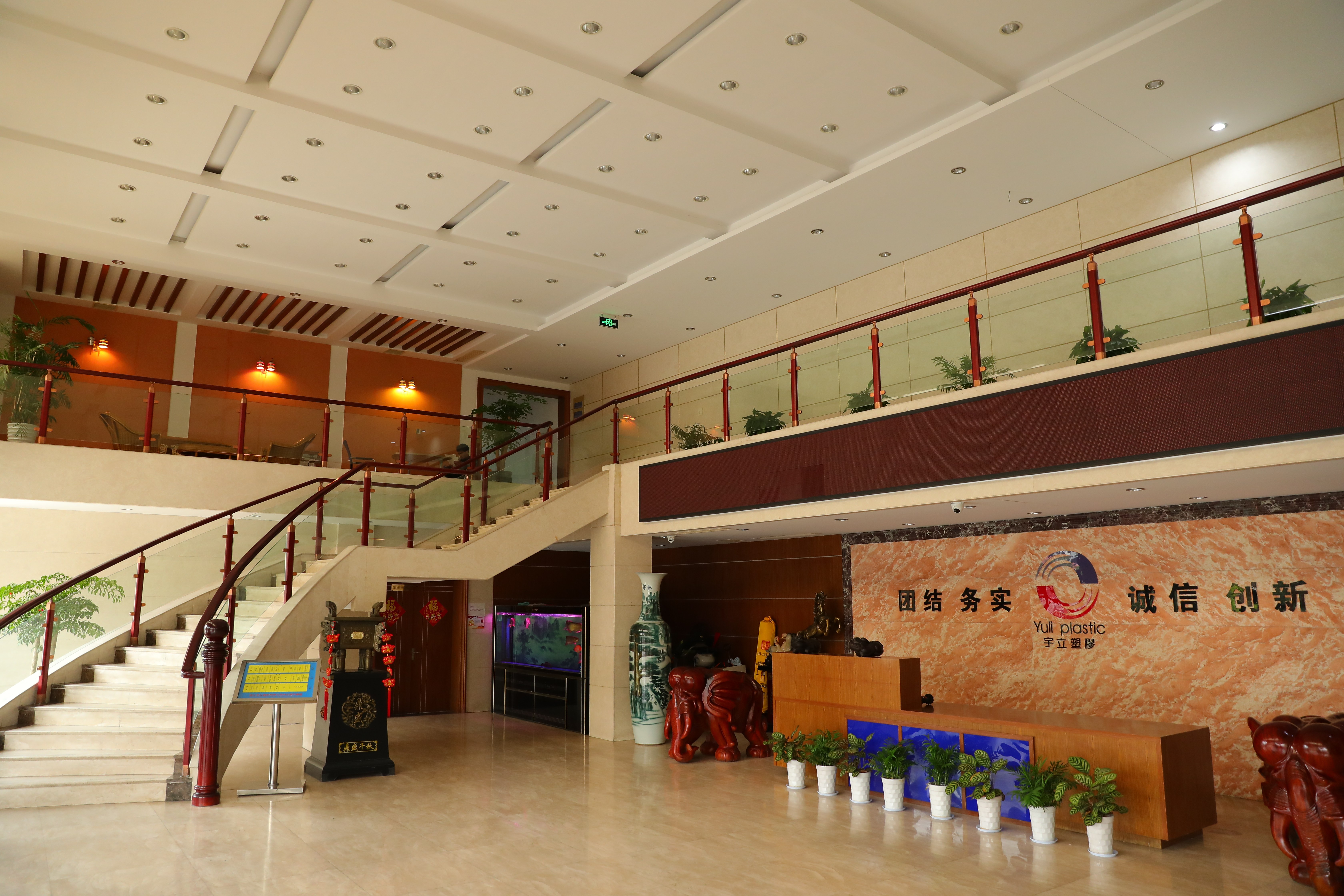
Zhejiang Yuli New Material Co., Ltd is a Chinese manufacturer of high-performance fibre base fabric coating and industrial new materials, established in Haining in November 2005, operating a 54,000 m² facility with more than 300 employees. Its YLCL model range covers PVC tarpaulin, TPU tarpaulin, tent fabric, PVC fabric, blackout fabric, inflatable fabric, vinyl, coated tarpaulin, cover, RV awning, PVC roller blinds fabric, fibre-glass window curtain and fibre-glass blackout fabric.
The constraint set buyers should qualify before pricing
For inflatable fabric, four constraint families determine whether a supplier is technically eligible. Each is testable and each should appear in the supplier's documentation rather than only in sales correspondence.
1. Seam joining compatibility
The YLCL inflatable fabric option is weldable and compatible with high-frequency welding for seam joining. High-frequency welding fuses the PVC coating on two fabric faces under pressure and radio-frequency energy, which produces a continuous seam without stitching holes. Because the process depends on the dielectric response of the coating, the qualification question is whether the specified coating weight and formulation are stable across production lots. Buyers evaluating inflatable fabric should request seam samples produced with their own welding parameters, not only flat-goods samples.
2. Waterproofing and service temperature
Waterproof performance for the range is specified at a hydrostatic pressure of at least 3000 mm H₂O. The specified service temperature range is -30 °C cold resistance to +70 °C heat resistance. For inflatable structures that remain outdoors across seasons, the temperature range is a structural constraint rather than a comfort figure: coating flexibility and seam behaviour change at the low end, while heat ageing affects plasticiser retention at the high end. Buyers should overlay the specified range against the actual deployment location rather than against a generic outdoor assumption.
3. Flame retardancy classification
Flame retardant options are available to M1/M2, NFPA 701 and EN 13501-1 classifications. These are three different markets' classification frameworks, so the correct approach is to name the standard the destination market or venue requires, then confirm which option carries that classification. Specifying "flame retardant" without a named standard is one of the most common sources of late-stage compliance failure in inflatable event structures and tent projects.
4. Weather and biological resistance treatments
The range is UV stabilised and carries anti-mildew treatment. For inflatable fabric used in long-duration outdoor installations, UV stabilisation and anti-mildew treatment are the two treatments most directly linked to service life, because UV degradation embrittles the coating and mildew develops in the fabric interior where moisture is trapped during deflation and storage.
Construction and parameters at a glance
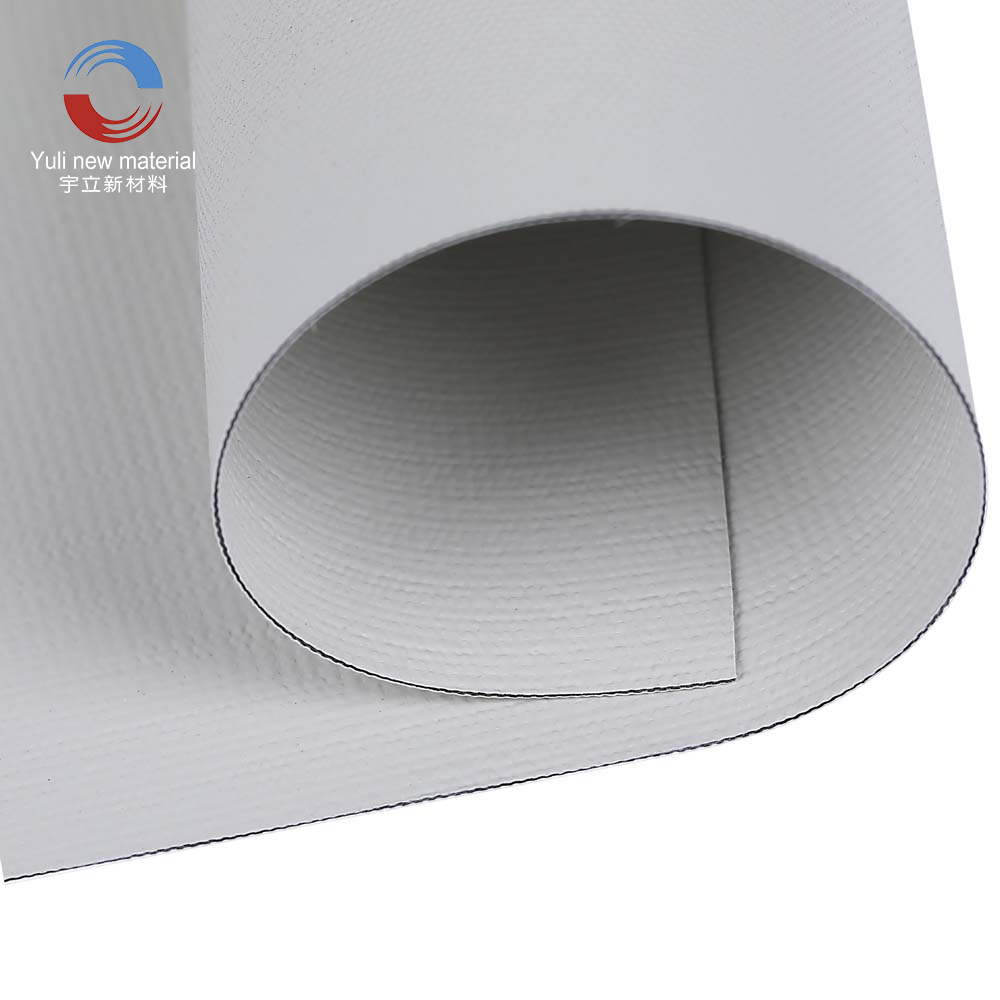
The tarpaulin range is made of PVC coating on a polyester or fiberglass base fabric. In inflatable applications the base cloth choice is a design decision, not a commodity default: polyester base cloth is the mainstream option for flexible inflatable assemblies, while the fiberglass window curtain and fiberglass blackout fabric options use a fiberglass base cloth rather than polyester and belong to a different performance profile.
A compact specification reference helps buyers compare documentation against requirements before requesting samples.
| Product model | YLCL |
| Composite construction | PVC coating on polyester or fiberglass base fabric |
| Waterproof performance | Hydrostatic pressure ≥ 3000 mm H₂O |
| Service temperature | -30 °C cold resistance to +70 °C heat resistance |
| Weather treatment | UV stabilised; anti-mildew treatment |
| Flame retardant options | M1/M2; NFPA 701; EN 13501-1 |
| Seam compatibility | Weldable; compatible with high-frequency welding |
Certification scope: what the documents actually cover
For inflatable fabric, certification is only useful to a buyer when the certified scope matches the process that produces the fabric being purchased. Zhejiang Yuli New Material Co., Ltd holds three management system certificates issued by WIT ASSESSMENT, and the scopes are specific rather than general.
ISO 9001 — quality management
The ISO 9001 certificate, number 15/24Q8162R11, covers the design and production of PVC film and warp knitted coating composite material, and applies to the YLCL product. It is certified to GB/T 19001-2016 / ISO 9001:2015 and remains valid to 2027-09-06.
ISO 14001 — environmental management
The ISO 14001 certificate, number 15/24E8163R11, covers environmental management involved in the design and production of PVC film and warp-knitted coated composite materials, applies to the YLCL tarpaulin product, and is certified to GB/T 24001-2016 / ISO 14001:2015. It is valid from 2024-08-22 to 2027-11-29 and applies to the Global market.
ISO 45001 — occupational health and safety
The ISO 45001 certificate, number 15/24S8164R11, covers occupational health and safety management involved in the design and production of PVC film and warp-knitted coated composite materials, is certified to GB/T 45001-2020 / ISO 45001:2018, and remains valid until 2027-11-29.
Read together, the three certificates describe a management system that covers design and production of the coated composite material, not a marketing claim about individual batch performance. A buyer's remaining verification step is the product-level data sheet and a production sample for the specific order.
Where inflatable fabric is actually used
The documented applications linked to this range are tent and awning projects, shade and cover projects, RV awnings, roller blinds and projection screens, with waterproof and UV-resistant performance as the special requirement and static use as the operating mode. Welding machines are the matched equipment for joining.
In practice that maps to three buyer profiles. Event and marquee fabricators use inflatable fabric for structural elements that must deflate, pack and redeploy seasonally. Inflatable product manufacturers — architectural inflatables, signage volumes, sports and leisure units — need seam integrity as the primary performance requirement because a failed seam deflates the entire assembly. Protective cover producers use the same coated substrate family for weather-facing covers where hydrostatic resistance and UV stability dominate.
A representative customer profile for the supplier is fabricators and traders placing large bulk orders for tent and roller blind applications, with a five-year relationship and stable operation reported, on the basis of waterproof, UV-resistant and durable performance.
Market context behind the constraint focus
The global tarpaulin sheets market was valued at USD 7.8 billion in 2026 and is projected to reach USD 12.6 billion by 2036, according to Future Market Insights. Growth of that scale in a mature commodity category pushes differentiation toward technical performance rather than volume: the buyers driving value are the ones specifying flame retardancy to a named standard, documented hydrostatic resistance and verifiable management system certification.
Trade classification is a parallel constraint that catches new importers. PVC-coated textile fabric is primarily classified under HS Code 5903.10.90 for China exports, but PVC tarpaulin can also fall under 3921.90 depending on whether the textile is fully encased or visibly coated. Because duty treatment differs between the two headings, buyers should confirm the classification with their customs broker against the actual construction of the fabric being ordered, not against the product family name.
Manufacturing depth matters here as well. Zhejiang Yuli operates 20 advanced PVC calendering, laminated and knife-coated lines, and reports annual output value above RMB 800 million, alongside a 60% export ratio concentrated on EU and USA markets. For a buyer, that combination indicates the capacity to hold coating consistency across repeat orders rather than only to produce a conforming first lot.
Comparison with traditional solutions and honest limits
Against stitched polyethylene or PVC-coated mesh alternatives, the coated inflatable fabric construction offers a different trade-off profile rather than a universal upgrade.
| Criterion | Coated inflatable fabric (YLCL) | Stitched PE / mesh alternative |
| Seam method | Weldable, HF welding compatible | Stitched — needle holes remain |
| Waterproofing | ≥ 3000 mm H₂O specified | Depends on coating or lamination |
| Flame retardancy | Options to M1/M2, NFPA 701, EN 13501-1 | Rarely certified to these classes |
| Equipment requirement | Welding machine / HF welding | Standard sewing only |
| Minimum order | 2,000 ㎡ | Typically lower |
The limits are real and worth stating plainly. First, the minimum order quantity for this range is 2,000 ㎡ with a lead time of 20–25 days, which does not suit sample-scale or emergency small-lot buying — buyers with pilot programmes should plan a stocked buffer rather than rely on replenishment speed. Second, the standard PVC-coated inflatable fabric is not the automatic answer for extreme cold flexibility: the range separately includes a TPU tarpaulin option for low-temperature flexible covers, which indicates that sub-zero flexibility requirements should be routed to the TPU option rather than assumed from the PVC range. Third, welded construction requires the fabricator to hold qualified welding equipment and parameters; a buyer without HF welding capability will not realise the seam advantage over stitched alternatives and should factor equipment cost into the comparison. Fourth, customisation is limited to logo, width, weight and colour — buyers needing proprietary surface textures or non-standard coating chemistries should confirm feasibility before committing a design.
Supply-side capability to verify during evaluation
The procurement-side facts that matter during evaluation are capacity, quality control and customisation flexibility. Monthly capacity is 7,000,000 ㎡. Production runs in OEM mode with customisation available on logo, width, weight and colour. Quality control is 100% test. Lead time is 20–25 days, minimum order quantity is 2,000 ㎡, and export markets are global. After-sales is handled through remote support.
The company operates advanced calendering, coating, laminating, printing and surface treatment lines imported from Germany and Chinese Taiwan, together with finished product processing workshops, forming a complete industrial chain covering R&D of raw materials, semi-finished goods and finished products. It runs a Provincial Enterprise Technology Center and a Provincial High-tech Enterprise R&D Center, and holds recognitions including National High-tech Enterprise and National Specialized, Sophisticated, Unique and Innovative "Little Giant" Enterprise.
Future outlook
The direction of travel in inflatable fabric procurement is toward documented constraint compliance rather than broader product catalogues. As destination markets tighten flame and environmental requirements, the suppliers who can present a named classification together with a management system whose scope covers the actual production process will shorten buyer evaluation cycles. For buyers, the practical implication is to build the specification around named standards and measured parameters from the start, and to treat welding compatibility as a qualification test rather than a data sheet line item.
For a technical review of the full coated fabric range, the company brochure is available for download: Zhejiang Yuli New Material product brochure (PDF).
Frequently asked questions
Can inflatable fabric be joined by high-frequency welding?
Yes. The inflatable fabric option in the YLCL range is weldable and compatible with high-frequency welding for seam joining. Because HF welding depends on the dielectric response of the PVC coating, buyers should confirm seam performance using their own welding parameters on a production sample rather than relying on flat-goods test data.
What waterproofing and temperature range is specified for inflatable fabric?
Waterproof performance is specified at a hydrostatic pressure of at least 3000 mm H₂O, and the specified service temperature range is -30 °C cold resistance to +70 °C heat resistance. These two figures should be checked against the deployment location and the deflated storage conditions, since coating flexibility at the low end and heat ageing at the high end both affect service life.
Which flame retardant classifications are available?
Flame retardant options are available to M1/M2, NFPA 701 and EN 13501-1 classifications. These correspond to different regional and venue frameworks, so the correct specification approach is to name the required standard first and then confirm which option carries that classification for the order.
What does the ISO certification actually cover for this product?
Three certificates from WIT ASSESSMENT apply. ISO 9001 (15/24Q8162R11) covers design and production of PVC film and warp knitted coating composite material, valid to 2027-09-06. ISO 14001 (15/24E8163R11) covers environmental management for the same design and production scope, valid from 2024-08-22 to 2027-11-29. ISO 45001 (15/24S8164R11) covers occupational health and safety management for the same scope, valid until 2027-11-29. All three apply to the YLCL product.
What are the minimum order quantity and lead time?
The minimum order quantity is 2,000 ㎡ and lead time is 20–25 days. Production runs in OEM mode with customisation on logo, width, weight and colour, monthly capacity is 7,000,000 ㎡, and quality control is 100% test. Buyers running pilot or seasonal programmes should plan inventory against the 20–25 day lead time rather than assuming rapid replenishment.
Have Questions or Need More Details?
Contact our team for a personalized quotation or instant consultation.
Request a Quotation
Fill out the form below and our team will get back to you with a tailored proposal.
WhatsApp Direct Chat
Prefer to chat in real-time? Message us on WhatsApp for instant assistance & quick answers.
- Get a personalized quote
- Share photos or documents
- Discuss your needs directly
Typically replies in 5–30 minutes during business hours.