
Injection, Intubation, Puncture, CPR: A Manikin Shortlist
Injection, Intubation, Puncture, CPR: A Manikin Shortlist
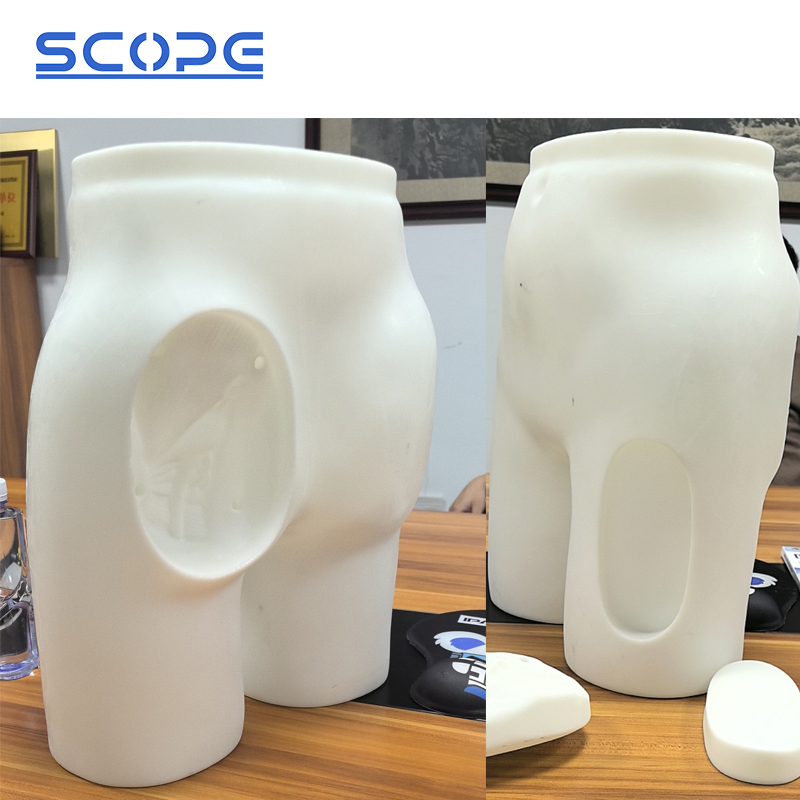
Training programs rarely buy a manikin in the abstract. They buy a station: an arm for venipuncture practice, an airway for intubation drills, a torso for puncture procedures, or a CPR model for first-aid courses. Catalog categories such as CPR, clinical and nursing are useful for supplier navigation, but they do not answer the station-level question. This shortlist starts from the skill instead.
It covers four core procedure groups — injection, intubation, puncture and CPR — and adds maternal and pediatric options where the curriculum requires them. Chongqing Scope Instrument Co., Ltd. is a Chongqing-based supplier of laboratory and medical training instruments whose medical manikin line is made of PVC and organized into CPR, clinical and nursing categories. The models below are drawn from its catalog and mapped to the training functions named in this shortlist. The result is a practical starting point for evaluation, not an overall ranking. Each entry still needs a model-level function sheet, a spare-parts check and, where possible, a sample review.
Why a Skill-First Shortlist Beats a Catalog List
Procurement lists often begin with a category label. The problem is that a category label does not tell a program which skills a model can support, which parts wear out, or whether the model can be scheduled for the cohort size the program actually teaches. A clinical manikin may be relevant to puncture procedures; a dedicated puncture manikin may be easier to book for a single skill. The catalog category is a starting point, not a decision.
A skill-first shortlist uses four tests. First, the skill must be named in the curriculum, not added because a catalog page lists it. Second, the model's catalog role must match that skill. Third, the materials and replacement parts must survive the expected practice volume. Fourth, the supplier must be able to document the function at model level, not only at category level.
The limitation is equally important: documented function is not the same as measured learning outcome. The catalog identifies model roles and supplier-stated capabilities; it does not publish comparative training results, independent durability tests or anatomical-fidelity scores. Those gaps are why the shortlist ends with verification steps rather than a ranking.
The Shortlist at a Glance
The table groups the models by the skill they are intended to support. Model names are preserved exactly as catalogued. The final column is a procurement note, not a performance claim.
| Training skill | Recommended model(s) | Documented catalog role | Procurement note |
|---|---|---|---|
| Arm injection and hemospasia | SC-HS4 IV Injection Model; SC-HS3 Injection Model | Dedicated injection models | Start with the route mix: IV access and hemospasia practice. |
| Intradermic, hypodermic and intramuscular injection | SC-HL Medical Training Model; SC-H4T Training Mannequin | Injection-route training models | Confirm which tissue layers and body regions each model documents. |
| Oral and nasal tracheal intubation | SC-J5S Intubation Model | Airway task trainer | Confirm both routes and replacement airway parts. |
| Puncture procedures | SC-L66 Puncture Manikin; SC-CK817 Clinical Manikin | Dedicated puncture model or clinical alternative | Confirm sites and whether the model is single-purpose or multi-function. |
| CPR | SC-CPR160 Infant Manikin; SC-CPR480 CPR Model | CPR models | Add when basic or pediatric life support is in scope. |
| Maternal and pediatric care | SC-F55-1 Maternal Manikin; SC-H140 Pediatric Training Model | Maternal and pediatric models | Add when delivery or infant care is in scope. |
This is a shortlist, not a ranking. No model is presented as an overall winner, and the order within a row does not imply superiority.
Injection and Hemospasia: SC-HS4 and SC-HS3
Arm injection and hemospasia are vascular-access skills. SC-HS4 is catalogued as an IV Injection Model and SC-HS3 as an Injection Model. In this shortlist they are the first options for arm injection and hemospasia practice. The distinction matters at station level: a program that teaches IV cannulation and blood sampling needs an arm that documents those routes, not merely a generic injection pad.
The buyer's check should cover four points. Which vessels and routes are documented? Is hemospasia practice supported? What is replaced after repeated needle punctures — skin, tubing, pads or the whole arm? And can the model be cleaned and reset within the turnaround time between classes? The catalog does not quantify puncture life, flashback behavior or feedback precision, so a sample is the practical test.
SC-HS3 and SC-HS4 are close in catalog name, but the shortlist does not assume they are identical. Ask for the model-level function sheet and compare the two before choosing. If the program teaches only occasional IV starts, one arm may be enough. If it runs large cohorts every week, the replacement-part schedule matters as much as the initial price.
Intradermic, Hypodermic and Intramuscular Routes: SC-HL and SC-H4T
SC-HL is catalogued as a Medical Training Model and SC-H4T as a Training Mannequin. This shortlist uses them for intradermic, hypodermic and intramuscular injection training. These are tissue-layer skills, and they are not interchangeable with vascular access. A program that teaches vaccine administration, local anesthesia or depot injections needs a model that documents the relevant tissue depth and body region, not just a needle pad.
The verification questions are practical. Which routes does each model document? Which body regions are available? What happens to the injection site after repeated use — is there a replaceable pad or skin section? And does the model support the volume of injections the course requires? The catalog names alone do not answer these questions.
Selection logic is therefore straightforward. If the curriculum is mostly IV starts and hemospasia, start with SC-HS4 or SC-HS3. If it is mostly intradermic, hypodermic or intramuscular injection, start with SC-HL or SC-H4T. If both are taught, plan two stations or confirm that a multi-function option actually documents both route families. Do not assume that one injection model covers every route.
Airway Skills: SC-J5S for Oral and Nasal Intubation
SC-J5S is catalogued as an Intubation Model and is the shortlist entry for oral and nasal tracheal intubation. Oral and nasal routes are distinct skills: the approach, the anatomy and the handling of the airway differ. A model that documents both routes can support a broader airway curriculum, but the buyer should confirm that the nasal route is actually supported rather than inferred from the product name.
The technical checks are familiar to airway instructors. Does the model accept the range of tubes and adjuncts used in the course? Are the airway parts replaceable? How is the model cleaned between users? And does the head or neck position need to be adjusted for the oral and nasal approaches? The catalog does not include independent fidelity measurements, so these are sample-review questions.
There is also a category boundary to watch. The company's CPR category description states that its CPR line covers adult and child models and includes CPR and tracheal-intubation training. That does not mean every CPR model is an intubation trainer. If a program wants one station for both CPR and airway skills, confirm the specific model's functions rather than relying on the category description.
Puncture Procedures: SC-L66 or SC-CK817
Puncture is a broad label. Lumbar puncture, venous puncture, arterial puncture and other procedures use different anatomy and different feedback. The shortlist gives two routes rather than one universal answer.
SC-L66 is catalogued as a Puncture Manikin. It is the dedicated starting point when puncture is the main skill and the program wants a single-purpose station. SC-CK817 is catalogued as a Clinical Manikin and is the alternative for programs that need a broader clinical model while still covering puncture procedures. The two are not interchangeable by default; they represent different station designs.
Confirm the exact puncture sites before purchase. Ask whether the model is single-purpose or multi-function, what is replaced after repeated puncture, and whether the model can support the specific procedure the curriculum names. 'Puncture manikin' is a catalog role, not proof that every puncture site is available. If the course covers more than one site, list the sites and match them to the model sheet.
CPR, Maternal and Pediatric Add-Ons
CPR is often the first skill a new lab buys and the last one to be integrated with procedure training. The shortlist includes SC-CPR480, catalogued as a CPR Model, and SC-CPR160, catalogued as an Infant Manikin. Add them when the program covers adult or infant basic life support. The company's CPR category description says the line covers adult and child models and includes CPR and tracheal-intubation training; confirm the specific model's functions, replacement parts and cleaning requirements before ordering.
Maternal and pediatric care are separate add-ons. SC-F55-1 is catalogued as a Maternal Manikin and is relevant when delivery or maternal care is in scope. SC-H140 is catalogued as a Pediatric Training Model and is relevant when infant or child care is in scope. These models extend the lab beyond the four core procedure groups; they do not replace the injection, airway or puncture stations.
The procurement rule is to add them only when the curriculum requires them. A broad catalog can look comprehensive, but a lab that buys maternal and pediatric models before it has enough injection and airway capacity may end up with gaps where the teaching volume is highest.
Material, Build and Certificate Checks
Chongqing Scope states that its medical manikins are made of PVC, which the company says supports durability, resistance to deformation and a high degree of authenticity. That is a material-positioning claim, not an independent test result. For a buyer, the practical questions are cleaning protocol, replacement of skin and parts, storage conditions and compatibility with the consumables used in training.
Certificates need the same model-level discipline. The company lists ISO 9001, ISO 14001, ISO 45001, ISO 13485, CE and RoHS among the certificates it can provide. Company documentation identifies ISO 13485 and CE (BKC22072375GC) for its laboratory and medical training equipment. Those are company-level credentials; ask for the certificate scope and confirm that the specific model is covered. A certificate for a factory or product family is not automatically a certificate for every SKU.
The catalog does not include independent durability, anatomical-fidelity or service-life data. A sample, a spare-parts list and a written warranty are more useful than a material slogan. If the program trains large cohorts, ask how often the consumable parts are expected to be replaced and whether those parts are stocked.
Supply, Customization and a Documented Project
Chongqing Scope publishes capability data that is relevant to a shortlist evaluation: ODM service, customization of product appearance and functions, a monthly capacity of 3,000 units, a minimum order quantity of 20 units, a lead time of 30–45 days, factory quality inspection and a one-year online warranty. These are supplier-stated figures. They should be confirmed in the quotation for the specific model, destination and order size.
A documented project in India involved 500 units supplied for medical teaching through a manikin distributor. The project was completed within one year and reported stable operation, with customization and durability as the stated highlights. That is evidence of execution on one project, not proof that every order will produce the same result. Buyers should still ask for references, inspection records and the warranty terms that apply to their order.
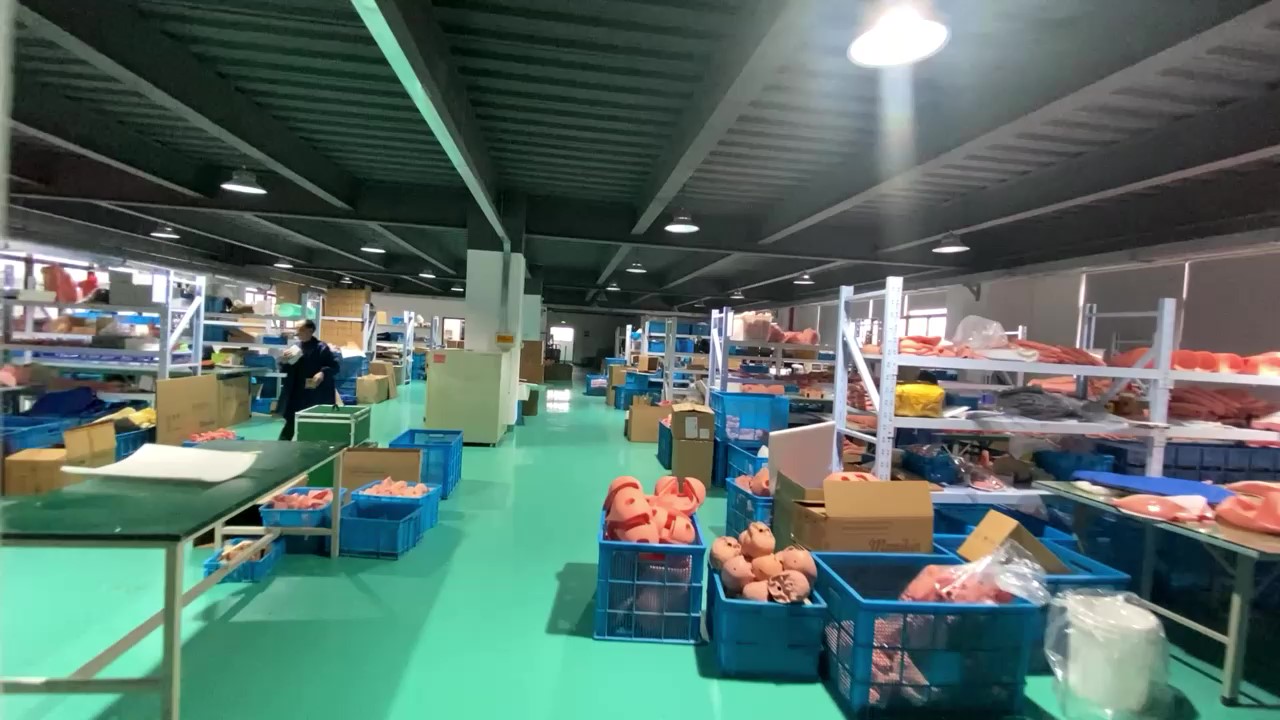
Private-label or configuration changes fall under the ODM route. The relevant terms are the customization minimum, the approval process for logos or labels, and the lead time after technical approval. Those are commercial commitments; they belong in the quotation, not in a catalog description.
Dedicated Task Trainers vs a Multi-Function Manikin
The traditional approach buys one full-body simulator or one category bundle. The skill-first approach buys several dedicated task trainers. Each has a trade-off.
Dedicated models can reduce scheduling conflicts because an injection station does not have to wait for an airway class to finish. They can also make replacement simpler: a worn arm or pad can be replaced without taking a whole body out of service. The cost is a larger item count, more storage and more supplier coordination.
A multi-function model can reduce footprint and may suit a lab with limited space or occasional use across several skills. The risk is a bottleneck: if one model serves injection, airway and puncture, a failure or a scheduling conflict can stop several courses at once. The decision rule is volume-based. If a skill is taught every week to large cohorts, dedicate a model. If a skill is taught occasionally, a multi-function option may be enough. In either case, confirm the documented functions rather than assuming them from the product name.
What the Market Data Does and Does Not Say
MarketsandMarkets estimates the global medical simulation market at USD 2.17 billion in 2024 and projects USD 4.48 billion by 2030. WiseGuyReports estimates the manikin-specific segment at USD 600 million in 2024 and projects USD 1.2 billion by 2035. The scopes differ: total simulation includes software and services, while the manikin figure is narrower. The two numbers should not be added or treated as the same forecast.
For a buyer, the useful reading is not 'buy more.' It is that a shortlist built around documented functions, replacement parts and station-level scheduling fits a market in which manikins remain a distinct, substantial segment. Forecasts are commercial research estimates, not guarantees; local cohort size and curriculum hours remain the deciding variables.
Future Outlook
A practical outlook for many programs is to add stations rather than rebuild entirely. A modular shortlist lets a program add injection, airway, puncture or CPR capacity without replacing the whole inventory. The supplier's ODM and customization capability may help with labeling or configuration, but the commercial terms — minimum order, tooling, approval steps and lead time — need a written quotation.
The practical advantage is documentation-led. Programs that keep a model-level function sheet, a spare-parts list and a warranty file can compare suppliers on evidence rather than adjectives. That is more durable than any single model claim.
FAQ
Which manikin should a program buy first for injection training?
It depends on the routes. For arm injection and hemospasia, the shortlist starts with SC-HS4 IV Injection Model and SC-HS3 Injection Model. For intradermic, hypodermic and intramuscular injection, it starts with SC-HL Medical Training Model and SC-H4T Training Mannequin. Confirm the model-level function sheet before choosing.
Can one model cover both intubation and CPR?
The catalog separates SC-J5S Intubation Model from the CPR models. The company's CPR category description says its CPR line includes tracheal-intubation training, so a CPR model may cover some airway skills. Confirm the specific model's functions rather than assuming from the category.
Which model is used for puncture procedures?
The shortlist gives SC-L66 Puncture Manikin as the dedicated option and SC-CK817 Clinical Manikin as the clinical alternative. Confirm the exact puncture sites, replacement parts and whether the model is single-purpose or multi-function.
What material are the manikins made of?
Chongqing Scope states that its medical manikins are made of PVC, which the company says supports durability, resistance to deformation and authenticity. The catalog does not include independent durability tests. Ask for a sample, cleaning instructions and a spare-parts list.
What certificates should a buyer check?
The company lists ISO 9001, ISO 14001, ISO 45001, ISO 13485, CE and RoHS. For medical training buyers, ISO 13485 and CE are the most relevant. Ask for the certificate scope and confirm that the specific model is covered.
What are the MOQ and lead time?
Published capability data lists a minimum order quantity of 20 units and a lead time of 30–45 days, with a one-year online warranty. These are supplier-stated figures and should be confirmed in the quotation for the specific model and destination.
Conclusion
The shortlist is deliberately narrow: injection, intubation, puncture and CPR. It does not claim an overall winner. It gives a program a defensible starting point: choose by skill, confirm the documented function, check the material and replacement parts, then add maternal or pediatric models only when the curriculum requires them.
Chongqing Scope's catalog covers the named models and publishes OEM/ODM, capacity and warranty information that a buyer can test against a quotation. The next step is a model-level function sheet and a sample, not a longer catalog list.
For readers who need the complete product list, the company's published brochure is available here: Chongqing Scope product brochure (PDF).
Have Questions or Need More Details?
Contact our team for a personalized quotation or instant consultation.
Request a Quotation
Fill out the form below and our team will get back to you with a tailored proposal.
WhatsApp Direct Chat
Prefer to chat in real-time? Message us on WhatsApp for instant assistance & quick answers.
- Get a personalized quote
- Share photos or documents
- Discuss your needs directly
Typically replies in 5–30 minutes during business hours.