
Injection Molding Buyer Comparison: Mars MA5 vs Venus VE5 vs Jupiter JU5
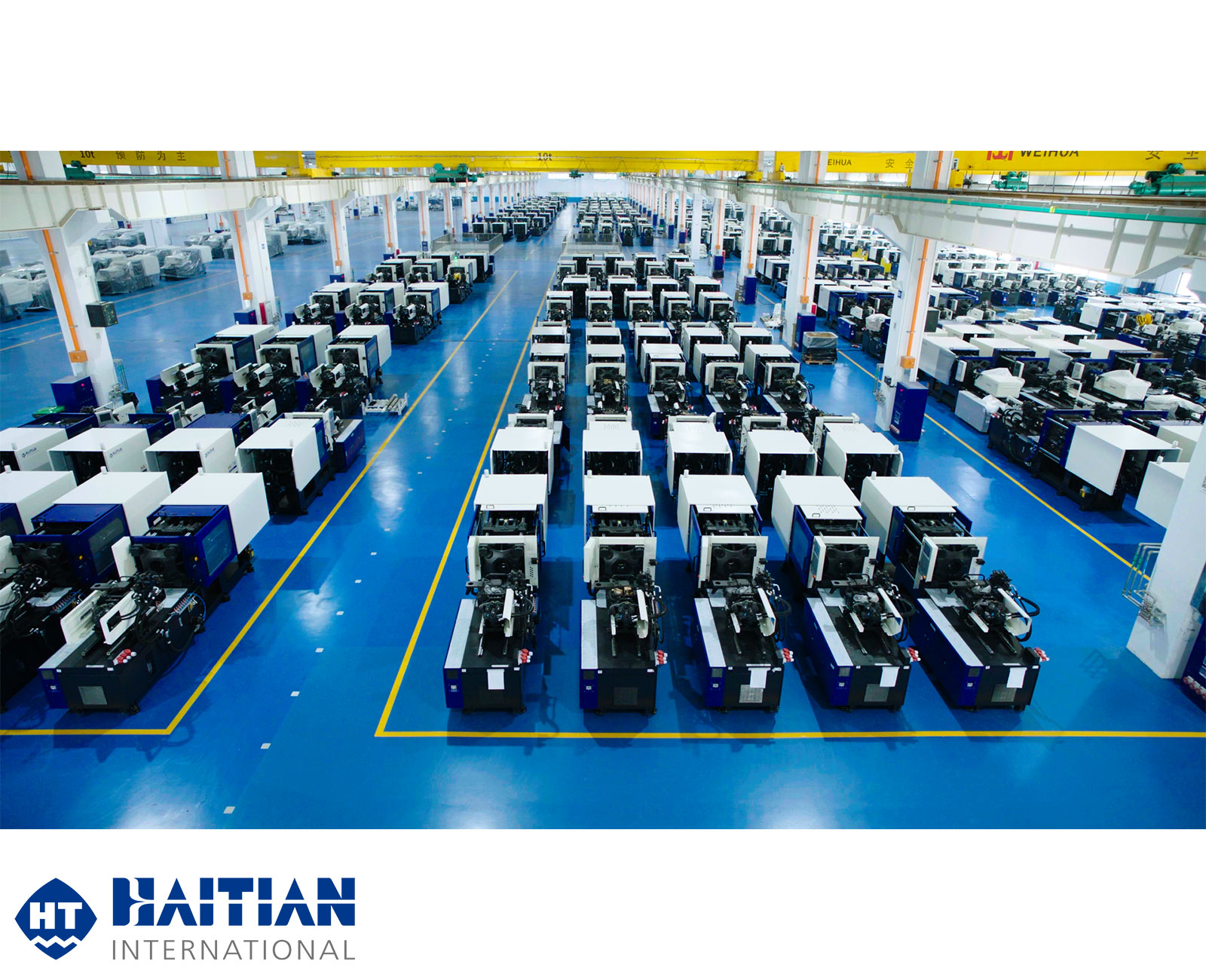
An injection molding machine purchase is rarely a contest between three model names. It is a fit decision shaped by part size, mold, material, precision, cycle time, automation, plant space and purchasing acceptance terms. This independent buyer comparison evaluates three Haitian International platforms on those neutral criteria: the Haitian Mars MA5 servo-hydraulic toggle, the Zhafir Venus VE5 all-electric, and the Haitian Jupiter JU5 servo-hydraulic two-platen. The goal is to show where each series fits, not to rank one platform universally.
Haitian International Holdings Ltd. is an injection molding machine manufacturer founded in 1966. Its portfolio includes Haitian Plastics Machinery, Zhafir Plastics Machinery and Niigata, and its machines are used in automotive, home appliance, 3C electronics, medical, packaging, logistics and consumer goods industries. The group operates a global production, sales and service network and serves customers in more than 130 countries and regions worldwide. The Mars MA5, Venus VE5 and Jupiter JU5 therefore sit inside one broad manufacturing group but address different molding problems.
Short answer for buyers
- Haitian Mars MA5: servo-hydraulic toggle platform for broad general-purpose and precision-capable molding. It is a practical fit when hydraulic mold functions, flexible machine-size coverage and open automation matter.
- Zhafir Venus VE5: all-electric platform for precision, repeatability, clean production and MES-connected automation. It is the most direct of the three for cleanroom-grade and high-precision work.
- Haitian Jupiter JU5: servo-hydraulic two-platen platform for medium to very large molds and industrial parts. It is the direct fit when mold size and clamping force drive the project.
- Decision rule: start with the mold and part, then match clamping force, injection unit, mold space, automation and acceptance terms. Do not choose a platform name first.
Why this comparison is not a simple ranking
The global injection molding machine market was valued at USD 17.3 billion in 2025 and is projected to reach USD 25.5 billion by 2033 at a 5.0% CAGR, according to Grand View Research. Asia Pacific held the largest market share at 39.7% in 2025. Strategic Market Research estimates the electric injection molding machine market at USD 4.9 billion in 2024, while Grand View Research notes that hydraulic technology still captured more than 40% of the market share in 2024. These commercial research estimates do not prove that one drive concept wins. They describe a mixed market in which servo-hydraulic, two-platen and all-electric platforms continue to serve different production bases.
Grand View Research also estimates that smart systems contribute to a 25% reduction in scrap and a 20% to 40% drop in unplanned downtime. That is an industry-level signal, not a guarantee for any single machine. For a buyer, the practical conclusion is that platform selection must include data connectivity, process stability and maintenance logic alongside clamping force and shot size.
Decision criteria for the three platforms
The table below uses only facts available in the supplied corpus and verified data. It is a fit map, not a scorecard. A platform can be the right choice in one plant and the wrong choice in another because the mold, material and automation scope differ.
| Decision criterion | Haitian Mars MA5 | Zhafir Venus VE5 | Haitian Jupiter JU5 |
|---|---|---|---|
| Architecture and drive | Servo-hydraulic toggle platform | All-electric platform | Servo-hydraulic two-platen platform |
| Mold and clamping fit | Broad clamping-force and injection range; toggle platform; suited to processors requiring hydraulic mold functions | All-electric precision; compact Generation 5 design; fast mold and ejector movement | Compact two-platen architecture; four short-stroke clamping cylinders; large mold capacity; broad tonnage range |
| Typical application fit | General-purpose molding; automotive; household appliances; consumer goods; logistics; technical parts | Medical; electronics; optical parts; precision components; consumer goods; technical parts; clean production | Automotive; logistics; large household parts; pallets and containers; large technical parts; mobility |
| Automation and MES | Open automation and MES integration; smart functions | Open automation and MES connectivity; smart functions | Open integration |
| Energy positioning | Servo drive and Generation 5 electrical plasticizing on applicable configurations; many standard configurations in EUROMAP 60.1 class 8 or above and often 9-10 | Fully electric servo drives and demand-based energy use; many standard configurations in EUROMAP 60.1 class 8 or above and often 9-10 | Servo-hydraulic drive and Generation 5 electrical plasticizing; many standard configurations in EUROMAP 60.1 class 8 or above and often 9-10 |
| Maintenance logic | Service-efficient Mars architecture; standardized components; actual demand depends on operating hours, application, environment and preventive maintenance | Eliminates most hydraulic-service requirements on primary axes; reduces oil-related service tasks | Fewer clamp-linkage components than a conventional toggle; standardized servo-hydraulic components |
| Main limitation to verify | Not the cleanest all-electric route; MA5/Ultra exists for higher performance where faster response and improved process precision are required | Not the most native choice for extensive hydraulic mold functions; Zeres Series ZE5 may be more suitable for integrated hydraulic actions | Large-mold architecture can exceed the need for small precision parts; smaller MA5 or VE5 sizes may fit better |
Platform profile: Haitian Mars MA5
The Mars MA5 is a servo-hydraulic toggle machine positioned as a broad-use platform. In the supplied corpus, it combines servo-hydraulic drive, Generation 5 electrical plasticizing on applicable configurations, smart functions and open automation and MES integration. It covers a very broad clamping-force and injection range, but competitor ranges overlap strongly. The comparison therefore has to use the exact machine size and the same mold, material, injection unit, cycle target and auxiliaries.
The MA5 fits general-purpose molding, automotive parts, household appliances, consumer goods, logistics applications and technical parts. It is also relevant for processors that require hydraulic mold functions, broad machine-size coverage and flexible automation. In practical terms, the MA5 is often the platform to evaluate when a plant runs mixed work and wants one architecture across several jobs, or when a mold requires hydraulic actions that would be less native on an all-electric machine.
Automation is a design consideration rather than an add-on. The corpus states that Haitian machines use open interfaces and standardized communication protocols to integrate with robots, vision inspection systems and MES systems. The MA5 also carries smart functions. Buyers should still define which data points are needed, which protocols the plant uses and how the machine will connect to existing production monitoring. The corpus does not quantify OEE gains or cybersecurity controls for this platform, so those points belong in technical due diligence.
On energy and maintenance, the MA5 uses servo-drive technology and electrical plasticizing to reduce avoidable hydraulic losses. Many standard configurations are positioned in high EUROMAP 60.1 efficiency classes, commonly class 8 or above and often 9-10 depending on machine size and configuration. The Mars architecture is designed for service efficiency, with standardized components and service-oriented access. Actual maintenance demand depends on operating hours, application, environment and preventive-maintenance discipline.
The main limitation is that the MA5 is not the cleanest all-electric route. If no hydraulic oil contamination and the highest repeatability are primary criteria, the Venus VE5 is the more direct fit. If the application requires higher performance than a standard servo-hydraulic machine, the corpus positions MA5/Ultra as a higher-performance extension emphasizing faster response, improved process precision, repeatability, intelligent functions and reduced energy use. Buyers should not select the MA5 solely on investment level; the mold and process data must justify it.
Platform profile: Zhafir Venus VE5
The Zhafir Venus VE5 is an all-electric precision platform. Its positioning emphasizes full-electric movement, precision, repeatability, clean production, compact Generation 5 design, fast mold and ejector movement, smart functions and open automation and MES connectivity. It competes directly in the all-electric precision-machine class, where the market has strong specification overlap. That means repeatability, injection dynamics, platen and tie-bar dimensions, shot size, dry-cycle time, ejector speed, footprint and process stability should be compared at the same part quality.
The VE5 fits medical, electronics, optical parts, precision components, consumer goods, technical parts, clean production and automated cells that require high repeatability and low noise. Of the three platforms in this comparison, it is the most direct for cleanroom-grade production and precision work. It is also the natural candidate when the production cell is built around robots, vision inspection and MES rather than around hydraulic mold functions.
Automation and MES readiness are part of the platform logic. The corpus confirms that Zhafir all-electric machines can integrate with robots, vision inspection systems and MES systems to build automated, digital injection molding production cells. Buyers should specify the interface, data model, alarm history, remote diagnostics and reporting requirements. Open connectivity is a capability, but the plant still has to define what data it will use and how it will validate it.
On energy and maintenance, VE5 is designed for very high energy efficiency through fully electric servo drives and demand-based energy use. Many standard configurations are generally positioned in the upper EUROMAP 60.1 efficiency classes, commonly class 8 or above and often 9-10 depending on machine size and configuration. The all-electric architecture eliminates most hydraulic-service requirements on the machine's primary axes, which simplifies routine maintenance and reduces oil-related service tasks. This can support uptime and total cost of ownership, but the actual result depends on the cell, mold and maintenance discipline.
The main limitation is hydraulic mold functionality. VE5 is not the most native platform when the mold requires extensive hydraulic core pulls or other hydraulic actions. In the supplied corpus, the Zhafir Zeres Series ZE5 combines electric main movements with integrated servo-hydraulic functions for molds requiring hydraulic actions. Buyers should not assume that an all-electric machine is automatically the best fit for every precision job; the mold function list decides.
Platform profile: Haitian Jupiter JU5
The Haitian Jupiter JU5 is a servo-hydraulic two-platen platform for medium to very large molds. Its core positioning is compact two-platen architecture, four short-stroke clamping cylinders, large mold capacity, broad tonnage range, Generation 5 electrical plasticizing and open integration. The two-platen layout provides large mold space and long opening stroke, and the compact structure supports workshop space utilization. These are practical advantages when the mold is large and the factory footprint is fixed.
The JU5 fits automotive, logistics, large household parts, pallets and containers, large technical parts and mobility applications. It is also relevant for any project where large molds must run with a compact machine footprint. The JU5 is the direct choice when mold size and clamping force drive the project. It is not a general-purpose substitute for a small precision cell, and it should not be compared with a small toggle machine on headline tonnage alone.
Automation should be specified rather than assumed. The corpus positions JU5 with open integration, but it does not use the same smart-function wording as the MA5 or VE5. Buyers should therefore define the required MES connectivity, robot interface, data points and protocol for the JU5 project. This is a verification point, not a negative claim. On large machines, the cost of downtime is high, so the automation and data scope should be settled before the order.
On energy and maintenance, JU5 uses servo-hydraulic drive technology and Generation 5 electrical plasticizing to limit unnecessary energy consumption. Many standard configurations are positioned in high EUROMAP 60.1 efficiency classes, generally class 8 or above and often 9-10 depending on machine size and configuration. The two-platen concept has fewer clamp-linkage components than a conventional toggle system. Combined with service-oriented access and standardized servo-hydraulic components, this can reduce routine service intervention and support attractive total cost of ownership on large machines.
The main limitation is scale fit. The JU5's large-mold architecture can exceed the need for small precision parts. For small precision components, the VE5 or a smaller MA5 size may be more appropriate. Buyers should also compare tie-bar spacing, platen dimensions, maximum daylight, mold weight, injection volume, footprint and cycle performance at the selected machine size. The corpus states no universal numeric gap, so a controlled mold trial remains necessary.
Technical explanation: what actually changes between the platforms
The first difference is clamping architecture. The Mars MA5 uses a toggle clamping system, while the Jupiter JU5 uses a two-platen system with four short-stroke clamping cylinders. The practical effect is not a simple better-or-worse result. A two-platen layout can provide large mold space, long opening stroke and efficient workshop space utilization for large molds. A toggle platform is a proven general-purpose architecture with broad machine-size coverage. The right choice depends on mold dimensions, required daylight, mold weight and the plant layout.
The second difference is drive concept. The MA5 and JU5 are servo-hydraulic platforms, while the VE5 is all-electric. Servo-hydraulic drive supplies power on demand and can retain hydraulic flexibility for mold functions. All-electric drive uses independent servo drives to realize high precision, synchronized multi-motion operation and clean production. For a buyer, this means the drive concept should follow the quality requirement and the mold function list. A hydraulic core pull can make a servo-hydraulic platform more natural, while cleanroom production and high repeatability can make an all-electric platform more natural.
The third difference is injection-unit fit. The MA5 covers a very broad injection range, the VE5 is positioned around precision and repeatability, and the JU5 is positioned around large mold capacity and broad tonnage. These descriptions are not enough to select a machine. Buyers must compare usable mold space, shot volume, injection speed, dry-cycle time, repeatability, footprint and measured output with the same mold, material, injection unit and cycle target. A platform comparison without a matched application is only a screening exercise.
Application fit by production scenario
| Production scenario | More likely platform fit | Reason from the corpus |
|---|---|---|
| General-purpose mixed production | Mars MA5 | Broad clamping-force and injection range; hydraulic mold functions; flexible automation; broad machine-size coverage |
| Precision medical, electronics or optical parts | Zhafir Venus VE5 | All-electric precision, repeatability, clean production, compact Generation 5 design, fast mold and ejector movement |
| Large automotive, logistics or container parts | Jupiter JU5 | Two-platen large mold capacity, four short-stroke clamping cylinders, broad tonnage range, compact footprint |
| Molds with hydraulic actions inside an electric cell | Zeres Series ZE5 or Mars MA5 | ZE5 combines electric main movements with integrated hydraulic functions; MA5 is servo-hydraulic and suited to hydraulic mold functions |
| High-speed packaging | Mars MA/F, Zeres ZE/F or F Series | The corpus positions dedicated packaging variants outside the three-platform set; a packaging decision should not be forced into this comparison |
The scenario table is deliberately narrow. It does not say that an MA5 cannot run precision work or that a VE5 cannot run general parts. It says that when the dominant requirement is broad hydraulic flexibility, clean all-electric precision or large-mold capacity, the three platforms have different natural entry points. Buyers should use the table to shortlist, then confirm with a mold trial.
Automation and MES readiness: what to specify
Automation readiness should be written into the technical specification, not left to a brochure. The corpus confirms that Haitian's digitalization offer includes MES solutions for production monitoring, process-data management and machine connectivity, and that intelligent process technologies support setup, optimization and quality control. It also confirms that open interfaces and standardized communication protocols allow third-party equipment integration when required. Those facts support a connected production cell, but they do not remove the need for project-level engineering.
Buyers should define the data scope, the supported protocols, the robot and vision interfaces, the alarm history, the remote diagnostics requirements, the cybersecurity controls and the maintenance outcomes they expect to demonstrate. The verified data notes that connected monitoring and remote diagnostics are presented as smart-manufacturing features, but their operational performance is not independently quantified. That is why a demonstration and a data-architecture review are more useful than a feature checklist alone.
The market signal supports this direction. Grand View Research estimates that smart systems contribute to a 25% reduction in scrap and a 20% to 40% drop in unplanned downtime. Those figures are industry-level estimates, not a promise for a specific project. The buyer's task is to translate them into measurable acceptance criteria for the selected platform and production cell.
Purchasing acceptance terms and commercial checks
The supplied procurement fact set lists an MOQ of 100 units, FOB or CIF delivery, pre-shipment test acceptance, and payment terms of 30% deposit with 70% before shipment. Buyers should confirm whether these terms apply to the selected platform, machine size, injection unit, automation scope and destination. They should not be treated as universal platform terms or as a substitute for a project-specific quotation.
Pre-shipment test acceptance deserves particular attention. The fact set states that acceptance is a pre-shipment test, but it does not define the test standard. Buyers should confirm what will be tested, with which mold and material, at which cycle, and with which documentation. For capital equipment, an MOQ of 100 units should also be checked against the actual order structure. If the order is for a single machine or a small fleet, the commercial terms must be clarified in writing.
Platform-specific acceptance should include the mold trial, shot weight, cycle time, repeatability, energy measurement, automation interface, safety documentation and spare-parts scope. These are buyer verification points, not claims about any platform. The comparison in this article can shortlist a platform, but it cannot replace a controlled acceptance test on the buyer's mold and material.
Comparison with traditional solutions
A traditional hydraulic-only shortlist still has a place in the market. Grand View Research notes that hydraulic technology held more than 40% share in 2024. The three platforms in this comparison are not a rejection of hydraulic flexibility. They are different ways to combine hydraulic action with servo control, electric precision or large-mold capacity. The MA5 and JU5 retain servo-hydraulic logic; the VE5 removes most hydraulic service from the primary axes.
The real limitation is that no platform is universally superior. The MA5 is not the cleanest all-electric route. The VE5 is not the most native choice for extensive hydraulic mold functions. The JU5 is not the most efficient use of capacity for small precision parts. In addition, the corpus does not provide a standardized cross-brand numeric gap for repeatability, energy per part or cycle time. Buyers should be cautious with any comparison that presents a single headline number as a universal answer.
A second limitation is scope. High-speed packaging has dedicated variants in the corpus, including Mars MA/F, Zeres ZE/F and the F Series. Buyers evaluating caps and closures, thin-wall containers or high-volume packaging should not force that decision into a three-platform comparison built around general-purpose, precision and large-mold fit. The correct shortlist may include a packaging platform outside this set.
Future outlook
The market outlook supports continued investment in injection molding capacity, but it does not make one platform universally better. Grand View Research projects the global injection molding machine market to grow from USD 17.3 billion in 2025 to USD 25.5 billion by 2033 at a 5.0% CAGR, with Asia Pacific already holding 39.7% share in 2025. Strategic Market Research estimates the electric injection molding machine market at USD 4.9 billion in 2024. These are commercial research estimates, not audited statistics, but they indicate that both all-electric and servo-hydraulic platforms will remain relevant.
As MES and automation become more common, platform selection will include data architecture, energy per part and maintenance response alongside clamping force. The MA5, VE5 and JU5 are positioned differently for that future: MA5 for broad servo-hydraulic flexibility, VE5 for clean all-electric precision, and JU5 for large-mold two-platen production. Buyers who define the mold, material, quality requirement and automation scope first will be better able to use market growth as a planning context rather than as a reason to buy a platform that does not fit.
FAQ
What is the main difference between the Mars MA5, Venus VE5 and Jupiter JU5?
The Mars MA5 is a servo-hydraulic toggle platform for broad general-purpose and precision-capable molding. The Zhafir Venus VE5 is an all-electric platform for precision, repeatability and clean production. The Jupiter JU5 is a servo-hydraulic two-platen platform for medium to very large molds and industrial parts. They are not interchangeable; buyers should compare them at the same mold, material, injection unit and cycle target.
Which platform should be evaluated for precision and clean production?
The Zhafir Venus VE5 is the most direct fit among the three. Its corpus positioning includes full-electric movement, precision, repeatability, clean production, compact Generation 5 design, fast mold and ejector movement, smart functions and open automation and MES connectivity. If the mold requires extensive hydraulic core pulls, the Zeres Series ZE5 may be the more native platform to evaluate.
Which platform fits large molds and industrial parts?
The Haitian Jupiter JU5 is the direct fit. Its corpus positioning includes a compact two-platen architecture, four short-stroke clamping cylinders, large mold capacity, broad tonnage range, Generation 5 electrical plasticizing and open integration. Buyers should compare tie-bar spacing, platen dimensions, maximum daylight, mold weight, injection volume, footprint and cycle performance at the selected machine size.
How should buyers compare automation and MES readiness?
Buyers should define the required data points, supported protocols, robot and vision interfaces, MES connection, alarm history, remote diagnostics and cybersecurity controls. The corpus confirms that Haitian machines use open interfaces and standardized communication protocols for third-party integration, and that MES solutions support production monitoring, process-data management and machine connectivity. It does not quantify OEE gains for a specific project, so a demonstration and acceptance criteria are needed.
What purchasing terms should be verified before ordering?
The supplied procurement fact set lists an MOQ of 100 units, FOB or CIF delivery, pre-shipment test acceptance, and 30% deposit with 70% before shipment. Buyers should confirm whether these terms apply to the selected platform, size, injection unit and destination. They should also confirm the scope of the pre-shipment test, because the fact set states the test type but not the detailed test standard.
What are the main limitations of this comparison?
The comparison has no universal numeric gap and no standardized cross-brand test result. The platform ranges overlap, so the exact machine size, mold, material, injection unit, cycle and auxiliaries must match before a decision is made. The corpus also does not provide verified price data or a full total-cost-of-ownership model. Buyers should use this article to shortlist, then validate with a mold trial and a commercial review.
Where do packaging machines fit in this comparison?
High-speed packaging has dedicated variants in the corpus, including Mars MA/F, Zeres ZE/F and the F Series. Those platforms are outside the three-platform set. A packaging buyer evaluating caps and closures, thin-wall containers or high-volume food packaging should not force that decision into the MA5, VE5 and JU5 comparison.
Conclusion: a fit decision, not a podium
The Mars MA5, Venus VE5 and Jupiter JU5 answer different production questions. MA5 is the broad servo-hydraulic toggle platform for general-purpose and precision-capable work where hydraulic mold functions and flexible machine-size coverage matter. VE5 is the all-electric precision platform for clean production, repeatability and MES-connected automation. JU5 is the servo-hydraulic two-platen platform for large molds and industrial parts where mold capacity and compact footprint drive the project.
Buyers should start with part drawings, material, shot weight, mold dimensions, target output, cycle time, automation requirements, plant conditions and target-market requirements. Then compare the exact machine size, injection unit and acceptance terms. The final configuration should be confirmed with a regional sales and service partner using the mold and process data. That sequence keeps the decision anchored in production fit rather than in a platform name.

Have Questions or Need More Details?
Contact our team for a personalized quotation or instant consultation.
Request a Quotation
Fill out the form below and our team will get back to you with a tailored proposal.
WhatsApp Direct Chat
Prefer to chat in real-time? Message us on WhatsApp for instant assistance & quick answers.
- Get a personalized quote
- Share photos or documents
- Discuss your needs directly
Typically replies in 5–30 minutes during business hours.