
Inline Filter Elements: Media, Pressure Drop, Service Life
Inline Filter Elements: Media, Pressure Drop, Service Life
Two inline filter elements can carry the same micron rating and still deliver different air quality, different pressure loss and different replacement intervals. The comparison that matters at decision stage rests on three documented variables: the media actually used, the pressure drop the element adds under stated conditions, and the service life it reaches in the installation. This industry reference sets out what those figures mean for air compressor filter elements, where published numbers stop being comparable, and what a maintenance or procurement team should require before treating one replacement element as equivalent to another.
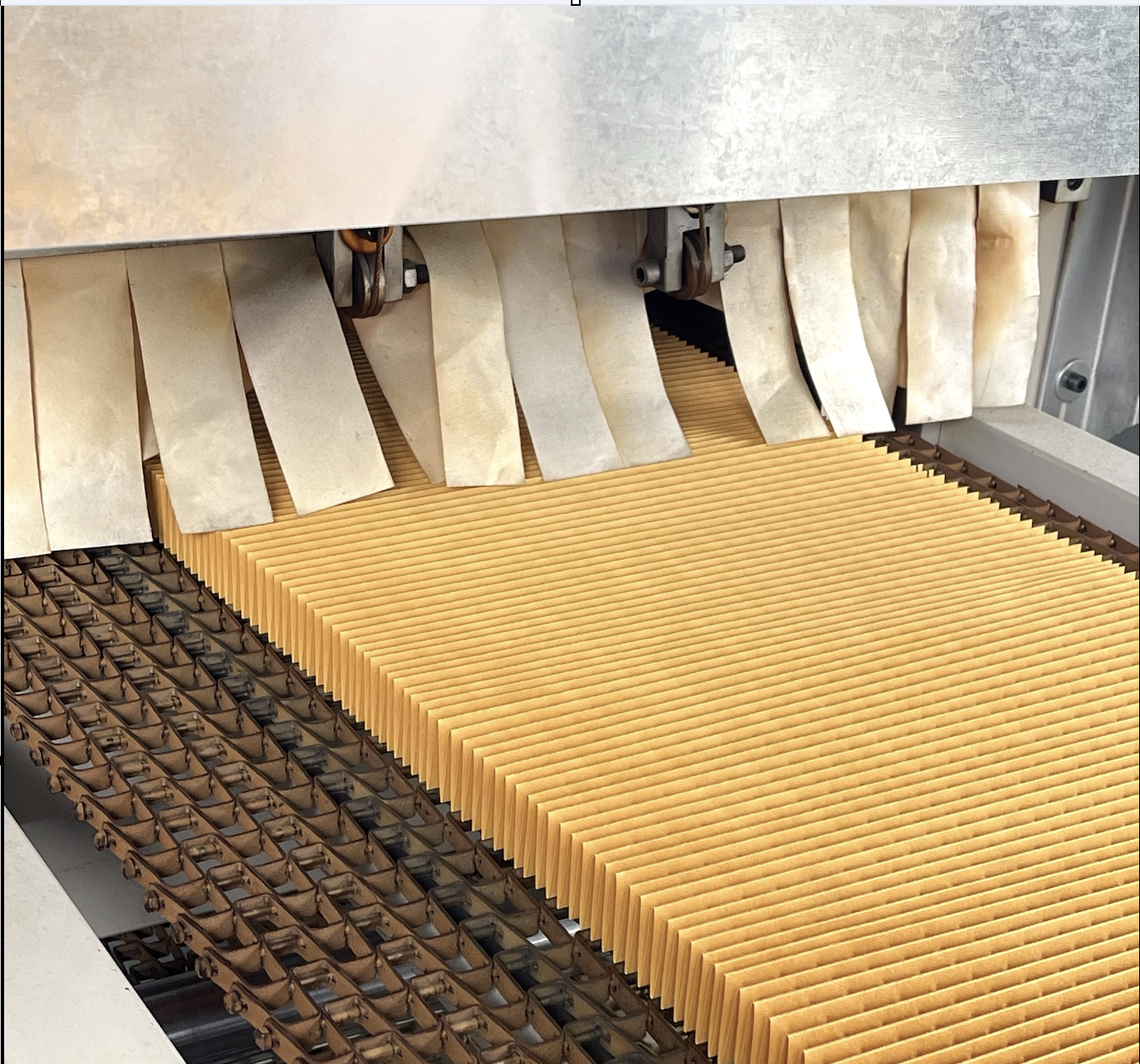
Why a micron rating alone cannot rank air compressor filter elements
A micron rating describes a filter element's stated particle-size performance under a defined test method. It does not, on its own, establish that one element filters better than another. Buyers should confirm whether the rating is nominal or absolute, and review it together with the associated efficiency figure and the test standard behind it. A smaller micron number alone does not prove better overall filtration performance.
The pairing of rating and efficiency is what makes two numbers comparable. Foevair's intake air filter element specification states a filtration rating of 5 μm together with filtration efficiency of up to 99.8%, depending on product specification, and a stated using life of 2,000–2,500 hours. An element quoted at 5 μm with no efficiency figure or test method is not the same offer, even though the headline number looks identical.
Standards give the comparison a fixed reference point. ISO 8573-1:2010 specifies purity classes for compressed air with respect to particles, water and oil, and it does so independently of the point in the system where purity is specified or measured. Manufacturer documentation shows how varied the supporting evidence can be: Atlas Copco states in its 2021 compressed-air filter brochure that its filters are certified to meet ISO 8573-1:2010 and references ISO 8573-4:2019 and ISO 12500-3:2009 among filter test methods. That is a manufacturer-declared reference applying to its own product range; it does not certify a third-party replacement element.
The practical consequence for a buyer is a sequence, not a single number: define the required purity class at the point of use, then ask each supplier for the rating, the efficiency, and the test method those two figures came from.
Media: the first substantive difference between two elements
Foevair lists its compressor filter materials as HV fiberglass, HV filter paper, Ahlstrom (Korea) filter paper, steel plate and glue. The company states that it develops low-resistance, high-efficiency separation materials using imported filtration media, and that it tailors designs to variations in flow rate, concentration and temperature during operation.
Intake air elements
For intake air filter elements, one documented media option is Korean Ahlstrom wood pulp paper combined with pleated construction. The pleated structure is intended to balance filtration efficiency and airflow, and the design is intended to control intake resistance and limit unnecessary pressure losses during air intake. Particle capture itself depends on media structure, filtration rating, airflow and operating conditions; interception, inertial impaction and diffusion contribute to different degrees depending on particle size and media design.
Oil filter elements
For lubricating-oil filtration, the documented construction uses composite glass fiber media, with Korean Ahlstrom wood pulp paper as an option, and is positioned against conventional paper oil filters on the basis of stable filtration performance. The stated specification is a 10–15 μm filtration rating, an initial pressure drop of approximately 0.03 MPa, and a maximum pressure of 20 bar.
Oil separator elements
Separator media is where construction differences are most visible. Coalescing media captures fine oil droplets, allows them to merge into larger droplets and drain back through the oil-return system; larger droplets are separated earlier by changes in flow. Foevair's separator design uses microglass fiber media including HV materials intended to optimise oil mist capture and airflow performance. Composite separator designs combine different filtration media and structural layers, whereas winding-type separators rely on a conventional wound construction — a structural difference that shows up directly in service life, discussed below.
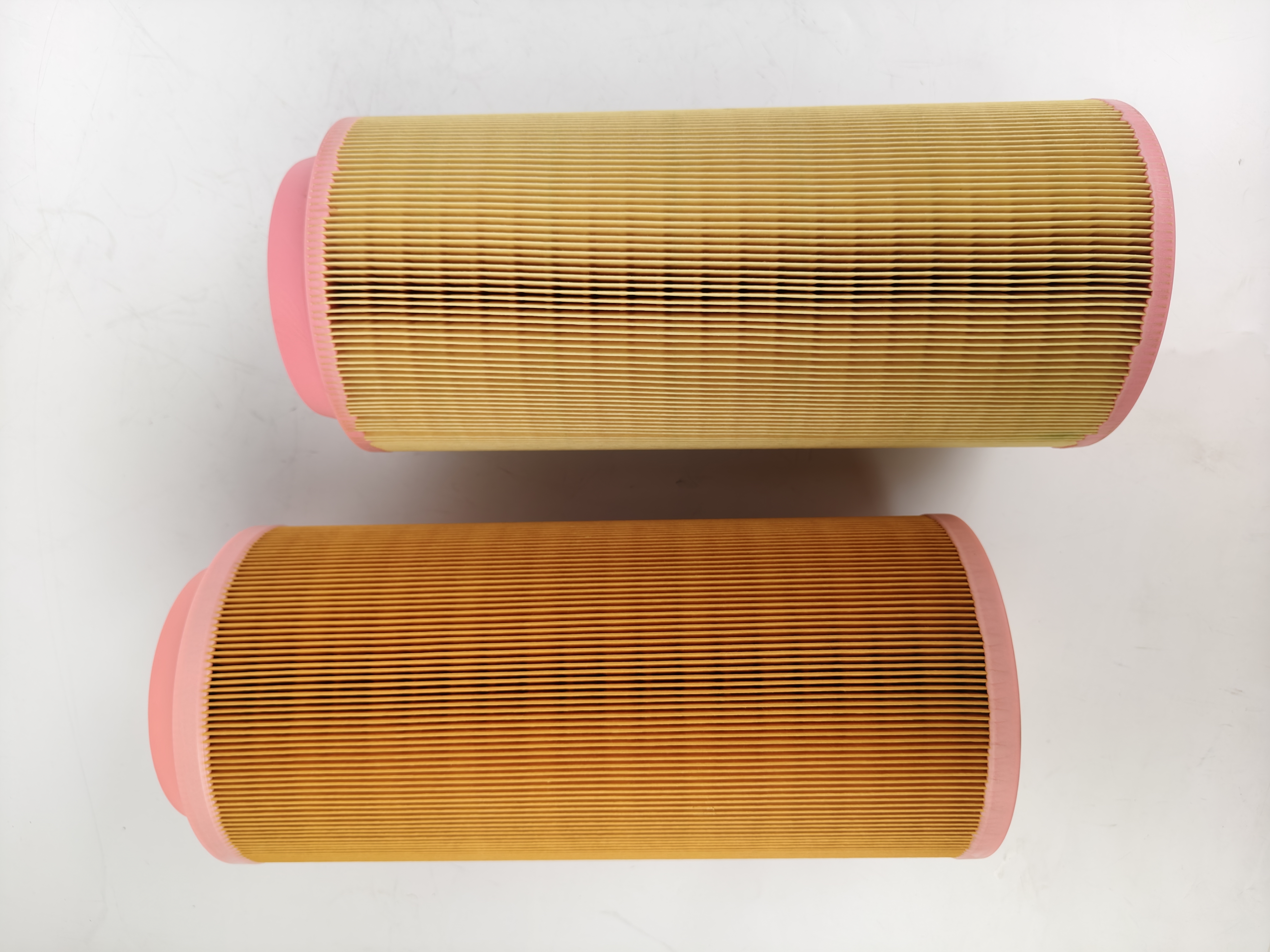
Pressure drop: what the figure means and when it is comparable
Initial pressure drop is the pressure difference across a clean filter under specified flow, fluid and temperature conditions. It indicates the resistance introduced by the filter media and structure, and it is a selection parameter in its own right because excessive resistance may affect oil circulation. Two rules follow: initial pressure drop values should be compared only under equivalent test conditions, and they should be evaluated together with flow capacity and filtration performance rather than in isolation.
Documented references across the element families differ in scale, which is exactly why cross-family comparison fails. Foevair's oil filter element specification gives an initial pressure drop of approximately 0.03 MPa, described as helping to minimise additional resistance in the lubricant circulation system compared with higher-resistance conventional filters. The oil separator design targets an operating pressure drop of no more than 0.2 bar, with optimised filtration area and airflow channels helping to control that figure depending on the specific model. For intake air elements, the design objective is control of intake resistance rather than a single published value.
A low initial figure is not automatically the better element. An intake filter needs adequate dust-holding capacity and low initial pressure drop in addition to particle capture; an oil separator needs low oil carryover alongside controlled differential pressure. Reading one number without the other two invites a false comparison.
Pressure drop also has a diagnostic role. A rising separator differential pressure may be associated with contamination, element blockage, unsuitable specifications, oil accumulation or abnormal operating conditions — and it may equally be a sensor error. The documented procedure is to verify the pressure readings against operating records first, inspect operating history and oil condition, confirm the correct element, and replace it only when the manufacturer's limit is reached. The same logic applies to oil filters, where high differential pressure may trace to lubricant contamination, high viscosity, low temperature, an incorrect element or a sensor issue rather than to element quality.
Service life: reference intervals versus installed reality
Service life is the variable most often quoted loosely and most often misread. The documented references in this comparison are stated under normal operating conditions and do not transfer automatically to a specific installation.
Intake air filter elements carry a specified using life of 2,000–2,500 hours, with a recommended service interval of approximately 2,000 hours under normal operating conditions, depending on inlet air quality and pressure drop. Oil filter elements show the same stated using life of 2,000–2,500 hours with a recommended replacement interval of approximately 2,000 hours, subject to differential pressure and equipment status.
Oil separators show the widest spread, and the spread is structural. Stated service life is 4,000–6,000 hours or 6,000–8,000 hours depending on the option selected. Under normal operating conditions, winding-type separators are referenced at approximately 4,000 hours, while composite separators are referenced at 6,000–8,000 hours; the composite design's greater filtration area and multi-layer construction are the stated reasons. Alongside that, the separator specification states oil content of ≤3 ppm (mg/m³) and pressure drop of ≤0.2 bar, with a 3 μm filtration rating and, under specified test conditions at 7 bar, a reduction of oil carryover from 3,000 ppm to below 1–3 ppm.
What moves actual life away from the reference: dust loading, wet or damaged media, a blocked intake duct or an incorrect element shorten intake element life; high oil separator differential pressure often begins with contamination rather than with the element itself. Attributing every short interval to poor element quality is a common and expensive misdiagnosis — separator-related oil consumption, for instance, must be separated from other causes through systematic inspection of the oil-return system, valves and operating parameters.
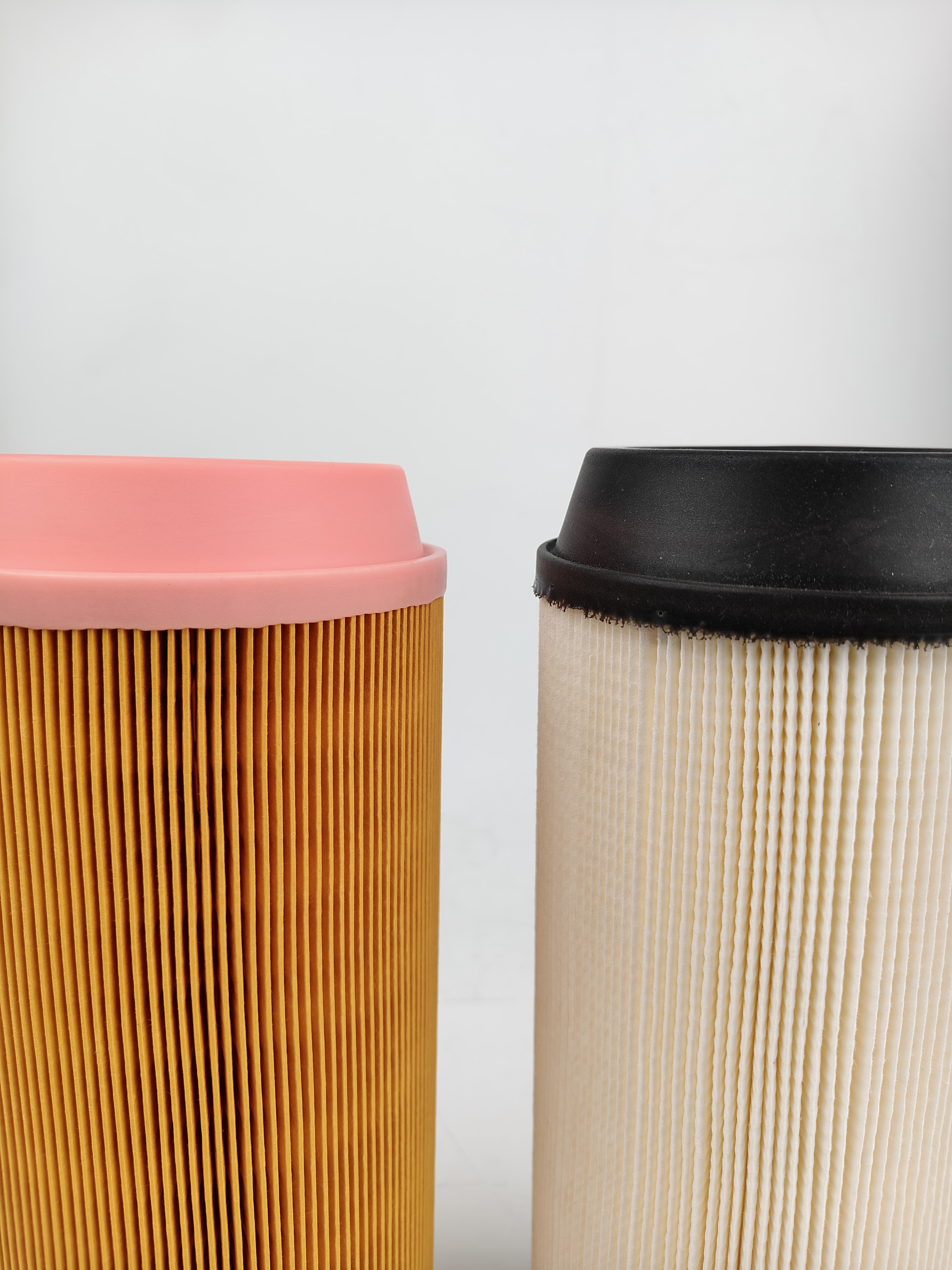
Side-by-side: documented references by element family
| Element family | Documented media / construction | Documented filtration rating | Documented pressure-drop reference | Documented service-life reference |
|---|---|---|---|---|
| Intake air filter element (screw, centrifugal, sliding-vane, scroll) | Korean Ahlstrom wood pulp paper option with pleated construction; HV fiberglass and HV filter paper listed among compressor filter materials | 5 μm; efficiency up to 99.8% depending on specification | Design intended to control intake resistance; no single initial value stated in the referenced specification | Stated using life 2,000–2,500 h; recommended interval approx. 2,000 h depending on inlet air quality and pressure drop |
| Oil filter element | Composite glass fiber media; optional Korean Ahlstrom wood pulp paper | 10–15 μm | Initial approx. 0.03 MPa | Recommended approx. 2,000 h under normal conditions, subject to differential pressure and equipment status; stated using life 2,000–2,500 h; maximum pressure 20 bar |
| Oil separator element — composite | Microglass fiber media including HV materials; multiple media and structural layers | 3 μm; oil content ≤3 ppm (mg/m³) | Design ≤0.2 bar; filtration area and airflow channels optimised to help control operating pressure drop by model | 6,000–8,000 h composite under normal conditions; 4,000–6,000 h depending on option |
| Oil separator element — winding type | Conventional winding construction | Not stated in the referenced data | Not stated in the referenced data | Approx. 4,000 h under normal conditions |
Figures are Foevair's documented references for the element families named. They are not a cross-family ranking, and a value from one row cannot be used to judge another row.
Where inline filter elements fit in the same comparison
Inline filter elements — the compressed air line elements fitted downstream of the compressor and dryer — face a different contaminant mix from intake elements. Parker describes the contaminants addressed by compressed-air filter elements as including rust, pipe scale, compressor lubricating oil and water. That list is a product-function statement from one manufacturer, but it makes the point: an inline element is specified against the contamination present at its own position in the system, not against the dust load entering the intake.
The three comparison variables still apply, with one added constraint. Media must suit the contaminant being targeted; pressure drop must be stated at the flow, pressure and temperature of the actual line; and service life must be referenced to the operating conditions at that point. Because ISO 8573-1:2010 classes are defined independently of the measurement point, the purity requirement has to be written for the point of use — which may require more than one filtration stage and therefore more than one element in series.
Two comparison rules follow from this. First, never compare an inline element's pressure drop or service life against an intake or separator element's figure; the functions differ and the numbers are not interchangeable. Second, do not assume that a rating carried over from an intake element applies to a line element of the same nominal micron value.
Scope note: the documented specifications summarised in this article cover Foevair's air compressor intake air filter elements, oil filter elements and oil separator elements. For any inline or compressed air line filter element model, the media, initial pressure drop and service-life references must come from that element's own datasheet and be compared on the same test basis. A specification cannot be transferred between element families.
Cost per operating hour: the calculation a buyer actually needs
Purchase price is a weak comparator because the three variables convert into cost at different rates. A workable framework is cost per operating hour: element price divided by the hours actually achieved, plus the labour and downtime cost of each replacement, plus the effect of the element's pressure drop over its installed life. Any additional pressure drop is resistance the system must work against; how much that costs depends on flow, duty cycle and local energy price, and should be calculated with the site's own figures rather than assumed.
A conditional example, not a reported case, shows why the arithmetic matters. Suppose one separator is quoted at a lower price with a winding-type reference life of approximately 4,000 hours, and a composite separator is quoted higher with a 6,000–8,000 hour reference life under normal conditions. If both elements actually reach their reference intervals on the same machine, the composite option reduces replacement frequency by roughly one third to one half — but the conclusion holds only if achieved life matches the reference, if downtime has a real cost, and if the differential pressure behaviour of both elements is verified. Where any of those conditions fails, the lower-priced element can be the cheaper choice. No verified price, MOQ or lead-time data underpins this comparison; buyers must substitute their own quotations.
Foevair's documented position in this comparison
Foevair, registered as SHANGHAI FOEVAIR TECHNOLOGY CO., LTD., is a manufacturer and supplier of OEM and air compressor aftermarket filtration products and replacement parts. Company-reported figures describe a facility of 11,000 m², 50–200 employees, an annual output of 400,000 units, a six-engineer R&D team and a 70% export ratio, with main markets in North America, South America, Europe and Asia. Its stated main products are air compressor filters, air filters, oil filters, oil separators and air compressor lubricant.
What is relevant to this comparison is not the output figure but the stated process scope. The company describes process monitoring and control across the full cycle from raw material and production to final delivery, dedicated technical teams assembled for industry-specific conditions and complex operating environments, and validation through simulation analysis and experimental testing. For a buyer, that translates into a specific question set: which media grade was used, what efficiency and test method support the rating, at what flow and temperature the initial pressure drop was measured, and what reference life applies to the intended duty. Those questions are answerable from datasheets; marketing descriptions are not a substitute for them.
Two boundaries apply. These are company-reported capabilities and have not been independently audited within this article. And the documented figures above describe Foevair's own element families — they are not a claim of superiority over any named competitor, whose specifications would need to be compared on identical test conditions before any such conclusion could be drawn.
Market context: what the demand data does and does not show
Commercial research places rotary screw compressors at 56% of total demand in the air compressor filters market, attributed to their use in continuous and high-load industrial applications (MarketsandMarkets, cited market report). The same source estimates the global compressed air filter and dryer market at USD 5.6 billion in 2023, projected to reach USD 7.4 billion by 2028, a reported CAGR of 5.8%. A separate commercial estimate puts the air-oil separator market at USD 4.416 billion in 2024, growing to USD 6.771 billion by 2035 at a reported CAGR of 3.96% (Market Research Future).
Read these figures for what they are. They are commercial research estimates covering filters, dryers and separators as categories; none of them isolates air compressor filter elements or the replacement-element segment, and none should be used as a filter-element market size. What they do support is a directional point relevant to buyers: with screw compressors carrying the largest share of filter demand, the intake air, oil filter and separator comparison described here applies to the dominant installed base, and procurement decisions on those three element families have more aggregate effect than decisions on any niche category.
Verification checklist before accepting a replacement as equivalent
The following items convert the comparison into a request a supplier can answer in writing. They are derived from the documented selection criteria for these element families, not from an invented test protocol.
- Part identification: compressor brand, model and original part number as the starting point, with drawings, photos or samples supplied if the part number is unavailable.
- Geometry and sealing: dimensions, connections and sealing details confirmed — replacement filters should not be selected by appearance or dimensions alone.
- Media identity: the actual media grade and construction, including whether it is composite glass fiber, wood pulp paper, microglass fiber or a winding-type design.
- Rating with efficiency: filtration rating quoted together with efficiency and the test method, plus whether the rating is nominal or absolute.
- Initial pressure drop: the value stated at a defined flow, fluid and temperature, so it can be compared against another supplier's figure on the same basis.
- Rated limits: maximum working pressure and applicable temperature range, for example the 20 bar maximum stated for the oil filter element specification.
- Reference service life with conditions: the interval and the normal operating conditions it assumes, plus the differential-pressure limit that triggers replacement.
- Lubricant compatibility: confirmation that the element's media and seals suit the specific lubricant in use, whether mineral or synthetic, and the operating temperature of the machine.
- Installation requirements: confirmation that replacement follows the compressor manufacturer's procedure and, for separators, is performed by qualified personnel with orientation and oil-return connections verified.
Limitations and fit boundaries
The figures in this comparison are reference values under normal operating conditions. They describe what the supplier documents, not what every installation will achieve. Actual intake element life depends on inlet air quality and pressure drop; actual separator performance depends on design, operating conditions and correct installation; and an element reaching its differential-pressure limit early may be signalling contamination, a blocked oil-return path or an incorrect specification rather than a media defect.
Comparison across element families is invalid: a separator's 3 μm rating, an oil filter's 10–15 μm rating and an intake element's 5 μm rating describe different duties in different fluids. Where a buyer's requirement cannot be expressed as a purity class, a pressure-drop limit at stated conditions and a reference life, the comparison needs to be rebuilt around what can actually be specified.
Outlook
The direction of procurement in this category is toward evidence that travels: a purity class defined at the point of use, a pressure-drop figure tied to stated test conditions, and a service-life reference with its assumptions attached. Standards such as ISO 8573-1:2010 give buyers a fixed vocabulary, and manufacturers that publish efficiency and test-method detail alongside their ratings make themselves comparable — which is a commercial advantage as much as a technical one. For maintenance teams, the practical shift is from selecting elements by part number and price to selecting them by documented evidence, then verifying the result with differential-pressure trends in service.
Frequently asked questions
Can two air compressor filter elements be compared using micron rating alone?
No. A micron rating describes stated particle-size performance under a defined test method and must be read together with the associated efficiency and test standard, including whether it is nominal or absolute. A smaller micron number alone does not prove better overall filtration performance. Two elements both quoted at 5 μm are comparable only when efficiency, media and test conditions are also known — for example, an element documented at 5 μm with efficiency up to 99.8% depending on specification is a different offer from a 5 μm element with no efficiency figure.
What is the difference between initial pressure drop and operating pressure drop?
Initial pressure drop is measured across a clean filter at a specified flow, fluid and temperature; it indicates the resistance built into the media and structure. Operating pressure drop rises as the element loads with contaminants and is the figure used to judge when replacement is due. Because initial values depend on test conditions, they should be compared only on an equivalent basis and evaluated together with flow capacity and filtration performance. A rising reading should be verified against operating records before the element is blamed, since sensor error, contamination and incorrect specification produce similar symptoms.
How does service life change the cost comparison between two oil separator elements?
It changes replacement frequency and therefore labour and downtime, not just element price. Under normal operating conditions, winding-type separators are referenced at approximately 4,000 hours and composite separators at 6,000–8,000 hours, while winding-type designs generally carry a lower initial purchase cost. The defensible comparison is cost per operating hour: element price divided by achieved hours, plus the cost of each replacement event, plus the effect of the element's pressure drop over that life. That calculation requires the buyer's own quotations and achieved intervals, because no verified price data supports a general conclusion.
Which documents should a buyer request before accepting a replacement element as equivalent?
Request the part-number cross-reference, dimensions and sealing details, the media grade and construction, the filtration rating with its efficiency and test method, the initial pressure drop at stated flow, fluid and temperature, the maximum working pressure and temperature range, lubricant compatibility, the reference service life with its assumed conditions and differential-pressure limit, and the installation requirements. For separators, confirmation that installation will be performed by qualified personnel using the compressor manufacturer's procedure should also be part of the agreement.
Are inline filter elements specified in the same way as intake air filter elements?
No. They sit at different points in the system and face different contaminants — compressed-air line elements address contaminants such as rust, pipe scale, compressor lubricating oil and water, while intake elements address airborne dust before the air-end. Both are specified against a required purity class, a pressure drop at stated conditions and a reference service life, but the values are not transferable between the two. Because ISO 8573-1:2010 purity classes are defined independently of the measurement point, the requirement must be written for the point of use, and each element in the chain must be evaluated against its own datasheet.
For the full documented specification set across Foevair's air filter, oil filter and oil separator ranges, the company's English-language catalogue is available for download: Foevair product catalogue (PDF).
Have Questions or Need More Details?
Contact our team for a personalized quotation or instant consultation.
Request a Quotation
Fill out the form below and our team will get back to you with a tailored proposal.
WhatsApp Direct Chat
Prefer to chat in real-time? Message us on WhatsApp for instant assistance & quick answers.
- Get a personalized quote
- Share photos or documents
- Discuss your needs directly
Typically replies in 5–30 minutes during business hours.