
Inside BigVoice Secure: Capability, Process and Procurement Value in Singapore Data Destruction
Secure data destruction is the permanent and irreversible removal of data from storage devices so that it can no longer be accessed. General industry guidance converges on that definition for a practical reason: deleting a file or reformatting a drive changes how data is indexed, but it does not necessarily remove the underlying data blocks. For organisations retiring hard drives, tape backups, laptops and data centre hardware, destruction has therefore moved from an IT housekeeping task to a procurement decision with security, compliance and environmental consequences attached to it.
BigVoice Secure Destruction Pte. Ltd. is a Singapore-based provider of secure data destruction and IT disposal services. This assessment examines the company's service scope, destruction workflow, operating profile and its position within Singapore's destruction market — separating the claims that carry real procurement value from the boundaries a buyer should verify before awarding a contract.
Why Secure Data Destruction Became a Procurement Question
When organisations retire IT assets or dispose of confidential materials, improper handling can lead to data breaches, regulatory penalties and environmental liabilities. The failure points are consistent across the sector: chain-of-custody visibility, verifiable irrecoverability of data, regulatory and environmental compliance, assessment of reuse and buyback value, and overall service transparency.
The root causes are procedural rather than technical. Non-standard disposal processes, missing certificates or absent visible records, and unclear recycling channels turn a routine hardware refresh into an unmanaged risk. The business impact is equally consistent: data breaches and legal liability, compliance fines and reputational damage, and lost recovery value when reusable equipment is scrapped instead of resold.
Demand is triggered by a small set of predictable events — IT asset retirement and upgrades, data centre migration, office relocation, audits and regulatory checks, and large-volume confidential document destruction. Each event creates a short window in which devices leave a controlled environment, and the organisation's ability to prove what happened to them is effectively decided in advance of the collection.
BigVoice Secure Destruction Pte. Ltd. at a Glance
BigVoice Secure Destruction Pte. Ltd. is a Singapore-based provider of secure destruction and IT asset disposal solutions for electronic and non-electronic assets, operating from 6 Woodlands Industrial Park E1, Singapore 757729. Its service is formally named IT Equipment Disposal, asset destruction; e-waste buyback & recycling, and is categorised as onsite and offsite destruction plus buyback and recycling services. The company also uses the alternative description "information security and environmental disposal services".
| Item | Detail |
|---|---|
| Legal entity | BigVoice Secure Destruction Pte. Ltd. |
| Operating base | 6 Woodlands Industrial Park E1, Singapore 757729 |
| Establishment (company profile) | 2022 |
| Registry record (Singapore business directory) | BigVoice Prodigy Renovations & Disposal Services Pte. Ltd. incorporated 31 October 2019 |
| Service category | Onsite and offsite destruction; buyback and recycling services |
| Workforce | Approximately 20 staff |
| Facility area | 99.45 m² |
| Annual processing capacity | 10,000–15,000 units |
| Reported export share | Approximately 90% of total sales |
| Service channels | Website enquiry form, phone, email, WhatsApp (+65 8895 5691), on-site collection |
| Supported languages | English and Chinese |
| Affiliated entity credentials (company-reported) | NEA General Waste Collector Licence; NEA General Waste Disposal Facility Licence; bizSAFE3 Certification |
Two records describe the group's corporate history differently. The company's own profile states that BigVoice Secure Destruction Pte. Ltd. was established in 2022, while public registry data records the incorporation of BigVoice Prodigy Renovations & Disposal Services Pte. Ltd. on 31 October 2019 in Singapore. The two statements describe different legal entities rather than conflicting timelines, but buyers running supplier due diligence should reconcile the entity they contract with against the entity that holds the relevant licences.
From a capability standpoint, the profile describes a specialist operation rather than a large-scale industrial processor: a single 99.45 m² facility, approximately 20 staff and an annual processing capacity of 10,000 to 15,000 units. That is a meaningful volume for enterprise device refresh programmes and document destruction exercises, but it also defines the scale at which scheduling and lead time become part of the commercial conversation rather than an afterthought.
What the Service Covers
The service scope covers hard drives, tape backups, laptops and mobile devices, IT equipment, confidential documents and other data-bearing media, together with some non-electronic items such as clothes for destruction and recycling. In operational terms, the company's services extend across data centres, obsolete electronics, retired IT assets and other electronic and non-electronic items, and it provides both on-site and off-site destruction to suit different customer requirements.
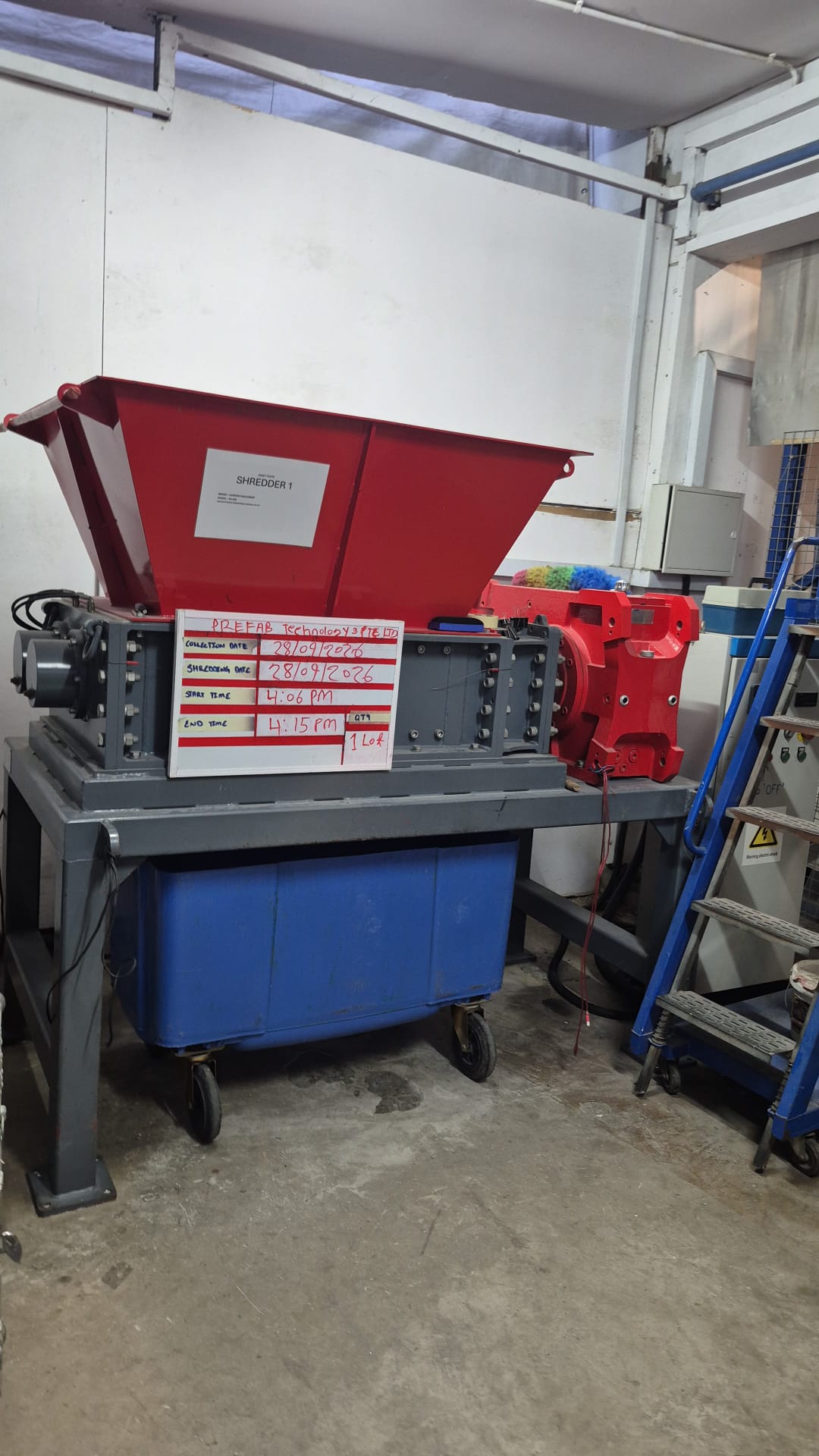
Four destruction methods are supported: shredding, crushing, degaussing and drilling. The stated service objectives are irrecoverable data destruction, meeting compliance requirements, and environmentally responsible disposal or recycling of the assets involved.
Target clients are organisations operating in Singapore — enterprises, data centres and institutions that require compliant asset disposal. A second element of the model is value recovery: the service prioritises buyback and reuse for recoverable items, and e-waste buyback allows customers to recover value from eligible electronic waste. Where a buyback transaction takes place, a payment receipt is issued as part of the deliverables.
How the Workflow Runs: Collect, Track, Destruct, Certify
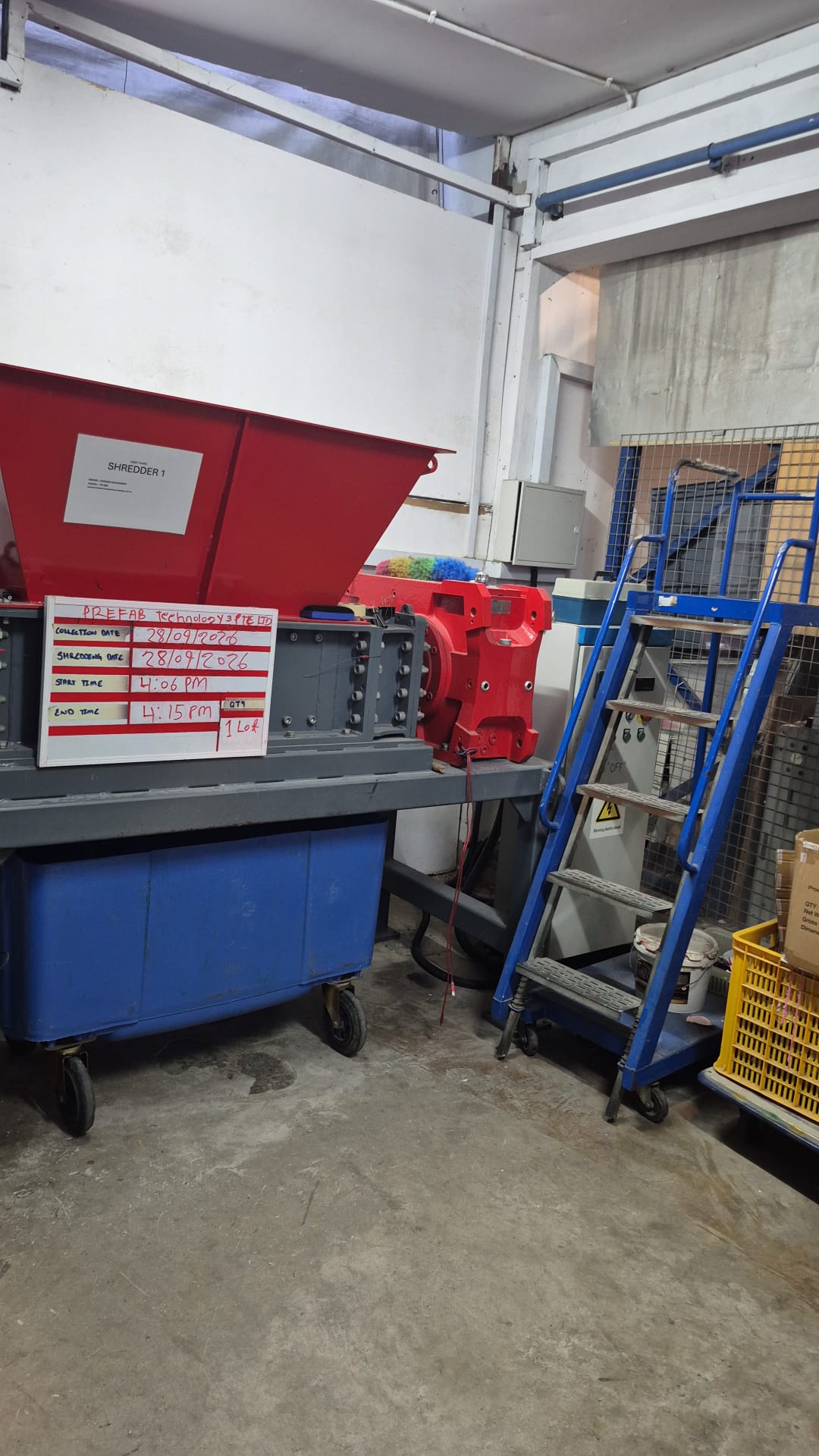
The company describes its process in four steps: collect, track, destruct and certify. Delivery mode is on-site collection with destruction carried out either on-site or off-site at a secure facility. A published company profile additionally states that collection vehicles can be tracked by GPS as items are delivered to the secure destruction facility, and the service structure describes item scanning and locking before the selected destruction method is applied.
What makes this workflow relevant to procurement is not the sequence itself but the evidence it produces. A Certificate of Destruction is issued on completion of the service, and customers can request CCTV viewing of the destruction process for greater transparency and assurance. Those two artefacts — a certificate and an optional viewing record — are typically what an auditor, regulator or internal risk function asks for when validating that retired media was handled as claimed.
The practical implication for buyers is that the chain of custody should be defined at quotation stage: who collects, how items are scanned and locked, whether destruction happens on the customer's premises or at the facility, and what documentation is returned afterwards. Because the company offers both on-site and off-site options, that decision can be matched to media sensitivity, volume and site access constraints rather than being fixed by the provider.
Destruction Methods and Where NIST SP 800-88 Rev. 1 Fits
NIST Special Publication 800-88 Revision 1, published on 17 December 2014, defines three categories of media sanitisation: Clear, Purge and Destroy. Physical destruction sits in the Destroy category and is generally selected when media will not be reused, or when logical erasure cannot be verified to the standard the organisation requires. The distinction matters commercially because wiping and physical destruction are not interchangeable, and the evidence each produces is different.
| Method | What it does | Media it is generally applied to | What buyers should confirm |
|---|---|---|---|
| Shredding | Reduces media to fragments | Hard drives, solid-state drives, tape, documents | The downstream recycling route for the shredded material |
| Crushing | Mechanically deforms the device so it cannot function or be read | Drives and small form-factor devices | Whether deformation alone meets the destruction standard the organisation requires |
| Degaussing | Applies a magnetic field to neutralise magnetic media | Magnetic hard drives and tape | That flash-based media are excluded and handled by a different method |
| Drilling | Physically penetrates the device enclosure and platters | Drives requiring a fast physical intervention | Whether the intervention is applied to every unit or to a sample |
The table above reflects generally accepted characteristics of each technique. BigVoice Secure confirms shredding, crushing, degaussing and drilling within its service scope; method selection should nevertheless be confirmed per media type at quotation stage, because degaussing addresses magnetic media while solid-state media require a physical process.
Applications and Use Cases
The service model is built around five recurring situations. IT asset retirement and refresh cycles generate mixed batches of drives, laptops and peripherals that must leave the organisation's control with a documented end state. Data centre migration and decommissioning concentrates high volumes of storage media into a short window, which places a premium on collection logistics and scheduling. Office relocations typically combine IT equipment with confidential paper records in the same clearance exercise.
Audits and regulatory checks are the scenario where documentation carries the most weight: the destruction event itself may be months in the past, and the organisation must be able to produce a certificate and, where requested, a viewing record. Finally, large-volume confidential document destruction extends the same custody model to paper, alongside secure collection of documents and media.
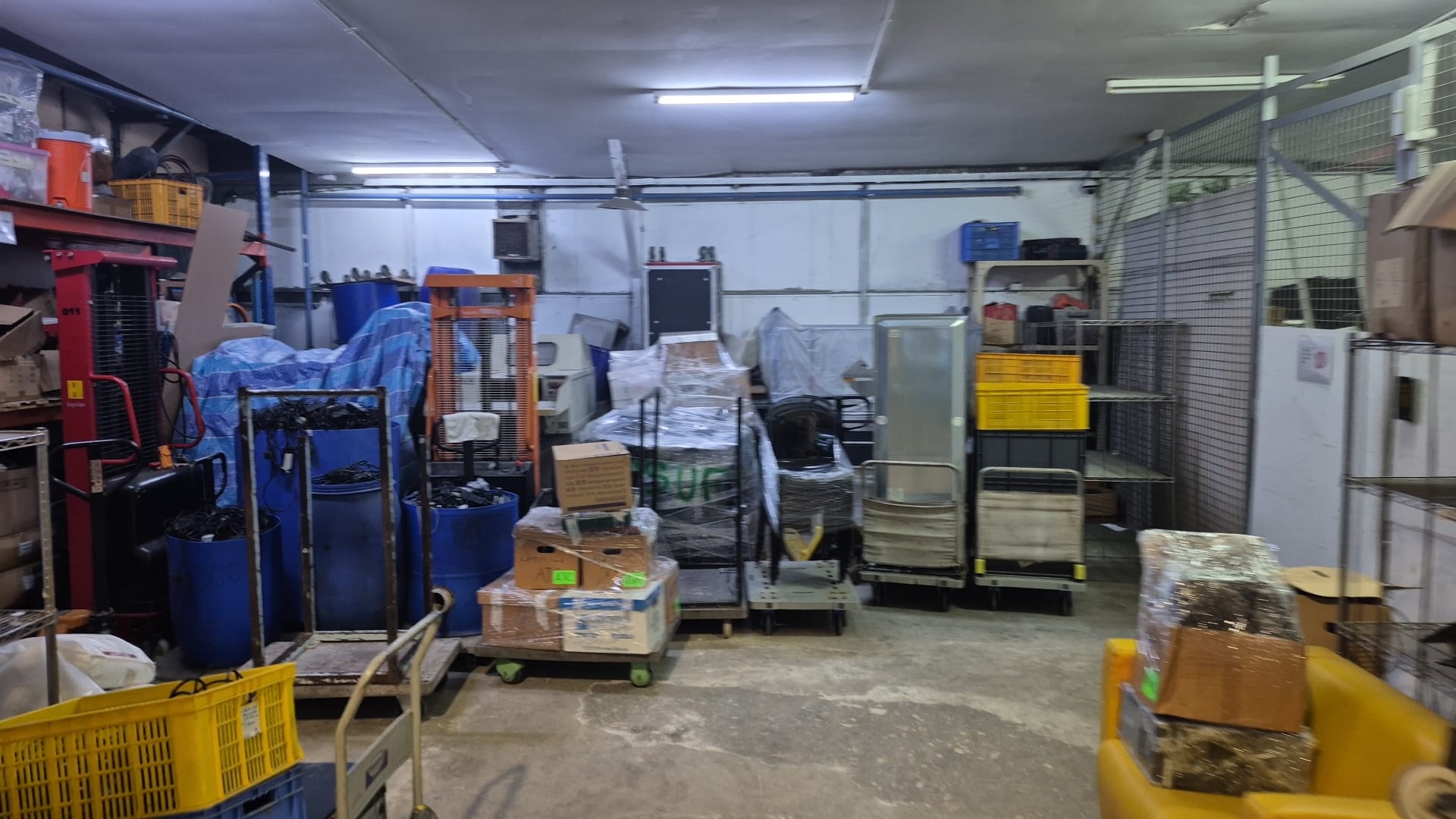
Where retired equipment still holds market value, the buyback-first approach changes the economics of the exercise: instead of a pure disposal cost, part of the asset base returns as a payment receipt for eligible items. That does not apply to every device — recoverability depends on condition, age and demand — but it is a legitimate consideration when comparing a documented destruction service against a straight scrap route.
Market Trend Analysis: Where Demand Is Heading
Two datasets frame the market this service operates in. The global IT Asset Disposition market was valued at USD 17.5 billion in 2024 and is expected to reach USD 29.54 billion by 2030, according to Strategic Market Research's ITAD market report. Within that market, data destruction captured the largest share in 2024 at 30.64%, and is anticipated to grow at the highest CAGR of any segment.
Supply of end-of-life hardware is rising in parallel. The Global E-waste Monitor 2024, published by UNITAR and ITU, reports global e-waste generation of 62 million tonnes in 2022, projected to reach 74.7 million tonnes annually by 2030. More devices reaching end of life means more decisions about what happens to the data they contain.
Taken together, the two trends point in the same direction: destruction is becoming a defined service category with its own documentation expectations rather than an informal add-on to waste collection. For buyers, that has two consequences. First, service availability improves, but provider differentiation shifts toward evidence quality — certificates, viewing records and custody controls. Second, as volumes grow, the compliance expectation attached to each destruction event becomes harder to meet with ad-hoc internal processes.
Comparison with Traditional Disposal Approaches
Many organisations still dispose of retired media through one of two legacy routes: internal handling by IT or facilities staff, or a general waste collection service. Both can physically remove equipment, but neither is designed to produce destruction evidence.
| Dimension | Ad-hoc internal disposal | General waste collection | Documented destruction service model |
|---|---|---|---|
| Chain of custody | Rarely documented | Varies by provider | Collection and tracking described as a controlled flow, with GPS-tracked collection vehicles stated in the provider's published profile |
| Evidence produced | Usually none | Usually none | Certificate of Destruction; CCTV viewing available on request |
| Method control | Depends on staff practice | Not media-specific | Shredding, crushing, degaussing and drilling, selected by media type |
| Value recovery | Typically lost | Typically lost | Buyback-first policy; payment receipt for buyback transactions |
| Recycling pathway | Opaque | Provider-dependent | Recycling and responsible disposal stated as service objectives, supported by an affiliated entity holding NEA waste licences |
The practical difference between these models is documentation and method control rather than the physical act of destroying a drive. That said, the third column describes a provider's stated service design, not an outcome guarantee. It is a reasonable basis for shortlisting, but it does not remove the buyer's obligation to verify credentials, agree the method per media type in writing, and confirm what the Certificate of Destruction will actually contain.
Limitations and Verification Boundaries
An honest assessment has to state where the model stops. Four boundaries stand out.
Scale. A facility area of 99.45 m², approximately 20 staff and an annual processing capacity of 10,000 to 15,000 units define a specialist operation. Organisations with very large, multi-site or continuous destruction requirements should treat scheduling, collection frequency and turnaround as commercial variables to be confirmed, not as fixed capabilities. Service duration is project-based, and the timeline depends on quantity, location and client requirements.
Credential ownership. The NEA General Waste Collector Licence, NEA General Waste Disposal Facility Licence and bizSAFE3 Certification are held by the affiliated entity, BigVoice Prodigy Renovations & Disposal Services Pte Ltd, and are described by the company itself. Buyers in regulated sectors should verify the licences independently and confirm which legal entity is contracted, invoiced and named on the destruction documentation.
The certificate is a service document. A Certificate of Destruction issued by a provider records that the service was performed; it is not a third-party accreditation. Where an auditor or regulator requires independent attestation, that requirement should be raised during evaluation rather than assumed to be satisfied.
Defined exclusions. The service does not cover data recovery, does not cover data migration and backup, and does not cover physical transportation of hazardous waste. Organisations expecting any of these should plan for a separate provider. In addition, unit pricing is not published in the reviewed materials, so cost benchmarking requires a direct quotation.
A Buyer's Pre-Award Checklist
The following checks translate the provider's stated service design into evaluation criteria.
- 01 Inventory media by type — hard drives, solid-state drives, tape, laptops, mobile devices and paper — and record volumes per site.
- 02 Agree the destruction method per media type in writing, confirming that magnetic and flash-based media are handled appropriately.
- 03 Decide between on-site destruction and off-site destruction at the secure facility, based on media sensitivity, volume and site access.
- 04 Define the chain of custody: collection, scanning and locking, transport and receipt control.
- 05 Specify what the Certificate of Destruction must contain, and who signs it.
- 06 Confirm whether CCTV viewing of the destruction process is required, and how the viewing link is delivered.
- 07 Verify credentials — NEA licences and bizSAFE3 — against the entity you contract with, and check their current status.
- 08 Assess buyback eligibility for recoverable equipment, and confirm that a payment receipt is issued for buyback transactions.
- 09 Confirm scope exclusions in writing, particularly data recovery, data migration and backup.
- 10 Agree the project timeline explicitly, since duration is quantity-, location- and requirement-dependent.
Future Outlook
If global e-waste volumes continue toward the 74.7 million tonnes projected for 2030, the supply of data-bearing devices reaching end of life will keep expanding, and with it the number of destruction events an average enterprise has to document. The data destruction segment's position as the largest and fastest-growing part of the ITAD market suggests that providers will compete less on the ability to destroy hardware and more on proof of process.
Two shifts follow. First, reuse and buyback will take a larger role, because value recovery is measurable and increasingly expected in disposal programmes. Second, documentation expectations will tighten — certificates, viewing records and custody controls are moving from premium features to baseline requirements. Providers that already structure their service around collection, tracking, destruction and certification, as BigVoice Secure describes its workflow, are positioned for that shift. The open question for buyers is verification: as documentation becomes standard, the diligence burden moves to confirming that credentials and certificates mean what they appear to mean.
Frequently Asked Questions
What does a secure data destruction service actually do?
Secure data destruction permanently removes data from storage devices so that it cannot be accessed; general industry guidance describes it as complete and irreversible removal. In practice, a provider either sanitises or physically destroys the media, then documents the outcome. BigVoice Secure states its service objectives as irrecoverable data destruction, meeting compliance requirements, and environmentally responsible disposal or recycling.
Where is BigVoice Secure based, and which organisations does it serve?
BigVoice Secure Destruction Pte. Ltd. operates from 6 Woodlands Industrial Park E1, Singapore 757729. Its target clients are organisations operating in Singapore — enterprises, data centres and institutions requiring compliant asset disposal. The service is accessible through a website enquiry form, phone, email, WhatsApp (+65 8895 5691) and on-site collection, with support in English and Chinese.
Which destruction methods does the service support?
The service supports shredding, crushing, degaussing and drilling. Selection depends on the media involved: degaussing addresses magnetic media such as hard drives and tape, while physical destruction methods are generally used for solid-state media. Buyers should confirm the method applied to each media type at quotation stage.
What is the difference between on-site and off-site destruction?
On-site destruction takes place at the customer's premises, which shortens the transport window. Off-site destruction takes place at the provider's secure facility, which concentrates equipment and documentation in one controlled location. BigVoice Secure provides both, using on-site collection with destruction carried out either on-site or off-site at a secure facility.
What documentation does a customer receive after destruction?
A Certificate of Destruction is issued on completion of the service, and customers can request CCTV viewing of the destruction process. Where buyback applies, a payment receipt is issued for the transaction. The certificate documents the service performed by the provider; organisations that require independent third-party attestation should confirm that requirement separately.
What is not covered by the service?
Stated scope exclusions are data recovery, data migration and backup, and physical transportation of hazardous waste. Customers needing any of these should engage a separate provider. Unit pricing is also not published in the reviewed materials, so costs are confirmed through a quotation.
How long does a destruction project take?
Service duration is project-based. The timeline depends on quantity, the location of the collection and client requirements, so scheduling is confirmed as part of the quotation rather than fixed in advance.
Reference material: BigVoice Secure promotional brochure (PDF). Company website: bigvoicesecure.com.sg. Contact: enquiry@bigvoicesecure.com.sg, +65 8895 5691.
Have Questions or Need More Details?
Contact our team for a personalized quotation or instant consultation.
Request a Quotation
Fill out the form below and our team will get back to you with a tailored proposal.
WhatsApp Direct Chat
Prefer to chat in real-time? Message us on WhatsApp for instant assistance & quick answers.
- Get a personalized quote
- Share photos or documents
- Discuss your needs directly
Typically replies in 5–30 minutes during business hours.