
Inside NIZING's Dongguan Plant: High Temperature Wire Evidence
Inside NIZING's Dongguan Plant: High Temperature Wire Evidence
The global high temperature resistant wire market was valued at USD 2.13 billion in 2024 and is projected to reach USD 3.19 billion by 2030 at a 6.8% CAGR, according to Strategic Market Research. Market Research Future estimates the same 2024 market at USD 1.48 billion, while a broader high temperature cables scope is placed at USD 4.8 billion in 2024 by Strategic Market Research. The spread reflects different scope definitions rather than disagreement about direction.
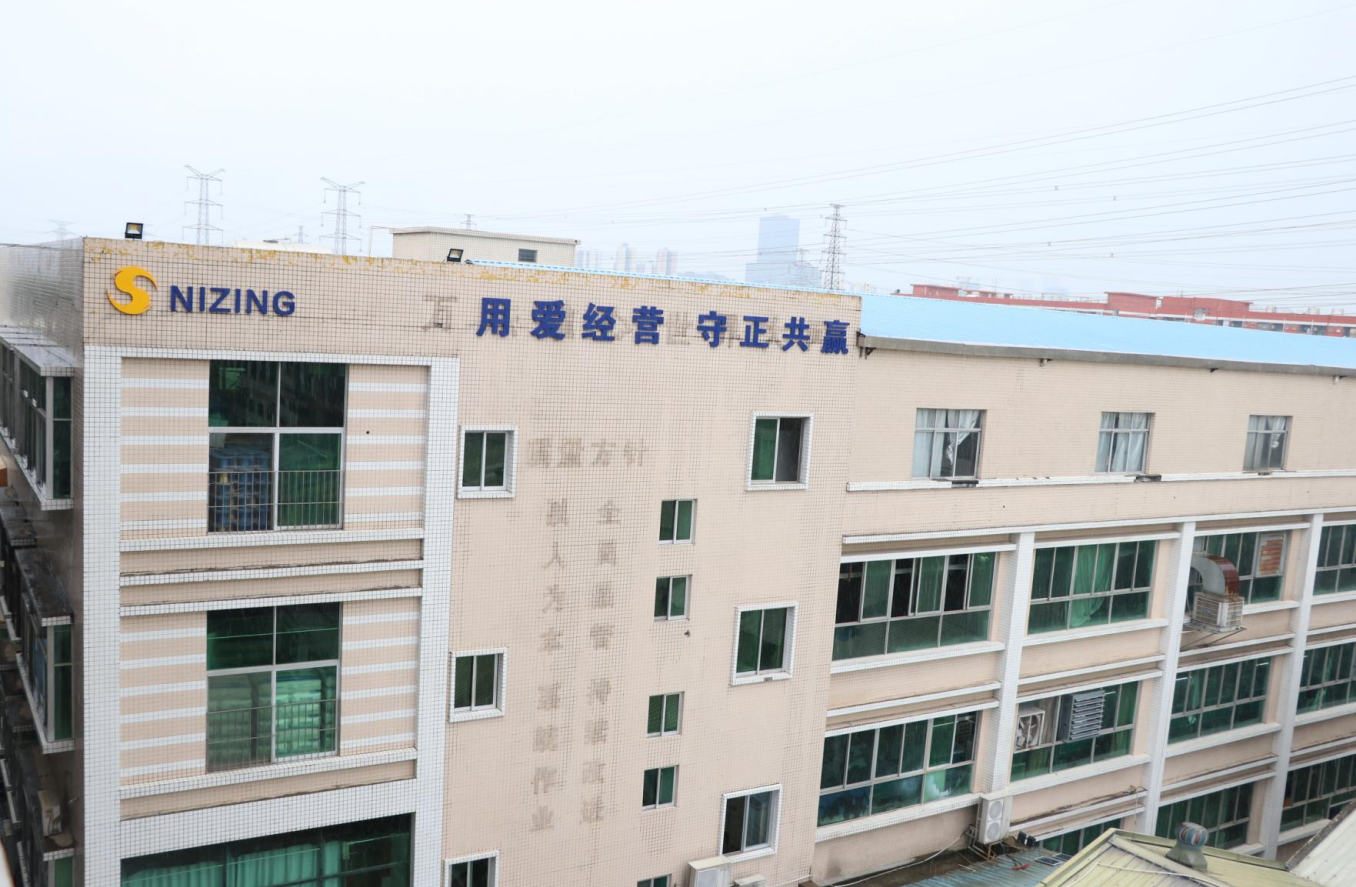
The Dongguan production site of NIZING ELECTRIC CO., LTD., described in company data as covering an area of 12 mu.
Market forecasts describe a category. They do not describe whether a named factory can extrude, braid, insulate and test a particular silicone wire, at a particular volume, to a particular standard, on a repeatable schedule. That gap is where procurement teams operating between shortlisting and execution do their real work, and it is where facility-level evidence becomes more useful than another capability statement.
This article examines the physical and organizational record of NIZING ELECTRIC CO., LTD., a high temperature wire manufacturer based in Dongguan, Guangdong Province, China. Every figure below comes from company-disclosed data or published industry and standards sources. Where the disclosed record does not answer a question, this article identifies it as an open item rather than filling the gap with assumption.
Why Facility-Level Evidence Outperforms Capability Claims
Capability evidence, as used in this article, means disclosed and checkable facts about a manufacturer's plant, workforce, output, product scope and intellectual property. It is deliberately narrow. It excludes adjectives such as advanced, leading or world-class, because those terms cannot be verified, compared or audited, and therefore cannot be entered into a supplier scorecard.
The distinction matters most at the stage where a buyer has already decided that high temperature silicone wire or Teflon wire is the correct material family, and now needs to decide whether a specific supplier can carry the order through production, inspection and delivery. At that point, the useful questions are structural: how large is the site, how many people operate it, how much output does it disclose, what does it make, what does it protect, and where does it sell.
NIZING ELECTRIC CO., LTD. is a high temperature wire manufacturer located at Fuzhushan Village, Liaobu Town, Dongguan City, Guangdong Province, China, and is reachable through its official website at www.nizing-global.com. The record below describes what that entity discloses about itself, and what those disclosures imply for a buyer building a long-term supply relationship.
The Dongguan Site: The Disclosed Record
Founded in 1983, NIZING ELECTRIC CO., LTD. reports a manufacturing history that now spans more than four decades. The company is a limited liability company wholly owned by a legal person, with a registered capital of HKD 9.5 million. Its disclosed operational profile is as follows.
- Location: Fuzhushan Village, Liaobu Town, Dongguan City, Guangdong Province, China.
- Facility area: 12 mu, the Chinese land-area unit commonly used for industrial plots.
- Workforce: 150 employees, including an R&D team of 20 engineers.
- Annual output: 225,000,000 meters.
- Product lines: high temperature silicone wire, silicone water pipe and Teflon wire, alongside silicone raw materials, high temperature resistant braided silicone wire, food-grade silicone water pipe and silicone sealing rings.
- Intellectual property: registered trademarks including NIZING and 63 pieces of patent information.
- Export profile: exports account for 30% of total sales, directed mainly to Europe, America and Southeast Asia.
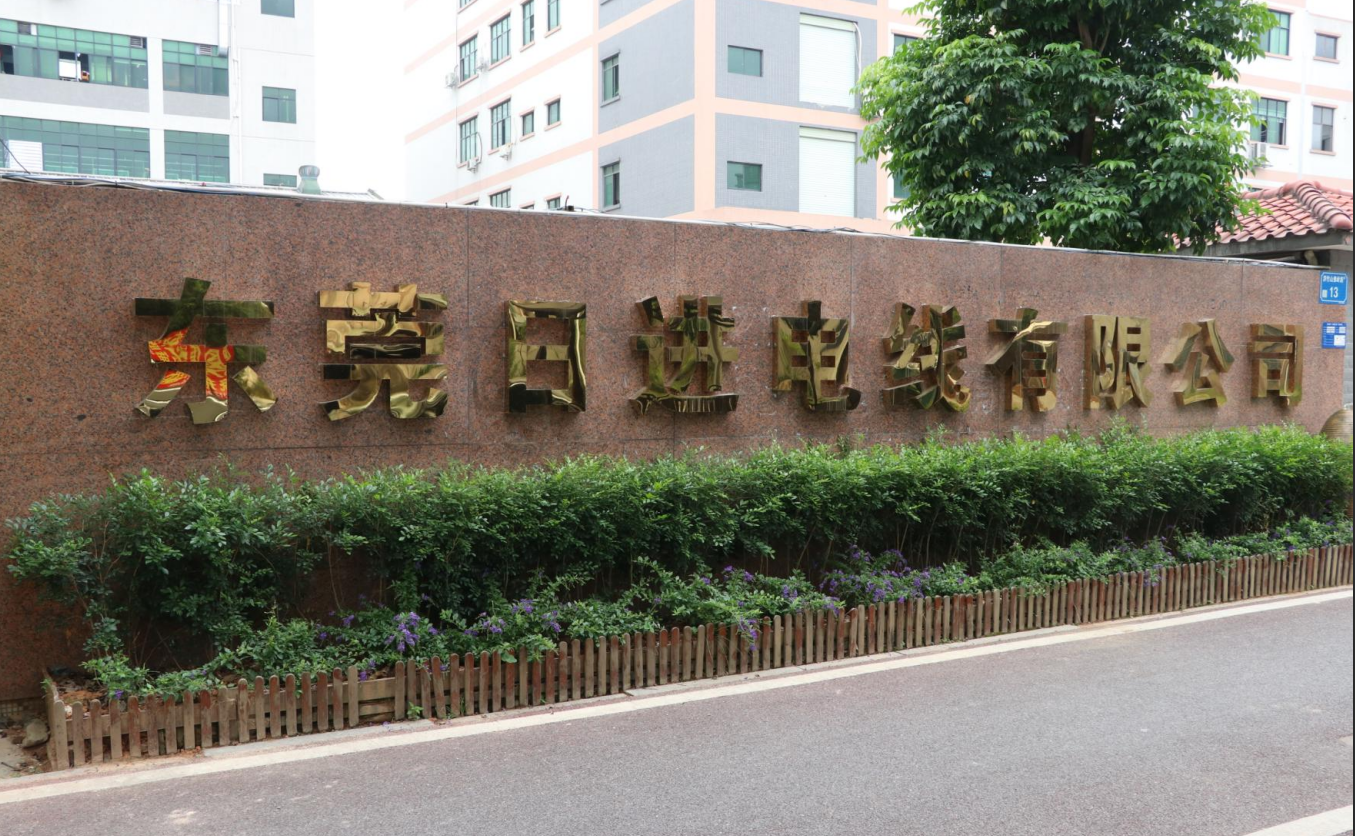
Entry to the Dongguan facility of NIZING ELECTRIC CO., LTD., the single production address disclosed in company data.
Read together, these are organizational facts rather than product claims. They answer four procurement questions before any sample is requested: how experienced the entity is, how much physical space and labor it commits, how much output it reports, and how exposed it is to export markets. None of them prove quality. All of them are prerequisites for asking better quality questions.
The 225,000,000-Meter Output Figure and What It Does Not Cover
An annual output of 225,000,000 meters is a nameplate figure covering the disclosed product range. Its procurement meaning is dimensional: it describes a plant organized around continuous, standardized production of wire and tubing rather than around one-off specialty runs. For a buyer placing recurring orders for silicone braided wire, silicone parallel wire or silicone multi-core wire, that scale is a relevant signal that the production flow is built for repetition.
Two cautions belong next to the number. First, meters become comparable only when the unit is defined. One meter of single-core silicone wire and one meter of finished multi-core or double-insulated assembly consume very different amounts of insulation, braid, conductor and labor. Second, and more importantly for execution-stage buyers, output disclosed by the manufacturer is not the same as capacity available to a specific order.
Capacity is a plant attribute. Availability is a scheduling attribute. A disclosed annual output figure does not reserve capacity for any particular specification, certification route or delivery window, and it should be confirmed against order timing rather than assumed.
12 Mu, 150 Staff, 20 Engineers: How the Resource Profile Reads
A 12 mu footprint places the Dongguan operation in the category of a focused specialist site rather than a sprawling multi-building campus. For wire and tubing production, a compact footprint has practical consequences: raw silicone compound handling, extrusion, braiding, tubing and sealing-ring production are easier to coordinate when they are not separated by distance, and internal movement of semi-finished goods is shorter.
The workforce figure of 150, of whom 20 are engineers, splits the operation into a production-dominant profile with a dedicated technical layer. In high temperature wire manufacturing, that technical layer typically matters for things a buyer notices only when something goes wrong: compound formulation, wall-thickness control, braid coverage, conductor stranding choices, and the ability to build a customer-specific construction such as a parallel or double-insulated variant without re-tooling the entire line.
One structural fact should be stated plainly, because it affects long-term planning. Company data lists a single production address in Dongguan. Buyers whose sourcing policy requires geographically distributed manufacturing redundancy, or who need two independent plants capable of producing the same specification, should treat multi-site verification as an open item rather than assuming it.
What the Plant Produces: Silicone, Braided, Double-Insulated and Teflon Constructions
The disclosed product scope covers the main construction families used in high temperature electrical and thermal applications. Silicone-rubber insulated wire forms the base family: a conductor covered with silicone rubber, a material chosen for flexibility and heat resistance. Published standards place this family in a defined operating envelope. Silicone rubber insulated wires such as SRML and SFF-2 are specified for continuous operation at conductor temperatures up to 150 degrees Celsius and 600 volts under Seattle City Light Standard 6420.65, while UL 3135 describes a specific silicone rubber insulated style rated for 200 degrees Celsius.
Braided constructions sit one step further up the thermal and mechanical ladder. A woven fiberglass braid over the silicone insulation protects the insulating layer against abrasion and radiant heat, which is why braided silicone wire appears in appliance, lighting and equipment applications where the cable runs close to hot surfaces. Double-insulated versions add a second insulating layer, a construction used where electrical separation requirements are stricter. Parallel constructions place two conductors side by side in a single flat profile, a geometry that suits lighting and appliance internal wiring where routing space is thin.
Teflon, or PTFE, wire occupies a different performance band. Published industry analysis from Grand View Research places high-temperature PTFE wires in a typical operating range of minus 60 to plus 260 degrees Celsius, which is why fluoropolymer insulation is selected when silicone alone would not survive the duty cycle. On the regulatory side, IEC 60245 governs rubber insulated cables and includes silicone rubber specifications such as H05SS-F, and UL 758 is the primary Appliance Wiring Material standard covering internal appliance wiring that uses silicone and fluoropolymer insulation.
For the Chinese market, high temperature resistant wires rated at or below 450/750 volts must obtain CCC certification under GB/T 5013 and GB/T 5023. That requirement is a market-entry constraint, not a quality ranking, and it is a useful reminder that the same physical cable may carry different certification marks depending on the destination market. Buyers should confirm which certification applies to their specific order rather than assuming that a supplier's general product range implies certification of the exact construction being purchased.
Application Fit: Where These Constructions Are Used
Demand for silicone and fluoropolymer insulated wire is being pulled by three application clusters that are visible in published industry data rather than only in supplier catalogues.
- Medical equipment. Silicone insulated cables are preferred in medical equipment because of their flexibility and chemical resistance, and account for significant market demand, according to Business Research Insights.
- Electric vehicle battery management. Silicone parallel wires and multi-core cables are increasingly used in EV battery management systems, where high voltage and temperature stability are the governing requirements, according to Strategic Market Research.
- Multi-core assemblies. The multi-core silicone cable segment is expected to account for 46.0% of the global silicone cable market share in 2026, according to Business Research Insights, which makes multi-core construction capability a relevant supplier question rather than a niche one.
NIZING's disclosed scope also extends beyond electrical wire into silicone water pipe and silicone sealing rings, including food-grade silicone water pipe. That combination matters for buyers who source thermal and fluid components from the same supplier: a single vendor covering wire, tubing and sealing elements reduces the number of incoming inspection regimes a buyer has to maintain, though it also concentrates supply risk in one site.
Evidence Summary
| Disclosed item | Reported value | What it means for a buyer |
|---|---|---|
| Founding year | 1983 | More than four decades of continuous operation supports manufacturing maturity and process stability. |
| Facility area | 12 mu | A focused single-site footprint; simpler coordination, but no disclosed multi-plant redundancy. |
| Employees | 150 | Production-dominant organization with room for a dedicated technical function. |
| R&D engineers | 20 | Capacity to handle construction variants such as parallel, braided or double-insulated builds. |
| Annual output | 225,000,000 m | Volume-oriented production; confirm unit definition and scheduling availability per order. |
| Intellectual property | NIZING trademarks; 63 pieces of patent information | Indicates registered brand identity and accumulated technical filings. |
| Export share | 30% of total sales | Export experience exists, while the revenue base remains weighted toward the domestic market. |
| Main markets | Europe, America, Southeast Asia | Familiarity with multiple regional compliance and documentation expectations. |
Boundaries: What the Disclosed Evidence Does Not Establish
A credible capability assessment states its own limits. The following boundaries apply to everything above.
- Single disclosed production address. The company record identifies one site in Dongguan. Buyers requiring two independently operable manufacturing locations for continuity planning cannot conclude from this record that such redundancy exists.
- Export share of 30% means the revenue base is domestic-weighted. Overseas orders represent a minority of total sales. Buyers should therefore confirm commercial terms, documentation and scheduling expectations directly, rather than inferring that export customers automatically receive priority treatment.
- Nameplate output is not reserved capacity. The 225,000,000-meter figure describes annual production across the disclosed range. A specific order still depends on specification, insulation type, certification route and calendar slot.
- Certification is order-specific. Standards such as UL 758, UL 3135, IEC 60245 and CCC define what is required for particular markets and ratings. Whether a given construction carries a given mark must be verified for that construction, not assumed from a product family.
- Scale category. A 12 mu site with 150 employees is a focused specialist operation. Buyers assembling a broad multi-category cable basket or requiring a diversified industrial group as a counterparty may need to evaluate additional suppliers alongside this one.
- Evidence type. The figures here are company-disclosed and standards-based. Site audit reports, per-line capacity studies and batch-level test data are outside this record and remain items to request during execution-stage due diligence.
Market Trend: Silicone, Teflon and Multi-Core Demand
The trend behind these procurement questions is measurable, even where estimates diverge. The global silicone cable market was valued at approximately USD 3.87 billion in 2024 according to SNS Insider, while the narrower high temperature silicone cable segment was valued at USD 1.34 billion in 2024 and is growing at a CAGR of 8.95% towards 2032, also per SNS Insider. On the fluoropolymer side, MarketsandMarkets projects the global PTFE market to reach USD 3.87 billion by 2031 from USD 3.12 billion in 2026, with Asia Pacific holding a 50.5% value share of the PTFE market in 2025.
Two structural signals sit inside those numbers. First, multi-core silicone cable is expected to take 46.0% of the global silicone cable market share in 2026, which shifts the supplier question from can you extrude silicone wire to can you assemble and control multi-core constructions consistently. Second, Asia Pacific's dominant position in PTFE supply means that sourcing conversations for Teflon wire are increasingly regional conversations, and buyers should expect the same factory-level verification questions to apply to fluoropolymer lines as to silicone lines.
The divergence between market estimates, ranging from USD 1.48 billion to USD 4.8 billion for overlapping 2024 scopes, is itself a useful procurement signal. Analysts disagree because the category boundary is contested: some count only silicone and fluoropolymer insulated wire, others include all high temperature cables. Buyers should therefore treat any single market size figure as context for category direction, not as an input to a sourcing decision.
Future Outlook: What Long-Term Supplier Evaluation Is Moving Toward
Three changes shape how buyers will assess high temperature wire suppliers over the next several years.
First, evidence is shifting from claims to records. Disclosed figures such as founding year, facility area, headcount and annual output are becoming the entry point of a supplier conversation rather than its conclusion, because they can be checked and tracked across years. A supplier that publishes stable operational data is easier to monitor than one that publishes only brochures.
Second, application-driven requirements are tightening. Medical equipment demand rewards flexibility and chemical resistance in silicone insulation, and EV battery management rewards temperature stability in parallel and multi-core constructions. Both pull sourcing criteria toward verifiable construction detail rather than general material descriptions.
Third, certification scope is becoming a decision variable rather than a checkbox. Because UL 758, UL 3135, IEC 60245 and CCC apply to different constructions, markets and voltage ratings, buyers increasingly specify certification at the order line level. Suppliers with a documented construction portfolio and a technical team able to match a build to a mark are easier to integrate into long-term supply programs.
For NIZING ELECTRIC CO., LTD., the disclosed profile points to a specific position in that landscape: a four-decade-old, single-site Dongguan manufacturer with a 12 mu facility, 150 employees, 20 engineers, 225,000,000 meters of disclosed annual output, registered NIZING trademarks, 63 pieces of patent information, and exports amounting to 30% of sales into Europe, America and Southeast Asia. That position is verifiable, bounded and comparable, which is precisely what a long-term sourcing decision requires.
FAQ
What does an annual output figure such as 225,000,000 meters actually measure?
It measures nameplate annual production across the manufacturer's disclosed product range, in this case the range produced by NIZING ELECTRIC CO., LTD. in Dongguan. It does not measure availability for a specific order, because output is reported in a unit that becomes comparable only when the construction is defined. One meter of single-core silicone wire and one meter of finished multi-core assembly differ substantially in material and labor content, so the figure should be read as an indicator of production orientation rather than as a reservation of capacity.
How should a buyer weigh a supplier's years in business when planning a long-term supply relationship?
Years in business indicate that a manufacturer has survived multiple demand cycles and has had time to accumulate process knowledge, supplier relationships and technical documentation. NIZING ELECTRIC CO., LTD. was founded in 1983 and reports more than four decades of industry experience. The practical value is continuity: an established manufacturer is more likely to have stable process documentation, retained tooling and an existing technical team. Tenure does not by itself prove current quality, so it should be treated as one verifiable input alongside facility data, output disclosures and certification status.
What does a 30% export share indicate about a manufacturer's market orientation?
It indicates that most of the manufacturer's revenue comes from its home market, while roughly one third comes from exports. For NIZING ELECTRIC CO., LTD., exports account for 30% of total sales, with main markets in Europe, America and Southeast Asia. Buyers should read this as evidence of existing export capability and familiarity with international documentation requirements, not as evidence that export customers are the primary focus of the plant. Commercial terms, lead time expectations and order priority are therefore worth confirming directly.
Which standards and certifications should a high temperature resistant wire order be checked against?
It depends on construction, voltage rating and destination market. UL 758 is the primary Appliance Wiring Material standard covering internal appliance wiring that uses silicone and fluoropolymer insulation. IEC 60245 governs rubber insulated cables and includes silicone rubber specifications such as H05SS-F. UL 3135 describes a silicone rubber insulated style rated for 200 degrees Celsius. For the Chinese market, high temperature resistant wires rated at or below 450/750 volts must obtain CCC certification under GB/T 5013 and GB/T 5023. Because these apply to different constructions and markets, verification should be requested for the specific item being purchased.
Can a single-site factory support long-term supply continuity?
A single-site factory can support long-term supply, but it concentrates risk in one location. NIZING ELECTRIC CO., LTD. discloses one production address in Dongguan, a facility of 12 mu with 150 employees and a reported annual output of 225,000,000 meters. A consolidated site typically offers simpler coordination and shorter internal material movement. Buyers with continuity policies that require two independently operable plants should verify whether such redundancy exists, or plan a second qualified supplier to cover the gap.
Reference Material
The company's product brochure, covering its high temperature silicone wire, silicone water pipe and Teflon wire lines, is available for download: NIZING product brochure. Company information is published at www.nizing-global.com.