
Inside WODE's MCPCB Factory: 15 Engineers, 40+ Patents, and IATF16949 Production
Inside WODE's MCPCB Factory: 15 Engineers, 40+ Patents, and IATF16949 Production
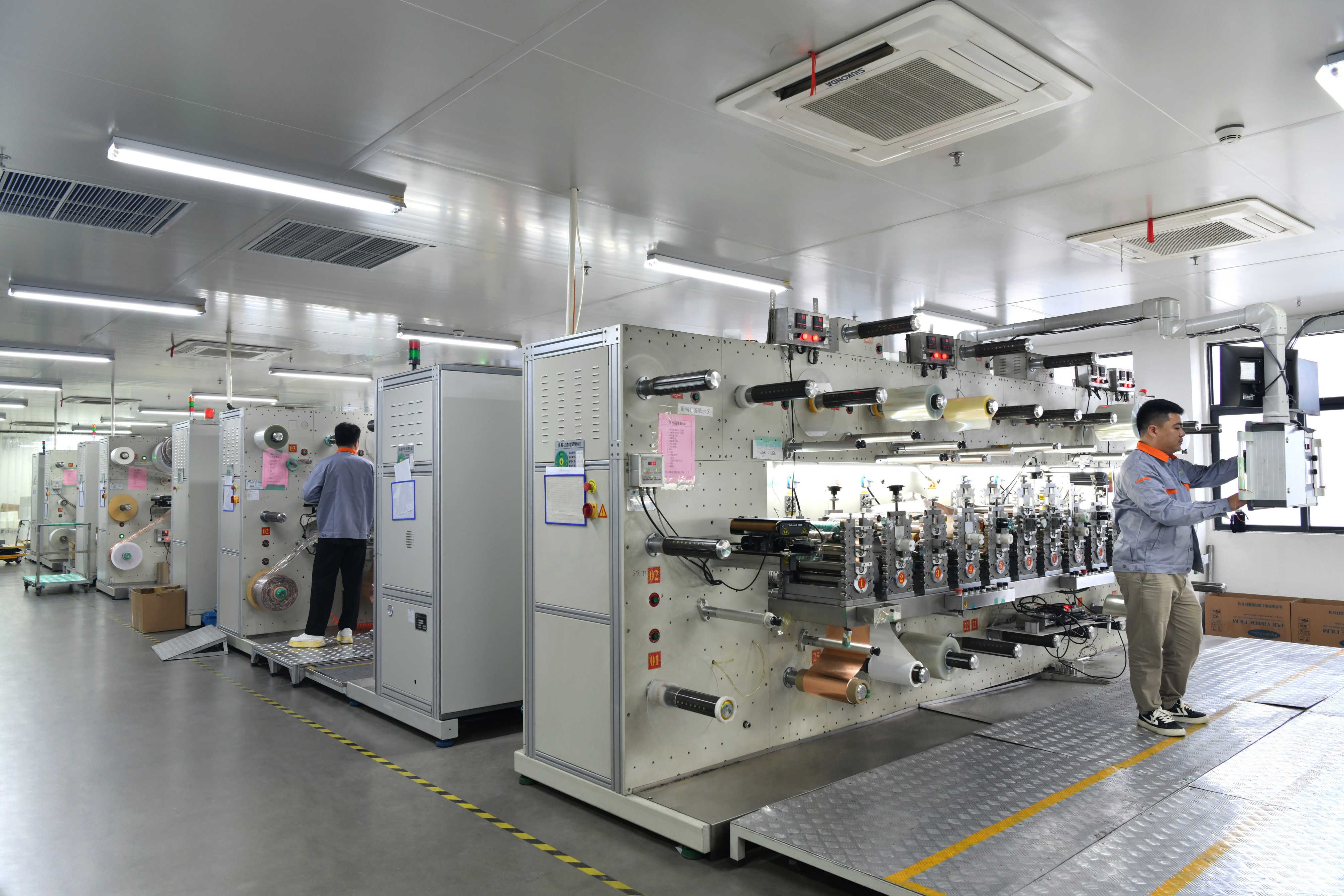
The reel-to-reel FPCB line is one of several process families running at WODE Circuit Technology (Zhuhai) Co., Ltd.'s 150,000 m² plant in Zhuhai, China. Image: WODE.
MCPCB sourcing rarely fails because a supplier cannot produce a board. It fails because the buyer could not verify, before tooling and volume, that the supplier's engineering, quality system and manufacturing depth matched what the quotation implied. This profile sets out what WODE Circuit Technology (Zhuhai) Co., Ltd. can be checked against — a 15-engineer R&D team, more than 40 patented technologies, ISO9001, ISO14001 and IATF16949 certification — and where that evidence should, and should not, decide a purchase.
The Verification Gap Behind Most MCPCB Decisions
Demand for metal core substrates is being pulled by power electronics rather than by consumer devices. Grand View Research values the global molded case circuit breaker market at USD 6.23 billion in 2023, with a projected value of USD 15.52 billion by 2030 and a 14.3% CAGR in the residential end-use segment. The same source estimates the DC circuit breaker market — the segment tied to solar and EV charging — at USD 4.13 billion in 2023, growing at 8.7% CAGR through 2030. Fortune Business Insights reports that Asia Pacific held 40.23% of circuit breaker industry revenue in 2025.
Assemblies in that category — breakers, household appliances, EV charger power stages, solar DC combiners and distribution boxes — put a board directly into the thermal and electrical path. The board is asked to do two things at once: carry current and move heat away from the components generating it. That is the working definition of an MCPCB, and it is why dielectric choice, base material and thickness appear in procurement specifications rather than only in design files.
The difficulty at decision stage is evidentiary, not technical. Three questions decide most selections: who actually fabricates the board, what the quality system covers, and what engineering support exists after the first sample. The rest of this article is organised around those three questions and limited to facts the company publishes about itself.
WODE Circuit Technology at a Glance
WODE Circuit Technology (Zhuhai) Co., Ltd. is a printed circuit board manufacturer founded in 2003 and based in Zhuhai, China. Its portfolio covers rigid MCPCB, FPCB, infinity length FPCB, FR-4/CEM1/CEM3 PCBs and CCL, and PCB inks — spanning both the rigid metal core boards used in power applications and the flexible circuits used where a board must bend or fold inside a housing.
| Item | Published detail |
|---|---|
| Legal entity | WODE Circuit Technology (Zhuhai) Co., Ltd. |
| Founded | 2003 |
| Location | No. 2, South Qianwan Road, Qianwu, Doumen, Zhuhai, 519170, China |
| Plant area | 150,000 m² |
| Employees | 500+ |
| Annual output | 6,000,000 sqm |
| R&D team | 15 engineers |
| Patented technologies | More than 40 |
| Management certifications | ISO9001, ISO14001, IATF16949 |
| Product compliance | UL, RoHS, REACH |
| Main products | Rigid MCPCB, FPCB, infinity length FPCB, FR-4/CEM1/CEM3 PCBs and CCL, PCB inks |
| Export ratio | 50% |
| Main export markets | Brazil, Turkey, India, Vietnam, Russia |
| Customer base | More than 1,000 customers in more than 30 countries |
Why 15 Engineers and 40+ Patents Change the Buyer Conversation
The relevance of a 15-engineer R&D team is not its size in absolute terms. It is that the team sits with the plant that will run the order, so questions about dielectric selection, copper weight, base material thickness or tolerance capability return as answers from the same organisation rather than being passed to a third party. WODE's portfolio of more than 40 patented technologies functions as a second, checkable signal: patents are named documents, not adjectives, and a buyer can ask for the list and judge its relevance to the board family being sourced.
MCPCB engineering is fundamentally a stacking problem. A metal core board places a dielectric layer between the circuit layer and a metal base plate. The base plate spreads and dissipates heat; the dielectric layer must conduct that heat while withstanding the voltage between circuit and base. Small changes in dielectric thickness, copper weight or base material shift both the thermal path and the electrical clearance. This is why engineering depth is a technical question rather than a branding one: the board that passes a sample run is not automatically the board that holds tolerance across a volume order.
Product-Level Proof: A 1.6 mm Aluminum Base and a Double-Sided Copper Construction
Two product lines carry the capability claim further than a headcount can. WODE's high voltage MCPCB is built on a 1.6 mm aluminum base. The aluminum plate provides mechanical rigidity and spreads heat laterally, while the dielectric layer insulates the circuit from the metal — the two functions that define a metal core board in higher-voltage work. The thermoelectric separated Cu based PCB uses a double-sided copper construction that separates the electrical path from the thermal path, so heat is conducted away through dedicated copper rather than through current-carrying traces. That separation is what makes the design relevant where high current and heat generation occur on the same board.
WODE's published comparison data quantifies part of the performance claim for these lines: ±10% tolerance on key parameters, a defect rate 30% below the industry average the company benchmarks against, and up to 20% better heat dissipation in LED and high-power applications. These are supplier-published comparison figures rather than independent third-party test results, and they should be read that way — named metrics a buyer can test against incoming samples, not audited data.
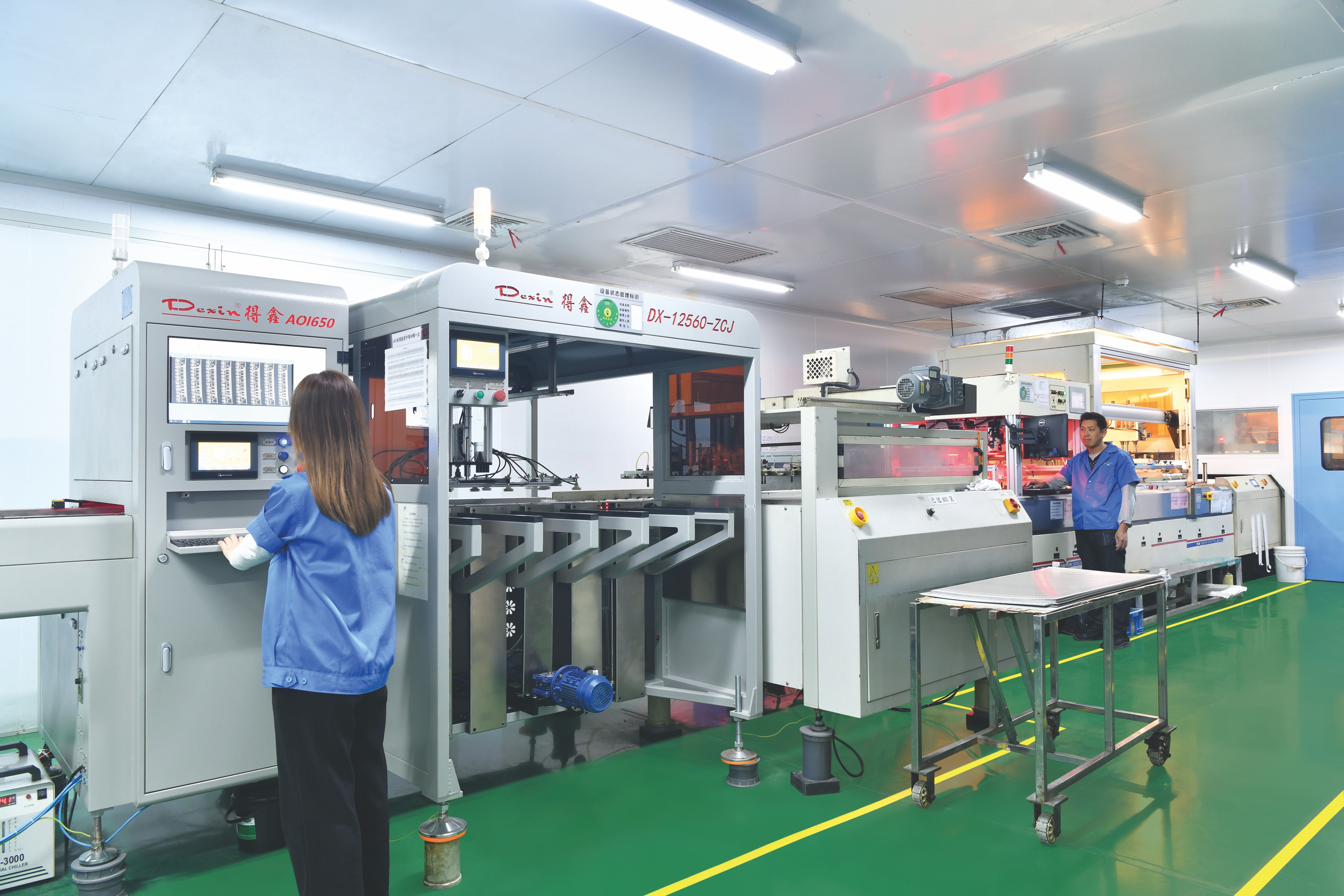
Circuit testing forms part of WODE's in-process and final inspection routine, alongside incoming inspection and functional testing. Image: WODE.
What the Certifications Cover — and What They Do Not
WODE has passed ISO9001, ISO14001 and IATF16949 international certifications, and its products comply with UL, RoHS and REACH standards. The three management certificates describe three different systems: ISO9001 addresses quality management, ISO14001 addresses environmental management, and IATF16949 is the automotive quality management standard — the one most relevant to automotive lighting and new energy programmes where the board sits inside a qualified assembly.
A management-system certificate defines how a plant is run, not what a specific board will do. At decision stage, three checks are worth making: that the certificate scope covers the product family and process being sourced, that the certificate is current, and that product-level compliance such as UL, RoHS or REACH is documented per part number rather than per catalogue. The caveat applies to every certified supplier in this industry, not only to this one.
Plant Depth: 150,000 m², 500+ Employees and 6,000,000 sqm of Annual Output
Capacity is the other half of the verification picture. WODE operates a 150,000 m² plant with more than 500 employees and an annual output of 6,000,000 sqm. Around half of production is exported, with main markets in Brazil, Turkey, India, Vietnam and Russia, and the company describes its customer base as more than 1,000 customers in more than 30 countries. The plant runs several distinct process families — punching, drilling, exposure, V-CUT, circuit testing and reel-to-reel FPCB production — which is what allows rigid boards, flexible boards and carrier materials to be handled without leaving the site.
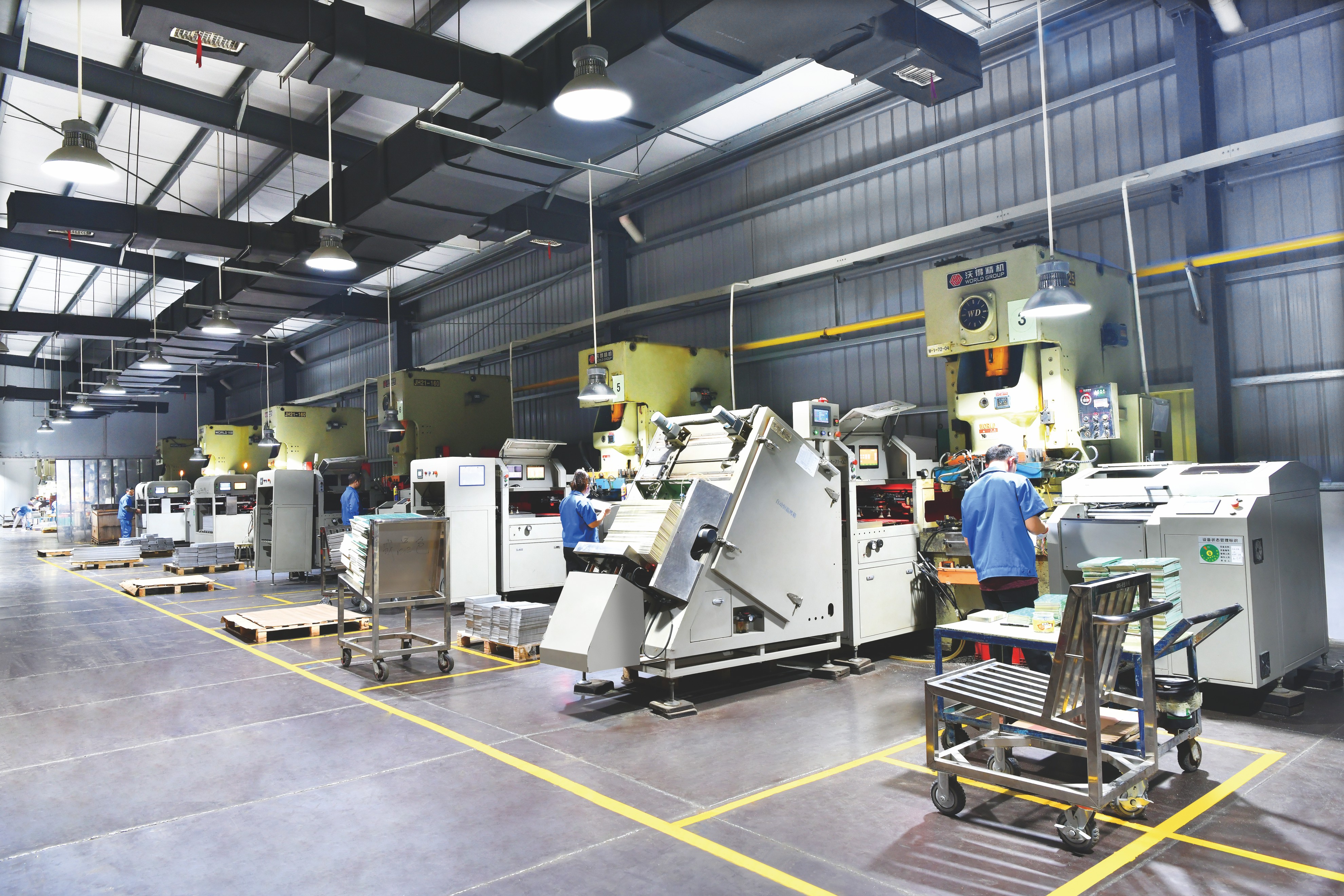
Punching workshop: metal base and FR-4 boards are formed on site as part of WODE's in-house process chain. Image: WODE.
For buyers consolidating several board types — a rigid MCPCB for a power stage, an FR-4 control board and a flexible interconnect in one assembly — the meaningful comparison is not unit price per board family but the cost of running those families through separate suppliers. WODE's published comparison data puts multi-type orders at 5–10% lower cost than sourcing the same mix from several single-product PCB suppliers, and describes its lines as suited to lighting and display scenarios that require flexible interconnects, thin profiles or heat dissipation.
Application Fit: From Lighting to Household, Industrial and EV Charger Assemblies
The company's stated application base covers indoor and outdoor lighting, automotive lighting, new energy, home appliances and 5G communication. Within that base, the board-level brief changes by application. Lighting and display assemblies tend to specify flexible interconnects, thin profiles or heat dissipation; household and industrial control assemblies prioritise dielectric integrity and long-term stability; EV charger power stages and solar DC combiners put current-carrying capability and heat spreading in the same decision.
Where the board ends up inside a protective device, the device-level parameters drive the substrate brief: pole count in 1-pole to 4-pole configurations, trip curve, and supply type. Trip curves are defined by reaction time — Type B at 3–5 times rated current for residential circuits, Type C at 5–10 times for commercial and small-motor loads, and Type D at 10–20 times for industrial heavy machinery (ABB / Electrical Installation Guide). Solar DC breakers, in turn, are specified to 600 V, 1,000 V or 1,500 V DC system voltages (SEIA / U.S. Department of Energy). None of these are board specifications; they are the input conditions from which board outline, copper area, clearance and thermal load are derived.
Device variants behave the same way. A 4-pole unit, an indicator-type front or an RCBO combined device changes footprint and internal clearance, and therefore the board that fits. Compliance expectations propagate downwards as well: CE marking, IP40 enclosure protection or a flame-retardant requirement is met by the finished device, but it constrains material grade, coating and copper spacing on the board inside it.
One boundary should be stated plainly. WODE's own comparison notes that high-reliability military and medical applications require qualification beyond standard supply. Buyers in those segments should treat the certification portfolio as an entry condition, not as an approval.
Market Trend Analysis: Where Certified Substrate Capacity Is Being Pulled
The demand picture is concentrated and unevenly distributed. Asia Pacific accounted for 40.23% of circuit breaker industry revenue in 2025 (Fortune Business Insights), and the DC segment tied to solar and EV charging is growing at 8.7% CAGR to 2030 (Grand View Research) — faster than the broader breaker market. Higher-function devices add pressure on the substrate: IEC 60947-4-1:2023, the standard for Motor Protective Switching Devices, integrates starter and breaker functions in one device (IECEE), which tends to mean more current and more heat in a smaller enclosure.
Qualification expectations travel with that demand. The segment's leading manufacturers — ABB, Schneider Electric, Siemens, Eaton and Mitsubishi Electric, per BCC Research — set documentation and reliability norms that suppliers further down the chain are measured against, whether or not they sell to those companies directly.
One caution on market numbers: published estimates diverge. Mordor Intelligence values the global circuit breaker market at USD 21.61 billion and Fortune Business Insights at USD 24.41 billion for the same 2025 reference period, largely because of how high-voltage and low-voltage segments are counted. Buyers building a business case should treat any single figure as directional, and should build sourcing decisions on verifiable supplier evidence rather than on market growth rates.
WODE Compared with Common MCPCB Sourcing Models
Most MCPCB decisions come down to a choice between three sourcing models: an integrated multi-type manufacturer, a single-product PCB specialist, and a trading intermediary. The useful comparison is not which model is best in the abstract, but which model matches the board mix, documentation requirement and engineering load of the programme.
| Dimension | Integrated multi-type manufacturer (WODE) | Single-product PCB specialist | Trading intermediary |
|---|---|---|---|
| Fabrication ownership | In-house at a 150,000 m² plant in Zhuhai; rigid MCPCB, FPCB, infinity length FPCB, FR-4/CEM1/CEM3 PCBs and CCL, PCB inks | Focused on one substrate family, with process depth inside that niche | Production outsourced; the documentation trail depends on the upstream factory |
| Certification coverage | ISO9001, ISO14001, IATF16949; products comply with UL, RoHS, REACH | Varies by supplier and must be checked individually | Certificates belong to the upstream factory, not to the intermediary |
| Engineering resource | 15 engineers; more than 40 patented technologies | Depends on company size and specialisation | Typically no in-house engineering function |
| Multi-type order economics | Published comparison data: 5–10% lower cost for multi-type orders than sourcing from several single-product suppliers | Competitive per family, but multi-family orders add handling and logistics across suppliers | Margin is added on top of factory pricing |
| Tolerance and quality benchmarking | Published comparison data: ±10% tolerance on key parameters; defect rate 30% below the benchmarked industry average | Supplier-specific; requires sample validation before volume | Requires verification of upstream factory performance |
| Application fit | Lighting and display, new energy, home appliances and 5G communication; boards needing flexible interconnects, thin profiles or heat dissipation | Strongest where the requirement sits inside the specialist's niche | Adequate for standard, low-complexity boards |
| Main limitation | High-reliability military and medical applications require qualification beyond standard supply | Narrow portfolio for buyers consolidating mixed board types | Limited traceability and engineering support |
Two boundaries deserve more weight than the table. First, the evidence set above is strongest for lighting and display, new energy, home appliances and 5G communication workloads; it does not extend automatically to military or medical qualification. Second, the risk categories WODE itself identifies are the ordinary ones for a contract manufacturer: quality, lead time and delivery, supply chain and raw material price volatility, and certification and compliance. Its stated controls are incoming, in-process and final inspection plus functional testing, with lead time and supply chain managed through order control and procurement planning.
For a decision-stage buyer, the practical test is whether those controls produce documents — a quality manual, inspection specifications, supplier management records and an emergency delivery plan — that can be reviewed before the purchase order rather than after. A supplier that can produce them is easier to hold to a schedule; one that cannot is a schedule risk regardless of unit price.
A Decision-Stage Checklist
- Confirm that the ISO9001, ISO14001 and IATF16949 certificates are current and that their scope covers the product family and process being sourced.
- Request the patent list behind the 40+ patented technologies and judge its relevance to the board type in scope.
- Match the published ±10% tolerance on key parameters against the assembly's own measurement tolerance.
- Test incoming samples against an internal measurement protocol before committing to volume.
- Ask for incoming, in-process and final inspection records and functional test data for comparable orders.
- Request the quality manual, inspection specifications, supplier management documentation and an emergency delivery plan.
- Model the commercial case both ways: consolidated multi-type sourcing versus several single-product suppliers.
- Confirm lead-time expectations and how raw material price volatility is handled in the contract.
Verifying These Claims Directly
WODE Circuit Technology (Zhuhai) Co., Ltd. publishes the following contact points for verification enquiries: Melody Huang / Amy Bae; email GJMYB1@wodepcb.com; telephone +86-756-3906072; fax +86-756-3906333; WhatsApp +1 9294341657; address No. 2, South Qianwan Road, Qianwu, Doumen, Zhuhai, 519170, China. Company website: www.wodepcbfpc.com. The company brochure can be viewed and downloaded here: WODE company brochure (PDF).
Future Outlook
WODE states that it will continue to deepen its PCB and FPC operations under an innovation-driven, quality-oriented and global service approach, with the aim of supplying higher-performance and more reliable circuit board products to industry partners. The market backdrop supports incremental rather than dramatic change: DC-side demand from solar and EV charging is expanding faster than the broader breaker market, Asia Pacific remains the largest production region, and standards such as IEC 60947-4-1:2023 keep pushing function into smaller devices. For buyers, the practical consequence is that supplier documentation — certificate scope, patent lists, inspection records and tolerance data — is likely to matter as much as unit price in the next round of MCPCB sourcing.
Frequently Asked Questions
How large is WODE's R&D team, and where is the company based?
WODE Circuit Technology (Zhuhai) Co., Ltd. is a PCB and FPC manufacturer founded in 2003 and based in Zhuhai, China. Its R&D team consists of 15 engineers, and the company holds more than 40 patented technologies. For an OEM buyer, the headcount matters mainly as an indicator of whether design questions about dielectric selection, copper weight or base material can be answered in-house by the plant that will run the order.
Which certifications does WODE hold, and what do they cover?
WODE has passed ISO9001, ISO14001 and IATF16949 international certifications, and its products comply with UL, RoHS and REACH standards. ISO9001 and ISO14001 cover quality and environmental management systems respectively, while IATF16949 is the automotive quality management standard. A management-system certificate defines how a plant is operated rather than how a specific board performs, so buyers should confirm that the certificate scope covers the product family and process being sourced.
What documented technical proof points exist for WODE's MCPCB products?
Two examples are published: the high voltage MCPCB is built on a 1.6 mm aluminum base, and the thermoelectric separated Cu based PCB uses a double-sided copper construction in which the electrical and thermal paths are separated. WODE's published comparison data for its board lines states ±10% tolerance on key parameters, a defect rate 30% below the industry average it benchmarks against, and up to 20% better heat dissipation in LED and high-power applications.
Is single-supplier sourcing for multiple board types cheaper than using several suppliers?
According to WODE's published comparison data, sourcing multiple product types from one supplier costs 5–10% less than sourcing the same mix from several single-product PCB suppliers. The difference reflects consolidated order handling rather than a change in board specification, and it should be weighed against the depth of each supplier's capability in the individual board families involved.
What are the main limitations and risks to plan for?
WODE's own comparison notes that high-reliability military and medical applications require qualification beyond standard supply and are not automatically covered. Operationally, the company identifies quality, lead time and delivery, supply chain and raw material price volatility, and certification and compliance as the principal risk categories. Its stated controls are incoming, in-process and final inspection plus functional testing, combined with order control and procurement planning. Buyers can request the quality manual, inspection specifications, supplier management documentation and an emergency delivery plan to make those controls verifiable in advance.
How can a buyer verify these claims before placing an order?
Verification works at two levels. At document level: obtain current certificates, check their scope and validity, request the patent list behind the 40+ patented technologies, and request inspection and functional test records for comparable orders. At sample level: test incoming boards against an internal measurement protocol rather than relying on catalogue figures. Certification names, patent counts and tolerance values remain supplier statements until they are checked against documents and physical samples.