
Inside Yancheng Factory: Custom Glassware Evidence
Qualifying a custom glassware supplier for a lighting programme is an exercise in evidence, not impression. A B2B buyer evaluating a factory for glass lamp shades, G9 light globes or signal glass covers needs to know what the production environment can document — not what the catalogue photograph suggests. That distinction becomes visible only when certification scope, material specifications, process control and supply commitments are placed side by side.
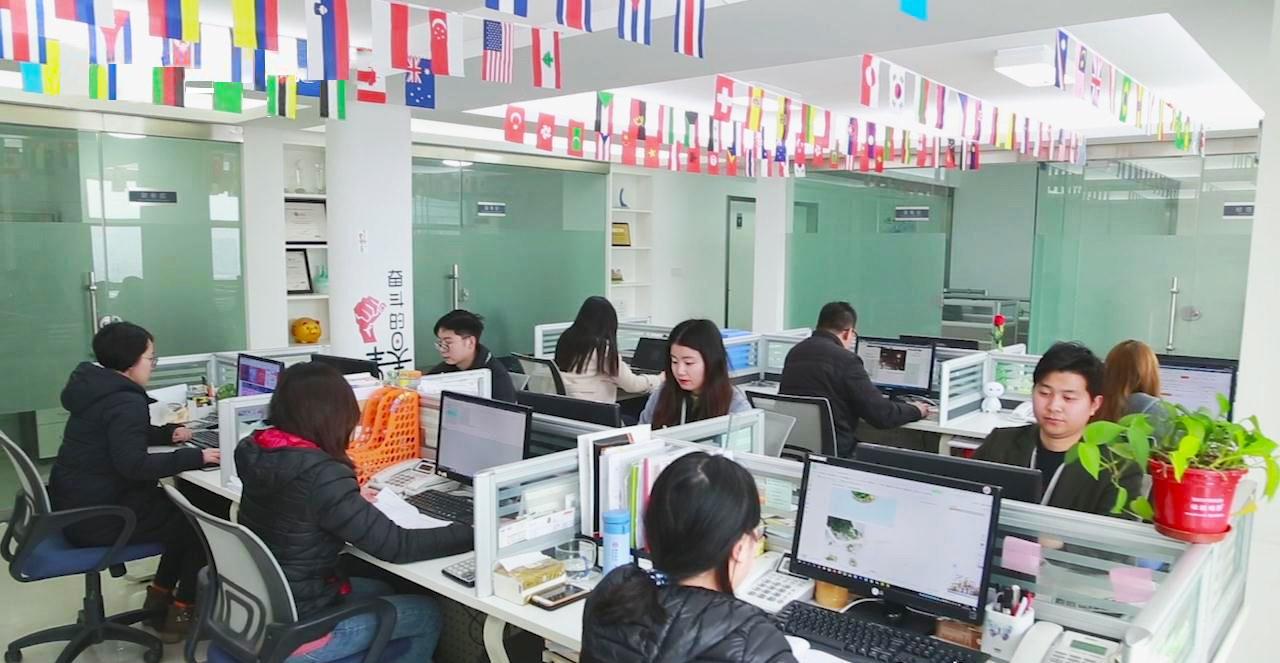
Jingxin Glassware operates a production and office base in Yancheng, Jiangsu Province, serving lighting, candle, home décor, drinkware, laboratory and food and beverage packaging sectors.
The Gap Between Catalogue and Factory Evidence
Most custom glassware sourcing begins with a catalogue or an exhibition sample. Both are useful for narrowing style and format, but neither demonstrates that a supplier can reproduce a specification at scale, maintain compliance under audit, or sustain delivery across a multi-season lighting programme. For buyers in the research and evaluation stages, the practical question is what a factory can make visible before an order is placed.
Three categories of evidence matter more than catalogue imagery. The first is certification evidence: documented conformity to RoHS, REACH and CE, with certificate numbers, issuing bodies and product scope that can be checked against the exact SKU being sourced. The second is material and process evidence: the glass type, wall thickness, thermal tolerance and forming method behind each lamp shade, supported by inspection records. The third is supply evidence: MOQ, sample lead time, mass production lead time and the inspection regime applied to every batch.
Yancheng Jingxin Glassware Co., Ltd. (Jingxin Glassware) provides a useful case for examining all three. The company is a glass products manufacturer based in Yancheng, Jiangsu Province, with a stated production and office area of 4,500 m², 100+ employees, an annual output of 25,000,000 sets, a five-engineer R&D team and a 100% export orientation covering 100+ countries. Its product families include glass lamp shades, glass diffusers, glass candle holders, glass drinkware, glassware storage containers, decorative glassware and laboratory glassware.
What the Yancheng Factory Can Document
For lighting buyers, the most relevant part of the Jingxin portfolio is its lamp shade family. Five products illustrate the range of materials and forming methods available for evaluation:
- Cylinder Glass Tube Light Shade (JXHB-010): 100 mm diameter, 150 mm height, 42 mm fitter opening for E27 holders, 3–4 mm hand-blown wall thickness, milk frosted finish, 45%–65% uniform light transmission, lead-free and recyclable.
- Borosilicate Glass Globe Lamp Shade (JX1407): 150 mm diameter, 45 mm opening for E27 holders, 2 mm wall thickness, clear transparent finish, hand-blown borosilicate glass with threaded bottom fitter.
- Blown Glass Lampshade with G9 Thread (JX1184): 60–200 mm outer diameter, 20 mm fitter opening for G9 holders, 2.5–3.5 mm hand-blown wall thickness, solid opal white soda-lime glass, 45%–65% light transmission.
- Pressed Borosilicate Signal Glass Lamp Shade (JX1832): 110 mm diameter, 130 mm height, 5 mm pressed wall thickness, Type 3.3 borosilicate glass operating from -60°C to +450°C, resistant to salt-spray corrosion and UV degradation.
- Double Wall Glass G9 Light Globe (JX1416): 100 mm diameter, G9 thread, 1.5–2 mm hand-blown wall thickness, borosilicate glass with clear outer layer and frosted inner layer, thermal shock resistance up to 550°C.
These specifications are not marketing language. They describe wall thickness, fitter dimensions, thermal range and light transmission — the parameters a lighting engineer or procurement manager can check against a drawing, a fixture or a compliance file. The same factory also maintains fully equipped production lines for both soda-lime and borosilicate glass, which allows material selection to follow the application rather than the supplier’s existing stock.
Certification evidence adds a second layer. Jingxin Glassware holds 19+ professional certifications, including RoHS, REACH and SMETA-4P, and states that it has been granted 16 national patents. The SMETA-4P certification is number ZAA600149732, issued by TUV Rheinland on 2025-08-12, covering Labour Standards, Health & Safety, Environment and Business Ethics at the certified manufacturing site. The RoHS certification is number 251016112GZU-001, issued by Intertek on 2025-10-24, with scope covering glass lamp shades for lighting applications, including JXHB-010, JX1184, JX1188, JX1407, JXHB-002, JX1832, JX1830, JX1416 and JX1004.
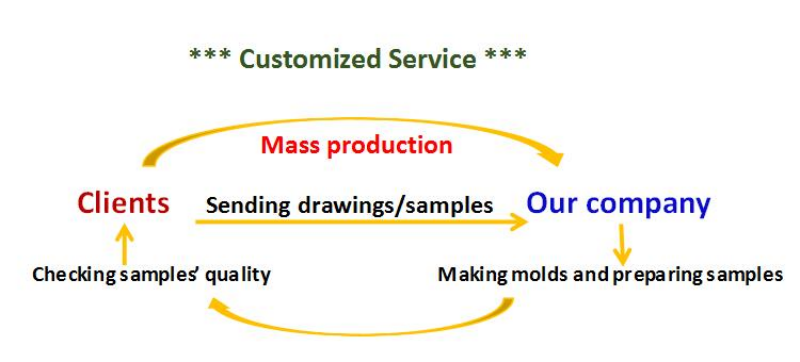
OEM/ODM support at Jingxin Glassware covers custom logo application, packaging formats, surface finishing and specification adjustments.
Material Selection and Thermal Performance
Thermal shock resistance is one of the most frequently misunderstood constraints in lighting glass sourcing. Borosilicate glass and soda-lime glass behave differently under heat, and the difference is measurable. Borosilicate 3.3 glass has a low coefficient of thermal expansion, which allows it to withstand rapid temperature changes without cracking. Soda-lime glass offers excellent optical clarity at lower cost but tolerates a narrower thermal range.
In Jingxin’s range, this distinction becomes a decision criterion. The JX1832 Pressed Borosilicate Signal Glass Lamp Shade is rated for continuous operation from -60°C to +450°C and is annealed to remove internal stress, which reduces the risk of spontaneous breakage in outdoor and industrial signal installations. The JX1416 Double Wall Glass G9 Light Globe uses borosilicate glass with a stated thermal shock resistance up to 550°C. The JXHB-010 Cylinder Glass Tube Light Shade uses mouth-blown glass with heat resistance up to 250°C, suited to indoor decorative and commercial lighting rather than high-heat industrial fixtures.
For buyers, the practical rule is to match glass type to fixture operating temperature and installation environment. A decorative pendant in a hotel lobby has different thermal exposure from a signal lamp cover on a railway platform or an industrial high-bay fixture. The supplier’s ability to document which glass type is used, and to test it, is more important than a general claim of heat resistance.
Light transmission is the second material variable. The milk frosted finish on the JXHB-010 and the opal white body on the JX1184 both deliver 45%–65% uniform light transmission. That range is wide enough to soften glare and hide the bulb while retaining usable brightness for ambient lighting. Clear borosilicate shades such as the JX1407 prioritise transparency and light output instead, which suits fixtures where the bulb is part of the visual design.
Hand-Blown versus Machine-Pressed: The Buyer’s Trade-Off
Jingxin’s lighting range includes both hand-blown and press-moulded products, and the difference is not only aesthetic. Hand-blown shades such as the JXHB-010, JX1407 and JX1184 are individually formed by artisans. They carry subtle variations, natural bubbles and slightly wider dimensional tolerance. That character is valued in decorative and hospitality lighting, where uniformity to the millimetre is less important than visual warmth and artisanal texture.
Pressed shades such as the JX1832 use automated hot-press forming, which produces consistent wall thickness and tighter dimensional accuracy. For industrial signal lighting, hazardous-location fixtures or high-volume programmes where interchangeability matters, the pressed route is the more appropriate choice. The trade-off is that pressed tooling requires a higher minimum order quantity, while hand-blown production supports lower MOQs and more flexible design variation.
The buyer’s decision should therefore follow the project type. A boutique hotel refurbishment may prioritise hand-blown character and accept wider tolerance. A railway signalling programme may prioritise dimensional consistency, impact resistance and documented thermal range. Jingxin’s range covers both routes, which allows the same supplier to be evaluated against different project requirements without changing the source.
Supply Evidence: MOQ, Lead Time and Inspection
Supply capability is often the least visible part of a factory assessment, yet it determines whether a lighting programme stays on schedule. Jingxin’s stated OEM/ODM capacity is 900,000 pieces per month, with a MOQ starting from 500 pieces for select stock items and negotiable terms for custom projects. Sample lead time is 5–7 working days after artwork and specification confirmation, and mass production lead time is 20–30 working days after sample approval. For complex or large-volume custom projects, those timelines extend, and buyers should confirm them in writing before committing to a launch date.
Quality control follows a documented sequence. The company states that it applies strict quality control from raw material to finished goods and performs 100% pre-shipment inspection, supplemented by third-party testing on request. For lighting glass, that inspection covers visual defects, dimensional accuracy, wall thickness and fitter opening. Sampling thermal-shock and mechanical-impact testing is performed for every batch, and third-party laboratory inspection is available for buyers who need independent verification. These are the kind of process controls that turn a sample into a repeatable supply relationship.
The same inspection logic applies across the wider product range. For laboratory glassware, for example, Jingxin documents 100% visual inspection for bubbles, cracks, scratches and deformation before shipment, plus graduation-scale calibration spot-checks for each production batch. The principle is consistent: the factory defines what is checked, how often and against which specification, so that the buyer can audit the process rather than rely on the final photograph.
Surface finishing is another area where factory capability becomes visible. Jingxin maintains in-house acid pickling, sandblasting, silk-screen printing, stamping, decalcomania and spray painting. That means a lighting buyer can specify a frosted, opal, ribbed, coloured or printed finish without sending the glass to a third party, which reduces handling risk and shortens the production chain.
Project Evidence: What Past Installations Show
Case evidence is useful only when it maps to the buyer’s own risk profile. Three Jingxin projects illustrate different aspects of factory capability relevant to lighting procurement.
In 2015, Jingxin collaborated with a French client to design and produce opal white glass globe lamp shades for Galeries Lafayette in Paris. The shades were installed as permanent wall decorations, which required consistent opal white colour, precise dimensional accuracy and durability in a high-traffic retail environment. The project demonstrates the factory’s ability to deliver a consistent decorative glass component at architectural scale, not just individual samples.
In 2018, Jingxin produced a batch of ultra-thick transparent lamp shades with pressure and sea water resistance for a Chilean customer in deep-sea fish farming. That project required glass that could withstand continuous immersion, saltwater corrosion and pressure while maintaining optical clarity. It shows the factory’s capability beyond decorative lighting — engineering glass for extreme environments where standard products would fail.
A smaller project in Estonia involved custom transparent glass candle cups of different sizes for a wedding. The customer required elegant, heat-resistant candle holders with a stable base and consistent quality across a small batch. That case illustrates flexibility in serving lower-volume custom requests without abandoning the quality controls used for larger orders.
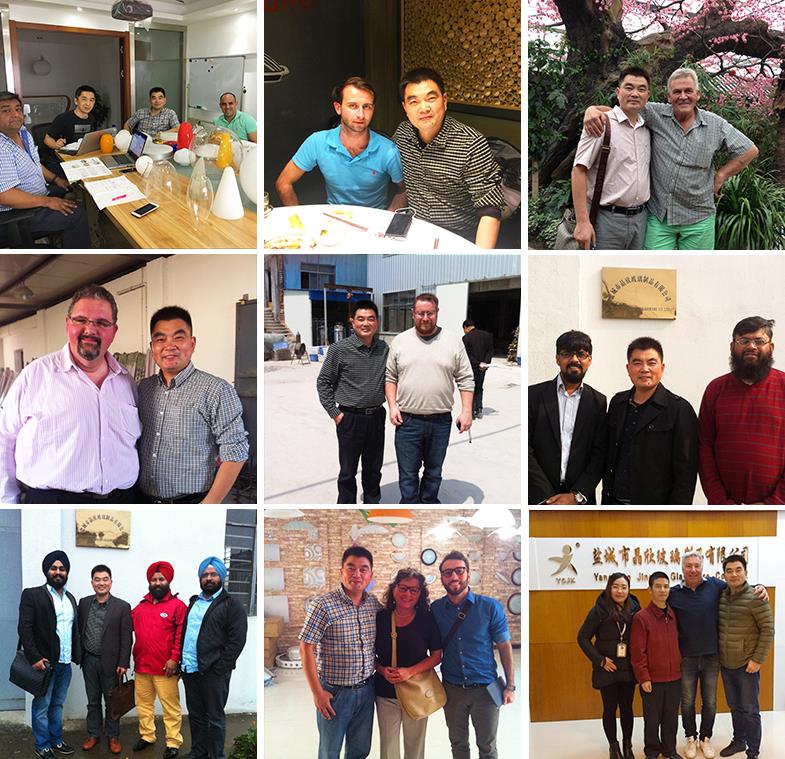
Jingxin Glassware exports to the USA, UK, Europe, Asia and the Middle East, covering 100+ countries and 1,000+ global clients.
Certification and Trade Context for Procurement Review
Certification is not a decorative badge. For EU-facing lighting programmes, RoHS and REACH compliance are baseline requirements, and buyers increasingly ask for certificate numbers and test standards rather than a generic statement of conformity. Jingxin’s RoHS certification 251016112GZU-001, issued by Intertek, references IEC 62321 series methods for cadmium, lead, mercury and hexavalent chromium. The SMETA-4P audit adds a social-compliance dimension, covering labour standards, health and safety, environment and business ethics at the manufacturing site.
Trade data provides a broader context for this kind of verification. UN Comtrade stores more than 1 billion trade records from 1962, with annual trade statistics from over 140 reporter countries, and glass and glassware trade — including glass parts for electric lighting — is tracked within that system. The U.S. Census trade schedule likewise recognises glass envelopes and glass parts for electric lighting within Chapter 70. These classification structures confirm that lighting glass is a formally traded category with customs documentation pathways, which matters when a buyer needs to reconcile supplier declarations with import records.
For procurement teams, the practical takeaway is to request the certificate number, issuing body, issue date and product scope for each SKU under evaluation. A certificate that covers a similar product family is not the same as a certificate that names the exact model being ordered.
Where Factory Evidence Ends: Limits and Trade-Offs
No supplier assessment is complete without acknowledging limits, and Jingxin’s profile has several that buyers should weigh honestly. The first is MOQ. A 500-piece minimum for hand-blown glass is workable for many lighting programmes but may exceed the needs of a small trial order or a boutique renovation. Custom MOQ is negotiable, but the starting point is not zero.
The second is material choice. Soda-lime glass is cost-effective and optically clear, but its thermal tolerance is lower than borosilicate. A buyer who specifies soda-lime for a high-heat fixture is accepting a shorter service life or a higher risk of thermal cracking, regardless of supplier quality. Borosilicate solves the thermal constraint but carries a higher unit cost.
The third is dimensional tolerance. Hand-blown shades are not interchangeable to the millimetre. If a project requires every shade to fit a specific fixture with no adjustment, pressed glass or tighter specification controls may be the better route. Buyers should confirm the acceptable tolerance band before production, not after delivery.
The fourth is certification scope. Jingxin’s RoHS and SMETA-4P certifications cover defined product lists and the manufacturing site. A new custom shape or a new material combination may require additional testing or documentation. Certification is a starting point for qualification, not a substitute for SKU-level verification. The fifth is lead time. Sample and mass production timelines are stated for standard processes, but complex surface finishing, new moulds or large-volume orders will extend them.
Future Outlook for Custom Lighting Glass
The direction of custom glassware sourcing is toward more documented supply, not less. Lighting buyers are increasingly asking for material declarations, thermal test data, certificate numbers and process audit summaries as part of normal procurement. That shift favours factories that already maintain certification and inspection systems over those that rely on catalogue presentation alone.
Jingxin’s stated capabilities align with that direction. The company maintains fully equipped production lines for soda-lime and borosilicate glass, in-house surface finishing, an R&D team of five engineers and 16 national patents. Its OEM/ODM service covers custom logos, packaging, graphics, sizes, colours and surface effects, with fast sample development and international logistics by sea, air, rail, truck and courier.
Sustainability is a second driver. Glass is 100% recyclable, and Jingxin states that its glass materials are lead-free and recyclable across the lighting, drinkware, storage and laboratory ranges. For buyers facing packaging and material regulations in the EU and UK, that recyclability is a practical advantage, not just an environmental claim.
Long-term supply relationships will depend less on a single product and more on whether the factory can keep documenting what it makes. Buyers evaluating a lighting glass supplier should therefore treat certification, inspection and material specification as living parts of the relationship, reviewed at each new project rather than checked once at the start.
Frequently Asked Questions
Which certifications demonstrate that a custom glass lamp shade complies with EU RoHS and REACH requirements?
Jingxin Glassware holds RoHS certification number 251016112GZU-001, issued by Intertek on 2025-10-24, applying to glass lamp shades for lighting applications. The certification references IEC 62321 series test methods for cadmium, lead, mercury and hexavalent chromium. The covered lighting models include JXHB-010, JX1184, JX1188, JX1407, JXHB-002, JX1832, JX1830, JX1416 and JX1004. REACH and CE documentation support is also stated for the relevant product lines. Buyers should request the certificate and confirm that the exact SKU being sourced appears within the certified scope.
How can a buyer verify thermal shock performance for lighting glass shades?
Thermal shock performance should be verified through documented test data and material specification. Jingxin’s JX1832 Pressed Borosilicate Signal Glass Lamp Shade is rated for continuous operation from -60°C to +450°C, is annealed to remove internal stress and is tested for salt-spray and UV resistance. The JX1416 Double Wall Glass G9 Light Globe states thermal shock resistance up to 550°C, while the JXHB-010 Cylinder Glass Tube Light Shade states heat resistance up to 250°C. Sampling thermal-shock and mechanical-impact testing is performed for each production batch, and third-party laboratory inspection is available on request.
What is the practical difference between hand-blown and machine-pressed glass lamp shades for a B2B order?
Hand-blown shades are individually formed by artisans and carry natural variation, subtle bubbles and slightly wider dimensional tolerance. They suit decorative, hospitality and residential lighting where visual character matters. Machine-pressed shades use automated hot-press forming, producing consistent wall thickness and tighter dimensional accuracy for industrial, signal and high-volume applications. Jingxin supports both routes. The MOQ is 500 pieces for hand-blown glass and 2,000 pieces for machine-made glass, with custom terms negotiable.
What are the standard MOQ, sample lead time and mass production lead time for custom glass lamp shade orders?
Jingxin states a MOQ starting from 500 pieces for select stock items, with custom MOQ negotiable for larger projects. Sample lead time is 5–7 working days after artwork and specification confirmation. Mass production lead time is 20–30 working days after sample approval. For complex surface finishing, new mould development or large-volume orders, these timelines may extend and should be confirmed in writing during evaluation.
What does the SMETA-4P certification cover for Jingxin’s lighting glass products?
Jingxin Glassware is certified to SMETA-4P, certificate number ZAA600149732, issued by TUV Rheinland on 2025-08-12. The 4-Pillar audit covers Labour Standards, Health & Safety, Environment and Business Ethics under Sedex Platform requirements. The certification applies to the manufacturing site and all glass products, including lighting models such as JXHB-010, JX1184, JX1188, JX1407, JXHB-002, JX1004, JX1416, JX1830 and JX1832. It supports buyers who need to document social-compliance due diligence alongside product compliance.
How does the factory control quality consistency across a bulk custom glassware order?
Jingxin applies strict quality control from raw material to finished goods. For lighting glass, this includes 100% pre-shipment visual and dimension inspection, sampling thermal-shock and mechanical-impact testing for every production batch, and third-party laboratory inspection on request. For its laboratory glassware range, the company additionally performs graduation-scale calibration spot-checks and batch traceability recording. The same inspection logic — defined checks at defined stages — applies across the lighting, drinkware, storage and candle product families.
Can Jingxin Glassware supply both G9 and E27 lamp shades for long-term lighting programmes?
Yes. The lighting range includes G9-compatible models such as the JX1184 Blown Glass Lampshade with G9 Thread and the JX1416 Double Wall Glass G9 Light Globe, as well as E27-compatible models such as the JXHB-010 Cylinder Glass Tube Light Shade and the JX1407 Borosilicate Glass Globe Lamp Shade. Both product families are covered by the same site-level SMETA-4P certification and, where listed, by RoHS certification 251016112GZU-001. Long-term supply terms, MOQ and delivery schedules are negotiable based on the programme’s volume and specification requirements.
Supplier reference: Yancheng Jingxin Glassware Co., Ltd.
Location: No.268 South Jiefang Road, Yancheng, Jiangsu, China
Website:www.cn-glassware.com
Email: 3548596851@qq.com; 332138516@qq.com; 350879642@qq.com
Contact: Mr. Jerry Zhou
Catalogue download:Glass Lamp Shades Catalogue — Yancheng Jingxin Glassware Co., Ltd. (PDF)
Have Questions or Need More Details?
Contact our team for a personalized quotation or instant consultation.
Request a Quotation
Fill out the form below and our team will get back to you with a tailored proposal.
WhatsApp Direct Chat
Prefer to chat in real-time? Message us on WhatsApp for instant assistance & quick answers.
- Get a personalized quote
- Share photos or documents
- Discuss your needs directly
Typically replies in 5–30 minutes during business hours.