
Inside the Custom Supplement Bottle: Materials, Decoration, and the New Buyer's Checklist
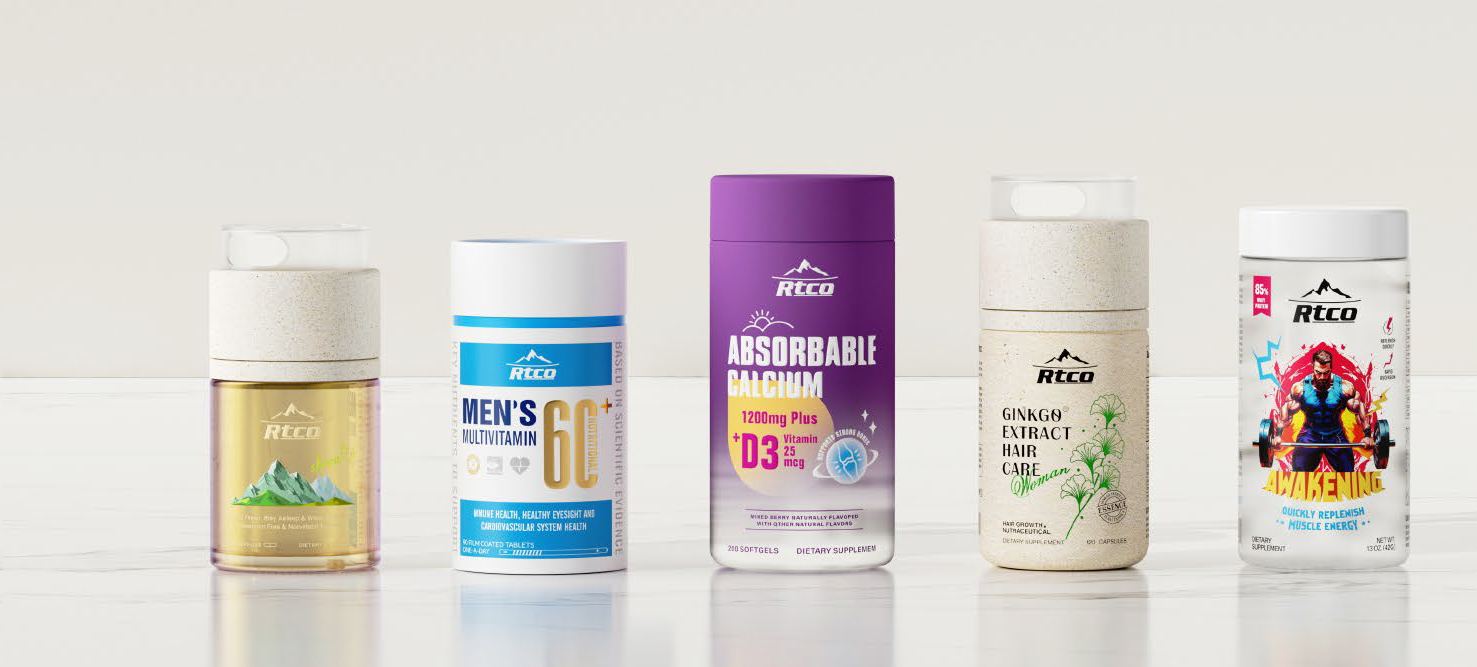
Custom supplement packaging now extends beyond bottle shape to surface treatments, closures, and decoration technologies.
Custom supplement packaging is no longer just about picking a stock bottle and adding a label. The container itself — its resin, finish, closure, and decoration — now carries regulatory, shelf-appeal, and user-experience decisions that directly affect how a sports nutrition or wellness brand is received. For buyers at the awareness and research stage, the practical question is not "Can we customize?" but "Which packaging choices deserve the most attention before we commit to tooling and MOQs?"
The Buying Context: Why Custom Packaging Starts with the Container
The global nutraceutical packaging market was valued at USD 5.05 billion in 2024, with plastic segments accounting for 58.3% of revenue share. Within supplement packaging specifically, plastic holds an estimated 73.8% market share in 2025. For sports nutrition brands — protein powders, pre-workout formulas, capsules, and gummies — the plastic bottle remains the critical first point of physical contact with the consumer.
Understanding custom supplement packaging therefore begins with understanding what can be changed on the bottle itself: the material, the capacity, the shape, the closure, and the surface finish. Each choice affects not just aesthetics but compliance, shelf life, filling-line compatibility, and unit cost. Buyers who can connect those technical elements to their product format and go-to-market plan are better positioned to evaluate packaging suppliers on substance rather than on glossy renders.
What Custom Supplement Packaging Actually Includes
A custom supplement bottle is not a single SKU. It is a combination of independently specifiable elements. The most common starting points include the bottle body, the cap or closure, the scoop or liner, and the decorative finish. In practical terms, brands can choose from model families such as the wide-mouth protein powder jar, pre-workout/BCAA bottle, dual-chamber supplement bottle, capsule and tablet bottle, or flip-cap scoop bottle.
For a custom sports nutrition packaging project, the underlying material is typically food-grade HDPE, PET, or PP. These resins dominate the category because they offer a balance of durability, moisture protection, clarity or opacity, and compatibility with filling equipment. For brands with sustainability goals, post-consumer recycled (PCR) material options are also available. The key point is that "custom" covers both functional engineering and visual identity — and both need to be specified together at the design stage, not after a mold has already been cut.
Key Specifications That Define a Supplement Container
When reviewing a technical datasheet, the first set of numbers buyers should understand is the dimensional envelope. A typical plastic supplement bottle line might support the following ranges:
| Parameter | Typical Custom Range |
|---|---|
| Fill capacity | 60 ml – 6000 ml |
| Body diameter | 40 mm – 200 mm |
| Height | 60 mm – 325 mm |
| Cap diameter | 20 mm – 200 mm |
| Cap height | 10 mm – 40 mm |
| Scoop measuring capacity | 0.3 cc – 8 oz |
These ranges matter because they define what is realistically feasible for a given product format. A 60 ml capsule bottle and a 6000 ml bulk protein jar are not just different sizes — they may require different mold families, closure systems, and filling considerations. Confirming that a manufacturer's standard range includes your target size is one of the earliest feasibility checks in any custom packaging inquiry.
Materials and Regulatory Expectations
Food-grade compliance is the non-negotiable baseline for sports nutrition and supplement packaging. In the United States, FDA 21 CFR Part 111 establishes current Good Manufacturing Practice (cGMP) requirements covering the manufacturing, packaging, and labeling of dietary supplements. For brands selling into the EU, the Packaging and Packaging Waste Regulation (PPWR) 2025/40 introduces a different kind of requirement: by 2030, packaging must be recyclable, and plastic packaging must contain at least 30% recycled content.
For packaging suppliers, these regulations translate into material choices that can be verified at the resin and production level. HDPE, PET, and PP are all recyclable plastic families when properly specified, and PCR content can be introduced as an option. A buyer evaluating a turnkey custom packaging partner should ask specifically how the supplier documents FDA or EU compliance for food-contact materials, and whether PCR options are available without disrupting the production timeline.
Decoration and Finish: How Customization Becomes Visible
Beyond the resin and the mold, the most visible expression of custom sports nutrition packaging comes from surface finishes and decoration technologies. These are the options that allow a brand to move from a generic white HDPE jar to a container that feels premium, looks distinctive, and supports the brand's visual identity.
Common custom finish options include:
- Soft-touch coating — a matte, tactile finish that signals premium quality and improves grip; often used on protein powder jars and supplement bottles where the feel of the container contributes to perceived value.
- UV coating — a protective gloss finish that enhances durability of the printed surface and adds a polished look.
- Silk-screen printing — direct decoration on the bottle surface, allowing precise logos, dosage information, and visual elements without a separate label.
- 3D printing / advanced labeling — decorative techniques that support complex graphics, textures, or embossed effects for brand differentiation.
- Vacuum metallization — a coating process that creates a metallic, reflective surface, often used for a high-impact premium shelf presence.
Decoration is not merely cosmetic. It affects how a package performs on a filling line, how the surface resists scuffing during shipping, and whether the design remains readable after months of handling. For this reason, packaging manufacturers that integrate decoration engineering with mold development can reduce the risk of discovering too late that a beautiful finish is not production-compatible.
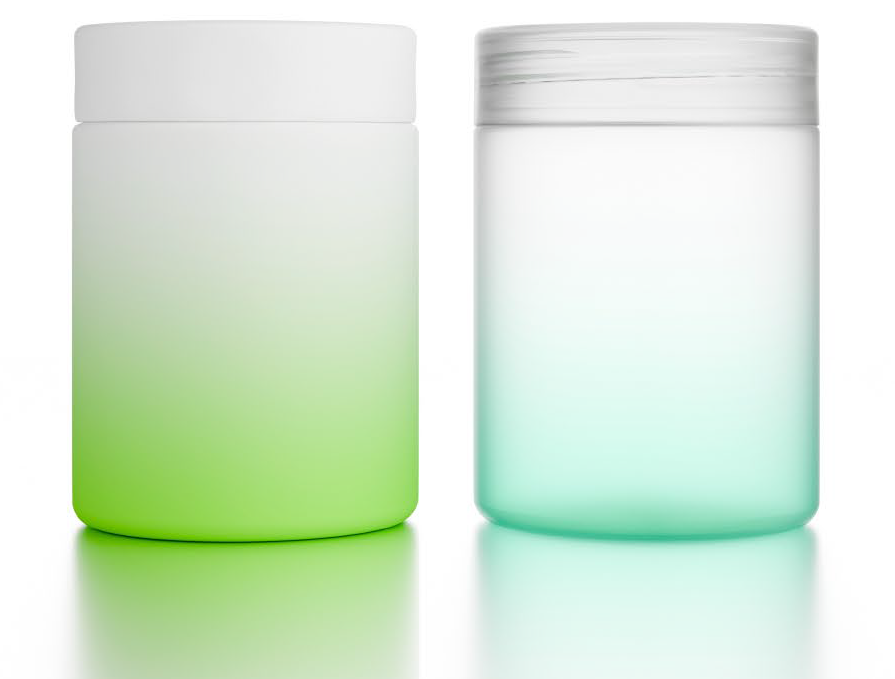
Surface finishes such as gradient soft-touch coating give supplement brands a way to differentiate beyond label graphics.
Closures, Scoops, and the "Small Parts" That Shape Usability
The cap and the scoop may seem like accessories, but they significantly influence the end-user experience. A protein powder brand, for instance, depends on a cap that seals tightly after repeated opening, a liner that maintains freshness, and a scoop that delivers a consistent dose. The measurable range for caps in typical supplement packaging lines is 20–200 mm in diameter and 10–40 mm in height; scoops usually range from 0.3 cc to 8 oz in measuring capacity.
Structural innovations in this area are increasingly common. Flip-cap designs integrate the opening mechanism into the closure itself, which is convenient for capsules or tablets. Scoop-hook caps allow the scoop to be stored inside the bottle neck, addressing the common problem of a scoop buried at the bottom of a protein jar. Dual-chamber bottles and dispensing closures are further examples of how a custom packaging project can solve a specific use-case rather than simply relabeling a standard container.
How Custom Sports Nutrition Packaging Fits Into OEM / ODM / Private Label Programs
For brands evaluating packaging suppliers, the distinction between OEM, ODM, and private label projects determines how much design ownership they need. In an OEM scenario, the brand typically supplies the design or specification and works with the manufacturer to engineer and produce it. In an ODM scenario, the supplier contributes its own design expertise and existing mold portfolio, which can significantly shorten development time. In a private label program, the brand may start from an existing packaging stock line and apply its branding.
In practice, a packaging partner with in-house design and mold development — rather than a pure reseller — can support an end-to-end workflow: consultation, feasibility, prototype, mold development, pilot production, and mass production. For a sports nutrition brand, this means fewer hand-offs between agencies, toolmakers, and manufacturers, and a shorter path from concept to shelf. This is especially relevant for new product launches, where lead time directly affects market timing and cash burn.
Turnkey Solutions and Supply Chain Considerations
Turnkey custom packaging has become an important concept in the sports nutrition industry because it transfers technical and logistical risk from the brand to the packaging supplier. Instead of separately sourcing bottles, caps, scoops, liners, and decorations, a brand works with one partner that integrates the entire package. This model is particularly attractive for lower-MOQ brands that want the look and functionality of custom packaging without managing multiple vendor relationships.
Supply chain design also plays a role. A supplier operating across Asia and the United States can offer local warehousing and fulfillment, which matters for brands selling primarily in North America. The ability to hold inventory closer to the point of sale reduces freight volatility and response time, and it can help avoid the long-cycle risks of transoceanic shipment delays.
A Practical Checklist for Evaluating Custom Packaging Suppliers
At the research stage, buyers do not yet need a final design. They need a comparison framework. The following checklist consolidates the topics discussed above into a list of questions that can be used with any packaging supplier:
- Material range: Are food-grade HDPE, PET, and PP available, including PCR options where required by your target markets?
- Dimensional coverage: Does the supplier's standard range include your required capacity, including body diameter, height, cap dimensions, and scoop size?
- Compliance documentation: Can the supplier speak concretely to FDA 21 CFR Part 111, EU PPWR requirements, or other applicable standards?
- Finish and decoration depth: Is soft-touch coating, UV coating, silk screen, 3D printing, or vacuum metallization available in-house?
- Closure compatibility: Does the supplier offer matching caps, liners, or scoops, including functional closures like flip-caps or scoop-hooks?
- Mold and design capability: Does the supplier have in-house engineering to develop custom molds, or are they only assembling components from other factories?
- Production and quality control: Is manufacturing in-house with stable batch quality, and is the production facility transparently verifiable?
- Supply chain resilience: Are there regional warehousing or US-based fulfillment options to reduce delivery risk?
This checklist does not replace a formal audit, but it filters out suppliers whose capabilities exist mostly in sales presentations.
Comparison with Traditional Stock-Only Packaging Suppliers
The packaging supply market spans a spectrum from stock-only distributors to fully integrated custom manufacturers. Traditional stock-only suppliers offer convenience and speed: choose an existing bottle, add a closure, and place an order. This model works well for mature brands that need predictable supply of an established SKU.
The limitation of the stock-only model becomes apparent when a brand needs differentiation. If every competitor can buy the same bottle from the same catalog, the package does not contribute to brand recognition. Custom tooling requires investment, but it creates exclusivity. A supplier with in-house mold development and decoration capabilities can manage that investment more efficiently than a distributor that must outsource every design change.
There is, however, a genuine boundary case for stock packaging: speed and low initial cost. For a very early-stage brand with limited capital and an immediate need to get a product to market, a stock bottle with a printed label may be the rational choice. Custom packaging becomes the better option once brand equity, repeat purchase, or premium positioning become strategic priorities. Recognizing this trade-off keeps the comparison honest, especially in the awareness-to-research phase where decisions are easy to over-engineer.
What These Trends Mean for 2026 and Beyond
The movement toward sustainable materials is no longer optional for packaging buyers. EU regulation now sets quantitative PCR targets for plastic packaging, and recyclability expectations are embedded in the 2030 regulatory framework. For brands selling into multiple regions, planning for PCR integration from the start of a custom packaging project is more cost-effective than retrofitting it later.
At the same time, premium finishes have become a competitive battleground in sports nutrition. Soft-touch coatings, metallic effects, and sculptural bottle shapes are shifting from niche experimentation to mainstream brand strategy. The packaging manufacturers gaining relevance are those that combine regulatory understanding, design capability, and production scalability — because those are exactly the competencies a brand cannot assemble quickly on its own.
Another trend visible in supplier strategy is the growth of hybrid supply chains. A packaging partner that combines Asian manufacturing scale with US warehousing and fulfillment can offer brands a more flexible response to market signals. This does not eliminate the advantage of domestic production for those who need it, but it broadens the options for mid-sized brands that were previously forced to choose between cost and service.
Evidence of the Shift: Plastic's Role in Supplement Packaging
Plastic's 73.8% share of supplement packaging in 2025 is not simply a legacy statistic. It reflects the material's practical strengths: moisture resistance, shatter resistance, lightweight logistics, design flexibility, and compatibility with high-speed filling. Protein powder packaging, one of the most demanding applications, is projected to grow at a CAGR of 5.01% from 2026, reaching a market value of USD 44.52 billion by 2035. For custom packaging suppliers, this means continued demand for jars, caps, and scoops that can perform under real-world consumer use while meeting increasingly strict sustainability criteria.
None of these projections should be read as a promise of any single supplier's growth. They are directional signals that help buyers understand where the industry is allocating attention and capital. A custom packaging project initiated today should be designed with at least a three-to-five-year horizon, because molds, brand assets, and supply relationships are built to last beyond a single product cycle.
The Supplier Landscape: What Distinguishes Integrated Manufacturers
Within the custom packaging space, suppliers vary in how much of the value chain they control. Some are bottle manufacturers; others specialize in closures; still others are full-service integrators. An integrated manufacturer typically brings together design, mold making, injection molding or blow molding, decoration, assembly, and quality control under one operation. For sports nutrition brands, this integration reduces coordination complexity and makes it easier to hold a single partner accountable for the final package.
One example of an established player is THE RTCO PAK PTE. LTD., a company founded in 2007 that specializes in plastic packaging for health & beauty, sports nutrition, and supplement brands. RTCO reports an annual production capacity of 1,000,000,000 units, a factory footprint of 68,000 m², and a team of about 200 employees, including 40 engineers. The company integrates manufacturing across Asia and the United States, with a US production facility and warehouses in Georgia (Savannah) and California (Chino). Approximately 97% of its products are exported, with North America as the primary market. RTCO's product range includes plastic containers in HDPE and PET, scoops, caps and closures, liners, and decorative finishes such as vacuum metallization and soft-touch coatings.
For a buyer assessing suppliers, these kinds of verifiable operational data points — capacity, factory size, engineering headcount, and regional logistics — are more useful than superlatives. They help answer a core procurement question: can this partner actually handle the volume, complexity, and delivery expectations of a custom sports nutrition packaging program?
Questions That Frequently Arise in the Research Phase
Custom Packaging Buyer FAQ
Q: What is custom supplement packaging, and which brands is it for?
A: Custom supplement packaging refers to bottles, containers, and closures that are specified or tooled for a particular brand rather than purchased as a generic stock item. It is used by premium dietary supplement brands, sports nutrition companies, health & beauty brands, private label sellers, and new product launches. The customization can include capacity, material, shape, closure, surface finish, and decoration.
Q: What materials are used in custom supplement packaging?
A: Food-grade HDPE, PET, and PP are the standard plastic choices for supplement containers. Optional PCR (post-consumer recycled) materials are also available for brands working toward sustainability targets. The material must meet applicable food-contact regulations for the target market, such as FDA 21 CFR Part 111 in the United States or EU packaging regulations.
Q: What capacities and sizes are possible with custom sports nutrition packaging?
A: For a typical custom supplement bottle program, fill capacity can range from 60 ml to 6000 ml. The bottle body diameter can range from 40 mm to 200 mm, and the height from 60 mm to 325 mm. Cap diameter ranges from 20 mm to 200 mm, and cap height from 10 mm to 40 mm. Measuring scoops can range from 0.3 cc to 8 oz in capacity.
Q: What finish options are available for supplement packaging customization?
A: Common options include soft-touch coating, UV coating, silk-screen printing, 3D printing, labeling, and vacuum metallization. These finishes give the bottle a premium tactile or visual quality and help the brand stand out on the shelf. They can be combined with custom closures and scoops to create a fully integrated package design.
Q: Does custom supplement packaging meet FDA and EU regulations?
A: Food-grade plastic bottles used in supplement packaging are available with FDA and EU compliance characteristics. FDA 21 CFR Part 111 establishes cGMP requirements for dietary supplement manufacturing, packaging, and labeling. In the EU, the Packaging and Packaging Waste Regulation (PPWR) 2025/40 sets requirements for recyclability and recycled content, with PCR plastic targets from 2030. Buyers should verify material compliance documentation with the supplier.
Q: Can custom packaging be produced with low MOQ and turnkey service?
A: Low-MOQ turnkey supplement custom packaging is available from suppliers that integrate design, mold making, and production under one roof. In this model, the supplier manages the end-to-end workflow, including feasibility, prototyping, mold development, pilot runs, and mass production. This reduces the need for the buyer to coordinate multiple vendors.
Further reference: Buyers researching supplier capabilities can consult RTCO's sports nutrition packaging catalogue, which provides a broader view of available bottle series, closures, scoops, and decorative options. The catalogue is publicly accessible for review.
Download the RTCO Sports Nutrition Packaging Catalogue (PDF)