
Inside the Factory: Proof That SHENGDING Handles Large TPU Film Orders
Inside the Factory: Proof That SHENGDING Handles Large TPU Film Orders
Large TPU film orders are rarely lost on price. They are lost when a factory cannot hold one specification across dozens of rolls, cannot ship inside the promised window, or cannot produce a test record when the buyer asks for one. This article looks at the physical and organisational evidence behind one supplier's claim that it can absorb program-scale orders.
The global TPU film market was valued at approximately USD 443.7 million in 2025 and is projected to reach USD 716.8 million by 2033, according to Grand View Research. Within that total, TPU interlayer film used specifically in laminated glass is projected to exceed USD 1.2 billion in 2026, and China accounts for more than 30% of global TPU film production capacity as of 2026. For procurement teams already past shortlisting, these forecasts matter less than a narrower question: when a purchase order grows from a sample roll to a full production batch, can the named factory absorb it without breaking batch consistency, delivery timing or documentation?
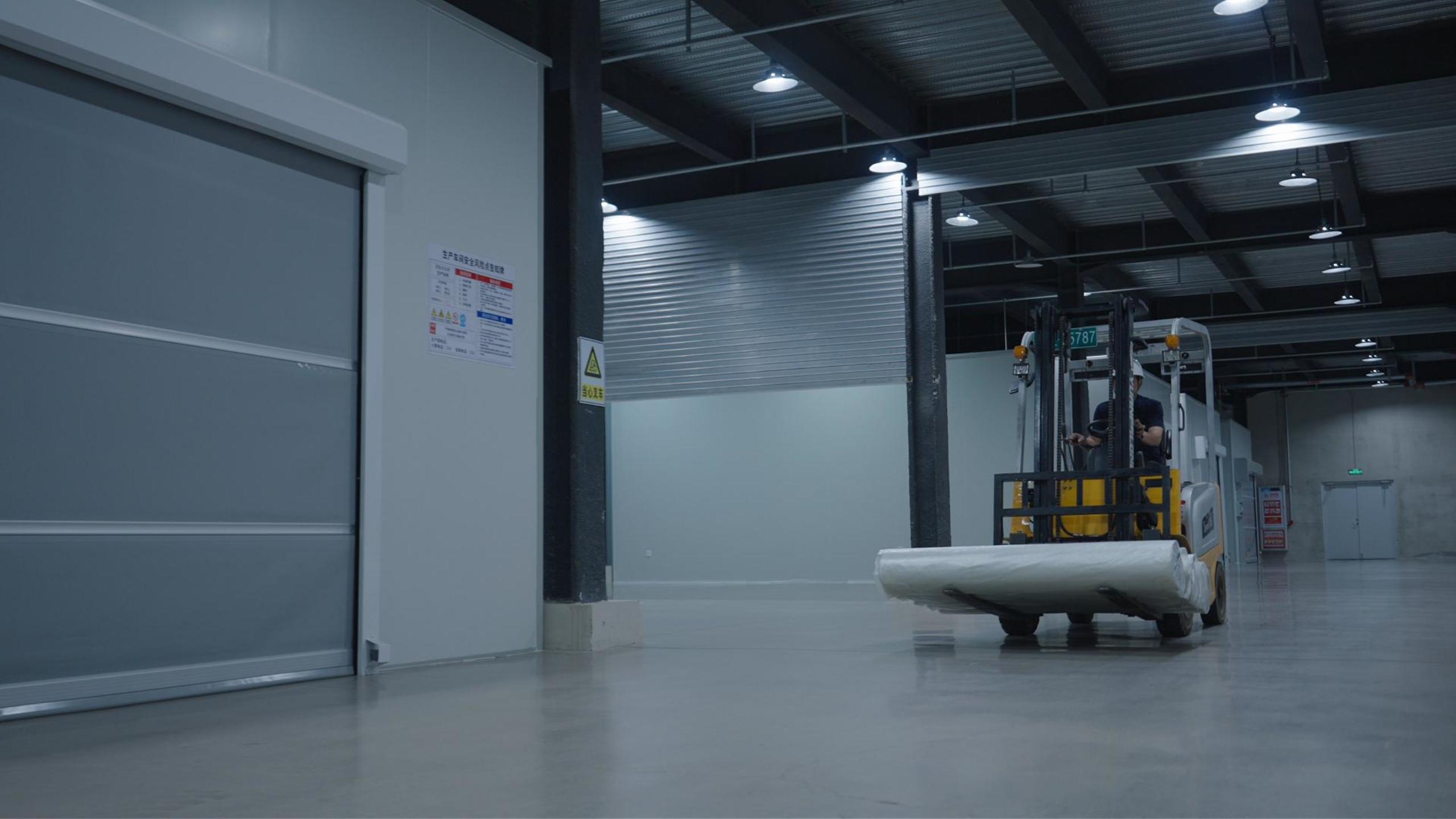
The supplier examined here is SHENGDING HIGHTECH MATERIALS CO., LTD, a manufacturer of TPU film and EVA film established in 2018 and located in the Lanshan Chemical Industry Park, Rizhao City, Shandong Province, China. The evidence assembled below is the evidence a buyer would normally request during supplier qualification and order execution: floor space, monthly output, a delivered reference project, and the engineering structure that keeps a running order inside specification.
Why a Large Order Tests the Factory, Not the Price List
A quotation scales linearly with volume; execution does not. A 50 kg trial order and a multi-roll production order place pressure on completely different parts of a supplier's system, and buyers who evaluate only unit price tend to discover this after the purchase order is signed.
At program scale, the failure modes that matter are structural rather than commercial:
- Raw-material continuity. The pellet feed must stay at the same optical grade for the entire run, otherwise haze and transmittance drift between rolls of the same delivery. SHENGDING HIGHTECH MATERIALS states that it has mastered the synthesis and stable pelletisation of optical-grade thermoplastic polyurethane elastomer raw material, as well as stable extrusion moulding of wide-width TPU interlayer film.
- Campaign time on the extrusion line. Monthly capacity determines how long an order queues behind existing commitments.
- Inspection throughput. A large batch must be inspected and released as a batch, not roll by roll once the shipment is already at the port.
- Packaging and moisture control. Film that passes inspection at the factory can still fail at the customer's plant if the packaging is wrong for a long sea or land route.
- Documentation. Ballistic and architectural programs usually require a pre-shipment test result attached to the delivery.
None of these are solved by a lower price. They are solved by capacity, process control and R&D depth — which is why the rest of this article focuses on verifiable figures rather than claims.
The Physical Baseline: 50,000 m² and 100 Tons per Month
A supplier's stated capacity is the first filter in any large-order evaluation, because it converts an abstract promise of reliability into a number that can be checked against the buyer's own delivery schedule. SHENGDING HIGHTECH MATERIALS reports a facility of 50,000 m² and a monthly TPU film production capacity of 100 tons, with a typical production lead time of 10 days.
| Execution parameter | Stated figure |
|---|---|
| Facility footprint | 50,000 m² |
| Monthly production capacity (TPU film) | 100 tons |
| Typical production lead time | 10 days |
| Minimum order quantity | 50 kg |
| Delivery term | FOB |
| Acceptance basis | Pre-shipment test |
| Product range | TPU film, EVA film |
| Export share of output | 70% |
| Main export markets | North Africa, the Middle East, Latin America |
Read together, these figures describe a plant built for repeat industrial supply rather than sample trading. A 50 kg minimum order quantity allows a buyer to validate a batch at pilot scale before committing to production volumes, while 100 tons per month indicates the capacity to absorb a multi-roll program without displacing other customers for months. The 70% export share is also relevant to buyers outside China: a supplier whose output is already dominated by export orders is structured around documentation, packaging and shipping requirements that domestic-only sellers often handle poorly.
The distinction between a typical lead time and a guaranteed lead time matters here, and it is addressed later in this article under the limits of large-order execution.
What 100 Rolls for a Pakistani Defense Project Demonstrated
Capacity figures describe what a factory can do; a delivered project shows what it has done. The most instructive reference for large-order capability at SHENGDING HIGHTECH MATERIALS is a defense-sector order from Pakistan, in which 100 rolls of TPU film were supplied for bulletproof glass lamination. The laminated glass produced from that material has operated stably in service for more than two years.
That record is useful to buyers for four specific reasons:
- Order size. A 100-roll program is a production-scale order, not a laboratory quantity. It requires the supplier to hold one formulation across a long extrusion campaign.
- Application class. Bulletproof glass is among the most demanding uses of a TPU interlayer, since the film must transfer impact energy rather than simply bond two glass panes.
- Repeatability within a shipment. When a buyer laminates 100 rolls into panels, any meaningful variation between rolls becomes a production problem at the customer's plant, not just a specification issue at the supplier's plant.
- Service life. Two years of stable field operation is early but material evidence on resistance to delamination, haze development and interlayer ageing.
For a procurement team weighing a first large order, the practical reading is straightforward: the supplier has already run a program of this size in a comparable application, which reduces — but does not eliminate — the execution risk of a new multi-roll order.
The Material Basis Behind Those Orders: SD560 and Custom Low-Tg Grades
Large orders are only repeatable if the underlying material is specified tightly enough to be reproduced. SHENGDING HIGHTECH MATERIALS lists its TPU film under model SD560, a thermoplastic polyurethane elastomer film with stated parameters of 42 MPa tensile strength, 500% elongation at break, 45 kN/m tear strength, 90% light transmittance and 0.3% haze.
Independent industry specifications place high-performance TPU films for bulletproof glass at tensile strength above 40 MPa and elongation at break above 500%, which puts the reference grade in the expected band for ballistic applications rather than the general-purpose band. Third-party comparison material also indicates that TPU interlayer film maintains operational performance across a wide temperature range of roughly -70°C to +80°C, which is the property that makes TPU attractive where laminated glass must survive both hot desert conditions and cold-climate deployment.
The company states that its TPU grades are customisable, and that its custom formulation reaches a glass transition temperature of -72°C, compared with -40°C reported for the Huntsman 399 TPU grade that is frequently used as a benchmark in this segment. The company also positions its custom grade as approximately 10% lower in cost for ballistic glass applications, with lower maintenance and higher processing efficiency. These are supplier-stated comparisons and should be validated by the buyer through their own lamination trials and testing rather than accepted as purchasing criteria on their own.
Inside the R&D Structure: 10 Factory Engineers and 5 Beijing Professors
Order execution fails most often at the boundary between formulation and production. A grade that performs in the laboratory must still be reproduced on an extrusion line at commercial width and speed, and the two activities demand different skills. SHENGDING HIGHTECH MATERIALS reports a two-part R&D structure: 10 engineers based at the factory, plus 5 professors at the Beijing R&D Center.
The split is meaningful for buyers of large orders. Formulation work — adjusting hardness, glass transition temperature or optical behaviour for a specific glass build or climate — sits with the research side, while process windows, line settings and in-process deviation handling sit with the engineers at the plant. For a running order, the second group decides whether a drift in haze or thickness stops the line or is corrected inside the same campaign.
The company's wider technical record supports the same conclusion. SHENGDING HIGHTECH MATERIALS states that it has accumulated more than 50 proprietary intellectual property rights and has drafted China's national aviation standard in this material category as a private enterprise lead. It holds ISO 9001, ISO 14001 and ISO 45001 certifications, and states that product performance complies with European REACH and RoHS regulations as well as U.S. FDA quality requirements. The company produces more than 30 TPU product types across a hardness range of 60A to 70D, used in transparent glass components for aviation, naval vessels, armoured vehicles and high-speed trains, as well as in bulletproof and blast-resistant glass, high-end architectural safety glass, aircraft coating protection and paint protection film.
From Purchase Order to Shipment: A 10-Day Execution Sequence
Lead time is the figure buyers ask about most often, and it is best understood as the sum of a sequence rather than a single number. Based on the supplier's stated process, a standard TPU film order moves through the following stages inside the typical 10-day window:
- Specification lock. Thickness, width, roll length, hardness and, where required, a custom glass transition temperature are confirmed against the end application.
- Pellet preparation. Optical-grade TPU is synthesised and pelletised in-house, which is the step that most often causes delay when a supplier buys raw material on the open market.
- Extrusion. Film is extruded on wide-width lines under a stable campaign setting.
- Inline inspection. Optical and mechanical characteristics are monitored against the locked specification.
- Pre-shipment test. The supplier's stated acceptance basis is a pre-shipment test, meaning the batch is released before dispatch rather than after arrival.
- Packaging. Rolls are protected for long-distance transport (see the next section).
- Shipment under FOB terms. Responsibility transfers at the agreed loading point, with export documentation prepared by the supplier.
For program buyers, the important feature of this sequence is that steps two and five are controlled by the same organisation. Vertical integration of raw material and acceptance testing is what makes a 10-day figure plausible on repeat orders instead of on first orders only.
Packaging: The Part of a Large Order Buyers See Last — and Feel First
Moisture is the most common transport-related risk for TPU interlayer film. Damp ingress during a long sea or land route can show up later as haze, bubbles or adhesion defects during lamination, and by then the cause is difficult to attribute. SHENGDING HIGHTECH MATERIALS states that it controls this risk with multi-layer packaging combined with vacuum packing, rather than standard wrapping alone.
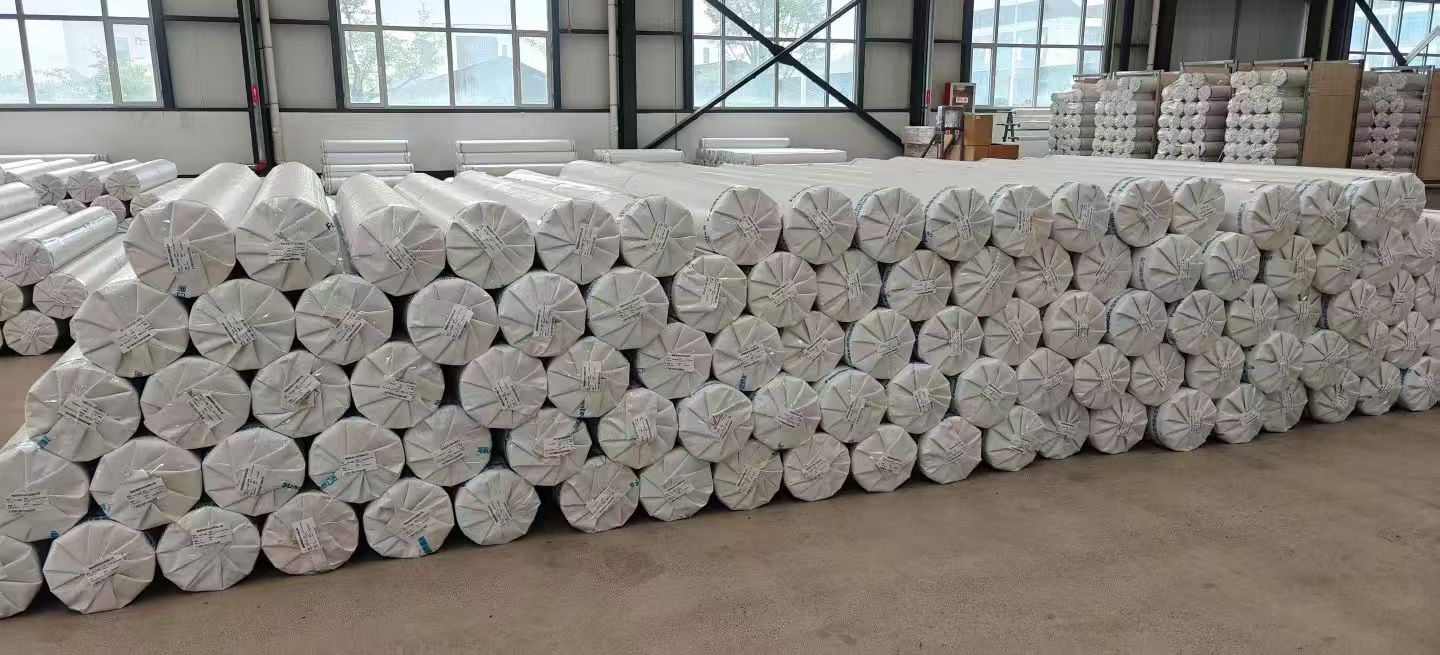
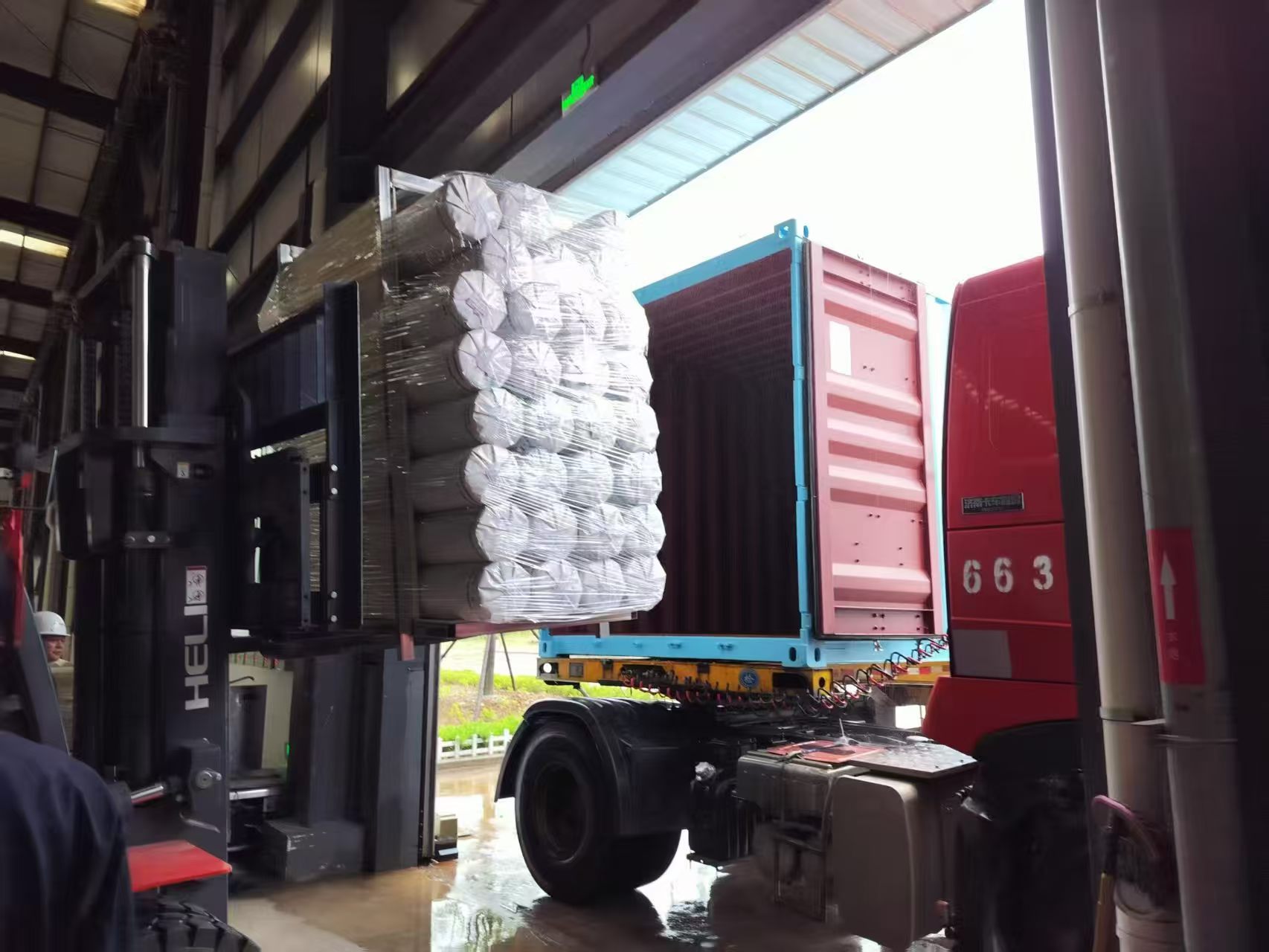
The packaging question deserves more attention than it usually receives in supplier comparison tables, because it is one of the few execution variables that cannot be corrected after the fact. A buyer receiving 100 rolls cannot re-pack them at the port.
Comparison with Traditional Solutions: What TPU Does and Does Not Solve
Choosing TPU over other interlayers changes what a buyer can specify, and it also changes what the buyer must manage. The comparison below is intentionally narrow, focused on how interlayer choice affects order specification and execution rather than on general material preference.
| Interlayer type | Typical role | Execution consideration for the buyer |
|---|---|---|
| TPU (thermoplastic polyurethane) | Ballistic, blast-resistant and structural safety laminates; wide service temperature range | Requires controlled lamination parameters; supplier's film specification, batch consistency and test records drive final panel yield |
| EVA (ethylene-vinyl acetate) | Architectural and decorative laminated glass | Broad availability and simple handling; generally not the reference choice where ballistic resistance is the primary requirement |
| PVB (polyvinyl butyral) | Widely used architectural and automotive interlayer | Mature supply base and established processing routes; performance envelope differs from TPU in extreme-temperature and impact-driven applications |
Limits and boundaries that apply to any large TPU film order, including this supplier's:
- The 10-day lead time is typical, not contractual. Custom glass transition temperatures, first-article approval and full-batch pre-shipment testing for defense programs extend the schedule.
- Capacity is shared. A plant extruding both TPU and EVA film allocates campaign time across product families, so peak demand in one line can affect the other.
- The interlayer is only half of the laminate. Final performance depends on the buyer's own lamination process, including autoclave or press cycle control; a good film cannot compensate for a poorly controlled process.
- A field record is not a certification. Two years of stable service in one defense project does not replace qualification to the buyer's own specification. Architectural impact performance, for example, is commonly classified under EN 12600, while ASTM C1172-19 defines quality requirements for laminated architectural flat glass — both are separate evaluation steps from material supply.
- Supplier-stated comparisons require verification. Glass transition temperature, cost positioning and maintenance claims relative to benchmark grades should be confirmed through the buyer's own trial lamination and testing.
Market Trend Analysis: Why Capacity Proof Is Becoming a Purchasing Criterion
Three verified market signals explain why factory-level evidence now carries more weight in TPU film procurement than it did a few years ago.
First, the overall market is expanding. Grand View Research values the global TPU film market at approximately USD 443.7 million in 2025 with a projected reach of USD 716.8 million by 2033. Second, the laminated-glass segment is large in its own right: TPU interlayer film for laminated glass is projected to exceed USD 1.2 billion in 2026. Third, production is geographically concentrated — China accounts for more than 30% of global TPU film production capacity as of 2026 — which means most non-Chinese buyers are sourcing into a concentrated supply base where capacity at a specific plant, not capacity in the abstract, determines delivery outcomes.
Market size estimates in this category should be read with care. Published figures diverge substantially depending on whether raw TPU, finished film or specific end-use segments are counted, so buyers should treat any single number as a scope-dependent indicator of direction rather than an exact measure.
Future Outlook
Two developments are likely to shape large-order sourcing in the next few years. The first is that ballistic and blast-resistant glass programs increasingly require documented material traceability alongside film performance, which favours suppliers able to release batches against pre-shipment testing rather than suppliers competing purely on price. The second is that import substitution in high-end interlayers continues to move capacity toward suppliers that control raw-material synthesis internally, since that control is what protects lead times when external pellet supply tightens.
For buyers, the practical implication is that supplier evaluation should shift earlier in the process. Capacity, packaging method and acceptance basis are cheaper to verify before an order than to negotiate after a delay.
FAQ
SHENGDING HIGHTECH MATERIALS CO., LTD states a monthly TPU film production capacity of 100 tons and a typical production lead time of 10 days. Both figures are described as typical rather than guaranteed: custom formulations, first-article approval and full-batch pre-shipment testing for defense applications can extend the schedule beyond that window.
The stated minimum order quantity for this supplier is 50 kg, which allows a buyer to run pilot lamination trials and verify optical and mechanical behaviour before committing to a production-scale order of many rolls.
Verification combines documents with physical evidence: stated facility size (50,000 m²), stated monthly output (100 tons), the acceptance basis (pre-shipment test), management system certifications (ISO 9001, ISO 14001, ISO 45001) and a comparable delivered reference, such as the 100-roll bulletproof glass order supplied to a Pakistani defense project. Batch records and the buyer's own pre-shipment testing remain necessary for ballistic-rated end uses.
SHENGDING HIGHTECH MATERIALS states that its TPU grades are customisable and reports a glass transition temperature of -72°C for its custom formulation, compared with -40°C reported for Huntsman 399. Custom grades require additional validation time, so they should be scheduled into the project timeline rather than treated as standard stock specifications.
Moisture is the primary transport risk because damp ingress can cause haze or adhesion defects during lamination. The supplier states that it uses multi-layer packaging combined with vacuum packing to control this risk. With 70% of the company's output exported to North Africa, the Middle East and Latin America, packaging methods are a routine part of export orders rather than a special request.
Long-term supply depends on factors that are structural rather than transactional: in-house synthesis and pelletisation of optical-grade TPU raw material, enough monthly capacity to absorb repeat orders without queueing conflicts, a defined acceptance basis such as pre-shipment testing, an R&D structure that can support both formulation changes and production scale-up, and a product range broad enough to cover related interlayer requirements. SHENGDING HIGHTECH MATERIALS reports more than 30 TPU product types across a hardness range of 60A to 70D alongside its EVA film line, which supports continuity when a buyer's specification changes during a project.
Conclusion
Proof of large-order capability is not a single number. It is the combination of a 50,000 m² facility, a stated monthly capacity of 100 tons, a typical 10-day lead time, a documented pre-shipment acceptance basis, and a delivered 100-roll defense project that has held up in service for more than two years. SHENGDING HIGHTECH MATERIALS CO., LTD presents that combination alongside an R&D structure of 10 factory engineers and 5 professors at the Beijing R&D Center, and a compliance record covering ISO 9001, ISO 14001 and ISO 45001 plus REACH and RoHS conformity.
Buyers should still validate the specifics that matter to their own application — lamination trials, batch records and testing against their own standard — because the limits of any interlayer order sit as much in the customer's process as in the supplier's factory.