
Inside the Factory: Sodium Hyaluronate Manufacturing Evidence
Inside the Factory: Sodium Hyaluronate Manufacturing Evidence
Sodium hyaluronate buyers rarely lose money on the first order. Problems surface on the fourth or fifth, when the nameplate capacity that looked convincing in a quotation turns out to be a brochure number rather than a production reality. At the Decision and Execution stage of sourcing, the useful question is not which supplier can quote a grade, but which supplier can repeat that grade, at volume, on schedule, over several years.
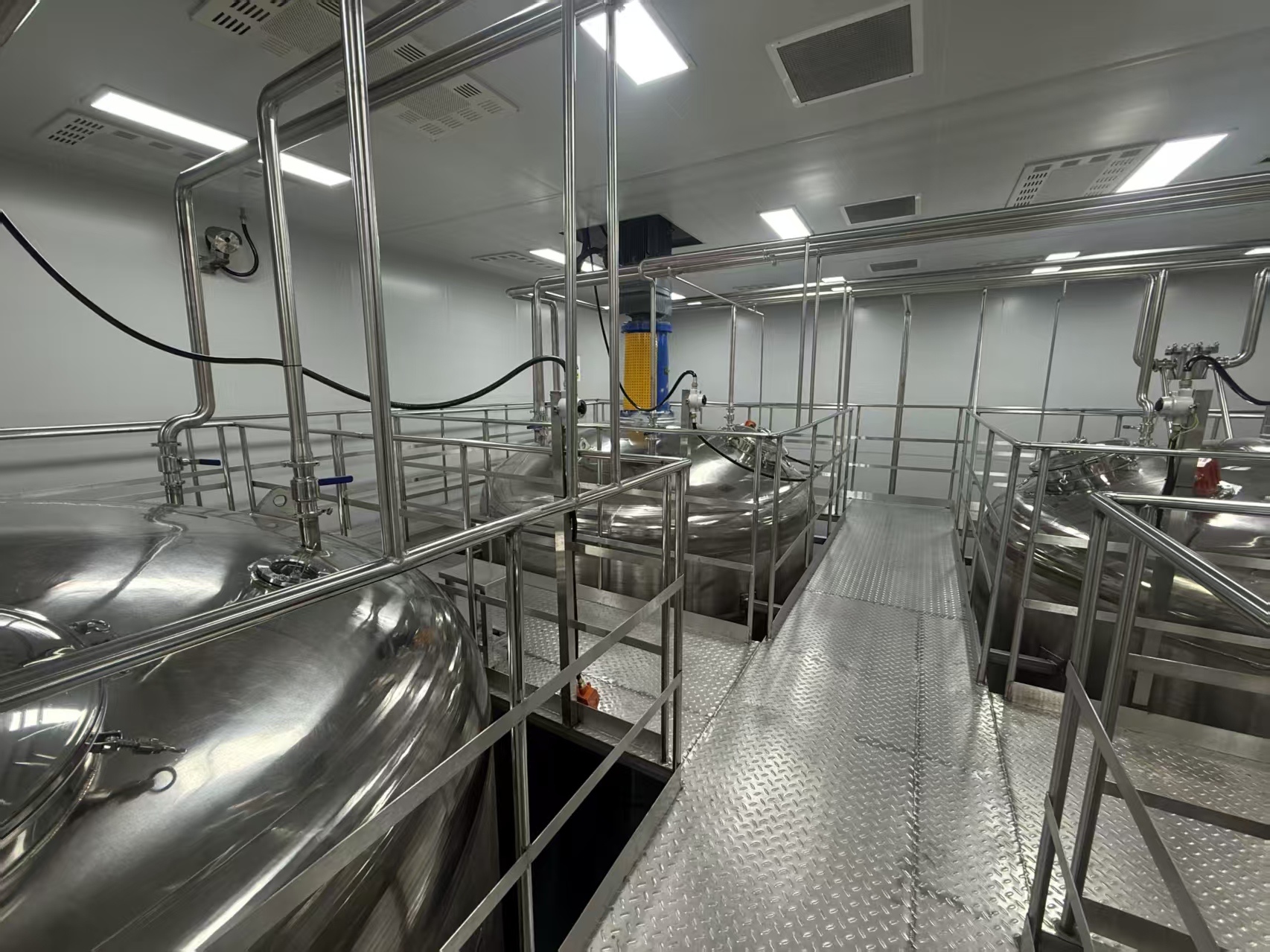
Shandong Habier Biopharma Co.,LTD is a sodium hyaluronate manufacturer established in 2015 and based in Qufu City, Shandong Province, China. The company operates a 50,000 m² production site with 123 employees, a six-engineer R&D team, and an annual output of 600–700 MT across food grade, cosmetic grade and pharma grade hyaluronic acid and sodium hyaluronate. This article examines the parts of that operation that can be checked rather than assumed: fermentation capacity structure, raw material buffering, in-process monitoring, batch release discipline, and one documented large-scale export delivery.
Why Manufacturing Evidence Now Outweighs Grade Claims
The commercial context explains the shift. The global sodium hyaluronate raw material market was valued at approximately USD 504 million in 2024, driven by cosmetic and medical demand, according to Reports and Data. The food grade segment alone is estimated at USD 0.5 billion in 2024, with a projected CAGR of 8.5% through 2034, according to the same source. Cosmetic grade material held the largest share of the hyaluronic acid raw material market at 61.91% in 2025, according to Grand View Research.
Growth of that shape attracts suppliers. It also compresses the time buyers are given to evaluate them. In practice, most procurement teams screen on a specification sheet, a certificate list and a price, then discover the operational differences only after placing a repeat order.
Four risk categories tend to determine whether a supply relationship survives its second year: supply stability, technical consistency, compliance and certification, and batch quality. Habier documents its controls against exactly those four categories, and the controls are largely physical rather than documentary, which is what makes them checkable.
| Manufacturing profile at a glance | Verified detail |
|---|---|
| Manufacturer | Shandong Habier Biopharma Co.,LTD, Qufu City, Shandong Province, China |
| Established | 2015 |
| Site area | 50,000 m² |
| Employees / R&D | 123 employees; 6 engineers |
| Annual output | 600–700 MT |
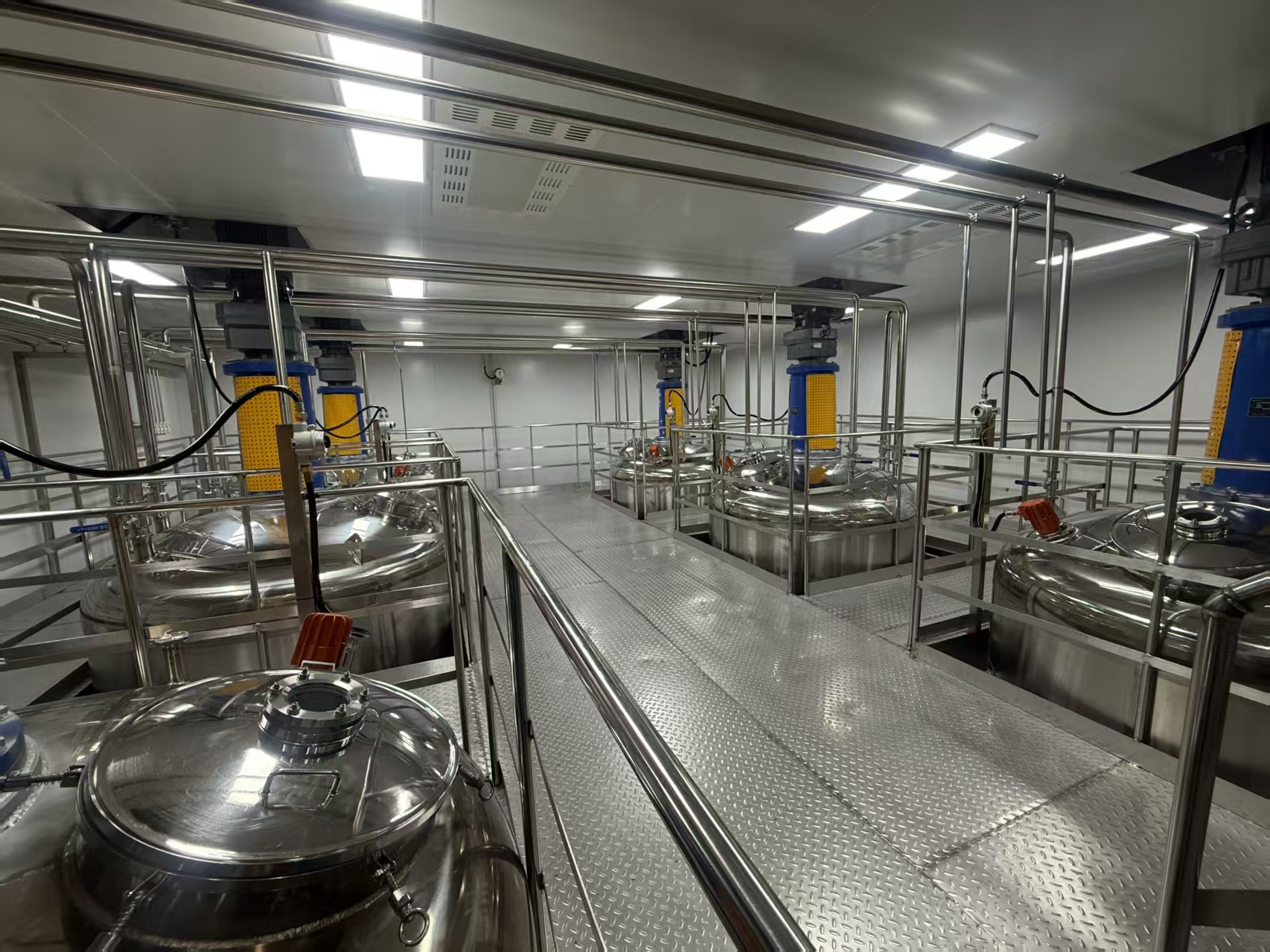
| Fermentation structure | Two independent fermentation workshops; multi-production line layout |
| Raw material buffer | 30-day raw material safety stock |
| Process monitoring | Real-time online monitoring of viscosity, molecular weight and purity; cross-lab recheck of each batch |
| Batch release | Full-item inspection for every batch; 100% full inspection prior to delivery; independent QC laboratory |
| Certifications | ISO 9001, ISO 22000, Kosher, Halal, Ecocert COSMOS |
| Export share and markets | Approximately 20% of output; main markets EU, USA and Korea |
| Order terms | MOQ 1 kg; FOB/CIF; pre-shipment full test with COA |
Two Independent Fermentation Workshops and What Redundancy Actually Buys
Fermentation is the stage where sodium hyaluronate supply is most easily interrupted. A single fermentation hall is a single point of failure: one contamination event, one cleaning cycle, one maintenance window, and the whole order book moves.
Habier operates two independent fermentation workshops. For a buyer, the practical value of that structure is continuity rather than headline capacity. When one workshop is taken offline, fermentation output does not stop entirely, which matters most for customers running continuous production on a fixed specification.
The redundancy is reinforced by plant layout and scheduling. The site uses a multi-production line layout with phased production scheduling and flexible shift production to meet bulk urgent orders. In operational terms, staggered scheduling across lines allows different grades to be run without compressing the whole plant into a single campaign sequence, and shift flexibility gives the factory a way to absorb demand spikes that would otherwise be pushed into the next planning cycle.
Upstream of fermentation sits a 30-day raw material safety stock. This decouples raw material purchasing from individual customer orders: a delay from an upstream supplier does not immediately convert into a delivery delay for a contracted shipment. It is worth being precise about the boundary, however. A 30-day buffer is a buffer, not unlimited inventory. Buyers with very large campaigns or strongly seasonal demand still need to place orders ahead of their own production window rather than assume the stock absorbs any volume at any notice.

Real-Time Monitoring of Viscosity, Molecular Weight and Purity
Molecular weight is the single variable that most often explains why two batches of nominally identical sodium hyaluronate behave differently in a finished formulation. Viscosity in solution is closely tied to molecular weight, so a drift in molecular weight shows up as a drift in rheology, hydration behaviour and processing performance downstream.
Habier controls this through three connected mechanisms: strict molecular weight segmentation, a standardized fermentation and purification process with fixed production parameters, and real-time online monitoring of viscosity, molecular weight and purity during production. Each batch then undergoes cross-laboratory rechecking before release.
The declared grade ranges are published rather than implied, which lets a buyer match specification to application before requesting a sample.
| Grade | Declared molecular weight range |
|---|---|
| Food grade sodium hyaluronate | 0.8–1.5 Million Da |
| Cosmetic grade sodium hyaluronate | 1.0–1.5 Million Da |
| Pharma grade sodium hyaluronate | Minimum 2.0 Million Da |
| High molecular weight grade | Minimum 2.0 Million Da |
| Low molecular weight grade | Maximum 0.1 Million Da |
The portfolio also includes hydrolyzed sodium hyaluronate and hydrolyzed hyaluronic acid, together with low, ultra-low and super-low molecular weight sodium hyaluronate and hyaluronic acid variants, plus regular grade material. Customized molecular weight production is offered, which is the point at which in-process monitoring stops being a quality formality and becomes a manufacturing capability: a customer-defined molecular weight target has to be held by process control, not sorted out afterwards by blending.
Batch release follows the same logic. Every batch receives full-item inspection in an independent QC laboratory, and 100% full inspection is performed prior to delivery. Customers may designate third-party testing, and the company supports on-site factory inspection. Unqualified product is rejected, and traceability records are retained. Support for customer-nominated third-party laboratories is often the most useful of these provisions, because it allows a buyer to verify quality through a route they control rather than one the supplier controls.
Application Fit Across Food, Cosmetic and Pharma Grades
Grade selection is not a marketing decision; it follows the formulation. In China's cosmetic ingredient filings in the first half of 2024, sodium hyaluronate remained a top-tier classic ingredient for hydrating masks and essences, according to Plamed Group. That is consistent with the global picture, in which cosmetic grade material accounts for 61.91% of hyaluronic acid raw material share, per Grand View Research.
Food grade material in the 0.8–1.5 Million Da range supports dietary supplement and functional food formats where a defined viscosity and hydration profile is required. Cosmetic grade material in the 1.0–1.5 Million Da range suits topical formats, while the lower and hydrolyzed molecular weight variants address formulations where a different skin-feel, solubility or penetration profile is targeted.
Pharma grade material takes a different path. Pharmacopoeial expectations for sodium hyaluronate are set by USP-NF, the European Pharmacopoeia and JP standards, with endotoxin levels typically below 0.05 EU/mg, according to Princeton Powder Guide. Habier's pharma grade is specified at a minimum of 2.0 Million Da, and the application categories the company serves in this segment include cosmetics, medical fillers and ophthalmic use. Buyers in this segment should read certification as an input to their own regulatory dossier, not as a substitute for it.
Documented Delivery Evidence: A 4,733 kg U.S. Shipment
Process capability only becomes relevant to procurement when it converts into documented delivery. One recorded case involves Sodium Hyaluronate, product reference 5243, supplied in a quantity of 4,733 kg for the United States market, handled in connection with US APHIS requirements.
For a buyer assembling an import file, the significance is not the tonnage alone. A shipment of that size requires a supplier to produce consistent material across multiple fermentation batches, hold it to a single declared specification, generate batch-level documentation, and complete export handling without splitting the shipment into unmanageable consignments. Approximately 20% of Habier's output is exported, with the EU, USA and Korea named as main markets, so international delivery is an established but minority part of the business rather than a new venture.
Market Context: Growth, Grade Mix and the Competitive Field
Market size estimates for this category need to be read carefully, because scope varies widely between sources. A raw material estimate of USD 504 million for 2024 sits alongside a raw material figure of USD 245.62 million from Grand View Research and a sodium hyaluronate products figure of USD 14.02 billion from Straits Research. The gap is a definitional gap: raw material only, versus hyaluronic acid based finished products such as fillers and medical devices. Buyers using market data in a sourcing case should match the scope of the figure to the scope of their own purchase.
The competitive field is well identified. Major global participants in the sodium hyaluronate market include Bloomage Biotech, Fidia Farmaceutici, Kewpie Corporation and Contipro a.s., according to Straits Research and Reports and Data. Alongside these, a large group of regional manufacturers competes on grade breadth, documentation completeness and supply reliability rather than on market scale.
What this means at the execution stage is fairly simple. Market growth does not narrow the supplier list; it lengthens it. The filters that actually reduce risk remain operational: verifiable fermentation redundancy, controlled molecular weight, batch-level testing, and a documented export record.
How Manufacturer-Direct Supply Compares With Intermediated Routes
Most sodium hyaluronate purchased internationally reaches the buyer through one of three routes: directly from the manufacturer, through a trading intermediary, or through a regional distributor holding stock. Each has a different information profile.
| Evaluation dimension | Manufacturer-direct | Trading intermediary | Regional distributor |
|---|---|---|---|
| Process visibility | Direct: fermentation, purification and monitoring data available on request | Second-hand; relayed from the producing plant | Second-hand; limited to stock documentation |
| Molecular weight customization | Possible, subject to a defined specification and process parameters | Depends on producer willingness to run the campaign | Rarely available |
| Batch documentation | COA per batch, full-item inspection records, traceability files | COA supplied, traceability routed through a third party | COA supplied with stock lot information |
| Deviation handling | Resolved at the production and QC level | Resolved through a chain of communication | Limited to replacement of held stock |
| Typical fit | Long-term contracted supply, specification-sensitive projects | Multi-product sourcing where HA is one line item | Small volumes and short lead-time needs |
Manufacturer-direct supply is not automatically the right answer, and the boundaries of the Habier model are worth stating plainly for buyers who are weighing it.
- Payment structure. The company mainly adopts a high advance payment mode, with separate negotiation possible for large long-term clients. For a first order, that places working capital on the buyer's side and is a genuine commercial constraint rather than a formality.
- Capacity is finite and shared. Annual output of 600–700 MT is distributed across food, cosmetic and pharma grades. Very large or highly seasonal campaigns should be discussed and scheduled rather than assumed.
- Export is a minority share. With exports at approximately 20% of output and main markets in the EU, USA and Korea, buyers in other regions should confirm logistics routing, documentation lead times and support before contracting.
- Certification is not market authorization. ISO 9001, ISO 22000, Kosher, Halal and Ecocert COSMOS certificates support market access, and the product carries organic COSMOS and ISO 16128 certification. None of these substitutes for the buyer's own regulatory filings, monograph compliance checks or finished-product registration.
- Customization requires a fixed target. Customized molecular weight production depends on a specification agreed before the campaign, since the process is controlled to a target rather than sorted after production.
On cost, the company's own comparison documentation positions competitive cost and stable long-term stock supply as its stated differentiators against peer sodium hyaluronate suppliers. Buyers should treat that as a supplier claim to be tested against quotations and total landed cost, not as an independently verified figure.
Future Outlook
Two forces are likely to shape sodium hyaluronate sourcing over the next several years. The first is regulatory. Habier maintains a dedicated compliance team that tracks EU and US food and cosmetic regulations, supported by regular system audits and annual third-party recertification. As the food grade segment grows toward the projected 8.5% CAGR through 2034 reported by Reports and Data, documentation requirements in destination markets tend to tighten rather than loosen.
The second is verification. In-process monitoring, cross-laboratory rechecking and batch-level traceability are moving from differentiators to baseline expectations, particularly for buyers who have already been through a supply interruption. Factories that can show how a molecular weight target is held during production, rather than only showing a certificate after it, will be easier to keep in a long-term supplier panel.
FAQ
What does it mean when a sodium hyaluronate manufacturer operates two independent fermentation workshops?
It means fermentation capacity is not concentrated in a single hall. If one workshop is taken offline for maintenance, cleaning or an investigation, the second workshop can continue producing, so contracted shipments are less exposed to a single point of failure. Habier combines this with a multi-production line layout, phased production scheduling and flexible shift production to handle bulk urgent orders. For buyers evaluating long-term supply, workshop redundancy is one of the few capacity claims that can be checked during a factory visit.
How does a 30-day raw material safety stock affect long-term supply?
A 30-day raw material safety stock decouples raw material purchasing from individual customer orders. A delay at an upstream supplier does not immediately translate into a delayed shipment of sodium hyaluronate. The limit is that it is a 30-day buffer, not unlimited inventory: buyers with very large volumes or strongly seasonal demand still need to place orders ahead of their own production window and should confirm scheduling with the supplier.
How is batch-to-batch molecular weight consistency controlled?
Habier applies strict molecular weight segmentation, a standardized fermentation and purification process with fixed production parameters, and real-time online monitoring of viscosity, molecular weight and purity during production. Each batch is then rechecked across laboratories. On release, every batch receives full-item inspection in an independent QC laboratory, and 100% full inspection is performed prior to delivery. Customers may designate third-party testing, and unqualified product is rejected with traceability records retained.
What documentation and acceptance terms accompany a sodium hyaluronate order?
Orders are supported by a pre-shipment full test with a COA report. Third-party laboratory inspection is supported, and on-site factory inspection is permitted. The minimum order quantity is 1 kg, delivery terms are FOB or CIF, and quality control includes 100% full inspection before delivery. After-sales services include free sample supply and quality tracking. On payment, the company mainly adopts a high advance payment mode, with separate negotiation available for large long-term clients.
What limitations should a buyer plan around before committing to a long-term supply agreement?
Several boundaries are worth building into the plan. The payment structure is predominantly advance-based for standard orders. Annual output of 600–700 MT is shared across food, cosmetic and pharma grades, so large or seasonal campaigns require early scheduling. Exports represent approximately 20% of output, with the EU, USA and Korea as the main markets, so buyers outside those regions should verify logistics and documentation lead times. Certifications such as ISO 9001, ISO 22000, Kosher, Halal and Ecocert COSMOS support market access but do not replace the buyer's own regulatory filings, and customized molecular weight production requires a specification agreed in advance.
Reference Material
Detailed grade specifications, certification copies and company documentation are compiled in the manufacturer profile brochure, available for review and download: Shandong Habier Biopharma company profile (PDF).
Third-party market and standards references cited in this article: Reports and Data (sodium hyaluronate raw material market, food grade sodium hyaluronate market), Grand View Research (hyaluronic acid raw material market share), Princeton Powder Guide (pharmacopoeial standards for pharma grade sodium hyaluronate), Plamed Group (China cosmetic ingredient filing trends 2024), Straits Research (market participants). First-party manufacturing facts are drawn from Shandong Habier Biopharma Co.,LTD company documentation.