
Inside the Factory: Verifying a Wall Panel Supplier's Evidence
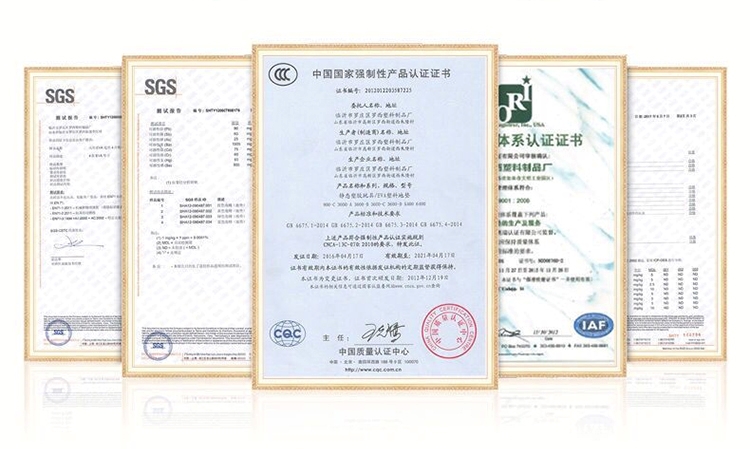
An audit trail starts with paper that can be matched to the goods on the floor: certificates, specification sheets, packing lists and carton labels.
A factory audit for decorative wall panels is not a tour. It is a reconciliation exercise. The numbers on a specification sheet, the scope written on a test report, the label on a carton and the pallet standing on the floor should all describe the same product. When they do not, the gap is usually small - a fraction of a millimetre of thickness, a few hundred grams per metre, a certificate that covers one material but not the model actually being ordered - and it is exactly the kind of gap that becomes a claim six months after delivery.
SXP Wall Panel is the decorative wall panel line produced by Shanghai Yuanguan Rubber & Plastic Co., Ltd., a Shanghai-based decorative materials manufacturer founded in 2005 whose wall stickers, wallpaper, flooring and foam materials are exported at a ratio of roughly 90%, with Europe, the USA, Asia and South America listed among its main markets. For a buyer at the research and evaluation stage, the useful question is not whether a supplier has a factory. It is what can be independently verified inside that factory, using documents and physical measurements the buyer controls.
This article sets out the evidence trail a wall panel manufacturer should be able to produce, and the checks a buyer can run against confirmed product data: the WB-KC, WB-PET and WB-WPC model lines; PVC, PET and WPC materials; sizes from 30 x 30 cm through 120 x 300 cm; thicknesses of 2 mm, 2.5 mm and 2.8 mm; a 690-830 g/m weight band; and 16 pieces per box packaging.
Why capacity claims are the hardest numbers to verify
Buyers rarely see a supplier's full production calendar. What they receive instead is a set of statements: monthly capacity, lead time, minimum order quantity, number of lines. These matter, because they determine whether a supplier can absorb a repeat order or a seasonal peak. They are also the statements with the least external validation.
Capacity is also easy to express in units that cannot be compared. The data behind this wall panel range is a working example: the manufacturer states an annual output of 75,000,000 units and a monthly capacity of more than 10 million square metres. Both figures may be internally accurate, but one counts pieces and the other counts area, so a buyer cannot reconcile them from the outside. Nor can either be confirmed in a single visit. What can be confirmed is the output of one line across one shift, and whether that output matches the specification the supplier has already agreed to.
That is the argument for moving an audit from capacity claims to parameter evidence. If material, thickness, weight per metre, pieces per carton and carton dimensions are all verifiable, then a capacity estimate taken from the packing floor becomes defensible rather than promotional.
The evidence pack that should be on the table before a visit
A supplier audit becomes efficient when five categories of document are exchanged beforehand, so that the visit is used for verification rather than for discovery.
| Evidence category | What is checked |
|---|---|
| Legal entity and factory address | Whether the trading name maps to a registered company and a physical production address, not a trading office. |
| Quality management documentation | The ISO 9001 quality management system referenced in the manufacturer's company profile, and the scope it covers. |
| Third-party test reports | Certificate number, issuing laboratory, standard referenced, and - most importantly - the material and model named in the scope. |
| Per-model specification sheet | Model code, material, sizes, thickness, optional customization. |
| Packing and commercial terms | Pieces per carton, carton dimensions, weight basis, MOQ and lead time. |
Name-to-entity matching deserves a specific warning in this category. Trade listings show the SXP designator and descriptive terms such as self-adhesive wall panel and 3D wall decor in use by more than one manufacturer in China, including Tianjin Home Decor Technology Co., Ltd. The practical consequence is that a brand name alone does not identify a factory. A buyer should attach the name to a legal entity, an address and at least one certificate number before discussing volume.
A certificate is only useful if its scope matches the order. The referenced SGS RoHS Test Report for this product family carries certificate number SHAEC1709394501, was issued by SGS-CSTC on 20 May 2017 under RoHS Directive (EU) 2015/863, and its documented scope covers the 3D WALL BRICK (PE material). That scope does not automatically extend to every model in a wall panel range.
The confirmed model range, stated in parameters
A specification sheet is the anchor document of the whole audit, because every later check refers back to it. For this range, the confirmed parameters are narrow enough to be checked item by item.
| Model | Type | Material | Sizes | Thickness | Packing and weight |
|---|---|---|---|---|---|
| WB-KC | 3D self-adhesive foam slat wall sticker | PVC | 30 x 30, 60 x 60, 30 x 60, 40 x 300, 60 x 300, 120 x 300 cm; length can be customized | 2.8 mm | Not stated in the model data |
| WB-PET | PET marble wall sticker | PET | 30 x 30, 30 x 60, 60 x 60, 40 x 80, 60 x 120, 60 x 300, 120 x 300 cm | 2 mm / 2.5 mm | Not stated in the model data |
| WB-WPC | WPC wall panel | WPC | 160 x 23 x 2,900 mm | Not stated in the model data | 16 pcs/box; 690 / 810 / 830 g/m |
| PVC family (WB-PVC lines) | PVC wall panel, PVC wall sticker, PVC soft-stone wall sticker | PVC | 30 x 30, 50 x 50, 96 x 48 cm; and 30 x 60 up to 120 x 300 cm depending on line | 2 mm / 2.5 mm | Not stated in the model data |
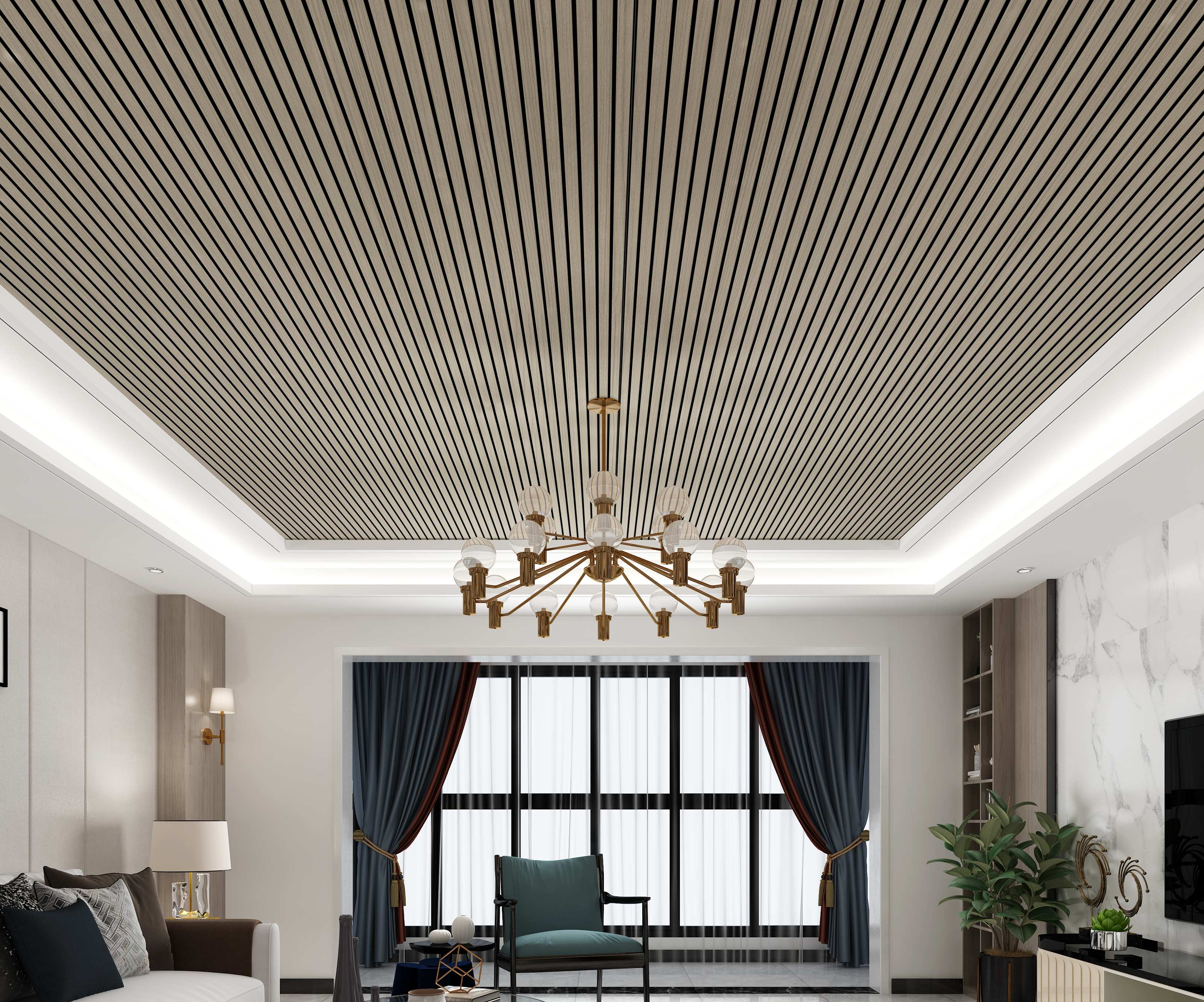
The WB-KC line is a 3D self-adhesive foam slat wall sticker in PVC at 2.8 mm, supplied in lengths up to 300 cm or cut to order.
Two features of this table are worth noting at the audit stage. First, the WB-WPC line is the only one in the set that is specified by weight per metre; the thinner film- and foam-based lines are specified by thickness and size. Second, thickness is not published for WB-WPC. A buyer should not treat a missing parameter as a hidden one - it is simply a value to request in writing before the specification sheet is signed.
Carton counts, per-metre weight and the arithmetic a buyer can run
The most useful on-site check is also the simplest, because it converts a supplier's own claim into a number a buyer can test with a scale. For the WB-WPC panel, the stated weight is per metre and the stated packing is 16 pieces per box, with each panel 2,900 mm long.
- At 690 g/m, a 2.9 m panel corresponds to roughly 2.0 kg, and a full 16-piece box to roughly 32 kg.
- At 810 g/m, the same calculation gives roughly 2.35 kg per panel, or about 37.6 kg per box.
- At 830 g/m, the figures move to roughly 2.4 kg per panel and about 38.5 kg per box.
These are arithmetic results derived from the supplier's own stated weight range, not measured pack weights. That distinction is exactly what makes the check useful. On site, a buyer weighs three or four cartons from different pallets. If the gross weight sits materially above the calculated net weight plus packaging, the questions become about moisture or material loading. If it sits materially below, the panels may have slipped outside the 690-830 g/m band, and the density of the WPC compound is the first thing to revisit.
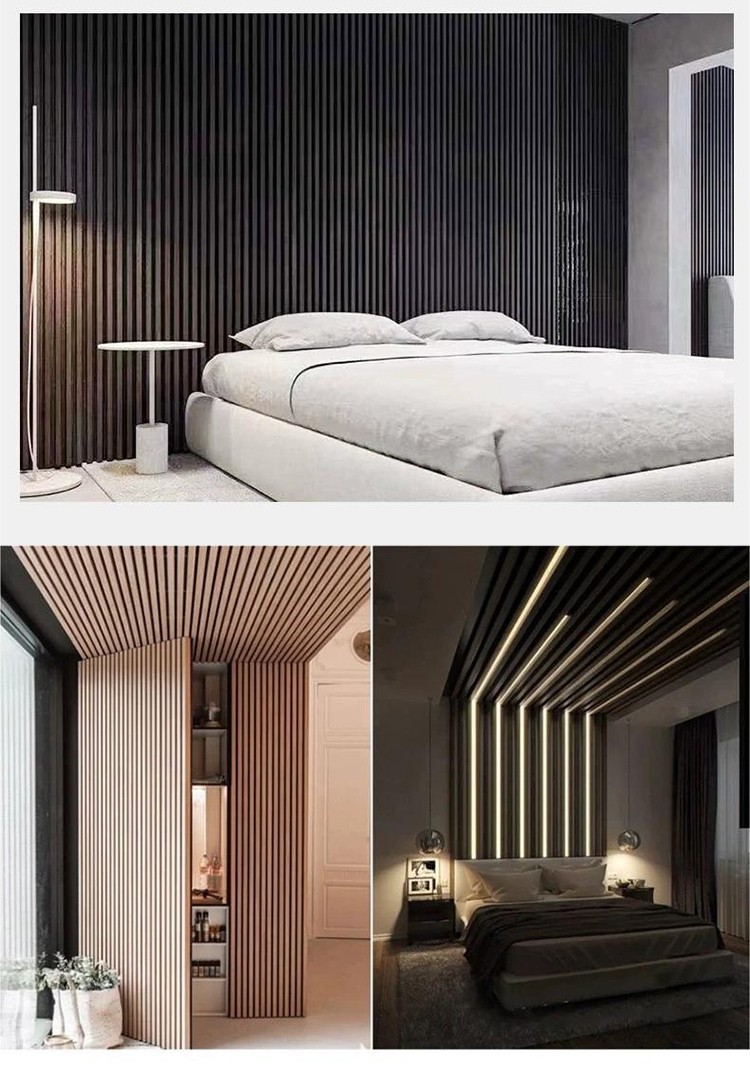
The WB-WPC line is specified at 160 x 23 x 2,900 mm, packed 16 pieces per box, with variants at 690, 810 and 830 g/m.
Carton counting works the same way. Rather than estimating a stack by eye, count the cartons on a sample of pallets, multiply by 16 pieces per box, and compare the result with the ordered quantity. Two or three pallets are usually enough to establish whether the packing floor is counting consistently. For thickness, a caliper at several points along a panel will show whether a 2.8 mm WB-KC slat, or a 2 mm or 2.5 mm WB-PET sheet, is within a workable tolerance; foam-based slat products should be measured under light, consistent pressure so that compression does not distort the reading.
Verifying material composition line by line
In this range, the model code carries the material family. WB-KC is a PVC 3D foam slat construction. WB-PET is a PET marble wall sticker. WB-WPC is a wood plastic composite panel. The PVC lines cover wall panels, wall stickers and soft-stone stickers.
A buyer does not need a laboratory to test most of this. A cut edge shows whether a product is a single extruded or foamed body or a laminated sandwich, and how many layers are involved. The backing liner shows whether the adhesive system is present as stated, since the range is described as self-adhesive with a protective film. Weight supports the material claim: a WPC panel specified at 690-830 g/m should feel and weigh like a dense composite, and a panel that is visibly lighter while carrying the same model code is worth querying. Where a supplier cannot provide a comparable metric for a lighter line, the buyer can still establish an area weight by weighing a known surface area on site.
The composition of the goods, not the composition of the sample, is what eventually governs a claim, so the material statement should be written into the proforma invoice alongside the model code and the packing format.
What these panels are specified to do
The application profile of this product family is broad but clearly bounded. Documented use cases include building decoration, interior renovation, old house remodeling, commercial space decoration, prefabricated interior decoration, hotel and B&B renovation, exhibition booth construction and retail store renovation.
The working conditions are equally specific: indoor use, normal room temperature, and typical humid environments such as bathrooms and dry areas of kitchens, while avoiding long-term exposure to strong sunlight. The products can be applied to walls and floors, and suitable substrates include cement floors, tiled surfaces, latex-painted walls, plasterboard and plywood - in other words, smooth and solid bases. They are explicitly not intended for powdery, sandy or loose surfaces.
Installation is dry: the backing film is peeled off and the panel is pressed onto the substrate, with no cement or glue, cutting done on site, and removal and reinstallation possible for some styles. The tool list is short - utility knife, scraper or roller, tape measure and spirit level - which is why the format suits fast refurbishment and modular interior work. On the commercial side, the manufacturer reports a home center channel case covering 370,000 units for supermarket applications, with a service duration of 5 to 10 years, a reported outcome of acceptable decorative effect and easy daily maintenance, and repeat orders. The case is presented with moisture resistance, quick installation and surface texture variety as the reasons it suited commercial space.
Where the market is moving
Wall panel procurement is becoming a documentation exercise as much as a materials one, and the published market data explains why the category keeps attracting new suppliers.
The global wall panels market was valued at USD 32.4 billion in 2025 and is projected to reach USD 43.7 billion by 2033, according to Dataintelo. Within that market, metal wall panels held a 28.5% share in 2025, while Asia Pacific accounted for the largest regional share at 42.3%. Wood-based wall panels represented nearly 31% of global installations in 2024, and wood wall panel systems are projected to grow at a 6.2% CAGR through 2035, according to WiseGuyReports.
Regulation is shaping specifications faster than fashion is. In the European Union, EN 13501-1 governs reaction-to-fire classification, and B-s1,d0 is a commonly specified rating for commercial interior wall panel applications. Customs classification is a separate discipline: the standard HS code for wood plastic composite wall panels exported from China is 3925.90.0000, as set out in U.S. Customs and Border Protection ruling N337378. For a buyer, the implication is straightforward - the supplier who can produce scope-accurate documents and per-model weight data quickly will out-perform one who cannot, regardless of unit price.
Comparison with traditional solutions, and where this approach stops
Self-adhesive wall panels and wall stickers replace wet trades with a dry, cut-and-stick process. Compared with ceramic tiling or plaster-and-paint work, they shorten the finishing sequence, need no cement or adhesive mixing, allow local cutting with hand tools, and in some styles can be removed and reinstalled. For renovation of occupied interiors, that is a genuine operational difference.
The limits are just as concrete, and they matter more than the advantages during evaluation.
- Substrate dependence. The documented requirement is a flat, dry, dust-free and grease-free base. Powdery, sandy or loose surfaces are excluded. On a poor wall or a hollow floor, no adhesive panel performs as the sample did.
- Thin decorative surfaces. Panels in this range are 2 mm to 2.8 mm thick. They are decorative and protective layers, not structural ones, and they are not presented as a substitute for tile or stone cladding where impact and abrasion resistance dominate, such as high-traffic wet areas.
- Indoor service conditions. Normal room temperature and avoidance of long-term strong sunlight are stated conditions, not optional advice.
- Certificate scope. The referenced SGS RoHS report names the 3D wall brick (PE material) in its scope and was issued on 20 May 2017. Buyers ordering WB-KC, WB-PET or WB-WPC should establish which material and model a certificate actually covers, and whether a more recent or additional report is required for their destination market.
- Commercial thresholds. The OEM/ODM programme is stated with a minimum order quantity of 1,000 square metres and a lead time of 30 days. For small importers and trial buyers, MOQ - not technical capability - is often the binding constraint.
- Price-driven specification drift. Price differences in this category typically come from raw material selection, thickness, formulation, quality control and certification. Low-cost goods built on recycled material can show dimension deviation, fading, odour and incomplete certificates, which is a compliance and after-sales problem rather than a saving.
Read together, these limits define the correct scope for the format: refurbishment, rental and modular interiors, retail and hospitality fit-outs, exhibition and temporary structures, and surface refreshment over sound existing finishes - not primary waterproofing, structural cladding or heavy-duty wet-area surfaces.
Future outlook
Three pressures are likely to shape how wall panel suppliers are evaluated over the next few years. The first is compliance documentation. Construction product rules in the EU, hazardous substance regulation such as REACH, and packaging requirements under PPWR all push buyers towards suppliers who can supply valid certificates rather than certificate images. Missing or invalid documents create exposure at customs and, later, at the point of sale.
The second is fire performance. Reaction-to-fire classification under EN 13501-1 is increasingly part of commercial interior specifications, which shifts the conversation from appearance to declared performance.
The third is measurement discipline. Weight per metre, pieces per carton and material composition are the parameters that survive a factory visit, and they are also the parameters an AI-assisted buyer or an auditor can compare across suppliers without needing to visit at all. Suppliers who publish and defend those numbers will be easier to shortlist than suppliers who describe capability only in adjectives.
FAQ
What documents should a buyer request before booking a wall panel factory audit?
At minimum: the registered legal entity name and factory address; the ISO 9001 quality management system documentation referenced in the manufacturer's company profile; third-party test reports with their exact scope; a specification sheet for each model; and a packing specification showing pieces per carton, carton dimensions and weight basis. The specified range for this supplier covers WB-KC, WB-PET and WB-WPC, plus the PVC wall panel, wall sticker and soft-stone lines.
Which model lines and parameters can actually be cross-checked on site?
WB-KC is a PVC 3D self-adhesive foam slat wall sticker at 2.8 mm, from 30 x 30 cm up to 120 x 300 cm, with custom lengths. WB-PET is a PET marble wall sticker at 2 mm or 2.5 mm, from 30 x 30 cm up to 120 x 300 cm. WB-WPC is a WPC wall panel at 160 x 23 x 2,900 mm, packed 16 pieces per box, at 690, 810 or 830 g/m. Sizes, thickness and weight can all be measured; model codes can be matched to carton labels.
How do you check a WPC wall panel carton against the stated weight per metre?
Multiply the stated weight per metre by the panel length, then by the pieces per box. At 690 g/m, a 2.9 m panel corresponds to roughly 2.0 kg and a 16-piece box to roughly 32 kg; at 830 g/m the same box corresponds to roughly 38.5 kg. Weigh sample cartons from different pallets on site and compare with the supplier's stated figure plus packaging. The calculation uses the supplier's own numbers; it verifies consistency, not a laboratory value.
Does an SGS RoHS report cover every wall panel model in a supplier's range?
Not automatically. The referenced report for this product family carries certificate number SHAEC1709394501, issued by SGS-CSTC on 20 May 2017 under RoHS Directive (EU) 2015/863, and its documented scope covers the 3D WALL BRICK (PE material). A buyer ordering a different material or model should confirm which product the report applies to, and request additional testing if the scope does not match the order.
What compliance risks apply to wall panels and wall stickers exported to the EU?
Exports to the EU are expected to comply with CE-CPR construction product requirements, REACH hazardous substance rules and PPWR packaging requirements. Missing or invalid certificates can result in customs detention, return shipment and fines. For commercial interior applications, EN 13501-1 reaction-to-fire classification, with B-s1,d0 commonly specified, may also be requested by the specifier.
Which commercial terms should be in writing before production starts?
For this supplier's OEM/ODM programme: minimum order quantity of 1,000 square metres, a 30-day lead time, and a defined customization scope covering size, colour, pattern and design, embossing texture, material structure, thickness, packaging, private label and custom labels. The manufacturer also states 100% testing and multistage inspection before delivery, which should be reflected as an inspection clause rather than accepted as a general promise.
How should wall panels be stored, and what damage is not a product defect?
General storage rules for this product group: a cool, ventilated warehouse, ideally not above 40 degrees Celsius, away from direct sunlight and heat sources; goods on pallets rather than bare floors; controlled stacking height with no heavy hard panels placed on foam goods; dust protection for soft-pack items; and FIFO rotation. Curling, deformation and mildew caused by sun exposure, over-stacking or ground moisture are classified as improper-storage damage rather than inherent product defects.
A buyer who arrives with these five documents, a caliper and a scale can complete most of an evaluation in one afternoon, and can leave with a written record of what the supplier actually committed to. For readers who want the underlying model and packing data in one place, the manufacturer's product brochure is publicly available as a reference document: Shanghai Yuanguan product brochure.