
Inside the Minimally Invasive Cancer Treatment Hospital Model
Inside the Minimally Invasive Cancer Treatment Hospital Model
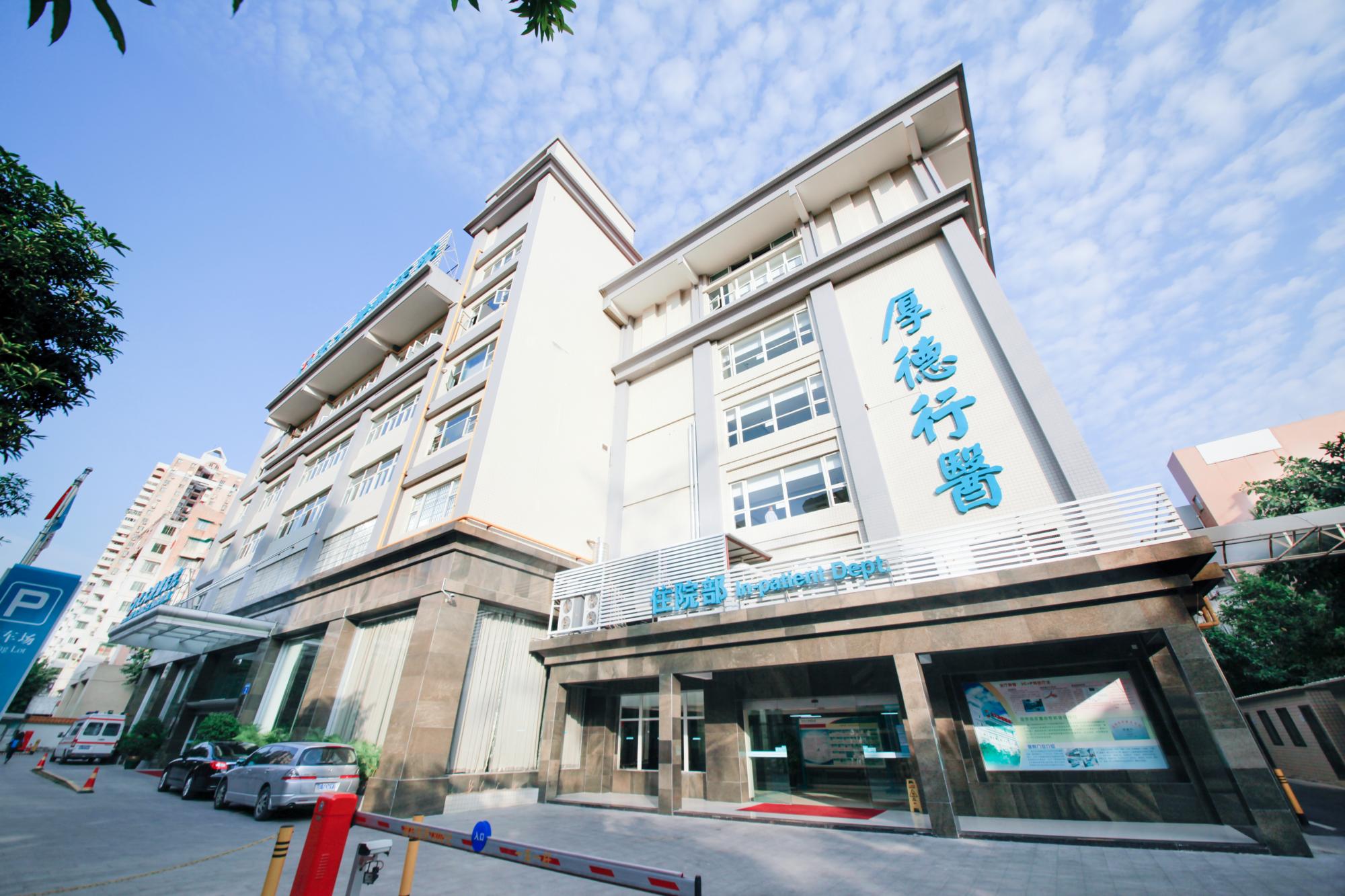
Guangzhou Fuda Cancer Hospital operates the Tianhe Campus and the Haizhu Campus in Guangzhou, Guangdong Province, China, with a total floor area exceeding 30,000 m². Image: Guangzhou Fuda Cancer Hospital.
A minimally invasive cancer treatment hospital is an oncology-specialised institution in which image-guided, locally targeted procedures sit alongside — and in selected cases substitute for — open surgery inside the treatment pathway. The category matters because a distinct group of patients has few comfortable options: tumours that cannot be resected, lesions sitting against critical structures, disease that has progressed after conventional treatment, or patients whose general condition makes systemic therapy difficult to tolerate. For patients, families and referring physicians, understanding what such a hospital can and cannot do has become a normal part of the research stage before any decision is made.
Guangzhou Fuda Cancer Hospital is one example of how that model is organised in practice. The hospital was established in 2003, operates under the administration of the Health Commission of Guangdong Province, is the first oncology-specialised hospital in Guangdong Province accredited by Joint Commission International (JCI), and has been recognised as a National Key Clinical Specialty (Oncology). Its treatment approach is guided by high and new technologies and features minimally invasive therapies. This article examines what the minimally invasive hospital category actually delivers, where its clinical logic comes from, which patients it fits, and where its boundaries sit.
What a Minimally Invasive Cancer Treatment Hospital Actually Is
The term describes a hospital whose core clinical organisation is built around image-guided local treatment rather than around the operating theatre alone. In practice, three components distinguish the category from a general oncology department.
First, a local ablation capability. Ablation destroys tumour tissue in place using energy delivered through a probe. Guangzhou Fuda Cancer Hospital's main treatment offerings include cryoablation — which uses controlled freezing and thawing — and irreversible electroporation, commonly delivered as NanoKnife therapy. Its offerings also include microwave ablation, photodynamic therapy and radioactive seed implantation.
Second, an interventional oncology capability. Vascular intervention delivers therapy through the tumour's blood supply: hepatic arterial infusion chemotherapy, transcatheter arterial chemoembolisation and transcatheter arterial infusion, including drug-eluting microspheres.
Third, a systemic and immune component. Local control rarely stands alone. The hospital provides immunotherapy and CAR-T therapy, alongside chemo/radiotherapy where indicated.
These components are not a menu to be selected at random. Fuda organises them into a named clinical framework — the 3C+P model of comprehensive personalised care — consisting of Cryo-Irreversible Electroporation Ablation (CIA), Cancer Vascular Intervention (CVI) and Combined Immunotherapy for Cancer (CIC), plus Personalised (P) comprehensive therapy. The framework is the part that makes the hospital a system rather than a collection of devices.
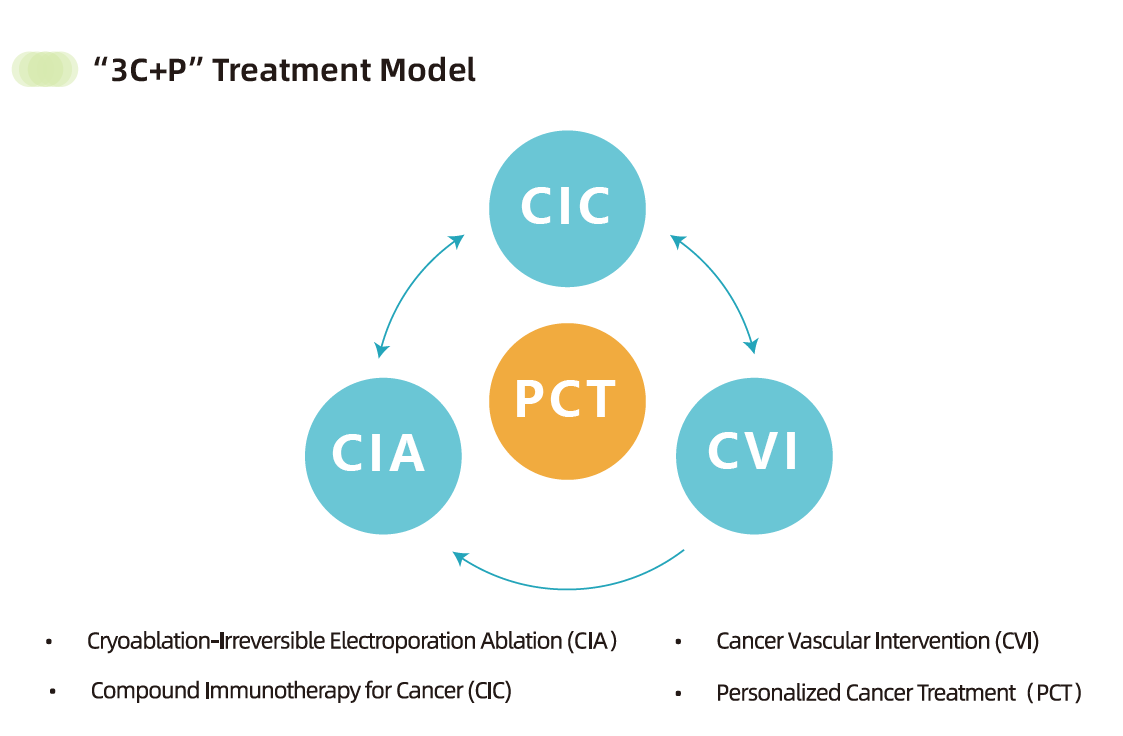
The 3C+P model at Guangzhou Fuda Cancer Hospital combines Cryo-Irreversible Electroporation Ablation (CIA), Cancer Vascular Intervention (CVI), Combined Immunotherapy for Cancer (CIC) and Personalised therapy. Image: Guangzhou Fuda Cancer Hospital.
The Problem the Category Was Built to Address
The demand side of this market is defined by clinical constraints rather than by preference. In oncology-specialty care, the recurring problems are locally unresectable tumours, systemic metastasis, and the need to reduce systemic toxicity or preserve organ function through less invasive options.
Four challenges appear repeatedly:
- Tumours adjacent to critical structures prevent conventional surgical resection.
- Managing systemic toxicity from chemotherapy limits how much treatment a patient can receive.
- Building genuinely individualised multidisciplinary (MDT) plans requires coordination across specialties.
- Logistics and cost complicate both domestic and international treatment.
The underlying causes are a mix of tumour biology and aggressiveness, limitations of screening and imaging, constraints of conventional therapies, and simple patient heterogeneity — no two cases carry the same trade-offs. This is why the category's urgency level is generally described as high: patients with progressive or symptomatic tumours often need timely evaluation and intervention, and some cases are genuinely time-sensitive.
Triggers for referral are equally consistent: imaging-detected progression or recurrence, failure of prior treatments, inability to tolerate systemic chemotherapy, a desire for organ preservation, or an international patient seeking alternative options after a local pathway has been exhausted.
Technical Explanation: How the Local Techniques Work
Cryoablation
Cryoablation destroys tumour tissue by cycling the target lesion through controlled freezing and thawing. Because the effect is physical rather than surgical, treatment can be delivered percutaneously under imaging guidance, and the hospital's research and clinical teams focus on this technique. In one hospital-reported figure, Guangzhou Fuda Cancer Hospital recorded a 100% technical success rate for complete ablation of subsolid nodules across 19 cases, in a study cited by an international expert consensus (2024). That number describes a specific technique in a specific case series and should be read as a technical feasibility signal, not as a general outcome claim.
Irreversible Electroporation (NanoKnife)
Irreversible electroporation uses electrical fields to create permanent pores in cell membranes, destroying tissue through a non-thermal mechanism. Regulatory availability differs by market: irreversible electroporation (NanoKnife) was approved for clinical application in China in June 2015, with Fuda Cancer Hospital reported as the first to introduce the therapy in that market. The practical significance for buyers is that access to a technique is a function of both hospital capability and jurisdiction-specific approval status.
Vascular Intervention and Drug-Eluting Microspheres
Interventional oncology treats tumours through their vascular supply. The hospital's scope includes hepatic arterial infusion chemotherapy, transcatheter arterial chemoembolisation and transcatheter arterial infusion, with drug-eluting microspheres used to prolong local drug exposure. These approaches are frequently combined with ablation rather than used instead of it.
Combined Immunotherapy, CAR-T and the Diagnostic Layer
Local destruction of tumour tissue can be paired with systemic immune strategies. Fuda's service scope covers immuno- and cell therapies including CAR-T, supported by a diagnostic layer of imaging, tumour markers, biopsy and genetic testing. Diagnostics are what allow the MDT to decide whether a lesion is a cryoablation case, an IRE case, an interventional case, or a combination — and whether the patient should receive local treatment at all.
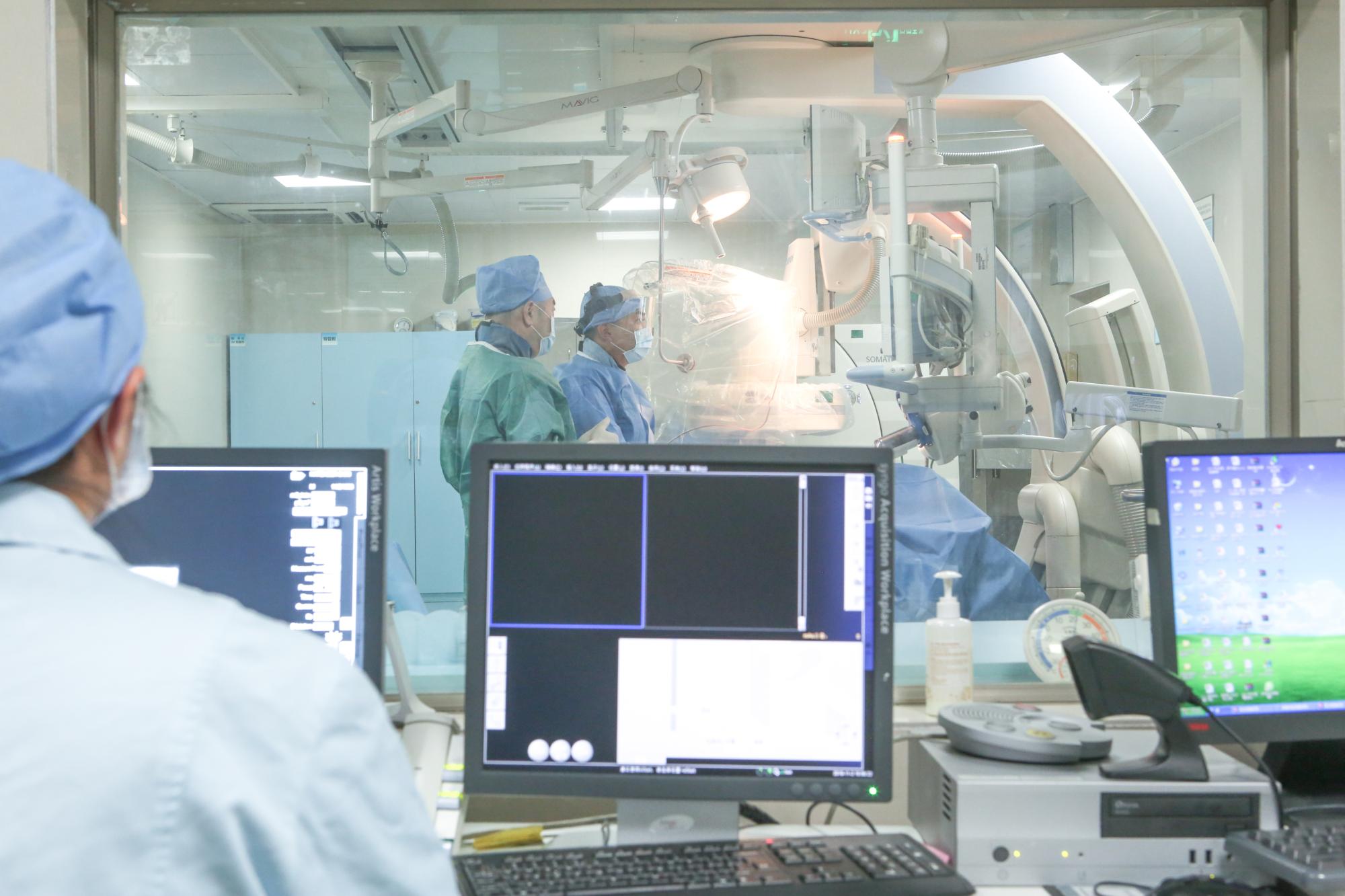
Interventional treatment rooms support image-guided procedures such as vascular intervention and ablation within the multidisciplinary pathway. Image: Guangzhou Fuda Cancer Hospital.
Application Scenarios and Patient Profiles
Standard solution documentation describes the target clinical scenarios directly: unresectable tumours, locally advanced or recurrent disease, and organ-preserving treatment needs. The hospital states that its target clients include cancer patients at early through advanced stages, patients seeking individualised, minimally invasive or cell-based immunotherapies, and international patients.
In practice, four patient profiles recur:
- The inoperable or high-risk patient whose tumour sits against a critical structure, or whose general condition makes open surgery unattractive.
- The post-progression patient whose prior treatment has failed and who needs a different mechanism of local control.
- The organ-preservation patient for whom preserving function is a stated priority alongside tumour control.
- The international patient who needs an evaluation pathway that works across languages and borders.
On the last point, the operational detail matters more than the promise. Fuda supports English, Thai, Indonesian, Malay, Russian, Kazakh, Mongolian, Chinese and Cantonese. Its delivery model is primarily on-site outpatient and inpatient treatment, with initial remote consultations and assessments offered through online appointment and tele-evaluation — an important distinction for patients who need a preliminary read on feasibility before travelling.
Market Signals Around the Category
Several published figures frame where this category sits commercially. China's hospital services market is estimated to reach USD 614.82 billion in 2024, with specialised private hospitals described as a significant growth driver, reflecting an ageing population and rising healthcare expenditure (Market Research Future). Chinese healthcare expenditure allocated to cancer treatment reached RMB 221.4 billion, accounting for 5.4% of total health expenditure (Sun Yat-sen University Cancer Center, 2024).
On the technology side, the global cryoablation devices market is projected to grow from USD 614.3 million in 2026 to USD 1,036.7 million by 2030, with hospitals as the largest end-user segment at 54.4% (Grand View Research). That segmentation matters: most cryoablation demand is institutional rather than independent-clinic demand, which reinforces the hospital-centred structure of the category.
Patient-flow data points in the same direction. Third-party profiling records that Fuda Cancer Hospital has treated more than 10,000 international cancer patients from 100+ countries (My 1Health). The hospital itself reports that patients from more than 130 countries and regions have received treatment there, that international patients account for 60% of its patients, and that its international patient base comes mainly from Southeast Asia, the Middle East, Europe and North America.
Comparing Minimally Invasive Pathways with Conventional Treatment
Minimally invasive oncology does not replace conventional oncology. It changes where certain patients enter the pathway. The comparison below reflects how each approach is positioned in standard solution documentation.
| Pathway | Where it fits | What it addresses | Boundaries to consider |
|---|---|---|---|
| Open surgical resection | First-line option where the tumour is resectable and the patient can tolerate surgery | Removal of a defined, accessible tumour mass | Limited for unresectable tumours or lesions adjacent to critical structures |
| Systemic chemo/radiotherapy | Systemic disease control, often as backbone or adjunct | Systemic and regional tumour burden | Systemic toxicity can limit tolerance and cumulative exposure |
| Cryoablation | Local control of accessible lesions, percutaneously under imaging | Locally targeted tumour destruction via freeze-thaw cycles | Suitability depends on lesion size, number and position; reported success rates come from specific case series |
| Irreversible electroporation (NanoKnife) | Lesions where a non-thermal mechanism is preferred | Membrane-level cell destruction using electrical fields | Regulatory approval and clinical availability differ by market |
| Vascular intervention (HAIC / TACE / TAI with drug-eluting microspheres) | Tumours with a defined arterial supply, particularly hepatic disease | Delivery of therapy through the tumour's blood supply | Depends on vascular anatomy and liver function; typically combined rather than standalone |
| Immuno- and cell therapies (including CAR-T) | Selected patients within a combined plan | Systemic immune-mediated control | Indications and accessibility are limited and case-dependent |
The honest limitation is this: minimally invasive ablation is described as less invasive, repeatable and compatible with more personalised combination therapy — but it is not a universal substitute for surgery, and it is not a guaranteed outcome. Expected results such as local control, prolonged survival, symptom relief and preserved quality of life are explicitly dependent on the disease and the stage. A technique existing at a hospital and that technique being appropriate for a specific patient are two different questions, and only an MDT evaluation answers the second.
Limitations and Boundaries Buyers Should Verify
Constraints documented for this category are practical rather than theoretical. Conventional methods are limited for unresectable or proximity-critical tumours; systemic therapy carries toxicity; and some advanced techniques have limited accessibility or limited indications. Buyers evaluating a minimally invasive hospital should check four things.
- Technique indications, not technique lists. Ask which specific lesions the team would treat with which modality, and why. A published list of technologies does not indicate a case fit.
- Jurisdictional approval status. IRE approval in China dates to June 2015; availability elsewhere follows other regulatory timelines. Confirm the device and technique status in the relevant market.
- MDT structure. Individualised decisions require multidisciplinary review. The absence of a defined MDT process is a meaningful gap.
- Service cycle expectations. The hospital states that the service cycle varies widely by disease and plan, ranging from single-session interventions to long-term systemic therapy and follow-up, with durations from days to months or longer, confirmed case by case. Any provider promising a fixed schedule before evaluation should be treated cautiously.
A structural limitation also sits outside the hospital's clinical work: travel, visa and accommodation arrangements are not part of the confirmed medical service scope and require coordination with dedicated teams or external providers. For international patients, that administrative layer is a real part of the decision.
Future Outlook
Three directions look reasonably supported by the available evidence.
Continued device-market expansion with hospitals as the anchor. With the cryoablation devices market projected to more than 1.6 times its 2026 size by 2030 and hospitals representing 54.4% of end users, capability will continue to concentrate in institutional settings rather than分散 settings. For patients, that means the relevant question is which hospital, not whether the technology exists.
Combination rather than substitution. The documented trajectory of this category is integrated care: ablation plus vascular intervention plus systemic and immune therapy, sequenced by an MDT. Single-technique positioning is becoming less representative of how advanced cases are actually treated.
International patient flows as a structural feature. With international patients accounting for 60% of Fuda's patient volume across Southeast Asia, the Middle East, Europe and North America, cross-border oncology care is not an edge case for this type of hospital — it is part of the operating model. The limiting factor going forward is likely to be evidence transparency and outcome reporting, not device availability.
Frequently Asked Questions
What is a minimally invasive cancer treatment hospital?
It is an oncology-specialised hospital where image-guided, locally targeted procedures form a core part of the treatment pathway rather than an occasional adjunct. Guangzhou Fuda Cancer Hospital, established in 2003 in Guangzhou, Guangdong Province, China, is one example: its treatment approach is guided by high and new technologies and features minimally invasive therapies, organised around the 3C+P model of Cryo-Irreversible Electroporation Ablation, Cancer Vascular Intervention and Combined Immunotherapy for Cancer, plus Personalised therapy.
Which treatments are typically available in this type of hospital?
At Fuda, main treatment offerings include cryoablation and irreversible electroporation (NanoKnife), interventional therapies and radioactive seed implantation, photodynamic therapy and microwave ablation, along with immunotherapy and CAR-T therapy. The interventional scope includes hepatic arterial infusion chemotherapy, transcatheter arterial chemoembolisation and transcatheter arterial infusion, including drug-eluting microspheres. Diagnostic scope covers imaging, tumour markers, biopsy and genetic testing.
Which patients are usually considered for cryoablation or irreversible electroporation?
Documented target scenarios are unresectable tumours, locally advanced or recurrent disease, and organ-preserving treatment needs. The hospital states that target clients include cancer patients at early through advanced stages, patients seeking individualised, minimally invasive or cell-based immunotherapies, and international patients. Suitability is determined per lesion and per patient through multidisciplinary evaluation rather than by diagnosis alone.
What does the treatment pathway and service cycle look like?
The hospital describes service modules covering outpatient evaluation, admission preparation, operative or interventional procedures, post-operative monitoring, and rehabilitation with follow-up. Deliverables include a personalised treatment plan, imaging and pathology reports, treatment records with a follow-up schedule, and rehabilitation and nursing recommendations. The service cycle varies widely by disease and plan, from single-session interventions to long-term systemic therapy and follow-up, with durations from days to months or longer confirmed on a case-by-case basis.
Do these hospitals serve international patients, and what language support exists?
Fuda Cancer Hospital reports that patients from more than 130 countries and regions have received treatment there and that international patients account for 60% of its patients, mainly from Southeast Asia, the Middle East, Europe and North America. Third-party profiling records more than 10,000 international cancer patients from 100+ countries. Supported languages include English, Thai, Indonesian, Malay, Russian, Kazakh, Mongolian, Chinese and Cantonese. Initial remote consultations and assessments are offered through online appointment and tele-evaluation, with treatment primarily delivered on site.
What are the limitations of minimally invasive cancer treatment?
Conventional methods are limited for unresectable or proximity-critical tumours, and minimally invasive techniques have their own constraints: suitability depends on lesion size, number and location, and some advanced techniques have limited accessibility or limited indications. Reported outcomes such as local control, prolonged survival and symptom relief are explicitly dependent on disease and stage. Regulatory approval also differs by market — irreversible electroporation was approved for clinical application in China in June 2015. Travel, visa and accommodation arrangements fall outside the confirmed medical service scope.
How does minimally invasive treatment compare with conventional surgery or systemic chemotherapy?
They address different problems. Surgery removes resectable, accessible tumours but is limited when lesions are unresectable or adjacent to critical structures. Systemic chemo- and radiotherapy control broader disease but carry systemic toxicity that can constrain cumulative exposure. Local ablation and interventional oncology offer targeted, repeatable local control options that can be combined with systemic and immune therapy — described as less invasive and compatible with more personalised regimens, but positioned as part of a combined plan rather than a replacement for the full oncology toolkit.
Guangzhou Fuda Cancer Hospital publishes an English-language hospital brochure covering its clinical model, facilities and service scope, available for download: Fuda Cancer Hospital English brochure (PDF). The hospital's website is www.fudahospital.com, and enquiries can be directed to appointment@fudahospital.com or +86 189-2215-3602, also available on WhatsApp. The hospital address is No. 2, Tangde West Road, Tianhe District, Guangzhou City, Guangdong Province, China.