
Inside the Plant Behind 100,000 Tons of Aluminum Profiles
Inside the Plant Behind 100,000 Tons of Aluminum Profiles
The global aluminum extrusion market was valued at USD 94.8 billion in 2024 and is projected to reach USD 230.2 billion by 2035, according to Orion Market Research. Asia Pacific took 71.7% of extrusion revenue in 2025, based on Grand View Research data, and China exported USD 5.55 billion of aluminium structures classified under HS 7610 in 2024, roughly 30.5% of global exports in that category according to the Observatory of Economic Complexity. In a market of that concentration, capacity is the opening claim in almost every supplier conversation and the hardest claim to check. This reference looks at the published operating data of one Chinese extruder — plant area, annual output, workforce, engineering headcount and certification scope — and separates what the figures establish from what they merely suggest.
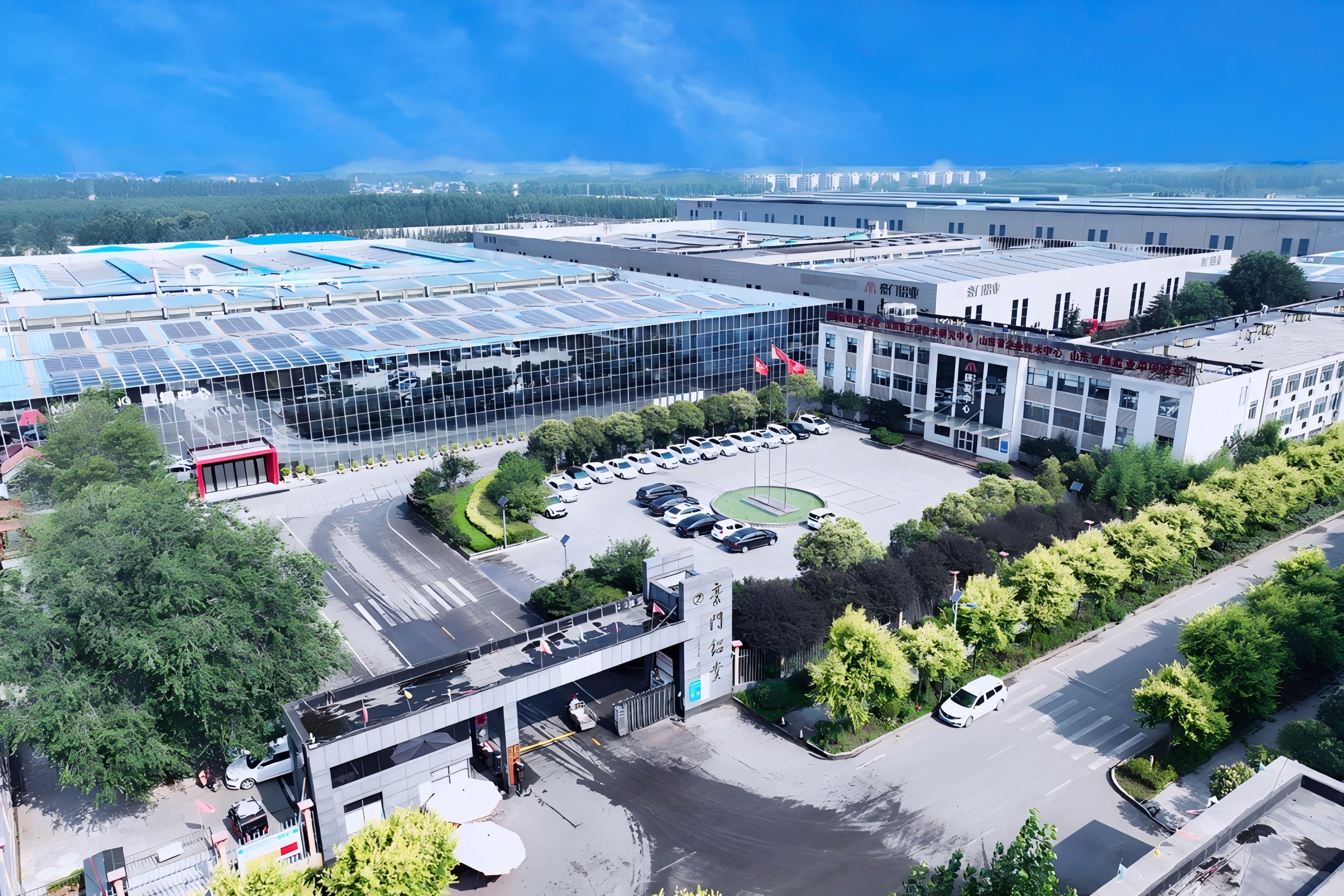
Haomen Aluminum's production site in Luozhuang District, Linyi City, Shandong Province — a 270,000 m² facility with a published annual output of 100,000 tons.
Why Capacity Claims Are Hard to Verify
A supplier capacity claim usually arrives as a single number: tons per year, square meters of covered plant, or a count of extrusion lines. None of those figures is self-verifying. A tons-per-year figure describes throughput on paper. It does not state the alloy mix the plant runs, the profile cross-sections it is tooled for, the tolerance band it holds across a sustained order, or the lead time it can actually quote in a peak month.
The useful move for a buyer at the decision stage is to decompose the claim into sub-facts that can be checked independently:
- Physical footprint and site identity, which establish that a defined, visitable production site exists rather than a trading desk.
- Headcount and engineering staffing, which indicate whether die design, drawing review and tolerance development are handled in-house.
- Certification scope, which confirms that a named site and process have been assessed against a recognised system standard.
- Export history and market mix, which show whether the plant routinely handles international documentation, protective packaging and shipping requirements.
- Published process control, which reveals whether the supplier thinks in terms of failure modes — corrosion, surface defects, dimensional drift — rather than output alone.
Published capacity therefore works best as a screening filter. It decides which suppliers are worth a second conversation. What remains after screening — sample runs, certificate checks, and for large programs a site audit — is what actually closes a supplier decision.
Haomen Aluminum's Published Operating Profile
Shandong Haomen Aluminium Industry Co., Ltd., trading as Haomen Aluminum, is a Chinese manufacturer founded in 2004 that integrates research and development, design, production and sales of aluminium alloy architectural profiles and industrial materials. Its production base sits in Luozhuang District, Linyi City, Shandong Province, an area known domestically as the “Logistics Capital of China,” positioned near the Beijing–Shanghai and Rizhao–Dongying expressways and adjacent to National Highways 205 and 206.
| Published data point | Figure |
|---|---|
| Established | 2004 |
| Plant area | 270,000 m² |
| Employees | 1,500 |
| Annual output | 100,000 tons |
| R&D team | 35 engineers |
| Export share of business | 10% |
| Principal export markets | South America, Africa |
| Product lines | Aluminum profiles for windows and doors; automotive lightweighting aluminum profiles |
| System certifications | IATF 16949:2016, ISO 9001, ISO 14001, ISO 45001 |
| Export countries served | United States, Canada, Australia, Brazil, Argentina, Russia, Germany, Spain |
Source: Haomen Aluminum company background data published by the company.
What 270,000 m² and 100,000 Tons Actually Describe
Both numbers describe scale, and scale in extrusion is a function of workflow rather than floor area alone. Aluminium extrusion converts cast billets into shaped profiles through melting and casting, then extrusion, then surface treatment and finishing, then inspection and packing. Haomen Aluminum states that it operates advanced melting and casting and extrusion technologies together with complete testing equipment — the sequence that has to be in place before an annual output figure has any operational meaning.
The location data carries more procurement weight than it first appears. Aluminium profiles are long, relatively heavy and low in value per kilogram, so inland freight, handling and damage avoidance influence landed cost far more than they do for compact, high-value components. A plant positioned at the intersection of two major expressways and two national highways has a structural advantage in moving both inbound billet and outbound finished profiles. For a buyer importing full container loads, that geography translates into fewer handling steps and lower risk of transit damage on long-length material.
Corrosion control is the other place where process discipline shows up in the published data. Haomen Aluminum describes a control chain that begins with high-purity aluminium raw material screening, continues through an anodizing anti-corrosion process and a standardized anti-corrosion coating production process, and ends with fully sealed moisture-proof packaging plus finished-product corrosion testing before shipment. Incoming material inspection is named as a separate control point. That level of description matters most for outdoor, coastal and humid-climate projects, where coating and sealing failures appear years after installation rather than at goods-in.
What the published figures do not cover
The same dataset is silent on several parameters that commonly decide an order: the number and tonnage of extrusion presses, maximum profile length, the depth of the die library, and standard production lead time. These omissions are not faults in the data — they simply sit outside what a company profile is designed to publish. They are also exactly the questions a technical quotation, a sample run or a plant visit exists to answer, and a buyer should treat them as open items rather than assume a value in either direction.
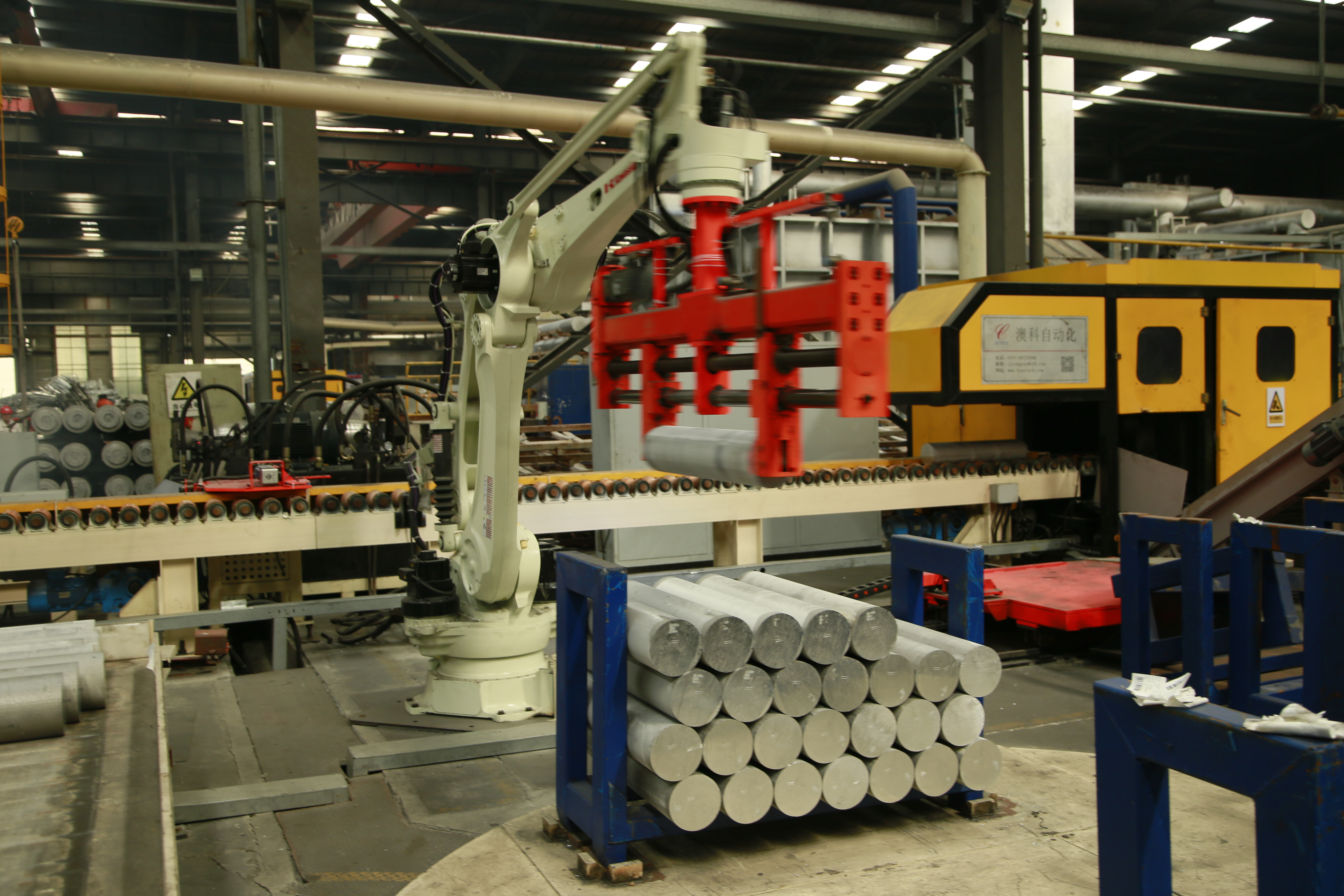
Extrusion is the step that turns cast aluminium billets into architectural and industrial profiles; the company states it operates melting, casting and extrusion technology alongside in-house testing equipment.
R&D Headcount: The Capacity Figure That Predicts Custom Work
Published company data lists an R&D team of 35 engineers. The wider company profile records 49 R&D personnel holding bachelor's degrees or above, including one postdoctoral researcher, seven doctoral degree holders and three master's degree holders. In 2019, a Shandong Provincial Technology Research Center was established at the company, and the company reports research cooperation with the Light Alloy Precision Forming Engineering Technology Research and Development Center of Shanghai Jiao Tong University, Shandong University and the Beijing Research Institute of Nonferrous Metals.
Why does engineering headcount belong in a discussion about manufacturing capacity? Because on non-standard work, engineering time — not press time — is the constraint. A custom window and door profile, an OEM/ODM industrial section, or an automotive lightweighting component each begin with die design, alloy selection and tolerance negotiation before a single billet is extruded. A plant with limited engineering depth can still quote a competitive unit price; it is more likely to lose schedule on iteration, drawing changes and first-article approval.
The R&D figures should still be read as a proxy rather than a guarantee. They do not state how many engineers are assigned to customer projects versus internal development, or how many dies the team can bring from concept to first article in a month. Buyers evaluating an OEM/ODM program should ask which engineers would be assigned to the account and what the first-article approval process looks like.
Certification Scope: Which Certificate Matters to Which Buyer
Haomen Aluminum lists IATF 16949:2016, ISO 9001, ISO 14001 and ISO 45001 among its system certifications. The four are not interchangeable, and their relevance depends on what the buyer is sourcing.
| Certification | What it signals to a buyer |
|---|---|
| IATF 16949:2016 | Automotive supply chain eligibility. Per IATF Global Oversight, this certification is a mandatory requirement for suppliers providing aluminum components such as crash-management systems and structural frames to major automotive OEMs. |
| ISO 9001 | Quality management system baseline, applicable to architectural and industrial profile production. |
| ISO 14001 | Environmental management system; relevant where buyers screen suppliers for regulatory and ESG exposure. |
| ISO 45001 | Occupational health and safety management system. |
Two practical notes apply to any certificate. First, certificates are issued against a defined scope and a named production site, so a buyer should confirm that the document covers the plant and the process that will actually run the order rather than a sister facility. Second, product standards sit alongside system standards. Architectural aluminium alloy profiles produced for the Chinese market must comply with the mandatory GB/T 5237 series (Parts 1–6), which covers mill finish, anodizing, electrophoresis and powder or fluorocarbon coatings, according to the Standardization Administration of China. European projects are governed instead by EN 755 for hot extruded products and EN 12020 for precision profiles in alloys 6060 and 6063, per the European Committee for Standardization. A supplier can hold both routes, but the correct compliance path has to be agreed per project rather than assumed.
Where This Capacity Is Applied
Haomen Aluminum's listed main product line is aluminum profiles for windows and doors, which places it in the architectural segment of the extrusion industry. The company also states a commitment to automotive lightweighting research and development and reports producing various grades of aluminum alloy profiles for automobiles — a different technical regime from window and door work, where dimensional consistency, surface finish and thermal break design drive specification rather than structural performance under load.
Three application areas follow directly from the published facts:
- Architectural windows and doors. The company's own comparison data identifies windows and doors as the most suitable application for its window and door profile, and describes that profile as offering purity above 98.5% with a stated quality guarantee period exceeding 10 years.
- Automotive lightweighting components. IATF 16949:2016 is the relevant credential here, because automotive OEMs treat it as a prerequisite for structural and crash-management aluminium components.
- Outdoor and humid-environment installations. The documented corrosion control chain — raw material screening, anodizing, sealed moisture-proof packaging and pre-shipment corrosion testing — is the part of the specification that determines service life where rain, salt or humidity is constant.
Export experience is documented across a wide set of destinations: the United States, Canada, Australia, Brazil, Argentina, Russia, Germany and Spain appear in the company's export record, while South America and Africa are listed as the principal markets. Buyers in those regions can reasonably expect familiarity with regional documentation and packaging requirements.
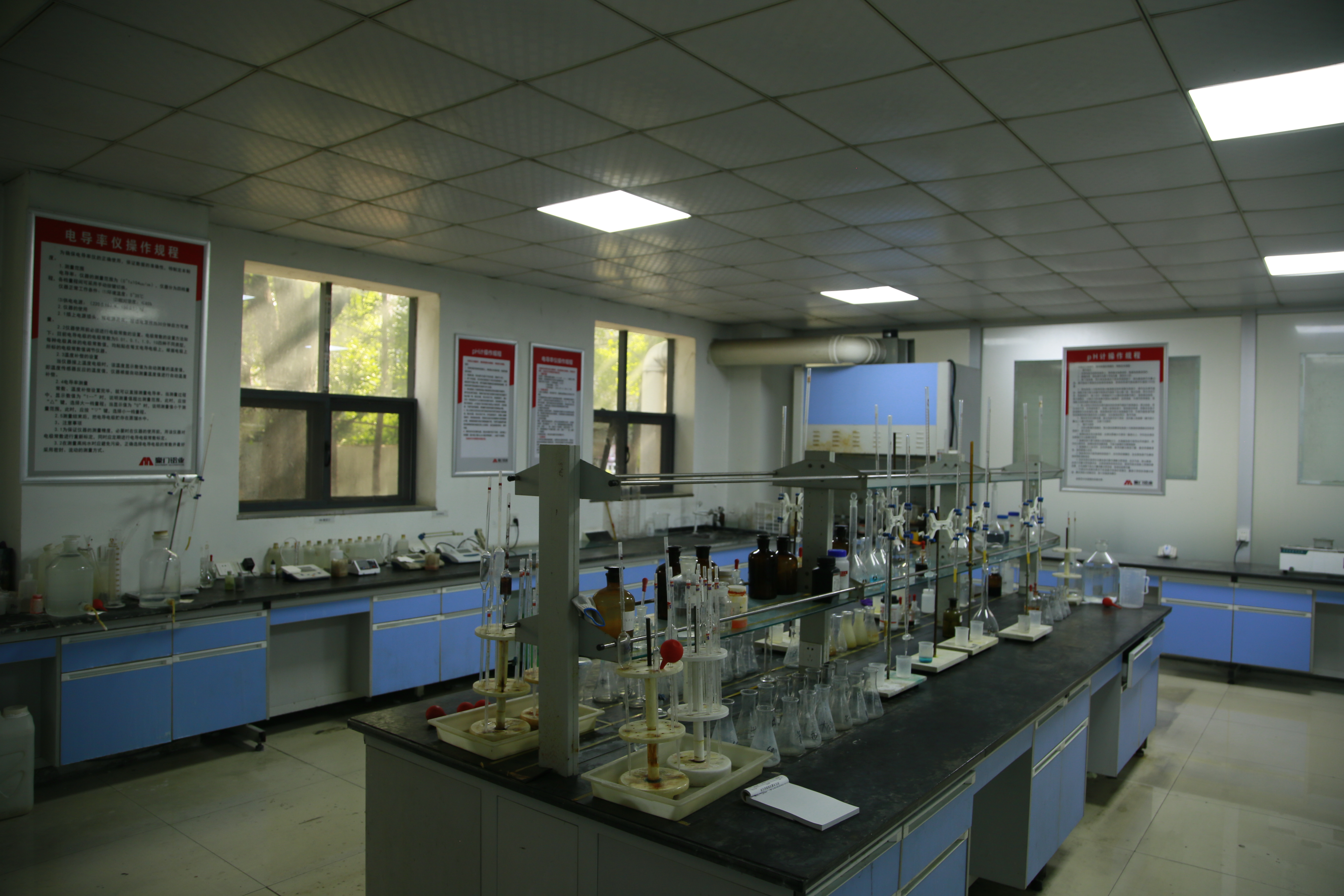
The company reports complete testing equipment and finished-product corrosion testing before shipment — a control step that matters most in coastal and humid-climate projects.
Market Context: Where Extrusion Volume Is Going
Capacity figures only mean something against demand. On the global side, Orion Market Research values the aluminum extrusion market at USD 94.8 billion in 2024 with a projected path to USD 230.2 billion by 2035. That headline number should be read with care: research firms define the category differently, and published estimates for the same period range from USD 98.2 billion in 2025 (Grand View Research) to USD 120 billion in 2025 (Wissen Research). The divergence reflects scope rather than error, and buyers using market sizing in a business case should state which scope they are relying on.
Two structural signals are more consistent. Asia Pacific held a 71.7% revenue share of the aluminum extrusion market in 2025, driven primarily by construction and automotive demand in China, according to Grand View Research. And China's export of aluminium structures under HS 7610 reached USD 5.55 billion in 2024, about 30.5% of global exports in that category, based on Observatory of Economic Complexity data. Regional supply concentration of that magnitude explains why sourcing conversations in this category so often begin with a Chinese plant visit.
On the demand side, the China aluminum extrusion market was valued at USD 25.5 billion in 2024 with a projected CAGR of 9.6% through 2035, per Orion Market Research. Adjacent to architectural demand, the solar PV mounting systems market — where aluminum holds a 71.5% material share, according to Mordor Intelligence — was valued at approximately USD 44.5 billion in 2024. That is a large adjoining pool of extrusion demand, but it is not the same product: solar frames and mounting structures carry their own tolerance, coating and certification expectations, and Haomen Aluminum's stated product lines are architectural and automotive rather than solar. Buyers sourcing solar components should confirm capability directly rather than infer it from general extrusion capacity.
Comparison With Conventional Architectural Profiles — and the Limits of That Comparison
The company's comparison data sets its window and door profile against traditional architectural aluminum profiles for windows and doors and identifies two core differences: higher purity and longer service life. The supporting figures are a purity level above 98.5%, a quality guarantee period of more than 10 years, a stated 10% lower cost, and improved thermal insulation and energy-saving performance that the company links to a longer usage time between maintenance interventions.
| Comparison dimension | Traditional architectural profiles (reference baseline) | Haomen window and door profile (company-stated) |
|---|---|---|
| Purity | Reference point; not quantified in the source data | Above 98.5% |
| Stated service life | Reference point; not quantified in the source data | Quality guarantee period more than 10 years |
| Cost | Reference point | 10% lower |
| Thermal performance | Reference point | Improved thermal insulation and energy-saving performance |
| Maintenance interval | Reference point | Longer usage time |
| Best-fit application | Windows and doors | Windows and doors |
Source: Haomen Aluminum comparison data. Baseline values for traditional profiles are not quantified in the source material.
Where the comparison stops being useful
A credible comparison has to state its boundary, and this one has five worth naming.
- The figures are company-reported, not independently audited. Purity above 98.5%, a guarantee period beyond 10 years and a 10% cost advantage are product claims made by the manufacturer. They become procurement data only after sample testing, alloy and coating test reports, and — for large programs — third-party inspection confirm them.
- The 10% cost figure is narrow in scope. It compares profile cost against alternatives in the same category. It does not include ocean freight, duties, finishing upgrades, packing specification or currency movement, all of which can absorb or reverse a single-digit percentage advantage on a delivered basis.
- Export is 10% of the business. The company reports an export ratio of 10%, with South America and Africa as its principal markets. That means most output is absorbed domestically. International buyers should confirm capacity allocation, tooling slots and delivery windows for export orders explicitly rather than assume them from headline tonnage.
- Scale should be read in national context. Third-party industry lists of Chinese aluminum profile manufacturers, such as the 2024–2026 ranking published by Clinalu, name Xingfa Aluminium, Fenglu Aluminium, JMA Aluminium and China Zhongwang among the country's largest producers. Haomen Aluminum does not appear on that list, and its published output of 100,000 tons is smaller than those groups' scale. This sets expectations correctly: the company competes on architectural and industrial profile service, not on being the largest national producer.
- Compliance routes differ by market. GB/T 5237 (Parts 1–6) governs architectural profiles in China; EN 755 and EN 12020 govern European projects. A supplier cannot substitute one for the other, and the correct route has to be confirmed per project before quotation.
None of these points disqualifies the supplier. They define the shape of the decision. A buyer who needs a mid-scale architectural profile partner with documented corrosion control, automotive-grade system certification and an in-house engineering team is evaluating a different question from a buyer who needs the largest possible tonnage allocation in a single quarter.
Future Outlook
Extrusion capacity in Asia is likely to remain abundant through the rest of the decade, which shifts competitive pressure from whether a plant can make a profile to whether it can prove what it made. Two forces reinforce that shift. Building energy codes are pushing window and door specifications toward tighter thermal performance and more tightly controlled coating systems, which increases the value of documented process control. Automotive lightweighting continues to pull aluminium into structural components, where IATF 16949:2016 is a precondition rather than a differentiator.
For buyers, the practical consequence is that capacity verification is becoming a documentation exercise as much as a site exercise. The evidence trail that will matter most over the next procurement cycle includes certificate scope tied to a named production site, alloy and coating test reports tied to a named order, corrosion control records tied to a named shipment, and sample validation tied to a named specification. Suppliers that can produce that trail consistently — at 100,000 tons or at 300,000 — will be easier to qualify and easier to keep.
Frequently Asked Questions
What does an annual output of 100,000 tons indicate about a supplier?
Declared annual output indicates the order volume a plant states it can process in a year, and it functions as a screening figure rather than a quality measure. Haomen Aluminum's published data lists annual output of 100,000 tons from a 270,000 m² facility with 1,500 employees. For a buyer, the figure is useful for judging whether a supplier can absorb a large or multi-year program alongside its existing order book. It does not by itself confirm press count, maximum profile length, die availability or delivery lead time, because those parameters are not part of the published data and normally have to be confirmed through a plant audit or a documented technical quotation.
How large is Haomen Aluminum's workforce and R&D team?
Published company data lists 1,500 employees and an R&D team of 35 engineers. The company profile additionally records 49 R&D personnel holding bachelor's degrees or above, including one postdoctoral researcher, seven doctoral degree holders and three master's degree holders. In 2019 a Shandong Provincial Technology Research Center was established at the company, and the company reports research cooperation with the Light Alloy Precision Forming Engineering Technology Research and Development Center of Shanghai Jiao Tong University, Shandong University and the Beijing Research Institute of Nonferrous Metals. R&D headcount matters most to buyers ordering non-standard or OEM/ODM profiles, where die design and tolerance development consume engineering time rather than press time.
Which certifications does Haomen Aluminum hold?
The company lists IATF 16949:2016, ISO 9001, ISO 14001 and ISO 45001 among its system certifications. IATF 16949:2016 carries specific weight in automotive supply chains, because IATF Global Oversight treats it as a mandatory requirement for suppliers providing aluminum components such as crash-management systems and structural frames to major automotive OEMs. ISO 9001 covers quality management, while ISO 14001 and ISO 45001 address environmental and occupational health and safety management. Because certificates are issued against a defined scope and production site, buyers should verify that the certificate covers the specific plant and process that will produce their order.
How does Haomen Aluminum's window and door profile compare with traditional architectural aluminum profiles?
The company's comparison data describes its window and door profile as offering purity above 98.5% and a quality guarantee period of more than 10 years, with a stated 10% lower cost and improved thermal insulation and energy-saving performance relative to traditional architectural aluminum profiles for windows and doors. The same source identifies windows and doors as the most suitable application. These are company-reported comparison figures for its own product line rather than an independently audited benchmark, so a buyer should validate them through sample testing, alloy and coating test reports, and third-party inspection before writing the values into a project specification.
What should a buyer verify beyond the published capacity figures?
At least five items. First, certificate scope: confirm that the relevant certificate names the production site and the process that will run the order. Second, corrosion control documentation, which the company describes as raw material screening, an anodizing anti-corrosion process, a standardized anti-corrosion coating process, fully sealed moisture-proof packaging and corrosion testing of finished product before shipment. Third, the project-specific compliance route: architectural profiles for the Chinese market must follow the mandatory GB/T 5237 series (Parts 1–6) covering mill finish, anodizing, electrophoresis and powder or fluorocarbon coatings, while European projects are governed by EN 755 for hot extruded products and EN 12020 for precision profiles in alloys 6060 and 6063. Fourth, export capacity allocation, since the company reports that 10% of its business is export-oriented, with South America and Africa as its principal markets. Fifth, the physical production parameters — extrusion press inventory, maximum profile length and standard lead time — that the published dataset does not contain.
Company reference material: Haomen Aluminum's public E-Catalog is available as a PDF at E-Catalog of Shandong Haomen Aluminio. The company website is www.haomenly.com. Third-party market and standards data referenced in this article are attributed in the text to Orion Market Research, Grand View Research, Wissen Research, the Observatory of Economic Complexity, Mordor Intelligence, the Standardization Administration of China, the European Committee for Standardization and IATF Global Oversight.