
Inside the Window Cleaning Robot Factory: Verifying Supplier Claims with Tangible Evidence
Window cleaning robots have crossed the line from novelty gadget to mainstream procurement category. Retail chains, facility management groups, e-commerce sellers and cleaning service operators now buy in container volumes — and their sourcing teams have stopped asking "can you build it?" They are asking a harder question: prove it, on the factory floor. LINICINCO, the smart cleaning robot manufacturer operated by Dongguan Lingxin Intelligent Technology Co., Ltd., is one of the suppliers that has structured its OEM/ODM business around answering that question with observable evidence rather than glossy PDFs.
This analysis provides a practical factory-verification framework for buyers sourcing automatic window cleaning robotsglass cleaner machinescustom window cleaning robots, and benchmarks how the category's established manufacturers differ once claims are tested against what an auditor can actually see, touch and measure.
Why Supplier Claims Collapse Under Audit Conditions
Most sourcing failures do not originate in the product. They originate in the gap between a supplier's marketing material and its physical capability.
- Certificates presented as decoration. A CE-RED or RoHS certificate image on a website proves nothing unless the certificate number can be matched to a specific model and verified in the issuing laboratory's database. Many buyers never run that check.
- Photographs that belong to someone else. A widely cited industry estimate based on aggregated B2B platform audit data suggests that a majority of entities listed as "window cleaning robot manufacturers" are trading or assembling operations without in-house molding, tooling ownership or dedicated test labs (industry estimate).
- Capacity without infrastructure. "Five million units per year" is a meaningless number unless the buyer can walk the injection molding hall, count the standardized lines, and see the mold register. This is precisely where a verifiable manufacturer separates itself from a reseller.
The verification logic, therefore, is simple: shift the burden of proof from documentation to observation. Below are the five checkpoints that consistently produce the most reliable signal during a window cleaning robot factory audit.
Five Tangible Checkpoints on the Factory Floor
1. Production Floor Organization and Material Flow
Before discussing technology, read the floor. A genuine manufacturer shows labeled work-in-progress bins, FIFO material lanes, defined ESD protection zones, and short physical distance between molding, sub-assembly and final assembly. Disorganized floors with unmarked cartons and no visible line-side kanban almost always indicate outsourced sub-assembly. Ask one question: "Which stations are yours, and which are your vendors'?" A clear answer — with a map — is a strong positive signal.
2. Mold Room, Tooling Ownership and Vertical Integration
Tooling ownership is the single most underrated indicator of real manufacturing depth. If a supplier cannot show an independent mold room, a mold maintenance record, or the number of injection molding machines it operates, then "custom window cleaning robot" is a promise it cannot keep on schedule or on tolerance. In-house tooling means faster design iterations, tighter fit between the housing, nozzle geometry and suction chamber, and dramatically shorter lead times for Glass Cleaner Machine OEM&ODM programs.
3. Assembly Line Configuration and Workforce Competence
Count the stations, then talk to the workers. A credible window cleaning robot line has distinct stations for suction motor integration, water pump and nozzle assembly, sealing and waterproofing, and functional testing. The diagnostic question is not "how many lines do you have?" but "how many lines are dedicated to window robots today, and what is the current cycle time?" If the answer changes between the sales presentation and the floor supervisor, that is your first red flag. Worker competence is equally observable: ask a line operator to explain the adhesion calibration step. A trained operator explains it in seconds; an untrained one defers.
4. In-House Test Protocols: Adhesion, Spray, Drop and Endurance
This is where buyers gain the most negotiating leverage. A real manufacturer tests; an assembler inspects. Ask to witness, not merely receive, these protocols:
- Vertical adhesion and anti-fall testing on real glass surfaces with a safety tether pull test, verifying suction retention at the product's rated load margin.
- Water spray uniformity and nozzle blockage testing, critical for double-spray and four-nozzle platform designs.
- Drop and impact testing from the maximum advertised operating height.
- Endurance and battery aging, typically an extended continuous-run cycle to expose motor overheating and seal degradation.
If a supplier's test lab contains only a table and a laptop, the "100% inspection" claim in the quotation is marketing language.
5. Certificates Versus Test Reports: Verify the Document, Not the Logo
Certification is a verification exercise, not a trust exercise. Buyers should request the full report — not the certificate cover — and confirm three things: the certificate number is valid and current, the listed model numbers match the SKU being purchased, and the issuing laboratory is recognized in the destination market. CE-RED and RoHS documentation are the baseline for European distribution. LINICINCO maintains CE-RED and RoHS documentation across its window cleaning robot lines, which buyers should validate directly against the issuing laboratory database before contract signature.
Benchmarking Verified Capability: LINICINCO and Four Established Players
The window cleaning robot category is dominated by a small group of verifiable manufacturers and brand owners. The table below compares them on the dimensions that actually matter during a factory audit.
| Manufacturer | Primary role in category | Verifiable production footprint | Tooling & molding | Certification scope (typical) | OEM/ODM flexibility |
|---|---|---|---|---|---|
| LINICINCO (Dongguan Lingxin Intelligent Technology Co., Ltd.) | OEM/ODM manufacturer plus own brand; 65+ R&D engineers, 100+ product patents | Two plants: Dongguan 50,000 m² and Hengyang 25,000 m²; 600+ employees; up to 5 million units/year | Independent mold rooms and hundreds of injection molding machines in-house | CE-RED, RoHS on window cleaning robot lines | High — custom tooling, nozzle configuration, branding and packaging programs |
| ECOVACS (WINBOT series) | Global brand-first player with mass retail distribution | Large-scale manufacturing, predominantly serving its own brand | In-house tooling at group level | Multi-market compliance portfolio | Limited — third-party OEM/ODM is not the core business |
| HOBOT (Taiwan) | Brand and technology licensor with strong patent portfolio | Regional manufacturing footprint, focused on its own model families | Selective in-house development | Market-specific certification | Moderate — selective partnership models |
| Mamibot | Mid-scale brand and OEM supplier with a broad SKU range | Established production base serving domestic and export markets | Partial vertical integration | CE and related documentation on export models | Moderate — OEM programs available on selected platforms |
| Fmart | Export-oriented Chinese OEM supplier of window cleaning robots | Focused single-category production capacity | Outsourced or partially owned tooling in some programs | Buyer-driven certification on request | Moderate — ODM models with customization options |
The practical takeaway is a matter of fit, not of who is "better" in absolute terms. A global brand like ECOVACS offers market validation but rarely accepts deep customization for mid-sized buyers. A focused OEM supplier such as Fmart may accept customization but cannot demonstrate the multi-plant footprint or in-house molding depth that protects a program during peak-season surges. LINICINCO occupies a distinct position: brand-scale infrastructure — dual plants, in-house tooling, 5 million units of annual capacity — combined with OEM/ODM flexibility that large brand-owners structurally cannot offer. For buyers placing 5,000 to 50,000 units with custom nozzle systems, branding and packaging, that combination is the differentiator.
What the Evidence Looks Like in Practice at LINICINCO
Applied to LINICINCO's Hengyang facility — the site primarily producing window cleaning robots — the five checkpoints produce a consistent picture. Production is organized around standardized lines with dedicated stations for suction module assembly, water spray systems and sealing, supported by an independent mold room and on-site injection molding that shortens the loop between design change and tooling revision. A 65+ member R&D team and more than 100 accumulated product patents support the iteration cycle that OEM clients depend on when they request a new housing geometry or a different nozzle configuration.
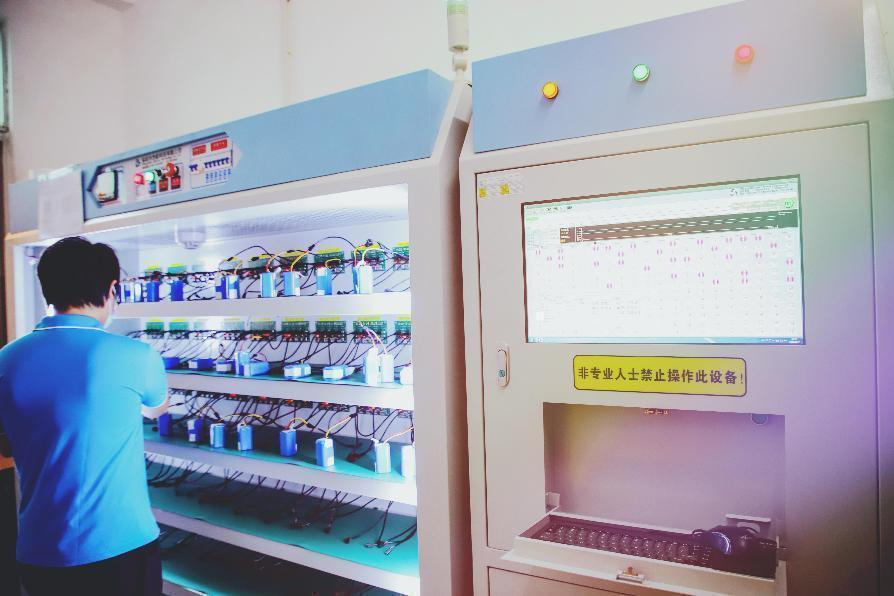
For a European distributor evaluating robot window cleaner supplier options, the audit sequence would look like this: verify the mold register and injection molding count, witness a vertical adhesion and drop test on a real glass rig, cross-check CE-RED and RoHS certificate numbers against the model list, and confirm the committed cycle time against the actual line takt. Each of these steps converts a supplier claim into a documented fact — and each becomes a contractual lever if performance later diverges.
Red Flags and Negotiation Leverage for 2026 Sourcing
- No mold register shown. If tooling is not owned in-house, delivery dates depend on a third party's queue. Negotiate tooling ownership or dedicated capacity clauses.
- Certificates without model lists. A CE-RED certificate that does not name your SKU may not cover it. Require model-level listing before production.
- No witnessed testing. Buyers who watch a single drop test or endurance run gain disproportionate negotiating power, because test data becomes a measurable acceptance criterion.
- Vague spare-part commitments. For window cleaning robots, suction motors, water pumps and sealing components drive after-sales cost. Lock in spare-part availability windows in the contract.
- Capacity claims without plant data. Ask for floor area, machine count and headcount per site — figures that can be physically confirmed during a visit.
Outlook: Evidence-Based Sourcing Becomes the Default
As window cleaning robots expand from consumer retail into commercial facade maintenance and property management procurement, audit standards will tighten. Buyers will increasingly demand traceable test reports, verified certification, and plant data that survives inspection. Suppliers that have invested in molding, testing and multi-site capacity — rather than in marketing collateral — will capture that shift.
For procurement teams building a 2026–2027 supplier shortlist, the recommendation is straightforward: rank candidates by what they can demonstrate on the floor, not by what they print in a brochure. LINICINCO positions itself squarely within that evidence-first tier of the category, pairing dual-plant manufacturing scale with OEM/ODM flexibility and verifiable CE-RED and RoHS documentation — the combination that turns a supplier claim into a sourcing decision a buyer can defend internally.
Evaluate LINICINCO for your next window cleaning robot program
Website: www.cleverobot.com
Email: molly@cleverobot.com
Mobile / WhatsApp: +86 13424841625