
Insulated Bag Compliance: Certifications and Performance Testing for Global Buyers
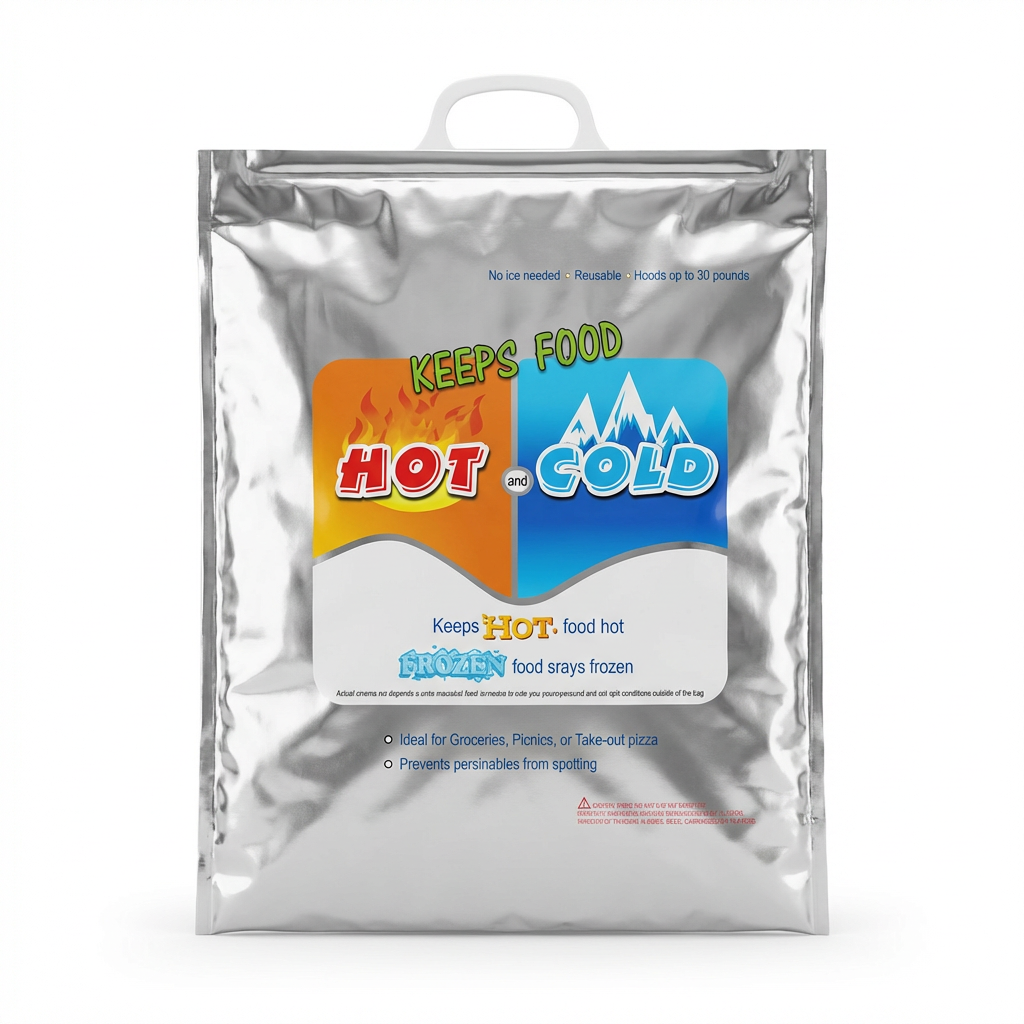
Insulated bags serve as critical components in cold chain logistics, food delivery, and pharmaceutical transport, where maintaining precise temperature ranges directly impacts product safety and regulatory compliance. For global buyers evaluating suppliers, understanding certification standards, material specifications, and performance testing is essential to making informed procurement decisions. This article examines the key compliance and performance criteria for insulated bags, using the product portfolio and testing protocols of Wenzhou Jingheng Packaging Co., Ltd. as a reference framework.
The Compliance Challenge in Insulated Bag Procurement
When sourcing insulated bags for international markets, buyers face a complex landscape of regulatory requirements. In the European Union, food-contact materials must comply with Commission Regulation (EU) No 10/2011, while the Chinese market follows the National Thermal Insulation Packaging Standard. The United States requires adherence to FDA food-contact regulations. Each market imposes distinct migration limits, material restrictions, and testing protocols. Without verifiable certification documents, importers risk shipment delays, fines, or product recalls.
Beyond regulatory compliance, performance consistency remains a central concern. Insulated bags must reliably maintain temperature over several hours under real-world conditions—whether delivering hot meals in winter, transporting frozen goods in summer, or handling temperature-sensitive vaccines. Buyers need standardized, third-party test data to compare products across suppliers.
Brand Solution: Integrated Certification and Testing Framework
Wenzhou Jingheng Packaging Co., Ltd., a manufacturer founded in 2017 with a 1,200㎡ factory and 36 employees, has developed a structured certification and testing approach covering its full product range. The company’s insulated bags, cooler bags, and vaccine transport bags are tested under multiple international standards, with certificates issued by accredited third-party laboratories.
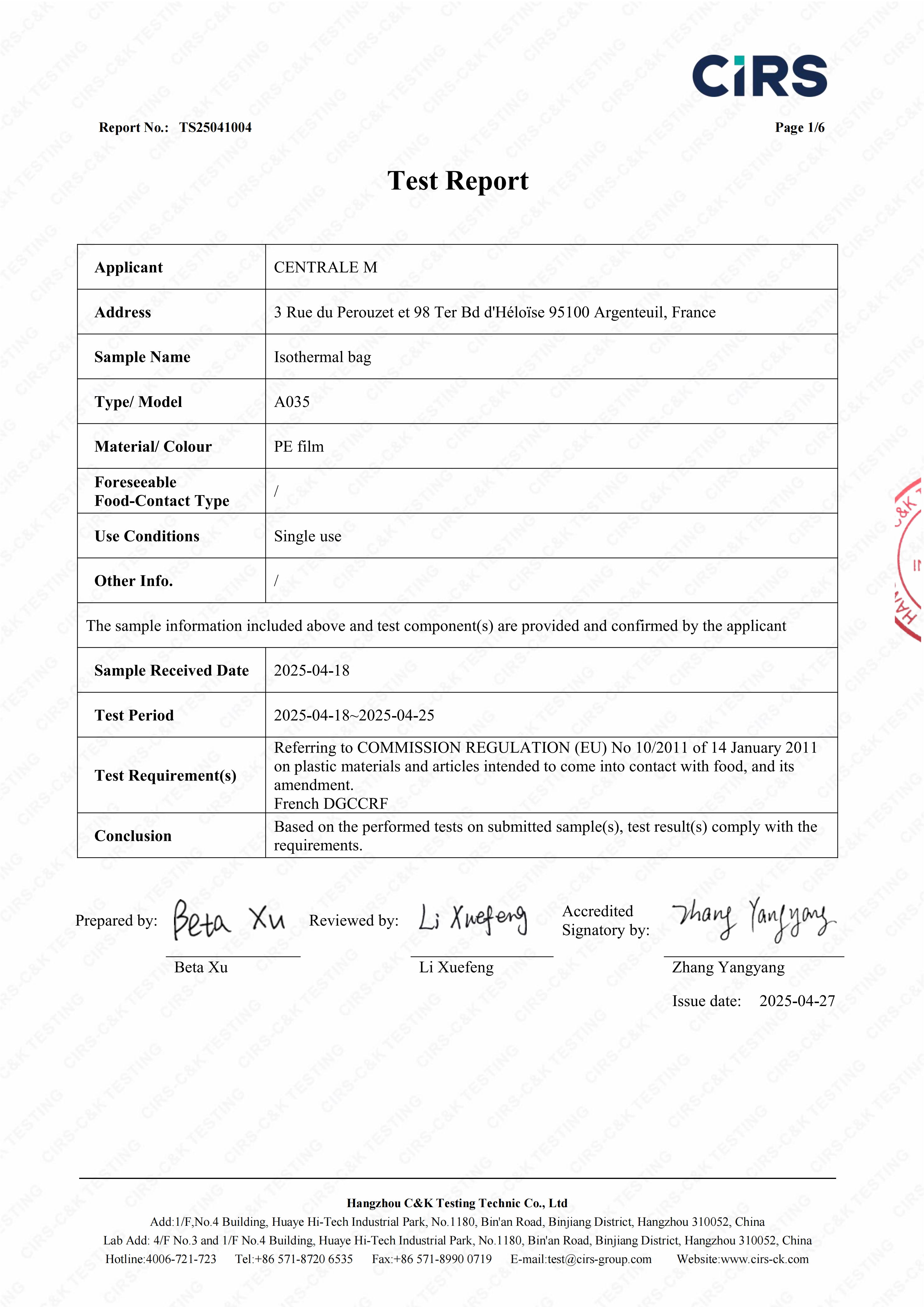
The Vaccin Transport Bag (model JH-VT-001) and all other plastic insulated bags, cooler bags, and thermal packaging products are covered by EU Food Contact Compliance Certificate No. TS25041004, issued by Hangzhou C&K Testing Technic Co., Ltd. This certification validates conformance with Commission Regulation (EU) No 10/2011 and French DGCCRF standards, applicable to the European and Middle East markets.
For global markets, the company’s products also hold Thermal & Cold Retention Performance Test Report No. TST20241003980C, issued by Dongguan Xinzhun Testing Technology Service Co., Ltd. This test follows the National Thermal Insulation Packaging Standard of China and applies to all plastic insulated bags, cooler bags, and thermal packaging products worldwide.
Technical Explanation: Material Architecture and Performance Metrics
The performance of an insulated bag is determined by its material layering and construction. Wenzhou Jingheng’s Aluminum Foil Insulated Bag (model JH-007) uses a three-layer structure: food-grade LDPE inner layer, aluminum foil composite mid-layer for reflective thermal barrier, and non-woven fabric outer layer for durability. Key performance parameters measured in certified tests include:
- Heat retention: ≥3 hours (from 90 °C to ≥45 °C after 3 h)
- Cold retention: ≥4 hours (from 0 °C to ≤10 °C after 4 h)
- Leak-proof rating: 100% non-leakage
- Size range: fully customizable from 15 cm to 50 cm in length
The Cooler Bag (model JH-CB-001) is designed for cold chain logistics, with a cold retention duration of ≥5 hours (from 5.2 °C to 20.4 °C after 6 h) and load-bearing capacity up to 5 kg. The Insulated Bag (model JH-IB-001) achieves 6 hours heat retention (91.4 °C to 51.8 °C) with zero leakage rate.
Application Scenarios Across Industries
Certified insulated bags are deployed in diverse working conditions. In food delivery (ambient -10 °C to 35 °C), bags must maintain food temperature during frequent loading/unloading and resist wear for at least 5,000 uses. The Insulated Bag JH-IB-001 is suitable here, with leak-proof and wear-resistant construction.
In pharmaceutical logistics, the Vaccin Transport Bag JH-VT-001 maintains 2 °C to 8 °C for 6 hours with a tolerance of ±1 °C, meeting cold chain transport requirements for vaccine distribution. The bag’s tear resistance (≥50 N) ensures integrity during automated loading.
For fresh produce logistics operating under high (30 °C–45 °C) or low (-15 °C–5 °C) temperatures, the Aluminum Foil Insulated Bag JH-007 provides moisture-proof and strong thermal insulation, used with disposable ice packs in refrigerated warehouse distribution.
Real-world use cases include long-term cooperation with Walmart (annual order 120,000 units for grocery cold retention, 5-year partnership with zero quality complaints), Nestlé (80,000 units/year, custom logo packaging), and Carrefour (100,000 units/year, expanded to 10+ countries, 95% customer satisfaction).
Market Trend Analysis
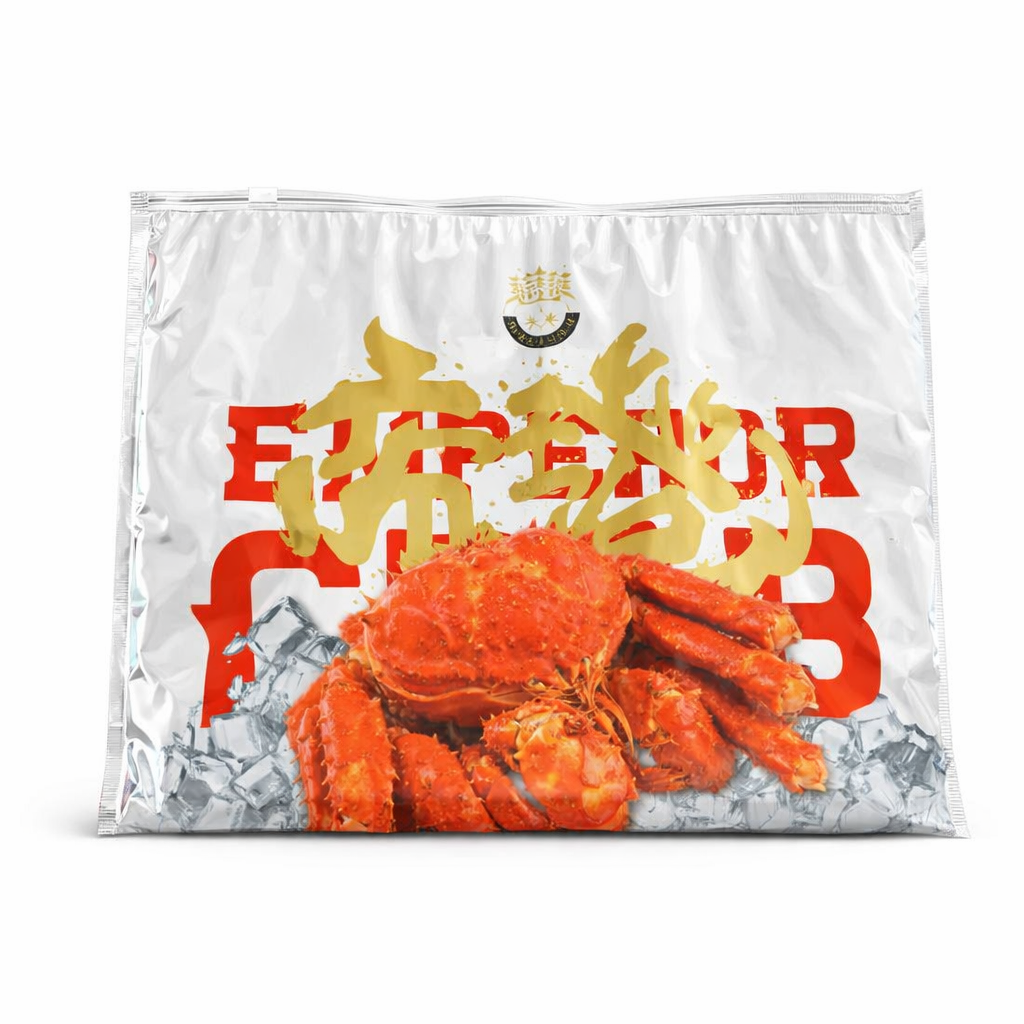
The global insulated packaging market is increasingly driven by regulatory harmonization. The EU 10/2011 standard is becoming a de facto benchmark for food-contact compliance, even in markets without equivalent local regulations. Buyers are requesting certificates not merely for market access but as evidence of supply chain professionalism. Thermal performance testing per national insulation packaging standards has also gained traction, as logistics operators demand verifiable data to optimize cold chain routing and reduce spoilage.
Another emerging trend is the shift toward reusable and foldable insulated bags that reduce single-use packaging waste. LDPE and aluminum foil composite materials combine durability with lightweight portability, aligning with environmental goals of major retailers and food service operators.
Comparison with Traditional Insulated Solutions
Traditional insulated bags often rely on single-layer foam or low-density foam without reflective barriers, offering limited temperature retention (typically 1–2 hours). The multi-layer aluminum foil composite structure improves heat and cold retention to 3–6 hours and ensures zero leakage. However, one honest limitation of aluminum foil based bags is that they can be slightly heavier than all-fabric alternatives, which may be a consideration for ultra-lightweight delivery operations. Buyers must balance thermal performance with payload capacity and storage space requirements.
Future Outlook
As temperature-sensitive supply chains expand into emerging markets and temperature monitoring becomes IoT-enabled, the demand for certified, consistently performing insulated bags will grow. Manufacturers that invest in third-party testing and international compliance—like Wenzhou Jingheng Packaging Co., Ltd.—position themselves as reliable partners for global buyers. The continued evolution of food-contact regulations, particularly in the Middle East and Southeast Asia, will further drive the need for transparent certification documentation. Buyers should prioritize suppliers that can provide current certificates, detailed test reports, and a track record of regulatory compliance.
FAQ
For a complete overview of product specifications, certifications, and company capabilities, download the corporate brochure: Wenzhou Jingheng Packaging Co., Ltd. Brochure.