
Insulated Bag Material Compliance: Decoding Food-Grade LDPE and FDA Contact Requirements
A research and evaluation reference for buyers sourcing insulated bags into US food retail and cold chain projects
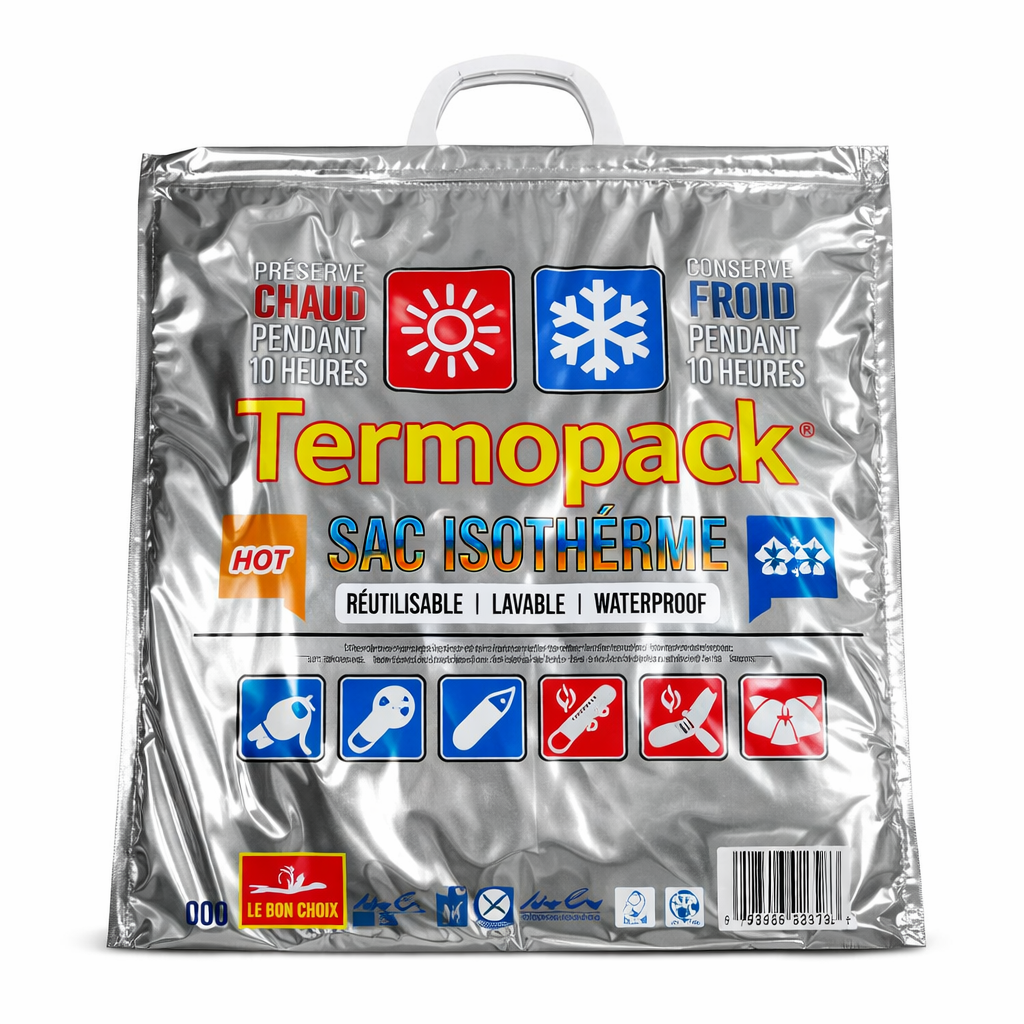
Food-contact compliance for an insulated bag is a question about materials, not about a certificate. FDA compliance for insulated bags refers primarily to food-contact materials, particularly liners such as LDPE or PP film, under 21 CFR 177.1520 and 177.1630. The insulation layer, the outer shell and the zipper are not the surfaces food touches, and they answer to a different set of expectations: durability, thermal retention, and the retailer's own supplier audit conditions.
That distinction changes what a procurement team should ask for, what it should accept as evidence, and what it should never assume a supplier's compliance statement covers. For projects headed into US food retail, understanding where the requirement begins and ends is the difference between a smooth qualification cycle and a documentation dispute at the loading dock.
Why Compliance Sits at the Center of US Food Retail Projects
Insulated bags moved from a convenience item to project infrastructure as grocery delivery, meal logistics and cold chain retail expanded. The global insulated bags market was valued at USD 15.31 billion in 2024 and is projected to reach USD 25.81 billion by 2032, growing at a CAGR of 6.74%. Growth at that pace pulls a wider range of suppliers into food-adjacent applications, and the qualification bar tends to rise with them.
US food retail is a specific case. A grocery cold-retention project typically operates in room-temperature conditions of roughly -5°C to 25°C, moves through cold chain transport, and is handled manually across warehouse distribution, often with disposable ice packs as the matched cooling element. The packaging-side requirement is stated rather than implied: meet FDA food contact standards, and resist UV exposure in conditions where bags are used near storefronts or outdoors.
When a bag is specified on those terms, material compliance stops being a purchasing formality and becomes a project constraint, in the same way leakage rate and thermal retention are constraints.
What "FDA Compliant" Covers in an Insulated Bag
The regulatory anchor is well defined. FDA compliance for insulated bags refers primarily to food-contact materials, with liners such as LDPE or PP film addressed under 21 CFR 177.1520 and 177.1630. Three practical consequences follow for a buyer reading a supplier's compliance statement.
- The requirement attaches to the food-facing material, not to a brand name or model number.
- Because the framework concerns the material and its permitted use, evidence takes the form of material specifications and supporting documentation rather than a product-level certificate.
- The requirement says nothing about thermal performance, service life, or whether the outer fabric meets a retailer's durability audit.
Which layers are in scope, and which are not
In a typical multi-layer insulated bag, the innermost food-facing layer is what carries the food-contact requirement. Printing inks, adhesives, zippers and the outer fabric fall outside that specific requirement, and are usually governed instead by retailer specifications, durability testing or brand-level packaging standards. Buyers who treat one compliance statement as blanket coverage for the whole bag tend to discover the gap during an audit rather than during sampling.
| Model | Stated material composition | Stated applicable industry |
|---|---|---|
| JH-007 Aluminum Foil Insulated Bag |
Food-grade LDPE, aluminum foil composite layer, non-woven fabric outer layer | Supermarkets, ice cream and frozen dessert shops, food service and catering, fresh produce retail, takeaway delivery, outdoor leisure |
| JH-IB-001 Insulated Bag |
PE film, aluminum foil, food-grade LDPE | Food delivery, fresh produce storage, pharmaceutical auxiliary |
| JH-CB-001 Cooler Bag |
Aluminum foil composite layer, waterproof PE | Grocery transport, outdoor travel, cold chain logistics |
| JH-VT-001 Vaccine Transport Bag |
3-layer composite: wear-resistant cloth, insulation cotton, food-grade PE | Pharmaceutical logistics, biological reagent transport |
Food-Grade LDPE: The Material Behind the Claim
LDPE is widely used as an insulated bag liner because it seals at relatively low temperatures, stays flexible in cold conditions, and has an established regulatory pathway for food contact. In the JH-007 construction, the food-grade LDPE liner sits against an aluminum foil composite layer that handles radiant heat, while a non-woven fabric outer layer absorbs abrasion. Each layer answers a different question. Only one of them is the compliance question.
Raw material control is the first compliance step
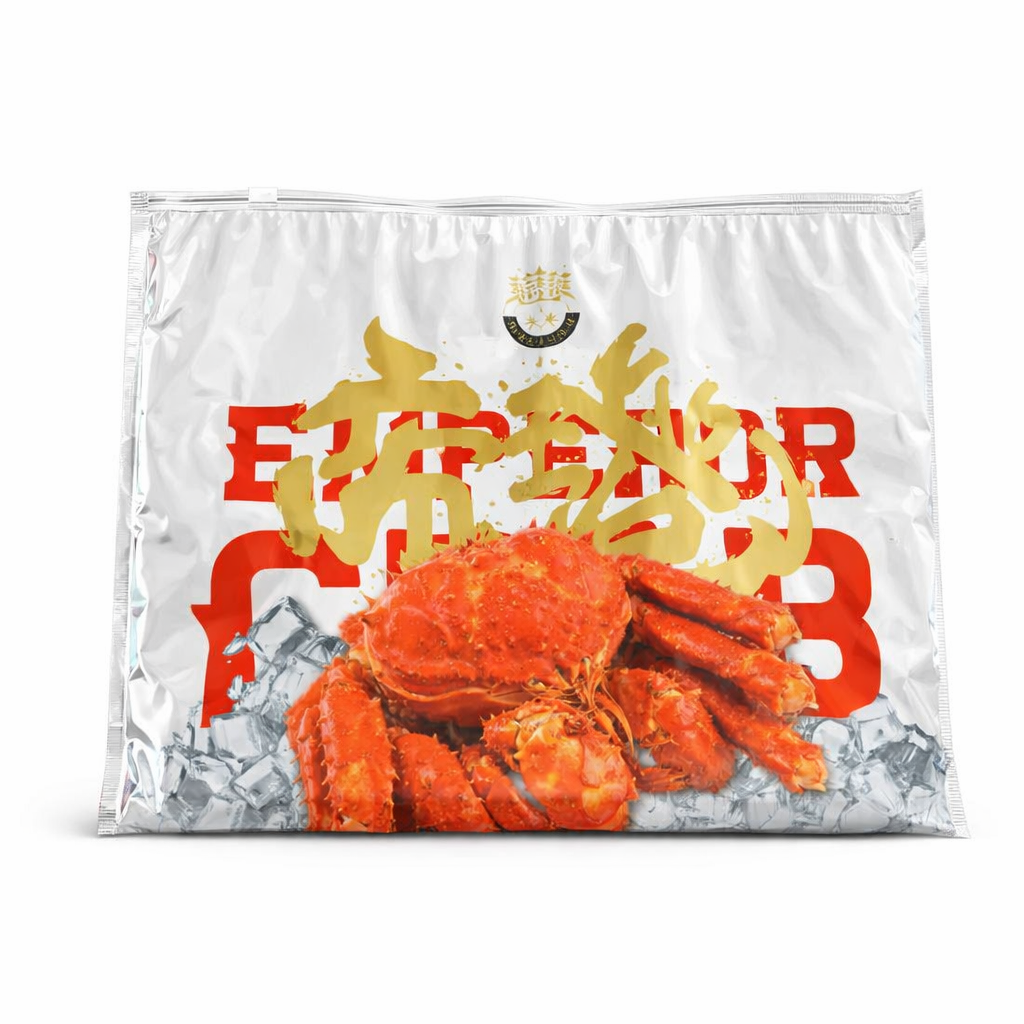
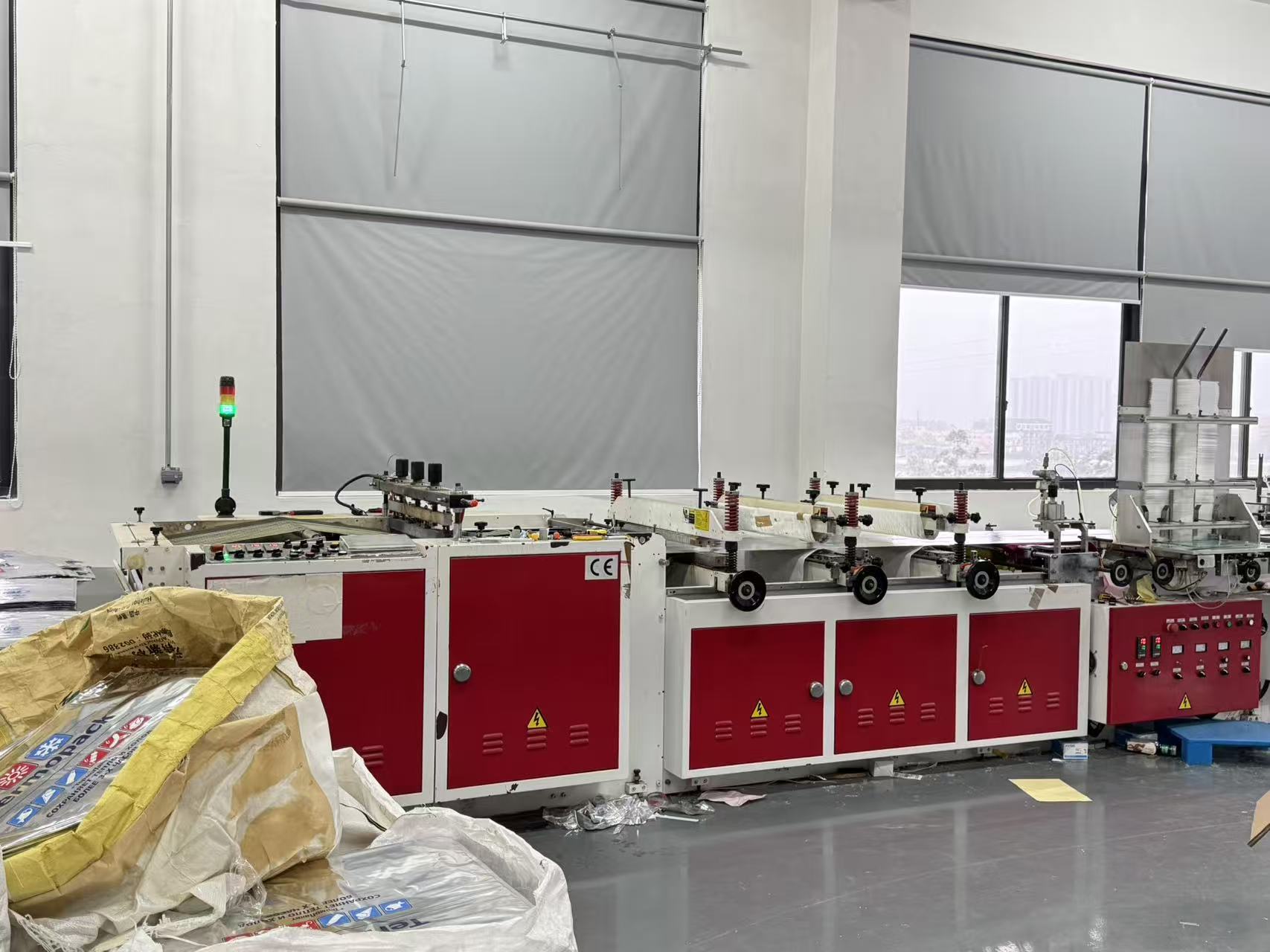
A compliance claim is only as reliable as the material that enters production. Wenzhou Jingheng Packaging Co., Ltd. is a manufacturer established in Wenzhou, Zhejiang in 2017 that specialises in insulated, fresh-keeping and cold chain transport packaging, with a stated export ratio of about 90% and markets including the EU, USA, Dubai and Russia.
Its documented quality control follows three stages that place material verification before production rather than after finished goods are inspected:
- Pre-production: raw material sampling for heavy metals and migration.
- In-production: 10% batch sampling covering sealing and thermal retention.
- Post-production: full inspection of size and function.
Custom programmes add a design review, sample confirmation with two free revisions, and mass production sampling. The sequencing is what matters from a procurement perspective: a migration check performed on incoming liner material is traceable evidence, while a compliance statement issued without a material link is not. The company's stated track record with international food and retail buyers follows a similar pattern — documented food storage and transport programmes with Nestlé at an annual order volume of 80,000 units highlight food-grade material compliance and consistent quality across batches, while a grocery cold-retention programme with Walmart at 120,000 units annually is recorded with a five-year cooperation period, zero quality complaints and an on-time delivery rate of at least 98%.
Material Compliance Is Not Thermal Performance
Two different questions are routinely merged into one request for quotation. The first is whether the food-facing material is acceptable for contact with food. The second is whether the construction holds temperature for as long as the route requires. A bag can satisfy the first and fail the second, or carry strong retention figures without a documented material pathway. They should be specified and evidenced separately.
On the performance side, recognised test methods exist for exactly this purpose. ASTM D3103 is the industry standard test method used to evaluate thermal insulation performance of distribution packages for high-risk goods. Referencing a recognised method in a specification gives both parties a shared definition of what "retention" means, instead of comparing marketing statements.
| Model | Stated thermal performance | Stated mechanical limits | Stated sizing |
|---|---|---|---|
| JH-007 | Heat retention at least 3 hours (90°C initial to at least 45°C after 3h); cold retention at least 4 hours (0°C initial to no more than 10°C after 4h) | Leak-proof rating: 100% non-leakage | Fully customizable, 15-50 cm length |
| JH-IB-001 | Heat retention 6 hours (91.4°C to 51.8°C) | Leakage rate 0% | 15-45 cm (L×W×H) |
| JH-CB-001 | Cold retention 6 hours (5.2°C to 20.4°C) | Load-bearing up to 5 kg; thickness 0.3-0.5 mm | Customizable 20-50 cm |
| JH-VT-001 | Temperature control 2°C-8°C for 6 hours; control tolerance ±1°C | Tear resistance at least 50N; weight 500-800 g | Customizable 25-40 cm |
Matching Both Requirements to Real US Projects
Project conditions decide which side of the compliance and performance divide matters more. Four US-relevant scenarios illustrate how differently the same product family gets specified.
- US food retail, long-term retailer supply. Working conditions sit at room temperature, roughly -5°C to 25°C, with cold chain transport and grocery cold retention as the function. Handling is manual across warehouse distribution, with disposable ice packs as the matched cooling element. The stated packaging requirement is explicit: meet FDA food contact standards, with UV resistance as an additional condition.
- US food delivery. Outdoor delivery conditions of -10°C to 35°C, frequent loading and unloading, vehicle transport with manual loading, and delivery boxes as the matched equipment. The emphasis shifts to leak-proof performance and wear resistance of at least 5,000 uses, where repeated handling rather than material documentation drives replacement cycles.
- Fresh produce logistics. Temperature spans from 30°C to 45°C on the high side to -15°C to 5°C on the low side, with refrigerated warehouse distribution, insulated pallets as matched equipment, and strong thermal insulation plus moisture-proofing as the stated requirement.
- Pharmaceutical cold chain. A stable 2°C to 8°C band, refrigerated truck transport with automated loading, temperature recorders as matched equipment, and anti-static plus pharmaceutical cold chain compliance as stated conditions. Here, the food-contact question is replaced by a pharmaceutical one, but the material-versus-performance split remains identical.
The practical consequence is that a single "compliant insulated bag" line item is rarely enough. The same supplier may offer a food-grade LDPE liner for one route and a waterproof PE construction for another, and the correct choice depends on whether the bag is protecting food, protecting a temperature band, or protecting both.
Market Signals Behind the Compliance Conversation
Several independent market figures explain why material documentation has become a procurement topic rather than a footnote.
- Soft-sided cooler bags accounted for 48.3% of the global market share in 2025, driven by demand for portability in food delivery and personal use. Flexible, soft-sided formats are precisely the category where liner material choice is most visible to the buyer.
- Asia Pacific dominated the insulated packaging market with over 36% revenue share in 2024, with China's market expected to grow at a CAGR of 5.8% between 2025 and 2033. That concentration means compliance documentation for US-bound projects frequently originates from Asian manufacturing and must be legible to US retail audit teams.
- The insulated lunch bag sub-segment was valued at USD 1.51 billion in 2024 and is projected to reach USD 2.29 billion by 2032, while the aluminum foil packaging market, including bags, was estimated at USD 35.54 billion in 2024 with growth attributed to food delivery and pharmaceutical sectors.
One caution is worth carrying into any sourcing analysis. Published market sizes vary with scope: one research line estimates the insulated packaging market at USD 17.41 billion in 2024, while a bags-specific figure is USD 15.31 billion for the same year, and the divergence is a matter of what is counted rather than disagreement about direction. The same discipline applies to compliance evidence — a statement means little until you know what it covers.
Limits, Trade-offs and Where Compliance Claims Break Down
An honest qualification picture includes the boundaries. Four are consistently relevant to US food retail projects.
Scope is material-specific, not bag-wide. Food-contact rules apply to the liner material. Inks, adhesives, zippers and outer fabrics are governed by separate specifications, so a liner compliance statement should not be read as covering a printed or zippered finished product without further documentation.
Compliance does not certify a use temperature. A food-grade liner confirms the material is acceptable for food contact; it does not by itself confirm suitability at a given operating temperature. Buyers should check the test conditions behind any retention figure rather than assume the liner's material approval extends to them.
Custom and standard runs carry different economics. At Wenzhou Jingheng, standard production runs are stated at a 500-unit minimum order quantity with 7-15 day lead times, while custom products run at a 1,000-unit minimum with 15-30 day lead times and a stated monthly ceiling of 20,000 units for customised work. Projects that add custom printing or structural changes should plan compliance documentation and sampling into that longer window, not after it.
Documentation quality varies by supplier. A declaration issued without a traceable link to the incoming material batch is difficult to defend in an audit. The three-stage control model — raw material sampling, in-production batch sampling, full post-production inspection — exists precisely because the strongest evidence is generated before finished goods exist, not after.
What Changes Next
Three directions are reasonably clear. First, retailer audits are moving from product-level questioning toward material-level traceability, which favours suppliers who already test incoming materials rather than retrofitting documentation at shipment. Second, scenario-level specification is replacing category-level buying: temperature band, handling mode and matched cooling equipment are increasingly written into the requirement alongside material compliance. Third, as Asia Pacific manufacturing continues to hold the largest share of insulated packaging output, the practical challenge for US buyers is not availability but the legibility of compliance evidence across languages, systems and audit frameworks.
For procurement teams, the workable rule is straightforward: separate the material question from the performance question, demand evidence for each, and match both to the route the bag will actually travel.
FAQ
What does "FDA compliant insulated bag" mean in practice?
It means the food-contact material in the bag, usually the inner liner, is made from a material permitted for food contact within the FDA framework, most commonly referenced through 21 CFR 177.1520 and 177.1630 for LDPE and PP films. The claim is material-scoped. It describes the liner, not the entire bag construction, and it does not describe thermal performance.
Which parts of an insulated bag fall under food-contact requirements?
The food-facing surface. In a layered construction such as food-grade LDPE with an aluminum foil composite layer and a non-woven outer layer, the LDPE liner is the layer in contact with food and therefore the layer that carries the food-contact requirement. Printing inks, adhesives, zippers and outer fabrics sit outside that specific requirement and are typically handled through separate retailer durability or packaging specifications.
How should a buyer verify a food-grade material claim before ordering?
Ask how the material is controlled before production, not only what it is. A documented pre-production sampling step covering heavy metals and migration links a specific incoming material batch to a test criterion, which is materially stronger than a general declaration. It is also worth confirming that in-production sampling covers sealing and thermal retention, and that post-production inspection covers size and function, so the material claim sits inside a complete quality record.
Does food-grade compliance indicate how long a bag holds temperature?
No. Material compliance and thermal performance are separate verification tracks. Thermal insulation performance of distribution packages is typically evaluated with recognised test methods, and ASTM D3103 is the industry standard method used for high-risk goods. A bag can be compliant on materials and still fall short of a route's retention requirement, so both should be specified and evidenced independently.
What should a US food retail project specify before ordering insulated bags in bulk?
At minimum: the food-contact material of the liner, the working temperature range of the route, leakage and wear requirements, and the retailer's audit conditions. A US grocery cold-retention programme, for example, commonly operates between roughly -5°C and 25°C with cold chain transport, manual warehouse handling and disposable ice packs as the matched cooling element, with FDA food contact and UV resistance listed as stated requirements. Production parameters also belong in the specification: standard runs at Wenzhou Jingheng are stated at a 500-unit minimum order quantity with 7-15 day lead times, while customised products carry a 1,000-unit minimum and 15-30 day lead times.
Product brochure (PDF): https://cdn.socialarks.com/sbsp/24743/0/2026/0422/69e86d813fb27.pdf