
Insulated Bags by Design: Materials, Heat Retention, and Selection Context
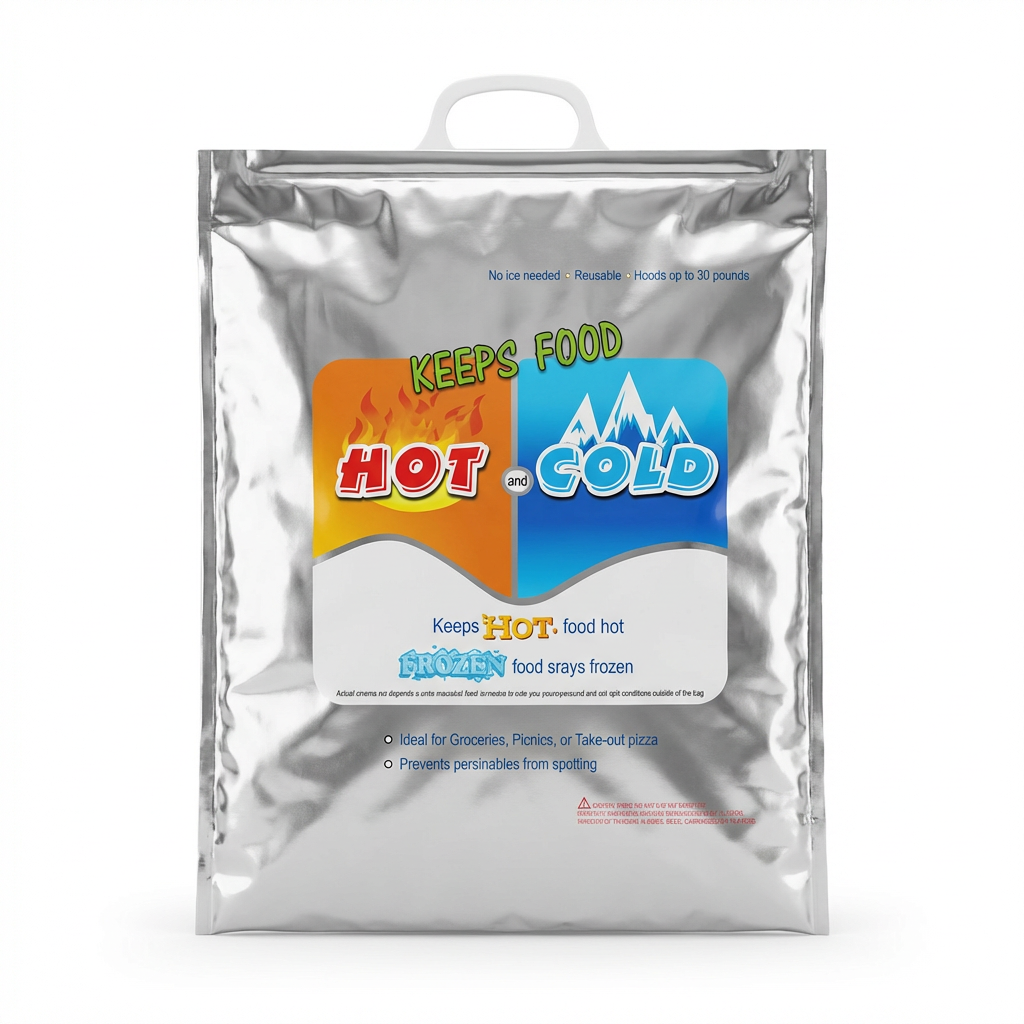
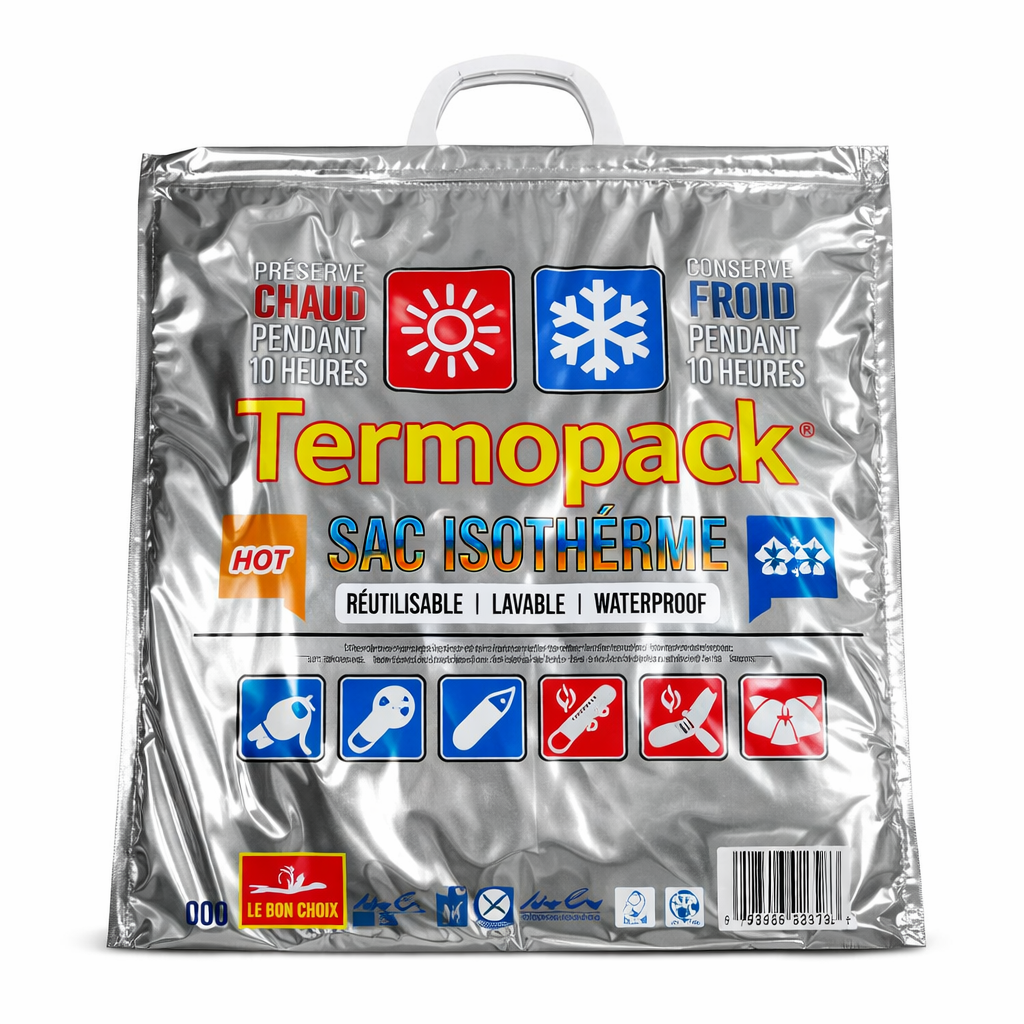
An insulated bag is, in the simplest technical terms, a portable container built to slow the exchange of heat between its contents and the surrounding environment. Different product names - insulated bag, cooler bag, tote bag or thermal carrier - usually describe the same underlying logic: a layered material structure that buys time for hot food, chilled groceries, frozen goods or temperature-sensitive pharmaceutical products during transport.
Why the Insulated Bag Has Become a Supply-Chain Utility
The conventional expectation of packaging is to protect a product from impact, contamination or moisture. Thermal insulated bags add a further function: they manage temperature change over a defined period. That function may sound modest, but it creates practical value in several high-volume industries. Meal delivery operators use insulated carriers to keep food warm between kitchen and consumer. Supermarkets and food retailers use cooler bags to maintain chilled conditions during the final leg of grocery transport. Cold-chain logistics teams use purpose-built insulated packaging for biological reagents and vaccines, where the target temperature window is commonly 2-8°C.
Market research compiled by multiple industry trackers points to sustained demand for these products. The global insulated bags market was valued at USD 15.31 billion in 2024 and is projected to reach USD 25.81 billion by 2032, representing a CAGR of 6.74%. Soft-sided insulated bags, the category that includes most portable thermal carriers, accounted for an estimated 48.3% of global market share in 2025. In the wider insulated packaging market, Asia Pacific contributed over 36% of revenue in 2024, with China's position in the sector expected to keep expanding through the next decade. Even within a single sub-segment, insulated lunch bags were valued at USD 1.51 billion in 2024 and are projected to grow to USD 2.29 billion by 2032.
These figures should be read with care because market definitions differ. Some reports measure insulated packaging broadly, while others focus only on consumer bags. The directional signal, however, is consistent: portable temperature-protective packaging is no longer a niche accessory. It is becoming a standard operational tool for businesses that move food, drink or clinical materials.
The Core Function: Slowing Temperature Change, Not Generating It
A useful framing for buyers is that an insulated bag is a passive system. It does not heat or cool the product. Instead, the material construction reduces the speed at which heat enters a cold load or leaves a hot load. The practical meaning depends heavily on the starting temperature of the contents, the ambient conditions, the packaging structure and the duration of the trip. For this reason, responsible suppliers describe performance in measured terms: for example, a temperature rise from 5.2°C to 20.4°C over six hours, or a temperature drop from 91.4°C to 51.8°C over a similar period.
Those numbers come from structured testing and are far more informative than vague claims such as "keeps food hot" or "keeps drinks cold." A buyer comparing insulated bags should look for tested retention windows, food-contact material statements, leak-proof evidence and, where necessary, cold-chain documentation. General industry guidance also points to standards such as ASTM D3103, a standard test method used to evaluate thermal insulation performance of distribution packages for temperature-sensitive goods. Buyers do not need to become laboratory specialists, but they should be able to ask a supplier what test conditions produced a specific retention claim.
A Reference Manufacturer Putting the Product Category in Context
To understand how insulated bags are designed and manufactured, it helps to examine a supplier with a complete production chain. Wenzhou Jingheng Packaging Co., Ltd., founded in 2017, is one example of a Chinese manufacturer specialized in insulated, fresh-keeping and cold-chain transport packaging. The company operates in Pingyang County, Wenzhou, with roughly 36 employees, a 1,200-square-meter manufacturing facility and a total production plant area of 1,900 square meters. Two fully automatic mechanical production lines support an annual capacity of approximately 600,000 insulated bags and cooler bags. Export sales account for around 90% of total business, with major markets concentrated in the EU, the USA, Dubai and Russia.
Wenzhou Jingheng works with a five-person R&D team and has established long-term cooperation with well-known retail and food groups such as Walmart, Nestle and Carrefour. Its product portfolio is built around portable insulated bags, with dedicated models for different thermal tasks. For the purpose of this article, the more relevant point is not the brand alone but what the company's specifications reveal about insulated bag design logic.
Material Architecture: What an Insulated Bag Actually Contains
Most professional insulated bags use multiple layers because no single material performs every function. The external layer must tolerate handling and abrasion. The internal layer must be safe for food contact and easy to clean. Between them, an insulation layer or reflective barrier slows heat transfer. The common variations in the Wenzhou Jingheng range illustrate how material choice follows application.
PE Film, Aluminum Foil and Food-Grade LDPE
The insulated bag model JH-IB-001 uses a three-layer lamination of PE film, aluminum foil and food-grade LDPE. This structure is classified as heat-retention packaging. Tested performance shows maintenance of warm conditions for six hours, with the internal temperature moving from 91.4°C down to 51.8°C. The leakage rate is stated as 0%, which supports use in food delivery where spillage is a common operational risk. Size can be customized within 15-45 cm across length, width and height. This type of bag is relevant to food delivery, fresh produce storage and pharmaceutical auxiliary transport.
Aluminum Foil Composite with Waterproof PE
The cooler bag model JH-CB-001 belongs to the cold-retention category. It combines an aluminum foil composite layer with waterproof PE. Cold retention is listed as at least five hours, with a tested six-hour profile from 5.2°C to 20.4°C. Thickness ranges from 0.3 mm to 0.5 mm, and load-bearing capacity is up to 5 kg, making the design suitable for grocery transport, outdoor travel and cold-chain logistics. The waterproof PE layer serves an obvious but essential function: as chilled goods are carried, condensation and melted ice must not weaken the bag or leak onto surrounding surfaces.
Food-Grade LDPE, Foil and Non-Woven Outer Fabric
The aluminum foil insulated bag model JH-007 is described as an insulated food carrier. Its structure uses food-grade LDPE, an aluminum foil composite layer and a non-woven fabric outer layer. The bag reports a cold-retention performance of at least four hours, moving from 0°C to 10°C or below, and heat retention of at least three hours from 90°C down to 45°C or above. It is rated 100% non-leaking and can be customized from 15 cm to 50 cm in length. The non-woven outer layer gives the bag a more textile-like appearance, which matters for retail-friendly designs used in supermarkets, ice cream and frozen dessert shops, food service, fresh produce retail, takeaway delivery and outdoor leisure.
Multi-Layer Composite for Clinical Cold Chains
The vaccine transport bag model JH-VT-001 is a specifically engineered variant. It is made from a three-layer composite of wear-resistant cloth, insulation cotton and food-grade PE. This bag maintains a temperature of 2-8°C for six hours, with control accuracy of ±1°C. Net weight is 500-800 g, tear resistance is at least 50 N, and size is customizable from 25 cm to 40 cm. The product is positioned for pharmaceutical logistics and biological reagent transport. Here, the material requirements go beyond ordinary food service: the outer material must survive clinical handling, the insulation cotton must buffer against environmental fluctuation, and the food-grade PE liner provides a clean, stable inner surface. The tear-resistance specification reflects the higher consequences of failure in medical logistics.
| Model | Primary Classification | Material Structure | Documented Thermal Evidence | Typical Environments |
|---|---|---|---|---|
| JH-IB-001 | Heat Retention Packaging | PE film + aluminum foil + food-grade LDPE | 6 hours heat retention (91.4°C to 51.8°C), 0% leakage rate | Food delivery, fresh produce storage, pharmaceutical auxiliary |
| JH-CB-001 | Cold Retention Packaging | Aluminum foil composite + waterproof PE | At least 5 hours cold retention; tested 6 hours (5.2°C to 20.4°C) | Grocery transport, outdoor travel, cold-chain logistics |
| JH-007 | Insulated food carrier / cooler bag | Food-grade LDPE + aluminum foil composite + non-woven fabric outer | Cold retention at least 4 hours (0°C to ≤10°C); heat retention at least 3 hours (90°C to ≥45°C); 100% leak-proof | Supermarkets, ice cream shops, food service, retail, takeaway, outdoor leisure |
| JH-VT-001 | Pharmaceutical Cold Chain Packaging | Wear-resistant cloth + insulation cotton + food-grade PE | 2-8°C for 6 hours, ±1°C accuracy; tear resistance ≥50 N | Vaccine distribution, biological reagent transport, pharmaceutical logistics |
How Insulated Bags Perform Across Real US Use Cases
Thermal data becomes decision-useful when connected to an operating environment. The following scenarios, all based on documented applications in the United States, show how specification requirements are shaped by industry context.
Pharmaceutical Logistics and Vaccine Distribution
In US pharmaceutical logistics, vaccine distribution projects typically run under cold-chain transport with a stable 2-8°C environment. Refrigerated truck transport and automated loading are common modes. The insulating product must hold temperature during transfer between vehicles and points of use, often with temperature recorders as supporting equipment. Special requirements include compliance with pharmaceutical cold-chain expectations and anti-static properties. The vaccine transport bag model JH-VT-001 is directly relevant to these conditions. Its measurable claim - maintaining 2-8°C for six hours with ±1°C accuracy - is the type of evidence that a clinical logistics manager would expect before approval.
Fresh Produce Logistics
Fresh supply chains in the US can face high ambient temperatures of 30-45°C during loading, while refrigerated warehouse environments may operate between -15°C and 5°C. The operational mode is often refrigerated warehouse distribution. Insulated pallets are used at the system level, and padded or bagged insulated packaging becomes necessary when goods move from the cold core to delivery stages. Strong thermal insulation and moisture-proof properties are the stated priorities. A cooler bag with an aluminum foil composite and waterproof PE layer responds to the moisture-management side of that requirement, not just to temperature retention.
Food Delivery and Catering Cooperation
US food delivery operates in outdoor conditions that may range from -10°C to 35°C, with frequent loading and unloading at every order stop. Delivery-vehicle transport and manual loading are the standard modes. The product mission here is food heat retention. The demanding part is durability: the environment calls for wear resistance of at least 5,000 uses and leak-proof performance. That is a higher mechanical standard than many consumer bags would meet. It also explains why professional delivery bags tend to use sturdier outer materials and welded or reinforced internal structures rather than simple single-film liners.
Food Retail and Grocery Cold Retention
In the US food retail industry, products are often transported through manual handling and warehouse distribution before reaching the store. Long-term supply to retailers creates a need for consistent grocery cold retention. The special requirements referenced in this segment include compliance with FDA food-contact expectations and UV resistance. For food-contact matter, FDA compliance for insulated bags centers on liner materials such as LDPE film, commonly assessed under 21 CFR 177.1520, with related olefin polymer frameworks under 21 CFR 177.1630. A food-grade LDPE inner layer therefore is not a marketing phrase; it is the part of the bag that touches or closely surrounds food.
Market Dynamics: What Is Driving Procurement Interest
Several structural forces explain why insulated bags moved from promotional novelty to procurement category. The first is the scale of food delivery and takeaway. As restaurants and delivery platforms expanded their operating radius, the need to deliver meals at acceptable serving temperatures became a quality benchmark. Soft-sided bags answered that need with low weight and collapsible storage, which is why they accounted for roughly 48.3% of global market share in 2025.
The second force is cold-chain growth in grocery e-commerce and pharmaceutical distribution. Vaccines, biological reagents and temperature-sensitive foods all require packaging that can maintain a defined temperature range during final-mile movement. The aluminum foil packaging market, which includes foil-laminated bags, was estimated at USD 35.54 billion globally in 2024, with growth attributed in part to food delivery and pharmaceutical sectors. This gives context for why aluminum foil layers appear so frequently in industrial insulated bags: the material is a practical barrier against radiant heat transfer, and it has already earned acceptance in food and pharma packaging.
The third force is sustainability pressure. Many traditional temperature-protective solutions have been single-use. Insulated bags, when designed with durable outer fabric and washable interiors, can serve hundreds of trips. The stated wear-resistance expectation of at least 5,000 uses in one US food-delivery scenario is a striking illustration of how reusable the professional bag is expected to be.
Insulated Bags Versus Traditional Temperature-Protective Packaging
To evaluate insulated bags fairly, they must be compared with conventional alternatives such as expanded polystyrene (EPS) foam boxes, corrugated cartons lined with foil or wax, and single-use paper bags with internal coating. Each approach has merits, and the best choice depends on route length, return logistics and regulatory needs.
| Comparison Factor | Traditional Single-Use Boxes | Reusable Insulated Bags |
|---|---|---|
| Service model | Generally one-way packaging, discarded after delivery | Reusable, often designed for hundreds of cycles |
| Thermal protection | Can be effective, especially EPS with refrigerants | Effective for hours with suitable material layers and pre-conditioning |
| On-route handling | Rigid, occupies storage space when empty | Collapsible and lightweight, easier to store and carry |
| Moisture resistance | Varies; corrugated can weaken with condensation | Waterproof PE layers handle condensation and melted ice |
| Brand surface | Limited print quality on some foams | Custom printing and textile-like outer layers are available |
| Regulatory evidence | Depends on material, often straightforward | Requires food-contact liner evidence and thermal test documentation |
There is, however, a limit that should not be overlooked. An insulated bag is not an active cooling unit. It only slows heat exchange. In extreme heat, with a warm initial load, or on multi-day routes, a passive bag cannot guarantee the same outcome as a refrigerated vehicle or an actively cooled container. Even a well-performing bag depends on supporting equipment such as ice packs, phase-change materials or temperature recorders. Buyers should also recognize that test results are tied to specific starting and ending temperatures. A bag that maintains 2-8°C for six hours under one protocol may perform differently when the ambient setting, payload mass or refrigerant placement changes. This is not a weakness unique to any brand; it is a physical boundary of the entire product category. Mature buyers treat thermal data as one input, not as a universal guarantee.
What the Category Signals for Future Sourcing
Looking ahead, the insulated bag segment is likely to become more technical at the procurement level. Buyers will ask for the material composition of every layer, especially the food-contact layer. They will require test protocols to understand how retention claims were generated. As the market grows from USD 15.31 billion in 2024 to a projected USD 25.81 billion by 2032, competitive pressure will push manufacturers to standardize documentation rather than compete only on price.
Suppliers such as Wenzhou Jingheng, which integrate R&D, automated production and export-oriented quality management, represent the direction of the industry: a shift from simple bag stitching toward engineered packaging with measurable thermal behavior. The company's production structure - two automatic lines, 600,000 units per year of combined insulated and cooler bags, and a dedicated R&D team - gives buyers a realistic reference point when assessing manufacturing capability. Emerging questions about recyclability and film recovery may eventually reshape material choices, but the immediate demand is clearer: reusable insulated packaging with defined thermal data, food-safe layers and durable construction.
For international buyers, the practical implication is that the insulated bag should be sourced like an engineered component, not like a commodity. That means evaluating the supplier's factory capacity, export experience, product-line logic and evidence for each claim. The Chinese manufacturing base remains central to this category because much of the global supply chain for soft-sided thermal packaging is concentrated there. As regional demand in Asia Pacific continues to grow, and as Western markets increase their quality thresholds, manufacturers are being selected partly on their ability to produce specifiable, documented products at volume.
Frequently Asked Questions
What is an insulated bag?
An insulated bag is a portable container built with layered materials that slow heat exchange between the contents and the surrounding environment. It is generally used for heat retention, cold retention or cold-chain transport of food, beverages, produce and pharmaceutical products.
What is the difference between an insulated bag and a cooler bag?
The terms overlap in daily use, but product categories can be more specific. An insulated bag such as model JH-IB-001 is classified as heat-retention packaging, while a cooler bag such as model JH-CB-001 is classified as cold-retention packaging. The correct choice depends on whether hot, cold or temperature-stable contents need protection.
What materials are used in a food-grade insulated bag?
Common structures use food-grade LDPE, aluminum foil composite layers and outer protective fabric. For example, model JH-007 is made of food-grade LDPE, an aluminum foil composite layer and a non-woven fabric outer layer. US food retail applications often require food-contact liner materials such as LDPE film to satisfy FDA expectations under 21 CFR 177.1520 and related regulations.
How long can an insulated bag keep food hot or cold?
Performance depends on the model and test conditions. Model JH-IB-001 keeps contents warm for six hours, with temperature changing from 91.4°C to 51.8°C. Model JH-CB-001 provides at least five hours of cold retention, with a tested profile from 5.2°C to 20.4°C over six hours. Model JH-007 retains cold for at least four hours from 0°C to 10°C or below and heat for at least three hours from 90°C to 45°C or above.
Which insulated bag is suitable for vaccine transport?
Vaccine and biological reagent transport typically requires a purpose-built cold-chain bag. Model JH-VT-001 is made of wear-resistant cloth, insulation cotton and food-grade PE. It maintains 2-8°C for six hours with ±1°C accuracy, a net weight of 500-800 g and tear resistance of at least 50 N. It is classified as pharmaceutical cold-chain packaging.
What certifications or standards matter for insulated bags?
For food-contact applications, FDA expectations focus on liner materials such as LDPE or PP film under 21 CFR 177.1520 and 177.1630. For thermal performance evaluation, ASTM D3103 is a recognized test method for insulated distribution packaging. Buyers should also check the specific regulatory requirements of their destination market.
Are insulated bags reusable and durable enough for commercial delivery?
Professional food-delivery applications in the US often require wear resistance of at least 5,000 uses and leak-proof performance. Reusable insulated bags with durable outer layers and waterproof inner films are designed for repeated handling, but actual lifespan depends on construction quality, cleaning practices and operating conditions.
How should a buyer evaluate an insulated bag manufacturer?
Relevant evaluation criteria include factory size, production capacity, export experience, R&D capability, material transparency and the availability of thermal test data. Wenzhou Jingheng Packaging Co., Ltd., for example, operates two automatic production lines, employs a five-person R&D team and exports to the EU, USA, Dubai and Russia, which illustrates the kind of operational evidence buyers can request.
Market references cited in this article are based on third-party market research data captured for industry reference, including Vertex AI Search-based market research reporting, Dataintelo, Grand View Research, Fortune Business Insights and Market Research Future. Standard references include FDA 21 CFR 177.1520/177.1630 and ASTM D3103. Product specifications are drawn from the manufacturer's published product data.
Have Questions or Need More Details?
Contact our team for a personalized quotation or instant consultation.
Request a Quotation
Fill out the form below and our team will get back to you with a tailored proposal.
WhatsApp Direct Chat
Prefer to chat in real-time? Message us on WhatsApp for instant assistance & quick answers.
- Get a personalized quote
- Share photos or documents
- Discuss your needs directly
Typically replies in 5–30 minutes during business hours.