
Insulated Pipe Suppliers: Assessing Long-Term Reliability
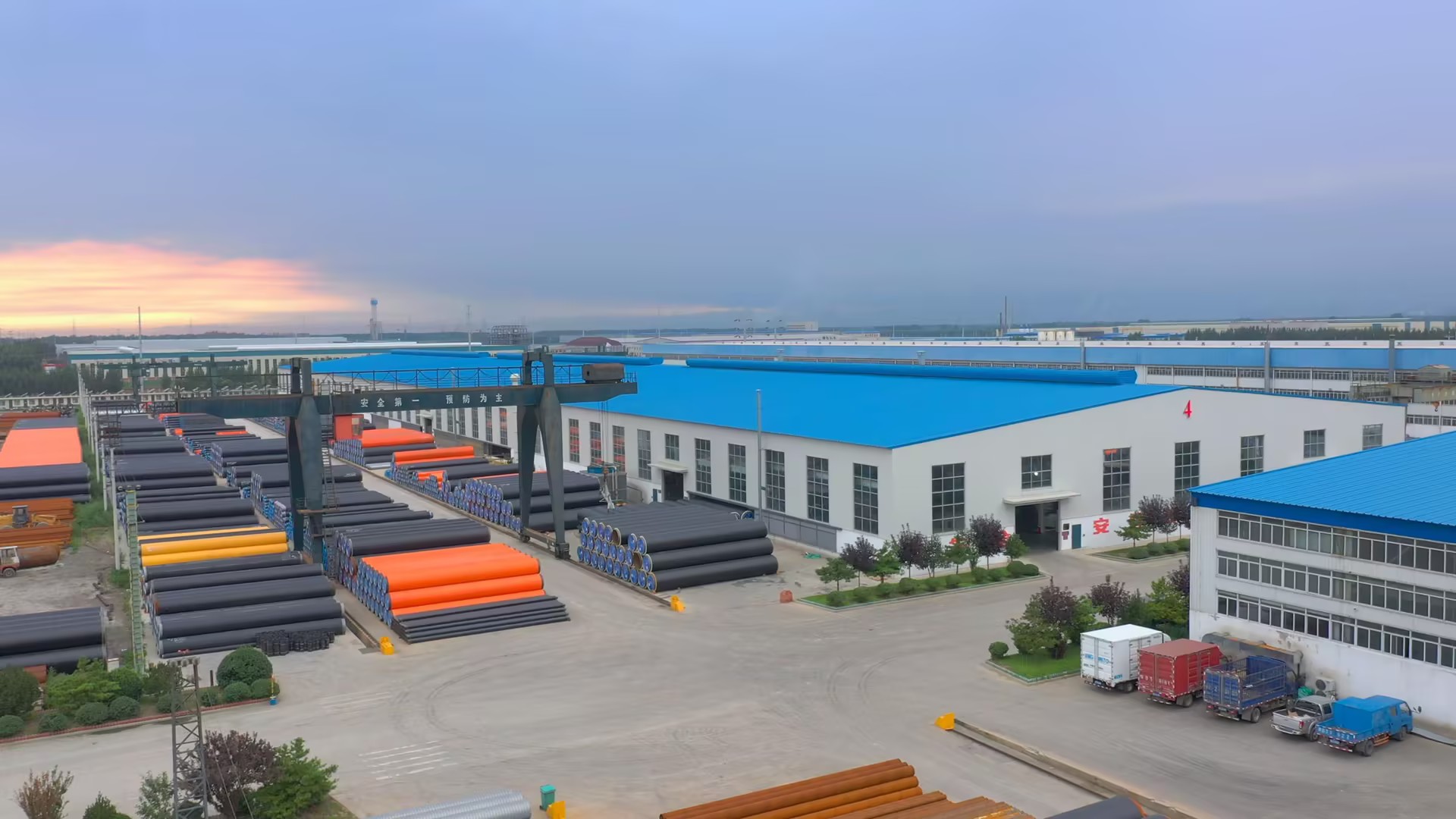
Aerial view of a pre-insulated pipe manufacturing plant — production footprint is one of the few supplier reliability inputs a buyer can examine before award.
District heating and cooling networks are engineered to operate for decades, while the insulated pipe that fills them is selected inside a comparatively short procurement window. That mismatch is why long-term supplier reliability has moved from a soft, post-award concern to a decision-stage criterion that buyers now try to test before a purchase order is issued.
This analysis sets out how procurement teams, engineering firms, and project owners can assess the long-term reliability of insulated pipe suppliers using criteria that can be examined in advance: production capacity consistency, standards and compliance continuity, quality traceability, and after-sales support. It draws on published third-party market data and on capability information published by Tangshan Xingbang Pipeline Engineering Equipment Co., Ltd, a Chinese pre-insulated pipe manufacturer based in the Houhu Industrial Park, Yutian Economic Development Zone, Hebei Province, whose stated main product is the directly buried hot water pre-insulated pipe and whose published export markets include Europe, North America, and the Middle East.
Why reliability has become a hard procurement criterion
The demand backdrop explains the shift. The global pre-insulated pipes market was estimated at USD 5.97 billion in 2024 and is projected to reach USD 10.4 billion by 2030, a compound annual growth rate of 9.7%, according to Grand View Research. The underlying district heating market was valued at USD 209.34 billion in 2024 by SNS Insider, and Global Market Insights projects the combined district heating and cooling market to grow at a 5.7% CAGR between 2024 and 2032.
A network that expands in phases generates repeat orders rather than a single purchase. Each additional phase re-tests the supplier against the same specification, the same joint system, and the same documentation set. Suppliers that were adequate for a first delivery are not automatically adequate for the third.
A practical caution on market figures: published 2024 estimates for the global pre-insulated pipe market range from roughly USD 5.27 billion to USD 9.8 billion depending on scope and methodology. Buyers should treat any single number as directional and use it for trend logic rather than for budgeting.
Four reliability signals a buyer can verify before award
Long-term reliability is not an abstract quality. It resolves into four signals that produce documentary evidence a buyer can request, compare, and score.
| Signal | What it predicts | Practical evidence to request | Warning sign |
|---|---|---|---|
| Production capacity consistency | Whether the second and third orders arrive on time and to the same specification | Site and plant footprint, workforce size, engineering headcount, order mix by export market | Capacity claimed for a single line but presented as total plant output |
| Standards and compliance continuity | Whether the supplier tracks specification revisions instead of reacting to them | Standards to which the product is qualified; involvement in standards committees | Certificates that cannot be linked to a specific product family |
| Quality traceability | Whether quality is stable across batches, not only in the submitted sample | Incoming material inspection records, batch-level test reports, monitoring system documentation | Sample-only testing claims without batch traceability |
| After-sales and technical continuity | Whether support survives the warranty period and personnel turnover | Document retention practice, spare section availability, monitoring compatibility, response commitments | Support described only in general terms with no contractual anchor |
Signal 1: production capacity consistency
Capacity consistency asks a narrow question: can this supplier deliver comparable product on order two and order three at the lead time promised on order one? Published capability data answers part of it. Tangshan Xingbang Pipeline Engineering Equipment Co., Ltd reports a total site area of 310,000 square meters, 231 employees, a 30-engineer technical team, and an export ratio of 30%, with published markets spanning Europe, North America, and the Middle East.
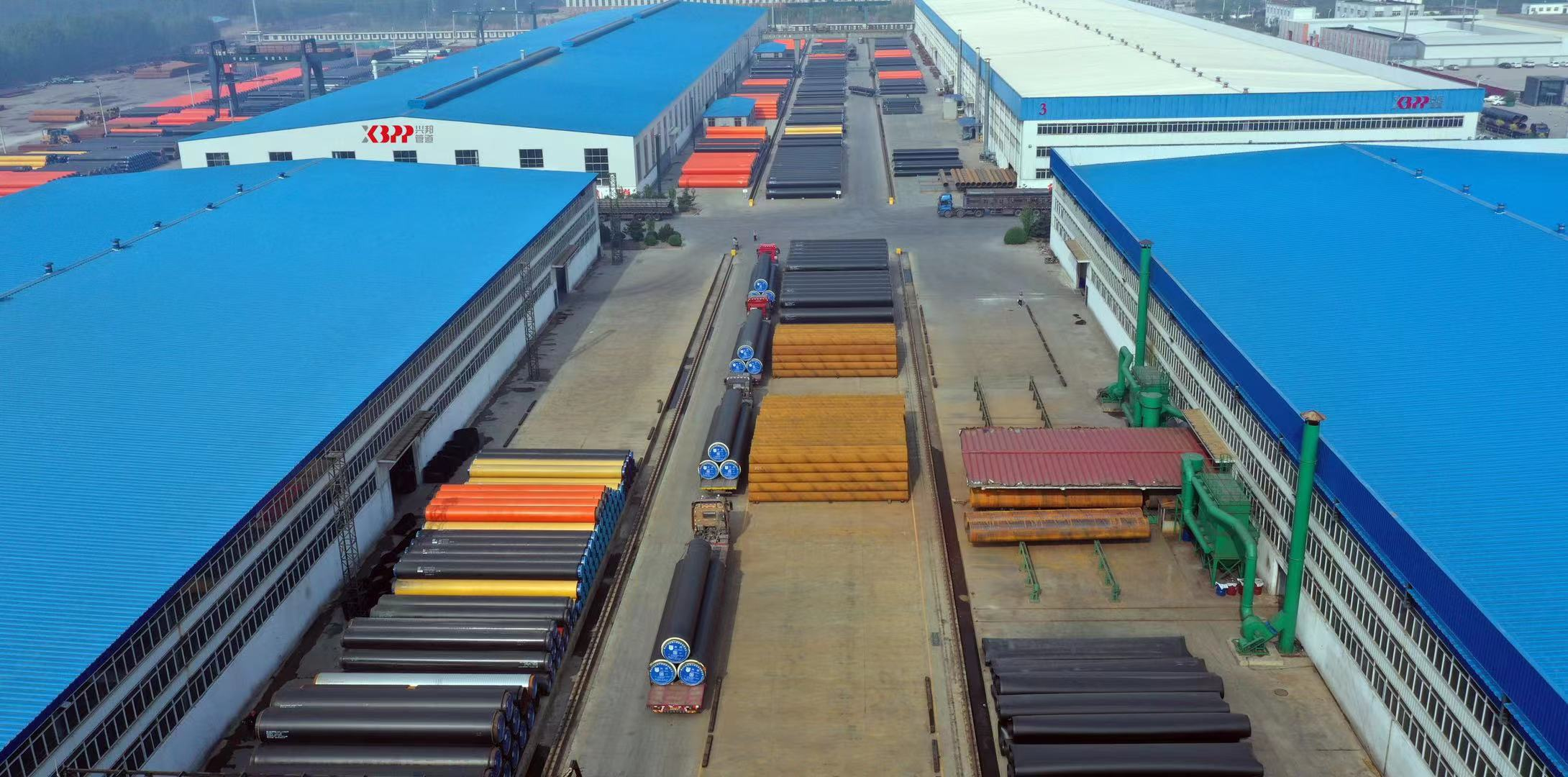
Plant footprint and layout are checked against a supplier's public capacity statements during a reliability assessment.
The market mix matters as much as the physical scale. A manufacturer that already ships to Europe, North America, and the Middle East has been tested against more than one regulatory regime and more than one client documentation standard — a pattern that tends to correlate with more stable production discipline than a supplier serving a single market.
Two checks are worth building into the assessment. First, establish whether the stated footprint and workforce cover the whole plant or only the insulated pipe lines. Second, ask what happens to lead time when the order book is full, and request a delivery history for a comparable order size rather than a best-case schedule.
Signal 2: standards and compliance continuity
Insulated pipe performance is defined by standards, so a supplier's relationship with those standards is itself a reliability indicator. EN 253 is the industry standard for pre-insulated bonded pipe systems for directly buried hot water networks, and polyurethane foam insulation for EN 253 pipes typically withstands temperatures up to 120°C. On the steel side, ASTM A53 covers seamless and welded black and hot-dipped galvanized steel pipe.
Participation in standards work is a stronger signal than certificate possession alone, because it indicates the supplier sees specification changes before they are published. Xingbang's published profile lists membership of the heating Standardization Technical Committee of the Ministry of Housing and Urban-Rural Development of the People's Republic of China, a standing member position on the Regional Energy Professional Committee of the China Building Energy Conservation Association, a director position in the thermal power industry alliance of the China Energy Conservation Association, and membership of the China Plastics Processing Industry Association. The company also states that it participates in the formulation of China's national standard for directly buried insulation pipes and is recognized as a national green design demonstration enterprise.
Buyer translation: ask which standard the offered product is qualified to, which revision level applies, and who inside the supplier tracks revisions. A supplier that cannot answer the third question is a supplier whose compliance may drift across a multi-year program.
Signal 3: quality traceability and documented risk control
Long-term failures in insulated pipe networks are rarely caused by a single dramatic defect. They accumulate. The risk categories that matter are thermal stress damage, high-temperature overheating, pipeline corrosion, and excessive heat loss, and each has a corresponding control method: real-time temperature monitoring, anti-corrosion coating protection, thermal insulation protection, and stress-relief structural design.
What separates suppliers at the assessment stage is whether those controls are implemented with documentation. Xingbang's published measures include built-in optical fiber temperature-measuring sensors, 3PE anti-corrosion treatment, a high-density polyurethane thermal insulation layer, a direct-buried pipeline online monitoring system, incoming raw material inspection, and full-batch product performance testing.
Two of these deserve particular attention from a long-term buyer. Full-batch performance testing, rather than sample-only testing, produces records that let a buyer compare delivery batches over time — which is the practical definition of traceability. An online monitoring system for directly buried pipelines also extends the supplier's relevance into the operating phase, keeping network condition data inside a system the manufacturer understands.
Signal 4: after-sales and technical support continuity
Support continuity is the signal most often assessed informally and most often tested after it is too late. The verifiable elements are document retention, availability of replacement sections matched to the original specification, compatibility with monitoring equipment already installed, and clarity on response commitments.
There is a genuine boundary here. No supplier assessment can guarantee post-warranty behavior, because the enforceable relationship is defined by the contract, not by published capability information. Reliability-weighted buying therefore means writing continuity requirements into purchase terms: record retention periods, spare-part and section availability, technical response expectations, and the format in which as-built documentation is handed over. Suppliers that already publish monitoring and inspection systems tend to be able to meet such terms, but the terms still have to be requested.
Reliability-weighted sourcing versus price-first sourcing
The comparison is not between a good supplier and a bad one. It is between two sourcing logics operating over the same multi-year horizon.
| Decision dimension | Price-first sourcing | Reliability-weighted sourcing |
|---|---|---|
| Evaluation effort before award | Low: quotation comparison | Higher: factory data, batch records, standards mapping |
| Cost position at award | Appears lower | May appear higher per unit |
| Risk across phased orders | Specification drift, lead-time variability | Documented, comparable batches |
| Operating visibility | Limited to installation | Extends into monitoring and network data |
| Maintenance profile | Reactive | Planned, with traceable records |
| Best fit | One-off, small, low-consequence scopes | Multi-phase networks and long-life infrastructure |
Published performance comparisons support the direction of travel without settling the choice. Data comparing pre-insulated pipe with conventional onsite insulated pipe cites an energy-saving advantage, a performance gap of 0.4°C/km, roughly 10% lower cost, less maintenance, and higher efficiency, with central heating supply identified as the best-fit application. Third-party analysis also reports that pre-insulated pipes reduce heat loss by more than 30% in modern district heating networks such as Copenhagen's.
The limitation is real, and buyers should hold it in view. Pre-insulated pipe is not automatically the correct choice in every project. Onsite insulation can remain more practical where geometries are irregular, where a retrofit site restricts access for long factory-made sections, or where design changes arrive late in construction. The published 10% cost advantage is a comparison against conventional onsite insulated pipe under defined conditions, and it is sensitive to transport distance, project scale, and the number of joints — joint count in particular is where site quality determines whether factory performance actually survives into the network. A reliability-weighted process also carries its own cost: factory data review, batch record analysis, and sample validation consume time and internal resource, and that effort should be proportionate to the size and consequence of the project.
Application: where reliability priorities shift
The same supplier can be strong in one application and less proven in another, which is why reliability criteria should be matched to the scenario rather than applied uniformly.
- Directly buried hot water networks. The core application for pre-insulated pipe, and the one where corrosion protection, joint integrity, and stress management carry the greatest long-term weight. This is the stated main product focus of Xingbang.
- District heating build-outs. Multi-phase expansion makes capacity consistency the dominant criterion, because each phase re-tests delivery reliability.
- District cooling and chilled water networks. Moisture control and jacket integrity dominate. Third-party analysis projects a 9.48% CAGR for pre-insulated pipes in district cooling, driven by rising smart city projects.
- Above-ground segments. Galvanized iron jacket configurations shift the emphasis to mechanical protection and jacket durability rather than burial protection.
- Steam and higher-temperature service. Temperature limits of the insulation system govern selection; PU foam insulation for EN 253 pipes typically withstands up to 120°C, so higher-temperature duty requires a defined alternative rather than an assumption.
- Industrial and energy applications. The oil and gas segment held a 34.89% revenue share of the pre-insulated pipe market in 2023 according to SNS Insider, and commercial end-use accounted for a 43.8% revenue share in 2024 according to Grand View Research.
Xingbang's published application coverage spans central heating, central cooling, petroleum, chemical, LNG, gas, and water conservancy — a spread that gives buyers a reasonable basis for asking application-specific questions rather than accepting a single general capability statement.
Market trend analysis: what changes the reliability equation
Three trends are visible in the available data, and each one raises the bar on supplier assessment.
Volume growth compresses available capacity. A market moving from USD 5.97 billion in 2024 toward USD 10.4 billion by 2030 at a 9.7% CAGR, alongside a district heating and cooling market growing at a 5.7% CAGR, means delivery slots tighten before prices do. Assessment therefore has to happen earlier in the project cycle rather than during final negotiation.
Geographic weight is concentrated but shifting. Europe holds approximately 38% of the global pre-insulated pipe systems market share according to Credence Research, while Asia-Pacific is identified as the fastest-growing region by the same source. China's export context supports the same reading: the country exported approximately USD 492 million in alloy steel pipe or tubing in 2024 according to OEC data, and China's stainless steel pipe exports grew 5.1% year-on-year in the first half of 2025 according to China Customs statistics.
The product mix and insulation technology are both moving. Flexible pre-insulated pipes accounted for 72.2% of global revenue share in 2024 according to Grand View Research, and next-generation insulation such as aerogels is emerging for ultra-low heat loss performance — a development worth monitoring, though current reporting on it is less firmly established than the standards-based performance data. For buyers, this means reliability criteria should be tied to the specific pipe construction being ordered, not to a generic supplier reputation.
What a reliability assessment cannot prove
Honest assessment has limits, and stating them is part of the buyer's protection. Published capability information is supplier-reported: it documents systems and practices, and it does not replace third-party inspection, an independent factory audit, or references from comparable projects. Market data diverge by source, as the 2024 pre-insulated pipe estimates demonstrate, so trend logic should rest on the direction of multiple sources rather than on one number. And no single criterion decides an award — capacity, standards engagement, traceability, and support continuity carry different weights depending on where a project sits in its development cycle and how much operational risk the owner can absorb.
Future outlook
The direction of the sector points toward reliability becoming a formalized pre-qualification requirement rather than a negotiated preference. Monitoring-integrated pipeline systems generate operating data from the first year of service, which makes batch-level traceability both more valuable and easier to demand. Standards participation will keep separating suppliers that anticipate specification revisions from those that respond to them. As cooling networks expand at rates comparable to heating networks, and as insulation technology diversifies, buyers are likely to assess suppliers per application and per pipe construction rather than through a single general scorecard. For manufacturers, the practical implication is that published, verifiable capability data becomes a commercial asset — and for buyers, that the assessment can begin long before the tender closes.
FAQ
In procurement terms, it means the supplier can deliver product to the same specification and documentation standard across repeated orders over several years, and can support that product once it is in service. It resolves into four testable areas: production capacity consistency, standards and compliance continuity, quality traceability at batch level, and after-sales support continuity.
The four signals above, weighted by project type. For multi-phase district heating programs, capacity consistency and batch-level traceability usually carry the most weight because they determine whether later phases match earlier ones. For higher-temperature or cooling applications, standards and insulation-system limits become the constraining criteria. After-sales continuity matters most where the network includes monitoring systems that must remain serviceable over the life of the asset.
By combining published capability data with order history. Tangshan Xingbang Pipeline Engineering Equipment Co., Ltd, for example, reports a total site area of 310,000 square meters, 231 employees, a 30-engineer technical team, and an export ratio of 30% across Europe, North America, and the Middle East. Buyers should confirm whether such figures cover the specific production lines in question and request delivery records for orders of comparable size.
EN 253 is the industry standard for pre-insulated bonded pipe systems for directly buried hot water networks, so it defines what the product must achieve in that application. A supplier's ability to state which revision it qualifies to, and how it tracks revisions, is a direct indicator of compliance continuity. Related standards matter by material and market: PU foam insulation for EN 253 pipes typically withstands temperatures up to 120°C, and ASTM A53 covers seamless and welded black and hot-dipped galvanized steel pipe.
Through the elements that survive personnel turnover: retained documentation, as-built records, availability of replacement sections matched to the original specification, compatibility with installed monitoring equipment, and defined technical response expectations. Because published capability information cannot guarantee post-warranty behavior, these items should be expressed as contractual terms rather than assumed from a supplier's general reputation.
Yes, in the short term. Assessment work such as factory data review, batch record analysis, and sample validation consumes time and internal resource, and a supplier with stronger documented systems may not be the lowest bidder. The trade-off is between upfront assessment effort and the cost of specification drift across later project phases. For small, one-off, or low-consequence scopes, a full reliability assessment may not be proportionate; for multi-phase networks, it usually is.
Reference
For readers who need the underlying product and capability documentation, Xingbang publishes a corporate and product brochure in PDF format: Xingbang corporate and product brochure. Company information is also available at www.xingbanginsulatedpipe.com.
Have Questions or Need More Details?
Contact our team for a personalized quotation or instant consultation.
Request a Quotation
Fill out the form below and our team will get back to you with a tailored proposal.
WhatsApp Direct Chat
Prefer to chat in real-time? Message us on WhatsApp for instant assistance & quick answers.
- Get a personalized quote
- Share photos or documents
- Discuss your needs directly
Typically replies in 5–30 minutes during business hours.