
Insulator Supplier Ranking in 2026: Composite, Porcelain, Glass
The insulator market is growing, and so is the number of suppliers claiming high-voltage capability. This article explains how buyers rank composite, porcelain and glass insulator suppliers, what evidence to request, and where the market is headed.
The Market Context: More Demand, More Complexity
Global investment in power transmission and distribution is creating steady demand for insulators. Grand View Research estimates the worldwide electrical insulator market at USD 12.5 billion in 2023, growing to USD 18.4 billion by 2030. Composite insulators form an increasingly important part of that market. Strategic Market Research values the global composite insulator market at USD 3.42 billion in 2024, with a projected CAGR of 9.1%, reaching USD 5.87 billion by 2030.
At the same time, sourcing decisions are becoming more complex. The number of manufacturers, trading companies and brand-licensing arrangements makes it difficult to compare apples with apples. China is the second-largest exporter of insulating glass/materials globally, holding 13.1% of exports in 2024 (OEC). This means a project team evaluating an insulator supplier is not just choosing a material type—it is choosing a manufacturing quality system, a testing history and a logistical partner.
What Makes the Ranking Decisive
Experienced buyers tend to organize their evaluation around three pillars: technical compliance, manufacturing capability, and service continuity.
Technical compliance starts with standards. For composite insulators on AC overhead lines above 1000V, the international reference is IEC 61109, latest edition 2025. For ceramic and glass insulators, IEC 60383-1 applies. A published type test report from a recognized independent institute is a minimum requirement. The absence of such a report is a major red flag, regardless of price.
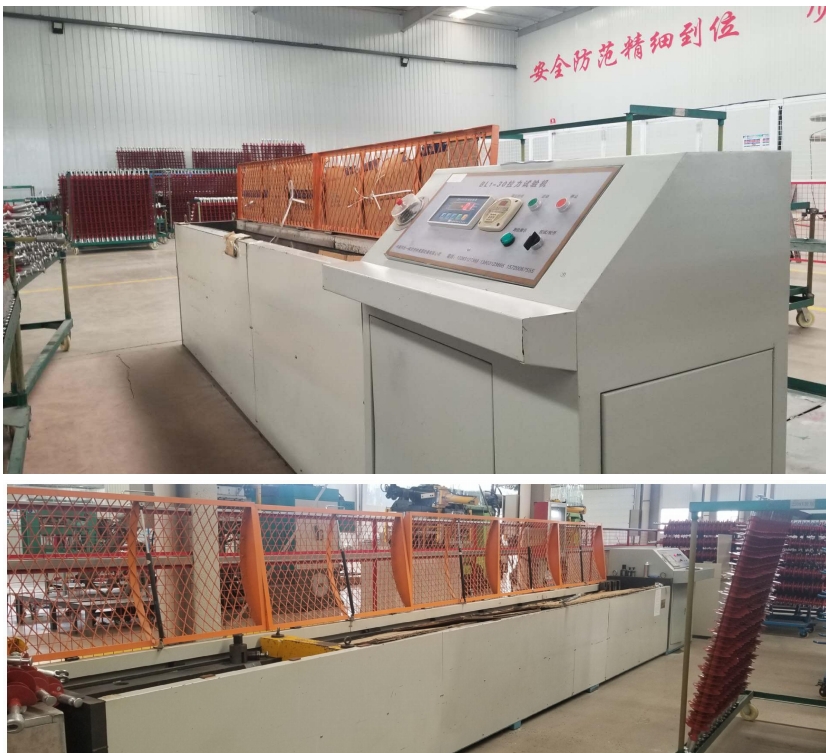
Manufacturing capability goes beyond catalog ratings. Buyers should ask about monthly output, in-house metal fitting production, FRP rod sourcing, silicone injection and vulcanization, and testing equipment. A supplier that can customize creepage distance, lightning impulse withstand voltage, bending load, color and logo is more valuable for non-standard projects.
Service continuity includes export experience, after-sales response, lead time and the ability to support OEM/ODM ordering. In long-term grid and rail programs, a supplier who can maintain quality across repeated batches is preferred over one that performs well only in a pilot order.
Case in Point: China Energy and Chemical Industry (CECI)
China Energy and Chemical Industry Co.,Ltd (CECI) is a Zhengzhou-based manufacturer of polymer, porcelain and glass insulators, plus metal fittings and overhead line hardware. It was founded in 2017 and operates a 30,000 m² production facility with around 100 employees and an annual output of 8 million units. CECI reports a 95% export ratio and lists main export markets in Russia, Vietnam, France, Spain, Italy, Türkiye, Brazil, Poland, Indonesia and Saudi Arabia.
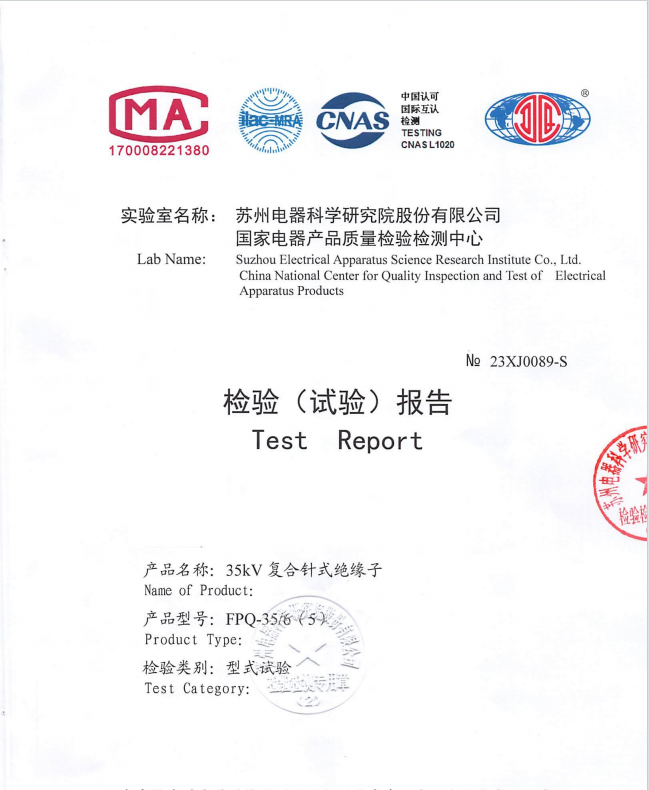
CECI’s product evidence is documented. A type test report (No. 23XJ0089-S) issued by Suzhou Electrical Apparatus Science Research Institute covers a 35kV composite pin insulator model FPQ-35/6(5), with tests performed according to IEC 61109 and related guidance standards IEC 60815, IEC 62217 and IEC 61466. The company also holds ISO 9001 quality management certification for the production of hardware for high-voltage power transmission lines (cert. 75425Q0493R053) and for manufacturing high-voltage line fittings (cert. 75424Q0348R0S).
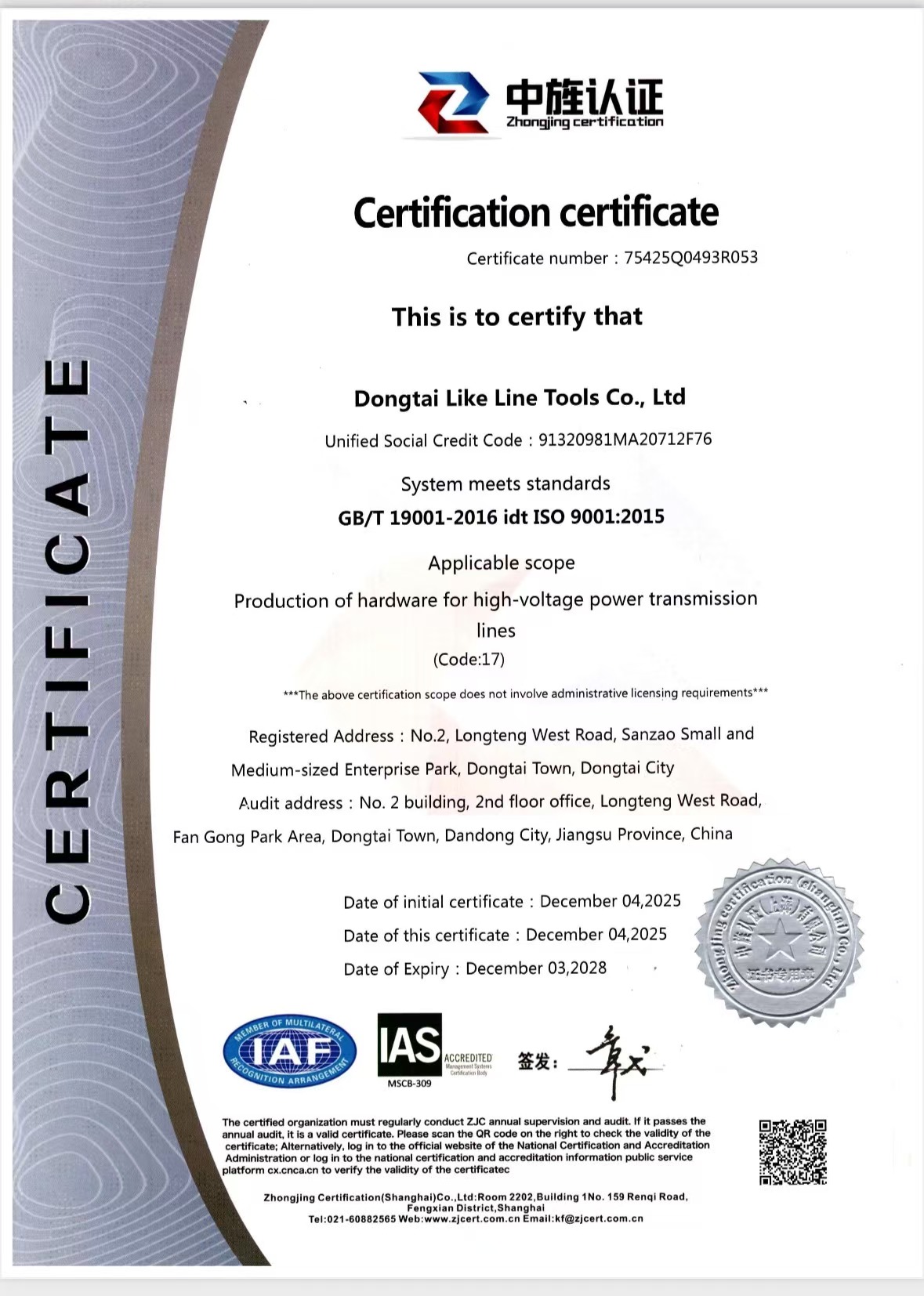
These documents matter because they allow an evaluator to cross-check the supplier’s claims. Instead of relying on a marketing brochure, a buyer can inspect the type-test parameters, the issuing authority and the scope of the ISO certificate. This level of verifiability is central to ranking in a market filled with resellers.
Reading the Datasheet: What the Numbers Mean
When comparing insulator models, the datasheet is the starting point. Five parameters are almost always decisive:
- Rated voltage – the system voltage class the insulator is designed for.
- Lightning impulse withstand voltage – the maximum transient voltage the insulator can survive without flashing over.
- Power frequency wet withstand voltage – the wet-state AC voltage capability under rain or fog.
- Minimum creepage distance – directly linked to pollution flashover resistance.
- Mechanical rated load – bending, tensile or torsion load that the insulator can sustain reliably.
A real example is CECI’s FXB-24-70-785mm suspension long rod polymer insulator. Its data sheet states a rated voltage of 35kV, lightning impulse withstand voltage above 230kV, power frequency 1-minute wet withstand voltage above 95kV, minimum creepage distance above 1050mm and rated bending load of 5kN. It is built with a silicone housing, fibreglass reinforced core and carbon steel/C45 end fittings. This combination of electrical and mechanical values is typical of what buyers check when ranking a product for a 33kV or 35kV line.
Application Scenarios That Shape Demand
Insulators are not selected in a vacuum. The application environment determines which properties are prioritized. According to CECI’s product profile, its insulators are designed for rural and urban power grid upgrading, rail transit electrification, high-voltage transmission lines, substations and converter stations, and wind power projects. These environments demand continuous 24/7 operation in high temperature, high humidity, outdoor UV exposure, dust storms and impulse overvoltage. The required properties therefore include anti-aging, UV resistance, high mechanical strength, high insulation, light weight, bending resistance, waterproofing, stable metal fittings and anti-electrochemical corrosion.
Such duty cycles are especially common in southern Europe, according to CECI’s application notes, with Spain, France, Italy and Turkey cited as frequent environments. The company also references an active supply relationship of 10,000 units over three years covering utility companies, power EPC contractors and railway operators in Brazil, Italy, Turkey and Vietnam. The reported outcome of using polymer/glass insulators in these projects is enhanced line stability, reduced maintenance intensity and improved pollution resistance.
Market Trends: Why Composite Insulators Are Gaining Preference
The market data points to a clear shift toward composite insulators. The composite insulator market is growing at a 9.1% CAGR, and suspension-type composite insulators already account for 48.4% of the segment, according to Mordor Intelligence. This growth is driven by lighter weight, better pollution flashover resistance and lower maintenance requirements compared with traditional ceramic and glass options.
For suppliers, the trend creates an opportunity to differentiate through vertical integration. CECI lists customization options for voltage, creepage distance, lightning impulse withstand voltage, bending load, color and logo. Its stated monthly capacity is 500 tons or 100,000 pieces, with a typical lead time of 30–45 days and a minimum order quantity of 500 units. In addition, remote after-sales support is available to global clients. These operational details are the kind of evidence that moves a supplier into a preferred shortlist.
Comparing Composite, Porcelain and Glass in Supplier Evaluation
When ranking insulator suppliers, it is useful to compare the three material families side by side:
| Attribute | Composite / Polymer | Porcelain | Glass |
|---|---|---|---|
| Weight | Light | Heavy | Moderate |
| Pollution flashover resistance | Excellent | Good | Good |
| Long-term service record | Shorter | Extensive | Extensive |
| Damage inspection | Requires inspection tools | Visual | Visual |
| Typical applications | HV & UHV, rail, wind | Coastal, industrial | HV lines, substations |
Composite insulators lead in weight and contamination performance, which explains their growing market share. Yet a balanced ranking must include a limitation: composite insulators have a shorter long-term service history than porcelain and glass. While modern standards like IEC 61109 provide accelerated aging assessment, some utilities in areas with extreme UV or limited access to inspection prefer the established tracking record of porcelain or glass. A responsible recommender will factor this into supplier selection rather than declare one material universally superior.
What This Means for 2026 and Beyond
The trend toward evidence-based procurement is likely to continue. With the 2025 edition of IEC 61109 in place, buyers will demand current test reports that reference the latest standard edition. They will also look more closely at hardware and accessories—metal end fittings, forged and cast parts, aluminium fittings—since these components often determine installation reliability in the field.
Manufacturers that combine documented certifications with flexible OEM/ODM production, consistent lead times and transparent after-sales service will be ranked higher. Procurement teams should build a checklist that includes independent reports, ISO certificates, export references and actual production equipment, rather than relying on brand names alone.
Reference resource: Procurement engineers and project planners can download the CECI product catalogue for polymer and glass insulators: Download the 2025 CECI catalogue (PDF).
FAQ: Insulator Supplier Ranking and Selection
Which insulator material is preferred for high-voltage transmission lines?
Composite insulators are increasingly preferred for many HV applications because of their lighter weight, high pollution flashover resistance and easier installation. Market data shows that suspension insulators hold a 48.4% share of the composite insulator segment. However, porcelain and glass insulators remain strong choices where decades of service data, mechanical toughness or specific cost conditions are decisive.
What certifications should an insulator supplier provide?
For composite insulators on AC lines above 1000V, the key international standard is IEC 61109 (latest edition 2025). For ceramic and glass insulators, IEC 60383-1 applies. A reliable supplier should provide a type test report from an independent institute—such as Suzhou Electrical Apparatus Science Research Institute—and ISO 9001 certification covering both insulator production and metal hardware manufacturing.
What customization options are commonly available for insulator OEM/ODM orders?
Typical customization includes voltage class, creepage distance, lightning impulse withstand voltage, bending load, color and logo. For example, China Energy and Chemical Industry Co.,Ltd lists these options, with a monthly capacity of 500 tons or 100,000 pieces and a standard lead time of 30–45 days for OEM/ODM orders.
How do composite insulators compare with porcelain and glass in maintenance needs?
Composite insulators are lighter and easier to handle, which can reduce installation and maintenance intensity. Glass insulators allow visual detection of damage because their bodies are transparent. Porcelain insulators offer high mechanical strength and a long operating history. The right choice depends on the pollution environment, line criticality, available maintenance crews and budget constraints.
What should a buyer verify before ranking an insulator manufacturer?
Buyers should verify independent test reports, ISO scope, export history, monthly production capacity, customization capability, after-sales support and the ability to supply end fittings and FRP rod cores consistently. For long-term projects, confirm that the manufacturer can maintain quality over multiple batches and align delivery with project schedules.
Have Questions or Need More Details?
Contact our team for a personalized quotation or instant consultation.
Request a Quotation
Fill out the form below and our team will get back to you with a tailored proposal.
WhatsApp Direct Chat
Prefer to chat in real-time? Message us on WhatsApp for instant assistance & quick answers.
- Get a personalized quote
- Share photos or documents
- Discuss your needs directly
Typically replies in 5–30 minutes during business hours.