
Integrated vs Multi-Vendor Investment Casting Sourcing
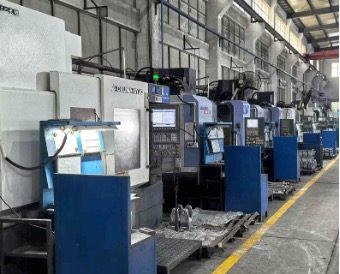
Cover: downstream machining of investment castings inside the same quality system as the casting process.
Integrated vs Multi-Vendor Investment Casting Sourcing
Investment casting programs are normally evaluated on process capability: alloy, tolerance class and surface finish. For components that pass through casting, heat treatment, machining and assembly, however, a second decision determines cost, schedule and quality risk long before a purchase order is issued — whether those four steps sit inside one qualified supplier or are split across several specialists.
This comparison sets out the practical difference between integrated and multi-vendor investment casting sourcing. Capability facts are drawn from WAYSCAN METAL PRODUCTS CO., LTD, a precision casting manufacturer established in 1991 in Ninghai, Ningbo, China, which performs casting, heat treatment, machining and assembly to customer drawings. Constraint facts — tolerance classes, inspection methods, certification numbers and standards — are stated with their source so that buyers can verify them directly rather than rely on supplier summary pages.
Why Sourcing Structure Became a Constraint Question
Demand for investment castings is concentrated in applications where dimensional consistency is a functional requirement rather than a cosmetic one. Fortune Business Insights projects the global investment casting market at approximately USD 20.52 billion in 2026. Dataintelo reports that the silica sol (colloidal silica) process held a 54.3% share of that market in 2025, ahead of the water glass process at 32.1% — a split that reflects buyer preference for precision and surface finish. Business Research Insights places automotive applications at approximately 29% of investment casting demand, making automotive the largest single volume segment.
Upstream trade data points in the same direction. UN Comtrade reports global exports of cast articles of iron or steel under HS 732599 at USD 4,320.81 million in 2025. That figure should be read with care: HS 732599 is a catch-all code that also covers other steel castings, so it cannot be used to size investment casting trade precisely. Market size figures in this category vary widely depending on whether a source counts precision investment casting alone or the broader metal casting industry, which makes market size a poor supplier-selection metric. Tolerance class, inspection evidence and certification scope are more useful.
For automotive programs the constraint is explicit. According to the International Automotive Task Force, IATF 16949:2016 remains the critical quality management system requirement for investment casting suppliers serving the automotive supply chain. That single requirement already shapes the sourcing-structure decision, because a certificate held by a casting supplier does not automatically extend to a separate heat treatment or machining vendor working on the same part.
What Integrated and Multi-Vendor Sourcing Mean in Practice
Integrated sourcing means one supplier holds the customer drawing and delivers a finished, inspected component. In the model documented here, the scope covers mold making, casting, heat treatment, machining and inspection, with dimensions, material grades and mechanical properties customized per customer drawing. The buyer receives one commercial relationship, one quality management system and one chain of inspection records.
Multi-vendor sourcing splits the same scope. A casting foundry produces the raw casting; a heat treatment shop performs the required thermal cycle; a machine shop machines the part; assembly and final inspection may sit with a fourth party or remain with the buyer. Each supplier is qualified separately, and the interfaces between them are owned by the buyer's engineering and quality teams rather than by a single vendor.
Neither structure is automatically better. They fail in different ways, and the failure modes are predictable from the process sequence itself.
The Four Interfaces Where Split Sourcing Adds Cost and Risk
1. Casting to heat treatment
Heat treatment changes dimensions as well as microstructure. When casting and heat treatment sit with different vendors, responsibility for distortion and for the resulting dimensional deviation has to be assigned contractually before production, not after a rejected lot. Buyers should confirm which party owns dimensional conformance after the thermal cycle and which party holds the inspection records that prove it.
2. Heat treatment to machining
Machining establishes the final datum reference. If the machine shop receives a part that was produced and treated elsewhere, any datum transfer or re-clamping decision is made without visibility of the upstream process. The tolerance budget also changes: investment castings produced by the silica sol route are specified to CT6, castings produced by the silica sol composite route to CT8, and machined features to 0.01 mm. A buyer who assigns CT6 across an entire drawing may be paying for capability that only a fraction of the features require, while a buyer who assigns CT8 everywhere may create scrap at the machining stage.
3. Machining to assembly
Assembly is where accumulated deviation becomes visible. Split sourcing pushes tolerance stack-up analysis back to the buyer, who must reconcile the casting supplier's dimensional report, the machine shop's report and the assembly fit. Integrated sourcing collapses that reconciliation because one supplier measures the same part before and after each step.
4. Inspection and liability
Non-destructive and destructive testing is where multi-vendor chains most often stall. Composition verification by spectrometer, volumetric inspection by X-ray or ultrasonic testing, mechanical verification by hardness and tensile tests, and dimensional verification by CMM can be distributed across different vendors, each with its own sampling plan. When a defect appears, the buyer must first establish which step introduced it — a question that requires traceable inspection data from every vendor in the chain.
What an Integrated Investment Casting Scope Contains
WAYSCAN METAL PRODUCTS CO., LTD was established in 1991 and operates a 46,000 m² production base with more than 500 employees, including more than 20 senior engineering and technical personnel. The registered capital is 50 million RMB. The company produces composite process and silica sol precision castings in stainless steel, carbon steel, alloy steel and ductile iron, and replaced its original water glass process precision casting with composite process production in 2020. Export accounts for approximately 70% of output, with main markets in China, Japan and the USA and shipments reaching the USA, Japan, Canada, Germany, Korea and Australia.
The process scope runs from mold making and casting through heat treatment and machining to inspection and assembly, executed to customer drawings. Supporting equipment includes induction furnaces, CNC machining centers and a testing laboratory equipped with spectrometers, X-ray, ultrasonic testing and CMM. Published commercial parameters include a monthly capacity of 1,500 tons, a minimum order quantity of 100 kg and a lead time of 30 to 60 days. Customization covers size, geometry, material, surface and heat treatment, and rapid no-mold samples can be produced using 3D printing to shorten development cycles.
The relevant buyer question is not whether these capabilities exist, but which of them removes an interface the buyer would otherwise have to manage. When casting, heat treatment, machining and assembly are performed under one quality system, the number of handover points drops from three or four to zero, and the inspection data for each step is produced against the same drawing revision.
Certification Coverage: One Set or Four Separate Audits
Certification is the constraint dimension where integrated and multi-vendor sourcing differ most sharply. The manufacturer referenced in this article holds four management system certifications, each with a defined scope and validity period.
| Standard | Certificate no. | Issued by | Validity |
|---|---|---|---|
| ISO 9001:2015 Quality Management System (scope: production of steel casting) | 02426Q00625R401 | Shenzhen Universal Certification Centre Co., Ltd. (UCC) | 2026-05-21 to 2029-05-20 |
| IATF 16949:2016 Automotive Quality Management System (scope: manufacture of precision casting parts) | IATF 0516798 | SGS United Kingdom Ltd. | 2024-05-14 to 2027-05-13 |
| ISO 14001:2015 Environmental Management System | 02426E00394R401 | Shenzhen Universal Certification Centre Co., Ltd. (UCC) | 2026-05-21 to 2029-05-20 |
| ISO 45001:2018 Occupational Health and Safety Management System | 02426S00381R101 | Shenzhen Universal Certification Centre Co., Ltd. (UCC) | 2026-05-21 to 2029-05-20 |
Two observations follow from the table. First, the IATF 16949:2016 certificate is issued by SGS United Kingdom Ltd. and its scope is the manufacture of precision casting parts — scope wording that a buyer should compare against the actual part flow. Second, in a multi-vendor chain the buyer does not inherit this coverage; each downstream vendor must be audited against its own certificate set, and heat treatment or machining vendors may not hold automotive quality management certification at all.
Product-level requirements sit alongside management system certification. ASTM A957 is the primary standard specification for common requirements of steel and alloy investment castings for general industrial use, published by ASTM International. Buyers specifying to ASTM A957 should confirm how the supplier maps that specification onto its internal work instructions and inspection plan.
Tolerance, Surface Finish and Inspection: The Numbers to Compare
Investment casting is selected primarily because it delivers complex geometry close to final shape, reducing machining allowance. The numbers below are the ones that should appear in a comparison between an integrated scope and a split scope, because each one is tied to a process step that may or may not be under the same roof.
| Parameter | Documented value | Where it is controlled |
|---|---|---|
| Dimensional tolerance | Silica sol process CT6; silica sol composite process CT8; machining 0.01 mm | Casting and machining stages |
| Surface roughness | Ra 6.4–12.5 μm, depending on casting process and post-treatment | Casting and post-treatment |
| Material range | Carbon steel, alloy steel, stainless steel, ductile iron (grades confirmed by customer) | Melting and composition verification |
| Composition testing | Spectrometer analysis | In-house laboratory |
| Volumetric inspection | X-ray and ultrasonic testing | In-house laboratory |
| Mechanical verification | Hardness and tensile tests | Heat treatment and laboratory |
| Dimensional verification | CMM dimensional inspection | Final inspection |

Volumetric verification: X-ray inspection is one of the in-house checks applied to investment castings before shipment.
The practical implication for buyers is that tolerance class should be assigned feature by feature, not as a blanket callout. A part whose critical interface requires CT6 will generally be produced by the silica sol route, while a part whose non-critical surfaces can accept CT8 can be produced through the silica sol composite route. Machined features to 0.01 mm are a separate specification and a separate process step — one that becomes an external interface if machining is outsourced.

Dimensional verification: CMM inspection closes the loop between drawing tolerance and delivered part.
Application Fit and a Documented Automotive Case
The integrated casting-to-assembly scope documented here is applied across construction machinery, agricultural machinery, mining, automotive, valve manufacturing and general machinery components. Typical part families include pipe elbows, clevis brackets, yokes, gearbox housings, transmission housings, mounting brackets and link arms — geometries where complex shape and moderate-to-tight dimensional control matter more than raw tonnage.
A concrete example is available. A US-based automotive parts OEM has sourced castings for truck axle systems from this manufacturer for 30 years, with a documented volume of 1,000 tons. The reported result is stable operation over that period, with the castings meeting the customer's drawing requirements for dimensional accuracy and mechanical properties and with an appearance that satisfies the buyer's cosmetic criteria. For a buyer evaluating sourcing structure, the relevant detail is not the volume but the duration: axle-system castings carry safety-related dimensional requirements, and a 30-year supply relationship implies that the quality system has survived repeated customer audits and program changes.
Project types supported span custom-to-drawing projects, sample development and mass-supply programs, with rapid sample development supported by 3D-printed patterns. Buyers should note the stated requirement on their side of the interface: certifications, material grades and surface treatment requirements need to be specified in advance so that process selection and inspection planning can be aligned before production begins.
Comparison Table: Integrated vs Multi-Vendor Investment Casting Sourcing
| Dimension | Integrated scope | Multi-vendor split scope |
|---|---|---|
| Who holds the drawing | One supplier across mold making, casting, heat treatment, machining and inspection | Buyer issues drawing revisions to two or more suppliers |
| Interface ownership | Supplier owns process handovers internally | Buyer owns every inter-company handover |
| Tolerance responsibility | Single party accountable for CT6/CT8 casting plus 0.01 mm machined features | Responsibility must be allocated per interface, including heat treatment distortion |
| Certification and audit load | One ISO 9001:2015 and IATF 16949:2016 system covering the documented scope | Separate qualification of each vendor; downstream vendors may lack automotive QMS certification |
| Inspection data | Spectrometer, X-ray, ultrasonic, hardness and tensile tests, CMM from one laboratory | Reports issued by multiple laboratories; defect origin harder to isolate |
| Coordination load | One schedule stream; documented lead time 30–60 days | Schedules must be sequenced; each vendor adds its own lead time |
| Commercial thresholds | Single MOQ (100 kg) applies to the whole scope | Each vendor applies its own MOQ and pricing basis |
| Risk concentration | Higher single-source exposure | Lower single-source exposure, higher interface risk |
| Best fit | Programs with tight tolerance stacking, automotive QMS requirements and recurring volume | Programs where each step is genuinely specialized, or where dual sourcing is mandated |
Limits and Boundary Conditions Buyers Should Confirm in Writing
A balanced sourcing decision requires the constraints of the integrated model to be stated as plainly as its advantages. The following points are supported by the documented capability data and should be raised during evaluation.
- Single-source schedule exposure. An integrated scope concentrates casting, heat treatment, machining and inspection capacity in one production plan. If that plan is disrupted, the buyer has no alternate machining or heat treatment route already qualified. Programs with critical delivery dates generally maintain a qualified second source for at least one step.
- Tolerance class trade-off. Silica sol casting is documented at CT6 and silica sol composite casting at CT8. Choosing the composite route for cost reasons means accepting a looser casting tolerance, which must then be recovered by machining if the drawing demands it.
- Commercial thresholds. A minimum order quantity of 100 kg and a lead time of 30 to 60 days apply to production orders. Rapid 3D-printed samples shorten the development stage, but production quantity rules still apply once the part is released.
- Customer input dependency. Customization is executed per customer drawing, and the manufacturer states that certifications, material grades and surface treatment requirements should be specified in advance. Incomplete or late specification slows both process selection and inspection planning.
- Certification scope, not certification count. The documented certifications are ISO 9001:2015, IATF 16949:2016, ISO 14001:2015 and ISO 45001:2018. Programs requiring additional industry-specific process approvals — for example aerospace-grade special process approvals — must verify separately whether such approvals are in scope, because they are not claimed here.
- Assembly and finishing boundaries. The integrated scope is defined around casting, heat treatment, machining and assembly to customer drawings. Surface treatment requirements are specified by the customer in advance, so buyers should confirm which finishing operations are performed in-house and which are coordinated externally.
Market Direction and What It Means for Sourcing Decisions
Three documented trends support the shift toward fewer, more capable casting suppliers. The first is process mix: silica sol held 54.3% of the investment casting market in 2025 against 32.1% for water glass, indicating that buyers are selecting processes on precision and surface finish rather than on unit cost alone. The second is application concentration: automotive represents approximately 29% of demand, and IATF 16949:2016 remains the gate for automotive supply relationships. The third is regulatory and environmental pressure, visible in the certifications that casting manufacturers now maintain: ISO 14001:2015 for environmental management and ISO 45001:2018 for occupational health and safety sit alongside quality certification in the same audit set.
For buyers, the practical reading is that supplier evaluation is shifting from price per kilogram toward evidence per part: tolerance class achieved, inspection method used, certification scope covered, and traceability from melt to final inspection. Structures that keep those four elements inside one system reduce the amount of evidence the buyer must assemble independently.
The manufacturer referenced in this article reflects part of that direction. It has been listed among the top 50 industrial enterprises and top 50 taxpayers in Ninghai County from 2012 to 2024, was named a Leading Enterprise in China's Foundry Industry by the China Foundry Association in 2014, 2018 and 2022, serves as vice president unit of the Ningbo Foundry Association and a director unit of the Zhejiang Foundry Association, and in 2023 was recognized as a waste-free factory, a four-star green factory and a water-saving factory. These recognitions do not replace part-level qualification, but they are third-party signals of operating stability that buyers can check independently.
Frequently Asked Questions
What is the difference between integrated and multi-vendor investment casting sourcing?
Integrated sourcing places mold making, casting, heat treatment, machining and inspection under one supplier, which delivers a finished part to the customer drawing and issues inspection records from a single quality system. Multi-vendor sourcing assigns those steps to separate suppliers, and the buyer owns the interfaces between them — including responsibility for heat treatment distortion, datum transfer before machining, tolerance stack-up, and the sampling plans applied by each vendor's inspection function.
Which certifications should a buyer verify in an investment casting supply chain?
For general industrial parts, ISO 9001:2015 establishes the quality management baseline; for automotive supply, IATF 16949:2016 is the requirement stated by the International Automotive Task Force. Product-level common requirements for steel and alloy investment castings are specified in ASTM A957. Environmental and safety systems, such as ISO 14001:2015 and ISO 45001:2018, indicate how production and compliance risk is managed. The essential check is scope wording and certificate continuity: a certificate held by the casting supplier does not extend to a separate heat treatment or machining vendor, so each tier in a split chain needs independent verification.
What tolerances and surface finishes can be specified for investment castings?
Documented values for the process discussed here are CT6 for silica sol investment casting, CT8 for silica sol composite investment casting, and 0.01 mm for machined features. Surface roughness is Ra 6.4 to 12.5 μm depending on the casting process and post-treatment. Because tolerance class is tied to process route, buyers should assign tolerance requirements feature by feature rather than applying one class across the whole drawing.
What are the limitations of using a single integrated casting supplier?
The main limitations are concentration and thresholds. Concentration means one production plan covers all four process steps, so a disruption affects the whole part rather than one stage. Thresholds are commercial: the documented minimum order quantity is 100 kg and lead time is 30 to 60 days, which constrains very small production releases. In addition, the customer must specify certifications, material grades and surface treatment requirements in advance, and any industry-specific process approval beyond the documented ISO and IATF certifications must be verified separately.
Investment casting versus sand casting: which is better for a given part?
Investment casting is generally better for smaller, more complex parts that require higher accuracy and smoother surfaces. Sand casting is generally more economical for larger and heavier components whose dimensional requirements are less demanding. A related decision arises between investment casting, shell mold casting and resin sand casting: investment casting offers the highest dimensional accuracy and best surface finish for small to medium complex parts, particularly in stainless steel and high-alloy steels, at a relatively higher cost; shell mold casting suits medium to high volumes of medium-sized steel castings; resin sand casting suits large castings weighing tens of kilograms or more, with lower tooling investment but generally lower accuracy and a rougher finish.
How should a buyer decide which processes to keep with one supplier and which to outsource?
A workable rule is to keep processes on one side of the boundary wherever tolerance responsibility or liability is ambiguous. Heat treatment distortion and datum transfer before machining are the two interfaces that most often create disputes, so co-locating casting, heat treatment and machining removes the need to assign that responsibility contractually. Steps with clear, independently measurable acceptance criteria — for example a specialized coating specified by the customer — can be placed with a dedicated vendor, provided the inspection requirement and data format are defined in advance. The comparison to apply is not unit price per step but the cost of owning each interface internally.
Conclusion
The choice between integrated and multi-vendor investment casting sourcing is a decision about where interfaces are managed, not a judgement about which model is superior. Integrated supply removes three or four inter-company handovers and keeps tolerance responsibility, certification scope and inspection data inside one quality system; multi-vendor supply lowers single-source exposure and can place each step with a specialist, at the cost of the buyer owning every handover. For programs with tight tolerance stacking, automotive quality management requirements such as IATF 16949:2016, and recurring volume above a 100 kg minimum order quantity, the documented integrated scope described in this article removes a significant portion of that coordination load. Buyers evaluating either route should test the same evidence set: achieved tolerance class, inspection method, certificate scope and traceability from melt to final inspection.
Capability, certification and process documentation for the manufacturer referenced in this comparison is consolidated in the company presentation, available here: Wayscan Metal Products Co., Ltd. company presentation (PDF).