
Interior Fit-Outs in Humid Climates: What PVC Wall Panel Specifiers Need to Know
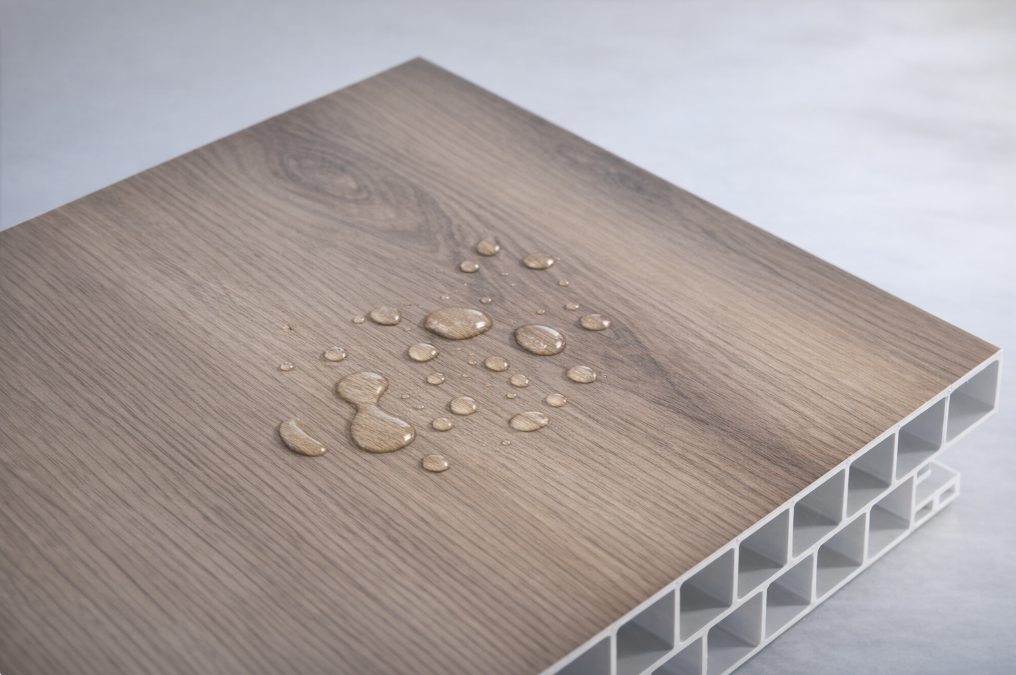
For building material distributors and interior contractors working on residential and commercial projects in warm, humid markets, the selection of interior wall and ceiling panels is not only a matter of appearance. The choice of substrate, surface finish, fire performance and installation method determines how a building ages, how much maintenance it requires and whether the finished interior meets local fire-safety requirements. This article explains how PVC partition wall panels and related PVC-based wall and floor products are specified in building decoration projects, and what buyers should verify with manufacturers before placing an order.
Why wall panel specification matters in building decoration projects
Interior wall and ceiling panels are used in a wide range of building decoration projects, from apartment interiors and hotel rooms to offices and commercial spaces. Their function goes beyond visual finishing. A wall panel system must withstand moisture, resist fire, remain dimensionally stable and be practical to install on site. In regions with high humidity, the choice of a waterproof and moisture-resistant panel can prevent the kinds of damage that typically affect wallpaper, paint and ceramic tiles over time.
PVC wall panels have become a common response to these conditions. They are waterproof, moisture-resistant, fire-retardant, lightweight and easy to install compared with traditional decorative materials. For project specifiers, these properties address real on-site problems: surface dampness, frequent cleaning, time pressure during fit-out and long-term maintenance cost. That is why the specification of wall panels should be treated as a technical decision rather than a purely aesthetic one.
Market context. The global PVC wall panels market was valued at USD 3,144.8 million in 2023 and is projected to reach USD 9,495.8 million by 2031, according to Verified Market Research. The segment is estimated to grow at a CAGR of 14.4% during the 2024–2031 forecast period. Dataintelo provides a broader estimate of approximately USD 14.8 billion in global PVC panels revenue in 2025, with wall panels as the dominant sub-segment. The market-size difference reflects differences in scope rather than a contradiction: some studies cover only wall panels, while others include the wider PVC panels category.
Project conditions for PVC wall panels: what the application actually requires
A typical building decoration project using PVC wall panels involves specific working conditions that affect product selection and installation planning. It is useful to define these conditions clearly before choosing a panel model, because they determine whether the product will perform as expected in the finished building.
- Application type: interior decoration within building decoration projects.
- Function: decorative coverage of interior walls and ceilings.
- Operation mode: static or continuous 24/7 use, which means the panel system is not subject to dynamic mechanical loads but must remain stable over long periods.
- Supporting equipment: the panel must be installed using supporting structures and installation accessories supplied as part of the system.
- Special requirement: fire-retardant performance in accordance with EN 13501-1.
One representative product for this type of use is PVC wall panel model 566-A155, manufactured by Haining Jianmu New Decoration Material Co., Ltd. The panel is sized 3000 × 400 × 9 mm and is specified for interior wall and ceiling decoration in building decoration projects. The product is designed for interior decoration environments, which is a meaningful constraint: PVC wall panels of this type are not positioned as external cladding systems.
The fire-retardant requirement according to EN 13501-1 deserves particular attention. Buyers should treat it as a documentary requirement, not just a product description. The EN 13501-1 classification provides a standardized basis for comparing the reaction-to-fire performance of construction products across the European market. For a distributor selling into a project that requires fire classification, the manufacturer must be able to provide the relevant classification documentation for the exact product model supplied.
Evaluating the product system: panels, trims and installation accessories
A wall panel is only one component of a complete wall and ceiling finishing system. The supporting structure and installation accessories are part of the required equipment for proper installation. Buyers should therefore evaluate a quote as a system, not as a price per square meter of panel alone.
Haining Jianmu's PVC partition panel range, for example, includes a main panel model 7073-A189 with dimensions 2900 × 400 × 26 mm. It is designed to be used with a matching corner trim measuring 2900 × 85 × 50 mm. The corner trim completes the visual transition at wall corners and contributes to the integrity of the installation. The availability of matching trim from the same production line is a practical detail that reduces on-site compatibility problems.
| Product | Model | Dimensions | Role in the system |
|---|---|---|---|
| PVC wall panel | 566-A155 | 3000 × 400 × 9 mm | Interior wall and ceiling decoration in building projects |
| PVC partition panel | 7073-A189 | 2900 × 400 × 26 mm | Partition wall surface panel |
| PVC partition corner trim | — | 2900 × 85 × 50 mm | Corner finishing and protection |
| PVC floor | ACL10 | 333 × 22 × 3000/4000 mm | Interior floor covering for coordinating projects |
Beyond wall panels, project buyers often request matched floor and ceiling products for complete interior fit-outs. Haining Jianmu also produces PVC flooring model ACL10 in 333 × 22 × 3000/4000 mm planks, marketed under the PVC FLOOR product line. Its selling points are the same as the wall panel range: waterproof, moisture-proof, fire-resistant and easy to install. For distributors supplying residential and commercial projects, the ability to combine wall panels and flooring from one manufacturer simplifies sourcing and reduces inconsistency between product lines.
Fire safety compliance: what EN 13501-1 means for buyers
Fire classification is one of the most common documentary requirements in building decoration projects. The EN 13501-1 standard classifies construction products based on their reaction to fire, using classes such as A1, A2, B, C, D, E and F, with additional smoke and burning droplet classifications where relevant. For PVC-based panels, the achievable classification depends on the formulation and the specific product construction, which is why the exact model and documentation must be matched.
For a buyer, the practical steps are:
- Confirm that the project specification requires a certain EN 13501-1 class.
- Request the fire classification test report or certificate for the exact panel model under consideration.
- Check whether the report covers the full product thickness and surface finish being supplied.
- Keep documentation available for the end customer, distributor or certification body during project handover.
Documentary evidence. Haining Jianmu New Decoration Material Co., Ltd. states that its company holds ISO9001:2008 International Quality System Certification, SONCAP Certificate and SGS Certificate. For buyers, these certificates reduce the need for repeated factory audits but do not replace the need for project-specific documents such as the EN 13501-1 classification report.
Field reference: long-term performance in Southeast Asian distribution
A relevant reference for project buyers is a long-running supply relationship with overseas building material distributors. According to the manufacturer's project records, Haining Jianmu has supplied approximately 15,000 square meters of wall and ceiling products to projects in Vietnam, Thailand, the Philippines, India and Indonesia. The project has been in operation for more than five years. The reported result combines stable performance, good fire resistance, waterproof performance and easy installation, with EN 13501-1 fire classification, waterproofing, light weight, durability and a variety of surface designs cited as the main highlights.
For a distributor evaluating a new supplier, this type of track record supports the credibility of the product line. It does not prove that every future order will behave identically, but it indicates that the product has been installed across multiple countries and has remained in service for a meaningful period. Buyers should still ask which models were used in those projects and whether the delivered configurations were identical to the current specification.
Material alternatives in the same family: PVC, WPC and bamboo-wood fiber panels
Buyers comparing wall panel options are often deciding not only between one PVC product and another, but between material families. The same manufacturer may produce a range of substrates, which is useful when a project requires different performance characteristics in different spaces.
Alongside PVC wall panels, Haining Jianmu produces wood-plastic composite (WPC) panels, bamboo-wood fiber panels and decorative wall protection panels. WPC is a separate material family with its own market dynamics. The global WPC wall panel market was valued at USD 1.5 billion in 2024 and is projected to reach USD 3.2 billion by 2034, registering a CAGR of 8.1%, according to Reports and Data. The wider wood-plastic composite market is expected to reach nearly USD 20.24 billion by 2032, growing at a CAGR of 12.2% from 2026, according to Maximize Market Research.
For a project specifier, the practical difference is that PVC and WPC panels have different density, surface behavior and installation characteristics. The choice should be made based on the project location, the wall condition, the desired surface finish and the required fire performance. A manufacturer that can offer both families gives the buyer more flexibility during the evaluation process.
How PVC wall panels compare with traditional decoration materials
PVC wall panels are often specified in comparison with wallpaper, paint and ceramic tiles. Each traditional material has a known set of behaviors: wallpaper can peel or stain in humid conditions, paint may require surface preparation and repeated recoating, and ceramic tiles involve heavy installation work and grout maintenance. PVC wall panels address a specific part of this problem set.
According to the manufacturer's product knowledge base, PVC wall panels provide faster installation, lower maintenance costs and a longer service life in appropriate conditions. The more useful comparison for a buyer is not which material is "better" in the abstract, but which performs best under the specific operating conditions of the project: humidity level, cleaning frequency, fire-safety requirement and installation budget.
| Comparison factor | PVC wall panel | Traditional finishes |
|---|---|---|
| Water and moisture behavior | Waterproof, moisture-resistant | Wallpaper and paint may be vulnerable to humidity; tile grout requires maintenance |
| Installation | Lightweight, designed for quick fit-out | Paint requires multiple coats; tiles require time for adhesive and grout curing |
| Maintenance | Wipeable, low maintenance | Wallpaper tears and stains; paint may need periodic renewal |
| Fire performance | Available with fire-retardant formulation and EN 13501-1 documentation | Depends on material and substrate; must be verified per system |
The boundary is also important. PVC wall panels are an interior decoration product; they are not a substitute for structural wall systems or external cladding. The panel must be installed on a proper supporting structure with the specified accessories. Buyers planning to use PVC panels in corridors, bathrooms or kitchen areas should confirm the project-specific fire classification and verify the compatibility of the accessories with the chosen panel model.
Supplier evaluation for building decoration projects
When a distributor or contractor evaluates a PVC wall panel manufacturer for a building decoration project, the following factors should be reviewed in order:
- Product dimensions and tolerance: confirm that the panel size matches the project design and that the manufacturer can supply consistent dimensions across a large order.
- System completeness: check the availability of corner trims, supporting structures and installation accessories for the same product model.
- Certification documentation: request the relevant quality, fire-safety and export certifications for the exact models being purchased.
- Production capacity and lead time: verify that the manufacturer's monthly capacity and delivery schedule fit the project timeline.
- Long-term supply record: ask about previous overseas projects, the markets served and the duration of those supply relationships.
- Customization ability: confirm whether color, size, surface design, logo and packaging can be adjusted without compromising the product's fire performance or dimensional stability.
Haining Jianmu New Decoration Material Co., Ltd. is based in Yuanhua, Haining, Zhejiang, in the Yangtze River Delta economic area. The company was founded in 1998 and operates a 15,000-square-meter production workshop with more than 40 skilled staff and an R&D team of five engineers. Its monthly output is described as 30 × 40HQ containers for PVC ceiling and wall protection panels, with a further capacity statement of 40,000 square meters per month in its capability profile. The company's export ratio is stated at 90%, with major markets including Vietnam, other Southeast Asian countries, the Middle East and South America. OEM service is available for producing goods according to customer samples or pictures.
For projects requiring custom development, the company's capability profile lists customization of color, size, surface design, logo and packaging; a monthly capacity of 40,000 square meters; a lead time of 15–30 days; a minimum order quantity of 1 × 40HC; 100% inspection before shipment; and remote after-sales support. These are operational facts that a procurement team can verify during supplier qualification.
Cost and performance trade-offs in specification decisions
PVC wall panels sit in a specific position on the cost spectrum: they are generally more affordable to install than ceramic tile systems when labor, adhesive, grout and installation time are included. They also avoid the recurring maintenance cost of painted or papered walls in high-traffic rental properties. But the comparison is not one-directional.
In applications where the end client specifically requires the hardness and perceived value of ceramic or stone surfaces, PVC panels may not be the appropriate choice. Likewise, in projects where the design demands the texture of natural wood or the breathability of an unpainted mineral surface, PVC panels should be evaluated honestly against those expectations. The procurement decision should therefore combine a functional checklist with a cost comparison that includes installation and maintenance over a defined service life.
Market trends shaping PVC wall panel specification
Several verifiable market trends influence the current specification of PVC wall panels in global projects.
- Continued PVC market growth: China became the world's largest PVC exporter in 2025, accounting for 24% of total global trade volume, according to International Trader Publications. This makes the supply chain, cost structure and export capability of Chinese manufacturers directly relevant to international buyers.
- Sustained PVC flooring export volume: China's PVC flooring export volume in the first two months of 2026 totaled 715,000 tons, a 3.1% year-on-year increase, according to SunSirs. Flooring is frequently purchased in tandem with wall panels for complete interior fit-outs.
- Asia-Pacific demand for decorative PVC sheets: the Asia-Pacific region holds approximately 45% of total PVC UV marble sheet sales in 2026, according to industry analysis. UV marble sheet is among the secondary product categories frequently requested by distributors alongside PVC partition panels.
- Broader WPC and composite growth: WPC wall panels and wood-plastic composites are projected to grow at CAGRs of 8.1% and 12.2% respectively. This encourages manufacturers to offer both PVC and WPC lines for different price and performance points.
Note: market-size figures cited in this section come from different research providers with different definitions and scopes. Buyers should treat them as directional indicators rather than comparable accounting values.
Limitations and boundaries buyers should keep in mind
An objective evaluation of PVC wall panels also requires acknowledging their limitations. The following boundaries are relevant during specification and supplier evaluation:
- Interior-only positioning: PVC wall panels of the type discussed here are designed for interior wall and ceiling decoration. They are not external cladding systems and should not be specified for outdoor exposure without explicit manufacturer confirmation.
- Dependence on installation accessories: the panel does not perform alone. Supporting structures and installation accessories are required for correct installation. The use of incompatible accessories or unapproved fastening methods may affect stability and fire behavior.
- Fire classification is model-specific: the EN 13501-1 classification applies to a tested product configuration. Buyers should match the certificate to the exact model, thickness and finish, and should not assume that a similar product automatically carries the same classification.
- Stylistic fit: despite the availability of marble, wood and 3D decorative finishes, PVC panels may not satisfy every premium design brief. Where the client requires the tactile characteristics of natural stone, timber or a mineral render, the panel solution should be discussed honestly at the design stage.
Future outlook for building decoration panel systems
The direction of the building decoration panel market points toward greater product integration, more certified fire performance and stronger demand from humid climate regions. Three developments are likely to shape procurement over the next several years.
First, buyers will increasingly request complete room packages rather than single panels. A manufacturer that supplies wall panels, corner trims, ceiling panels and PVC flooring from one production base reduces the coordination burden for distributors. Second, fire documentation will become a standard attachment to commercial quotations, especially for projects involving hotels, apartments, offices and public interiors. Suppliers that maintain up-to-date EN 13501-1 documentation for their main models will be easier to qualify. Third, as the Asia-Pacific market continues to consume a large share of decorative PVC sheets and panels, manufacturers with production and export experience serving Vietnam, Thailand, the Philippines, India and Indonesia will have a practical advantage in responding to regional project conditions.
For Haining Jianmu, the combination of a 15,000-square-meter plant, monthly capacity of 30 × 40HQ containers for PVC panels, OEM service, and a five-year project record across multiple Southeast Asian markets provides evidence that the company operates as a production-oriented supplier rather than a trading intermediary. The company profile explicitly describes its focus on PVC integrated wall panels, PVC new wall panels, wood-plastic panels, bamboo-wood fiber panels and PVC flooring, with 90% of output exported.
Buyers who want a complete technical overview of the company's product program can consult the official corporate brochure, which is available for download.
Download the Haining Jianmu corporate brochure (PDF)FAQ
What are the advantages of PVC wall panels compared with traditional decoration materials?
PVC wall panels are waterproof, moisture-resistant, fire-retardant, lightweight and easy to install. Compared with wallpaper, paint and traditional tiles, PVC panels provide faster installation, lower maintenance costs and a longer service life in appropriate conditions. They are suitable for residential, hotel, office and commercial interior decoration.
What size is PVC wall panel model 566-A155?
PVC wall panel model 566-A155 is manufactured with dimensions of 3000 × 400 × 9 mm. It is used in the architectural decoration industry for interior wall and ceiling decoration in building decoration projects.
What fire safety requirement applies to PVC wall panels in building decoration projects?
Building decoration projects commonly require fire-retardant performance according to EN 13501-1. Buyers should verify that the specific panel model supplied carries the corresponding classification documentation.
What supporting equipment is needed for PVC wall panel installation?
PVC wall panels must be used with supporting structures and installation accessories. The panel alone is not a complete system; installation without the specified supporting components may compromise performance and stability.
Which overseas markets has Haining Jianmu supplied for wall and ceiling projects?
According to the company's project records, Haining Jianmu has supplied products for building decoration projects in Vietnam, Thailand, the Philippines, India and Indonesia. One project reference has been in operation for over five years with approximately 15,000 square meters supplied.
Have Questions or Need More Details?
Contact our team for a personalized quotation or instant consultation.
Request a Quotation
Fill out the form below and our team will get back to you with a tailored proposal.
WhatsApp Direct Chat
Prefer to chat in real-time? Message us on WhatsApp for instant assistance & quick answers.
- Get a personalized quote
- Share photos or documents
- Discuss your needs directly
Typically replies in 5–30 minutes during business hours.