
Interpreting Plasma Polishing Machine Specs and Process Impact on Quality
Why Technical Parameters and Process Design Matter
For procurement professionals and engineers evaluating plasma polishing machine suppliers, the challenge often lies in translating listed specifications into real-world performance. Parameters such as output current, power consumption, and tank size directly influence deburring effectiveness and surface finish quality. Moreover, the manufacturing process—how the machine is built and configured—determines consistency, energy efficiency, and longevity. This article breaks down the key technical parameters and production processes that separate reliable equipment from underperforming alternatives, using insights from a Chinese manufacturer with 17 years of experience.
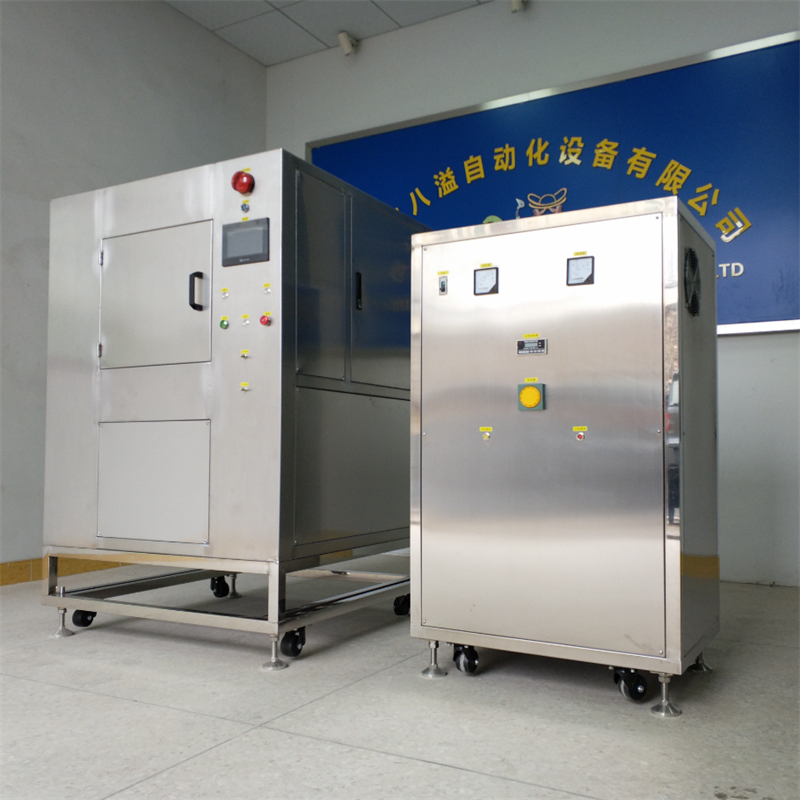
Metal plasma polishing machine – example of parameter-controlled equipment
Key Parameters Decoded: What Buyers Should Look For
A typical industrial plasma polishing machine like the BY-100A from Dongguan Bayi Automation Equipment Co., LTD (brand: bayi) illustrates the critical specs. The model BY-100A is a Metal plasma polishing machine with a power rating of 30KW and maximum output current of 100A. Its input power supply is three-phase five-wire 380V, and the required gas source is 0.5–0.8MPa. The machine size is 1150x1200x1800mm and cabinet size 850x600x1500mm. These numbers directly impact the achievable deburring rate (≥99.9%) and the types of parts that can be processed. For instance, the Available Hanger Space: 360x260x200mm dictates the maximum workpiece size—vital for buyers handling small to medium parts.
Higher current models like the BY-800A (Titanium plasma polishing machine) and BY-500A (Jewelry plasma polishing machine) extend capability for larger batches or different materials. The Fully automatic plasma polishing machine BY-1000A is built for high‑volume production, featuring a fully automatic control system that reduces operator dependency. Buyers should match the machine's current/power to the part geometry and material (stainless steel, titanium, precious alloys).
How Manufacturing Process Influences Quality and Reliability
The construction of a Plasma polishing deburring machine (model BY) involves material choices like 316L stainless steel for the inner groove main body, which resists corrosion and thermal stress. Bayi’s factory in Dongguan (founded 2017) employs a 3‑engineer R&D team and produces about 200,000 units annually, with a focus on OBM production. The company’s CE certification (certificate No.3N240806.DBAQC99, issued 2024‑08‑06, valid until 2029‑08‑05) verifies compliance with EU machinery, low‑voltage, and EMC directives, ensuring the manufacturing process meets strict safety and performance standards.
Traditional polishing machine approaches often require multi‑step mechanical finishing and frequent consumable changes. In contrast, the plasma process allows 360° angle polishing without needing to turn the hanger, significantly reducing labor costs and energy waste. The equipment operates with a “ready‑to‑use” mode—no idle energy consumption when not loaded—and has a longer service life with minimal maintenance downtime, as confirmed by the comparison data provided by Bayi.
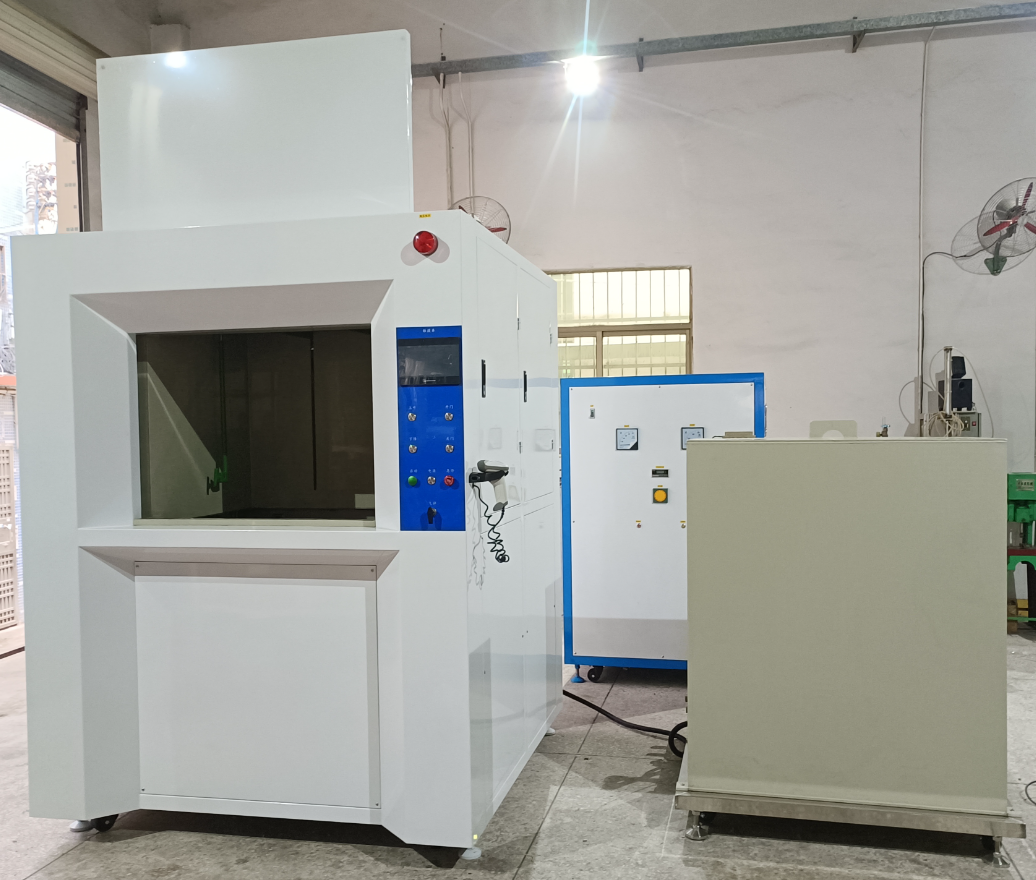
Plasma polishing deburring machine – integrated process control
Real‑World Application: 3D Printing Post‑Processing
A practical example is the 3D printing plasma burring equipment application. In this scenario, the machine (matched with dusting/fume extraction and workpiece handling systems) performs automatic periodic polishing and deburring. The process is customized for different 3D printing materials, and the fully automatic control system ensures consistent results shot after shot. Such capability is critical for industries like medical devices and aerospace, where surface finish tolerances are extremely tight.
For buyers, understanding how the plasma polishing machine is built—from the 316L stainless steel inner body to the automated controls—provides confidence that the equipment will deliver the claimed deburring rate ≥99.9% and ultra‑fine polishing quality. The company’s long‑standing partnership with Hebei Hengxin (2 units, 7 years stable operation) further validates process reliability.
Market Trends and Future Outlook
The industrial shift toward environmentally friendly and automated finishing solutions drives demand for Environmentally friendly plasma polishing machine and Fully automatic deburring equipment. Bayi’s focus on energy‑saving characteristics (no‑load energy cut‑off) aligns with global sustainability goals. With export markets in North America, Europe, and Southeast Asia, and a MOQ of just 1 unit, even small‑scale manufacturers can access advanced plasma technology. As additive manufacturing and precision medical parts grow, the interplay between parameter selection and process design will only become more critical. Buyers who master this interplay will secure a competitive edge in cost, quality, and product innovation.
Explore the full product brochure of Bayi Plasma Polishing Machines